Other than shot placement, movement, and camo the only other thing that can ruin a good hunt is wind. Most big game animals have an amazing ability to smell and that can make getting close enough to them to take a shot very difficult. We thought we’d run through the scent control options that we carry here at Archery Country and how to use them so you have the best chance of going undetected while bowhunting.
Ozone Products
How does it work?
Ozone from an ozone generator can be an extremely effective tool to attack and reduce the viruses, bacteria, odors and other contaminants that build up.
Ozone molecules (O3) are inherently volatile and look for every opportunity to return to the natural state of oxygen (O2). When an OZ generator emits a powerful stream of ozone molecules into an environment they seek out and destroy odors, bacteria, viruses, mold, mildew, and more. Ozone is drawn to these odor compounds and micro-organisms and destroys them through the oxidation process (O3 loses one oxygen molecule and reverts back into O2).
After Ozone oxidizes, the odor compound that was once a nuisance is now broken apart – resulting in a clean and refreshed environment! The oxygen molecules can then be used over and over again in this cycle. This means no refillable cartridges, additional filters, or any other repeat-purchase accessories. Just turn on and refresh time and time again! ScentLok offers a great variety of ozone products for protection during your next hunt.
Our favorite ScentLok Ozone products:
These products are intended to be used prior to hunting.
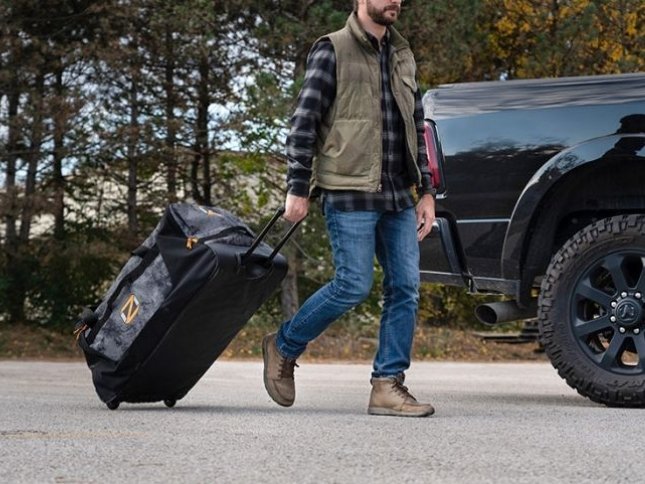
ScentLok OZ 8K Ozone Rolling Bag & Radial IQ Combo
Storing your hunting clothing in an ozone storage container is a vital step for success in the field. Our products are constantly adsorbing odors and contaminants in the air that surrounds them. Keeping your gear in the OZ 8K Ozone Rolling Bag + Radial IQ Combo allows the new Radial IQ ozone generator to destroy lingering odors and keep them from contaminating your gear.
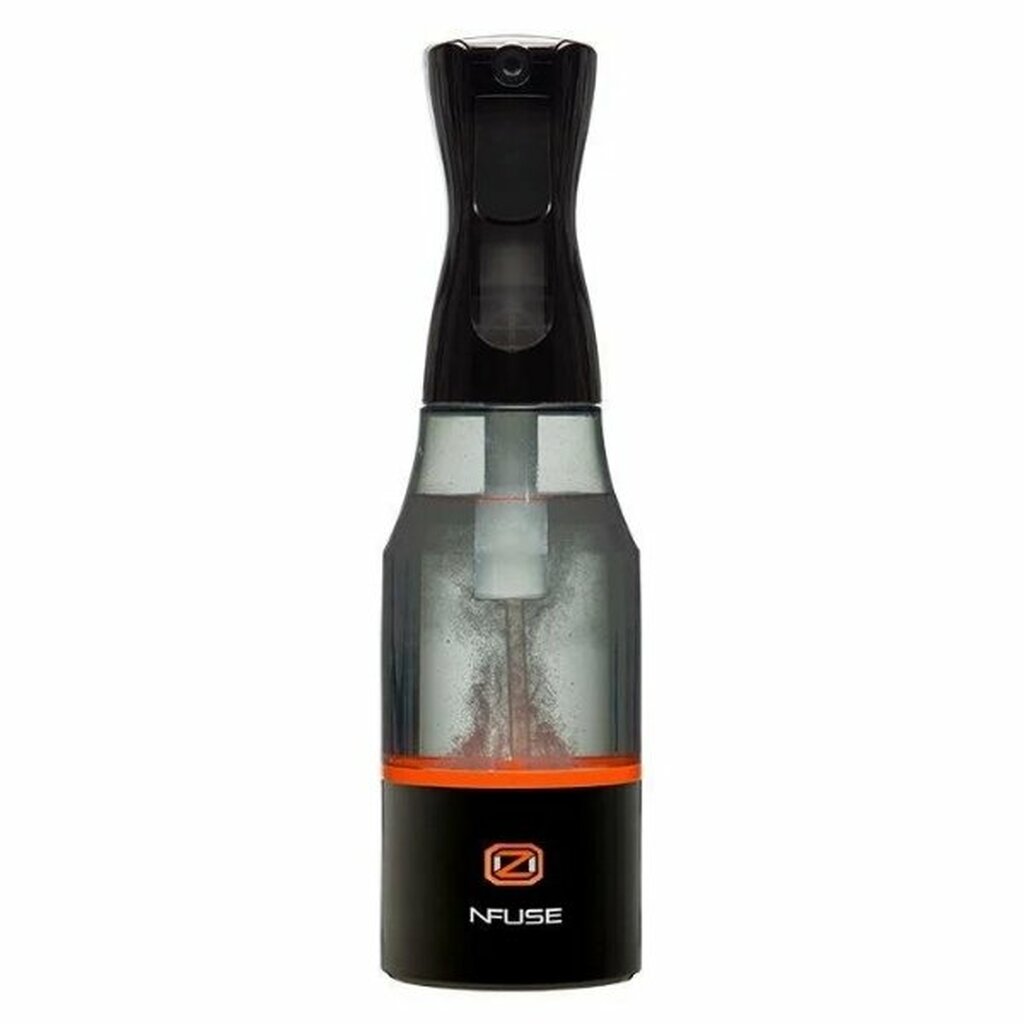
ScentLok OZ NFuse Ozone Sprayer
The OZ NFuse Ozone Sprayer transforms tap water into a powerful, effective and highly economical means of destroying odor-causing bacteria – deodorizing virtually any surface or area and reducing odor-causing bacteria by up to 99% in minutes!
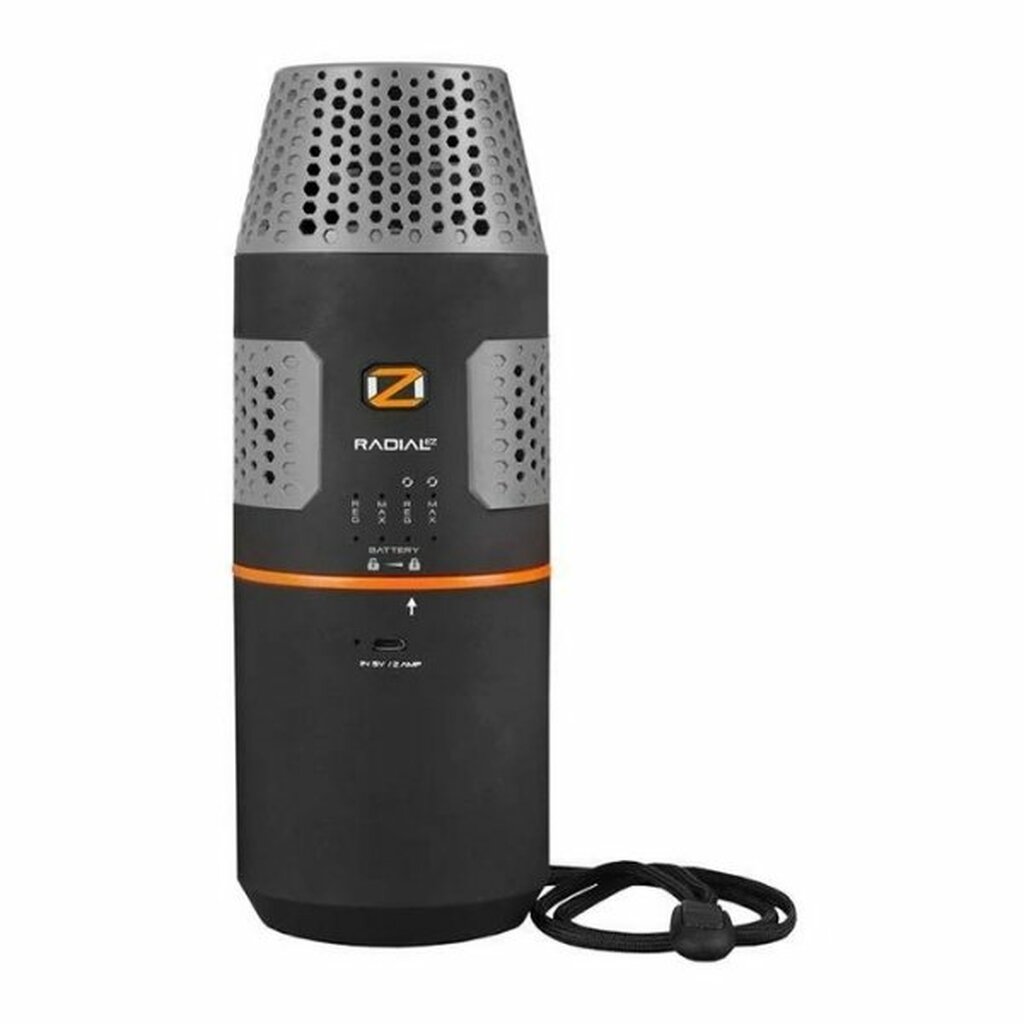
ScentLok OZ Radial EZ
The OZ Radial EZ is ideal for your odor control needs, a perfect fit for camping, closets, medium-sized rooms, cabins, and more. This portable ozone generator was specifically designed to quietly seek out and destroy odors and bacteria in its path.
Odor Eliminating Enzyme Products
What are enzymes and how do they work?
Enzymes are active proteins found in all living matter, people, animals and plants. They are not living organisms themselves. The only things that are alive are the cells that create or produce the enzymes. Enzymes are crucial to basic life processes. If you could look into a cell, you would find a multitude of enzymes directing traffic or processes to keep that cell alive. Enzymes are nature’s way of processing, kick starting or breaking things down. Dead Down Wind offers several options for odor eliminating enzyme products.
Our favorite odor eliminating enzyme products:
These products are intended to be used before or right before hunting.
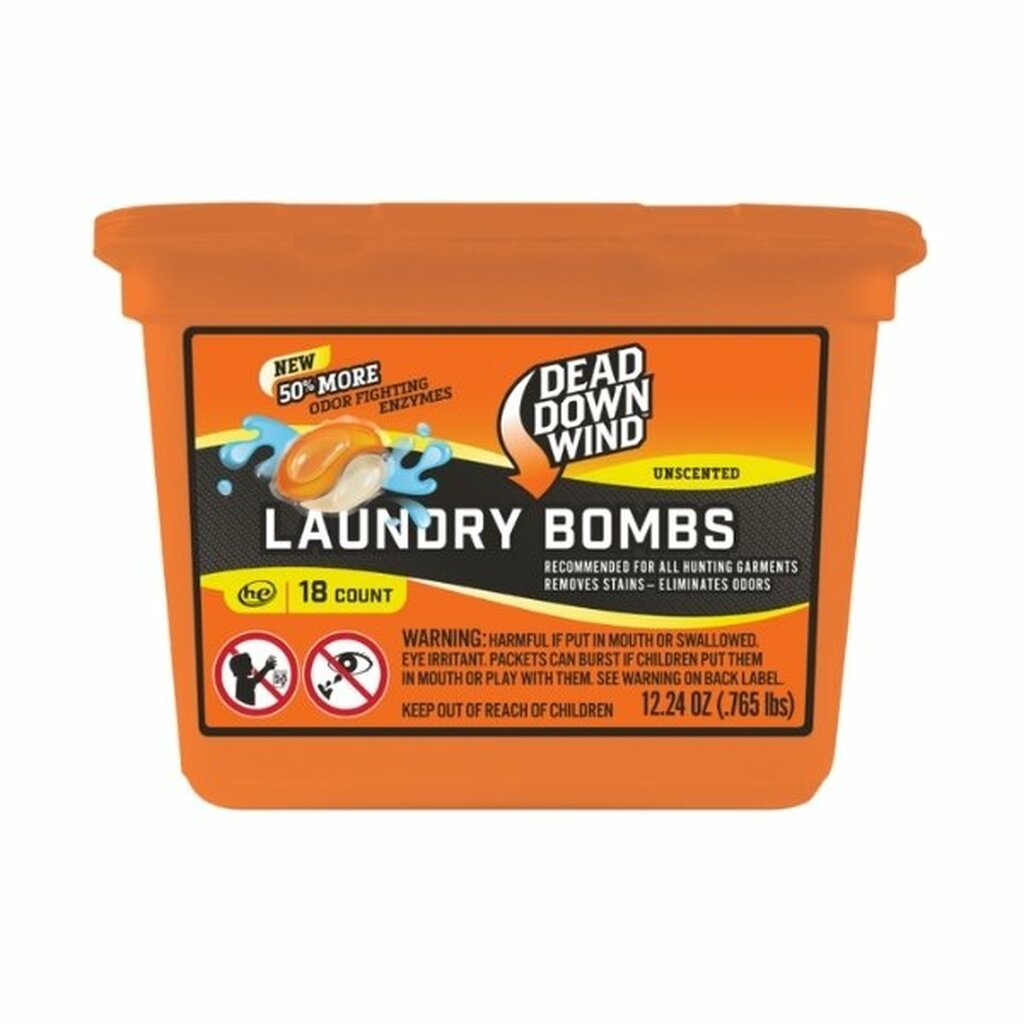
Dead Down Wind Laundry Bombs
Laundry Bombs are new easy-to-use, water soluble multi-chamber packs that consist of Dead Down Wind’s proven enzyme-based detergent, now with 50% more enzymes. Place a Dead Down Wind Laundry Bomb into the washing machine drum before adding hunting garments to remove stains, odors and even increase the longevity of your gear.
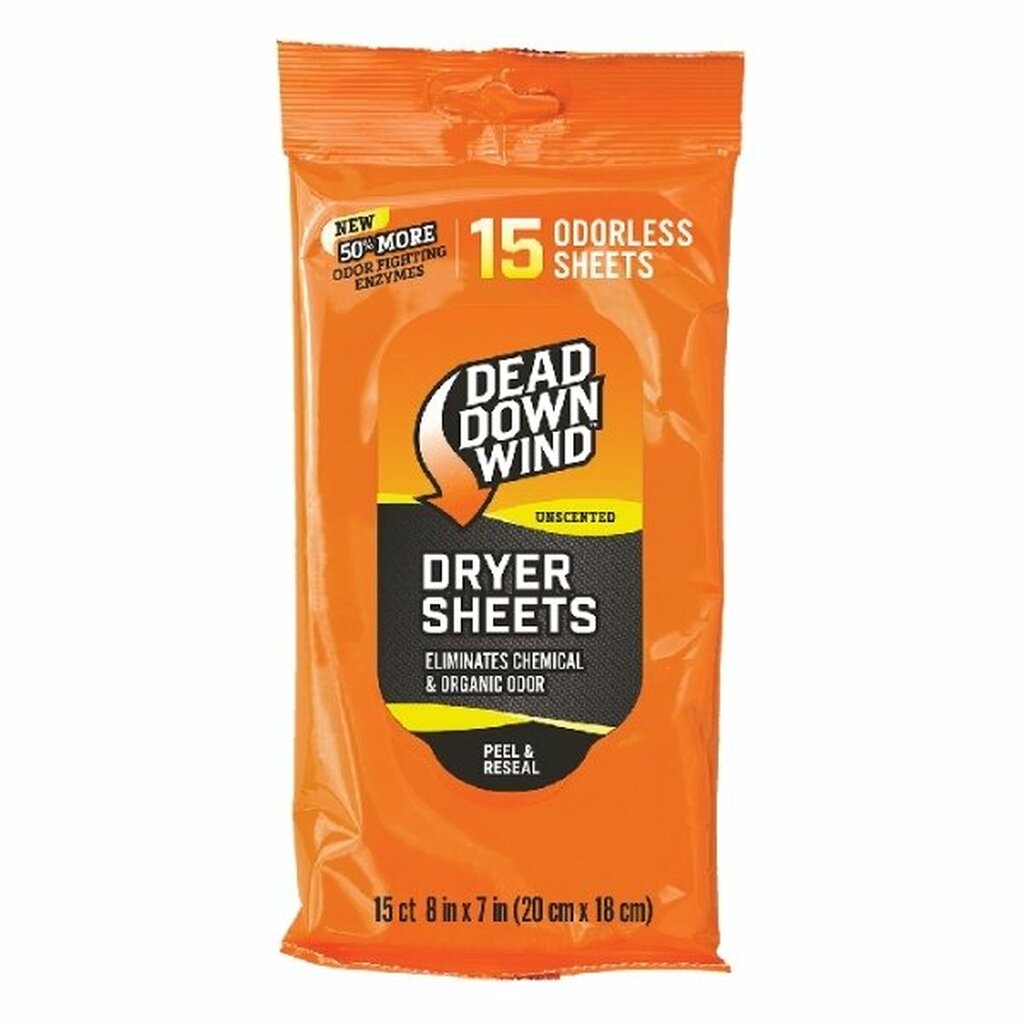
Dead Down Wind Dryer Sheets
Dead Down Wind’s Dryer Sheets deliver odor elimination coupled with anti-static performance – that’s why they are wet coming out of the package. If you are using a regular dry sheet, then it probably isn’t doing anything for odor elimination. DDW’s Dryer Sheets are the only biodegradable dryer sheet on the market.
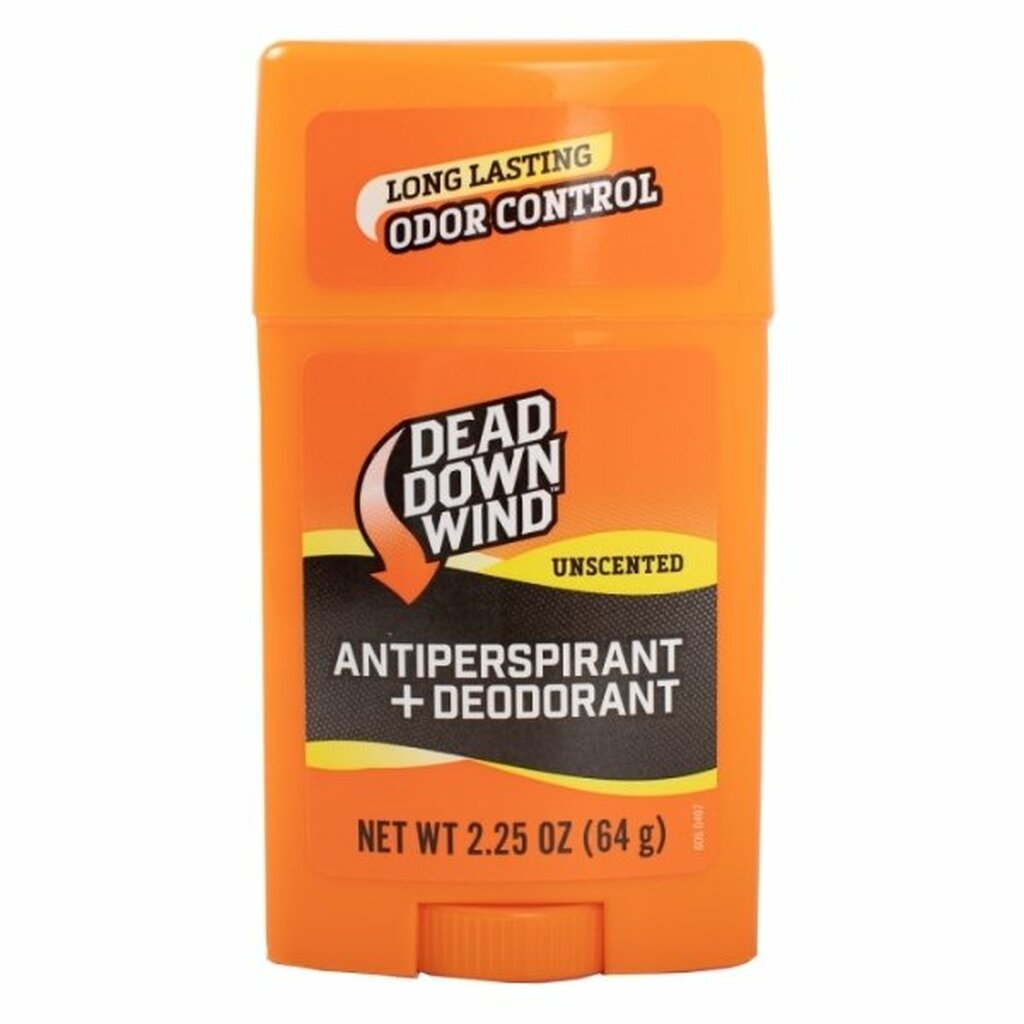
Dead Down Wind Antiperspirant
The second phase to the complete scent prevention system is hygiene. This is a crucial step that allows you to stop odor right at the source. The Dead Down Wind™ Antiperspirant focuses on eliminating odor right at the source so you can stay field-ready when it matters most.
In The Field Products
These products are intended for wild game to smell so that their olfactory systems are manipulated. We offer two different kinds of products that do this.
Nose Jammer
Nose Jammer contains Vanillin and other natural aromatic compounds that have the ability to effectively jam an animal’s sense of smell. The compounds used in Nose Jammer are not alarming to game animals because they are found in lignin, a major support structure for all trees, grasses, and shrubs. The key is taking these prolific compounds game animals are conditioned to and delivering them at concentrated levels to overload the olfactory gland found in an animal’s nose.
Our favorite Nose Jammer Products:
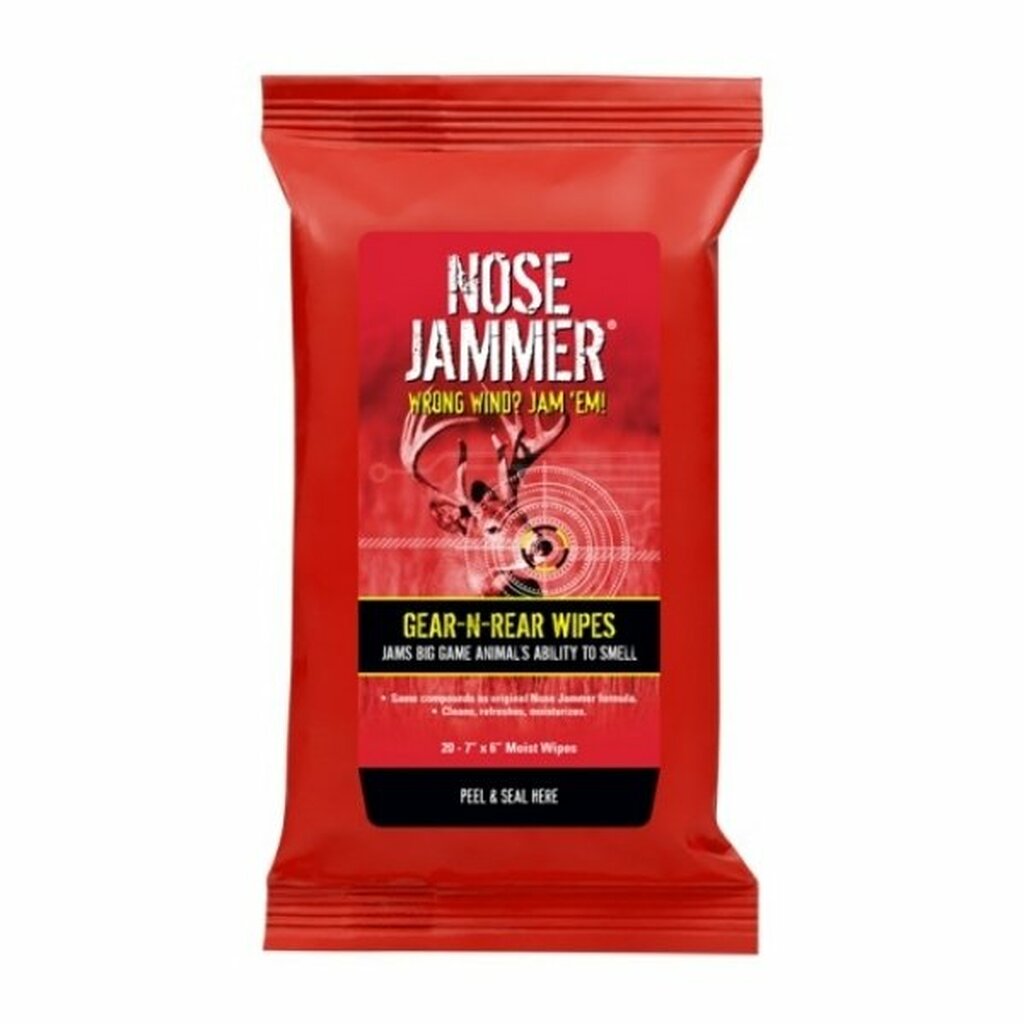
Nose Jammer Gear-N-Rear Wipes
Nose Jammer Gear-N-Rear Wipes make cleaning up in the field easy. Our wipes are made with the same secret formula found in all Nose Jammer products. They are formulated to be used on your body as well as your hunting gear. Each package contains 20 – 7″ x 6″ wipes.
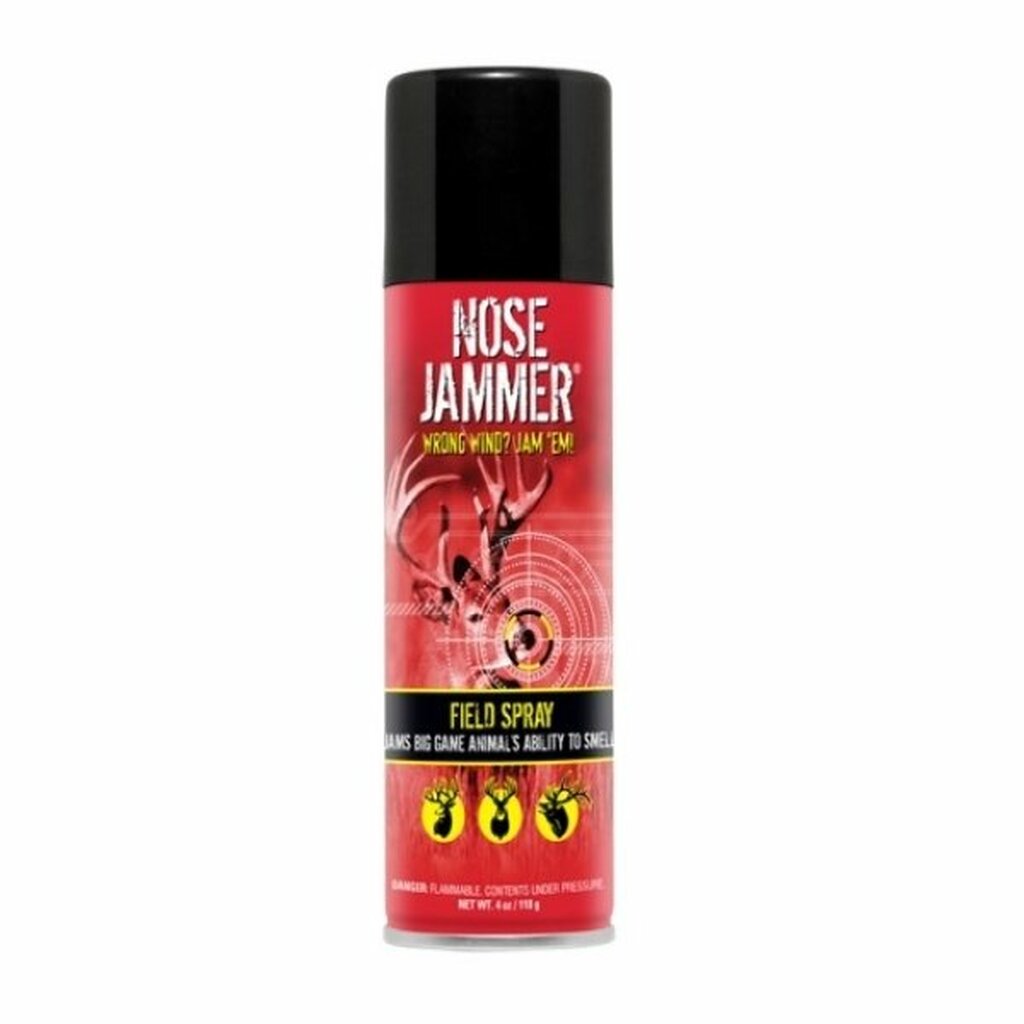
Nose Jammer Aerosol Field Spray
Nose Jammer creates a cloud around you which jams big game’s ability to detect and track human odor. Nose Jammer should be sprayed on clothes, boots, tree stands, blinds and brush. When the wind swirls, critters olfactory gets jammed and they stay unalarmed. Works on all critters with a nose!
Scent Thief
Scent Thief is a formula that relaxes the olfactory epithelium of animals and shuts down their ability to smell. The evaporation of Scent Thief into the air is how the formula enters the animals nose. We interviewed Russell Epperson, the inventor of Scent Thief of our podcast and he suggested applying it liberally throughout your hunt for the best results.
Our favorite Scent Thief Products:
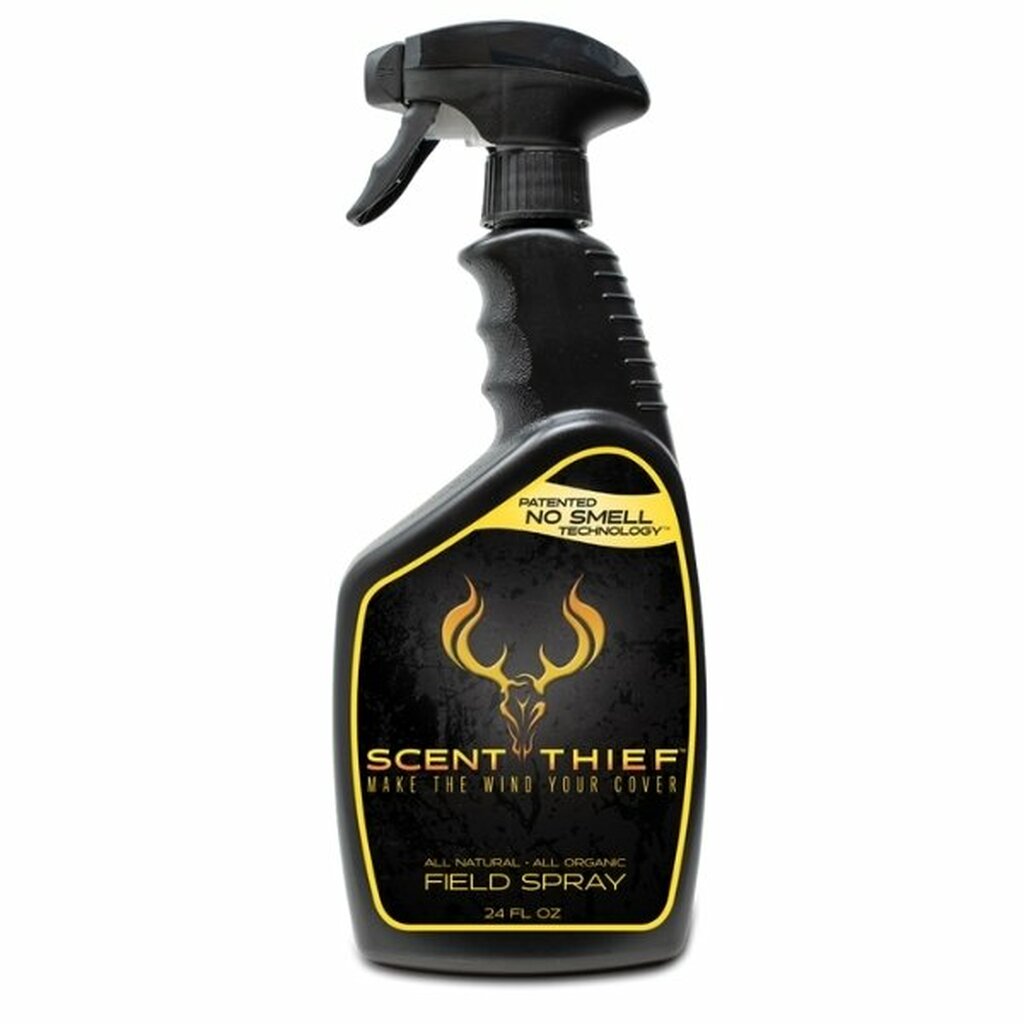
Scent Thief Field Spray 24oz
Scent Thief’s revolutionary formula is the first and only hunting scent blocker product to completely eliminate an animal’s sense of threatening odors. Our patented No Smell Technologyrelaxes the olfactory epithelium, temporarily shutting down an animal’s sense of smell. When an animal gets Scent Thief Field Spray in their nose, they won’t be able to smell anything else. Guaranteed. The wind can now act in your favor. All natural, all organic ingredients are safe for skin, clothing and the environment.
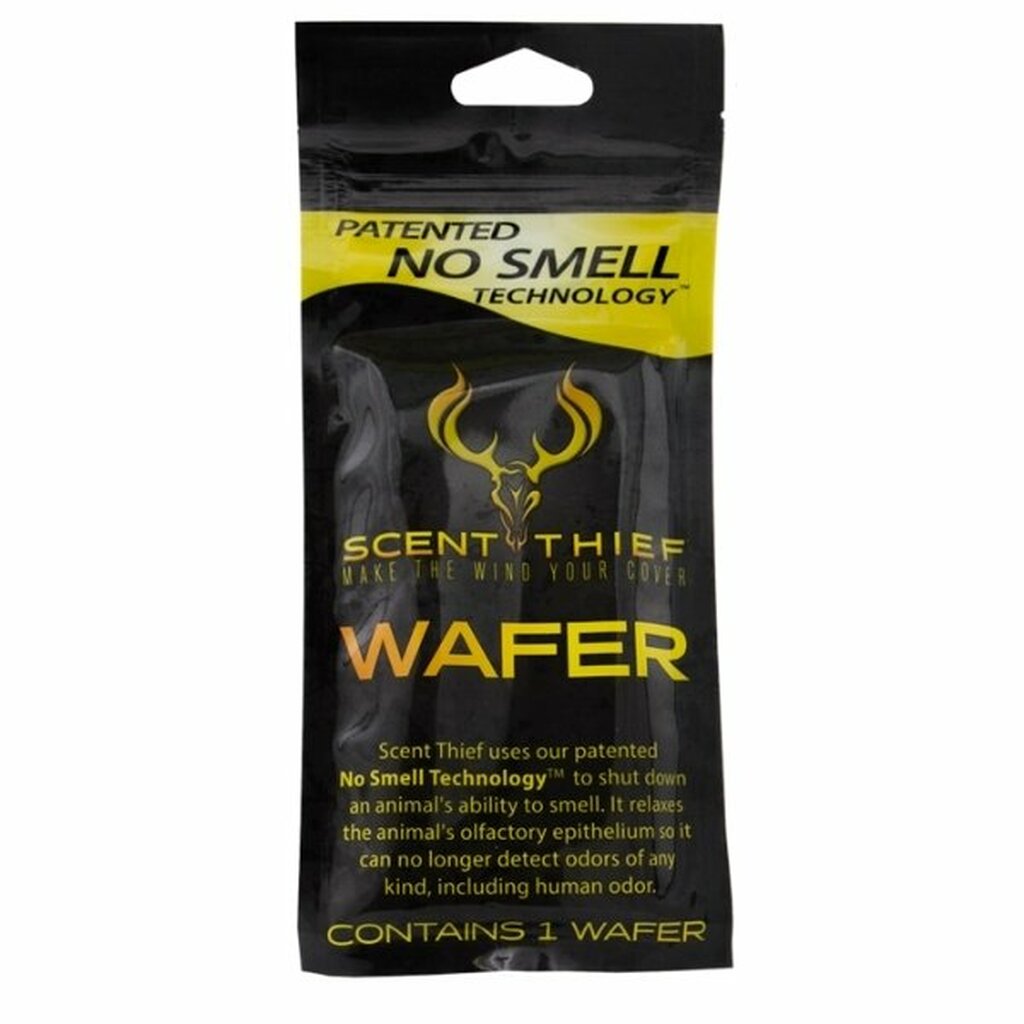
Scent Thief Wafer
The Scent Thief Wafer is the next evolution in No Smell Technology™. Use the Wafer in the field by hanging it in a tree, up-wind of where your treestand is located. The wind will help carry the Wafer scent and create a “No Smell Area” around you. Use alongside the other hunting scent blocker products to eliminate an animals ability to smell you.
No matter which scent control options you choose, being prepared for a shift in wind while hunting is always a good idea. Shop all of our scent control products here.
The best endorsement of a product is to use it continually and take its reliability for granted.
My Timberland® Earthkeeper boots fit that description and they have been through the wringer.
by Leon Pantenburg
There was no comparison shopping going on when I bought my Timberland Earthkeeper boots. My old Georgia® work boots were about worn out, and I was sorta looking for a new pair. The Earthkeepers were on a sale rack in Bend, Oregon, there was a pair that fit me and the price was right.
Today, I don’t think about my Timberland work boots. They’re just there, parked by the back door to the garage or they may be tossed in the back of my pickup. The Timberlands get pulled on when I mow the yard, walk the dog, climb a ladder, work with power tools, trim shrubs and trees and grub around in the garden. If I’m working outside, chances are I’ll be wearing them.
Originally released in 2007, according to the Timberland website, this boot was the start of the Earthkeepers® Edition that has grown to include shoes, clothes, and more.
Here are the specs of the Timberland Earthkeeper boots style 15551210:
Better Leather from a tannery rated silver by the Leather Working Group for its water, energy, and waste management practices
Footbed lined with leather from a tannery rated silver by the Leather Working Group for its water, energy, and waste management practices
100% recycled PET laces
ReBOTL™ fabric lining containing at least 50% recycled plastic
Midsole of EVA-blend foam for high-rebound cushioning
Steel shank for arch support
TPR welt
Rubber outsole
Imported
Here’s the good stuff:
Wear: My Earthkeepers have been worn regularly for the past decade or so. Finally last fall, the sole started to separate from the upper. Some glue and a C clamp fixed that, and the soles are good for a lot more hard wear.
Comfort: It goes without saying that work boots need to be comfortable, especially if you will be standing and working all day. The Earthkeepers don’t have any sort of waterproof liner, so they are cooler than most boots with some sort of waterproof liner. This also means that you can’t wade in water without getting your feet wet. That’s fine – I have Muck Boots for wet conditions.
Style: As work boots go, these look good in most situations. I wear mine with jeans and Carharts, or with cut-offs and a T-shirt when I go to Lowe’s to pick up stuff. Working people typically don’t worry about their footwear’s appearance, but it’s nice to have a good-looking pair anyway.
Urban dwellers have discovered work boots, and the sensible footwear has a place in the big cities. If you ever have to evacuate your home due to natural or man made disasters, these are the boots you want to be wearing.
Fit: My foot size is 11, EE width, in hikers. The Earthkeepers fit my feet just right.
Laces: My boots still have the original laces, and they show minimal wear. The laces stay tied and perform as should be expected.
Care: I don’t do anything to my Earthkeepers. The boots get cleaned as needed. I suppose the leather should be treated with mink oil or some leather preservative and that may happen some day. To keep your Earthkeepers looking good, the leather should be maintained regularly.
Then there’s this:
Durability: It’s been mentioned that the sole started to separate from the upper. Considering how hard these boots have been worn, that’s acceptable. They can be re-soled.
Sole: I prefer a smooth sole on work boots. I have hikers with aggressive tread for hiking and hunting, and the soles should match the terrain. But in a boot you might be wearing to go in and out of a house, from the truck to the combine or from the barn to inside, the sole needs to be easy to scrape off and clean. Also, a smoother sole is better for climbing on ladders.
Most hiking trails these days are well-worn paths, and aggressive tread is overkill. A smoother sole is easier on the environment.
From the website: At the heart of the Timberland® brand is the core belief that a greener future is a better future. This comes to life through a decades-long commitment to make products responsibly, protect the outdoors, and strengthen communities around the world. The brand has committed to plant 50 million trees worldwide by 2025, and has a bold vision for its products to have a net positive impact on Nature by 2030, giving back more than they take.
Do you need a pair of Earthkeepers?
Everyone needs some work boots, even folks who live in the city. These boots have proven themselves, and I will be looking for a new pair if mine ever wear out!
Please click here to check out and subscribe to the SurvivalCommonSense.com YouTube channel – thanks!
Your fishing reel is one of the most essential aspects of your gear. When you are targeting catfish, it becomes even more important! Catfish fishing reels are often a much-debated topic amongst anglers who love to chase these amazing fish. Using the wrong type or size of reel could be catastrophic and lose you a fish when you least expect it.
It is important to know what features you need in a good catfish reel and what kind of power you need out of it. After all, catfish can grow to enormous sizes and put some very serious strain on your equipment. By carefully selecting the right type of fishing reel, you can save yourself plenty of time, money, and trouble in the long run.
The first thing to consider is the species of catfish that you will be after. There are many different species out there, and each one is different. You should also consider what size of catfish you intend to catch from these species, as they can be very small (one to ten pounds) or extremely large (50+ pounds). Again, catfish are strong fish and the size will factor into your fishing reel selection.
There are three main species of catfish that anglers will be fishing for, blue catfish, channel catfish, and flathead catfish. These fish are all very different from each other. All of them, however, are very powerful and can grow to tremendous sizes. Because of this, you need the right type of reel. But which type should you select?
Among the many types of fishing reels that are available, there are two, in particular, that stands out when it comes to catfish. These are conventional reels and spinning reels. Let’s take a look at spinning reels, to begin with.
Spinning reels are one of the most popular types of fishing reels, and for certain situations, can be great for catfish. Spinning reels utilize a wire bale across the top of the reel that flips back and forth when you are casting. This makes them much easier to use and cast with than others like baitcasting reels. Because of their ease of use, they are very widespread and come in many different shapes and sizes.
Spinning reels are great for small to medium-sized catfish. If a catfish is too large, it can damage or even break the spinning reel with its power due to its design. If you are targeting truly large catfish, you are better off using the other type of reel: conventional reels.
Conventional reels (sometimes known as baitcasting or saltwater reels) are the best option for big catfish. These reels are bigger, heavier, and stronger. They are made to handle large fishing lines and weight and feature great drag systems for fighting heavy fish. For this reason, they are the number one choice amongst anglers chasing large saltwater fish or big catfish.
Both spinning reels and conventional reels are great choices for catfish depending on your style and the fish you intend to catch. Both will have their own unique advantages and disadvantages, but both are the best options for catching the elusive catfish. There are many great options of both types out on the market today, but with so many to choose from, where do you begin? Luckily you have come to the right place! Let’s take at some great fishing reels that can aid you in your next catfish fishing trip.
KastKing Rover Round Baitcasting Reel
The Rover Round baitcasting reel by KastKing is a conventional reel that is extremely tough and durable. It is reinforced with thick, hard anodized aluminum in the side plates and uses a CNC machined spool to be as strong as possible. All of the various gears are precision cut and made of high-quality metals, ensuring that they offer the best durability and are resistant to corrosion. With a carbon fiber drag system, you can enjoy up to 30 pounds of silky smooth drag. So how does this help catch catfish? With how tough it is, even the largest catfish will not be able to break this reel. The Rover Round by Kastking is available in many different configurations and options, allowing you to get the exact model you need for your style of fishing. With a fantastic design and high-quality build, this fishing reel will last you for years to come.
KastKing Kapstan Elite Saltwater Spinning Reel
Although the Kapstan Elite is designed to be a saltwater spinning reel, its excellent construction and design make it one of the best catfish spinning reels on the planet. Because it was made to be fished offshore, it features waterproof rubber rings to ensure no water, mud, or debris gets into your reel to mess it up. The carbon fiber drag system has a giant drag for the size (depending on the model you get) and the oversized spool disc allows you to use any size of fishing line that you need. An all-aluminum body and solid construction mean you can reel in any catfish you want. Available in a few different options, the Kapstan Elite is one of the best spinning reels out on the market, especially if you intend to catch large catfish.
KastKing ReKon Line Counter Fishing Reel
Last but certainly not least, the KastKing ReKon Line Counter fishing reel is another big conventional reel that has high durability and high-quality parts to ensure any size of catfish can be handled. It features an accurate mechanical line counter that allows you to know where to keep your bait so that you can target the zone where you are catching fish and know how much line is left. This large reel can hold plenty of lines, and the all metal parts ensure it is resistant to corrosion while out on the water. No matter what type or size of catfish you are after, the ReKon line counter reel by KastKing is an exceptional choice!
Bears are naturally shy animals and prefer to avoid people. Conflicts arise when they are attracted to human food or garbage or when we surprise them while out on the trail.
See Living and camping in bear country for tips on how to prevent bears from getting into food and garbage around your home and camp.
If You Have a Problem With a Bear Around Your Home or Cabin
If in spite of your best prevention efforts a bear is causing a problem around your home and cabin, here are a few things you can do to get it to leave.
First make sure that you and your family are in a safe spot (inside a house or vehicle, or standing close together with 3 or more people).
Make noise (yell, bang pans, etc.) to scare the bear.
If the bear is not threatening, watch it and try to figure out why it is attracted to your home or camp. Fix the problem after the bear leaves. You can call your local Fish and Game office for suggestions.
If the bear is a threat to a person’s life or your property you may either call the Police (911), your local Fish and Game office, and/or shoot the bear yourself.
Remember, if the bear has been attracted to your home or camp by improperly stored food or garbage, it can NOT be legally killed.
If You Kill a Bear in Defense of Life or Property (DLP)
You may kill a bear in defense of your life or property if you did not provoke an attack or cause a problem by negligently leaving human or pet food or garbage in a manner that attracts bears and if you have done everything else you can to protect your life and property (5 AAC 92.410).
Property means your dwelling, means of travel, pets or livestock, fish drying racks, or other valuable property necessary for your livelihood or survival. While game meat is considered your property, you may not kill a bear to protect it unless the meat is critical for your survival. Even in this situation you still must do everything possible to protect the meat (i.e. proper storage, scaring the scavenger, etc. See Safely in Bear Country) before you may kill the bear.
If you have to shoot a bear, be sure you shoot to kill – wounded bears are potentially more dangerous than healthy bears. Also be very careful of what lies beyond your intended target – stray bullets can travel over a mile and still be deadly.
Bears killed in defense of life or property belong to the state. If you kill a bear you must remove the hide from the carcass and must also salvage the skull (Bear Hides: Skinning and Field Care) (PDF 506 kB). You must give both the hide, with claws attached, and the skull to ADF&G. You must also notify your local ADF&G Wildlife Conservation office or Alaska Wildlife Troopers immediately. You are required to fill out and submit a Defense of Life or Property Report Form (PDF 114 kB) questionnaire concerning the circumstances within 15 days.
Karl Kroll, left, and Donald “Buzz” Chamberlain pose with their 82 pound beaver.
In the spring of 1989, I sat down to talk with Donald “Buzz” Chamberlain and his wife Betty at their downtown Boscobel antique store. It was one of my first interviews and I was a little nervous about whether people would talk to me.
I didn’t need to worry though. People were more than happy to talk to me about the river and their escapades.
Buzz told me about his record breaking beaver that he trapped on March 28, 1951 at the mouth of the Blue River in Grant County with his buddy Karl Kroll.
Weighing in a 82 pounds, the beaver was big enough to warrant a mention in the Wisconsin Conservation Bulletin (the precursor of Wisconsin Natural Resources Magazine) of June 1951. Buzz is pictured to the right in the photo along with Karl Kroll, who helped him trap the monster animal.
Original text from the Wisconsin Conservation Bulletin for June 1951.
The two used a set trap to capture the beaver. They received $35 for the pelt which was pretty good money for the day.
Chamberlain told me that 1951 with the first year that beaver were trapped in Grant County after a trapping ban. I wondered if the large size of the beaver was related to the trapping ban. I wanted to verify the ban so I went to the State Historical Society (SHS) and checked the hunting regulations for that era. I sat in between the tightly-packed stacks at the SHS library going through the old paper regulations and found one line in the 1949-50 pamphelt regarding Beaver.
Beaver – Season, if any to be established by the Conservation Commission at its December meeting.
Text from the 1949-50 Wisconsin Trapping Regulations.
Since the pamphelt was inconclusive about a trapping ban, I contacted Jessica Rees Lohr, Wildlife Research Scientist at the Department of Natural Resources (DNR) to see if she could solve this mystery.
She put me in touch with Shawn Rossler, DNR furbearer specialist and he stated:
“My recollection is that we (WI) closed the beaver season on and off from 1903-1947. Starting in 1947 or 48, we had some form of beaver season…but I don’t know what years they were regulated or considered unprotected. I believe we had season dates that lasted anywhere from 9 – 200 days…some counties were open and others closed. That said, I don’t have any additional documents to reference that would give us specifics for the opening of Grant County to modern, regulated beaver trapping, unfortunately.”
So what do I believe?
My instinct it is to believe Buzz and that trapping was banned in Grant County in at least one year prior to 1951. That’s not the sort of thing that people just make up.
To absolutely know for sure, I’d have to dig through the Conservation Commission’s notes about trapping in that era. I tried to do this, but found no one at the DNR who would help me. Through an open records request, the DNR sent me the Wisconsin Wildlife Harvest Summary: 1930-2018. In this report, it states beaver harvest information in 1951 for just the top counties in northern Wisconsin: Vilas, Bayfield, Iron, Washburn and Sawyer. The average pelt price was $11.81 so Buzz got a good price for his beaver. Prior to 1951, there is no listing of Grant County as a place where beaver were harvested.
Does this report validate that there was no trapping of beaver in Grant County prior to 1951? Not exactly, but it’s the best that I could come up with.
For now, I choose to believe Buzz and that the large size of the beaver could have resulted from a ban on trapping in the years prior to 1951.
Buzz Chamberlain passed away July 12, 2003. He is buried in the Boscobel Cemetery in Boscobel, Wisconsin.
Getting into the world of hunting can seem like a herculean task.
There is so much to know about the different types of guns to use, the different games and which season to hunt in, the regulations in your region, and a lot more.
But none of it compares to the thrill and adventure of hunting.
Carefully observing the movements of an animal, aiming for a precise shot, knowing where exactly to aim, and the joy that you feel afterward – are some of the reasons why so many people love to hunt.
It doesn’t matter if you are a beginner or a highly experienced hunter, everyone could go for a better air rifle to improve their skills.
Top 9 Best-rated Air Rifles For Hunting Medium Games
If you are in a hurry, here is an overview of the highlight candidates in our list of best air rifles for hunting medium games 2026:
Things to Consider Before Buying Air Rifle For Hunting Medium Game
Before we get into the best options for air rifles for hunting medium game, let’s discuss some factors to consider before making this choice:
1. Types of Medium Game
The most important factor to consider is whether the air rifle you purchase is suitable for the game you want to hunt.
Medium game is considered to be animals that weigh over 50 pounds and less than 350 pounds, such as raccoons, woodchucks, red foxes, bobcats, deer, wild sheep, antelope, feral hogs, warthog, caribou, impala, etc .
The loudness of an air rifle is an important factor to consider before making the final purchase.
An air rifle with a lower sound will not scare away animals, make it easy for you to shoot, and not disturb the people in your surroundings.
Many of the air rifles you will find in the market have a sound suppression system but it is still important to check how many decibels of sound an air gun makes upon shooting.
Best Air Rifles For Hunting Medium Games – Top-rated guns in 2026
Now that you know what to consider before making the final decision, to take your hunting experience and skills up a notch, I present to you, some of the best air rifles for hunting medium game.
1. FX Impact M4: Powerful PCP Air Rifle For Hunting Medium Game
The FX Impact M4 is my top recommendation when it comes to a powerful PCP air rifle that you can use for hunting medium game.
This air rifle has many impressive features that put it on top of my list.
Not only is this gun the most powerful option you can find within its price range, but it is also extremely comfortable and convenient to use.
First, you need to know that this air rifle is available in .177 cal, .22 cal, .25 cal and .30 cal.
Each of these air rifles has 375, 270, and 85 shots per fill respectively.
But the best part is that the FX Impact M4 has an interchangeable caliber to suit your needs.
Moreover, this air rifle has a dual transfer port and a reversible side lever.
You can even adjust the valve control, match trigger, and the hammer spring tension of this air rifle externally.
What more can you want in a rifle? The FX Impact M4 will not only give you a good velocity but can also be adjusted to function exactly how you want.
The length of this rifle is 34.25 inches and it comes with an AR15-style manual safety system.
Moreover, you will get a 3-year transferable warranty if you choose this PCP gun.
If you know anything about the hunting world, then you must be no stranger to the Benjamin Marauder air rifle.
So, you will be happy to know that the famous Benjamin Marauder Air Rifle now comes with an ambidextrous synthetic stock.
With a caliber of .177 and a velocity of 1100 FPS, it is one of the most powerful PCP air rifles that you could find in the market.
Benjamin Marauder Air Rifle has a vertically adjustable comb, a reversible bolt, and a tray that can be adjusted for achieving different velocities.
Apart from the different stock, this air rifle now has more features that make it easier to use, such as a raised aluminum breach that makes it easy to load this powerful rifle.
Like the older Benjamin Marauder Air Rifle, this model is 42.80 inches in length, has a manual safety, and has a magazine capacity of 10 pellets.
6. Seneca Aspen: Best Self-Supported PCP For Medium Game Hunting
If you prefer a self-supported PCP air gun while hunting medium game, I have the perfect suggestion for you.
If you are a beginner when it comes to hunting, the Seneca Aspen is one of the best choices to start your hunting journey with.
This air rifle has a .22 caliber with a two-stage velocity adjustment option along with features like an onboard pressure gauge, and automatic overpressure air release.
Not only will this gun be very convenient for you to use, but it is also easy for you to carry as the latest model features a new synthetic stock.
Although it is slightly heavier than other PCP air guns at a weight of 8 lbs, the overall length of this rifle is 43 inches.
The new edition of the Seneca Aspen air gun features a fully shrouded rifled steel barrel along with a fill probe and a single-shot tray.
9. Air Venturi Avenger: Best Value PCP Air Rifle For Medium Game
The Air Venturi Avenger rifle is easily the best-value PCP air rifle for medium games.
You might have even heard many fellow hunters talk about this air rifle recently.
It provides perhaps the best velocity and accuracy for its price range.
The .177 caliber Air Venturi Avenger rifle has a velocity of 1000 FPS; the .22 caliber rifle has a velocity of 930 FPS, whereas the .25 caliber rifle has a velocity of 900 FPS.
Not only is this PCP air rifle powerful, but it also has many features that make hunting easy for you.
In fact, the Air Venturi Avenger rifle was designed with keeping target practice in mind, so it is an excellent choice for those who are new at hunting.
This highly sought-after air gun has a two-stage adjustable trigger, a magazine capacity of 8, and 24 pellet shots per fill.
Moreover, it has a repeater fire mode that will assume a clear and accurate shot for you, whether you are honing your aiming skills or shooting small and medium games.
The Crosman 1077 air gun has a plastic buttpad to absorb recoil and help you enjoy more shooting without worrying about hurting your arms.
Besides, it features non-slip checkering in the grip and forearm.
The checkerings increase friction between the shooter’s palm and the gun’s stock, add more stability to your arm when shooting, and prevent slippage from the shooter’s sweat.
Ammo
Crosman 1077 has the .177 caliber (the internal diameter of the barrel, measured in inches) so it uses .177 pellets as ammo.
.177 pellet is cheap and lightweight.
It also has various types such as wadcutter, round nose, pointed, hollow point, etc.
Press the release buttons on both sides of the magazine and pull it downward.
Slide the pellet clip pin forward and take out the clip.
With the clip in one hand, use your other hand to insert a pellet at one of twelve pellet chambers (with the pellet’s nose lying forward and the pellet’s skirt flying backward).
Keep inserting the pellet until the clip is full.
Put the clip into the magazine, pull the clip pin rearward, and return the magazine to the stock.
Installing CO2 cartridge:
Put the gun “SAFE”.
Unscrew the piercing tube cap below the barrel and remove it.
Insert the new CO2 cylinder into the gun with the small head pointing rearward.
Screw the cap firmly into place.
Put the gun off safe and fire.
If the gun doesn’t shoot, put it on safe and tighten the screw more (you can use a screwdriver or a coin placing in a slot of the knob to produce more force)
In summary, you can see that it takes very little effort to load the Crosman 1077 gun.
And the best part is you don’t have to break a single sweat to pump or to break down the barrel like other pneumatic rifles and springers.
The sight uses optical fiber for the dots so you could align the target faster and more accurately, even in the low-light shooting condition.
Besides, the rear sight has windage adjustment (allows you to adjust the sight left and right), and elevation adjustment (allows you to adjust the sight up and down).
It has hundreds of customer reviews without a single complaint about noise.
You don’t have to buy hearing equipment even if you have sensitive ears.
Moreover, you can be confident to shoot this gun in the backyard without disturbing your neighbors.
Shooting range and intended use
The Crosman 1077 CO2 air rifle is great for target shooting and plinking up to 30 yards.
It’s not recommended to use this gun for pest control or small game hunting unless in the close range (less than 20 yards)
Crosman 1077 Accessories
The Crosman 1077 has CO2 cartridges as the only accessory.
You can buy a speed loader and an additional pellet clip for a faster reload.
For even greater accuracy, you can buy a scope to mount in an 11mm dovetail scope rail.
Maintenance
The Crosman 1077 semi-automatic air gun requires very little maintenance.
You only need to put a drop of Pellgun Oil on the tip of every CO2 cartridge, another drop on the thread of piercing tube cap, and a light coat of oil on the barrel to prevent rust.
Specification
Caliber: .177
Power source: CO2 cylinder
Velocity: Up to 625 FPS
Barrel length: 20.38”
Overall length: 36.88”
Capacity: 12 shots
Front sight: Fiber Optic
Rear sight: Fully adjustable for windage and elevation
Scope rail: 11 mm dovetail
Safety: Cross-bolt
Weight: 3lbs 11 oz
Buttplate: plastic
Function: Repeater
Checkering: Grip and forearm
As you can see above, the barrel is not very long and the gun only weighs a little more than 3lbs
So it’s very lightweight and easy to carry around for even a 10 years-old child.
Crosman 1077 Price
The Crosman 1077 price is only $70.
You can’t get a better semi-automatic CO2 air rifle at this price level.
Also remember that if you shoot a lot, you should buy numerous pellets (500-count packs at least) and a bunch of CO2 cartridges.
The cost of CO2 capsules and pellets can add up over time, though.
Pros and Cons
Pros
Cons
Cheap price
Lightweight
Medium velocity
Highly accurate
Great fiber optic sight
Easy to load and cock, no pumping or breaking barrel effort required
High follow-up shot speed
Impressive semi-automatic feature
Durable stock
Useful checkering in grip and forearm
Provide more shooting and more fun
Not enough power for pest control and small game hunting
Cost of CO2 cartridge can add up if you shoot a lot
As of this date, the Crosman 1077 semi-automatic CO2 air rifle has a one-year limited warranty from the date of purchase.
Customer Reviews
While researching this product, I always look at the trench in customer reviews.
Although the Crosman 1077 has lots of 4 stars and 5 stars, it also got a bunch of 1-star ratings.
There are 2 issues that arose with the negative reviews:
The first is the problem of leaking CO2 so the gun cannot shoot at all.
But defective products are a risk we always have to face in online buying and air rifle shopping is no exception.
The second is the pellet jamming.
The manual is very clear about how to insert the pellet into the clip properly so make sure you follow the instruction carefully to avoid this problem.
Besides, it is advised that you use only the Crosman pellet to work with the gun to get the best result and avoid any potential damage to your gun.
The world’s oceans are full of fascinating creatures, including quite a few large and rather intimidating marine animals! If you love nature and the ocean as much as we do at Harbor Breeze Cruises, we hope you’ll be excited to gain some insight into two predators found in the oceans: the orca and the great white shark.
Meet These Impressive Apex Predators
Great white sharks and orcas are known as apex predators, which means that they reside at the top of the food chain. They play a crucial role in regulating the populations of other species and maintaining the balance of the world’s delicate marine ecosystems.
Because great white sharks and orcas are two of the most iconic marine mammals in the world, it’s no surprise that a debate exists over which animal is the most formidable.
Orca vs great white shark . . . which one is bigger? Which one is faster? Which one is the most relentlessly fierce and deserves to be known as the ultimate marine predator? Let’s see if this debate can be settled once and for all!
Orca vs Great White Size
On average, orcas—also known as killer whales—are twice as long and three times as heavy as great white sharks, making their difference in size and weight quite significant. The orca’s larger body mass and muscular build contribute to their ability to take down larger prey with relative ease. So, when it comes to orca vs great white size, the orca is the clear winner in this category.
Great White vs Orca Speed
Great white sharks are incredibly fast swimmers; they can reach speeds of up to 25 miles per hour in short bursts. It’s worth noting, however, that orcas are faster when swimming long distances. Orcas can reach speeds of up to 35 miles per hour and, most importantly, they can maintain this consistent speed. When it comes to great white vs orca in terms of speed, the answer essentially depends on the distance they’re swimming.
Orca vs Great White Teeth and Bite Force
The orca’s bite force is estimated to be around 19,000 pounds per square inch (psi), while the great white shark’s bite is closer to 4,000 psi. An orca’s teeth are designed for tearing or shredding, but not for chewing; they consume their food in chunks or swallow their prey whole. In contrast, great white sharks have sharp and serrated teeth, making it possible for them to immobilize their prey and slice through flesh. According to Animals Around the Globe, “Great white sharks . . . have 300 sharp triangular teeth in several rows in their mouths. They also have an extraordinary sense of smell which helps them detect their prey from far away.” Though bite force and the shape of their teeth must be considered when comparing these apex predators, another comparison that needs to be made involves how they hunt.
Great White vs Orca Hunting Techniques
Orcas and great white sharks take different approaches to hunting. Great white sharks prefer to hunt alone; they use their speed and agility to ambush their predators at lightning speed. Orcas, on the other hand, hunt in pods of up to 40 whales so they can have an even better chance of taking down their prey, which often includes large mammals such as seals and sea lions. Regarded as social and cooperative hunters, orcas seem to understand the importance of underwater teamwork, utilizing their strength and size to ensure that they have the big, filling meals they need to survive and thrive.
Orca vs Great White Shark: Who’s the Apex Predator?
Are you tempted to say that the orca is the apex predator, considering its size, weight, speed, bite force, and hunting strategies? Or are you inclined to believe that even though the shark is smaller, its speed, rows of sharp teeth, and agility make it the apex predator?
If you were to cast your vote on which is the ocean’s apex predator based on appearance alone, the great white shark would surely be the winner. Their frightening appearance has even inspired Hollywood movies like Jaws and Deep Blue Sea.
Many scientists and researchers, however, seem to agree that the orca is the more ferocious predator, hunting and catching whatever type of prey becomes available to them. Orcas seem to have no fear and, of course, working together boosts their overall success rate.
All comparisons considered, it also comes down to which one could kill the other. While there is no evidence to suggest that orcas regularly prey on great white sharks, American Oceans writes, “Orcas are also the only known predators of great white sharks. Scientists have been studying this behavior for several years and have even captured video footage of orcas killing and eating great white sharks off the coast of South Africa. The orcas use their powerful jaws and teeth to inflict fatal wounds on the sharks, and then consume their liver, which is a nutrient-rich organ.” A-Z Animals also notes, “According to a 2019 report, orcas that relocate to an area to hunt seals will drive away any great white sharks that previously resided in the area. In addition, these sharks tend to keep clear of the area for at least an entire season. This reluctance to return indicates that the sharks possess some level of fear of the orcas and do not wish to chance an encounter by returning too soon.”
Interestingly, Science Focus declares orcas as the apex predator upon taking another important factor into consideration: their intelligence. Their article simply states, “Not only are orcas much bigger, they are also smarter.”
Join Us on an Unforgettable Cruise
Orcas and great white sharks—along with other marine life—remind us of the importance of respecting, protecting, and appreciating these magnificent animals and the oceans in which they live.
Harbor Breeze Cruises is proud to offer year-round whale-watching tours that are affordable and family-friendly. During your cruise, you can plan to sit back and relax while you wait to spot whales and dolphins in their natural habitat. You’ll feel right at home on the water on our eco-friendly, comfortable, and state-of-the-art catamarans operated by friendly and knowledgeable crew members, including educators representing the Aquarium of the Pacific.
For more information or to book a tour with Harbor Breeze Cruises, call 562-432-4900 or purchase your tickets online. We’d be thrilled to welcome you aboard one of our whale-watching cruises. While seeing a killer whale is not guaranteed, it’s certainly a possibility! Our crew and passengers have spotted blue whales, gray whales, humpback whales, and other whale species, and we can confidently say that no matter what type of whale species you may spot during a cruise with Harbor Breeze, you’ll be humbled by and grateful for the experience.
Fishing always seems like a simple, laid-back event. It’s usually a family-bonding experience accompanied by a slow, leisurely boat ride and a picnic. You catch a few fish, maybe grill some, then release the rest.
As with most things, there are outliers to this stereotype. Instead of a calm and easy affair, an angling trip can also turn into a strenuous game of tug-of-war between you and a giant inhabitant of the seas.
Regular-sized fish may be the norm, but there are also people who have caught large, record-breaking creatures with just their trusty rod and reel. Here are some of the largest fish ever caught over the years.
3,427-Pound Great White Shark, New York, 1986
The biggest fish recorded to be caught on rod and reel is a controversial one. In August 1986, Frank Mundus and Donnie Braddick caught a 3,427-pound great white shark off the coast of Montauk in New York.
The two anglers were reportedly using a 150-lb test line on a group of white sharks. According to a 2005 recounting of Mundus himself, their fight to reel in the shark went on for a total of one hour and 40 minutes.
A Controversial Record Breaker
Unfortunately, the catch is considered to be controversial. There are accusations that Mundus was only able to catch the great white shark after fishing by a dead whale. The dead whale allegedly attracted the sharks, which allowed Mundus and Braddick to bait and reel it in. This violates the record rules of the International Game Fish Association (IGFA).
However, according to Mundus, his boat pulled up to an already dead whale. By his account, the whale had large bloody bite marks the size of peach baskets and still had blood coming out of its mouth. He claims he and Braddick waited by the whale until midnight, when two sharks slammed into the whale.
IGFA-Approved Honorable Mentions
Although the 3,000-plus pound great white shark that Mundus and Braddick caught is tangled up in some controversy, there have been plenty more large catches over the decades that are recognized and approved by the IGFA.
The five official largest fish ever caught on rod and reel while saltwater fishing are the following:
2,664-Pound Great White Shark, Australia, 1959
The contested and official largest fish caught on rod and reel are both great white sharks but are almost 1,000 pounds and over 30 years apart.
The official IGFA-approved record is held by Alfred Dean, who caught a 2,664-pound great white shark while angling in Ceduna, Australia back in April 1959. Since great white sharks have become a protected species today, this record-breaking catch will likely stay unbeaten for years to come.
1,785-Pound Tiger Shark, Australia, 2004
The next largest fish ever caught by an angler using only a rod and a reel is another shark caught much more recently. This time, it was a tiger shark weighing 1,785 pounds and 11 ounces. It was caught by Kevin J. Clapson in ULladulla, Australia in March 2004.
This catch is tied with another record-setting catch from 1964 by Walter Maxwell. The only difference between the two catches was 11 ounces, leading the IGFA to rule in favor of a tie.
1,708-Pound Greenland Shark, Norway, 1987
In October 1987, Norwegian angler Terje Nordvedt caught another large shark while angling in Trondheimsfjord, Norway. He used a herring as bait to reel in a Greenland shark. The fish weighed a total of 1,708 pounds 9 ounces.
Greenland sharks are one of the largest living species of sharks in the world. It can grow up to seven meters or 23 feet long and live up to 500 years old, based on radiocarbon dating.
1,560-Pound Black Marlin, Peru, 1953
The next largest fish ever caught on rod and reel is a welcome change from the shark family that dominate the top three spots. Taking the fourth spot is a gigantic black marlin caught off the coast of Cabo Blanco in northern Peru in August 1953.
The 1,560-pound black marlin was caught by angling legend Alfred C. Glassell, Jr., who used a 130-lb line class and bait. This catch is one of the longest-standing IGFA world records. This particular fish can still be seen as part of a permanent exhibition in the Houston Museum of Natural Science.
1,496-Pound Bluefin Tuna, Canada, 1979
Another non-shark entry rounds up the last spot in the top five largest fish caught by rod and reel. In October 1979, renowned heavy-tackle angler Ken Fraser used a mackerel as bait to reel in a 1,496-pound bluefin tuna. The huge fish was caught in Aulds Cove, off the coast of Nova Scotia, Canada.
This region is known for its bluefin tuna fishery. However, Fraser’s heavy-tackle angling record remains unbeaten to this day.
Making It Big
When it comes to saltwater fishing, a huge part of what gets you catches the size of those on this list is luck, patience, and perseverance. Of course, having the best fishing tackle matters too.
Increase your chances of catching record-breaking fish with Rite Angler’s high-quality tackle. We offer products designed for success and made with anti-corrosive materials for better durability to withstand stormy seas, the blazing sun, and the biggest catch.
Rite Angler has been the partner of many fishers and anglers since our founding in 1990, providing reliable terminal tackle and other fishing equipment for men and women serious about improving their fishing game.
Check out our website and order superior lures, lines, and tackle for your next fishing trip, today!
As a kid, I often wore two or three pairs of cotton socks topped with a super thick wool sock. It was a very inefficient system and did more harm than good. After many years, miles, and cold sits, I learned just how important good hunting socks are.
Hunting socks may not be a glamorous gear item, but they sure as heck deserve your attention. Between comfort, moisture mitigation, and keeping you warm/cool, socks are key ingredients to happy feet in the woods.
A flimsy and oft-neglected piece of fabric, good socks go unnoticed and are sometimes taken for granted. Bad socks, however, can ruin an outing with bunching, constant slipping, or — worse yet — hunt-ending blisters.
With all of that said, there are a ton of hunting sock options floating around out there. To help sort them all out we at GearJunkie decided to pull our top picks for 2024 together. With any luck, this list will help ease your search and put smiles on your feet come hunting season. Swing down to our Comparison Chart to learn more about picking the right hunting sock, and be sure to check out ourBuyer’s Guide.
The Best Hunting Socks of 2024
Best Overall Hunting Sock: The Darn Tough Midweight Hunting Sock
Best Budget Hunting Sock: Cabela’s Instinct 2.0 Wool Crew
Best Hunting Sock for Women: The Darn Tough Boot Midweight Hunting Sock
Best Late-Season Hunting Sock: First Lite Zero Cold Weather OTC
Beast Early-Season Hunting Sock: Farm to Feet Ely
Most Versatile Hunting Sock: Vortex Game Trail Tick Repellent Hunt Sock
Most Technical Hunting Sock: KUIU Ultra Merino Over the Calf Sock
Best of the Rest
Hunting Socks Comparison Chart
Darn Tough Midweight Hunting Sock$27Cabela’s Instinct 2.0 Wool Crew Quick-drying wool socks are key for snowy, late-season conditions; (photo/Josh Kirchner)
Why You Should Trust Us
Hunting is one of my ultimate passions and I’ve been backpack hunting with a smile on my face for the past 10 years. And the health of my feet is a massive part of that. Trust is a must with socks for me.
Whether I’m making a long double-digit hike into a backcountry camp, or I’m hauling out a mind-bendingly heavy load, my feet are the gateway to the finish line. In other words, I have absolutely zero tolerance for incapable socks.
When testing out a pair of hunting socks, there are a few things on my radar. Fit, comfort, insulation, and breathability. I’m also just paying attention to how my feet feel overall while hiking, whether hot spots are present or if my feet sweating. Success in these areas is critical for pursuing my passions, as a bad pair of socks can cause a bad day in the field.
Of course, with my own experiences, I also took into account the experiences of trusted hunters around me. It provides a different perspective and gets me out of my own head for a bit. And the top-selling hunting socks on the market were also noted at a variety of price points.
All of our feet may be a little bit different, but the hunting socks listed above will cater to a wide range of hunters — whether they’re sitting in a treestand, or packing miles into the backcountry.
How to Choose a Hunting Sock
Up above we’ve laid out quite a few options for hunting socks. And aside from our top picks, there are a ton of options out there for you to choose from. So, how do you go about choosing the right hunting sock for you? We’ve got you covered. Once you’ve dialed in your sock game, consider taking a look at our guide to the top hunting boots.
Time of Year
The first thing that needs to be established is what time of year you’re planning on hunting the most. Choose a sock that fits the demands of most of your hunts. Obviously, the early season is going to be warmer than the late season. Don’t be the guy hunting with a late-season sock when it’s 80 degrees out. That’s a recipe for a bad time.
So, why not just use a midweight sock for everything to hit all of the marks? You can absolutely do that, just know that it’s a give and take. You’ll give up warmth in the late season or you’ll give up breathability in the early season. Of course, there are tricks to get by like airing your feet out often when it’s hot or starting a fire to warm the toes when it’s cold.
The last thing you need on a hunt are blisters or cold feet; (photo/Josh Kirchner)
Style of Hunting
Another factor in choosing the right hunting sock for you is your style of hunting. Some hunters are more active and they prefer to stay mobile. And when you’re more mobile, you’re naturally going to sweat more. At the same time, the more methodical hunter that plays the waiting game more often than not has different needs. They aren’t going to sweat as much and will require more insulation depending on the time of year.
For the active hunter a lightweight hunting sock is going to be best. This is going to not only wick moisture away, but because it’s thinner it will be more breathable and dry faster. Even when it’s cold out, if I’m moving on a regular basis, I don’t need a super thick sock to stay warm. In fact, having too thick of a sock could cause more harm than good because you’ll sweat more. Wet equals cold. You want to keep your feet dry and warm.
For more stationary hunters, sock choice is going to be temperature dependant. In the early season, a lightweight sock will be just fine. However, when it gets cold, this is where the gap increases between the active and stationary hunters. In these cases, lean on the mid-heavyweight side. When you’re not moving as much, you’ll require more insulation simply due to the fact that you’re radiating less heat.
We suggest using wool socks over cotton or synthetic. They are generally more durable and odor resistant, and are worth the extra expense; (photo/Josh Kirchner)
Test Before Your Hunt
This is not a cookie-cutter process. The hunting sock that your buddy loves might not do right by you. I’ve had that happen in the past. Maybe you just don’t like where a certain seam or reinforcement zone is on a sock, thus decreasing the comfort level.
With that said, test your socks before heading out on a hunting trip — even if that’s just wearing them around the house for a day. You won’t know if they’re going to work unless you try. And you don’t want to find out they don’t while out on a hunt.