Home Blog Page 114

Mathews Unveils New Bow for 2024 | Deer & Deer Hunting

0

Mathews introduces its newest bow model — the Phase4™. Engineered with new Resistance Phase Damping™ Technology to drastically reduce vibration and built compatible with a completely redesigned line of Bridge-Lock™ Stabilizers, the Phase4 is the stealthiest hunting system to-date.

Mathews Phase4
The all-new Mathews Phase4 in the Black finish. There are seven other finishes available. Photo courtesy of Mathews Archery.

“For 2024, we focused on building a streamlined hunting system that had the least amount of noise and felt vibration in a fully setup bow,” stated Mark Hayes, design engineering manager. “The result is a complete hunting system that is up to 13% quieter with 37% less vibration.”

Mathews Phase4
The all-new Mathews Phase4 in the Granite finish. There are seven other finishes available. Photo courtesy of Mathews Archery.

NEW Resistance Phase Damping™ Technology

Resistance Phase Damping™ (RPD) stops vibration at the source, resulting in the smoothest shooting archery system Mathews has ever created. This first of its kind innovation tackles excess energy directly in the limbs which significantly deadens and silences post-shot vibration.

Resistance Phase Damping™ (RPD) creates a smooth shooting experience. Photo courtesy of Mathews Archery.

“The real value of RPD is maximized when paired with our new Bridge-Lock stabilizers,” says Hayes. “We challenged conventional stabilizer design and ended up with a radically improved bar that is better balanced, absorbs more vibration and allows hunters to fine tune their setup like never before.”

NEW Bridge-Lock™ Stabilizers

Expanding on Mathews exclusive Bridge-Lock Technology, the new Bridge-Lock Stabilizers offer improved balance points and a stiffer connection to your bow for added vibration dampening and enhanced stabilization. InterLink™ Weight Technology makes adding and removing stabilizer weights easier than ever before with a redesigned threadless, stackable weight system that only requires one set screw for quick adjustments. Completed with a quick-disconnect knob allowing adjustability in ½” increments, the Bridge-Lock™ Stabilizers offer a new level of harmonic tuning and customization in a single bar. Available in 8”, 10”, and 12” length options and eight finish options to complete your hunting system.

The new Bridge-Lock Stabilizers offer improved balance points and a stiffer connection to your bow for added vibration dampening and enhanced stabilization. Photo courtesy of Mathews Archery.

The new Phase4 is available in 29” or 33” axle-to-axle lengths. The Phase4 29 has a 6” brace height and accommodates draw lengths from 25.5”-30”. The Phase4 33 has a 6.5” brace height and accommodates draw lengths from 27”-31.5”.

The all-new Mathews Phase4 in the Forest All-Season finish. There are seven other finishes available. Photo courtesy of Mathews Archery.

The Phase4 is available in eight finish options. You can find more information on the 2024 Phase4 and new accessory line at Mathewsinc.com and experience them today at your local Mathews Retailer.

Mathews Phase4

MSRP

  • Phase4 29: $1,299
  • Phase4 33: $1,399
  • Bridge-Lock Stabilizer (8”): $249.99
  • Bridge-Lock Stabilizer (10”): $259.99
  • Bridge-Lock Stabilizer (12”): $269.99
  • Bridge-Lock Adjustable V-Bar: $199.99

About Mathews Archery

Mathews Archery has been committed to elevating the archery experience for over 31 years. All Mathews bows are designed and built in Sparta, Wisconsin, U.S.A. and distributed through independent retailers around the world. Experience the full line of premier target and hunting bows at mathewsinc.com and take a look at the 2024 new product guide here.

The New Hoyt Ventum 33 Bow: A Backcountry Killer

0
The New Hoyt Ventum 33 Bow: A Backcountry Killer

Hoyt’s latest compound bow is designed with the backcountry bowhunter in mind. (Photo courtesy of Joe Ferronato)

Overview: Hoyt Ventum 33 Bow | $1,249

It’s that time of year again. You know, the time where archery-shop parking lots are chock full, and the pro staff are overwhelmed. The time when hunters realize that the “I have time” sentiment is all but gone and the season is starting in mere days—if it hasn’t started already. Hunters across the country will soon be taking to the hills in pursuit of bull elk or velvet mule deer.

I worked as pro staff in an archery shop for several years while in college and if one thing always held true, it was that people procrastinate when getting their equipment ready for hunting season. Bow sales would always skyrocket when the calendar read September.

I am not one to encourage this behavior, but I may be as guilty as the rest. This year my new bow setup came just weeks before the season—I did make sure to practice with my previous setup throughout the off-season to stay prepared, but I’m just now getting acquainted with my new choice in compound bows.

Years of staring at top-end bows on the shelf built a desire for me to always have the “best” model for the year. This year, with the delays in outdoor products everywhere in the industry, my insatiable lust for something new brought me down to the wire.

As I searched through catalogs of new bows, I studied their specs and ended up going with the Hoyt Ventum 33. This is Hoyt’s aluminum-riser flagship model for the year, and it earned its place at the top of the line.

The Ventum offers two axle-to-axle lengths: a 30-inch and a 33-inch. Due to my height and monkey-like arms, I chose the 33-inch axle-to-axle model. I have found over the years that a longer axle-to-axle bow decreases string angle at my long draw length and allows me to shoot more confidently and accurately at farther distances.

The New Hoyt Ventum 33 Bow: A Backcountry Killer
The Ventum re-imagines how a bow delivers calm in the shot when nerves are raw and adrenaline feeds on a constant drip. (Photo courtesy of Joe Ferronato)

The Ventum 33 features an ATA speed rating of 334 feet per second, with a 6 3/8-inch brace height that is as forgiving as anyone could ask for. And this sleek backcountry killer weighs in at 4.7 pounds—without accessories.

Hoyt’s Newly Designed Cam System

The updated cam system on the Ventum 33 delivers the ultimate blend of comfort, speed, and tunability to make this a versitle hunting bow. The HBX cams allow for draw-length adjustability from 26 inches to 31 inches by choosing between two modules-one of my favorite things about the design of HBX system.

While many other cams on the market are draw-length adjustable, when you get to the longer draws the draw cycle suffers and the shootability of the bow is diminished. However, with the HBX system, my 31-inch draw shoots the same as someone at a 27-inch draw. As an added bonus, these cams are adjustable between 80- and 85-percent let-off for a more comfortable shooting experience in a hunting situation.

Another thing that makes the Hoyt a great option for backcountry and Western hunters is the draw weight variability. These bows come with limbs that offer max poundage ratings of 40, 50, 60, 65, 70, and even 80 pounds. I chose the 80-pound limbs to get a little more speed out of a heavier arrow—and let’s just say it has worked well.

Riser and Stabilizer Redesign

The new riser design features two “integrate” options to ensure the best balance you can get out of your archery setup. Hoyt adopted the same rest integration that companies like Mathews have been using for the past couple of years. Using a dovetail design the QAD Integrate MX will attach directly to the riser in a center-mounted position. In a similar fashion, Hoyt designed the riser to accept a picatinny rail on the front to mount your sight directly in line with the riser. These features can help center-balance your bow by removing a lot of attachment hardware from the outside of the riser.

The New Hoyt Ventum 33 Bow: A Backcountry Killer
HBX comes in one cam size that covers the full draw length range by using two different module sizes, so you get the fastest performance across all draw lengths. (Photo courtesy of Joe Ferronato)

The biggest change you’ll notice on the riser of all top-of-the-line Hoyt bows this year is the stabilizer mounting location. These bows come with the In-Line Short Stop 2.25 stabilizer mounted just above the limb pocket instead of right below the grip. This all-new positioning gets you more bang for your buck. A 2.25-inch stabilizer has the same effect on balance as a 6-inch stabilizer mounted in the traditional location. This means you can get better balance with a lot less weight—a perfect solution for a dedicated hunting bow. With the addition of a sidebar mounted directly to the riser with Hoyt’s sidebar mount, the bow balances beautifully.

Shootability and Performance from Hoyt

When shooting a bow—especially one that is meant for serious hunting out West—I look for several things: Comfortable, smooth, and silent draw; a firm back wall that holds steady; good balance; and a quiet and shock-free shot. The Ventum met all my criteria from the second I picked it up.

The draw cycle is smooth and comfortable. From initiation to the back wall, the cams pull steady and quietly. There are no hard angles that cause a steep drop off or crash into the valley, making it silent and controllable.

The HBX cams are aggressive, and I was pleasantly surprised to find that the bow holds true when at full draw. The bow doesn’t want to jump forward like many other speed bows on the market. Keep your back muscles engaged and hold for as long as you can. Upon release, the hand shock is minimal.

The New Hoyt Ventum 33 Bow: A Backcountry Killer
The smooth and fast HBX Cam is making its debut this year, and you are going to love how it tunes, shoots, and feels. (Photo courtesy of Joe Ferronato)

A quiet bow is a good bow, and the Ventum is nothing short of that. I don’t notice any noise that would make me nervous to hunt with. Yes, the loud bows of the past killed a lot of critters, but the quiet technology of these new bows helps tremendously when taking shots on big game animals. Jumping or ducking the string is very real, and the quieter your bow is the more likely you are to connect on your shot.

I didn’t do myself any favors when it comes to a silent shot. Choosing 80-pound limbs for extra speed on the shot only adds to the possible noise a bow can make. My Ventum is pushing a 500-grain arrow at 301 feet per second—an optimum setup for penetration. This is a speed that is difficult to achieve and many bows that push arrows that fast do it with a snappy, loud shot. The Ventum, though, is quiet—even shooting at an indoor range, the noise was minimal. I wish I had a sound level meter, but unfortunately, you’ll have to take my word for it.

Tuning my Ventum was a breeze. With the HBX cams, yoke tuning is a thing of the past. To tune, you need to remove the axle and cam and place small shims to move the cam left or right to correct your center shot. This was an incredibly simple process—at least with the help of some equipment at the local bow shop. Within minutes we had the Ventum shooting perfect bullet holes through paper. Tuning the bow further I noticed it was incredibly easy to get my desired arrow flight—my broadheads are flying true to my field points and I am ready for the archery season. Follow along in the coming months to see how the Ventum performs on my fall hunts.

Juniper Berries: How To Find, Harvest, and Use Them

0

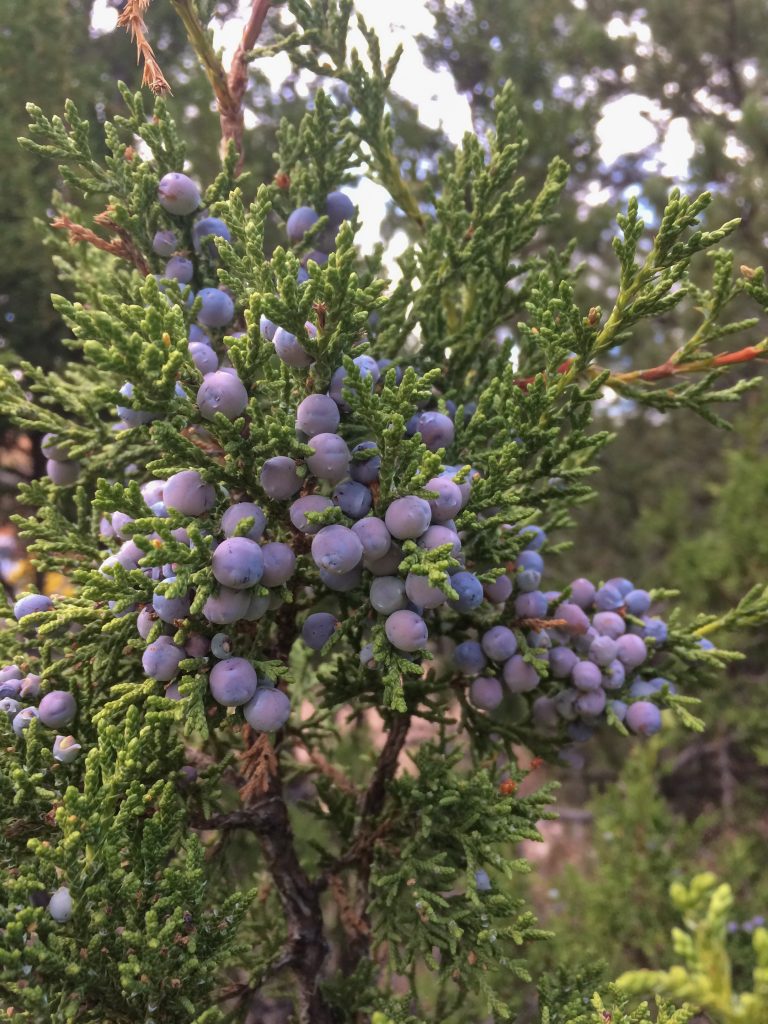
Juniper Berries

Here in Ohio, we still haven’t had a frost so I’m still bringing in the harvest. This week, I’m ready to collect juniper berries.

Our juniper shrub has played an important part in our farm since the very beginning. It was much smaller when we moved in, but nonetheless, was the best shelter on the property for our very first bee hives. The mockingbird, for which we named our farm, nested in the juniper just above the hives that first year and we took it as a good sign.

Where to Find Juniper Berries

Junipers grow in most parts of North America. They aren’t too picky about the soils in which they grow, with the exception of their dislike for an extremely wet one. Because they can tolerate extremely dry conditions, you may have met a juniper even if you live in the city. They are often planted near sidewalks and streets. They don’t need much in the way of maintenance, so no need for a grounds crew to keep them trimmed. Even the berries, which are small and abundant, lure the birds to come and fetch them instead of gracelessly cluttering the yard.

Using Juniper Berries

Juniper berries have a long tradition of use in food, beverages, and medicine. I wrote some weeks ago about the fact that they are the main flavor in gin. In Norway, where my family originates, it is common to home brew with juniper berry tea. You’ll find recipes that include juniper berries with meat, especially fish. Just a few are used, and they are usually crushed to release their flavor. It is said that they make a domestic meat taste like their wild counterparts.

In medicine, juniper berries are recognized for both their high content of volatile oils and their beneficial resins. It its common to see them applied to issues in the respiratory tract and urinary tract. Therefore they can be useful for such issues as cold, congestion, cough, urinary tract infections, arthritis, and gout. They are fairly intense in their action, so only small amounts are used.

NOTE: Juniper berries aren’t a tonic by any means, so the use of them over long periods of time isn’t advisable. The use of the berries for anyone with only one kidney, or someone with kidney disease, is not advised.

Harvesting Juniper Berries

Our juniper bush towers over us these days. It has grown from a modest six feet to easily 11 feet over the past 15 years. I won’t bother picking any of the berries above my head. In that way, I can leave some of the berries for the birds. Juniper leaves are sharp, so it’s best to use gloves when picking juniper berries.

The time-honored way to pick is much like mulberry picking. Place a sheet underneath the shrub, grasp a branch with berries, and gently shake. The berries will fall off quite easily. You are looking for only the blue, ripe berries. Anything green will rot before it dries.

Drying Juniper Berries

After gathering the berries, it is time to dry them. It has turned rather chilly and humid here, so I’ll most likely use the dehydrator. It takes quite a while to fully dry a juniper berry because it is highly resinous. You can expect to allow them to air dry for up to three weeks or at least two days in the dehydrator.

Using Dried Juniper Berries

This winter, I’m looking forward to experimenting with some juniper rubs for outdoor barbecue. If I decide to use the berries for medicine, they can be tinctured, powdered, or made into tea.

Want juniper berries, but don’t have time for a DIY?

You can find organic dried juniper berries here for a reasonable price.

Have you noticed a juniper shrub in your area, covered in blue berries? Have I inspired you to take a closer look?

*******

2020 Mathews VXR Bow Review

0

Mathews VXR 31.5 hunting bow

My first modern compound bow was a Mathews Q2 SoloCam that I got in the winter of 2002. I loved that bow and was completely taken by the speed and accuracy I was able to achieve with it so quickly. Over the past 20 years, I have created so many hunting memories with a Mathews bow in my hand. I have owned and hunted with several other name brand bows, but I always seem to return to Mathews Archery. Last week, I toured their manufacturing facility, met some of their knowledgeable staff and learned more about their story. After all of that, it was hard not to fall in love with their bows completely.

While I could talk about the history of Mathews Archery because it’s truly fascinating (and I would encourage everyone to visit the link below to read about the company’s start), for the sake of words, I want to explore some of my personal impressions about the company that makes it so appealing as a bowhunter.

One of the most impressive aspects of Mathews Archery is that they build bows from start to finish within the same two buildings. In those two buildings, the initial engineering is completed, the risers and cams are machined, bows are dipped and finished—all of the parts and pieces are assembled right there on site.The strings are built and installed in the same area where each bow is timed and prepped before it goes out the door. Each person on the assembly line oversees one specific part of the process. Employees control the production and assembly of every single part and piece of a new Mathews bow and it’s all done in-house. Essentially, they control everything and the result is extremely tight tolerances and consistency for each and every bow that goes out the door.

While I was also impressed with the innovation that goes into their bows, I was even more impressed with the innovation in the machinery that they have developed to build and assemble them. Previously, when I have considered buying a new bow, I am really only thinking about the bow itself—which obviously makes sense—but, now, I have a whole new level of appreciation for these bows based upon the technology involved in building and assembling each one.

The older I get the more interested I am in the story of a company and their products. I become more aware of the company’s culture and values and I want to try to put my money into quality products that are made by people who I believe are as passionate as I am about archery and hunting. For me, it’s clear that Mathews Archery is first and foremost interested in creating accurate, quiet and innovative bows. Every office I visited was full of deer, elk and antelope mounts. Almost every employee that I talked to was interested in how my hunt was going and eager to share their own hunt stories. Mathews is a company that believes in archery, bowhunting, adventure and storytelling. I really appreciated the culture there and the employees I met walk the walk; they all hunt, they all shoot and are passionate about archery. People can accuse me of being a fanboy and that’s fine, I’ll admit that I am indeed a fan of their bows and the company as a whole.

The 2020 Mathews VXR 31.5 Bow Review

Full draw with Mathews VXR 31.5 bow

With that, I also thought I’d add a review of the brand new 2020 Mathews VXR that was just released today. I received a VXR 31.5 about a month ago and, full disclosure, this bow was given to me; however, I have spent the past month shooting it and, in all honesty, I am very impressed with this bow.

First off, the VXR measures in at 31.5” axle to axle, making it the shortest bow I have ever owned. I wouldn’t say that I was excited when I was told that it would be 31.5” bow since I have always preferred a longer ATA based on the premise that they tend to hold better and the string angle at my 30” draw was always too steep for my liking on a short bow.

Interestingly enough, though, the VXR riser is actually longer than the riser of the 35” Halon X that I have been shooting for years. The VRX riser is not only longer, but it’s also lighter and stiffer due to the geometry and bridged design. A longer riser yields a steadier hold. If you think about what it’s like to hold a broomstick in your bow hand and then you tip that from side to side, there’s less movement at the ends because it’s so long. The length of that broomstick adds stability. In comparison, a foot-long ruler in your hand moves a lot when you tip it back and forth. That’s why the riser length matters and the VXR holds extremely steady due to the longer and stiffer riser.

Along those same lines, the geometry of the VXR with its Crosscentric Cams yields a string angle that is still really comfortable even with my longer draw length. I have no issues easily finding my three anchor points on my face: nose to string, string to corner of my mouth and the first knuckle under my jaw. It’s a very comfortable bow at full draw.

Mathews 2020 VXR Bow Specs

VXR 28 SpecsVXR 31.5 SpecsAxle-to-Axle28″31.5″Brace Height6″6″Draw Weight60, 65, 70, 75 lbs.60, 65, 70, 75 lbs.Draw Length25.5″-30″27″-31″Let-Off80 or 85%80 or 85%Physical Weight4.44 lbs4.66 lbsIBO RatingUp to 344 FPSUp to 343 FPSCamCrosscentric w/ Switchweight TechnologyCrosscentric w/ Switchweight TechnologyMSRP$1,099$1,199

Video review of the 2020 Mathews VXR

Most people ask about draw cycle of a bow and while that’s less of a concern for me than how the bow holds at full draw, it’s worth noting that the VXR draws very smoothly. I wouldn’t suggest that it draws as smooth at the Traverse, but it’s certainly smoother than my Halon X. On the draw, it’s very similar to last year’s Vertix, which builds fairly evenly throughout the cycle. The rollover into full draw is smooth with no noticeable dive or drop into the back wall. The back wall is firm due to two cable stops (one on each cam) that engage the inner cable. The back wall is firm and the bow holds really well at full draw.

For me, a great addition this year was the option to choose between an 80% or 85% let-off mods. I chose the 80% left off mods and the slight addition in holding weight is welcomed. I get enough holding weight to give me more stability in the back wall, but it doesn’t feel like it wants to jump out of my hand if I relax a little. The VXR also has the Switchweight mod technology. Rather than using your limb bolts to change the draw weight, you can simply maximize the limbs out (which is most efficient) and change the mods to adjust your draw weight in 5 lb increments. I’m very intrigued with 65 lb mods as I have really liked that weight for hunting out of blinds or treestands when drawing a bow from a sitting position or when it’s cold.

Mathews VXR bow showing harmonic stabilizer

The most noteworthy aspect of the VXR is that it is by far the most quiet dead-in-your-hand bow I have ever shot. It’s so quiet that the first few times I shot it, I was really wondering if something was wrong with it. Sounds silly, but it’s disturbingly quiet. For a hunter, obviously that’s a good thing. Less noise equates to a higher likelihood that a buck or bull won’t jump the string. It’s also really dead in the hand. I’ve never cared about some feedback from a bow, but for folks that love a really smooth shock-free bow, the VXR really shines and it is DEAD quiet. I’ll say it one more time: every year, every new bow is the quietest dead-in-the-hand bow—the difference is that the VXR really is.

A few other things to note: the new OD green color of the VXR is really nice and they have a new finish that has a great texture to it. The Engage Grip is thin, comfortable in the hand and easily provides a repeatable grip. I like the grip, but I also love the fact that I can simply remove it and shoot it off the riser. Older Mathews models had sharper edges and, if you wanted to shoot it off the riser, it wasn’t comfortable. The VXR has rounded edges and it feels fantastic in the hand. It’s my preferred method, but I love the fact that they have given me the option.

Extended six bridge riser of Mathews VXR bow

The VXR tuned extremely easily. I had perfect bullet holes through paper in three arrows and the fixed blade broadhead flight out to 80 yards was very good. It incorporates the top hat shim technology, so if you need to fine-tune your left and rights, it’s easily achieved by moving the cams slightly one way or another. Learn how to easily adjust top hats here. The bow carries really well due to some minor machining in the riser. Carrying it in your hand is comfortable and the same rounding in the riser fits your thumb perfectly at full draw. The VXR also balances really well. In your hand without anything on it, it sits almost straight up and down. I ended up setting mine up with a 12” Bee Stinger MicroHex stabilizer with 3 oz of weight on a 10-degree quick disconnect and a 10” Bee Stinger MicroHex back bar with 7 oz of weight on the Mathews Adjustable V-Bar bracket. For a great article on bow balance with stabilizers, you can check out Brady Miller’s article on Mathews’ website here.

Below shot of 2020 Mathews VXR 31.5 hunting bow

My first three days at the range with the VXR, I robin-hooded three different arrows at 20, 30 and 50 yards. I shot some of the tightest groups at 40 yards I have shot in a long time and I was having a blast. The VXR is easy to shoot; some bows I have had to work to shoot well and this is not one of those. It holds so well; the back wall is perfect and it goes off without a hitch.

Trail Kreitzer Mathews VXR Wisconsin whitetail

I was able to take it to Wisconsin to hunt this past week and, even with temperatures in the 20s, it was easy to draw, held true and I took my first whitetail buck at 10 yards. If you are looking for a new hunting bow in 2020, I’d strongly suggest you visit an authorized Mathews dealer and shoot the VXR. From a guy who has been a skeptic of shorter ATA “hunting” bows, it’s shifted my paradigm and I can’t wait to see what I can do with it in 2020.

Learn more about the 2020 Mathews VXR bows here

goHUNT INSIDER equals better hunting research

Best Hiking Gloves: Cover Up For Comfort

0

Enjoy Happy Trails, the free monthly newsletter from Hiking For Her.

Receive a free resource: Hiking Layering System Explained

The best hiking gloves are the ones you reach for over and over again, because they work well to keep your hands warm and dry.

That’s why I recommend that you have at least 3 types of gloves in your hiking gear locker.

Let’s tackle them one at a time, with an overview of hiking gloves by function.

Best hiking gloves for cold weather

Cold weather hiking the best hiking gloves to guard against hypothermia.

Scary fact:

One of the most neglected areas on a hiker’s body in cold weather are your hands.

  • We all think about protective hats and jackets and pants, but please don’t overlook the importance of keeping your hands warm at all times.

If your fingers are numb, you aren’t going to have the dexterity to adjust your clothing, take the cap off your water bottle, or unfold the map that tells you when an important trail junction is coming up.

And that leads to making mistakes on the trail that can endanger your life, or at least your enjoyment of a hike.

So keep your digits toasty warm!

I have a repertoire of winter hiking gloves, and switch them out as needed.

The least cumbersome pair are fingerless gloves, like these.

  • My fingers are free to manipulate, grasp and tug on my hiking poles, boot laces, and zippers, but the rest of my hands and wrists stay warm.
  • Doesn’t sound like a big deal? It will be when an icy cold wind is blowing, or it begins to rain.
  • And they convert easily to mittens when I need a bit of extra warmth around my fingers.

Fleece hand protectionon a hike

I like lightweight fleece gloves for situations when I know I’d rather not use mittens, like the photo above.

  • They ride along in the bottom of my pack year round, because cold hands are dangerous for extended periods of time.
  • Even a nice summer day can turn nasty at higher elevations. Always put on an extra layer once you top out somewhere the wind can reach you (especially important if you’re sweaty from the exertion of uphill hiking).

Note that these glove options are not weatherproof, so I recommend them only for dry cold conditions.

If you want bombproof gloves with all the features, that also allow you to interface with your phone or GPS screen, expect to pay a bit more.

But revel in the warm, dry hands you’ll have!

Here is a full array of your options.

  • Remember to sort them by weight, weather proofness, and features, as outlined above.

Natural fiber options

Possum down might not be a familiar glove material to you, unless you reside in New Zealand.

Read the Hiking For Her review of Possumdown hiking gloves here.

Another natural choice: alpaca wool gloves, like these.

Best hiking gloves for cool windy conditions

In the spring and fall, I want to stay warm but don’t want extra bulk in my pack or on my hands.

These are the gloves I pull out of my pack when I begin to feel chilled.

  • I know that my core temperature is dropping a bit, and I pay attention by warming up my hands.
  • I also pull on a hat if I’m not already wearing one.
  • More cool weather hiking tips here

Sometimes I know that I’ll be cold part way through the hike, because I’ve consulted my topographical map and recognize a ridge or other windy land feature coming up soon.

So these gloves are kept within easy reach, in my jacket pocket or a top pocket of my backpack where my hiking partner can easily reach them for me.

That way, I don’t need to lose body heat by stopping, removing my pack (there goes all of that delicious warmth trapped against my back!), and digging through gear.

I recommend that you do the same: Keep these gloves handy (oooh, a hiking glove pun).

Why not wearhiking mittens?

I am not a fan of wearing mittens on the hiking trail, with one exception.

Mittens encase my hands in a non-functional configuration, making it hard to grip my poles or do much of anything.

The only exception I make is when I face really cold conditions and I want all of my fingers smushed together to share warmth.

  • I make sure all gear adjustments have been made before I slip on mittens like these.
  • Sometimes I need my trail buddy to help me yank on the second one! And I return the favor.
  • Sometimes I wear these mittens in my sleeping bag if I’m having a hard time falling asleep. For some reason, warm hands relax my entire body.
  • They’re also nice cushioning for sitting on hard cold rocks!

I appreciate the safety loops on these mittens, because I can dangle them above snow or mud from my poles or pack.

Best hiking glovesfor sun protection

I never used to believe in wearing gloves to block UV rays on cloudless hikes…

until I began to require skin biopsies every year for the pigmented spots on my face and hands.

Now I’m a believer in wearing lightweight, light colored wicking fingerless gloves on my summer hiking adventures.

Ever notice how sunscreen tends to wear off?

  • How many times do you reapply it to your hands and fingers?
  • Yeah, not so much for me, either.

This brand is rock solid in the gear industry.

If you’d prefer full sun gloves, they’ve literally gotcha covered! These are handy when you’re hiking over reflective snow fields, to prevent sunburn.

Bonus: Wearing these gloves prevents “age” spots, too.

If you want to go whole hog into UV protective clothing, read this.

A few more tips for buying the best hiking gloves

If you’re just starting out hiking in cooler conditions, and won’t be staying outdoors overnight, you can get away with bargain brands of hiking gloves.

But expect flimsy materials, poorly sewn seams, and less than ideal insulation.

If you’re heading into uncertain weather conditions, or plan to spend at least one night camping in cool/cold/unpredictable temperatures, you absolutely must pay attention to your hands.

Regardless of which brands and styles you go with, be sure your best hiking gloves have:

  • women’s sizing, with a snug but not binding fit
  • a cinching system for creating an airtight seal for really cold conditions
  • appropriate thickness to keep you from over heating or freezing (which is why I have several styles)
  • durable synthetic material on the palms if gripping poles or camera gear is important
  • non-chafing seams
  • wrist straps to prevent loss

Gloves = hiking love

If you are hiking with newbies, children, or a group of folks you don’t know well, bring along a second pair of gloves to hand over when any of them begin to shiver.

Demonstrate without a word that the best hiking gloves are a vital component of your anti-hypothermia strategy.

Be prepared for grateful words and a big smile.

Notice the word LOVE in there?

  • Glove love is where it’s at, y’all.

Ready to tackle warm feet on a hike? I thought you might be up for it 😉

Home page > Best Hiking Gear >

Best Hiking Gloves

I get emails all the time about what I wear on the trail.

That’s why I provide these affiliate links to you: the best gear is instantly available for your consideration, and the gear company sends a few pennies per dollar to Hiking For Her’s website with no added cost to you when you purchase.

Everyone ends up a winner that way: great gear for you, strong gear companies, and more free hiking tips for everyone.

Yeehaw!

And thanks very much for your support. It’s warmly and sincerely appreciated.

DIY European Mount

0

Why European Mounts

Just like you, we’re itching to get back out in the stand, sporting our favorite colors—camouflage and/or blaze orange. We’re ready for those pulse pounding moments of securing a monster in our cross hairs. But, knowing how to clean, butcher, preserve, serve, and display your harvest are action items that need to be addressed ahead of time.

There are a number ways to display your season’s trophy in a sustainable manner. Perhaps the most popular method—the shoulder mount, will give you the most realistic outcome. However, at a well-established taxidermist, shoulder mounts can also cost upwards of $700. On the contrary, a Euro mount is inexpensive, can be done at home, and supports sustainable hunting by using the animal’s entirety. Follow along as we make a European skull mount.

How to Make Your Own Euro Skull Mount

Products You Will Need

  • •Butchering knife set
  • •High Powered Outdoor Cooker
  • •Large Aluminum Stock Pot
  • •Washing Soda, 1/2 cup / gallon of water used
  • •Heat Resistant Gloves
  • •Hose with jet spray setting
  • •Bleach or Whitening Agent, Optional
  • •Basting Brush or Paint Brush
  • •Skull Hooker for display

Instructions

Boil with CAUTION. Boiling too long may result in nose bones coming off.

  1. While you’re harvesting your deer, separate the head from the body so that you can begin to work on the skull. With your hunting knife, carefully skin the head by removing the hide, fat, and flesh off the skull. Pro Tip: we do this step as we are harvesting the deer in the field or back at camp. The longer you wait to remove the flesh, the more difficult it is to clean and whiten since it discolors the bone.
  2. Continue your dissection by removing the eyes, tongue, connective tissues, and brain matter as best as you can. Be strategic when doing this. You may need to concoct a tool to scrape out the gray matter such as a hanger. Use the hole where the spinal cord enters the base of the head. After you’ve finished, let the skull dry out a couple hours in the sun.
  3. Next is the boiling process. Right now, the skull appears brown and rather discolored—this is normal and will be remedied during the whitening process. Fill a medium to large stock pot with water (just enough to cover the skull, not the antlers), add in your Washing Soda, place on your cooking system, and bring to a rolling boil over medium to high heat. Boil for 30 minutes. Monitor this to ensure the entire skull remains below the water line.
  4. Remove from the pot. There may be some tissues and particles left on the skull. (This is fine.) Spray the skull with a jet hose setting, working around the nooks, crannies, and cavities. Be prepared. This can be a dirty job especially when cleaning the spinal cord opening.
  5. With a fresh batch of water, boil the skull again (30 minutes.) Repeat the boiling and jet spraying process up to three times, until the skull is completely clean.
  6. This step is optional. If your skull is not as white as you’d like you can take a basting brush and brush the skull’s entirety with the bleach or whitening agent. If you choose to do this step, make sure to get the front, back, sides, and creases, all while avoiding the antlers at all costs.
  7. Bring it outside and hang it in the sun for 24 hours. You can repeat this process of painting and drying in the sun up to three times. Be weary of where you hang your skull as animals may be prone to walk off with your hardwork.

After you’ve whitened your skull—it’s time to show it off! Use a Skull Hooker to effortlessly mount to your prize to the wall. The Little Hooker® is the perfect size for housing mid-sized European skulls and game such as hogs, aoudad, alligator, black bear, deer, antelope and exotic medium game such as gazelle, and impala just to name a few. Your fall harvest will be the conversation piece at every gathering.

Top 5 Best Streamers for Trout – And How to Fish Them

0

What are the Best Trout Streamers?

There are thousands of different types of streamer patterns available today. However, many of these flies will not catch fish when pursued with the most common methods used by practical fly fishers in trout streams across North America.

As a general rule the best trout streamers are:

  • Autumn Splendor Streamer
  • Slumpbuster with Cone Streamer
  • Zonker-Grizzly Streamer
  • Muddler Minnow Streamer
  • Muddy Buddy Streamer

If you’re looking to add some variety to your trout-fishing arsenal – or perhaps want to put some additional “pluck” into your prey – here is a list of five great streamer patterns to use in local trout streams.

Tom Dosoff Catching Nice Brown Trout

1. Autumn Splendor Streamer

The Autumn Splendor might be the most famous bugger design ever created, developed on the Roaring Fork by Tim Heng. One should not be fooled by the name because this bug catches fish all year round. It is based on a straightforward principle that works with most fish species from trout to bass and pikes, the basic idea of catching something.

The Autumn Splendor Streamer is a streamer that was originally tied in the Roaring Fork Valley of Colorado, but it has since gone viral from coast to coast! The Autumn Splendor is a more active and flamboyant version of the flash bugger that’s just as good for trout as it is for bass.

There are different ways to make this fly work, but most people use it as an indicator/strike indicator for fishing nymphs or wet flies downstream, where you fish it high in the water column on sinking lines and let it sink down on its own.

Streamer Fly Fishing for Trout Video

As far as colors go, darker colors definitely seem more attractive for fish in low light conditions, but that’s just one factor among many others that are equally important when you’re fishing streamers or buggers – it’s not just about color.

According to some anglers, another benefit of using a certain kind of flies is that they behave differently on the water, making it easier to target fish by reading their reaction and adjusting accordingly through matching their pace or speed. That’s why most fishers choose streamers over other types of flies – they can either mimic different species at once or behave like selective baits all on their own.

The Autumn Splendor isn’t the only one that’s high on demand among those who choose streamers as their go-to method of choice, you can find any number of different patterns.

2. Slump Buster with Cone

The Slumpbuster is one of the few new streamer patterns that are much more than a Wooly Bugger variant. To create a fish attracting jigging motion in the water and its matuka-style fur strip wing seductively breathes without fouling, the front end of this fly is heavily weighted.

Slumpbuster Fly Fishing Streamer in Green

The Slump Buster is an excellent choice if you’re looking to cast upstream and let it drift slowly towards you or do some jigging with it. In shallow water, use a floating line and strip it with short jabs. The head of this fly rises as it is stripped and goes between strips.

Slump Busters are meant to be fished on fast-moving rivers when fish feed near the surface, but when salmon appear in deeper areas, this bug could serve as an indicator fly for nymphs or bottom bugs too. Slumpbusters work best at depths where you need a stiff leader to get them down just a few feet from your weight upfront.

Large Brown Trout Caught on Slumpbuster

If you’re having difficulty landing a fish, try switching to a Slump Buster and casting, retrieving, and hanging on. It has the ability to move erratically through the water that excites fish.

  • Use a floating line in shallow waters and strip it with short stomps.
  • When you strip this fly, the head rises up and it dives down between strips.
  • In deeper water, utilize a full sinking line; let it sink for a moment before stripping it erratically.

Olive or Black Slump Buster streamers are perfect for all fresh and saltwater fishing adventures. Unlike zonker strips of rabbit with their very long hair, these skin strips were short-haired, nicely mottled, and thin-skinned for easy wrapping.

There’s no doubt that this fly is a great choice if you want to fool a fish with a highly visible streamer at slower speeds. Slumpbusters are perfect for shallow water fishing but can be used in all kinds of conditions.

3. Zonker-Grizzly Streamer

A Zonker Fly’s slick profile will imitate a minnow or a leech. This snag-resistant fly is ideal for bottom fishing and is a great pattern to use with nymphing techniques.

Zonker Fly Fishing Streamer - Grizzly Color

One of the most popular patterns ever, the Zonker-Grizzly Streamer is a technical fly type – it has what’s known as a high-risk profile. Especially in clear water with light penetration, this is one of the best streamers out there because it functions beautifully on depths where you can’t measure your fly line or see your indicator.

The Zonker is a great streamer that is highly effective in both still and running water. It’s usually fished with longer leaders and heavy tippet, so it can get down quickly to fish feeding near the bottom or lie on top of it if you want it to mimic a crayfish or crawfish. The black Zonker is best in clear to slightly stained water, whereas brown is great for very dirty water.

Rainbow Caught on Zonker

The Grizzly Zonker is a beautiful minnow imitation. This traditional streamer has a lot of pulsating action while swimming and is ideal for big trout, bass, and various other species.

A zonker is a fly constructed from a piece of fur. Zonker strips are strips of hide that, when wet, soften and create a fly with bulk that pulsates when retrieved. It’s great for bigger flies, such as streamers and pike fly patterns.

The Zonker Streamer is one of several popular patterns often used by fly fishing guides for steelhead and salmon. It has an extended body section that makes it very easy to tie this fly onto any size hook. This pattern’s profile reminds predators of minnows that live near stream bottoms or slow-moving rivers or ponds, thus making them eat this fly instead of your regular dry flies.

4. Muddler Minnow Streamer

Developed by Charlie Fox, one of America’s most successful anglers at longtime, Muddler Minnow Streamer is a classic and among the best flies for large, aggressive fish like pike and musky. As you might guess from its name, it’s simply a streamer that resembles a minnow, but that doesn’t mean it will only work on trout – even though there are other patterns that work better for them.

Muddler Minnow

This particular pattern can also be fished as an indicator fly for nymphs or wet flies downstream when you have a sinking line to cast with or attach it to a leader/tippet knot and drift it over the surface of the water.

One great thing about Muddler Minnow Streamers is their durability because they’re tied with deer hair instead of feathers, so they should last you a while and not tear apart too easily. Unless you break them against the rocks and logs, that is!

5. Muddy Buddy Streamer

Muddy Buddy streamers are an excellent and versatile option for any fly fisher and can be used in both fresh and salt waters. This particular fly has a weight-forward design which makes it useful when fishing deeper areas where you cannot see down to spot fish.

Muddy Buddy

The Muddy Buddy Streamer comes in several colors and if imitation is what you seek, try out the black or olive muddy buddy streamer. These colors are ideal for fishing in murky water when visibility is limited.

The black color of this streamer is perfect for the area with the most silt in river water which is usually in the deepest part. Since this fly has a larger profile, it can be used as a comfortable choice when going for larger fish.

Large steelhead caught on streamer

This fly is effective during the warm summer months when many saltwater species are feeding near the surface of the water. The best time to use this streamer is from early morning until late evening, but keep in mind that you should be aware of changing currents if fishing with this streamer.

When casting this streamer, you will want to try and keep your line as straight as possible which will help the streamer ride horizontally through the water column instead of floating vertically.

Muddy Buddy streamers are great if you’re looking for an option that can be fished in both still and running waters, sink at different depths, and imitate virtually any type of prey fish. Their weight-forward design makes them effective even when cast upstream into the current or used as an indicator fly for other nymphs or wet flies.

What Flies Do You Use for Fly Fishing?

When fly fishing, the type of fly used depends on the situation. For example, in the late summer, when the water is low and warm, mayflies, midges, and stoneflies are a good bet for catching trout. On cold winter days, midges, eggs, and worms are also effective flies to use.

Catch More with Streamers

What Is the Best Fly for Fly Fishing?

The best fly for fly fishing depends on the season. For example, when trout are feeding on nymphs and emerging insects in the early spring, an excellent fly to use is a stonefly. The best time of the day to fish is around the warmest part of the day for this type of situation.

In addition, when caddisflies start hatching in May and June, try using a fly that imitates them, such as Griffith’s Gnat or Pheasant Tail Nymph. On hot summer days when there isn’t much insect activity, you might want to use an attractor such as Royal Wolf or Elk Hair Caddis, which work well because they imitate aquatic food items such as crayfish and minnows.

Seasonal Hatch Chart for Fly Fishing

What Flies Are in Season for Fly Fishing?

The flies in season vary greatly, but for the most part, the best time for fly fishing is from May through September. Fly fishing in the winter and spring months can also be successful, but the type of fly used will typically be different. For example, caddis and stoneflies aren’t commonly used in the winter months.

In addition to these essential flies, there are many other options that work well at certain times. During cold weather in winter, try using egg patterns or small nymphs such as Pheasant Tail Nymphs. When trout are near the bottom-feeding on crayfish in summer, use Woolly Buggers or Worm Patterns.

How Much Do Flies Cost for Fly Fishing?

In general, flies cost anywhere an average of $2 to $3. Flies typically cost more the larger they are, and those are made of materials such as peacock herl, marabou, and mink fur. Flies can also be bought in bulk to reduce their price per fly.

The cost of flies can vary a significant amount depending on the materials used. Some of the most expensive flies are made from.

Fly fishing flies in nice box

What Are Fly Fishing Flies Used For?

Fly fishing flies are used to catch fish. Flies are typically used in trout fishing and come in various shapes and sizes that imitate insects. Flies will typically draw fish to the top of the water where your fly is or imitate things that fish feed on below the water.

Different patterns of flies are used based on the time of year, water conditions, and location. Flies come in all shapes and sizes with various materials used to construct them. Materials for fly construction can be very expensive with fur being one of the most expensive pieces.

Matthew Bernhardt

Conclusion

Streamer patterns are also very good for fly fishing beginners because of their size and the fact that they can easily imitate a big baitfish which is one of the most common prey in rivers and lakes, but they’re mainly used to target large trout. This article discusses five great streamer patterns for trout fishing:

  • Autumn Splendor Streamer
  • Slumpbuster with Cone
  • Zonker-Grizzly Streamer
  • Muddler Minnow Streamer
  • Muddy Buddy Streamer

Streamer patterns are among the most popular fly patterns for fly fishing. They are fantastic attractors and can be easily tied in a few minutes; they can imitate anything from baitfish to leeches, crawlers, nymphs, and more.

What is a Nymph in Fly Fishing

0

I’ve written a bunch about the act of nymph fishing, but I haven’t talked much about nymph flies themselves. Using a nymph while fly fishing is probably the most effective method of catching trout. It doesn’t have the glamor of dry fly fishing, but nymphing can change a skunk into a productive outing.

What is a Nymph Fly?

A nymph fly is a fly fishing lure that simulates a sub-surface bug with a hook in it during the larval stage. Mayflies, damsels fly, stone flies and caddis flies start life as eggs on the stream bottom. The eggs hatch into a nymph or larva and become a prized meal for trout.

Examples of Nymph Flies

Nymph Fishing Flies
Nymph Fishing Flies
  • Pheasant Tail Nymphs in size 10 through 16. These flies should be in every fly box. Proven effective, and easy to tie if you’re a fly tier. Get a couple with beads and you’ve got most situations covered.
  • Hares Ear Nymph in size 12 through 18. I like using a hare’s ear as a dropper in size 16 off a buoyant dry fly. The light color of the hare’s ear simulates so many bugs. If you want to fish this nymph a little deeper find flies with brass beads.
  • Green Caddis size 10 to 16. When the trout are keyed into green caddis you’ve got to fish them deep and on the bottom. I’m always amazed at how vibrant green these nymphs are.

Tips for Selecting an Effective Nymph for Fly Fishing

A common quote in fly fishing circles goes like this. So what are they biting on? Those little brown flies about 3/8 inch long with a hook inside.

This hits home the important factors in selecting a nymph fly. If you pickup a river rock or submerged log and get your nose down close and look. If the water you’re fishing has trout, odds are you’ll see lots of little brown bugs crawling around.

Here’s the tip: Size up those creepy crawlies you see under rocks and woody debris and select a fly that’s close in color and size.

Green Caddis are really common on my home water. I’ve learned through years of experimenting that the best nymph for me to start out with are those green beauties.

caddis fly nymph bug and fly

How to Fly Fish with a Nymph

The simplest way to start nymph fishing is to use an indicator. Basically rig up a longer leader 9 to 12 feet is best. An indicator is a float that can be positioned along the leader. I start by placing the leader 3 times the water depth when fishing in a moderate current. Tie on a fly like the hares ear or green caddis and hang on!

Read more about nymphing with an indicator in this article. What is a strike indicator in fly fishing

Another method is called “high stick” nymphing. This method uses a fast sinking nymph fly and fish relatively close (10 to 15 feet away) Instead of letting the fly drift in the current, while high sticking the angler actually leads the nymph through the fishy water.

I’ve written a great article that goes into all the details of high sticking. How to High Stick Nymph Fly Fish

If you see occasional trout rising, setup a dry fly with a dropper nymph. This combination can be super effective, and you can get a double hook-up. I like the floating lead fly to be something like a Elk Hair Caddis or a Yellow Humpy. The hollow hairs used to tie these flies help them float. If you can remember treat these flies with floatant before getting to the water. If you give the floatant plenty of time to dry they’ll float longer.

I wrote an article all about rigging up a Dry/Dropper in this article: How to Setup a Dry Fly with a Dropper for Fly Fishing

Recommended Fly-Fishing Gear for Fly Fishing Nymphs

If asked I would say the number one item I would recommend is a nice fly rod. Behind that a decent selection of flies followed by fluorocarbon leaders and tippet.

I really believe in investing in getting the right gear to fly fish. You might plan a trip for weeks and you’re excited about the chance to catch a trophy. When nymph fishing fluorocarbon leaders and tippet is an inexpensive way to improve your odds to netting that trophy.

Nearly invisible and stronger than nylon in the same diameter fluorocarbon lines have less stretch making them more sensitive. Pick-up a couple fluoro leaders and tippets – highly recommended.

Fly Selection – in one way you could say an item that costs between $1-$3 is cheap. Having 2-5 fly boxes filled with 100s’ of flies is an investment. To fish nymphs effectively you will lose flies. Trout like to hide in wood and around rocks so snagging and breaking-off will happen.

Fly rods above 9 ½ feet in length excel when nymph fishing. Water current speeds vary across the top of the water and through the depth. The more fly line that can be held off the water will minimize the amount of drag/pull inflicted on the fly.

Longer fly rods also enable the fly fisher to “reach-out” into little pockets of trout holding water. Example: those back eddies behind a boulder

Tips from Fly Fishing Guides When Using Nymph Flies

Many times, when you’re not catching anything the first thing you do is switch out the fly you’re using. DON’T SWITCH – if you’ve picked a fly that remotely resembles the natural bugs – FIRST add a little bit of weight. Nymphs and fish are on the bottom, your fly needs to be close to the bottom as well.

Bouncing a nymph on the bottom will dull a hook fast. Regularly check the hook for sharpness and carry a hook file to re-sharpen.

Add a little bit of tippet length to get down deeper. Nymph fishing is way harder that dry fly fishing on the surface. Usually you can’t see the fly, in turn you don’t know what’s happening. Adding tippet length until you start ticking on the bottom will improve your hook-ups.

Set the hook often. Learn to strip set whenever you even think the fly has paused, ticked or changed direction. Fish learn to spit-out anything that isn’t food – SUPER fast.

The strip set is a method of tightening the fly line and hooking a fish without completely pulling the fly out of the water.

How to strip-set: The key is to keep your rod tip stationary. I hold the rod with my right hand and have the fly line in my left.

To set the stage, your nymph is drifting nicely with an occasional tick on the bottom. Then you see a pronounced pause in the line – with your rod tip stationary QUICKLY jerk/pull the fly line back 2 feet or so with left hand.

Another benefit of the strip set is that often after striking you can continue drifting the fly through the holding water without re-casting.

More Articles about CATCHING Fish on a Fly Rod

Learn the ins and outs of catching Brook Trout in this article: How to Fly Fish for Brook Trout

A perfect summer evening for me is fly fishing for Bluegills. I detail the steps in this article: How to Fly Fish for Bluegills: A Complete Guide

Read about my favorite fly rod – especially for nymph fishing in this article. The Best Fly Rod, Reel and Fly Line for Nymph Fly Fishing

What is the Best Broadhead for Elk Hunting?

0

When you strip away all the fancy gear, the expensive packs, boots, garments, etc.. hunting elk with archery tackle really boils down to two very simple yet ultra important concepts.

1. Be accurate and precise at distance with your equipment

2. Maximize penetration of your arrow

There is zero argument about elk hunting popularity being on the rise. The influx of new archery hunters, difficulties of legally travel abroad to hunt, and increased content around western hunting all has played a part of the elk hunting surge! With that in mind, we’ve also seen a continuous rise in the questions surrounding the business end of your arrow.

“What is the best broadhead for my elk hunting trip?”

“What broadhead should I be using for elk?”

“What is the best broadhead for elk?”

Elk are certainly not whitetails, but they are certainly not water buffalos either! Outside of the animal itself having a reputation of carrying tough hides and a more dense skeletal structure, what other factors should you be considering when trying to pick the best broadhead to harvest an elk with?

YOUR SHOOTING PLATFORM

Regardless of the animal you are hunting, the very first stop in your process of selecting the right broadhead is your shooting platform. Your bow is the largest factoring part of the equation, PERIOD.

Someone shooting a recurve should not be choosing the same arrow and broadhead setup as someone shooting a crossbow or compound. Taking that a step further, draw weight and length, arrow speed, arrow weight, etc, should all factor in to your broadhead choice.

If we’re talking about a crossbow platform, I am shooting fixed blade broadheads. It’s really that simple. I don’t have to think about it, and I don’t have to consider anything else… I don’t even have to wonder. A fixed blade broadhead that is tough, has excellent penetration statistics, something that has thick blades is what I’m looking for. Flight characteristics at high speeds is critical when shooting a crossbow. A general rule of thumb is vented blades tend to perform better than solid blades and cutting diameters no more than 1 1/2″ tend to be more accurate at longer distances. Our K2-Fixed and Fixed EXT broadheads offer everything a crossbow hunter dreams of.

When we’re talking about compounds you really have a wide variety of broadhead choices. Fixed blades, hybrid blades, and mechanicals are all options but not all are created equal. Pending your bow and arrow setup you have some really good options. The key factor is, again, your bow setup. Understanding your bow’s capabilities with your exact draw length and total arrow weight is ultra important. Low poundage shooters and, in some cases, you folks with short draw lengths really need to take a hard look at fixed blade broadheads. Having the understanding that in certain setups you just can’t afford to lose any KE, these types of scenarios IS THE REASON Afflictor’s hybrid broadheads were created. The patented drive-key design offers next to no loss of KE, and with blades opening at impact, you have a true fixed blade broadhead when entering the animal. We can’t say that about other mechanicals. Across the board, whether you are looking at Afflictor’s fixed blade or hybrid blade broadhead offerings, there’s multiple solutions for all compound shooters. Regardless of your broadhead choice, the important message is make sure you understand your setup and that your bow is a fine tuned machine!

When we are looking at the more traditional setups, these guys tend to like a traditional broadhead, right? A single bevel or potentially other fixed blade options, but some trad guys are actually shooting different hybrid broadheads. Something like our Hybrid X or our K2 Mini in the heavyweight stainless steel versions where they’re getting into 175 grains, are really gaining popularity. An outside the box solution for traditional archers, but hybrid designs can be a viable option.

YOUR ARROW BUILDS

The other consideration on your setup is around your arrow builds.

For seasoned elk hunters, their arrow builds and broadheads go hand in hand with their shooting platform. Since the western hunting is growing and evolving, there’s a lot more new elk hunters in the mountains, and we’re a trend of eastern guys thinking elk are just big deer. “I’m a whitetail hunter and I’m going elk hunting. That mindset is a mistake.

You need to understand you WILL need more Kinetic Energy and Momentum for pass through shots on elk…regardless if you are shooting a mechanical, hybrid, or fixed blade broadhead. You need to understand that the average archery shot on an elk is much longer than the average shot on a whitetail. You need to understand and plan for this. If you are an eastern guy and truly just want to shoot the same arrows for both species, the best advice is to take the “reverse engineer” approach. Build and shoot what will work for the tougher animals and it will work for whitetails.

HUNTING STYLE AND POTENTIAL SHOT OPPORTUNITIES

  • Where are you going to be hunting?
  • Are you going to be hunting a waterhole with a standard blind placement?
  • Are you going to be spot and stalk?
  • Are you going to be calling?
  • Are you willing to take a shots that is pushing your limits?

Not all western states have the same elk hunting regulations when it comes to archery equipment. Make sure you read and fully understand the regs of the state where you hold your elk tag. Some states have specific requirements around broadheads. For a quick break down you can check out one of our other blogs by clicking here.

Your hunting style will certainly impact the potential for tough shots. If you are planning to only ambush hunt elk, similar to whitetails, shot opportunities tend to be closer and with less obstructions. If you’re like the majority of elk hunters, calling and glassing to locate animals and then closing the distance, it’s pretty common to face less than ideal shot angles, obstructions, and some serious distance.

All these variable influence what type of broadhead will perform best, but the common theme doesn’t change. Make sure you have enough KE and Momentum with great long distance flight characteristics.

CUTTING DIAMETER

One consistent theme over the years, no matter what part of this industry I’ve been, it seems that elk hunters have a preference for a certain diameter cut, no matter what broadhead that they’re shooting….1 1/2″. Now, of course, there’s highs and lows to that, but I’m just saying as an average, in our experience for most people, what they’re looking for is 1 1/2″ cutting diameter.

The discovery behind that is that seems to be the cut that offers the greatest penetration for most people’s set up. When that broadhead hits that 1 1/2″ mark, it seems to really be able to pass through elk and still carry good flight characteristics.

Why does size make a difference? Well, when you start getting into broadhead diameters that are 2″ and up, you really have to have the right setup to drive that home for enough penetration to do fatal damage. You may also be handicapping yourself a little bit because the larger blades sometimes are a little more fragile. They require a lot more energy to open, penetrate, and to pass through. So you really have to be considerate of your overall setup when you’re considering using a larger cut blade. On top of that, larger blade diameters typically do not fly as well as smaller blade diameters.

FIXED VS MECHANICAL

This debate also lives in the elk bowhunting world too. It will never end…it’s like the old Chevy vs Ford talk.

Fixed broadheads are simple in our eyes. They take out some of the performance variables out of the equation, and you know, with the right placement you’re not going to have any problem with an elk. The challenge is long distance flight characteristics. Even though this shouldn’t be any issue with a well tuned bow, folks still want to shy away from the added work in tuning their setup.

Mechanicals have come a long way since their inception. They’re tougher and more reliable than before. Now you can get them with thick blades and some designs don’t require a lot of energy to open. Again, you have to do a little bit of research around your setup to make sure you’re making the right purchase.

When push comes to shove, you need a sharp broadhead that performs at distance. Outside of understanding the archery regulations in the state you are hunting in, confidence in executing a well place shot is king. What ever broadhead gives you these three things is the broadhead you should be shooting.

Author: Chris Creed, Afflictor Broadheads

Five of the Best Boa Snowmobile Boots

0

Freezing cold toes are no fun when you are out for a ride. These boa snowmobile boots will protect your little piggies when the mercury drops.

No one likes to get cold feet, especially when snowmobiling, and maybe when getting married. Picking the right pair of snowmobile boots is vital to the enjoyment of the ride. Not only do you need warm boots, but also supportive boots that function just as well off the sled as they do on.

While not absolutely essential, the boa closure system is ideally suited to snowmobilers. Lacing up your boots, or simply tightening or loosening them a little, can be done with the turn of a dial. You can even do it with a gloved hand – perfect for those cold winter morning rides. Boa snowmobile boots make it faster and easier to take them off or put them on. Plus, they are laced with stainless steel wire that is built to last, so you won’t have to worry about breaking a lace before you get out and ride. The boa closure system adds some cost to your snowmobiling boots, but when you consider you may own a pair for many years, the added convenience makes up for it – at least in our opinion.

Here are some staff favorite boa snowmobile boots that pass the test of being warm, functional, comfortable and ready to take on the adventure that you have in mind.

Lead Photo Courtesy Shuttestock/Wlad Go

1. Editor’s Choice: KLIM Adrenaline Pro GTX BOA

Klim Adrenaline Pro GTX Boa

Of course, you know Klim is going to bring it when it comes to technical riding gear. The all-new Adrenaline Pro GTX boot is Klim’s latest advancement in comfortable boots made for extremely technical conditions. The plan going into the these boa snowmobile boots was to tweak their previous design to add more support for your foot and for you as you tackle the terrain. The GTX boots have an advanced Boa closure and 600g Thinsulate insulation. They are guaranteed to keep you dry with complete GORE-TEX outers. They recommend a technical sock be worn to get the most out of the boot, which isn’t a bad idea anyway. These boots also have a forward design with stiff support against movement that aren’t going forward. This helps keep you planted and protected, while at the same time, being comfortable – Just as you’d expect from Klim.

Check Price

2. Runner Up: FXR Black Ops X-Cross Pro

black fxr black ops x-cross pro boa snowmobile boot

Boa technology is something you’ll see with many of the top boots. It is a simple system that has replaced standard tie-laces and lets you really get a snug and secure fit. FXR Racing created the Black Ops X-Cross Pro for those wanting the ultimate in extreme terrain riding and warmth. They are rated to -40° C with 600-gram insulation, but there’s so much more to these boots. The 2-piece tongue provides a positive fit for maximum comfort so you get the best flexibility, stability and protection while on your sled. Additionally, this boot has a fixed liner with fur lining for further comfort and warmth, while minimal seams in the sled-contact areas minimize possible damage from high contact points. When you’re off the sled, the 20mm thick EVA midsole gives you plenty of traction in the snow, and the 2mm rubber reinforced toe cap provides protection from cold and whatever you might stumble across under the snow.

Check Price

3. CastleX Charge Atop

Castle X Charge Atop Boa

As one of the leaders in performance snowmobile gear, CastleX has a boot that comes in at a close second on our list of best BOA snowmobile boots. This rugged snowmobile boot features a 3-layer Merino Wool blend that provides plenty of insulation to keep you warm, while providing plenty of moisture wicking air mesh to keep your feet dry. Furthermore, the CastleX Charge Atop has a fully integrated Castle DRY-X waterproof membrane to keep your feet dry even in deep snow, and the ColdShield Technology from CastleX helps to keep your feet comfortable with the removable insole that is manufactured from wool with a metallic heat reflecting layer.

Check Price

4. 509 Raid Single Boa

Black 509 Raid Single Boa snowmobile boot

Probably best known for its lineup of snowmobile goggles, 509 has some other gear worth looking into. The 509 Raid Boa snowmobile boot comes with 600g of Thinsulate insulation, 5TECH waterproof and breathable liner, Raid rubber reinforcements engineered to stand up to sharp running boards, and a dual boa lacing system with quick release M3 Lace reels and aircraft stainless wire. That dual boa lacing system lets you fine tune the upper and lower zone fit with the turn of a dial. All of this combines to make the 509 Raid Boa one of the best snowmobiling boots available.

Check Price

5. Korker Polar Vortex 1200

black and white korker polar vortex 1200 winter boots

While not a traditional snowmobile boot, these boots from Korker are something you should look at for a warm, dry boot that has tremendous support for activities on the sled and off. These boots feature 1200g of 3M Thinsulate insulation for maximum warmth of your feet while out on your sled, and the 100% waterproof construction ensures that your tootsies stay dry. If you venture out and feel a little chill in your feet, don’t fret because for additional warmth, Korker has integrated Farenheight Heat Warmer compatibility into their premium aerogel frost barrier footbed. One of the best selling points of these comfy winter boots is that they’re available with their OmniTrax 3.0 Interchangeable soles. You’ll get one set of Winter Rubber Lug soles and for those icy days, you can swap the soles out for the IceTrac Studded Rubber Lug soles that feature a total of 332 carbide studs to give you solid traction on the slippery stuff.

Check Price

Why is the Boa lace system better than traditional laces?

In one word, simplicity. The Boa lace system allows for tightening of your boots with simple turn of a knob, quickly and evenly. No more fiddling around with two laces, trying to pull them together with frostbitten fingers. Even with gloves on, you can secure and even tighten the boots if they settle after a little bit. They’re just easy and convenient.

What are the most important factors to look for in boots?

First and foremost for us, you want your boots to be warm. Why bother spending the money on them if you end up with frostbitten toes at the end of your riding day. Your boots should have plenty of insulation in addition to being 100% waterproof that helps to keep your feet warm, and of course with all of this you want your boots to be comfortable. Think that you’ll be in these for hours and how much can you really enjoy your riding if your feet are killing you. Finally we like our boots to have a good sturdy sole with plenty of traction. Remember that you’re not on your sled the entire time of your riding adventures. You want to have good traction while you’re taking your breaks as well.

Additional Resources

  • Best Snowmobile Gloves To Keep Your Fingers Warm
  • Best Snowmobile Jackets

Recent Updates

10/18/2022: Removed obsolete product, added new product (Korkers Polar Vortex 1200, FXR Black Ops X-Cross Pro, and CastleX Charge Atop), Added FAQ

We are committed to finding, researching, and recommending the best products. We earn commissions from purchases you make using the retail links in our product reviews. Learn more about how this works.

Best Air Rifle Deals

Popular Posts

Air Gun 101: What You Should Know about Air Rifle Barrels Before Buying

0
Have you ever heard the phrase: “Imitation is the sincerest form of flattery”? The Chinese must have been very sincere in emulating this proverb. I...

Air Rifle Scope vs. Rifle Scope – Which One Fits Your Shooting Needs?

0
"Air Rifle Scope vs Rifle Scope: Unveiling the Ultimate Precision Optics. Discover the essential differences and benefits of these two optical devices, empowering shooters...

How Do Break Barrel Air Rifles Work?

0
A break barrel air rifle is a type of airgun where the barrel breaks open at a hinge point just above the breech. This...