In the vast expanse of the animal kingdom, power is often exemplified not just by size or speed but by the sheer force of an animal’s bite. This force, a lethal combination of anatomy and strength, defines an apex predator’s ability to capture and consume prey, assert dominance, and even defend territory.
Among the impressive list of creatures with formidable jaws, the lion, often dubbed the ‘King of Beasts,’ holds a respectable position. But where exactly does this majestic big cat stand in the rankings of the strongest bite forces in the animal world?
What is Bite Force, Exactly?
At its core, bite force is a measure of the pressure exerted by an animal’s jaws when biting down. Think of it like the pressure one might feel when pressing down on something using one’s hand, but in the case of animals, particularly with powerful jaws, this pressure is exponentially greater and can be the difference between life and death in the wild.
This force is often measured in units called PSI (pounds per square inch) or kg/cm², which gives an understanding of how much force is applied over a particular area.
Several factors play a crucial role in determining an animal’s bite force. The jaw structure is paramount; the mechanical advantage provided by the length and shape of the jaws, along with the placement of the teeth, can significantly impact bite power. Next, muscle power is essential.
Strong, robust muscles surrounding the jaw allow for a more forceful clampdown. Finally, the teeth anatomy complements bite force. In lions, for instance, their long and sharp canine teeth are designed to pierce and hold, while their carnassial teeth at the back help in shearing flesh off the bone.
The Lion’s Bite Force: Numbers and Comparisons
When it comes to raw power, the lion’s bite force is a force to be reckoned with. Adult male lions have a bite force that averages around 650 PSI (or approximately 45.86 kg/cm²). To put this in perspective, it’s a force more than enough to crush a human skull or snap a spine. However, as with many things in nature, everything is relative.
Compared to other animals, especially other big cats, the lion’s bite isn’t the strongest, but it’s specifically adapted for its hunting needs and lifestyle. For example, the jaguar, renowned for its ability to pierce through skulls and turtle shells, has a bite force even stronger than that of a lion.
To offer a clearer picture, let’s compare the lion’s bite force with other big cats and notable African savannah predators:
Comparison Table: Bite Force Among Various Animals
AnimalBite Force (PSI)Bite Force (kg/cm²)Lion65045.86
It’s evident from the table that while the lion’s bite is formidable, some animals, particularly the crocodile and jaguar, possess even more powerful jaws. However, it’s crucial to remember that bite force is only one aspect of an animal’s hunting and defensive capabilities.
Anatomy Behind the Bite
A closer look at the lion’s anatomy reveals why it possesses such a powerful bite. The lion’s skull is robust, with a broad muzzle providing ample space for large jaw muscles. The temporalis and masseter muscles, primarily responsible for the up and down movement of the jaw, are well-developed in lions, allowing them to exert immense pressure when they bite.
Furthermore, a lion’s canine teeth, measuring up to 10 cm in length, are not just for show. These sharp, conical teeth are designed to pierce deeply into the flesh, effectively clamping onto prey. Once the lion has a firm grip, its powerful neck muscles come into play, allowing it to drag or even suffocate larger prey.
Behind the canines, the carnassial teeth play a critical role. These are specialized molars and premolars that work like scissors, cutting flesh as the lion chews, ensuring that meat is sheared off the bone and consumed efficiently.
All these anatomical adaptations combined, from the skull structure to the muscle placement and teeth design, make the lion’s bite a potent tool, tailored for its life in the wild.
Why is a Strong Bite Crucial for Lions?
A potent bite is more than just a show of strength for lions; it’s a survival tool. In the unforgiving landscapes of the African savannah and the limited regions of India where Asiatic lions reside, every hunt counts.
A lion’s strong bite ensures it can efficiently penetrate the thick hides of its prey, typically large ungulates like wildebeest or zebra. Once the lion latches onto its prey, the bite force aids in suffocating it, a common technique employed by these big cats.
Beyond hunting, a robust bite plays a crucial role in the social dynamics of lion prides. Males frequently spar for dominance and control over a pride, and in these disputes, displaying a powerful bite can be a deterrence or a weapon.
Additionally, territorial clashes between different prides or nomadic lions can get fierce, with bite force playing a significant role in establishing dominance and securing territories.
Bite Force vs. Killing Technique
While the bite force of a lion is certainly impressive, it’s only a part of the equation when it comes to hunting success. Lions, unlike some other big cats, often rely on teamwork and strategy. Once prey is isolated and ambushed, lions use their weight and strength to knock it down.
The actual killing technique usually involves suffocating the prey by biting down on its throat or sometimes its mouth and nose, cutting off air supply. This method contrasts, for instance, with jaguars that employ their superior bite force to pierce the skull or brain of their prey, ensuring a quick kill.
Similarly, cheetahs, despite having a weaker bite force compared to lions, rely on their unmatched speed and agility to chase down prey, using their bite to strangle and incapacitate.
It’s evident that while bite force is a significant factor, the technique and strategy employed are just as crucial, if not more, in determining hunting success.
Frequently Asked Questions
Learn More About Lions
Lion: Characteristics, Diet, Facts & More [Fact Sheet]
Lion Teeth: Nature’s Deadly Arsenal
Lion vs. Elephant: Interactions & Confrontations of Two Heavyweights
Lion vs. Crocodile: Confronting Two of Nature’s Titans
Mountain Lion vs. Lion: Main Differences & Who Would Win a Fight?
Lion vs. Lioness – How Do They Differ and What Are Their Roles in The Pride?
Komodo Dragon vs. Lion: Detailed Comparison & Who Would Win a Fight?
Lion Sleep Patterns: How Many Hours Do Lions Sleep?
Our editors independently select products featured on Wide Open Spaces. However, we may earn a commission when you buy something through our links.
You’ll get an argument from duck hunters everywhere, but when you start talking about the best duck calls, you’ll have to understand that we all have our favorite. The game calls we use for the realistic sounds of waterfowl are arguably the most critical call in the hunting game.
From single reed to double reed and even triple reed duck calls, duck callers can get a little overwhelmed by all the possibilities of different calls. From the high-ball and chuckle to the peeps and whistles of smaller puddle ducks, every call is unique in its ability to fool and even calm wary waterfowl. It’s all about getting them to believe that our spread isn’t the only thing giving them a good reason to land.
There are different reasons to choose between wood, acrylic, and even plastic calls. There are plenty of good reasons to choose or not to select other calls with multiple reeds.
Whether you’re hunting timber or big open water, you may want to be heard loud and clear or give off the swamp’s softer, more melodic tones. Do you want a raspy sound or a clean and clear one?
Whether you want to make a quack, a feed call, or a hail call, you’re not going to do it with your lips. You had better have something readymade on your lanyard. Even better, it should have the versatility to make a wide range of sounds for when it is right to fool some waterfowl.
The Buck Gardner Double Nasty series offers several choices, from the mallard hen to the hen wood duck. Yes, it’s a significant attractor of the venerable woodie. But this call is also a good confidence call for warier ducks who’ve seen and heard it all before. Buck Gardner makes it from durable polycarbonate, which is quite common.
2. Rich-n-Tone RNT Macrohen Double Reed
Rich-n-Tone RNT Macrohen Double Reed – Field Supply, $109.99
The RNT Macrohen is a double reed call that’s acrylic and rocks the high-end sounds needed for reaching those sky-high, determined-to-go-somewhere-else birds. At $119.99, it may not be for everyone’s taste, but that didn’t stop you from buying that much in new duck gear a year ago.
3. Faulk’s Professional Duck Call
Faulk’s Professional Duck Call – Amazon, $29.56
Walnut is the wood of choice for Faulk’s with this tasty-sounding call referred to as the Professional. Wood calls are superior at withstanding subzero temperatures that can freeze up poly calls. Since there’s nothing better than shooting mallards with a bit of snow on their backs, the smooth-sounding tones are what you need for a limit of ducks.
4. Haydel’s Double Reed Mallard
Haydel’s Double Reed Mallard – Amazon, $20.98
The old-school XL from Haydel’s Game Calls was the first duck call that I ever bought. Trying to entice mallards off Lake Ontario in January is hard enough. Still, with a steady northwest wind in your face, you need a call that gets the word out. I always loved its raspy high-ball and the see-through shell. Calling ducks became more manageable once I saw how anyone could apply a tool like this.
5. Duck Commander 6-in-1 Whistle
Duck Commander 6-in-1 Whistle – Amazon, $10.19
On Amazon Prime, this call is a steal. Tweets for pintail and widgeon aside, the simple “dweek” that makes drake mallards stop in their tracks is one of the best confidence calls in duck hunting. This call is great to hand over to the youngster in your life and be patient while they do laps around the house making their favorite call sounds.
6. Duck Commander Triple Threat
Duck Commander Triple Threat – Amazon, $31.56
Arguably the best all-around call out there, the Triple Threat has everything that you want in a call: it’s affordable, easy to learn on, and tough as nails. Veterans and beginners alike will take to this call with pleasure. Don’t let its nondescript look fool you; the best duck calls make duck calling easy, and the Robertsons make one of the best.
There are excellent and outstanding calls from Iowa to Arkansas, where they shoot steel shots at waterfowl. Call makers everywhere would like to think theirs is better than the rest, but you should decide for yourself what a high-quality duck call is.
Looking for a little more? Follow my webpage, or on Facebook and Twitter.
This article was originally published on September 18, 2021.
READ MORE: WHAT SHOTGUN LOAD SHOULD YOU USE FOR EACH HUNT?
Regarding hooksets with such light monofilament, Schafer offers some tips. “Don’t wail back on the rod, let the fish lay on it, have him hook himself with the resistance from the run. They may rob a lot of your baits before you dial in the bite and how they are feeding. I had Mike “Ike” Iaconelli on the boat, and he had to solve the puzzle with the hookset and slow down and adjust his Bassmaster hooksets accordingly to set the hook depending on how they are hitting the jig.”
“Don’t wail back on the rod, let the fish lay on it, have him hook himself with the resistance from the run.”
Records in the Books
The newly added sheepshead species in IGFA’s saltwater line class and tippet categories has dominated the record books with 28 approved records throughout 2022, and submissions are still coming in hot. It is going to be a toss-up between most likely New Jersey or Virginia as to where most of the records will come from for the remainder of 2024. Below are a few of the notable catches since the sheeps became eligible for line class and tippet world records, and off course, the biggest, baddest sheepshead record of all time, Wayne Desselle’s 21-pound, 4-ounce monster that came from the St. John Bayou in New Orleans, Louisiana on April 16, 1982, over 30-years ago.
Desselle’s Sheepshead
All-Tackle World Record 9.63-kilogram (21-pound, 4-ounce)
On April 16, 1982, Wayne Desselle was fishing the St. John Bayou in New Orleans, Louisiana when he landed this incredible 9.63-kilogram (21-pound, 4-ounce) sheepshead. Wayne was soaking a shrimp for bait and was able to land the fish after a brief battle. Desselle then brought the fish to Jefferson, Louisiana to record an official weight on a certified scale. As well as being the All-Tackle record, Wayne’s Sheepshead is also the Louisiana state record.
Foster’s Sheepshead
4.88-kilogram (10-pound, 12-ounce) IGFA Men’s 10-kg (20-lb) Line Class World Record
On July 27, 2022, Mark Alexander Foster was fishing the Chesapeake Bay in Virginia, USA, aboard the GoFishVa captained by Joseph Kennedy, when he caught this 4.88-kilogram (10-pound, 12-ounce) sheepshead to set the IGFA Men’s 10-kg (20-lb) Line Class World Record. Mark was using a fiddler crab when the sheepshead struck and landed the fish after a quick eight-minute fight.
Morton’s Sheepshead
3.88-kilogram (8-pound, 9-ounce) Men’s 8-kg (16-lb) Line Class World Record
Angler Randy Morton has taken full advantage of the newly introduced line class categories for sheepshead, with submitting seven record applications for the species this past year. On July 23, 2022, Randy was fishing the Chesapeake Bay Bridge Tunnel in Virginia, USA, when he landed this 3.88-kilogram (8-pound, 9-ounce) sheepshead, setting the IGFA Men’s 8-kg (16-lb) Line Class World Record for the species. He weighed the record fish at Long Bay Pointe Marina in Virginia Beach, Virginia. Randy’s tactic of choice for sheepshead is is fishing with fiddler crabs on a jig head.
Hanzlik’s Sheepshead
0.91-kilogram (2-pound) Women’s 1-kg (2 lb) Tippet Class World Record
Sheepshead an also be targeted on IGFA compliant fly fishing tackle (learn what you need to know regarding IGFA rules for fly fishing). In her kayak, Emily Rose Hanzlik stalked the mangroves edges of the local waterways in North Palm Beach, Florida where on March 17, 2022, she sighted this 0.91-kilogram (2-pound) sheepshead. She enticed the fish to eat her fuzzle shrimp fly. The catch earned her the IGFA Women’s 1-kg (2 lb) Tippet Class World Record for the species. After recording the weight on her certified scale, she released the fish safely.
Klause’s Sheepshead
Multiple sheepshead world records
Over the past two decades 2016 IGFA Bob Herder Light Tackle Award recipient, Maureen Klause, has set more than 20 light tackle world records on some of sport fishing’s most prized saltwater game fish, mostly in her home waters of Ocean City, New Jersey. Recently while fishing with captain Daniel Schafer aboard the @insomniacguide she has racked up an impressive suite of world records for sheepshead. To her and captain Schafer’s credit, they have released all the record sheepshead after being properly documented for world record consideration.
Captain Dan Schafer/Maureen Klause IGFA Sheepshead World Records.
Now’s the Time
If you’re a sheepshead angler, there has never been a better time to catch an IGFA World Record. With the IGFA opening up line class and tippet records categories for sheepshead in March of 2022, creating dozens of record opportunities on conventional gear, fly tackle, and for junior anglers.
Since the announcement, the IGFA has approved records from throughout the entire range of the species, from the marshes of Louisiana to the Chesapeake Bay in Virginia. Anglers have landed record sheepshead employing a variety of methods, from jigs tipped with crab, to shrimp imitations on fly.
For more information regarding current sheepshead records and vacancies, reach out to Zack Bellapigna, the Angler Recognition Coordinator at the IGFA at [email protected].
Finally! I got my hands on the Benelli M4, more specifically the Benelli M1014, and I couldn’t be more excited to review this world-renowned semi-automatic tactical shotgun.
Today we’re going to be talking about a truly iconic shotgun, that is the Benelli M4 / M1014. This gun is so well known simply by sight it is the “tactical shotgun” everyone thinks about when they think of tactical shotguns.
Popular Culture
It would be a huge disservice considering the Benelli M4 alone has been featured in over 40 movies and TV shows.
The Benelli M Series of shotguns has been featured in hundreds of movies and TV shows through the years.
Some of the most popular movies such as John Wick, Miami Vice, Sabotage, The Walking Dead, and everyone’s new favorite Yellowstone.
These are just a small sample of shows that feature the M4. If you go back to the M1, M2, and M3 you will find your favorite movie among them, I’m certain of it.
Benelli M4 Military Use
I’m going to talk a little bit about the history and get into it makes this weapon so interesting.
The Benelli M4 is in wide military usage across the globe and is one of the few shotguns that was built from the ground up to be a combat shotgun.
Since it was created with the very purpose of being used it combat that makes the gun even more appealing and the design choices Benelli made are extremely interesting and telling.
The United States Marines have used the gun since 1999.
Other countries currently using the Benelli M4 for military use are Isreal, the United Kingdom, Australia, South Korea, and Portugal just to name a few.
These semi-auto shotguns are used from small tactical units right up to infantry fighting units.
They are battle-tested and proven in a number of conflicts across the globe.
This is a very effective weapon and because of the amount of combat action this shotgun has seen, it’s extremely easy to review because we already know that this is a proven combat shotgun that is reliable and durable.
So now all that is left to do is talk about how this shotgun is different from the other shotguns on the market and the features and ergonomics that make this gun so different.
Features and Ergonomics
The features and ergonomics of the Benelli M4 are a huge selling point for this tactical shotgun.
The ergonomics along with the insanely manageable recoil are two things that really make this gun what it is.
Many people don’t come close to a Benelli M4 because it is somewhat expensive but the ones who have used it know that it is truly one of the best tactical shotguns available.
Pistol Grip
I’ll start with one of the most iconic pieces of the gun: the grip.
Many movies have made reference to the grip and it is the easiest way to identify the weapon at a glance.
The grip feels good and large the pistol grip texture is decent on the M1014 it is a polymer grip with lines cut in the polymer to serve as the texture.
I have smaller hands and it still feels good even for a larger grip.
The pistol grip on the M4 really makes this gun shine it’s a combination of a comfortable known feeling of a pistol and the balance of a shotgun all in one.
Trigger
Now that brings us to the trigger, one of the most important parts for companies to get right!
The trigger has only a small amount of play before you hit the wall. With about a 6-7 pound pull and a short crisp reset, the trigger is really nice.
For a shotgun, Benelli has really impressed me with this trigger because it’s very short and crips, and feels great. Considering it’s a combat shotgun built from the ground up the fact they got such a nice trigger in this gun is surprising.
Safety
There’s really only so much you can say or do with a shotgun safety. It’s nothing to write home about.
You can easily toggle the safety one or off and it works well but it’s nothing earth-shattering.
Barrel
Most of the Benelli M4 models feature an 18.5-inch barrel.
The Benelli for your slugs and your buck, anything that you could possibly need to use with it.
There are shorter models of the Benelli M4 that have a 14-inch barrel for CQB and other closer engagements.
I like the 18.5″ barrel due to the fact it can be used for nearly any application with any ammo and be very effective.
The versatility of this gun is fantastic you can hunt with it, skeet shoot, nearly anything you want to do with this shotgun you can. Overall the barrel length in the 18.5″ is great and I like it a lot.
Handguard
Now let us talk about the handguard because while it is a very simple design it’s an extremely important part of the shotgun.
With this handguard, there isn’t much in the way of mounting options so if you are used to an AR-15 and its infinite amount of mounting accessories this might be a slight disappointment to you.
But the simplicity is unbeatable. You can take off both of the plastic handguard pieces are replace them with picatinny or any aftermarket handguard you wish.
But keep in mind this handguard design is combat-proven and changing the handguard or throwing anything on the gun increases the complexity of the gun.
Plus, the gun has such clean lines adding anything to it will really break up the extremely clean look of the M4.
So this handguard works great in my opinion.
One thing to note about this gun is the barrel is thick and the handguard performs just fine but the weapon does heat up when you shoot it and it can heat up fast.
If you shoot 20-25 rounds consecutively you’re going to start feeling some serious heat from the barrel. My recommendation is to make sure you a wearing some thick gloves if you plan to shoot this gun rapidly and consecutively.
Stock
The nice thing about the Benelli M4 is that there are multiple socks out there that you can switch out for.
But considering the stock is iconic I’m not too worried about switching it out.
I really do like the sock on the Benelli M1014. The stock feels good when you shoot. What many people don’t know is most of the stocks on the Benelli M4’s are single position, yes even the skeletonized stocks that look collapsible.
It all boils down to the M4 Recoil Spring Tube Assembly and if it’s cut for multiple position stock adjustment or not.
Overall the stock is exceptional and functions as intended.
Loading/Tubular Magazine
Time to talk about the tubular magazine on the Benelli M4. Surely another iconic piece of the gun.
The magazine tube on this weapon provides a ton of stability for the gun. There are a number of rings holding the magazine tube so that it doesn’t move, bend, or sway. This tubular magazine is definitely not going to be knocked out of place or damage to take this weapon out of service.
The magazine cap on the end of the magazine is very sturdy and durable as well.
Of course, most of us have been spoiled with the AR-15 and even bolt guns with their magazine-fed functionality the magazine tube feels dated at best.
While there are magazine-fed shotguns they don’t have quite the combat-proven appeal that the tubular magazine shotguns have.
Also, the reliability of a shotgun shell in a magazine is not as good as a tubular magazine. At some point though I could see the magazine feed shotgun make the tubular magazine shotguns obsolete.
But as it stands as of this writing the Benelli M4 is the most reliable, durable, and combat-proven shotgun on the market today.
If you’re looking for a purpose-built combat shotgun the Benelli is no slough and definitely should be considered.
Shell Release Lever
We have covered a number of the features of this gun already but one of the most interesting ones is the shell release lever.
This part get’s a little deep and it’s easier to show you than it is to explain in writing so try to stay with me here.
The Benelli M4 features a shell release lever. The lever functions in a way that allows you to stop the next round in the magazine tube from being released and chambered with the gun are either fired or the shell in the chamber is ejected.
So if you have a round loaded into your Benelli M4 until you hit that Shell Release Lever, no more rounds are going to come into the chamber from the magazine tube.
But what would you need that you ask?
First, this is a safety feature built in to stop this semi-auto shotgun from chambering additional rounds. If you need to store this gun in a vehicle and don’t want to keep one in the chamber but want it to remain ready to fire quickly it’s perfect for that scenario.
Second, if you are handing the gun to someone you can unload the chambered shell and then not chamber the next round to hand it to them over an obstacle or a barrier safely and simply
Third, and most importantly, you can easily switch between different types of shotgun shells quickly and in the middle of shooting.
For example, if you have your magazine filled with buckshot and you need to reach further downrange to hit your target you can lock your shell release lever and cycle the chambered round and switch your shotshell out for say… a slug, now you can reach downrange and engage your target at a longer distance.
So as a recap, if I have a round in the chamber, but I need to load the next round for whatever reason I can go ahead and I hit the shell release, I eject out the current round in the chamber, release it, and that will load up the next round.
Now, keep in mind if I’m unloading the weapon and cycle the shells out of the chamber, I flip it around and I’m releasing the shells off manually once those are out, if I try to lock this bolt back, it’s not going to lock back because it will only lock back on an empty chamber once the hammer has dropped.
But to get it to lock back what I can do is, hit the shell release lever, then I can lock that bolt back.
Capacity
Now depending on the version, you get a seven-round tube or a five-round tube with a cap, which is silly. Magazine caps and limits are foolish.
The Benelli M4 can shoot both 2 3/4″ and 3″ shells. The cap in the five-round tube can be removed and if legal to do so I highly recommend it.
It is very easy to switch the magazine tube to get the 2 round limit out of the Benelli M4, to achieve the seven-plus one magazine. But it may cost a little money. You also need to be aware of 922(r).
What’s 922(r)? It’s a federal law that prohibits Benelli from importing this gun with a 7 round capacity. You can learn more about it by watching this video.
You can actually get seven plus two if you have the 7 round tube. Let us talk about ghost loading.
Ghost Loading/Carrier Loading
So what is Ghost loading? Ghosting loading is getting your Benelli M4 to a nine-shell capacity.
Here is how you ghost load:
Pull that back until the shell carrier doesn’t lift
Then drop the shell that was in the chamber into the shell carrier
Then you place your second shell into the Chamber
Ride that bolt forward
Go ahead and shoot
If you would like to see it in person watch flannel daddy (aka Travis Haley’s son) explain and show you the Ghost loading technique.
Operating System
One of the major components of the Benelli M4 is its gas system and simple and easy it is to take down.
The gas system is called the ARGO, which stands for auto regulating gas-operated.
A.R.G.O.Benelli’s patented Auto-Regulating Gas-Operated (A.R.G.O.) system is a simple, self-cleaning, piston-driven action.
The gas system is also what makes the gun shoot clean to the point you almost don’t have to clean the weapon.
Because of the ARGO’s gas systems self-cleaning ability there have been documented instances of M4’s going 20,000+ rounds with no cleaning and no issues.
Assembly/Disassembly
Assembly and disassembly of the Benelli M4 is extremely simple.
To disassemble the M4 you start by unscrewing the cap right that holds the barrel on.
Once that is off you can easily pull the Benelli M1014 apart.
This is one of the appeals of the M4 because it is extremely field-friendly, it’s very easy to replace the barrel and operating system assemblies for a shorter one. So if I needed the 14-inch entry model, it’d be very easy to pull off the 18.5″ barrel and put on a whole new barrel.
Underneath the handguards is the ARGO system. The ARGO system has two operating rods that are piston-driven and impinge upon the bolt carrier group and cycle it.
The ARGO system is a very simple and reliable system and the best part is it works with nearly any shotgun round, from slugs to buckshot to lighter rounds like birdshot.
The A in ARGO stands for auto-regulate so no need to adjust the gas system depending on your shotgun shell.
Sights
Let us talk about the sights on the Benelli M4, probably one of the most important things on the gun.
The sights that come stock on the Benelli M4 are quite good. The front sight has a simple white dot and wings on either side to protect it.
The wings on the front sight are a nice touch are clearly there to protect the front sight so it doesn’t get knocked around or damaged.
Moving back to the rear sight which features an extremely simple ghost ring setup.
The ghost ring sight is fully adjustable and is fantastic to use. The sight picture is great and overall it’s hard to beat.
The stock sights are awesome. But most people who pay for a Benelli M4 are going to put an optic on it of some kind. It just makes sense and really completes the gun overall.
Finish
Time to talk about the finish on the Benelli M1014.
All of the aluminum parts are anodized with a tough mil-spec phosphate coating.
The coating is extremely resistant to rust and corrosion but if you happen to need just a little extra Benelli does offer an H2O model.
You never hear much about people having trouble with their Benelli coating so I feel you can rely on this phosphate coating to last.
The finish is a matte finish with almost no glossy parts on the M4 at all, which I personally love for a few reasons.
Less chance of someone seeing a reflection if you are using this in combat or self-defense and matte finishes just seem to hold up better.
Benelli M4 Accessories
Naturally with any gun, you’ll want to accessorize it to make it your own. The old adage there are many of these guns but this is my gun doesn’t really hit home until you add your own flair.
So what is available? I’m glad you asked!
Benelli M4 Bag
If you are looking for a great case for your Benelli M4 Lynx Defense has you covered with the Gigabyte shotgun case.
The Gigabyte is the best soft case for the Benelli M4 and has tons of padding and weapon retention.
If you don’t need a hard case the Gigabyte is the hands-down best carry case for your Benelli M4.
Optics
The nice thing about the M4 is it comes standard with a 1931 picatinny rail on top of the gun so nearly any AR-15 optic or red dot sight will work.
But! There are some other interesting options and spins you can take let’s dive in.
Trijicon RMR
Using the Scalarworks SYNC you can easily mount a Trijicon RMR to your Benelli M1014.
The Scalarworks mounting system replaces the existing Picatinny rail system and adds an optic mounting plate for the RMR, much like you would see on a red dot-ready pistol slide.
Aimpoint T-2 or Comp M5 or T-1
You can also buy a Scalarworks Sync/02 for the Aimpoint T-2, Comp M5, or Aimpoint T-1.
The nice part about the Sync mount is you can co-witness the iron sights with the Aimpoint T-1 or T-2.
EOTech HWS
The EOTech HWS will affix directly to the top rail and you will see almost every Benelli M4 feature these optics.
Why?
Because they work and a rock-solid in design and look great on the M4. Not to mention they are nearly perfect for a shotgun. The design of EOTech’s holograph reticle is the perfect circle shotgun pattern.
You can check out our full review on the EOTech HWS.
Flashlights
One of the best ways to mount a flashlight to the Benelli MR is to use the Multi Light Benelli M4 Scout Mount.
It is made by Impact Weapons Components and works great. You can it up from Brownells and a number of other retailers.
The Impact Weapon Scout Mount allows you to directly mount any Surefire, Streamlight, or other weapon light you choose.
Personally, I wouldn’t mount any pressure switches since you would have to do some serious custom work to make that work and would just use the push button activation caps.
Shooting the Benelli M1014
One of the nicest things about the Benelli M4 is shooting it. The A.R.G.O. system works incredibly well and a lot of the recoil is absorbed because of the gas system.
This is one of the major selling points of the Benelli M4 and it does do its job in mitigating recoil.
Ammo Options
Shotgun shells are one of the most prolific rounds available and with that comes a ton of options and possibilities. Let us talk about the three main loads you are likely to use in the Benelli M4.
Good Slug for Benelli M4
There are a ton of great slug options for the Benelli M4. Slugs have gotten rather expensive in the world of ammo in 2022.
However, if you are looking for range rounds that won’t break the back the low recoil Fiocchi 12 Gauge – 2-3/4″ Rifled Slug rounds are probably your best bet.
Good Buckshot for Benelli M4
Buckshot has tons of different options due to its popularity in the hunting space. But when it comes to the M4 it feels like it needs a tactical buckshot load.
So for this, I’d have to recommend the Black Aces 00 Buckshot to feed in your Benelli M4.
Final Thoughts
Without a doubt, I think the Benelli M4 is the go-to combat shotgun.
It’s probably the best one out there currently. There are other shotguns that are giving the M4 a run for its money, namely the Beretta 1301.
But the Benelli M4 still holds the gold medal in terms of durability, reliability, and finish resistance.
Many other options are better than the M4 but it still has its place and purpose and still is incredibly reliable.
The M4’s biggest limitation is the fact it’s a shotgun and it has all the same limitations regular shotguns have. But for something close range and one the ability to absolutely destroy targets at close range you can’t beat a 12 gauge shotgun.
Final thought, the Benelli M4 is a fantastic combat-capable shotgun that looks great and performs great and not only is it one of the best shotguns on the market but it’s one of the best shotguns for home defense.
The Bowtech General was added to the Bowtech 2008 lineup. With an ATA just over 31″, an 8 1/4″ brace height, and a 315 fps IBO, this rig was quiet and was a premier hunting bow. Because of limb problems, Bowtech issued a voluntary recall on all the bows and replaced the limbs, and discontinued making the bow. The General is still one of the best bows ever designed by Bowtech. This bow is slower than todays speed bows, but should be a consideration if the shooter is looking to make a purchase. Since the limbs have been replaced, the only reason not to purchase this rig is because you feel you have to have the newest bow on the market.
Finish
This rig was designed with the Realtree Hardwood Green In-Velvet coating. Archers order this rig in Realtree APG HD, Advantage MAX-4, Mossy Oak Obsession, Mossy Oak Treestand, or Mossy Oak Brush. This finish is still used today and provides a rubber-like feel and enhances the vibration dampening properties of the bow.
Risers/Limb
This rig came with a fully machined forged riser providing strength and stability. The riser also has a short pivoting leg at each end which provides the center point for the pivoting limb. This “leg” provides some movement along the limb to aid in maximum bend for shooting stability. The limbs for this bow are a 12″ center pivoting split-limb system that are machined out of a unidirectional fiberglass. This particular material is known for its strength and durability, making it perfect for bow limbs. There is virtually no limb pockets. The limbs are secured to the riser and use a pivot point where the riser supports the limb at a midway point. This provides additional limb stability and allows the limb to bend more from the midpoint out to the cam. This design helps the bow generate more power while dissipating the shock throughout the rest of the bow. This bow also used Vertical Force Technology, which was introduced in 2002 and basically meant parallel limbs. It was not long before other bow manufacturer realized that Bowtech was onto something revolutionary. The General was only one of the Bowtech rigs that boasted this technology.
Other Components
This bow came with BCY 452X strings, a Short Stop integrated string stop, roller guard cable guard, center pivot limb pockets, and a hush kit. As this rig is no longer in the Bowtech lineup, if the archer is looking to purchase one, it will be used. This means that it will most likely have a host of add-on components.
Eccentric System
This rig used the Center Track Binary Cam System. This cam system generated the speed produced by the General. This cam system not only provided excellent speed for 2008, but also was able to provide that speed without creating any bow torque. The General boasted an IBO of 315 fps. A test bow, straight out of the box, setup for 70# draw weight, 29″ draw length, and shooting a 360 grain arrow chrono’d at 285 fps. Although not right on IBO, but very close. Draw length can be adjusted by changing the draw modules. The modules will allow for adjustments in 1/2″ increments. When changing the draw length of the General, it is necessary to adjust the draw stop as well. Adjusting the stop post will allow for additional draw length adjustments in 1/16″ increments. It is also very important that the shooter not try to adjust the draw stop while at full draw.
Draw Cycle/Shootability
Pretty smooth draw throughout the cycle to a solid back wall. At full draw, there is no bow creep. However, if the shooter must let off the shot, they should use caution. The shooter will have only about two inches of movement toward letdown, and then the bow will pull with a lot of force and accidental release is a real possibility. It is very difficult to hold on to.The draw weight of this rig is based on the peak weight of the limbs, and adjustability of up to 10# from there. The limbs come in weights of 50#, 60#, and 70#. Any adjustment from there is done simply by loosening the limb bolts. The archer must be careful not to loosen the limb bolts too much. This rig was a very shootable, quiet, and accurate bow, but limb problems caused Bowtech to voluntarily recall the bow to repair the issues. Bowtech eventually discontinued this rig. If an archer can find a General on the used market, they should be wary and have the bow checked out prior to purchase to ensure the repairs have been completed. Any authorized Bowtech Dealer can perform this inspection.
Silencing Package
This rig is quiet out of the box. The slightly heavier riser, the In-Velvet finish, the string stop, and the hush kit make this bow very quiet. Even when shooting a light arrow (at or near IBO) there is almost no noise from this bow.
Comparisons
The Bowtech General can be compared to the Bowtech 101st Airborne. Even with the limb problems the General had before the recall, it was still one of the best overall bows ever designed by the guys at Bowtech. The 101st, although a good bow in its own rights, was never a flagship quality rig. The 101st is an overall bigger bow with five more inches ATA. The brace height of the 101st is slightly shorter at 7 3/16″ instead of the 8 1/4″ of the General. The 101st also offers an additional 20 fps than the General, but does not compare when it comes to quietness, smoothness, and accuracy. Since neither of these bows are in the current Bowtech lineup, they both must be purchased used. Because of this, the shooter can definitely find either one of these bows in a price range that they are comfortable paying. The limb issues encountered by the General have been corrected, but the purchaser would be advised to have it checked out to be sure. Although this issue has been corrected, the General still carries the stigma of limb problems that some just can’t get over.
Usage Scenarios
This rig was designed specifically as a hunting rig. It will fit well on a target course or a 3D range, but make no mistake, it is a hunting bow. When originally designed, the designers at Bowtech were looking for a rig that was fast, quiet, and smooth. They found this in the General, and it was their flagship bow in 2008. With an IBO of 315 fps, this rig is fast enough, and is quiet enough to fit any hunting situation.
Value
When this bow first hit the market, it sold for around $849. They can be found used today for as low as $250. Although this rig was involved in a voluntary recall by Bowtech, the limb problems that caused the recall should have been fixed. If you can find a Bowtech General and the limbs have been replaced, this rig is a very good bow to purchase. There still are very few bows that are as quiet as this bow, although there are quite a few that are faster.
Summary
The guys at Bowtech were looking to create a rig for the hunter that was fast, quiet, and smooth. They eventually came up with the General. This bow not only met the call, but did so with no vibration or noise. With an ATA of just over 31″ and a brace height of 8 1/4″, this bow is accurate, fast, and consistent. The Center Track Binary Cam system provides a smooth draw and an IBO of 315. This is about 15 fps slower than the average bow today, but in 2008, it was respectableThis rig is adjustable as well with a draw length range of 26″ – 30″ in 1/2″ increments, and a draw weight range of 40# – 70#. The limbs are the primary determinate for the draw weight with the weight being adjustable to 10# below peak weight of the limbs. This rig was added to the 2008 lineup, but shortly into the year Bowtech voluntarily recalled the bow as it had received 255 work orders for defective limbs. Although they recalled all the bows and replaced the limbs, the damage had been done and they discontinued the bow. The shooter can still find them for sale online. The limb issues should have been corrected, making this a very good bow to have in your arsenal. The shooter would be advised to have the bow inspected by an authorized Bowtech dealer prior to purchasing the bow just to make sure it didn’t slip through the cracks when the recall took place.
If you’re planning to kill a wolf in the wild, you need to learn how to skin a wolf in the right way. If you’re not familiar with the procedure, here are some tips for the task. First, you’ll need to gut the animal. You should first cut out the bulging belly. This will make the skin and hair slip off. Once the animal has been gutted, you’ll need to make a small slit down its belly. Be careful not to cut into the ear area, as this will prevent it from spoiling.
If you’re planning to kill a wolf in the wild, you need to learn how to skin a wolf in the right way. If you’re not familiar with the procedure, here are some tips for the task. First, you’ll need to gut the animal. You should first cut out the bulging belly. This will make the skin and hair slip off. Once the animal has been gutted, you’ll need to make a small slit down its belly. Be careful not to cut into the ear area, as this will prevent it from spoiling.
After the skin is rolled up, you can freeze it to dry it. You can also hang the animal to dry and thaw. The next step is to prepare the wolf for skinning. After the wolf is completely defrosted, you can put it on a stretcher and hang it until it is dry to the touch. Once the wolf’s hide is completely dry, you can freeze it.
When you’ve finished skinning the wolf, you can hang it up to dry. The wolf’s skin will be much easier to remove if you hang it on a wall. If you’re not comfortable doing this, you can use a Wolf Balloon to keep the animal upright. Then, you can use a knife to cut the hide into small pieces. You should also avoid cutting yourself while skinning.
If you’re not comfortable skinning a wolf, you should purchase a wolf balloon. A wolf balloon makes the process easier and quicker. Just remember not to try this method if you’re squeamish! And if you don’t want to risk the skinning process, a gambrel is your best option. You can also hang the animal on a gambrel.
You can skin a wolf by removing its head. You can do it yourself by following a few steps. The wolf’s skin can be split and dried. After that, you can freeze the hide and sell it at a fur market. You can also take a wolf to a store that sells pelts and use it for your clothing or furniture. You’ll find a wolf’s body and hair in the local area.
Before you start skinning a wolf, be sure it’s dead. In the wild, a wolf may freeze to death. In cold weather, the animal can be frozen in the shed or at the skinning shop. It can take as much as four days to thaw completely. If you’re not careful, the animal could still be frozen before you get to it. In addition, it may be hard to distinguish a wolf from a dog by the color of its coat.
Before you begin skinning a wolf, you should take care of its feet. This helps prevent injury. Then, you’ll need to prepare the wolf’s head and neck for skinning. You’ll need a squeamish person to help you. If you’re not sure how to skin a wolf, it’s better to call a professional. This will be safer for you.
The first thing you should know about wolves is that they have a lot of senses. They have 200 million smelling cells in their noses and can detect scents up to 100 times better than humans. Moreover, wolves have 42 teeth, and their back teeth are used to crush bones. The front teeth are used for nibbling and pulling, while the tongue is used for cleaning meat. This is an important step in learning how to skin a wolf in the wild.
The wolf’s skin should be clean and dry. It should be completely free of any wounds or cuts. Before you skin a wolf, be sure to prepare its hide for skinning. In the case of a wolf, the skin will be incredibly moist and slippery. It may even be difficult to remove the fur. But that’s all part of the fun! While this process might be a bit messy, it’s a worthwhile experience for the whole family.
The first step in skinning a wolf is to prepare it for skinning. If you’re going to be skinning a wolf in the field, it is best to do it as soon as possible after the kill. If the skin is tanned too dark, it will be too difficult to carry. The last step is to remove the bones. You can use coconut oil or olive oil to tan the hides, or you can use an ice cream solution.
Open sights have been a crucial component of firearms for centuries. Despite advancements in technology, they remain a popular choice among shooters of all skill levels. Whether you are a seasoned marksman or a novice, having a solid understanding of the different types of open sights, their workings, advantages, disadvantages, and how to use them effectively can significantly improve your accuracy and overall performance.
In this article, we will delve into the world of open sights and provide you with a comprehensive guide to help you make the most out of this crucial component of your firearm.
What Are Open Sights?
Credit: Envato Elements/ microgen
Open sights, also called iron sights, are an integral part of rifles, shotguns, and handguns. They offer a straightforward aiming mechanism that does not rely on batteries to function. They are often mandatory by law in specific hunting situations and are typically made of robust metal materials to withstand the rigors of regular use.
Open sights are made up of two components: a front sight and a rear sight. The front sight is a fixed post or bead that is positioned at the end of the barrel or on a ramp near the muzzle. The size and shape of the front sight can vary depending on the type of firearm and its intended use. For example, a shotgun used for bird hunting may have a larger front bead, while a rifle used for precision shooting may have a thinner, more precise front post. The rear sight, on the other hand, is typically a notched plate or aperture that is mounted on the barrel or receiver. Some open sights may have a basic notch in the rear sight, while others have a more complex aperture that can be adjusted for windage and elevation.
To aim using open sights, a shooter lines up the front sight with the rear sight, aligning them with the target. This process is known as “sighting in” the firearm. Once correctly aligned, the shooter can aim and discharge the weapon.
The Benefits of Using Open Sights
Credit: Envato Elements/ valeriygoncharukphoto
Open sights offer several benefits compared to other types of sights. Some of these benefits include:
1) Cost-Effective
Open or iron sights are generally much less expensive than other types of sights, such as telescopic sights or red dots, making them a popular choice for beginner shooters or those on a budget. By choosing these sights, shooters can enhance their accuracy and shooting skills without breaking the bank.
2) Lightweight
Other types of sights, such as telescopic or red dot sights, tend to be heavy which can be burdensome, causing discomfort and strain on the shooter’s arms, shoulders, and back. Open or iron sights, on the other hand, are significantly lighter, allowing the shooter to move and aim their weapon with greater ease and accuracy. This reduction in weight also reduces the likelihood of fatigue on the shooter’s body, enabling them to remain focused and alert for more extended periods, resulting in better shooting performance.
3) Does Not Require Batteries
Open sights have a significant advantage over electronic sights in that they do not require batteries or electricity to function. This means that they can be used in any environment, without the worry of the batteries running out or malfunctioning.
Additionally, since these sights do not have any electronic components, they are not susceptible to electronic interference. This makes them an excellent option for shooting in areas with high levels of electromagnetic waves, such as areas with high-voltage power lines or around electronic devices.
4) Quick Target Acquisition
One of the key advantages of open or iron sights is their ability to facilitate quick target acquisition. In hunting or self-defense scenarios, every second counts, and the simplicity of open sights can prove to be a vital factor in reacting quickly. By merely aligning the front and rear sights with the target, the shooter can quickly and efficiently acquire their target, without the need for additional adjustments or sighting mechanisms.
5) Durability
Open sights are renowned for their durability, making them an excellent choice for shooters who require a rugged and reliable aiming device. Unlike electronic sights, which can be sensitive to impacts or exposure to harsh environments, these sights are typically made of high-quality materials and designed to withstand the rigors of frequent use in various environments. The robust construction also makes them less likely to malfunction or require maintenance, providing shooters with a reliable and low-maintenance aiming device.
6) Consistent Accuracy
Open or iron sights are simple and reliable, which can lead to consistent accuracy in shooting. With practice and proper alignment, shooters can achieve consistent accuracy with open sights, even at longer distances. This consistency can be particularly important for hunters or target shooters who need to hit their target with precision.
The Different Types of Open Sights
Credit: Envato Elements/ ASphotostudio
The four main types of open sights are v-notch sights, u-notch sights, buckhorn sights, and semi-buckhorn sights. Here’s a brief description of each:
1) V-Notch Sights
V-notch sights are one of the most common types of open sights, and they’re often found on pistols and rifles. As the name suggests, they feature a V-shaped notch cut into the rear sight, which serves as the aiming point. The front sight is typically a post or bead that is centered in the V-notch. To aim, you need to align the top of the front sight with the bottom of the V-notch on the rear sight, and then center the front sight in the notch.
V-notch sights are popular for their simplicity and accuracy at short and medium ranges. However, they are not very precise, and you cannot adjust them for windage or elevation.
2) U-Notch Sights
U-notch sights are similar to V-notch sights, but they feature a U-shaped notch instead of a V-shaped notch. This type of sight is often found on shotguns and rifles intended for target shooting or hunting purposes. To aim, you need to align the top of the front sight with the top of the U-notch on the rear sight, and then center the front sight in the notch.
The U-shaped notch on U-notch sights offers an advantage over V-notch sights by helping to frame the target, simplifying the aiming process. While these sights are not as precise as other sighting options and cannot be adjusted for windage or elevation, they still offer greater precision than V-notch sights.
3) Buckhorn Sights
Buckhorn sights are a type of open sight that is often found on lever-action rifles. They feature a curved notch with a small protrusion in the center that serves as the aiming point. To aim, you need to align the front sight with the center of the buckhorn notch.
Buckhorn sights are well-suited for fast shooting at close to medium ranges, but they can be challenging to use for more precise shooting at longer ranges.
4) Semi-Buckhorn Sights
Semi-buckhorn sights are similar to buckhorn sights, but they have a flatter, less curved notch. This type of sight is often found on bolt-action rifles, and it’s preferred by some shooters for its versatility and accuracy at longer ranges. To aim, you need to align the front sight with the top of the semi-buckhorn notch.
Which Open Sight Should You Choose?
Credit: Envato Elements/ Vailery
The type of open or iron sight that you should choose depends on a variety of factors, including personal preference, shooting style, and the intended use of the firearm.
For those who prioritize simplicity and ease of use, V-notch sights are a good choice. They are suitable for handguns and rifles and are commonly used for close to medium-range shooting, including self-defense, hunting, and recreational target shooting. They are also ideal for shooting in low-light conditions, as the contrast between the front and rear sights is easy to see.
For those who require greater precision and accuracy, U-notch sights are a better option. They are particularly useful for shotguns and rifles that are used for target shooting or hunting, where precise aiming is critical. The U-shape of the notch provides a more precise aiming point than V-notch sights, making them suitable for longer ranges.
Buckhorn sights are ideal for shooters who need to quickly acquire and aim at targets at close to medium ranges. These sights are frequently used in lever-action rifles used for hunting or fast-paced shooting sports. However, they are not recommended for precise shooting or longer ranges because the curved notch can make it challenging to align the front sight with the target accurately.
On the other hand, semi-buckhorn sights provide a more versatile and accurate open sight for shooting at longer ranges. They are commonly found on bolt-action rifles used for target shooting or hunting. The flatter, less curved notch on the rear sight provides a more precise aiming point than a buckhorn sight. Although these sights are suitable for longer ranges, they can also be used for close to medium-range shooting.
Step-by-Step Guide on How to Use Open Sights Effectively
Credit: Envato Elements/ Vailery
Now that you know the different types of open sights and which one is best suited for you, here is a step-by-step guide on how to use them effectively:
1) Begin by Properly Aligning the Sights
Before using open sights, make sure they are properly aligned for your firearm. Adjust the rear sight so that the front sight post is centered in the notch. If the sights are misaligned, you will not be able to aim accurately, and your shots will miss the target.
2) Assume a Stable Shooting Position
Stand in a stable position with your feet shoulder-width apart and your body slightly leaned forward. Place your dominant hand on the grip of the firearm, and your non-dominant hand under the barrel or foregrip for support.
3) Bring the Firearm Up to Your Shoulder
Bring the firearm up to your shoulder while maintaining a stable shooting position. Ensure that the butt of the firearm is pressed firmly against your shoulder, and your cheek is resting against the stock of the firearm.
4) Focus on the Front Sight
When aiming with open or iron sights, it is important to focus on the front sight. The target and rear sight should be hazy while the front sight should be clear. This helps you aim accurately.
5) Maintain a Consistent Sight Picture
Once the sights are aligned and you have focused on the target, focus on maintaining a consistent sight picture. This means keeping the front and rear sights in the same position relative to each other and the target throughout the firing sequence.
6) Squeeze the Trigger
With your sights aligned and your firearm aimed at the target, squeeze the trigger gently. Avoid jerking or flinching, as this can cause your shot to miss the target.
7) Follow Through
After firing the shot, continue to focus on the front sight and keep the firearm steady for a moment before lowering it. This helps you to ensure that your shot was accurate and can help you make any necessary adjustments to your aim for future shots.
3) Practice, Practice, Practice
Using open or iron sights effectively takes practice. Make sure to spend time at the range honing your skills and becoming familiar with the sights and the shooting process. Shooting at different distances and in different lighting conditions can also be beneficial. By practicing frequently, you can develop muscle memory and ultimately enhance your precision.
Summary
Open sights are an integral component of firearms, and selecting the appropriate sight is vital to improving your shooting experience. With a diverse range of open sights available, it’s crucial to evaluate your shooting needs and preferences. Whether you use your firearm for hunting, target shooting, or self-defense, there’s an open sight that suits your requirements.
Once you have selected the right open sight for your firearm, it’s time to practice your shooting skills. That’s where EasyShot shooting targets come in handy. At EasyShot, we offer a variety of high-quality shooting targets that can help you improve your accuracy and precision. With durable construction and multiple designs, our targets are perfect for all types of shooting practices. Check us out today!
There is a lot of misinformation out there about rabies. Some people believe that any wild animal can carry the virus, while others think that it’s only bats and raccoons that are at risk. So, what do you need to know about rabies and squirrels? Are they a danger to humans? Can they spread the disease? In this blog post, we’ll answer all your questions and set the record straight. Keep reading to learn more.
What is Rabies and How is it Transmitted?
Rabies is a viral disease that affects the nervous system and can be fatal. It’s usually transmitted through the bite of an infected animal, but it can also be spread if saliva from an infected animal gets into an open wound or the eyes, nose, or mouth. The virus then travels to the brain, where it causes inflammation and eventually death.
Do Squirrels Carry Rabies?
The short answer is no, squirrels do not carry rabies. Small rodents (like squirrels, hamsters, guinea pigs, gerbils, chipmunks, rats, and mice) and lagomorphs (including rabbits and hares) are almost never found to be infected with rabies and have not been known to transmit rabies to humans.
There are several reasons why squirrels are not a major risk for spreading rabies. Squirrels are small in size and have rapid metabolism. For example, if a rabid animal bites a squirrel, then the squirrel will die within a few hours. That’s why small rodents like squirrels, rats, and mice are unlikely to get infected by each other and spread the rabies infection. The rabies virus kills these small rodents within a few hours of being bitten before transmitting to other animals.
What animals carry rabies?
In the United States, bats, raccoons, skunks, and foxes are the most common animals that carry rabies. Squirrels are much less likely to be infected with the virus. In fact, there have been only two documented cases of squirrel-to-human rabies transmission in the United States, both of which occurred in 2003.
So, while it is technically possible for a squirrel to carry rabies, it’s extremely rare. If you are bitten by a squirrel, the chances of contracting the disease are very low.
Signs and Symptoms of Rabies in Squirrels
If a squirrel does happen to contract rabies, there are several signs and symptoms that you might see. These include:
-Paralysis of the hind legs
-Inability to eat or drink
-Excessive salivation or drooling
-Aggressive behavior
-Foaming at the mouth
-Incoordination
– Neurological problems
If you see a squirrel exhibiting any of these symptoms, it’s important to contact your local animal control or wildlife agency immediately. They will be able to safely remove the animal and test it for rabies. Do not attempt to capture the animal yourself.
Can You Get Rabies from Touching a Squirrel?
No, you cannot get rabies from touching a squirrel. The virus can only be transmitted through a bite or contact with saliva or other bodily fluids from an infected animal. So, even if a squirrel has rabies, you won’t contract the disease simply by petting it or touching its fur.
However, it’s still important to use caution when approaching any wild animal. Squirrels are wild animals and they can carry other diseases (like typhus and leptospirosis) that can be transmitted to humans. They can also carry fleas and ticks that can transmit these diseases to your pets. So, it’s always best to err on the side of caution and avoid contact with wild animals whenever possible.
Treatment for a Squirrel Bite
If you are bitten by a squirrel, the first thing you should do is wash the wound with soap and water for at least 5 minutes. Then, seek medical attention immediately. Your doctor will assess the risk of infection and determine if you need to receive any vaccinations or other treatment.
Can Squirrels Give Rabies to Dogs?
No, squirrels cannot give rabies to dogs. The virus can only be transmitted through a bite or contact with saliva or other bodily fluids from an infected animal. So, even if a squirrel has rabies, your dog won’t contract the disease simply by being in contact with it.
However, it’s still important to use caution when your dog is around wild animals. Squirrels are wild animals and they can carry other diseases (like typhus and leptospirosis) that can be transmitted to dogs. They can also carry fleas and ticks that can transmit these diseases to your pet. So, it’s always best to err on the side of caution and avoid contact with wild animals whenever possible.
Squirrels May Carry Other Diseases
While squirrels are not known to carry rabies, they can carry other diseases that can be transmitted to humans. These include:
-Typhus: Typhus is a bacterial disease that can be transmitted to humans through contact with infected fleas or lice. Symptoms of typhus include fever, headache, and rash. If left untreated, typhus can lead to serious complications or even death.
-Leptospirosis: Leptospirosis is a bacterial disease that can be transmitted to humans through contact with contaminated water or soil. Symptoms of leptospirosis include fever, headache, and muscle pain. If left untreated, leptospirosis can lead to kidney damage or failure.
How soon after being bitten should I seek medical attention?
If you’ve been bitten by any animal, it’s important to clean the wound and seek medical attention as soon as possible. Even if the animal does not appear to be sick, it’s always better to err on the side of caution. If you can’t get to a doctor right away, call your local animal control or police department and they can help you decide what to do.
Can I get rabies from a petting zoo?
No, you cannot get rabies from petting animals at a petting zoo. The animals in these types of zoos are typically vaccinated against the virus and are closely monitored for any signs of illness. However, it’s still important to wash your hands after petting any animal, as there may be other diseases that they can transmit.
Should I be worried about contracting rabies if I live in an area with a lot of squirrels?
No, you don’t need to worry about contracting rabies from squirrels if you live in an area where they are common. As we mentioned before, squirrels are very unlikely to be infected with the virus. Even if they were infected, they would likely die within a few hours due to their small size and rapid metabolism. So, the chances of a squirrel spreading the rabies virus to humans are very low.
Conclusion
To sum up, there is always a small chance that any animal could be infected with rabies, but it’s very unlikely in the case of squirrels. So, if you see one acting strangely, there’s no need to panic. Just keep your distance and call your local animal control or wildlife agency for advice. (See this post for more)
Dungeness Crabs are abundant in every bay and inlet along the Pacific Coast and are considered a summertime delicacy. The beauty of living near the saltwater and being able to head out in even a small boat and catch these tasty shellfish is not lost on thousands of people who go out crabbing every summer. I wrote this post for those of you who are new to crabbing and need a little information on what equipment you need. You can also check out our post Puget Sound Dungeness Crabbing Buying Guide for some of our favorite equipment.
A good haul of Dungeness Crab from Puget Sound. This pile will easily feed the whole family!
Crab Pots
There are many different styles of crab pots but basically you can separate them into two groups, round pots and collapsible traps.
Pots are usually geared more towards those looking to crab in deeper water or heavier currents. If you plan on trying to catch Dungeness Crab in the Pacific Ocean, where currents are strong, you want to pick up heavily weighted round pots. Pots tend to be heavier with the weight build into the frame, most weigh 10 to 20 pounds. They are also more expensive than collapsible traps. However, collapsible traps are extremely popular in areas like Puget Sound.
Collapsible traps tend to be less expensive. However, they are light weight and you need to add some pot weights so they don’t drift off. I spend most of my time crabbing in Puget Sound and the SMI/Beau Mac collapsible traps are my favorite. We typically are setting our traps in less than 80 feet of water, so a little added weight is all that is needed to keep the trap from drifting. Collapsible traps are also easier to store. If you plan on keeping your traps on your boat they are real space savers. If you are crabbing from a small boat where space is an issue, bring along the collapsible traps and assemble them one-by-one as you go!
Both traps and pots can be soaked for a long period of time. If you are planning on soaking for a few hours while fishing or overnight, traps and pots are preferred over rings.
Crab Rings
Crab rings are extremely popular, very effective, and preferred if you are looking to catch crab in shallow waters. Rings are popular with folks trying to catch crab from a dock or pier. I like to use crab rings when I am fishing in less than fifty feet. Rings lay flat on the bottom but when pulled, they create a basket that funnels crab to the bottom and keeps them there. Because a ring will simply lie on the bottom, crabs are free to come and go as they please. Fresh bait will draw them into the ring. When using rings, allowing a soak time of about 20 to 45 minutes is perfect. Crab will quickly eat away any bait. They will start searching for another food sources once the bait is gone.
Crab Trap Harness
When pulling up a crab ring, trap or pot it is important to pull it up evenly. A ring that is pulled up slanted can allow for crabs to crawl out the edge of the ring; a trap that is pulled up slanted allows crabs to potentially escape through an open door. A 3-way or 4-way harness solves this problem. These are designed to clip to the corners of a trap, or clipped evenly around a round pot or ring for a smooth and level retrieve. Harnesses are highly recommended over just tying your line to the edge of your pot/ring/trap.
Crabbing Lines
There are two options for your crabbing main line, yellow ¼ inch poly line or leaded line. Yellow poly is thinner, cheaper and it floats. Floating lines can cause problems when crabbing in an area with boat traffic. Let’s just say you have a 100’ line and decide to set your trap at a 50’ depth, lines can easily be tangled in a boat’s prop or cut off by one. If you decide to use yellow poly, be sure to clip on some weight to the line to pull it under the surface. I find snapping on a weight is a pain, and that a thin line is less comfortable to pull. Leaded lines are a little more expensive, but they offer huge benefits! Leaded line is easy to coil. You won’t have to worry about getting it tangled in someone’s prop because it sinks.
Crab Buoy
Here in Washington, we have many requirements pertaining to our crab floats. They must be half red, half white. You need to write your name and address on the buoy. They must be on the surface and visible at all times. Identifying which buoy belongs to you can be challenging at times. Use a PVC staff and either paint it a bright color or attach a flag to it, this will help you locate your pot quickly. Some folks will connect a multicolored buoy to their required red/white. I am a huge advocate of any form of customization; imagine motoring into a sea of red/white buoys and having to motor around looking for the one with your name written on it!
Bait Boxes
Bait boxes are an easy way to store bait in a trap. A bait box will slow down the crabs’ attempts to devour your bait. I prepare all of my bait boxes in advance, then I put them in a cooler so they are ready to go. Attach them permanently with wire ties or zip ties, temporarily with small bungies.
Bait Pins
If you are using a fish carcass for bait, a bait pin can be a great alternative to the bait box. Just run the pin through the mouth of a filleted out rockfish or salmon and into the bottom mesh of your ring/trap/pot.
Best Dungeness Crab Bait
Fresh baits work best. Save any filleted carcasses of salmon, trout, rockfish or lingcod because they make excellent bait for Dungeness Crab. Also, I have done very well with chicken, turkey legs and herring. One of the funnest things to do is catch flounder or sand dabs and use them in the trap.
Crab Measuring Device
Having a measuring device with you is extremely important. Every marine area has a specific minimum size requirement for crabs, and a crab measuring tool is essential. Possessing a crab that is even 1/16” under the minimum size can potentially yield you a confiscation of your entire catch and a hefty ticket.
Pot Pullers and Davits
Having an electric pot puller is nice for heavy pots or crabbing in deeper water. If you plan on doing any shrimping then you definitely need to invest in one. Even having a davit with a pulley on the boat makes pulling much easier. Plus it keeps the line from rubbing on the gunwale of the boat and keeps the pot from scratching up the side of your boat.
Electric Pot Puller Suggestions
Scotty 2500 Electric Pot Puller – View on Amazon
A davit with a pulley makes pulling up crab pots much easier!
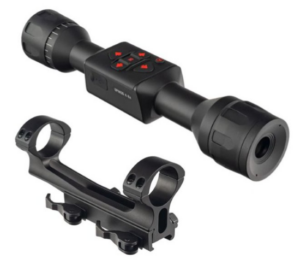
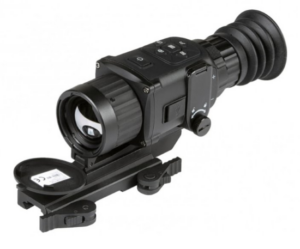
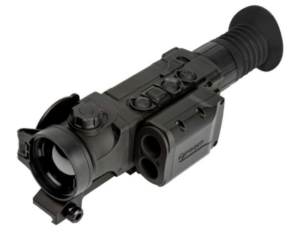
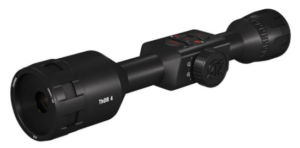
Thermal scopes are perfect for low-light shooting, giving any hunter an advantage in the field.
An excellent thermal sight will let you see targets not possible with your bare eyes.
What to Look for In a Thermal Scope
There are a few things to consider when buying a thermal scope to ensure you get the best one for you.
Resolution
Much like your flat-screen television, thermal scopes have a resolution, which significantly affects image quality.
Thermal scopes have two resolutions to consider: the display resolution and the sensor resolution.
To put it simply, a sensor resolution is a resolution you will get while using thermal imaging, and the display resolution will be your standard view.
So, if you have a 160 x 120 pixel sensor and a 1280 x 720 display, your targets will only come in 160 x 120 while using thermal.
Battery Life
Some scopes are energy hogs and will drain your battery quickly.
However, several models on this list will last over 10 hours of continuous use between charges.
Features
Many features come with thermal scopes, including smart features, various magnifications, video recording, and range finding.
Make sure you pick the features that are important to you.
Below are the 12 best thermal scopes on the market.
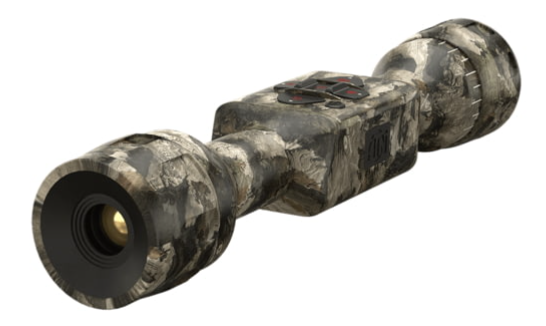
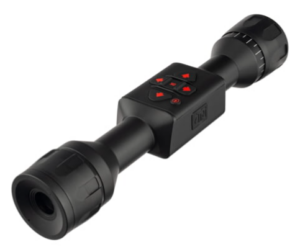
#1. ATN ThOR LT 3-6x50mm Thermal Rifle Scope
Magnification: 3x – 6x
Sensor Resolution: 160 x 120 Pixels
Battery Life: 10+ Hours
Waterproof: Weather Resistant
Magnification Type: Variable
The ATN ThOR LT 3-6x50mm Thermal Rifle Scope is a variable 3x – 6x magnified thermal scope perfect for nighttime hunting.
It has a 30mm tube and a 50mm for excellent visibility.
With the latest thermal technology, it has a display resolution of 1280 x 720 pixels with a 160 x 120 pixels sensor resolution.
They made it to withstand the elements with a weather-resistant IP rating and a lightweight, durable aluminum body.
You can use it for 10+ continuous hours, and it comes with White Hot and Black Hot Color modes.
Other features include multiple reticle patterns, a 3D accelerometer, and a one-shot zero.
If you are looking for a solid thermal scope with excellent battery life, the ATN ThOR LT 3-6x50mm Thermal Rifle Scope is perfect for crossbows, rifles, and other weapon systems.
It is available from Optics Planet. Here’s where to buy it: www.OpticsPlanet.com
Pulsar’s Core RXQ30V 1.6-6.4x22mm Thermal Imaging Rifle Scope is an excellent thermal option for close-range hunts.
It has a 22mm objective lens, a 640 x 480 pixel display, a 384 x 288 thermal sensor with 985 yards of detection, and a 50Hz refresh rate for excellent visibility.
The Pulsar RXQ30V comes with a green sapphire display mode, white-hot mode, and black hot mode.
The scope can easily attach to the most popular models of rifles and crossbows with a Weaver/Picatinny mount.
They constructed the scope out of heavy-duty glass-nylon composite and can be operated in extreme temperatures (-13 degrees to 122 degrees Fahrenheit).
It comes with 2x CR123A batteries, and a single charge can last up to 4 hours.
The Pulsar Core RXQ30V 1.6-6.4x22mm Thermal Imaging Rifle Scope is an excellent addition to any weapon.
It is available from Optics Planet. Here’s where to buy it: www.OpticsPlanet.com
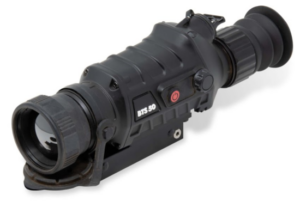
The Burris BTS 50 3.3-13.2x50mm Thermal Rifle Scope has unique features that set it apart from its competition.
It has a high-resolution 400 x 300 pixel screen with several customization options to match your tastes.
The scope provides seven different color palettes and ten reticle options to form the best combination for you.
An excellent feature is the heat tracking utility where it will highlight the area with the most heat for faster target acquisition.
The battery can last up to 5 hours of continuous use, and the scope comes with multiple thermal options.
It also includes integrated stadiametric rangefinding for accurate shooting at unknown distances.
If you are looking for a thermal scope with plenty of viewing options and a high-resolution screen, the Burris BTS 50 3.3-13.2x50mm Thermal Rifle Scope may be right for you.
It is available from Optics Planet. Here’s where to buy it: www.OpticsPlanet.com
The Accufire Technology Incendis Clip-On 1 – 4x 30mm Thermal Imaging Rifle Scopes has a super intuitive double reticle and can be used as a standalone scope, standalone monocular, or an attachment for your favorite optic.
It has four heat displays to choose from: White-Hot, Black-Hot, Red Accent, and Green-Hot.
It has a variable magnification of up to 4x and has a display resolution of 1024 × 768 pixels, a core resolution of 384 x 288 pixels, and a 60Hz refresh rate for a sharp image.
The Incendis can operate in harsh environments with an operating temperature range of -22 degrees to 122 degrees Fahrenheit.
If you want to upgrade your current scopes capabilities, the Accufire Technology Incendis Clip-On 1 – 4x 30mm Thermal Imaging Rifle Scope is perfect for you.
It is available from Optics Planet. Here’s where to buy it: www.OpticsPlanet.com
The Pulsar Thermion XM50 5.5-22x42mm Thermal Rifle Scope is a second focal plane variable scope with a 5.5x to 22x magnification.
The XM50 has some impressive features that make it one of the best thermal scopes on the list, but it is expensive.
You will clearly see your target in any lighting conditions with a maximum heat range of 2,500 yards.
It has an impressive 1024 x 768 pixel display resolution and a 340 x 240 sensor resolution.
One of the remarkable features of this scope is the built-in recording with recoil activation.
You can capture or live-stream your most intense hunts in 1024 x 768 resolution.
Another pleasant feature is that you can store up to five different rifle profiles into the scope for easy swapping between your weapon sets.
With an integrated rangefinder, you will have pinpoint shooting at any distance.
It also has a lifetime warranty.
The Pulsar Thermion XM50 5.5-22x42mm Thermal Rifle Scope is an excellent buy if you have the money.
It is available from Optics Planet. Here’s where to buy it: www.OpticsPlanet.com
#6. ATN ThOR LT 4-8x50mm Thermal Rifle Scope
Magnification: 4x – 8x
Sensor Resolution: 160 x 120 Pixels
Battery Life: 10 Hours
Waterproof: Weather Resistant
Magnification Type: Variable
The ATN ThOR LT 4-8x50mm Thermal Rifle Scope has a 160 x 120 sensor resolution, a 1280 x 720 pixel display, and a 60 Hz refresh rate.
You will be able to clearly see your target with up to 8x magnification.
It has an impressive battery life with up to 10 hours of continual on a single charge to last you your entire hunt.
They had this thermal scope with a hardened aluminum body resistant to the harshest weather.
Other features include multiple reticle patterns, a white-hot mode, a black-hot mode, and a 3D accelerometer.
If you are looking for a balance between value and features, the ATN ThOR LT 4-8x50mm Thermal Rifle Scope will not let you down.
It is available from Optics Planet. Here’s where to buy it: www.OpticsPlanet.com
#7. Sig Sauer ECHO3 1-6x23mm Thermal Reflex Sight
Magnification: 1x – 6x
Sensor Resolution: 320 x 240 Pixels
Battery Life: 6 Hours
Waterproof: Yes
Magnification Type: Variable
The Sig Sauer ECHO3 1-6x23mm Thermal Reflex Sight is an excellent thermal sight for predators and hog hunters.
It has a high-resolution sensor core with 320 x 240 pixel resolution and a 30 Hz refresh rate.
You can connect it to any BDX smart device via Wi-Fi or Bluetooth to capture images or recordings of your hunt.
The recorder is recoil activated, and the display has eleven color pallets and several brightness levels.
It also has a MOTAC (Motion Activated Display), which activates on motion to save battery life, but the sight can last over six hours of heavy use on a single charge.
If you want a reflex sight style thermal scope perfect for hog hunting, buy the Sig Sauer ECHO3 1-6x23mm Thermal Reflex Sight today.
It is available from Optics Planet. Here’s where to buy it: www.OpticsPlanet.com
The AGM Global Vision Rattler TS25-384 1.5x25mm Compact Thermal Imaging Rifle Scope is a compact thermal scope perfect for medium-range hunts.
The sensor core resolution is 384 x 288 pixels and a 1024 x 768 OLED display with a 50 Hz refresh rate, making it easy to see in any weather, including fog, rain, or smoke.
They made it to withstand harsh weather with an IP67 water resistance level and an operating temperature of -4 degrees to 131 degrees Fahrenheit.
It has a 4.5-hour battery life, but you could extend it via a USB 5V power bank.
An excellent feature is that you can easily stream or record your hunts via Wi-Fi.
It also includes a limited three-year warranty.
The AGM Global Vision Rattler TS25-384 1.5x25mm Compact Thermal Imaging Rifle Scope is perfect for anyone who wants a durable thermal scope that can record video at a medium range.
It is available from Optics Planet. Here’s where to buy it: www.OpticsPlanet.com
#10. Pulsar Trail 2 LRF XP50 Thermal Rifle Scope
Magnification: 2x – 16x
Sensor Resolution: 640 x 480 Pixels
Battery Life: 8 Hours
Waterproof: Yes
Magnification Type: Variable
Pulsar’s Trail 2 LRF XP50 Thermal Rifle Scope has the highest sensor resolution on the list with an impressive 640 x 480 pixel resolution for excellent image quality.
It also has a 1024 x 768 pixel resolution display with several modes, reticle options, and illumination color options.
They built this scope to last with a lightweight glass-nylon composite housing and an IPX-7 waterproof rating.
With a built-in rangefinder with a maximum range of 1,100 yards, you will get accurate shots at any distance.
It has a 16 Gb internal storage to record your hunts and comes with built-in Wi-Fi to access your app to record or stream your hunt.
The Pulsar Trail 2 LRF XP50 Thermal Rifle Scope is the best thermal scope on this list, but it is also the most expensive.
It is available from Optics Planet. Here’s where to buy it: www.OpticsPlanet.com
#11. ATN ThOR 4 1.25-5x19mm Thermal Smart HD Rifle Scope
Magnification: 25x – 5x
Sensor Resolution: 384 x 288 Pixels
Battery Life: 18 Hours
Waterproof: Weather Resistant
Magnification Type: Variable
The ATN ThOR 4 1.25-5x19mm Thermal Smart HD Rifle Scope has smart features that the other ATM ThORs lack.
It includes smart features such as Wi-Fi, Bluetooth 4.1, GPS, iOS/Android apps, recoil activated recording, and a MicroSD card slot for recording.
Other features include a built-in rangefinder, 3D GS7 Gyroscope, 3D Accelerometer, 3D Magnetometer, and an E-Compass.
With a massive 18-hour battery life, you can hunt all day without needing to worry about your battery life.
It also includes a three-year limited warranty.
If you want a solid thermal scope with smart features, the ATN ThOR 4 1.25-5x19mm Thermal Smart HD Rifle Scope is an excellent choice.
It is available from Optics Planet. Here’s where to buy it: www.OpticsPlanet.com
#12. ATN ThOR LT 320 3-6x30mm Thermal Rifle Scope
Magnification: 3x – 6x
Sensor Resolution: 320 x 240 Pixels
Battery Life: 10+ Hours
Waterproof: Weather Resistant
Magnification Type: Variable
The ATN ThOR LT 320 3-6x30mm Thermal Rifle Scope has an internal rechargeable battery that lasts up to 10+ hours on a single charge, saving you money on batteries.
They made it to last in any environment with a weather-resistant design and an aluminum body.
It has a 3x to 6x variable magnification with a display resolution of 1280 x 720 pixels and a sensor resolution of 320 x 240 pixels at 60 Hz.
It has a simple design, making thermal imaging easy to use for fast target acquisition.
If you are looking for a rechargeable thermal scope, the ATN ThOR LT 320 3-6x30mm Thermal Rifle Scope is an excellent choice.
It is available from Optics Planet. Here’s where to buy it: www.OpticsPlanet.com
References / Resources
How To Choose A Thermal Rifle Scope
Night Vision vs. Thermal Scopes
How To Sight In A Thermal Scope
See Also
Best Spotting Scopes For Hunting & Target Shooting
Best Air Rifle & Pistol Scopes
Best Laser Sights For Pistols
Best Night Vision Goggles & Binoculars
Best Rangefinders For Hunting & Golf
Affiliate Disclosure: This post may contain affiliate links. If you click and purchase, I may receive a small commission at no extra cost to you. I only recommend products I have personally vetted. Learn more.





 The newly added sheepshead species in IGFA’s saltwater line class and tippet categories has dominated the record books with 28 approved records throughout 2022, and submissions are still coming in hot. It is going to be a toss-up between most likely New Jersey or Virginia as to where most of the records will come from for the remainder of 2024. Below are a few of the notable catches since the sheeps became eligible for line class and tippet world records, and off course, the biggest, baddest sheepshead record of all time, Wayne Desselle’s 21-pound, 4-ounce monster that came from the St. John Bayou in New Orleans, Louisiana on April 16, 1982, over 30-years ago.

 Angler Randy Morton has taken full advantage of the newly introduced line class categories for sheepshead, with submitting seven record applications for the species this past year. On July 23, 2022, Randy was fishing the Chesapeake Bay Bridge Tunnel in Virginia, USA, when he landed this 3.88-kilogram (8-pound, 9-ounce) sheepshead, setting the IGFA Men’s 8-kg (16-lb) Line Class World Record for the species. He weighed the record fish at Long Bay Pointe Marina in Virginia Beach, Virginia. Randy’s tactic of choice for sheepshead is is fishing with fiddler crabs on a jig head.