Home Blog Page 30

Do Turkeys Eat Ticks? All You Need To Know – Stop Ticks

0

Yes, Turkeys eat ticks. An adult turkey is one of the best tick-eaters that it can eat nearly 200 or more ticks a day. Wild Turkeys in the forest floors, swamp regions, and grasslands are the best natural pest controllers. Domesticating Turkeys is one of the best ways to keep the ticks in control. But it is more significant to know more about the turkey-tick relations, effectiveness of tick elimination, etc before proceeding with your domestication idea.

How Dangerous Are Ticks To Humans?

Not all tick species are dangerous. Some prominent ticks can be vectors of life-threatening diseases to humans and animals.

Ticks are parasites that feed on blood. They are disease-causing insects with tiny hard heads and oval-shaped bodies. They are typically flat, brown, oval-shaped, and small and measure only a few millimeters in length. Ticks mostly live in woody, and brushy areas, clinging to shrubs and grasses, and they crawl on animals’ hair or skin when they move past and brush against it. You can find a large population and species of ticks in the USA, UK, Europe, and other western countries.

Most prominent diseases carried by ticks include:

  1. Lyme Disease
  2. Tularemia
  3. Anaplasmosis

Diseases transmitted by ticks to humans may cause symptoms as mild as a localized rash to as severe as joint infections, cardiac distress, and even death if left untreated.

Ticks pose a genuine problem to pets, livestock, and local wildlife. Animals become anemic if they are hosted by large number of ticks. If left untreated, anemia can cause lethargy, weight loss, organ failure, and death.

Best Animal For Tick Control

Biocontrol is the correct method to control the tick population in one place. Meaning, we use one organism to reduce the spread of another organism. In that sense, Using natural tick predators on our property helps us keep the tick population in control.

Some animals that help humans control the tick population are frogs, lizards, squirrels, opossums, some birds, ants, and fire ants. In this list, opossums are the best tick hunters that play a vital role in controlling the tick population. They eat almost 5000 ticks per season – a considerable part in tick destruction. But we cannot raise opossums on our farm. Do you know Turkeys are one of the best predators of ticks that is safe and you can possibly grow them in your farm.

Turkeys And Ticks:

How to raise turkeys on our farm to control the tick population?

Raising turkeys on your farm is not a complicated process. They need some extra care than chickens on your farm. These birds spend most of their time hunting, pecking, scratching, and foraging for food. Once you start to have them in the yard, you will love them. They eat some foods like snails, fish, and lizards. They eat grains, nuts, fruits, insects, and vegetables too.

Do turkeys carry ticks?

Yes! They may carry ticks sometimes. But it is not much harmful to humans or other domestic organisms like dogs, cats, cattle, etc. A research found that turkeys eat almost all ticks – in their larval and nymph stages. They also remove a maximum number of ticks from their body during self-cleaning. So, it is hard for the ticks to escape turkeys.

When we raise turkeys on our farm for tick control, proper vaccination, biosecurity against outside contamination, management practices, and good hygiene are essential. Using antibiotics helps us treat and control diseases in turkeys and improve their overall health.

Do Wild Turkeys Eat Ticks?

Yes! They do. You can find wild turkeys in the suburban areas, grasslands, shrublands, etc. more often eating ticks. The presence of wild turkey is a threat to the ticks population. But you might be amazed if you know which type of turkey eat most ticks? If that i your question, here is the fact!

Which type of turkey eat most ticks? – Domestic or wild turkey:

Generally, domestic turkeys do not bother ticks as they have more options to eat other than ticks. They will fill their stomach with grasses, sweet corn, tomatoes, summer squash, lettuce, etc. Thus, it is obvious that wild turkeys are the potential predators of ticks compared to domestic turkeys.

Domesticated Turkeys and all the five subspecies of the Wild Turkeys eat ticks. Wild Turkeys will consume Ticks when they find them. They are not active hunters but they eat ticks on the ground, in the grass, in low vegetation, and even on their own bodies during self-grooming. Even though these birds are tick hosts, they tend to eliminate more ticks than they spread.

How Many Ticks Does Turkey Eat In A Day?

Turkeys have sharp eyesight and acute hearing, making them talented tick gobblers. A fully grown turkey can consume 200 or more ticks per day. A turkey family, including a female turkey and her two generations along with her mate, can consume around 3800 ticks per day.

Can Turkeys acquire Lyme Disease After Eating Ticks?

Lyme disease is the most threatening tick disease spread to humans by infected ticks. Blacklegged or deer ticks act as vectors of Lyme disease in humans and animals.

Turkeys do not get Lyme disease from eating ticks. The ticks have to be attached to the hosts for more than 36 hours to transmit the disease. There is no possibility for this to happen after the ticks have been killed and eaten by the Turkeys.

Other Birds That Eat Ticks

Chicken:

Chickens eat ticks. They will be able to consume 80 ticks per hour. Chickens will help control the ticks in the backyard. Chickens have been discovered as natural predators of ticks by a study published in 1991. They consumed around 3 – 330 little critters in a single session.

Ducks:

Ticks are fond of moisture, and the Ducks are the most appropriate choice in wet and muddy areas. Though ducks cannot completely eat all the ticks in an area, they can significantly keep down the tick numbers. They are beneficial to the farmers.

Guineafowl:

Farmers use guineafowls as a natural tick repellent. Guinea fowl can eat as many as 1000 ticks per day.

Cattle Egret:

The cattle egret is a bird species that lives in grasslands and cattle pastures in many regions. It removes and eats ticks and flies from the body of animals. Thus, these species do their part in controlling the tick population. These birds ride on cattle backs to pick ticks and eat.

They have a diverse diet chart that depends on the habitat. Generally, these birds are insectivores, and their favorite foods are grasshoppers, locusts, and crickets. Ticks are also on their diet chart but only in small numbers. Some other prey of cattle egrets include earthworms, spiders, crayfish, mollusks, tadpoles, frogs, snakes, lizards, rats, fish, and birds.

Partridge:

Partridges look small, plump, and cute. You can find these ground-dwelling game birds throughout the United States and near water sources. They eat ticks and contribute a remarkable portion to tick control. The thick bristles on their tongues act as a brush-like tool for catching insects and ticks. They can pick and consume all types of ticks, even under leaves and grasses.​​​​​​​ These birds help keep the population of ticks in control by taking ticks as food.

Roadrunner:

Roadrunners belong to the cuckoo family with the native of North America and Mexico. They eat ticks occasionally. So this behavior will not affect the presence of ticks in the environment. These birds get ticks on their feathers and body when they hunt food sources like lizards, mice, insects, snakes, etc.

Their favorite foods: black widow spiders, millipedes, centipedes, crickets, grasshoppers, beetles, caterpillars, snails, mealworms, cockroaches, tarantulas, mosquitos, and dragonflies.

Woodpeckers:

Woodpeckers can naturally eat more ticks. They do this with their long and sticky tongues. The Woodpecker population has a vital role in controlling Lyme disease around the world. Some other favorite foods of woodpeckers: Ants, beetles, termites, spiders, caterpillars, bird eggs, other arthropods, small rodents, nestlings, fruit, lizards, sap, and nuts.

Oxpecker:

An oxpecker is a bird that feeds on ticks and commonly lives in Africa, Asia, and Australia. They often sit on large animals like giraffes, zebras, buffalo, and rhinos. Then they start eating ticks and lice from their body. These birds use their sharp beaks to remove pests from an animal’s skin. Usually, these birds live in woodlands or grasslands and help animals keep their body healthy and clean. They also eat flies, maggots, and all other kinds of larvae from their host body.

Do Quail Eat Ticks?

  • Quails usually forage on the ground and eat what they find. Many people and various communities, especially farmers use quail for tick control in their farms. They can naturally eat more ticks and control tick infestation. Generally, quails are ground birds that dig around in the ground to find food. They consume ticks when they get them from the ground.
  • Like any other animal, quails also get ticks. But they do not have proper immunity to tick bites. So sometimes, these ticks bite may create harmful effects on the overall health of quail. Once you find any tick infestation on your farm quail, ask for medical support. Otherwise, those ticks may start latching onto the quail’s skin.
  • We know that deer ticks are the prime cause of Lyme disease. In some areas, people use quail to control Lyme disease.

How many quails do we need to control ticks in a particular place?

It entirely depends on the area of the place and the severity of the tick infestation. Quails eat all the ticks effectively wherever you allow them to roam freely. Setting them free in the backyard is the best idea to control the ticks population there. Around ten quails are enough for controlling ticks in an area of 1 acre.

Can quails get Lyme disease by eating ticks?

No! They can not get Lyme disease from eating ticks. They receive this disease only when the microbes that cause Lyme disease enter their bloodstream. When quails eat ticks, they will get digested, and there is no direct contact with the bloodstream.

Final Thoughts

Turkeys have proved to be effective in controlling the tick population. So, growing or domesticating some turkeys is best if you live in a tick-infested area. But never forget to follow the precautionary measures advised by the government to prevent tick infections. Turkey treatment might be an additional way to prevent ticks but being precautionary is the basic thing that needs to be followed to prevent tick infections.

FAQ

Q1. Do turkeys transmit ticks?

Wild turkeys do not spread deadly ticks. A recent study shows that turkeys get rid of as many ticks as they carry. The reason? Turkeys eat ticks.

Q2. Which animal eats the ticks the most?

Opossums are one of the top predators of ticks and kill more than 90 percent of the ticks they encounter. Opossums are good at removing ticks, and they can eat up to 5,000 ticks per season.

Q3. What kills ticks naturally?

Eucalyptus and Neem oil can kill ticks effectively. Just combine 4 ounces of purified water into a spray bottle and 30 drops of your carrier oil of choice. Shake well and spray anywhere you want to kill ticks.

10 Best Air Rifles for Squirrel Hunting

0

The rule of hunting is getting to understand your prey. Expert hunters know this, and sometimes they get particular when choosing their weapons depending on what you are hunting. If you are a novice hunter, it is easy to make the mistakes I did when starting. I used heavy-caliber rounds for all my hunting experiences. Though suitable for taking down big game it literally destroyed small game.

When you are hunting small game like squirrels, it is unnecessary to use heavy gunfire. You will need to have the best air rifles for squirrel hunting. Hunting any game is not easy, especially small games like raccoons and squirrels.

In this article, all my focus is on exploring the best air rifles in the market and the different features they all have that make them ideal for squirrel hunting.

Reasons for Using an Air Rifle

Using an air gun will improve any hunter’s marksmanship and shooting skills while using any rifle. It is the first form of practice you need before challenging yourself with big game hunting. Spring-powered air guns have adverse recoil as well, and this will let you handle the full recoil of a rimfire or bore rifles as well.

When going out for target practice, it is cheaper to do it with an air rifle than with a full bore rifle. The logic is that the costs of an air gun are more affordable, yet it offers a similar hunting experience. When you get better aim using the air gun rifles, the same will reflect when hunting big game using a rimfire or center rifle.

When hunting for small pesky rodents like vermin rats and squirrels on your farmyard, air guns are safer and will not destroy farm machinery when you miss your target. Besides using it for pest control, air guns can be for entertainment as well. Not many states have dire ramifications for possessing and owning an air rifle gun. Therefore you can use it to shoot at targets with your friends when they come over.

Why I Like Them?

Air rifles are a silent killer when you fix it with a moderator that takes away the noise when you fire. Because of this, you can hunt as many squirrels and vermin rats on the go before realizing they are being picked out one by one.

Unlike using a rifle or shotguns, air guns will not need regular cleaning each time you fire. It is because they never use chemicals as fuels; therefore, they are not complicated to handle.

Also, because air rifles have little recoil compared to rimfire and center rifles, they will not stress your body each time you fire. It makes them the preferred choice for people with disabilities and the aged who require little resistance and complications.

Headshots are very effective for taking down even big game animals. The advantage is it preserves the meat if you plan to eat it. Because air rifles have limited power and chemicals, the meat stays free from peppered pellets you would have if you used a shotgun instead.

Review of the Ten Best Air Rifles You Can Find in the Market Today

Gamo Magnum Air Rifle .22 Cal

I will start with the first air rifle that I tried during my squirrel-hunting quest—the Gamo Magnum Air Rifle .22 Cal. The first thing I noticed when I handled it for the first time is how sturdy it is. It also feels lightweight, which is a bonus if you want to use it for longer hours. There is also so much control when locking into targets, especially fast-moving targets.

The good thing about the Gamo Magnum air rifle is that it gives a clean but lethal shot. I realized that the squirrel I hunted was not battered to a pulp, and the meat was preserved. Another advantage is how much power it has yet subtle and causes only slight vibrations you can handle after you fire it. Few vibrations mean a firm hand and can easily get the second shot accurately if you need more than one shot to kill a squirrel.

The Gamo Magnum air rifle comes fitted with a rear sight and front scope for improved accuracy. The front scope is fixed, but you can make adjustments on the rear sight. One thing that favored my quest when using the Gamo Magnum air rifle is the excellent optics. The field of view is clear and reliable, which makes you hit targets accurately.

I had the advantage of speed, as the .22 Cal used on the Gamo Magnum air rifles has a fast velocity. They move at 1300 feet per second. It is safe to use as it has a recoil pad that reduces the recoil to a paltry 74%. It is also waterproof since I used it in the rain, without any hiccups.

Pros

  • It has minimal vibration
  • The Gamo Magnum air rifle has a high velocity .22 Cal
  • Adjustable trigger
  • Reduces the felt recoil by up to 74%
  • It offers the hunter powerful shots
  • It comes inclusive with useful accessories

Cons

  • I found it to be more loud compared to other air rifles under review here.

Hatsan 95 Air Rifle Combo

It is one of the best air rifles for squirrels as it has two features that other models do not have. The first thing I loved about this rifle is that it has a high-quality and two-stage trigger that makes it easy to engage. The second aspect is that the trigger pressure is ideal, and it let me take shots at the precise moment I wanted.

The Hatsan 95 Air Rifle Combo is a gun that is also aesthetically appealing. The steel barrel looks nice, yet it manages to fire accurately with minimal effort.

With this particular air rifle, you can have three versions: .22, .25, and .177 — and each will give you exceptional performances. The .22 has a maximum velocity of only 1 000 FPS, which is decent as it builds on accuracy. On the other hand, the .177 caliber is the best for all long-range shooting as it offers a velocity of up to 1,300 FPS. The .25 is the least in terms of velocity as it only has a maximum velocity of 650 FPS.

The Hatsan 95 Air Rifle Combo comes with open sights that I found the best for taking clear shots. Because it is the best for both mid and short-range shooting, I rank it as one of the best air rifles for squirrel hunting.

The Hatsan 95 Air rifle has a beautiful design of walnut wood. It will give you superior accuracy and is a rifle with superior features than most.

Pros

  • Accurate
  • Anti-beartrap mechanism
  • Sturdy gun
  • Clean shots
  • Lightweight

Cons

  • Some people may find it difficult gun to cock
  • The grouping is sometimes spread in a few of the rifles made.

Gamo Varmint Air Rifle .177 Cal

Hunting pesky tree rats and squirrels can be a fun sport if you have the Gamo Varmint air rifle. Sometimes after having a bad day, all I need is to feel better, and hunting squirrels offers more resolve than the rigorous process of hunting deer, hogs, or ducks.

The Gamo Varmint air rifle is a .177 Cal designed to remove the stress pests bring to your life. It is a simple air rifle that fires a caliber up to 1250 feet per second. With such firepower, it is enough to fall a squirrel from a tree minimizing the rare chance of missing your target.

The Gamo Varmint Air Rifle is also an all-weather gun with excellent stability, which combines well with quality to give you maximum performance. It is lightweight and synthetic stock that is also easy to carry everywhere you go.

It uses match-grade polymer steel, and the jacketed barrel is somewhat fluted, which adds speed and spin to your ammunition. The Gamo Varmint air rifle uses a two-stage and adjustable trigger that gives the feeling of a comfortable and customized fit. The thick butt-pad will absorb most of the recoil, and this ensures a smooth shooting experience for all hunters.

Pros

  • Sturdy gun
  • Clean shots
  • Lightweight
  • Accurate

Cons

  • Is somewhat louder than other air rifles

Gamo Whisper Silent Cat Air Rifle

Another best air rifle that I tested is the Gamo Whisper Silent Cat Air rifle because it has decent speed and accuracy. It has a maximum velocity of 1200 FPS, which is fast enough for hunting squirrels from mid to short-range distances.

The Gamo Whisper Silent Cat Air Rifle operates using a single cocking system, which is ideal for smooth shooting. It also uses automatic cocking to make it faster to shoot and easy to operate. The most crucial feature I loved about this air rifle is that it has a first and second stage of trigger adjustments that make it precise and comfortable.

The barrel is of the Gamo Whisper Silent Cat Air Rifle is fluted and has a polymer jacketed steel. The air rifle is also dead silent as it has a noise dampener that makes it undetectable to the squirrel population. It means that you cannot disrupt the squirrels because the gun makes no noise when your fire. The dampener has the potential to reduce the noise from air rifles by almost half.

You would not disrupt the squirrels since this air rifle comes with a noise dampener that is not detachable. The noise dampener can minimize the noise produced by air rifles by almost half, which allows you to attract more squirrels.

The design comes with a rubber pad for the butt of your air rifle. It takes away the recoil and makes for comfortable shooting as well. It comes with the best optics, which makes you shoot accurately at your targets. The sights are both waterproof and fog proof, which makes it a durable all-season air rifle.

Pros

  • Powerful shots
  • Reliable optic sight
  • Durable
  • Quiet operation

Cons

  • The scope is sometimes wobbly

Benjamin Trail NP XL Magnum

The Benjamin Trail NP XL Magnum is among the best air guns for novice hunters. It has a total length of 4.25 inches and is considered among the full rifles available under this review. The aesthetic wood stock design makes it a lightweight air rifle at only 9.7 pounds.

It has a thumbhole stock that feels comfortable for all hands and coupled-up with a good grip that adds to your pinpoint accuracy shots.

The Benjamin Trail NP XL Magnum uses Benjamin’s Nitro Piston Technology and is also a single hot air gun. The manufacturer replaced the steel spring as the source of power with this new technology as its main aim is to reduce the feel of recoil when you fire.

Through the use of Nitro Piston technology, you can have improved accuracy as you have a faster locker time. It can fire pellets at 1100 feet per second, making it a lethal rifle for hunting small game like squirrels and rabbits.

It has a quiet but simple break barrel as its action. Because it reduces noise, you can take a second shot if you happen to miss your first one. The trigger is also smooth and is only a brisk 3.5 pounds. The weight of the trigger is not adjustable, which is a downside, but if you are a straight shooter, you will have no qualms with this design.

Most novice hunters will enjoy using this air rifle for target practice as the skills can easily be transferred to the full gun when hunting for a big game. Every shot you fire will carry a 30-foot-pound of downrange muzzle energy. The Benjamin Trail NP XL Magnum, therefore, is among the most hard-hitting air rifles that take down small game with a single shot. The hard punch is a welcome feature as I like to consider the humane side of killing prey; it should be a quick and painless death.

Pros

  • Powerful shots
  • Reliable optic sight
  • Durable
  • Quiet operation

Cons

  • The weight of the trigger is not adjustable

Seneca Dragon Claw

Under this review, this is the most potent air gun rifle in the market. The Seneca Dragon Claw is for situations where you need one shot, and it must be the killer shot. When I was using the Seneca Dragon Claw air rifle, I preferred the .50 Cal.

One thing I admire most about this rifle is the pre-charged pneumatic design. It makes this beast gun able to fire .50 Cal up to 679 feet per second and a 230 ft.-lbs muzzle energy. With this kind of firepower, it is no surprise that you can hunt and successfully kill both small and medium-sized game like small hogs, foxes, coyotes, and possums.

The outstanding feature of the Seneca Dragon Claw air rifle is that it uses dual tanks of 500cc air capacity. The dual tanks are under your air rifles barrels that give it balance when handling it. It also comes with the best adjustable sights accompanied by a dovetail rail to mount the optics on your rifle’s barrel. It has an appealing aesthetics as the wooden stock finish on the fore-end is quite attractive.

Pros

  • Sturdy gun
  • Clean shots
  • Accurate and powerful

Cons

  • The dual tank feels cumbersome and makes the rifle heavy

Benjamin Vaporizer SBD Air Rifle

The Crosman Benjamin Rogue SBD is an improved version of the original Benjamin SBD. The acronym SBD stands for Silencing Barrel Device. As a result, this reduces the noise when you fire the rifle and is up to three times more silent than other air rifles in the market.

It is also a powerful rifle as it fires the .177 caliber design pellet up to 1,400 feet per second. If you are looking for a silent killer’s true definition, then you must try the Benjamin Vaporizer SBD. When hunting for small prey like rabbits and pesky pests like squirrels, it is a brutal rifle that kills on impact. It, therefore, offers the prey a humane, quick, and painless death.

The Silencing barrel device is odd-looking, but I love how it functions well and is also out of the way, so it doesn’t block the adjustable scopes. Another essential feature worth mentioning is the two-stage trigger that gives a smooth squeeze.

Pros

  • Accurate
  • Sturdy gun
  • Clean shots
  • Lightweight
  • The most silent air rifle because of the SBD

Cons

  • Appears complicated and not for the novice hunter

Beeman R7 Air Rifle

The Beeman R7 is one of the smallest and compact air rifles in the market today. Yet, despite the size, it is still powerful enough to fall small pre like squirrels. It is also not lacking in the accuracy department as it has excellent balance and control. When I was using it, I discovered that it is remarkable at hitting fast-moving objects as it also has high speed and velocity. It can fire a .177 pellet up to 700 feet per second.

It is a model that takes after the popular Beeman R1 air rifle. The idea behind the same design was to create a shorter, lighter, and comfortable to shoot weapon. An excellent feature that complements the design is the use of a double joint cocking lever, which reduces the effort when cocking.

The barrel design is a spring-piston that can propel a .177 Cal accurately and at faster speeds. The trigger is also adjustable and breaks at 1.25 lbs.

The Beeman’s reduced effort cocking device makes it unique and an overall excellent break barrel design. The fact that it is 5 inches shorter and 2.5 pounds lighter than the Beeman R1 makes it the clear winner.

The Beeman R7 is among my favored air rifles because it comes with adjustable scopes and mounts for all your optical needs.

Pros

  • Lightweight
  • Sturdy
  • Adjustable trigger

Cons

  • Some people feel like it lacks enough killer power

Benjamin Fortitude Gen2 PCP Air Rifle

When you want a simple design, then the Benjamin Fortitude is among the top air rifles. It is also easy to use and affordable. The Benjamin Fortitude has all the features you need to hunt and kill small game like rabbits and squirrels. The pellets come in two sizes you can choose from, either the .117 or—22 caliber pellet rifles. For the .117Cal, you will have a 950 FPS, and the .22 offers up to 800 FPS.

It is a bolt action and a single-shot air rifle that has a 10-round rotary magazine. The Benjamin Fortitude weighs a paltry 5.3 pounds and is an all-weather type of design. It is lethal at distances under 100 yards, and this is why I love it for all my hunting experience. The single-stage trigger design allows a constant pull that makes it accurate.

Pros

  • Easy to use
  • Lightweight
  • Accurate
  • Lethal at distances under 100 yards

Cons

  • None worth mentioning

Air Arms TX200 Hunter Carbine

It is an elegant and refined air rifle design. It has a sleek appearance, and it does back it up with more firepower. The Air Arms TX200 Hunter Carbine is a compact and lightweight .177 rifle known to be the best for target shooting and hunting of small game. This gun has excellent accuracy and can send a pellet downrange up to 930 FPS. It comes with an underlying under lever of 34 pounds cocking effort.

The Air Arms TX200 Hunter carbine is the best for hunting small game as it is lethal for prey like rabbits and squirrels. It is exceptionally lightweight and has a beautiful wooden stock finish that makes it aesthetically appealing. It has decent handling, and it is easy to use and the best for the novice hunter.

The most impressive feature is the two-stage adjustable trigger that is coupled-up with a barrel from Lothar Walther to give it precision and accuracy.

Pros

  • Easy to use
  • Lightweight
  • Accurate
  • Sleek design and a two-stage adjustable trigger

Cons

  • Expensive is not a con as you cannot drive a Ferrari that you cannot afford.

Winchester M14 CO2 Review

0

The Winchester M14 Pellet BB Gun is primarily a tribute to U.S. military veterans in its design.

This is a well-engineered and steadfast rifle that can use to shoot both steel BBs and .177 caliber pellets.

If you’re in love with military guns and wish to experience the power, the Winchester M14 air rifle is the one for you.

Two cartridges of 12g CO2 power the Winchester M14.

These cartridges are stored in the lower clip, allowing for easy access for reloading.

The magazine holds 8 round magazines on each side. So it has 16 rounds before reloading.

Under supervision, young shooters can LEARN to shoot, given the ease of use and lightweight.

This semi-automatic CO2 air rifle can be your choice if you are not looking for a hunting air rifle.

Here, I’ve compiled a detailed Winchester M14 CO2 air rifle review, which will allow you to make an informed decision about buying one.

Winchester M14 CO2 Air Rifle Review

Battle Rifle Look

Winchester M14 CO2

The Winchester M14 air rifle is a replica of the M14 rifle, the iconic rifle of the US armed forces.

This allows the shooter to experience a real battlefield feeling when they handle the gun.

It’s been manufactured with the same adjustable sights that you would find in the battle rifle.

Besides that, the rifle contains a good shot count with a maximum velocity of 560 FPS.

The rifle meets the claims of the manufacturer.

Notably, there is no such claim for the Winchester M14 CO2 to be matched with the original M14 concerning weight.

Off-course it doesn’t!

The Muzzle velocity claim for the Winchester M14 air rifle is 700 FPS.

It is unlikely that this figure can meet the original M14.

On sweltering days, we can estimate 620FPS would be the top figure.

If you participate in any competition for shooting, the Winchester M14 CO2 air rifle is a great option for its lightweight and affordable price.

Surprisingly Scope And Sight

For a shooter, the sight abilities of a gun matter a lot.

The Winchester M14 semi-automatic co2 air rifle is the only air rifle with open sights.

If you compare the view of Winchester M14 CO2 with the original firearm, it is quite similar to that.

There is a front post where the sight is easily adjustable for both elevation and windage.

It has copied the firearm at the front post with protecting “ears.”

You will love it if you are interested in military guns.

The rear sight is very much closer to that of the original M14.

The left side of the knob through which elevation is controlled and the simple click system is required to rotate against.

The right knob adjusts windage the same as the firearm and rotates in quarter-turn increments.

It needs to be pulled out a bit for the adjustments.

(For more on how many types of air gun sights are out there and which one is suitable for you, see this post.)

winchester m14 co2 air rifle review

The HAM test was taken for shooting a soda can at 20 yards, and the results were terrific.

The scope looks like the real Winchester M14.

This makes it unsuitable for scope mounting.

Again, the scope mounting system of the dovetail and screw is the same as that of the original M14 firearm, except for the screw hole diameter.

It is disappointing to say that the Winchester M14 CO2 air rifle scope would never have made the availability of the scope mount.

The HAM test showed that even the scope is fitted.

It would not be a suitable addition anyway.

Winchester M14Cocking Effort And Trigger

It’s strange, the Winchester M14 semi-automatic CO2 air rifle has to be pulled a very long way.

The average trigger weight is a hefty 7.5 pounds.

The acquaintance enables the shooter to safely pull back rapidly.

Just like to extend the first stage, in addition, to release at a defined endpoint.

Well, if shooting as the way above, you will feel lighter than it actually is.

This is not very pleasant.

The Winchester M14 CO2 air rifle is, of course, lighter than the real gun, by around 2 pounds of weight.

Therefore, you will find the gun more buoyant while shooting.

The lightweight benefits the shooter, especially when he/she is not highly trained.

In front of a trigger guard, you will find a manual trigger safety .

Again, the position of this protection is just like the Original M14 firearm.

If you are using the gun with family members, it is necessary to think first about their safety.

On the side of the breach is the cocking handle.

There is a manual for the shooter to take guidance to find out how to recoil the cocking and firing for the initial time.

The gun fires frequently as you draw the trigger, and this flexibility makes it trouble-free to use.

Winchester M14 CO2 Trigger

Impressive Consistency

HAM has tested the consistency of the Winchester model m14 air rifle, and the results are satisfactory.

Moreover, the accuracy is not affected by the bullet used in it.

Noted that the rifle was not for bird hunting, just for plinking.

In the case, you wish to have shooting fun on the weekend with your partner or family in the backyard.

The Winchester M14 CO2 air rifle would be the best option for you.

The HAM Test also shows that the rifle is a great gun for sport shooting.

The muzzle velocity was steady during shooting.

Winchester M14Accuracy And Reliability

Any shooter who wishes to use a rifle for hunting must be concerned with accuracy and reliability,

But since the Winchester M14 CO2 air rifle is not a hunting gun, perhaps that’s not so important here.

Note that the gun was tested by HAM at 61 degrees Fahrenheit on an indoor range.

Like all other CO2 air guns, it is sensitive to temperature and shoots more slowly in the cold.

However, you must have an idea, or you have to consider windage weather while shooting.

Let me be clear that you cannot go shooting on a cold winter’s day.

Compared with other CO2 rifles, the Winchester M14 Pellet BB Gun has a muzzle velocity which increases by around 2FPS per degree Fahrenheit and then can go beyond the temperature of 95 degrees.

Therefore, it can be said that as the temperature increases, the muzzle velocity of the air rifle also increases. Winchester M14 CO2 is one of the best 5 CO2 air rifles on the market.

Due to the reason that CO2 is a refrigerator gas, if you tend to shoot fast, it will cause it to shoot slower than usual.

During the HAM test, the time gap between the two shoots was 5 seconds.

You can have a clear view of the explanation mentioned above through the Table given below.

Rifle Pallet Average Muzzle VelocityAverage Muzzle EnergyResult/Accuracy
Gamo Raptor Platinum 4.7 Grain549.8 fps3.13 ft/lbsPOOR
H & N Field Target Trophy Green 5.56 grain510.5 fps3.22 ft/lbsPOOR
RWS Hobby 7 grains447.7 fps3.12 ft/lbsPOOR
Crosman Premier HP 7.90 Grain439.1 fps3.38 ft/lbsPOOR
JSB Exact Diabolo 8.44 Grain417.4 fps3.27 ft/lbsPOOR.BEST TESTED
H & N Field Target trophy 8.64 grain396.2 fps3.01ft/lbsPOOR
H & N barracuda match 10.65 grain354.8 fps2.98ft/lbsPOOR

In the above table, you can see that the maximum muzzle velocity has been achieved with Gamo Raptor Target Trophy green 5.56 grain which is 549.8FPS.

This velocity is achieved at 61 Fahrenheit.

This means that muzzle velocity with the maximum figure can be found at 95 Fahrenheit in the region of 620 FPS.

After the HAM test, I can say that the accuracy is not that impressive. It was just accurate up to 10 yards.

(For more on everything you need to know about air rifle accuracy, see this post)

More on Chrony test of the Winchester CO2 pellet & bb rifle here:

Shooting Ability

For any shooter, the dimensions of the weapon matter a lot to shoot accurately with confidence.

It’s hard to handle heavy guns, especially if you are not experienced.

The Winchester M14 CO2 has a length of 44 inches taken as a whole, making it good for adults.

winchest m14

It’s synthetic, not made of real wood, which makes it very light and takes away from the genuine feel.

The HAM test revealed that weight truly matters a lot for CO2; with lightweight rifles performing slower.

You cannot use this rifle to kill any bird.

Basically, you can utilize this gun to have fun but not to do actual damage to any living thing.

The low weight means the whole family can use it to have a fun experience with a military firearm.

Loading the CO2 cartridge is not that hard; it is simple as it does not require any plastic key for position tightening.

Auxiliary supports the shooter.

You can quickly drop the magazine and reload the magazine by means of the button on the surface of the magazine.

Acceptable Noise

There’s no silencer, the noise is only moderate anyway.

If you don’t wish to disturb your neighbor, this is an acceptable gun.

The HAM test revealed that the Winchester M14 CO2 air rifle is less noisy than the benchmark for silence, Benjamin Marauder.

Appearance

Winchester M14 CO2 Appearance

As mentioned and claimed by the manufacturers, this is a tribute to military guns.

At a distance, you won’t be able to tell the difference between this and the real Winchester M14.

Guess what!? There is the bayonet mount & a mock flash hider.

Additionally, the sling swivels allegedly work amazingly.

It allows a one-inch rifle sling to be built-in for effortlessness to look.

Keeping price in mind, synthetic molding is basically of good quality.

There is texture finishing just the same as on the M14 firearm.

At this reasonable price, the appearance is more than satisfactory.

The Winchester M14 CO2 is the best option for you to experience a real firearm without actually doing so.

Winchester 1400CS Mossy Oak is also another air rifle with gorgeous looking.

If you like guns that look like military guns or firearms, then you must consider adding the Winchester M14 CO2 air rifle to your vault.

Here I wish to recommend that you do not shoot sheet bbs at water or any hard object as they would ricochet!

Remember to remove all of your pets before shooting.

At close range, it can still cause pain and harm.

Moreover, you should wear safety glasses while shooting – your eyes are at risk when it comes to this kind of activity.

Amazing Price

It’s only $70. Any complaint is really null and void since the price is so staggeringly low.

Just for the look alone, it’s worth the money, even as a gift for someone else.

HAM Rating

The HAM Team has evaluated the Winchester M14 CO2 air rifle. Results below:

VALUE FOR MONEY80%
ACCURACY20%
TRIGGER/COCKING80%
CONSISTENCY70%
NOISE LEVEL90%
SIGHT60%
SHOOTING ABILITY70%
APPEARANCE70%
BUYING80%

This is not for killing animals purpose. It’s simply a fun backyard plinker.

Pros & Cons

ProsCons
  • Lowest Price
  • It looks like firearm M14
  • Adjustable sight
  • No noise
  • Good shot count
  • Better color and finishing
  • Due to Lightweight, it is easy to carry on shoulders
  • Good for plinking
  • Best at backyard
  • Best for gift
  • Best for your collection in the vault if you love firearms
  • Family-friendly
  • You can train any family member for plinking
  • It is not for hunting accordingly; not that harmful if it is at home
  • If you are a sportsman and do the shooting, this is the best option for you which is very much reasonable
  • Synthetic
  • Not for hunting, not even birds-any type
  • Does not work like the firearm
  • Poor accuracy
  • Low muzzle velocity
  • If you wish to see for a hunting rifle, this is not for you

Specs

  • Semi-automatic air rifle
  • Manual safety guide
  • The front side is fixed
  • Adjustable sight
  • Synthetic stock
  • Sling swivels
  • Steel barrel
  • 12g CO2 cartridge
  • .177 caliber
  • Manufacturer is Winchester
  • 700 FPS velocity
  • Ammo type is Pellet & BBS
  • Gun weight is 2.9 LBS.
  • Length is 44.5
  • Barrel length 21
  • Loudness is four medium high
  • Magazine capacity 16
  • Warranty is 30 days limited

Users Review

Most reviews praise the rock bottom price for the Winchester M14 CO2 air rifle.

The low price has inherently attracted people to buy this as a gift for someone.

It is easy to handle, and a good starting point for new shooters who aren’t yet ready for .22 caliber.

It’s also a decent sport gun, inspire by its not elite level.

With a reasonable price, it performs unexpectedly well.

The customers have suggested that they would like the entire magazine to be removable.

Some customers find the trigger to be a bit too heavy given the light weight of the gun, which could take quite a bit of getting used to.

Finally, it’s worth noting that people with army backgrounds have been buying the Winchester M14 CO2 air rifles.

Perhaps it’s just a soft spot on their part.

But if it’s good enough for them, maybe it’ll be good enough for you!

How to hunt africa – ELEPHANTS

0

Table of Contents

The Ten Commandments of Firearm Safety

The Ten Commandments of Firearm Safety are stated variously by different organizations and are often presented in different order, but the meaning is consistent and universal, including in Africa. If these rules are followed, a firearm-involved accident is highly unlikely.

  1. Treat every firearm as if it’s loaded.
  2. Control the direction of your firearm’s muzzle.
  3. Be sure of your target and what’s beyond your target.
  4. Be sure that the barrel and action are clear of obstructions and that only the proper size ammunition is used.
  5. It is not uncommon for termites and other insects to discover that a rifle barrel is an ideal place to build a nest. Take a look through your barrel every day!
  6. Unload firearms when not in use.
  7. Never point a firearm at anything you do not intend to shoot.
  8. Never climb a fence or tree or jump a ditch or log with a loaded firearm.
  9. Never shoot a bullet at a flat, hard surface or water.
  10. Store firearms and ammunition separately.
  11. Avoid alcoholic beverages and drugs before and during shooting.

These commandments rely upon basic common sense. Implied throughout is the reliance on control of the direction the barrel is pointed—and the lack of reliance on the firearm’s mechanical safety. These rules don’t change in Africa. Most professional hunters (PHs) will attest that the most dangerous creature in the African bush is an excited visitor with a firearm!

Four Basic Safety Rules

The International Hunter Education Association (IHEA) reduces the Ten Commandments of Firearm Safety to four basic safety rules. They can be remembered by using the acronym ACTT and the statement “ACTT responsibly around firearms.” ACTT stands for:

  1. Assume every firearm is loaded. Consider any firearm that you have not just unloaded to be still loaded, and treat it accordingly.
  2. Control the muzzle —point guns in a safe direction. Decide what the safest muzzle direction is, and keep your firearm pointed in that direction. Never point a firearm at yourself or others.
  3. Trigger finger —keep your finger off the trigger until ready to fire. The natural instinct when picking up a firearm is to put your finger in the trigger guard. Don’t! This could cause an accidental discharge if the firearm is loaded.
  4. Target—be sure of your target and beyond. Never point your firearm at something you do not intend to shoot. Make sure you positively identify what you are shooting at and what lies in front of it and beyond it. Do not use telescopic sights as a substitute for binoculars when identifying persons, animals, or objects.

Universal Drills

Basic firearms safety applies no matter where you are, and is often accomplished by certain basic and universal rituals or drills.

  • Checking the chamber. Whenever passing a firearm to another person or getting into a vehicle, the normal etiquette or protocol is to check the chamber to make sure it is empty—likewise when receiving a firearm from another person.
  • Negotiating an obstacle. Whether crossing a fence, boulder, log, or stream, or entering a stand or blind, it is almost unavoidable that the firearm’s muzzle can be temporarily out of control and a 100% safe direction cannot be guaranteed. There are two ways to handle the situation.
  • The buddy system. Two buddies (or you and your PH) take turns holding the firearms and negotiating the obstacle.
  • Unload the firearm! The standard procedure for crossing a fence is to unload the firearm and lay it down at the base of the fence with the muzzle pointing in a safe direction. Cross the fence, and retrieve the firearm. While this is the “school solution” for all obstacles, many will be negotiated simply and quickly by slinging the rifle. The point is that the muzzle is temporarily out of control, especially in the case of a slip or fall, so the chamber should first be unloaded.
  • Getting into a vehicle. Customs and laws vary. In some areas, it is specifically illegal to have an uncased firearm in a vehicle. Required or not, it is always a good idea to put a firearm in a soft case while in a vehicle—not only to reduce wear and tear, but also to reduce the chance of a scope changing zero. However, whether a case is used or not, when a firearm is in a vehicle (including a boat or aircraft) or in a saddle scabbard on a horse or ATV, the muzzle is temporarily out of control, so the chamber must be clear. The drill for getting into a vehicle or any similar situation is thus simple: Clear the chamber and check it!

Introduction to the African Elephant

Two Varieties of African Elephants

Most authorities maintain there are two varieties of African elephants: the bush elephant found across most of sub-Saharan Africa and the forest elephant of the forest zone. Today, these are often described as two separate species: Loxodonta africana (the bush elephant) and Loxodonta cyclotis (the forest elephant).

  • The primary difference is size. Forest elephants are much smaller, with mature males averaging eight feet at the shoulder, while bush elephant bulls range from 10 to 13 feet or more. Weighing up to 15,000 pounds, the bush elephant is the largest land animal on Earth. But the size difference between the bush and forest elephants is significant enough that the Asian elephant, though smaller than the African bush elephant, is actually larger than the forest elephant.
  • Based primarily on size, the two African elephant types have long been recognized and considered subspecies. Separate species classification, though recent and not agreed upon, is based on differences in size as well as appearance. For example, bush elephants typically have four toenails on the front feet and three on the rear, while forest elephants typically have five toenails on the front feet and four on the rear.

Common Behaviors

The African elephant is a browsing animal that must have prodigious amounts of both vegetation and water. A large elephant may consume 900 pounds of foliage daily. Elephants are thus highly destructive feeders and, when overpopulated, quickly devastate their habitat. Elephants will normally water daily and must water every other day. With their huge food intake requirements, they may travel many miles daily between good browse and water sources.

Elephants have extremely keen hearing and an uncanny sense of smell. Their eyesight is not on par with their other senses. But it’s unclear if they really can’t see particularly well or if they simply place greater reliance on their two stronger senses.

Elephants are social animals with a generally matriarchal society. The primary unit is customarily about 10 females, mostly related, led by an older female. Depending on available food and water, family groups may congregate into much larger herds, sometimes into the hundreds, but such gatherings are temporary.

Cows and Bulls

Although elephants are very slow breeders, normal population increase will be about 5% per year. Cows (females) can reproduce at about 10 to 12 years old, with single calves born after a 22-month gestational period. Although sexually mature earlier, bulls (males) are usually neither big enough nor strong enough to compete for mating rights until their mid-20s. By this time, bulls are nearly twice as heavy as females of the same age, but elephants continue to grow slowly throughout their lives until they reach old age.

As young bulls reach puberty, they are ejected from the family group. Cows may come into estrus at any time of the year, at which time bulls will join the group for breeding—with bulls fighting viciously for mating rights.

Cows are exceptionally good and protective mothers and are generally far more aggressive than bulls. However, breeding bulls experience an exaggerated level of testosterone, accompanied by facial gland and penis secretions (the former can be seen while the latter is found in tracks). The increased testosterone causes extreme aggression, a state called musth. Cows with young are always extremely dangerous to approach, but a bull in musth is probably the most dangerous.

Teeth and Tusks

Life expectancy depends primarily on tooth wear. Elephants have four molars, with new molars growing and moving forward replace the front pair as they wear. An elephant will replace its molars four to six times, but when the last set wears out, slow starvation is certain. Average life expectancy in the wild is about 50 years. But in areas with softer soil (such as montane and forest environments), elephants can live to 70 and more.

The tusks are actually incisors that continue to grow throughout an elephant’s life. Although tuskless African elephants occur in both sexes, both males and females typically grow tusks, with cow ivory much smaller and thinner than bull ivory. In the old days, it was said that an elephant may grow a pound of ivory per year, but this is not true. A bull in his 30s—in his prime—may grow several pounds of ivory per year, with growth slowing as he begins to age. To a degree, tusk size is somewhat dependent on body size, but genetics and minerals are probably much more important. While the trunk is the primary instrument in stripping leaves, elephants use their tusks for digging, for breaking branches, and for fighting. So, it isn’t unusual for an elephant to break one or both tusks during its long life.

Threats to African Elephant

Primary threats to the elephant are the illegal ivory trade and loss of habitat to human expansion. In the 1970s and 1980s, commercial poaching reached a peak, and elephant populations fell precipitously in much of Africa. In 1989, the international body Convention on International Trade in Endangered Species (CITES) enacted a near-worldwide ban on ivory trade that blocked many markets and allowed significant recovery for 20 years.

Unfortunately, since 2009, a new wave of poaching has swept much of Africa. Total numbers continent-wide are uncertain and hotly disputed, but it must be accepted that the African elephant is again in crisis. That said, Africa is a big continent. There are several countries, primarily in southern Africa, where elephants have been protected and are being managed well.

Management

Since 1990, CITES has allowed exemptions for sport-hunted ivory for personal use, by quota, from countries that have demonstrated that limited hunting is beneficial to their elephant population. Namibia and South Africa have limited habitat for elephants, with current populations of a few ten thousand each at or near carrying capacity. Zimbabwe is estimated to have a minimum of 70,000 elephants, far above carrying capacity. These countries continue elephant hunting as part of their management, as do Cameroon, Mozambique, Tanzania, and Zambia, all with approval of CITES.

Africa’s largest elephant population is in Botswana, which has 250,000 by recent (2015) survey. Although this number is considered far above the carrying capacity, Botswana does not currently allow elephant hunting.

For American hunters, the U.S. Fish and Wildlife Service does not precisely echo CITES in allowing importation of legally sport-hunted ivory. In 2017, import permits were being issued for Namibia and South Africa, with a moratorium on ivory importation from Tanzania and Zimbabwe (permitting for Zimbabwe ivory appears likely to resume in the near future).

Despite increasing pressure from illegal poaching, African countries that continue to hunt elephants consider regulated hunting an important tool because (1) placing value on elephants—through direct fees and local employment—deters poaching; (2) license and permit fees fund anti-poaching efforts; (3) legal safaris in the field deter illegal activities; and (4) with elephants being highly intelligent animals, legal hunting acts as a deterrent against human/elephant conflict (crop-raiding). In areas where elephants are overpopulated, the management imperative for hunting is as strong as for any species in the world.

Equipment for African Elephant Hunting

Legal Requirements

Many African countries have minimum caliber requirements for dangerous game, and hey, if they do, the elephant is always considered dangerous game. Both the legal minimum and common sense say that a .375 is the minimum caliber for elephant. Now, in many countries, this is not stated as .375. It’s stated as the European equivalent, the 9.3mm or .366 caliber, which is very, very minimal for elephant.

Use of handguns and archery tackle is much more restrictive, specifically illegal in many areas but allowed in some. Now whether you prefer the European 9.3mm or the more common .375, or larger and more powerful cartridge, or a big handgun or archery tackle, keep in mind that whether enacted into law or not, minimum standards exist because of conventional wisdom developed over time and based on experience, which is both good and bad.

An elephant bull can be 10 times larger than the average buffalo. So, a .375 is a good sound, sensible minimum. And if the law allows and you choose to deviate from that and use a handgun or archery tackle or black powder, make sure it’s legal in the area where you’re hunting and discuss it with your PH.

Cartridges for Elephant Hunting

The .375 H&H, introduced clear back in 1912, is probably the baseline for hunting elephant. It’s going to be within the legal minimum in all countries, and it’s a cartridge of relatively low recoil that most people can learn to handle. But keep in mind with elephants, shot placement is always more important than raw power. Now faster .375s are going to give you a little bit more penetration and certainly deliver more energy. But keep in mind that as you go up the velocity scale, and with the .375s, recoil goes up.

Now the 9.3s are the European equivalent. Cartridges like the .370 Sako Magnum, also called 9.3x66mm, and the old 9.3x64mm Brenneke, are essentially the equal of the .375. If a 9.3 is legal where you’re hunting, you’re going to do just fine with them.

Low recoil options are actually relatively limited. The old 9.3x62mm and 9.3x74R in double rifles is very, very minimally adequate for elephant. It may be legal in areas where 9.3s are allowed, but you’re pushing the limit. And that’s really as low as you should ever consider going for elephant hunting today.

The several .416s and cartridges like the .450/.400, and .404 Jeffery are extremely effective on elephant. In fact, with higher velocity, many of them will actually penetrate better than the big bores. They’re going to be a lot more effective than the .375 for elephant. But you have to keep in mind that they’re not as versatile for other game and they do produce more recoil.

The true big bores are the traditional choices for hunting elephant. Now with their higher velocity, the .40s may penetrate better, but the big bores are going to deliver a heavier blow. Obviously, as you increase in power, then recoil goes up. So, it’s really important to not use more gun than you can handle comfortably, but there is no such thing as too much gun for elephant. Your professional hunter will almost certainly be armed with a big bore to back you up, if necessary.

Rifles for Elephant Hunting

The bolt action is by far the most common choice for visiting hunters. And there’s bolt actions and suitable calibers at a wide variety of price ranges. This is certainly the least expensive option, and it’s going to be effective. However, if you choose a bolt action, you have to make absolutely certain that all aspects of feeding and functioning are totally reliable. And in your practice sessions, make sure that you practice working that bolt so that you can get off follow-up shots quickly, if you need to.

The double rifle is the preference of many professional hunters because of the instantaneous availability of that second shot, and hey, that applies to visiting hunters as well. Elephant hunting is probably the only situation where the double rifle really is superior to the bolt action simply because of that instantaneous and reliable second shot.

The drawbacks to the double rifle are greatly increased cost and reduced versatility. But in this most specialized of all hunts, versatility shouldn’t be a major consideration. Several modern single shots are chambered for cartridges that are absolutely adequate for elephant. But a single shot isn’t recommended simply because of the frequent requirement for a quick backup shot.

Now as a visiting hunter, you’re not going to be hunting alone, so if you choose a single shot, that’s fine. Your professional hunter is going to be there, but he may well have to back you up simply because no human being can load a single shot fast enough when things go wrong with elephant.

No other action types, whether slide action, semi-auto or lever action, have been factory chambered for cartridges adequate for elephant. Custom work is possible, but you don’t see these in elephant hunting very often.

Bullets for Elephant Hunting

Hey, this is easy, solids only. Non-expanding or solid bullets are designed for deepest penetration on the largest game. And these are the bullets you absolutely have to use. Elephant hunting is purely a game of shot placement and then penetration of the bullet.

The professional hunter and Craig Boddington crouch beside an elephant skull.

Professional Hunter: Craig, there’s no way that any form of soft point, even a premium soft, would enter the brain. It’s just so much bone to travel through that a soft point would slow down and not make the brain.

The two primary choices today are the homogeneous-alloy or all-copper bullet—the solid, solid—and then the traditional jacketed bullet that has a lead core but it’s jacketed with a coating of mild steel, what we call steel-jacketed solids. Both are extremely good. There really aren’t any bad solids on the market today; it’s obviously a very small market. And these are bullets that you trust your life to, and really, all the solids on the market today are very good.

You should use the one that gives you the most confidence. The only limitation is that the homogeneous-alloy bullets have a slightly different pressure curve, may not be a good idea to use them in older double rifles with thin barrel walls. But again, just a matter of confidence. There aren’t any bad solids, but for elephant hunting, you’ve got to choose a solid.

Legal Requirements

Most African countries (but not all) have established legal minimums for “dangerous game,” which always includes elephant. If in doubt, ask your professional hunter (PH)! Although we often state that the .375 is the legal minimum, this is not always true.

In several countries, the actual minimum is the European equivalent, which is 9.3mm (.366-inch). Some countries do not have established legal minimum standards, and in some countries, the rules vary. Zimbabwe, uniquely, has a minimum energy standard, which includes the 9.3x62mm Mauser. But this rule is only applicable on government land and not on private land.

Use of handguns and archery tackle is more restrictive, specifically illegal in many areas but allowed in some. Whether you prefer the European 9.3mm, the more common .375, a larger and more powerful cartridge, a big handgun, or an archery tackle—keep in mind that, whether enacted into law or not, minimum standards exist because of conventional wisdom developed over time and based on experience—both good and bad.

An elephant bull can be 10 times larger than the average buffalo! Regardless of law or convention, a .375-caliber rifle is the recommended minimum for elephant. If you wish to deviate from this and local law allows it, discuss this with your PH, and make certain that he or she is willing and confident to conduct a hunt under such circumstances.

Cartridges for Elephant Hunting

9.3s and .375s. The baseline for elephant hunting is probably the .375 H&H, introduced in 1912. The .375 H&H is adequate for elephant under most conditions and has the advantage of fairly moderate recoil that most shooters can learn to handle. In any discussion of hunting elephant, shot placement is far more important than raw power.

Faster .375s, such as the .375 Weatherby Magnum and Remington Ultra Mag, deliver more energy, but they also deliver more recoil. The .375 Ruger, though slightly faster than the .375 H&H, is a more compact cartridge, chambered in several excellent but inexpensive rifles.

9.3mms, such as the .370 Sako Magnum and 9.3×64, are essentially ballistically identical to the .375 H&H, but they may not be legal if the stated minimum is .375 caliber. Lower-recoil options are few. Even in areas where 9.3s are legal, the 9.3x62mm Mauser and 9.3x74R (for double rifles) should be considered very marginal, especially for hunting larger-bodied bulls.

.40s and .416s. The several .416s and cartridges such as the .450/.400 for double rifles and the .404 Jeffery are much more effective on elephant than the .375s. Shot placement remains critical, but the .375 and equivalent should be considered a bare-bones minimum, with the .40-caliber cartridges as far better choices. Their disadvantages are that they are not as versatile for other game and that they produce more recoil. But they are very good choices for elephant.

Big bores (.450 and larger). The true big bores are the most traditional choices and are effective on elephant. Because of higher velocity, the .40-caliber cartridges penetrate at least as well, but the big bores deliver a heavier blow. Recoil tends to increase along with caliber, so it’s important to avoid using larger calibers than you are comfortable shooting. But there is no such thing as “too much gun” on elephant. The largest calibers are highly specialized, but so is elephant hunting! Your PH will almost certainly be armed with a big bore.

Rifles for Elephant Hunting

Bolt actions. A bolt-action rifle is by far the most common choice for the visiting hunter. There are numerous options in various price ranges chambered to suitable cartridges. But if a bolt action is chosen, its user must make certain all aspects of feeding and functioning are totally reliable. In practice sessions, he or she should concentrate on learning to work the bolt quickly for follow-up shots.

Double rifles. The double-barreled rifle is often the PH’s choice because of the instantaneous availability of a second shot. In elephant hunting, this applies to the visiting hunter as well: Elephant hunting is one of very few situations where the double rifle is clearly superior to the bolt action—purely because of that instant availability of a second shot. The double rifle’s drawbacks are higher cost and reduced versatility, but in this most specialized of all hunts, versatility should not be a consideration.

Single shots. Several modern single shots are chambered in suitable cartridges for elephant. Because of the frequent requirement for a fast second shot, single shots are not recommended for elephant hunting. But they can be used with the understanding that the visiting hunter will not be alone and may have to rely on the PH for necessary backup.

Other action types. No other action types (slide action, semi-automatic, lever action) have been factory chambered for cartridges adequate for elephant, although custom work is possible.

Bullets for Elephant Hunting

Solids only! Non-expanding solid bullets are designed for the deepest penetration on the largest game. Only high-quality non-expanding bullets are suitable for elephant. Choices usually fall between homogeneous copper alloy bullets and traditional lead-core bullets jacketed with mild steel overlain with copper (steel-jacketed solids). Both bullet types are effective.

Because of their highly specialized and relatively limited use, there are no “bad” solids in production today. However, homogeneous-alloy solids have a different pressure curve, so they are not recommended for older double rifles with thin barrel walls. Because of distance and size of target, extreme accuracy is not a requirement. The primary criterion in the choice is the bullet that gives you the most confidence.

Scopes and Sights for Elephant Hunting

Optical or open?Elephant hunting is one of the few situations in the entire hunting world where iron sights are superior to telescopic sights. Here are reasons why iron sights are superior: Ranges are very close and the target is very large, but proper shot placement within that large target remains essential. The use of a magnifying sight runs the risk of seeing nothing but a wall of gray at very close range. Also, telescopic sights tend to create tunnel vision. The greatest danger in elephant hunting may not be from the target elephant but from unseen elephants nearby, so peripheral vision is important.

Ideal iron sights for elephant.Either aperture or traditional open sights may be used, but it’s important that they be extremely sturdy. Do not assume that iron sights are automatically stronger than optical sights. Also, if iron sights are chosen, do not assume that you can simply pick up the rifle and use them well enough. Practice is required!

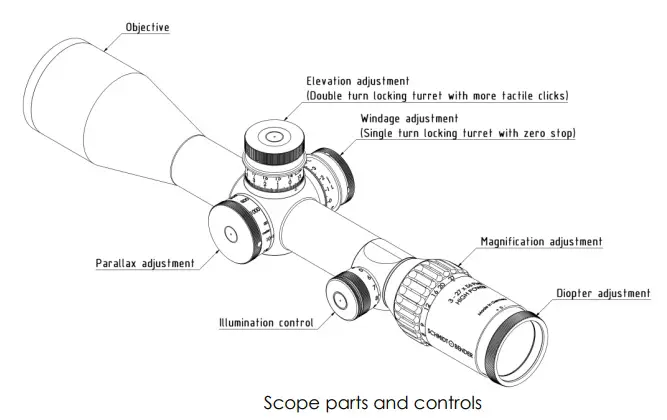
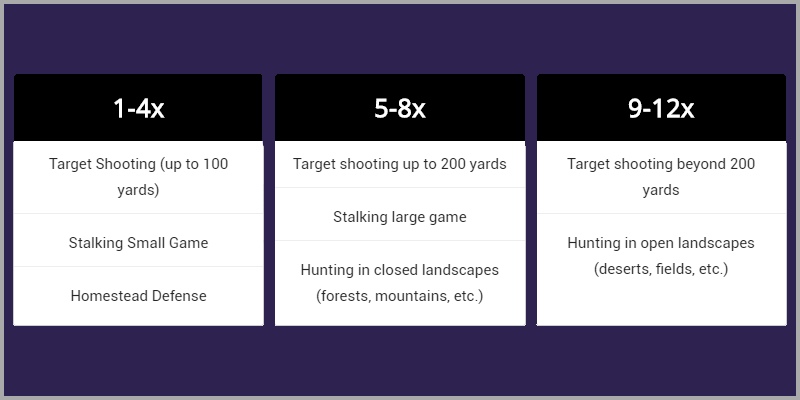
Ideal scopes for elephant.Because of familiarity with scopes or visual acuity, scopes can be used if there are issues that preclude use of iron sights. But in elephant hunting, magnification is dangerous and too much magnification can be deadly. Low-range variables with a low setting of 1X (meaning no magnification) are ideal, and a low setting of 2X is probably the maximum that should be considered. Lighted reticles greatly speed aiming and assist in shot placement.

Optical options.Traditional open sights (notch or V rear, bead or blade front) require the eye to focus in three focal planes: rear sight, front sight, and target. This becomes increasingly difficult as range increases and greater precision is required. Also, open sights become more difficult for most people as middle age approaches and the eye becomes less flexible. The aperture, or peep, sight is an iron sight, but it is actually an optical sight in that the eye naturally centers the front sight in the aperture or circular opening of the rear sight. Thus, aperture sights require the eye to focus in just two focal planes: front sight and target. Most shooters can effectively use aperture sights for some time after open sights are completely “fuzzed out.” A disadvantage is that, in low light, all iron sights—open and aperture—quickly become hard to see. But an aperture sight is a valid option on an elephant rifle.

  • Another extremely sound option is the reflex or red-dot sight. This is a non-magnifying sight that projects or reflects a red dot as the aiming point. Actual dots may be yellow, green, or blue. But on elephant, a red dot is probably the most visible. The reflex sight, like a scope, allows the eye to operate in one focal plane. As with a scope reticle, the eye simply superimposes the dot on the aiming point. All iron sights and reflex sights encourage shooting with both eyes open, thus maintaining the peripheral vision that can be critical in elephant hunting.

Scope mounts.While any mechanical device can fail, the scope mount is probably the weakest link. Recoil is the great enemy to both scopes and mounts, so strong and rugged mounts must be chosen and must be assembled properly in accordance with the manufacturer’s directions. Modern detachable mounts are adequately strong. But even if iron sights are present on the rifle, make sure you have another option in case there is scope failure or a need to go into extremely thick cover. That said, it has been proven that low-powered scopes and reflex sights are faster to use than any iron sights, even at very close range. In elephant hunting, shooting distances are usually very close. This is a situation where a hunter might consider removing a scope in favor of iron sights before concluding a stalk but only if the alternate sights are properly zeroed and he or she is completely familiar with them.

Quality.Both rifles and scopes take serious beatings in Africa, constantly bouncing over rough roads. Scopes should be rugged, and the best way to ensure that is to use one of the many high-quality brands and to avoid the most inexpensive scopes.

Protection.Dust is a major issue in Africa. Bring a scope cover or lens caps. Leave it on your scope in the vehicle, and remove it when you commence a stalk. Using a soft gun case in vehicles will also save wear and tear on the scope as well as the rifle.

Handguns, Muzzleloaders, and Archery Tackle

Handguns, muzzleloaders, and archery tackle are legal in some areas. Elephants have been taken by the most imaginable alternative methods. Equipment requirements for these methods of take are highly specialized. (Remember that an elephant may be 10 times the size of a buffalo bull!) If alternative methods are desired, this must be discussed with and cleared by your outfitter and/or PH, preferably a person who has previous experience with the type of method you wish to use.

Hunting success is never assured, but the choice of alternative methods of take renders success more difficult. This is not a problem for dedicated handgun, muzzleloader, and archery hunters, but it must be understood. Also, the PH is morally and legally responsible for the safety of the entire party. If the PH deems it essential to shoot in order to prevent the escape of a wounded animal and avoid a dangerous follow-up, then that’s a judgment call he or she must be allowed to make. Obviously, when equipment of marginal power and penetration are used, it is more likely that the PH will be required to fire backup shots.

The Professional Hunter’s Greatest Concern

While we all think about Africa’s dangerous animals and snakes, most professional hunters (PHs) and guides worldwide worry most about strangers with firearms. Statistically, nearly as many PHs and trackers are injured by accidental gunshot wounds as by dangerous animals.

Range Day

One of the first events on any safari or guided hunt is to go “check zero.” Some PHs are astute “gun guys,” but many are not. Either way, they will endeavor to get you as close to the animals they hunt as circumstances (terrain, vegetation, etc.) allow. Long-range shooting on elephants is out of the question, but the shot may be standing unsupported at close range or on shooting sticks at very medium range. PHs have a vested interest in making certain your firearms have survived the journey and are reasonably in zero, but they probably don’t care as much as you do that your zero is “perfect.” At the ranges elephants are taken, an inch or two off at 100 yards makes very little difference. Zero does need to be checked, but the purpose of that range day is actually threefold. The PH and his or her team—including the trackers—want not only to ensure that the rifle hasn’t shifted during travel but also to evaluate your shooting ability and your gun handling safety.

Every day is “qual day.” In the U.S. military, an oft-used saying is “every day is qualification or ‘qual’ day.” Range day is like qualification day, and it’s not an exam you cram for. Basic gun handling safety must be practiced all the time, and it matters to your safari. The way you shoot and handle your firearm on range day has much to do with the way your PH and his or her team will conduct the safari—how they will try to set up your shots, what shots they will recommend (or in fact allow) you to take, and how much time they will have to devote to watching your gun handling when they should instead be focused on finding game and orchestrating stalks. Safe gun handling starts at home on your range, but it continues on range day and must be constant throughout.

Shooting Off of Sticks

In African hunting, three-legged shooting sticks are almost universal. There are several reasons for this.

  • They get you up off the ground. Low vegetation often precludes shooting positions commonly used elsewhere (such as prone, sitting, and kneeling) because the animal is often obscured.
  • Even when a low position is possible, everything in Africa has thorns, and biting ants are a common pest in many areas. Shooting standing off sticks solves the problem.
  • Sticks are ideal in the African situation. The lead tracker often carries them. During a deliberate stalk, the PH usually takes the sticks and the lead. But if an animal is suddenly spotted or encountered within shooting range, the lead tracker will customarily set up the sticks and fade to one side. The PH comes up to the other side to evaluate the animal. Your job as the hunter is to step forward, avoiding sudden movements, get the rifle on the sticks, and be prepared to shoot if the PH gives the go-ahead.

Shooting Sticks Technique

Shooting sticks require practice! It takes a bit of work to become comfortable and familiar with shooting sticks. The two primary secrets are:

  • Learn the right height for you!Usually, it’s about the level of the top shirt button, so you can lean slightly forward into the sticks.
  • Placement of your supporting hand.Never rest the barrel directly on the junction of the sticks (or anything else). The ideal is to grasp both the fore-end of your rifle and the sticks, tying them together. Not everyone has large enough hands to do this, so you have to find what works for you. This is another exam you can’t cram for! Don’t let range day be the first time you’ve ever used sticks. Make your own or get a commercial set, and practice with it on your own range. Then you can not only demonstrate your ability but also show your PH and your trackers exactly how you like the sticks set up.

Practice does make perfect! Sticks are not a perfect solution; slight horizontal wobble is almost unavoidable. However, with practice, most shooters can become adequately steady for perhaps 150-yard shots, certainly covering almost all shots at elephants.

Steady and Steadier

With shots at elephants, the target is large and the range is close. The shot must be placed well, but speed is generally more important than precision. Practice on your range until you can consistently hit a pie plate-sized target off sticks at 50 yards and unsupported standing at 25 yards. That should prepare you for most shots at elephants.

Loaded or Unloaded?

As in all things, listen to your PH, and follow his or her directions! Typically, the rifle will be carried with cartridges in the magazine but with the chamber unloaded until the PH directs. The PH will walk ahead of you, and in areas where dangerous game might be present, his or her rifle will usually be fully loaded and ready. Yours doesn’t need to be until you are “action imminent.” There is very little imminent danger while tracking elephant. So, there is usually no reason for the chamber to be loaded until an actual stalk begins.

The basic rule is that the chamber should not be loaded unless you can absolutely control the direction of the muzzle. This means that if you are carrying the rifle slung over your shoulder, the chamber should be clear. In areas where dangerous game is present, most PHs don’t use rifle slings; they carry their rifles in their hands, and the rifles are always ready.

Most sport hunters do use slings, and that’s fine. But a fully loaded rifle should not be slung because it is impossible to control the muzzle in the case of a slip or fall, and many mechanical safeties can be brushed off by clothing while a rifle is slung. If in doubt, never hesitate to ask your PH if you should chamber a round.

Mechanical Safeties

The safety on your rifle is not a substitute for safe gun handling but serves as a backup for momentary lapses. Even if you are carrying your rifle at “port arms” ready, you may briefly lose control of the muzzle direction if you slip or stumble. But when glassing and tracking, whether carrying the rifle casually or slung, the muzzle is not under tight control, so the chamber should be clear.

Whether loaded or unloaded, the muzzle must be pointed in a safe direction. When the chamber is loaded, check the mechanical safety constantly to make sure it is engaged. African hunting is especially problematic for gun handling safety because it is normal for you, your PH, and your trackers to walk single file, and you as the hunter will be well back in the line. No matter how you carry your rifle and how often you check your safety, focus on keeping the muzzle in a safe direction: UP, DOWN, or SIDEWAYS.

The “African Carry”

As so often seen in photos and on television, it is very common in Africa to carry the rifle with the action balanced over one shoulder, butt to the rear, muzzle forward and grasped and controlled by one hand. This is not in itself unsafe, as the hand controls the direction of the muzzle.

In order to understand the “African carry,” it’s useful to know where it comes from. In the old days when trackers also commonly served as “gunbearers,” the normal situation was for the gunbearer to walk ahead—rifle balanced on one shoulder, muzzle forward, butt to the rear. When game was encountered, the hunter needed only to reach forward, grasp the pistolgrip, and take the rifle, quickly and efficiently.

Today, almost all African hunters—professional and amateur—carry their own rifles. The “African carry” persists because few PHs use slings, and the muzzle-forward carry is very comfortable (especially with heavy double rifles, with flat action bottoms and broad muzzles to grasp). The obvious problem is the muzzle points forward. Thus, when walking in line, it is almost inevitable that the person carrying rifle will “sweep” the person walking ahead. If the rifle is unloaded, this is merely unsafe and a display of terrible manners. If the rifle is loaded, the “African carry” is potentially deadly. It is not recommended, but it is a very comfortable way to carry a rifle, especially on long, hot tracking hunts. If employed, it is essential to concentrate constantly on muzzle control. Keep the barrel offset well to the side and away from the people walking ahead.

Evaluating the Elephant

Listen to your PH. Hey, that’s the first and cardinal rule in all African hunting, and it’s equally important with elephant hunting. Hey, it’s your animal, but you must never shoot until the PH gives the go-ahead, and you have to be absolutely certain that you and your professional hunter are looking at the same animal.

Professional Hunter: Hit him.

A hunter fires her rifle at an elephant.

Professional Hunter: Again.

The professional hunter and hunter fire follow-up shots at the elephant.

Judging Elephants

This is your PH’s job, not yours.

The professional hunter and Craig Boddington discuss an elephant they have just observed.

Professional Hunter: Brilliant.

Craig Boddington:

Professional Hunter: Beautiful elephant.

Craig Boddington:

Professional Hunter: The guy’s better than the one yesterday.

Craig Boddington: Yes.

Professional Hunter: He’s in the middle 60s.

Craig Boddington:Yes.

Professional Hunter: You can see how thick he is.

Craig Boddington: Oh, it’s beautiful.

Professional Hunter: That elephant will probably have about 29 to 30 inches in his head. He’s got a monster head.

Craig Boddington: Huge.

Professional Hunter: Absolutely monster head.

Craig Boddington: Yeah.

With experience, PHs can become pretty good at it, but judging the weight of ivory is probably the most difficult and frustrating trophy judgment in the world. This is because a major portion of the tusk is concealed within the skull, and the actual weight depends a lot on the size of the nerve.

Hunters discuss an elephant near a waterhole.

Hunter 1: Oh, lovely, thick ivory.

Hunter 2: Oh, he’s beautiful.

Hunter 1: What a great elephant.

Hunter 2: That is a great elephant.

Some elephants have larger nerve cavities than others. Your PH will do the best job possible of calling the ivory, but the ultimate decision is up to you.

The professional hunter and Craig Boddington each hold up an elephant tusk.

Professional Hunter: Generally, what you look at is the girth of the ivory at the lip, OK? And let’s say, for instance, this ivory is 15 inches at the lip. We then take an assessment of what is actually showing, and in this case, there might be 3 feet of ivory showing. So, you multiply the 3 by the 15, that will give you 45 pounds. Now, that would be if the ivory was solid. We then have the nerve. And the nerve can vary as much as from 5 to 10% of weight lost to the nerve, depending on the age of the elephant.

This elephant is a sort of middle-aged elephant, and you would probably be looking at 7%, maybe 8%, even up to 10%. So, if you take that 45 pounds, less 10%, it would come to around about 40 pounds, 41, 42 pounds, which is exactly what this elephant is.

Craig Boddington That’s exactly what he is.

Professional Hunter: And that’s pretty much how we assess the weight of tusk in the elephant.

With elephant hunting today, there may be specific requirements. In some cases, there are legal minimums, which may be expressed as either tusk length or weight. And in some areas, there are legal maximums enforced to protect genetics for large tusks. Today, with elephant hunting an important management tool in overpopulated areas, there are also trophy hunts in reverse, where tuskless elephants, non-trophy bulls, and even females may be targeted.

Regardless of what type of elephant you’re looking for or have on license, the actual hunt’s much the same because you and your PH are going to have to get very close to make sure the chosen animal meets the requirements.

Trophy Quality

One of the best and most current references is Safari Club International’s record book, available online at scirecordbook.org. With elephants, its primary value is its currency, showing where record-class elephants are being taken today. With elephants, it’s extremely important to research the area you plan to hunt and establish reasonable goals. Monster tuskers can appear almost anywhere, but at the cost of an elephant safari today, it may be foolish to pass a bull that’s average and acceptable for the area and continue looking for an animal that may not exist. Once again, listen to your PH.

Craig Boddington fires his rifle at an elephant.

Professional Hunter: Look at that.

Craig Boddington: Oh, that’s beautiful.

Professional Hunter: He’s 20 inches at the lip.

Craig Boddington: Oh my god. That’s beautiful. Fantastic.

Professional Hunter: He’s absolutely beautiful.

Craig Boddington: Fantastic.

Hunters: Whoa. Whoa.

Professional Hunter: Now, that other tusk is just—

Craig Boddington: The other tusk is unbelievable, absolutely. It’s heavier than I thought, heavier than you thought.

Professional Hunter: That left tusk is going to hit 70.

Measuring

Although the record books are excellent references, try to avoid record book fever. Elephants are measured and enter the record book based on tusk weight. However, your professional hunter is generally going to evaluate the elephant based on tusk length, meaning the length of the exposed tusk at the lip, understanding that a whole lot of that tusk lies buried deep in the skull.

Once you’ve taken your elephant, if possible, you should get accurate tusk weights before you leave camp, but at a minimum, take measurements. Measure the total length of the tusk. Measure from the lip to the tip, and then get the circumference at the widest point. You should record those just for future reference.

Listen to Your Professional Hunter

Listening to your professional hunter (PH) is the first and most cardinal rule of African hunting, and it is even more important with all dangerous game. It is essential that you never shoot until your PH gives the go-ahead. But even when he or she does, it’s still your shot and your animal. So, don’t take a shot unless you are comfortable, steady, confident, and certain that you and your PH are looking at the same animal.

Judging Elephants

This is your PH’s job, not yours. With experience, PHs can become pretty good at it, but judging the weight of ivory is probably the most difficult and frustrating trophy judgment in the world. This is because a major portion of the tusk is concealed within the skull and the actual weight depends a lot on the size of the nerve; some elephants have larger nerve cavities than others. Your PH will do the best job possible of “calling the ivory,” but ultimate decision is up to you.

With elephant hunting today, there may be specific requirements. In some cases, there are legal minimums (which may be expressed as either tusk length or weight). And in some areas, there are legal maximums that are enforced to protect genetics for large tusks. Today, with elephant hunting being an important management tool in overpopulated areas, there are “trophy hunts in reverse.” These hunts may target tuskless elephants, non-trophy bulls, and even females. Regardless of what type of elephant you are looking for or have “on license,” the actual hunt is much the same—because you and your PH are going to have to get very close to make sure the chosen animal meets the requirements.

Trophy Quality

One of the best and most complete references is Safari Club International’s record book, available online (www.scirecordbook.org). With elephants, the primary value is its currency, showing where “record class” elephants are being taken today. With elephants, it is extremely important to research the area you plan to hunt and to establish reasonable goals. Monster tuskers can appear almost anywhere. But at the cost of an elephant safari today, it may be foolish to pass a bull that is average and acceptable for the area and to continue looking for an animal that may not exist. Listen to your PH!

Measuring

Although record books are excellent references, try to avoid “record book fever.” Elephant trophies go into the record books based on tusk weight. However, most PHs judge ivory by estimating the length of the tusk showing beyond the lip and the circumference of the tusk. If possible, you should get accurate tusk weights before you leave camp. But for future reference, it’s a good idea to take measurements: outside the lip, total length, and circumference at the lip.

In the Group

Lone elephant bulls are frequently encountered, but bachelor groups of three to six are probably most common. When hunting bulls, most PHs avoid cow herds because of the danger. But since elephants may breed throughout the year, a mature bull could be found in a herd at any time. When hunting cow elephants, it is necessary to penetrate the herds to make sure a chosen animal doesn’t have a calf at heel.

It is essential to be absolutely certain you are focusing on the same animal as your PH. Shooting the wrong elephant has been done, and it is a horrible mistake! The first and cardinal rule applies: Listen to your PH. It is essential that you never shoot until your PH gives the go-ahead. But even when he or she does, it’s still your shot and your elephant. So, don’t take the shot unless you are comfortable, steady, confident, and certain you and your PH are looking at the same animal.

Stages of Elephant Hunting—Locating Elephants and the Approach

Most elephant hunts have four phases: locating elephants, the approach, selecting the animal, and taking the shot.

Locating Elephants: Tracking

Elephants are usually located by tracking or glassing. Tracking elephants is one of the most traditional and interesting of all African hunts. And it’s pure magic to watch the African trackers do their work.

Despite their great weight, elephants are actually more difficult to track than buffalo because their feet have pads rather than hooves. So, elephant tracking is advanced tracking that only the most skilled trackers can do well. It starts with a search for fresh tracks, which can mean days of covering ground, usually done by a combination of driving and walking. Fresh tracks will often be found crossing a road or track. And water sources are often critical.

It may take a short time on the track, but by examining tracks, dung, and signs of feeding, African trackers can determine the age of tracks. This is critical information, but it depends on the time of day. Early in the morning, it’s perfectly acceptable to follow tracks made during the night, even 12 hours earlier.

A hunter investigates an elephant track.

Craig Boddington: An elephant hunt always starts with finding a good track. We’ve got a good one here. He’s worn in the back. It’s fresh. It’s from this morning. It’s about 7 o’clock right now, just the perfect time to find an elephant track.

Ivan is going to measure it. But we don’t really need to measure this track. We know that this is an older bull because he’s worn. And this is one we’re going to follow.

Elephants can cover many miles in a day, but usually, alternately feed and rest during the night. In the early morning, they’ll usually start to move toward heavy cover, where they’ll rest through the heat of the day. Knowledge of the area is, thus, important to evaluating the feasibility of following tracks, but an elephant will go where it goes. So, one never knows at the outset where and how far a track might lead.

Age of a track is, thus, extremely critical in evaluating whether or not to follow, but so is the track itself. Since mature bulls are nearly twice the size of cows, it’s very easy to determine bull tracks. Size of elephants vary regionally. So, you’re looking for a large track for the area you’re hunting. There are also indicators of age that fine soil will offer, such as depth of corrugations and sole wear.

The professional hunter points at an elephant track.

Professional Hunter: You see no smoothness on the track.

Craig Boddington: No, none whatsoever.

Professional Hunter: None whatsoever. And if you look here, if you look at the big calluses, you can see there’s no smoothness.

Craig Boddington: No smoothness. None whatsoever.

Professional Hunter: So, the baby skin is disappearing. And it’s getting more mature. And then the calluses get even bigger and bigger and bigger. And it just shows you the size of the body. And if you follow a track like that, probably you will end up with mature bull. So, the moment there’s any smoothness, you just walk away from it. It’s going to take you for a long walk.

None of these indicators say anything about size of tusks. The only way to determine size of tusks is track up the elephant and take a look.

Locating Elephants: Glassing

In more open or hilly country, elephants are often spotted simply by glassing. This is common in Namibia. It’s common in Botswana. It’s also common in hilly country in Zimbabwe.

If elephants are spotted at a distance then, you may have to circle the wind, where you may be able to make a direct approach. But the approach begins once elephants are spotted.

The Approach

The elephant hunt really starts almost at the end of the track. This may mean the sign is very fresh. Experienced PHs and trackers develop almost a sixth sense as to when elephants are near. Because of timing and the elephant’s habit of seeking thick cover at midday, auditory clues are actually the most likely—a stick breaking as elephants feed, a trumpet from a paranoid cow, the soft belly rumbling of undisturbed elephants, or the much softer swishing sound of the great ears fanning.

Following tracks is fairly straightforward. Although if the wind is unfavorable, experienced trackers will often deliberately leave the tracks and try to circle the wind. But now, with elephants nearby, it’s absolutely essential to get the wind right.

Most trackers carry ash bags, cloth sacks filled with fine ash, that when shaken will show wind direction. This is usually the time to load the chamber of your rifle. Don’t hesitate to ask your PH if you should load up. But make sure your safety is engaged, and pay close attention to keeping your muzzle in a safe direction.

From this point, movement will be much slower and has to be as quiet as possible. Depending on the cover, you may be able to walk upright or you may need to crouch. Crawling or butt scooting is possible, but rare with elephants.

Follow your PH’s lead, and concentrate on stepping as quietly as possible.

How to Hunt African Elephant

Most elephant hunts have four phases: locating elephants, the approach, selecting the elephant, and taking the shot. Depending on the circumstances, elephants are generally located by tracking or glassing.

Hunting Techniques for Locating Elephant

Tracking

Tracking elephants is one of the most traditional and interesting of all African hunts, and it is pure magic to watch African trackers to their work. Despite their great weight, elephants are actually more difficult to track than buffalo because their feet have pads rather than hooves. So, elephant tracking is advanced tracking that only the most skilled trackers can do well.

It starts with a search for fresh tracks, which can mean days of covering ground, usually done by a combination of driving and walking. Fresh tracks will often be found crossing a road or track, and water sources are often critical. It may take a short time on the track. But by examining tracks, dung, and signs of feeding, African trackers can determine the age of tracks. This is critical information.

Successful tracking depends on the time of day. Early in the morning, it is perfectly acceptable to follow tracks made during the night, even 12 hours earlier. Elephants can cover many miles in a day, but they usually alternately feed and rest during the night. In the early morning, they will usually start to move toward heavy cover, where they will rest through the heat of the day. Knowledge of the area is thus important to evaluating the feasibility of following tracks. But an elephant will go where it goes, so one never knows at the outset where and how far a track might lead.

Age of a track is thus extremely critical in evaluating whether or not to follow, but so is the track itself. Because mature bulls are nearly twice the size of cows, it is very easy to determine bull tracks. Size of elephants vary regionally, so you’re looking for a large track for the area you are hunting. There are also indicators of age that fine soil will offer, such as depth of corrugations and sole wear. None of these indicators say anything about size of tusks. The only way to determine that is to track up the elephant and get a close look!

Glassing

In more open or hilly country, elephants are sometimes located by glassing. This is common in both Botswana and Caprivi, where elephants are extremely plentiful and the bush conditions allow it, and in hilly country in Zimbabwe and elsewhere. Depending on wind, you might circle to intercept or make a direct approach once elephants are located.

The Approach

The elephant hunt really starts almost at the end of the track. This may mean the sign is very fresh. Experienced PHs and trackers develop almost a sixth sense as to when elephants are near. Because of timing and the elephants’ habit of seeking thick cover at midday, auditory clues are the signs you will most likely encounter: a stick breaking as elephants feed, a trumpet from a paranoid cow, the soft belly rumbling of undisturbed elephants, or the much softer swishing sound of the great ears fanning.

Following tracks is fairly straightforward. Although if the wind is unfavorable, experienced trackers will often deliberately leave the tracks and try to circle the wind. But now, with elephants nearby, it is absolutely essential to get the wind right. Most trackers carry ash bags—cloth sacks filled with fine ash—that will show wind direction when shaken. This is usually the time to load the chamber of your rifle. Don’t hesitate to ask your PH if you should “load up.” But make sure your safety is engaged, and pay close attention to keeping your muzzle in a safe direction.

From this point, movement will be much slower and must be as quiet as possible. Depending on the cover, you may be able to walk upright, or you may need to crouch. Crawling or butt-scooting is possible but rare with elephants. Follow your PH’s lead, and concentrate on stepping as quietly as possible.

Stages of Elephant Hunting—Selecting the Elephant

Selecting the Elephant

This is probably the most exciting phase of any elephant hunt. At this point, you’re probably very close. Perhaps closer than you ever expected to be from a wild elephant. But you’ll be shocked at how well elephants blend into cover and how little cover it takes for an elephant to hide almost completely. Whether you’re looking for a worthy bull or a tuskless cow, you must now find out.

Often, you have to go very close then retreat and circle back to look at all the individuals in a group. This phase often happens at midday when African winds are swirling and unstable. So, the trackers are paying close attention to the wind while the PH studies the herd.

Hunters observe an elephant that is very close to them.

Professional Hunter: Yeah, he’s very inquisitive. It’s fine, no problem.

Hunter: Way too smart.

Professional Hunter: He’s not actually feeding there. He’s looking at us. He’s pretending to eat. That’s something that he put in his mouth is called crotalaria. They don’t normally eat that. This is called displacement behavior, where what he’s doing is he’s pretending that he wanted to eat that, but actually he’s checking us out. See how wide open his eyes are? If he was feeding, his eyes would be half shut. And he’s just listening to us talking. If I talk in a proper voice, he’ll probably flare up a little bit. He might come in a step or two, but then he’ll back off.

There we go. That’s fine. He’s going to back off. Now, watch. Back off, big guy. Back off. Back off. No, no, don’t worry. Back off. Back off, big guy. Back off. Back off. Back off. Back off.

The elephant leaves. The hunters laugh in relief.

Professional Hunter: That’s fun stuff, isn’t it?

Not every group or herd will contain a suitable animal. But if you get into a group of elephants and you manage to see each and every one and determine that there’s nothing in there you’re looking for, hey, you’ve won on that day.

The professional hunter and Craig Boddington discuss an elephant they have just observed.

Professional Hunter: Nice elephant.

Craig Boddington: Beautiful.

Professional Hunter: Anywhere else probably.

Craig Boddington: Anywhere else.

Professional Hunter: The champagne cork would have been gone.

Craig Boddington: We’re not anywhere else.

Professional Hunter: No, that’s true.

Craig Boddington: This is the kind of bull we’re seeing. What a fantastic experience.

The Final Stalk

Depending on the range, you may be in a shooting position while you’re evaluating the elephants. But even a small group of four or five bachelor bulls is likely to be spread out whether resting or feeding. Even if you see an acceptable bull, most PHs will want to look at the entire group, making sure there isn’t a monster being overlooked.

So often you’ll have to do some creeping and sneaking to get into position. You’re excited and a little bit scared. This is the time when firearms safety habits become critical. Your chamber will certainly be loaded by now, but check it one last time. Check the power ring on your scope too. Depending on the terrain, you may want some magnification or not, but make sure it’s where you want it.

As you’re creeping and sneaking, check your safety repeatedly. Keep your fingers away from the trigger guard, concentrate on keeping your muzzle in a safe direction, and follow your PH’s lead. If a final approach is needed, it will usually be just you and the PH. The tracker is staying back to reduce noise and movement.

Follow your PH’s lead, and be very, very careful where you step. The PH will probably carry the shooting sticks. And if circumstances dictate, he might be able to set them up. But as we’ve discussed earlier with elephants, be prepared for that standing unsupported shot and expect it to be very close.

Selecting the Elephant

This is perhaps the most exciting phase of any elephant hunt! At this point, you are probably very close—perhaps closer than you ever expected to be from a wild elephant. But you will be shocked at how well elephants blend into cover and how little cover it takes for an elephant to hide almost completely!

Whether you’re looking for a worthy bull or a tuskless cow, you must now find out. Often, you have to go very close, then retreat, and circle back to look at all the individuals in a group. This phase often happens at midday, when African winds are often swirling and unstable. So, the trackers are paying close attention to the wind while the PH studies the herd. Not every group or herd will contain a suitable animal. But if you actually manage to see, evaluate, and eliminate all the animals in the group, then on that day, you’ve won.

Stand Up and Shoot

Your PH’s default method will almost always be to set up the shooting sticks, but this requires both time and motion. There are many situations with elephants when your stalk carries you so close that the extra movement necessary to set up the sticks is almost certain to spook the animal.

With elephant hunting—perhaps more so than any other African hunting—it is essential that you can make an accurate shot from an unsupported standing position. This is another exam that cannot be crammed for. Practice shooting standing on your range. Again, pie-plate accuracy at just 25 yards is good enough. Shot placement is critical on elephant, but beyond 25 yards is actually a long shot on elephant. If such a shot is necessary, there should be time to set up sticks. For the close-range encounter, practice so that you can raise the rifle, snicking the safety as you raise it, find the sight picture quickly, and hit the pie plate.

Closing on Elephant

In the final moments of a stalk—and any time a hunter is in proximity to elephants, even if inadvertently—the rifle will almost always be fully loaded (cartridge in the chamber and safety on). This is not only to be ready but also to avoid the metallic noise of working the action in proximity to game. Again, muzzle control is essential, with the mechanical safety as only a backup system.

  • Crawling. Depending on terrain and vegetation, a lot or a little creeping and crawling is often required to get into a final shooting position. The biggest safety challenge comes when crawling is required. And this is potentially one of the most dangerous situations because many mechanical safeties can be brushed into firing position by grass and twigs. The trigger can also be snagged. Natural excitement doesn’t make it better! It is essential to focus on the muzzle, step by step, and ensure it is pointed in a safe direction. The muzzle can be offset to one side, or if you are in the rear of the line, the muzzle can be reversed.
  • Butt scooting. An alternative to crawling on hands and knees is to sit flat with legs forward, knees bent, and feet flat on the ground. The rifle is laid across the lap with the muzzle to either side in a safe direction and with arms straight and hands to the rear. Using legs and arms, you scoot forward a foot and then repeat. Although slow and uncomfortable, butt scooting is safer from a muzzle control standpoint. If any significant distance must be covered, it is also less strenuous than hands-and-knees and creates much less wear and tear on hands, knees, and rifle.

Although techniques for crawling and scooting are important to know, their use is rare in elephant hunting because the elephant’s eyesight are a third and distant line of defense. Approaches must be made with the wind in favor and in absolute silence, so walking slowly, one step at a time, is most common when closing on elephants. Also, if the wind changes the hunter must be ready to move quickly!

Toughness of African Elephant

Elephants are so huge that “toughness” is a silly subject. No shoulder-fired rifle has enough power to impress an elephant. They can be killed readily but only by bullet penetration into brain, spine, heart, and lungs. Some of our really modern expanding bullets are actually tough enough to provide adequate penetration on some shots. But only non-expanding solid bullets designed specifically for penetration can provide reliable penetration on all potential shots. That said, with elephants, we are asking for a great deal of penetration—often through massive bone. No caliber or bullet is going to work every single time, so with elephants, it is extremely important to keep in mind what might happen next and be prepared for fast follow-up shots.

Shot Placement

Hey. Elephants are so huge that toughness is a silly subject. No shoulder-fired rifle has enough power to really impress an elephant. It’s all about shot placement.

They can be killed readily but only by bullet penetration to the brain, spine, heart, and lungs. Some of our really modern expanding bullets are actually tough enough to provide adequate penetration on some shots, but only non-expanding solid bullets designed specifically for penetration can provide reliable penetration on all potential shots.

That said, with elephants, we’re asking for a great deal of penetration, often through massive bone. No caliber of bullet is going to work every single time. So, with elephants, it’s extremely important to keep in mind what might happen next and be prepared for fast follow-up shots.

Neck and Spine Shots

Though either will at least immobilize an elephant instantly, neither is recommended for an initial shot. The target is too small and the risks of a non-fatal wounding shot much too high.

Frontal Brain Shot

By the time most hunters go on an elephant safari, they’ve read too many old books and watched too many DVDs, and they want to make that frontal brain shot. It is not recommended. The skull is huge, the brain is small, and it’s easy to make a mistake. The biggest challenge with the frontal brain shot is the brain lies well back in the skull, so its relative position changes with distance and head angle.

A professional hunter and Craig Boddington crouch beside an elephant skull.

Professional Hunter: Bearing in mind the brain is about the size of an American football and is totally surrounded and protected by this huge, bulky bone.

Craig Boddington: It sits a whole lot lower in the skull than a lot of people believe.

Generally speaking, at moderate distance, maybe 15 yards, and in a resting attitude, directly between the eyes is about right. Very close in the final instant of a charge, the elephant will drop its head, so center of the forehead is more correct.

When the elephant is threatening, he raises his head. Or when he’s very close, the uphill angle now requires shooting well below the eyes and requiring even more penetration.

The professional hunter and Craig Boddington crouch beside the elephant skull.

Craig Boddington: And that means you’re going to have to penetrate this much bone to reach that brain.

Professional Hunter: Exactly. As the elephant gets closer to you and his head goes down, your point of entry of your shot becomes higher and higher, and less and less bone to go through. The other major problem you have with a frontal with the elephant is that your elephant’s ivory sockets end up right above the eye. And depending on the size of the bull, you’ve got anything from 22 to 26 inches of ivory in the head. Any slight side shot, undoubtedly, the hunter ends up hitting the ivory and damaging the ivory.

It’s not true that a near miss to the brain will always stun an elephant—sometimes. But don’t count on it.

The professional hunter and Craig Boddington crouch beside the elephant skull.

Craig Boddington: This is where you have that honeycomb bone that they talk about that just soaks up the shock, right?

Professional Hunter: If someone puts a shot through the honeycomb, Craig, undoubtedly, the elephant will walk away. It’s not going to go down.

The most likely result of a failed brain shot is that, absent rapid follow-up shot, that elephant will never be seen again. However, despite the most careful maneuvering to get into position, the elephant ultimately decides what shot angle is offered. If an elephant senses something amiss, it will often confront the threat, which means a frontal brain shot will be offered. Avoid it if you can, but study it hard.

The brain lies at the center of the broomstick. So, while external aiming point changes with head attitude and distance, aiming to break that broomstick is always the right shooting solution. If the frontal brain shot is successful, the back legs usually collapse first, and the elephant is down so fast that he literally falls out from under the recoil of the rifle.

If the brain shot fails, things happen just as fast. But you should instantly recognize that you’ve flubbed, and you have to shoot again immediately and more accurately. By the time you’ve recovered from recoil, it will be too late to try a frontal brain again, but the elephant will normally turn away. So, in very rapid succession—fractions of seconds—you’ll be offered first the side brain shot, and then the shoulder shot, and then, as a last resort, a going-away shot to either hip or spine.

Side Brain Shot

Although still not recommended for first-time elephant hunters, the side brain shot is much easier to visualize than the frontal brain, and it’s just as deadly. Unlike with the frontal brain, from the side, the relative position to the brain doesn’t change with head angle and changes only slightly with distance.

A professional hunter, a hunter, and Craig Boddington stand beside a downed elephant.

Professional Hunter: I’ve got Kofi actually pointing out the earhole there. And as the head pivots up, there’s no movement.

Craig Boddington: No, that doesn’t move.

Professional Hunter: Do you see that?

Craig Boddington: That stays the same.

Professional Hunter: It really is the pivot point.

Craig Boddington: The frontal shot changes radically, and the side shot doesn’t change at all.

Professional Hunter: Absolutely.

Craig Boddington: Wow.

Viewed from the side, the elephant’s earhole is very visible. Perfect shot placement for the side brain shot with a broadside presentation is simply one hand’s breadth, three or four inches, in front of the earhole. At a very slight quartering-away angle, the earhole was the aiming point. At a very slight quarter-to angle, shoot slightly in front of the earhole.

As with the frontal brain, things happen quickly. And you’ll know instantly if your shot failed or was successful. But with a failed brain shot, things happen even faster. There will only be a split second for a follow-up shoulder shot, and then a split second later, the only opportunity is the going-away spine or hip shot.

Shoulder/Heart Shot

This is the shot preferred by most professional hunters and the shot that’s recommended for first-time elephant hunters. The target is huge, the aiming point is clear, and if properly executed, the result is certain. The shoulder/heart shot is not as dramatic as the brain shot. An elephant so hit can be expected to run 50 to possibly 200 yards. But losing an elephant to even a marginal chest cavity shot is extremely unlikely.

The elephant has a very prominent crease behind the shoulder that looks very much like an upside-down V. Find that crease, and come up to the top. The crease will end about one-third up from the brisket. Perfect. Broadside, the top of the V is a perfect lung shot. Quartering slightly away, the top of the V is a top of heart shot. For the perfect shoulder/heart shot, however, with a broadside presentation, find the top of the upside-down V. Then, depending on how the elephant is standing, move about 6 to 10 inches left or right toward the center of the shoulder.

A hit slightly higher back will still be solidly in the lungs, but it’s important to stay below the horizontal halfway point. Such a hit should be quickly fatal. But the elephant is going to run, and you can’t be certain of either shot placement or bullet performance, so follow up that first shot if you possibly can.

Shot Placement: Neck and Spine, Frontal Brain

Neck and spine shots. Though either placement will at least immobilize an elephant instantly, neither is recommended for an initial shot. The target is too small, and the risks of a non-fatal wounding shot are too high.

Frontal brain shot. By the time hunters go on an elephant safari, most have read too much of the old stuff and watched too many videos. The front brain shot is often the shot they dream of making, but it is not recommended for first-time elephant hunters! The skull is huge, the brain is small, and it’s easy to make a mistake. It is not true that a near-miss to the brain will always stun an elephant. Sometimes, it will, but don’t count on it. The most likely result of a failed brain shot is that, absent rapid follow-up shots, the elephant will never be seen again. This shot should be avoided if possible. However, despite the most careful maneuvering to get into position, the elephant ultimately decides what shot angle is offered. If an elephant senses something amiss, it will often confront the threat, which means a frontal brain shot will be offered. Avoid it if you can, but study it.

  • Head angle. The biggest challenge with the frontal brain shot is that the brain lies well back in the skull, so its relative position changes with distance and head angle. Generally speaking, at moderate distance (15 yards) and in a resting attitude, directly between the eyes is close. When very close in the final instant of a charge, the elephant will drop its head, so the center of forehead is more correct. When threatening or when very close, the uphill angle requires shooting well below the eyes and even more penetration.
  • Break the broomstick! The most visual and most easily remembered rule on the frontal brain shot is to visualize a broomstick horizontally through the elephant’s skull from earhole to earhole. The brain lies at the center of the broomstick, So, while the external aiming point changes with head attitude and distance, aiming to “break the broomstick” is always the right shooting solution.
  • What next? If the frontal brain shot is successful, the back legs normally collapse first, and the elephant is down so quickly that it essentially falls out from under the rifle. If the brain shot fails, things happen just as fast. But you should recognize instantly that you’ve flubbed it, and you must shoot again immediately and more accurately. By the time you have recovered from recoil, it will be too late to try a frontal brain again. The elephant will normally turn away, so in very rapid succession (fractions of seconds), you will be offered first the side brain shot, then the shoulder shot, and, then as a last resort, a going-away shot to either hip or spine.

Shot Placement: Side Brain, Shoulder/Heart

Side brain shot. Although still not recommended for first-time elephant hunters, the side brain shot is much easier to visualize than the frontal brain shot—and equally deadly. With the side brain shot, the relative position of the brain doesn’t change with the head angle unlike with the frontal brain shot. And it changes only slightly with distance.

  • Viewed from the side, the elephant’s earhole is very visible. Perfect shot placement for the side brain shot with a broadside presentation is simply one hand’s breadth—3 or 4 inches—in front of the earhole.
  • At a very slight quartering-away angle, the earhole is the aiming point. At a very slight quartering-to angle, shoot slightly in front of the earhole.
  • As with the frontal brain shot, things happen quickly, and you will know instantly if your shot failed or was successful. But with a failed side brain shot things happen even faster. There will be only a split second for a follow-up shoulder shot, and then a split second later the only opportunity is the going-away spine or hip shot.

Shoulder/heart shot. This is the shot preferred by most African PHs and most recommended for beginning elephant hunters. The target is huge, the aiming point is clear, and if properly executed, the result is certain. The shoulder/heart shot is not as dramatic as the brain shot. An elephant that is hit can be expected to run 50 to possibly 200 yards, but losing an elephant to even a very marginal chest-cavity shot is extremely unlikely.

  • Find the V. The elephant has a very prominent crease behind the shoulder that looks very much like an upside-down V. Find that crease, and come up to the top. The crease will end about one-third up from the brisket—perfect! Broadside, the top of the V is a perfect lung shot. Quartering slightly away, the top of the V is a top of heart shot. For the perfect shoulder/heart shot, however, with a broadside presentation, find the top of the upside-down V. Then depending on how the elephant is standing, move about 6 to 10 inches left or right toward the center of the shoulder.
  • A hit slightly high or back will still be solidly in the lungs, but it’s important to stay below the horizontal halfway point.
  • Such a hit should be quickly fatal, but the elephant is going to run. You cannot be certain of either shot placement or bullet performance, so follow up that first shot if you possibly can!

Shot Angles

Obviously, just like any other animal, elephants don’t always stand perfectly broadside. But because elephants are so much larger than anything else, only very slight quartering angles can be accepted for body shots, and angles make brain shots more difficult. The broadside presentation is rarely perfect, but most PHs will work very hard to maneuver you into an acceptable shooting position and presentation. And you must not shoot until your PH says, “Take him.”

Going-Away Shots

On unwounded elephant, of course, never. However, to prevent the escape of a wounded animal, the going-away shot is not an uncommon option. Like most animals, upon receiving a bullet, an elephant is most likely to turn away to escape, opening up two opportunities for follow-up shots.

Spine Shot

A central Texas heart shot is unlikely to penetrate to the vitals of an elephant, so it’s essential to break heavy bone. Unlike most animals, on an elephant, the spine is very visible as a prominent ridge above the tail. This is not a large aiming point, but a hit on that ridge will immobilize your elephant.

Hip Shot

Although harder to visualize, the hip shot is much preferred by experienced elephant hunters for stopping wounded elephants. As an elephant goes away, the pumping action of the massive hip joint is actually visible at just about the level of the anus. Aside from the obvious danger of following the elephant, the elephant’s able to cover vast amounts of ground. So, potential loss of the wounded elephant is probably higher than with any other animal. Never shoot unless you’re certain, but once the initial shot is fired, follow up your shot if you possibly can. If the first shot wasn’t fatal, additional shots can’t worsen the situation.

Shot Angles

Obviously game animals don’t always stand perfectly broadside. But because elephants are so much larger than anything else, only very slight quartering angles can be accepted for body shots, and angles make brain shots more difficult. The broadside presentation is rarely perfect, but most PHs will work very hard to maneuver you into an acceptable shooting position and presentation. You must not shoot until your PH says, “Take him!”

  • Going-away shots. On unwounded elephant, of course, never! However, to prevent the escape of a wounded animal, the going-away shot is not an uncommon option. Like most animals, upon receiving a bullet, an elephant is most likely to turn away to escape—opening up two opportunities for follow-up shots.
  • Spine shot. A central “Texas heart shot” is unlikely to penetrate to the vitals of an elephant, so it’s essential to break heavy bone. Unlike most animals, the spine on the elephant is very visible as a prominent ridge above the tail. This is not a large aiming point, but a hit on that ridge will immobilize your elephant.
  • Hip shot. Although harder to visualize, the hip shot is much preferred by experienced elephant hunters for stopping wounded elephants. As an elephant goes away, the pumping action of the massive hip joint is actually visible, at about the level of the anus.

Aside from the obvious danger of following a wounded elephant, the elephant is able to cover vast amounts of ground. So, potential loss of a wounded elephant is probably higher than than with any other animal. Never shoot unless you are certain, but once the initial shot is fired, follow up your shot if you possibly can. If the first shot wasn’t fatal, additional shots cannot worsen the situation!

After the Shot

Adrenaline is surging, and that’s good. But that’s not the time to throw away safety. After firing a shot, immediately make ready to shoot again. With elephant hunting, a backup or insurance shot is almost always fired no matter what happens after the first shot. Sometimes, you will remain in position and observe or listen for a time. Other times, you will rush forward, depending entirely on your PH’s judgment at that moment. After the shot or shots, you should reload your chamber and be ready. But before you move forward to check your elephant or look for sign, be certain you engage your safety, and maintain full control of your rifle with both hands. Before you move is the right time to top up your magazine, especially if you have fired more than one shot.

Approach a downed elephant with extreme caution, and do not rush ahead of your PH and trackers. Approach with your PH. Ideally, approach so that a final insurance shot may be fired from a safe position—either into the brain or heart, depending on how the elephant is lying. With elephants, it is the lack of reaction to that insurance shot that verifies the animal’s death. Once it is certain the animal is deceased, unload your chamber.

Follow-Up Shots and Backup Shots

Follow-up shots. On the range, practice firing additional shots from sticks and while standing unsupported. If a brain shot is not successful, things happen very fast. And elephants almost never go down immediately even to perfectly placed heart/lung shots. So, with elephants, additional follow-up shots can be extremely important. If the first shot didn’t go right, follow-up shots, in this unique case, can actually be more important than the first shot.

  • Practice working your action or using the second barrel of your double without changing position or losing your sight picture. Speed is of the essence! Things happen fast after the first shot is fired. But with elephants, there will usually be a brief opportunity for a follow-up shot, provided you have trained yourself adequately. Especially with failed brain shots—which are common—it is extremely unlikely that elephant will ever be seen again, so quick follow-up shots are of critical importance. As with all situations, it remains essential to be absolutely certain you are aiming at the same elephant!

Backup shots. These shots are commonly thought of as being fired by your PH at your elephant. Most competent PHs prefer not to fire, following the ethic that it is your animal and your long-awaited adventure. Some, usually with limited experience, are too anxious to assist.

  • The subject of backup shots must be discussed with your PH at the start of your safari. If you insist on a brain shot, then it is highly recommended that you ask your PH to be prepared to fire immediately after you do. The result of a failed brain shot, as one famous PH said, is that the elephant will “ramp the horizon, never to be seen again.” The shoulder/heart shot, though not as immediate, is far more certain, and its use may preclude the necessity for the PH to fire.
  • Ultimately, the PH is responsible for the entire party’s safety, including yours. It is the PH’s responsibility to recover wounded game if at all possible, and this is clearly essential with wounded dangerous game. It is recommended that the PH be allowed to use his or her judgment as to whether or not to fire. The necessity for the PH to fire is greatly mitigated by accurate initial shot placement and by follow-up shots when they can safely be made.

Following Up on Elephant

Absent a well-executed brain shot, it’s very unlikely for an elephant to fall within sight. However, the animal is huge. It’ll be heard crashing away for some time and may roar in pain and fright. In open cover, some PHs will immediately dash forward, trying to keep the elephant in sight. But it’s more common to wait a bit and listen.

If the shot is well placed, the elephant will go down very quickly, usually well within earshot. Either way, before moving, top up your rifle. Follow your PH’s lead. But be sure to engage your safety and keep your rifle muzzle in a safe direction. And be ready.

Your professional hunter and, perhaps, the trackers have observed the hit or hits, and they have a reasonable idea of the situation. But hey, some hits are better than they look and some are worse. Unless it’s believed that the shots weren’t well placed, the initial follow-up is generally conducted with the hope and often belief that the elephant is down.

With elephants, however, this is usually readily apparent. Blood spray from the trunk will indicate a proper heart-lung hit, and the elephant will quickly be found. The spoor will also reveal a poorer hit and a worse situation. Your professional hunter is in charge and he’s done this before. Place yourself where he tells you, and proceed carefully.

The professional hunter signals the group to stop.

Craig Boddington: There’s still movement?

The professional hunter and Craig Boddington walk slowly forward.

Rifle fully loaded, on safe, controlled by both hands, muzzle in a safe direction. When the elephant is spotted, whether down or standing, shoot again at your PH’s direction.

Craig Boddington fires his rifle at the elephant.

Professional Hunter: He’s going away.

The elephant is shown lying down.

Another hunter fires his rifle at an elephant in a herd. The elephant collapses. The other elephants run away as hunters shout at them. The elephant gets up.

Hunter: He’s getting back up. Hit him again.

The hunters fire multiple follow-up shots at the elephant.

Depending on cover and spoor, after you follow it for maybe 200 yards, the assumption has to be made that you’re following a wounded elephant. This is a dangerous situation, and the outcome is now uncertain. The spoor has to be followed as long as it is possible for the trackers to hold the track or until the elephant’s crossed a totally unbreachable boundary such as an international border. Wounded elephants have been recovered after several days on the track.

In the case of a wounded elephant, the PH is absolutely in charge. And one of the things he worries about most is an inexperienced hunter with a rifle in his hands. Some PHs prefer to follow up alone with their trackers. Others will invite the hunter to participate based on their evaluation of his or her coolness and safe gun handling. If invited, walk as the PH directs, usually to the side rather than the rear and concentrate. This is serious stuff.

Pay attention to where the PH and trackers are at all times. Keep your rifle on safe, and monitor your muzzle direction. This is a good time to load up again with solids. In the case of a charge, the frontal brain shot is usually the only shot that’s presented, and it’s the only shot that’s going to stop the elephant.

An elephant charges forward. Two hunters fire multiple shots at the elephant. The elephant collapses.

It hasn’t changed. Imagine the broomstick running from earhole to earhole, and shoot to break that broomstick.

Following Up on Elephant

Absent a well-executed brain shot, it is extremely unlikely for an elephant to succumb within sight. The animal is huge, so it will be heard crashing away for some time and may roar in pain and fright. In open cover, some PHs will immediately dash forward, trying to keep the elephant in sight. But it’s more common to wait a bit and listen. If the shot is well placed, the elephant will go down very quickly, usually well within earshot. Either way, before moving, top up your rifle. Follow your PH’s lead. But be sure to engage your safety, and keep your rifle muzzle in a safe direction. And be ready!

  • Your PH and, perhaps, the trackers have observed the hit or hits. Based on experience, they will have a reasonable idea of the situation. But some hits are better than they look, and others are worse. Unless it’s believed that the shot or shots weren’t well placed, the initial follow-up is generally conducted with the hope (and often belief) that the elephant is down. With elephants, however, this is usually readily apparent. Blood spray from the trunk will indicate a proper heart/lung hit, and the elephant will quickly be found. The spoor will also quickly reveal a poorer hit and a worse situation. Your PH is in charge, and he or she has done this before. Place yourself where the PH tells you and proceed carefully—rifle fully loaded, on safe, controlled by both hands, muzzle in a safe direction. When the elephant is spotted, whether down or standing, shoot again on your PH’s instruction and place your shot as well as you can.
  • Depending on cover and spoor, after you’ve followed for 200 yards, the assumption must be made that you are following a wounded elephant. This is a dangerous situation, and the outcome is now uncertain. The spoor must be followed as long as it is possible for the trackers to hold the track or until the elephant has crossed a totally unbreachable boundary, such as an international border. Elephants have been recovered after several days on the track.
  • In the case of a wounded elephant, the PH is absolutely in charge, and one of the things he or she worries about most is an inexperienced hunter with a rifle following behind. Some PHs prefer to follow up alone with their trackers. Others will invite the hunter to participate based on evaluation of his or her coolness and safe gun handling. If invited, walk as the PH directs—usually to the side rather than the rear—and concentrate. This is serious stuff. Pay attention to where the PH and trackers are at all times, keep your rifle on safe, and monitor your muzzle direction. This is a good time to load up with solids!
  • In the case of a charge, the frontal brain is usually the only shot—and almost always the only shot that will stop the elephant. The shot placement hasn’t changed; you must shoot to “break the broomstick” running from earhole to earhole.

Researching Africa

Anticipation is part of the fun of any safari, but smart preparation will make any safari more successful.

For further study:

  • African literature. These works are unusually rich. Since the African elephant has long been the stuff of legends, there are a number of great books specifically on elephant hunting, both old and current. While Africa has certainly changed, elephant hunting hasn’t changed much, so there is value to this reading. Just be aware that today’s trophy quality is not what it was 50 years ago, so do not allow your reading and study to instill unrealistic expectations.
  • Films and videos. Beware of unnecessarily sensationalized media. With elephants, mock charges are common, but serious charges are rare, especially with straight shooting and careful hunting. However, there are great films, television shows, and videos (both amateur and professional) on elephant hunting. The most important thing to learn is to visualize proper shot placement, and moving pictures are excellent for this. They are also valuable for ivory judgment.

Conditioning

Elephant hunting is not marathon running or sheep hunting, but an elephant hunt with typical tracking can be one of the most physically demanding hunts in Africa. The best exercise for walking is walking. Tracking is conducted at a slow, steady pace. But it isn’t unusual to be on tracks for several hours, and at the end of the hunt, the vehicle may be several hours away.

Practice

Shooting accurately is a key to the success of any hunt. The more practice time you can manage in the months and weeks before the hunt is to the good. There is no formula, but if an unfamiliar heavy rifle is acquired for an elephant hunt, a minimum of 50 (better 100) shots should be fired through it prior to the hunt, both to build familiarity and to ensure absolute reliability. Because of recoil, this cannot be done in one or two sittings. You can use a .22 to practice shooting off sticks and while standing. Shooting the elephant rifle should be limited to 5 to 10 shots per range session to avoid acquiring a recoil-induced flinch.

  • Shooting sticks. Make or acquire a set of shooting sticks and practice with them, working your bolt through a full magazine or using both barrels of your double.
  • Speed. The great complaint of African professional hunters (PHs) about their hunters’ shooting is not raw accuracy but speed in acquiring targets and getting their shots off. Rather than just practicing shooting off sticks, practice starting a few feet behind them with rifle down and safety on. Work on getting into position, acquiring the target, and getting an accurate shot off quickly.
  • Offhand or standing. Practice shooting unsupported at closer ranges. In the field, this is to be avoided. But in close encounters with elephants, there is often no other option, so spend a lot of range time shooting offhand.
  • Reloading. Practice working your action rapidly with as little movement off the target as possible, firing two or three shots rather than just one.
  • Use a .22. While there is no substitute for shooting the rifle or the rifles you intend to use on safari and becoming absolutely familiar and confident, shooting off sticks and shooting offhand can be practiced very effectively with a .22 rimfire—cheaper ammo, no recoil, less noise. Training with an accurate airgun is equally effective.

Medical Considerations

Always consult your doctor before planning any distant hunt, or beginning a training regimen for any hunt. That said, medical preparations for safaris are minimal.

  • Inoculations. The Centers of Disease Control and Prevention (CDC) maintains a listing of required and recommended inoculations by country. Again, consult with your doctor before taking any medications, but “required” and “recommended” mean just that. You can expect to be required to show proof of a required inoculation in order to gain entry to a country, while recommended inoculations are at your discretion. It’s important to check the current listings, but typically, there are no required inoculations for Namibia, South Africa, or Zimbabwe. Countries to the north often require a current yellow fever vaccination.
  • Malaria prophylaxis. Except for South Africa, most elephant hunting areas have potential for malaria-carrying mosquitoes. Numerous malaria preventives are available—all by prescription—so discuss the best option with your doctor.
  • Medical evacuation membership. African hunting is generally safe, but in the case of an accident or sudden illness, medical evacuation from a foreign country can be catastrophically expensive. Several firms offer medical evacuation memberships that will cover these expenses if evacuation is necessary. This coverage is a good idea any time you are away from home, so annual membership is ideal for people who travel regularly. If this is not the case, short-term membership is available to cover the period of your safari.
  • First-aid training. If you aren’t trained, get basic first-aid training. Your PH will do everything possible to prevent you from being injured. You should be prepared to help your PH if there’s a serious accident.

Paperwork

Temporary firearms importation and visa requirements vary with countries (and visa requirements vary depending on your country of origin). Both are subject to change. Discuss these requirements with your outfitter well ahead of your safari, and be clear as to what actions are required and who (you or your outfitter) is supposed to do them.

Airline Reservations and Requirements

Airline Reservations and Requirements Traveling with firearms is increasingly difficult. Some carriers no longer carry firearms, and many carriers require advance notice. Some interim destinations require special permits to transit with firearms. The simplest and safest solution is usually to use a “firearms and hunting-savvy” travel agent to help sort through the labyrinth, but if you book your travel yourself, speak to an airline representative and make sure all requirements are fully understood.

Clothing

With current baggage restrictions, it’s advisable to pack light. This is generally possible on an African safari because weather is usually mild and, unlike hunting camps in many areas, laundry is done on a more or less daily basis.

  • Camouflage is becoming more common in Africa, and restrictions against wearing it have generally been lifted. Whether camouflage or solid, neutral green is the preferred color. You should have at maximum three changes of clothing.
  • Fabric chosen should be quiet to avoid scratching noises in brush and should be rugged enough to withstand vigorous handwashing. Cotton is always a good choice.
  • Whether you wear short or long trousers or sleeves is a personal choice. Most PHs wear shorts. Shorts are quieter in brush and cooler during the heat of the day but mean more exposure to the sun and (probably) more scratches from thorns.
  • Do not underestimate how cold it can be during the African winter (June to August), which corresponds with the peak safari season in southern Africa. In addition to layered outerwear for cold mornings and rapidly cooling evenings, bring a warm watch cap or balaclava and gloves.
  • Rain is extremely unlikely between June and October, but it is not impossible. Light rain gear can also double as an extra layer.

Additional Equipment

Optics

Binoculars are mandatory, likewise good sunglasses.

Firearms Accessories

Cleaning kit. Africa is hard on firearms. Dust is the major issue, but once in a while, insects nest in gun barrels (overnight). Bring minimal cleaning gear: oil, solvent, patches, and a jointed cleaning rod.

Rifle sling, scope caps, soft gun case, belt ammunition pouch, hearing protection. Especially if the decision is made to bring just one rifle, consider bringing a spare riflescope set in rings, along with necessary tools to switch in case a scope fails or is damaged in a fall.

Ammunition. Required amounts vary depending on length of safari and size of bag, but running low isn’t fun, and running out is a problem. Think about two to three cartridges for each animal you plan to hunt along with spares for zeroing and checking zero periodically. If a specific rifle is brought primarily for elephant, then 30 rounds is plenty, mixed between expanding and solids. Weigh your total ammunition, and make sure you don’t exceed the international 5-kilogram or 11-pound baggage limit for ammunition.

Packing Tips

Firearms and Ammunition

Firearms must be packed separately in sturdy locked cases. Make sure your hinges are secure and the hasps allow the case to be securely locked. Always declare firearms and ammunition when you approach any ticket counter.

In the United States, up to 5 kilograms or 11 pounds of ammunition in original factory containers can be in checked baggage, separate from firearms. In Europe and South Africa, the same weight limit applies, but ammunition must be checked separately in its own locked case (wood, metal, or plastic). The simplest approach is to get a small, sturdy ammunition case and pack it in your duffel bag with locks inside but not locked when you leave the United States. In this fashion, you are ready to comply if required during a plane change or stopover.

Carry-On Bag

While baggage handling is generally reliable, delays and lost bags do occur everywhere in the world. Pack your carry-on bag as if it were the only bag you will receive! You can usually borrow a rifle and ammo and purchase basic clothing articles, so mandatory in the carry-on are binoculars, camera, extra prescription glasses, all prescription medications for the full period of your hunt, one change of clothing, and anything else you simply cannot live without for 10 days or 2 weeks.

Checked Bags

Luggage must be rugged and waterproof, but soft duffel bags are better than hard-sided luggage because they are easier to fit into vehicles and smaller final transport to camp.

Do Wolves Feast on Deer?

0

“Wolves vs. Deer: Unveiling the Age-Old Predator-Prey Relationship”

The Varied Diet of Wolves: Exploring Their Consumption of Deer

The Varied Diet of Wolves: Exploring Their Consumption of Deer

Wolves are known for their adaptability when it comes to their diet. While their main prey consists of large, hooved herbivores such as moose, elk, and deer, they have also been observed consuming a variety of other animals. This includes smaller mammals like beavers, hares, marmots, and rodents, as well as fish and birds. Wolves are even known to scavenge for carrion and garbage. However, their occasional predation on domestic livestock and pets has led to conflicts with humans and a negative reputation for the species.

The specific diet of wolves depends on the availability of prey in their habitat, as well as the size and vulnerability of the prey. Different regions across the Northern Hemisphere have varying populations of ungulates (hooved animals), which serve as the primary prey for wolves. For example, Arctic wolves hunt caribou and musk-oxen in their icy habitats, while wolf packs in Idaho, Montana, and Wyoming primarily target elk, moose, deer, bighorn sheep, and mountain goats. Mexican gray wolves prefer elk and deer as their wild prey in North Carolina.

In parts of Spain and Italy, wolves tend to feast on red deer, roe deer, and wild boar. In Central Asia, ibexes, argali sheep, and wild goats are the main prey for wolves. The Himalayan wolf inhabits high altitudes in the Himalayas and Tibetan plateau where they hunt Tibetan gazelles.

While wolves can survive on 2.5 to 3.7 pounds of meat daily, successful reproduction requires them to consume 5 to 7 pounds per day. Despite this need for food intake for reproduction purposes or survival in general; however; wolves typically do not eat every day but instead follow a feast-or-famine lifestyle. They can go for days or even weeks without eating, and when they do make a successful kill, they can consume up to 20 pounds of food in one meal.

Hunting large ungulates like elk, moose, caribou, and musk-oxen is easier and safer for wolves when they hunt in packs. It takes skill, energy, and luck to successfully take down such large prey. While wolves are skilled hunters, they are not always successful due to various factors such as the age and experience of the wolf, the vulnerability of the prey (e.g., old, injured, sick or young individuals), the time of year and day, the terrain, and the weather conditions.

Research has shown that wolves tend to target the most vulnerable individuals within a herd or flock of prey species. This includes older animals, those that are injured or sickly, as well as individuals with a history of poor nutrition. By targeting these vulnerable individuals, wolves ensure their own survival by reducing competition for resources.

The relationship between wolves and their prey is complex and influenced by various factors. In some cases where more than one prey species is available in an ecosystem, wolves may switch their focus from one species to another depending on the availability and abundance of each. For example, in northeastern Minnesota’s east-central Superior National Forest where white-tailed deer, moose, and beavers are present as top menu items for wolves; researchers have observed that when moose populations declined by over half from 2006 to 2016; wolf populations almost doubled instead of decreasing. Wolves supplemented their diet by hunting white-tailed deer during this period.

Similar observations were made in other locations where wild ungulates became scarce or absent. A study conducted in Alaska’s Alexander Archipelago revealed that while ungulates represented about 65% of wolves’ diet on a regional level; the kind and proportion of ungulates varied across different locations. Sitka black-tailed deer were the main prey on several islands, while moose and mountain goats were the primary prey on the mainland. When one of these ungulate species declined or became scarce, wolves adapted by changing their prey to a variety of other species including land mammals (beaver, black bear, rodents, etc.), marine life (mammals and fish), and even birds.

In instances where wild ungulates or other wild prey are scarce or absent from the landscape, wolves may turn to alternative food sources such as domestic livestock. This brings them into direct conflict with humans and has been linked to seasonal patterns like grazing seasons when livestock are more vulnerable. Wolves have also been known to scavenge for garbage in certain areas. In Israel, wolf scat analysis revealed that they consume not only meat scraps and fruit but also non-food trash items like human hair, plastic containers, cigarettes, and eggshells.

Fruit is another surprising addition to wolves’ diets in various regions across Europe and China. Studies have found evidence of wolves consuming cherries, berries, apples, pears, figs, plums, grapes, melons; even regurgitating wild blueberries for their pups at rendezvous sites in Minnesota’s Voyageurs National Park.

Understanding the varied diet of wolves is crucial for wildlife management policies and debunking myths surrounding wolf predation. By studying what wolves eat and how it relates to their habitat and prey availability; researchers can gain insights into the ecological dynamics between predators and their prey while also addressing conflicts with humans over resources.

From Moose to Deer: Understanding the Prey Preferences of Wolves

Wolves are large carnivores that primarily prey on ungulates, such as moose, elk, and deer. However, they are not strict carnivores like some species of cats. Wolves have adapted to a more varied diet and are considered generalists and opportunistic hunters. In addition to ungulates, wolves also prey on smaller animals like beavers, hares, marmots, rodents, fish, and birds. They are also known to scavenge carrion and garbage. Unfortunately, occasional predation on domestic livestock and pets has contributed to the negative reputation of wolves among some people.

The flexibility in their diet is one of the reasons for the success of wolves as a species. It allows them to survive and thrive in various ecosystems across the Northern Hemisphere. The type of prey available, its size, and vulnerability determine what wolves eat. Different regions have different dominant prey species for wolves. For example, Arctic wolves hunt caribou and musk-oxen while elk, moose, deer, bighorn sheep, and mountain goats are the main prey for wolf packs in Idaho, Montana, and Wyoming.

Wolves can survive on 2.5 to 3.7 pounds of meat daily but require 5 to 7 pounds per day for successful reproduction. However, they do not eat every day and live a feast-or-famine lifestyle. After successfully hunting a large ungulate, a wolf can consume up to 20 pounds of food in one meal. Hunting large ungulates is easier and safer for wolves that hunt in packs compared to hunting alone.

Research has shown that wolves tend to target the most vulnerable individuals within a herd or flock of prey species. This includes the old, injured, sick or young individuals with less visibly discernable vulnerabilities such as poor nutrition history. When wild ungulates and other wild prey are scarce or absent from the landscape, wolves have been observed to switch their prey preferences. They may supplement their diet with alternate prey species or turn to domestic livestock, leading to conflicts with humans.

Understanding the prey preferences of wolves is crucial for wildlife management policies and dispelling myths and misperceptions about wolf predation. By studying what wolves eat, researchers gain insights into factors such as prey availability, vulnerability, terrain, climate, disease, and fragmented landscapes that influence wolf diets. This knowledge helps in conserving wolf populations and promoting coexistence between wolves and humans.

Feast or Famine: How Wolves Adapt Their Diet to Include Deer

Feast or Famine: How Wolves Adapt Their Diet to Include Deer

Wolves are known for their adaptability when it comes to their diet. While their main prey consists of large hooved herbivores like moose, elk, and deer, they have also been observed hunting smaller animals such as beavers, hares, marmots, and rodents. In addition to these land-dwelling creatures, wolves have been known to consume fish and even birds. They are opportunistic hunters and scavengers, often feasting on carrion and garbage. However, this varied diet has also brought them into conflict with humans as they occasionally prey on domestic livestock and pets.

The flexibility in the wolf’s diet is one of the reasons for its success as a species. It allows them to survive and thrive in various ecosystems across the Northern Hemisphere. The type of prey wolves eat depends on its availability, size, and vulnerability. Different regions have different dominant prey species for wolves. For example, Arctic wolves hunt caribou and musk-oxen while elk, moose, deer, bighorn sheep, and mountain goats are the primary prey for wolf packs in Idaho, Montana, and Wyoming.

Wolves typically do not eat every day but live a feast-or-famine lifestyle. They can go days or even weeks without eating but can consume up to 20 pounds of food in a single meal after successfully hunting a large ungulate. Hunting large ungulates like elk and moose is easier and safer for wolves that hunt in packs. However, hunting success depends on various factors such as the age and experience of the wolf, vulnerability of the prey animal, time of year and day, terrain, and weather conditions.

Research has shown that wolves tend to target the most vulnerable individuals in a herd or flock of prey species. This includes old or injured individuals as well as young ones. Wolves also target prey with less visibly discernable vulnerabilities, such as a history of poor nutrition. In instances where wild ungulates and other prey are scarce or absent, wolves have been observed to switch their diet to include alternate prey species. This prey switching behavior helps them survive in environments where the primary prey species is in decline.

In some cases, when wild prey is unavailable, wolves turn to domestic livestock as a food source. This brings them into direct conflict with humans and has contributed to their negative reputation in certain areas. Wolves have also been known to scavenge from garbage dumps and consume non-food items accidentally, such as plastic containers or broken glass.

Overall, the wolf’s diet is influenced by factors such as prey availability, vulnerability, terrain, climate, and disease. Understanding what wolves eat and how they adapt their diet is crucial for wildlife management policies and dispelling myths and misperceptions about wolf predation. By studying their diet and prey relationships, researchers can gain valuable insights into the behavior and ecology of these fascinating animals.

Deer on the Menu: Unraveling the Relationship Between Wolves and Their Prey

Wolves have a diverse diet that includes large, hooved herbivores known as ungulates, such as moose, elk, and deer. However, they are not limited to these prey species and also hunt smaller animals like beavers, hares, marmots, rodents, fish, and birds. They are even known to scavenge carrion and garbage. This adaptability in their diet has contributed to the success of wolves as a species, allowing them to thrive in various ecosystems across the Northern Hemisphere.

The specific prey that wolves target depends on factors such as availability, size, and vulnerability. Different regions have different dominant prey species for wolves. For example, Arctic wolves primarily hunt caribou and musk-oxen, while wolf packs in Idaho, Montana, and Wyoming mainly rely on elk, moose, deer, bighorn sheep, and mountain goats. The Mexican gray wolf favors elk and deer as its wild prey in North Carolina.

Wolves can survive on 2.5 to 3.7 pounds of meat per day but require 5 to 7 pounds for successful reproduction. However, they do not eat every day and live a feast-or-famine lifestyle. After successfully hunting a large ungulate, a wolf can consume up to 20 pounds of food in one meal. Hunting large ungulates is easier and safer for wolves that hunt in packs compared to hunting alone.

When it comes to hunting strategies and behaviors of wolves, studies have shown that they tend to target the most vulnerable individuals within a herd or flock of prey species. This includes the old, injured, sick or young individuals with less visibly discernable vulnerabilities such as poor nutrition history.

The relationship between wolves and their prey is complex and influenced by various factors such as the number of prey animals available. Research conducted on Isle Royale, an isolated ecosystem, revealed that the moose and wolf populations tended to reflect each other. When moose numbers were high, there was more food for wolves, leading to better nutrition, higher pup survival rates, and an increase in the wolf population. As wolf numbers declined, they put less pressure on the moose populations, allowing them to rebound.

In multi-prey ecosystems where more than one prey species is available, a decline in the primary prey species can lead to two possible outcomes for the predator population. The predator population may also decline or it may continue to increase by supplementing its diet with alternate prey. This phenomenon is known as “prey switching.” For example, in northeastern Minnesota’s east-central Superior National Forest, wolves primarily target white-tailed deer, moose, and beavers. When the moose population declined significantly from 2006 to 2016, instead of decreasing in number, the wolf population almost doubled. Wolves supplemented their diet by hunting white-tailed deer and continued preying on moose calves.

In instances where wild ungulates and other wild prey are scarce or absent from the landscape, wolves exhibit flexibility and resilience in their diet. They may turn to domestic livestock as a food source, which often leads to conflicts with humans. Garbage dumps can also serve as a food source for scavenging wolves.

Studies have shown that fruit can also be part of a wolf’s diet. Scat analysis across different regions has revealed the presence of various fruits like cherries, berries, apples, pears, figs, plums grapes, melons in their diets.

Understanding what wolves eat and their relationship with prey species is crucial for wildlife management policies and dispelling myths about wolf predation. By studying these aspects of wolf ecology, researchers gain insights into how wolves interact with their environment and shape conservation strategies.

Debra Mitts-Smith, an expert in wolf literature and art, conducts research on wolves and is currently working on a cultural history of the wolf. The International Wolf Center provides educational resources and information about wolves to promote their survival and the understanding of their role in ecosystems.

Wolves and Deer: Examining the Complex Interactions in their Food Chain

Wolves and deer have a complex relationship when it comes to their food chain. Wolves primarily prey on large, hooved herbivores such as moose, elk, and deer. These ungulates make up the main source of food for wolves, but they are not the only prey that wolves target. Over half a century of research on wolves has revealed that they also prey on smaller animals such as beavers, hares, marmots, rodents, fish, and even birds. Wolves are opportunistic hunters and scavengers, which allows them to adapt to a more varied diet compared to hypercarnivores like cats who eat only meat.

Vulnerable Prey

Studies have shown that wolves tend to target the most vulnerable individuals in a herd or flock of prey species. This includes the old, injured, sick, or young animals that are easier targets for predation. Wolves also target prey with less visibly discernable vulnerabilities such as a history of poor nutrition. By focusing on these vulnerable individuals, wolves increase their chances of successful hunts and ensure their own survival.

Prey Switching

In areas where more than one prey species is available, wolf-prey relations become even more complex. When the primary prey species goes into decline or becomes scarce, two things can happen: the predator population may also decline or the predator population may continue to increase by supplementing its diet with alternate prey. Biologists call this “prey switching.” For example, in northeastern Minnesota’s Superior National Forest where white-tailed deer, moose, and beavers are the top menu items for wolves, researchers found that as the moose population declined by more than half from 2006 to 2016, wolf numbers almost doubled instead of decreasing. The wolves supplemented their diet by hunting white-tailed deer and continued to prey on moose calves, contributing to the ongoing decline of the moose population. Only when the white-tailed deer population also declined did the wolf population start to decrease.

Scavenging and Human Conflict

Wolves are known to scavenge for food, including carrion and garbage. This scavenging behavior can sometimes bring them into direct conflict with humans. In areas where wild prey is scarce or absent from the landscape, wolves may turn to domestic livestock as a food source. This leads to conflicts between wolves and livestock owners. Additionally, wolves have been observed scavenging in garbage dumps and consuming non-food trash items such as human hair, plastic containers, cigarettes, and eggshells. These behaviors highlight the flexibility of wolves’ diets and their ability to adapt to different food sources in order to survive.

Overall, studying what wolves eat provides valuable insights into their ecological role and helps shape wildlife management policies. Understanding the complex interactions between wolves and their prey species, such as deer, is crucial for maintaining balanced ecosystems and mitigating conflicts between humans and wildlife.

Dietary Flexibility of Wolves: Insights into Their Consumption of Deer

Dietary Flexibility of Wolves: Insights into Their Consumption of Deer

Wolves are known for their dietary flexibility and ability to adapt to different prey species. One of the main prey animals for wolves is deer, which includes species such as moose, elk, and white-tailed deer. Research has shown that wolves have a varied diet and will also prey on smaller animals such as beavers, hares, marmots, rodents, fish, and even birds. They are also known to scavenge carrion and garbage.

The type of prey that wolves consume depends on factors such as the availability of prey in their habitat, the size of the prey animal, and its vulnerability. Different wolf populations across the Northern Hemisphere have different preferred prey species. For example, Arctic wolves hunt caribou and musk-oxen, while Mexican gray wolves primarily target elk and deer. In Spain and Italy, wolves tend to feast on red deer, roe deer, and wild boar.

Wolves can survive on 2.5 to 3.7 pounds of meat daily but require 5 to 7 pounds per day for successful reproduction. However, they typically do not eat every day and live a feast-or-famine lifestyle. After successfully hunting a large ungulate like an elk or moose, a wolf can consume up to 20 pounds of food in a single meal.

While hunting large ungulates takes skill and energy, it is easier and safer for wolves that hunt in packs. Wolves are skilled hunters but not always successful due to various factors such as the age and experience of the wolf, the vulnerability of the prey animal, the time of year and day, terrain conditions, and weather.

Studies have shown that wolves tend to target the most vulnerable individuals in a herd or flock of prey species. This includes old or injured animals as well as young individuals or those with a history of poor nutrition. The flexibility and resiliency of wolves become especially apparent in areas where wild prey is scarce or absent from the landscape.

In instances where the primary prey species goes into decline, wolves may resort to “prey switching” by supplementing their diet with alternate prey. For example, when the moose population declined in northeastern Minnesota, wolves increased their predation on white-tailed deer. Similarly, in Alaska, wolves expanded their dietary niche to include a variety of species such as land mammals, marine life, and birds when ungulates became scarce.

However, when wild prey is unavailable, wolves may turn to domestic livestock as a food source, leading to conflicts with humans. They have also been known to scavenge from garbage dumps and consume non-food items incidentally.

Understanding what wolves eat and how they adapt to different prey species is crucial for wildlife management policies and dispelling myths about wolf predation. Research on the dietary flexibility of wolves provides insights into their ecological role and helps shape conservation efforts for both wolves and their prey species.

Sources:
– International Wolf Center: https://wolf.org/
– “Dietary Flexibility of Wolves: Insights into Their Consumption of Deer” (International Wolf magazine)

In conclusion, wolves are natural predators that do indeed eat deer. Their diet primarily consists of herbivores such as deer, aiding in maintaining a balanced ecosystem. Understanding the predator-prey relationship between wolves and deer is crucial for wildlife conservation efforts.

MOA vs MRAD Rifle Scopes (Explained in Plain English)

0

Which one is better: MOA or MRAD?

The short answer: it’s your preference. If you use the metric system (meters/centimeters) then go for MRAD. But if you measure in the empirical system (yards/inches) then MOA may be easier.

If you want a more thorough answer along with an explanation of MOA vs MRAD, then keep on reading!

MOA vs MRAD: Why do we care?

Suppose you’re headed out on a hunting trip with your buddies.

You did your research, you read the best rifle scope guide, and you’re ready to go. But then your buddy starts talking in meters and your MOA turrets are adjusting in yards.

His numbers don’t match your turrets, your turrets don’t match your reticle, and now your target has bounded off to another state.

The problem: he was using MRAD while you were using MOA.

MOA and MRAD are basically two different systems of measurement.

When sighting rifle scopes, the reticle and turrets are used together to reach the most accurate shot possible. The turrets change the position of your reticle while your reticle provides an aiming point.

Your turret clicks and the hashes on your reticle can use one of two different systems of scope alignment: MOA or MRAD.

You can have the best long range scope on the market, but if you don’t sight it in using either system, it’s useless.

If you’re looking for help choosing between rifle scopes, here’s the only guide you’ll need to read.

What’s an MOA Scope?

M.O.A. stands for Minutes of Angle; a system based on degrees and minutes. This type of angle measurement is used to calculate the distance to a target and MOA turrets correction for the bullet trajectory.

Basically the math breaks down to this: there are 360 degrees in a circle, and 60 minutes in a degree for a total of 21,600 degrees.

You can find your MOA measurement by multiplying the distance in yards by 1.047, then dividing by 100. You can thank the Ancient Egyptians and Mesopotamians later.

At 200 yards, one MOA equals 2.094 inches. Out to 1,000 yards, 1 MOA equals 10.47 inches, and so on.

For those of us who aren’t Einstein, the easiest way I’ve found is to use a quick-reference conversion chart. That way you don’t miss your prize buck while scribbling away on math problems.

MOA scopes aren’t a perfect system though.

Often calculations are made with 1 MOA at 100 yards (91.4 meters), but you need to count on 100 yards with 1.05 MOA. Up to 100 yards there will be no problem with 1 to 100 comparison, but when shooting over longer distances you’ll be 5% off base and this could mean missing a shot.

This isn’t a problem if you’re only shooting at medium ranges. Read my 4×32 scope guide for more details.

I use an MOA reticle scope on my AR-15 A2 after I removed the front sights for added cool guy points. I’ll show you how to remove the AR-15 A2 sights here.

What’s an MRAD Rifle Scope?

MRAD stands for milliradians (or MIL for short), and was originally developed for artillery in the late 1800s. It’s still the preferred method for military and police force operations to this day, where you’ll commonly here it referred to as a MIL-dot reticle.

Based on a radial line, a unit of angular measurement that is equal to roughly 57.3 degrees, a milliradian is one thousandth of a radian.

This system does not come out to make a perfect circle like the MOA system. Instead, milliradians divide the circumference of a circle into 6.28 equal sections measuring 57.3 degrees each in an MRAD scope.

Thus, every circle has a circle circumference that is 6.28 radians long. Then each radian is going to be divided into 1,000 parts more, which is called Milliradians.

When calculating MRAD in a MIL-based scope, you will be calling it MIL, which is 3.6 inches at 100 yards (91.4m using the metric system) equal to 1 MIL.

I tried an MRAD scope on my M1A that happens to have the best M1A scope mount ever.

MOA vs MRAD: Which is better?

The short answer: neither. The argument is as old as time, but it’s really just the shooter’s preference of rifle scope.

The fight between MOA vs MRAD boils down to a difference in how we format degrees of angular measure. It’s fancy math terminology that basically asks if you use yards or meters.

Technically, the 1/4 MOA clicks are slightly more accurate than the 1/10 MIL, but the MIL values are somewhat easier to communicate.

Reference cards with MIL are easier to read because they are indicated by 2 numbers only, while the cards with MOA are indicated with four numbers. We could go back and forth all day, but you get the idea.

If you like other comparisons, check out my Nightforce SHV vs. Vortex PST guide.

Which do you need?

Choosing between the MOA or MRAD system will take some self reflection, so buckle up.

If you normally think in meters or centimeters, then it is easier to calculate distance with a MOA. If you normally think in yards or inches, then MRAD should be your go-to.

And if you’re not going to calculate distances, it doesn’t matter between the MRAD vs MOA. Do your thing, both types are equally effective for medium- and long-range shooting.

Another thing to take into account is that you also have to consider your hunting partners, teammates, friends, and so on. You’ll want to have a common language so you can communicate together without having to do conversions between the two systems.

Or you could be an absolute rebel and have a scope for each system, swapping it out in the field with the best quick detach scope mounts. Live your life to the fullest.

Most importantly, choose the same system for your turrets and scope reticles. I have a guide on first focal planes vs. second focal planes to help you choose the right reticle as well.

Regardless of all the math, the decision between MOA and MRAD isn’t that important. Clicks with an MOA turret are slightly more precise than clicks with a MIL turret, but at the end of the day it’s a style choice between rifle scopes.

FAQ

Best tinder for survival fires

0

This review focuses on tinder that’s appropriate to keep in a portable kit, such as your go-bag, EDC, or vehicle. They work just fine for home supplies too, but there are a few larger products — such as standard “fireplace starter logs” — that you can add when you have more storage space.

The easiest thing to do is buy an off-the-shelf tinder, practice with it, then throw it in your bags and you’re done.

But this is a category where it’s relatively easy to make your own tinder and save some money. If you’re so inclined, those DIY options are covered below, too.

Igniter reviews:

  • Lighters
  • Matches
  • Ferro rods / fire steels

Tinder summary:

  • Everyone should have tinder in their primary go-bag — even if you’re comfortable sourcing natural tinder in the field (you might not be able to when you need it!) There’s not much point in carrying an ignition source if you can’t actually turn it into a fire.
  • Most types of tinder are either a fiber (eg. cotton) or petroleum-based fuel.
  • You can make tinder at home, and they usually work fine, but the safest and easiest way to prep is to buy an off-the-shelf product. DIY instructions are down the page.
  • Mix multiple types of tinder so you can cover a wider range of conditions. A common combo is mostly the smaller fiber-based tinder with a few larger fuel cubes to handle harsh conditions.
  • Good tinder lasts for at least 1-2 minutes and still works when damp.
  • Remember to practice!

The best overall choice (and what many of us carry in our go-bags) are TinderQuik Firestarting Tabs. This popular product comes as no surprise to experienced bushcrafters and preppers. TinderQuik tabs are waterproof cotton that’s been condensed into a small package. To use, you simply break a tab apart with your fingers, making it fluffy and ready to catch a spark. Works well with all major ignitors.

At roughly $13 for a 50 pack, that’s $0.25 per fire. They’re small and light enough that you could carry all 50, although we generally recommend carrying at least 10-20 in the bug out bag checklist. 20 tabs only weigh around 0.5 ounces. TinderQuik tabs will last a minimum of 5 years, though if stored at room temperature can last a lot longer.

Fuel cubes, like the SOL All-Weather Fire Cube, can be a worthy upgrade when you need a very hot starter flame or expect to be dealing with conditions that make fires difficult (eg. you’re in a permanently-damp part of the world.) Roughly $0.60 per fire, or 2-3 times the cost per fire of the basic fibrous/cotton options. Burns for up to 12 minutes at a whopping 1,300 degrees Fahrenheit — perfect for drying out the wet kindling you’re trying to ignite or for directly heating a small stove or canteen to boil water. The cubes are individually wrapped, and weigh .2 ounces which makes it easy to throw one or three in your kit as a backup for your main tabs. We chose the SOL cubes over similar competitor UST Wetfire because the SOL burns twice as long, and unlike Coughlin’s Solid Fuel, tabs are individually wrapped.

If you like the idea of a larger product that you can cut down to size for each need, check out the Fat Rope Stick, a 6” long by 1.5” diameter tube of cotton rope that has been impregnated with a proprietary wax. The wax makes it waterproof and works as an accelerant. They’re pricey at around $17 for two ropes. If you use a common 0.5 inch per fire, that’s roughly $0.70 per fire. Lasts indefinitely when unopened and stored properly, with a claimed life of five years after the package is opened.

Paracord is already a universal staple used by almost every survival expert we know. Some fancier paracord comes with waxed-jute tinder wrapped inside the multi-stranded cordage — so you use it as plain cordage until you need to make an emergency fire, at which point you split open the cord and pluck out the tinder.

Although we don’t recommend relying on this as your primary tinder, UST’s ParaTinder 550 Utility Cord is one of the products we tested in the paracord review that has such a feature and stood up to our field abuse. So if you want to build in some extra redundancy by combining products / backups, the more expensive cordage is worth a look.

What is tinder and why you need it for fire starting

The easiest way to convince someone of the value of tinder is to ask them to make a fire by holding a match to a log. The match will die before the log ignites 99% of the time.

That’s why people use tinder and kindling as smaller intermediate steps, working their way from a single spark to a roaring flame. Which means the role of tinder is to catch the spark created by your ignitor, ignite quickly, and hold that flame until the kindling catches fire. Think of tinder like the toddler phase of a fire.

Remember the fire triangle:

fire extinguisher test

That’s why tinder (when it’s ready to use) often looks more like a frayed bird’s nest or those hairballs that hide under your bed than a solid chunk of something — each of those little fibers has great exposure to oxygen and can easily “catch” a spark. Most tinder that isn’t frayed or fibrous overcomes that limitation with the help of combustible chemicals (usually petroleum based).

Types of tinder

Humans have used all sorts of stuff for tinder since the discovery of fire. Bark, grass, plants, sap, wood shaving, fungi, dried poop, old bread, and tax returns all work fine — even Doritos and crayons work!

Modern tech has made it easier to carry the most efficient tinder in the smallest, lightest, and/or cheapest package. Most tinder falls into these categories:

  • Cordage and fiber
  • Fuel blocks
  • Metals
  • Natural biofuels (eg. fatwood)

Cordage and fibers

Fibrous material like cotton balls, cotton rope, char cloth, paracord, hemp rope, and jute twine can all be used as tinder. They’re often coated with a water-resistant and combustion-accelerant material, such as wax or petroleum distillates, which makes them more effective in harsh conditions.

Products in this category typically burn for 1-2 minutes, are lightweight, easy to carry, easy to make, commercially available, and claim a shelf life of five years (although it’s likely longer).

The tab starts small and condensed. Break it up with your fingers, then light.

It’s common to find these products compressed down for packaging and carrying. The TinderQuik tabs, for example, need to be broken up with your fingertips to turn the condensed cotton into that frayed bird’s nest with more volume and oxygen around the fibers.

Some of the top products in this category:

  • Baddest Bee Fire Fuse
  • Black Beard Fire
  • Fat Rope Stick
  • Live Fire Original
  • Pyro Putty
  • TinderQuick
  • UST ParaTinder 550 Utility Cord
  • Titan SurvivorCord
  • Live Fire Gear 550 FireCord

Solid fuel cubes

Individually-wrapped cubes composed of trioxane, hexamine, paraffin wax, and other petroleum distillates.

Some are small and intended to be used as short-term tinder, while others like the Esbit Fuel Tabs can be used as an all-in-one that both catches a spark easily and then burns long enough to be used as a main fuel source — for example, to sit underneath a small camp stove to boil water.

Depending on the size, average tinder cubes will burn for up to five minutes — that extra burn time might make a crucial difference when dealing with wet kindling. They can be extinguished and reused. Solid fuel cubes have a shelf life of 5 years, but during our research, we came across numerous stories of people lighting 20-year-old hexamine bars with no problems.

Top examples:

  • Coughlin’s Solid Fuel Tabs
  • Esbit Fuel Tabs
  • SOL All Weather Fire Cubes
  • UST Wetfire

Metals

Magnesium, which creates a short and intense flame, is best used when it is shaved on to natural tinder such as grass, leaves, down feathers, pine needles, and bark. Although it may look like a big chunky block of metal, magnesium tinder is deceptively lightweight. Magnesium can be purchased in blocks which can be shaved over natural tinder, or bags of magnesium shavings.

Magnesium is a component in ferrocerium (the alloy used in ferro rods) and often found in hybrid products that combine the ferro rod (ignitor) and magnesium (tinder). The Fire-Fast Trekker is an example that we use and like.

Steel wool (superfine #0000) can also be used as tinder, and like magnesium, it doesn’t burn very long and is best used to complement paper or natural tinder, especially in damp environments.

How can steel burn? Because steel wool is composed of thin carbon steel strands with a lot of surface exposure to oxygen, it only takes a little energy in the form of heat to start an uncontrolled combustion reaction. Energy from a match, ferro spark, or electric current is enough to ignite the steel wool.

Many survivalists will keep a handful of superfine #0000 steel wool and a 9-volt battery in their fire supplies. Merely pressing the battery terminals to the steel wool will ignite the bundle. If you choose to keep steel wool, secure the battery so the terminals are not exposed and be mindful of electricity sources.

Other metallic tinders:

  • Trolley Shop Magnesium Rod 5-Pack
  • Hilitand Magnesium Rod
  • Jets emergency fire starter magnesium bags
  • Red Devil 0320 steel wool (super fine)
  • Homax Steel Wool (super fine)
  • Pandora Steel Wool (super fine)

Natural tinder

Any dry organic material technically qualifies as “natural” tinder, but in practice people usually focus on specific types like fatwood and bagasse.

fat wood natural tinder

Fatwood, also known as pine knot or rich pine, comes from the stump or heartwood of pine trees. Those trees produce sap, which courses its way through the interior structure of the tree. When the tree ages or dies, evaporation turns that sticky sap into a harder — and very flammable — resin.

You can find fatwood in nature, make it yourself (kind of), or buy it off the shelf. DIY details below, but the punchline is that “forced” fatwood is wood with more of a coating, rather than the natural fatwood that was internally impregnated with the resin.

Bagasse in UCO Sweetfire Fire Starter

Bagasse is a dry, fibrous pulp biofuel that’s left over after sorghum and sugarcane have been processed for their main juices. Bagasse is combined with a wax and formed into individual blocks. Bagasse is a common product in the United States and can be found at any big box store like Walmart. It is also common in outdoor or sporting good stores.

Top products:

  • Coughlin’s Fire Sticks
  • Light My Fire Mayadust
  • Light My Fire Tinder-on-a-Rope
  • PBL Fatwood
  • Plow & Hearth Fatwood Fire Starter
  • UCO Sweetfire Fire Starter Tinder

DIY: How to make homemade tinder

The possibilities are endless — especially when you’re improvising in the field in the moment you need a fire — but there are a few common recommendations for DIY tinder that you can make and store ahead of time for portable kits.

Common stuff you’d find around the house or neighborhood

Pros: Free and easy! Cons: Often don’t work as well as proper tinder products. Dry out and compress any of these into a small container and you’re good to go:

Old Man’s Beard, formally known as Usnea, a type of lichen
  • Old Man’s Beard and similar moss that’s fluffy and flammable (when dry)
  • Cedar or Juniper bark. Common in the United States. Shave it or fluff it up for an awesome natural tinder
  • Dryer lint — from cotton clothing is awesome. Lint from other clothing sources such as wool, microfiber and polypropylene may smolder, so not a great option, but it works
  • Used wet wipes that have dried out
  • Biofuels found around your yard, such as dry trimmings
  • Newspaper, printer paper, junk mail… any kind of paper that doesn’t have a slick/glossy coating (eg. a magazine)

Cotton balls and paraffin wax or petroleum jelly

Both popular options create a waterproof tinder that works well in the field. Using paraffin is a more involved process, but it’s a little less sloppy, and you avoid the problem of jelly-coatings becoming more fluid in the heat. If you use jelly, try to store the coated balls in a waterproof container (eg. a ziploc bag) so that the viscous jelly doesn’t ruin other stuff.

Jelly:

  1. All you need is a 100% pure cotton ball and normal petroleum jelly, like what you find in the pharmacy.
  2. Simply coat a cotton ball in the jelly using your fingers or anything similar. You only need to cover the surface, no need to try and work it deep into the fibers. (You want some internal dry fibers anyway.)

Paraffin:

  1. Buy Gulf Wax (the most common brand, but anything similar works fine) from your local supermarket. It is commonly found in the canning section.
  2. Melt the wax in a double boiler. A double boiler setup is where you take a pot and fill it halfway with some water. Turn your burner on medium heat. Take another pot, preferably an old one, place your wax inside the pot, and set it on your first pot. The steam in your first pot will heat up the second pot, and melt the wax.
  3. Once the wax is melted, turn off your heat source, and stir in your cotton balls.
  4. When the balls are coated, use tongs to remove and place on parchment paper or similar.
  5. Let cool.

Fire rope: natural cordage (eg. rope, hemp, jute) and paraffin

Similar concept to the cotton balls:

  1. Use a natural cord, such as a cotton rope. Be mindful that some cordage already has fire retardant built in for safety, which you obviously want to avoid.
  2. Cut the length you’d like to store. Some people like to make one long rope they cut down in the field before each fire, while others like to pre-cut.
  3. Melt paraffin wax in a double boiler.
  4. Gently swirl in the cord until it’s coated.
  5. Remove, hang or place on parchment paper, let cool.

Fatwood (sort of)

Real fatwood is hard to fake because it takes years for the natural process of impregnation and evaporation to work. DIY methods like this essentially make waterproof kindling, less so a pure fatwood tinder.

  1. Source a piece of pine, and using your favorite hatchet, cut the pine into small strips.
  2. Using your double boiler, melt some paraffin wax or natural tree sap.
  3. Place the small pieces of pine in the melted wax, and stir them around so they are evenly coated. When coated, remove with some tongs and set aside to cool.
  4. Store in a ziploc bag or waterproof container.

Why do deer dash in front of vehicles?

0

“Why do deer risk their lives in front of speeding cars? Exploring the mysterious behavior that drives these majestic creatures into harm’s way, this headline delves into the intriguing reasons behind why deer have a tendency to dart across roads, posing a dangerous situation for both drivers and themselves. Uncover the factors at play and gain insights into this puzzling phenomenon.”

1. Understanding the Behavior: Why Do Deer Run in Front of Cars?

1. Understanding the Behavior: Why Do Deer Run in Front of Cars?

Deer running in front of cars is a common occurrence, and understanding their behavior can help drivers better anticipate and avoid collisions. Here are some reasons why deer may run in front of cars:

1. Sudden Movement: Deer are known for their quick and unpredictable movements. They may suddenly dart across the road without warning, making it difficult for drivers to react in time.

2. Territorial Instincts: During mating season, male deer become more aggressive and territorial. They may chase females or engage in fights with other males, leading them to cross roads in search of a mate or to defend their territory.

3. Foraging Patterns: Deer are herbivores and rely on vegetation for food. They often graze near roadsides where grass and plants are abundant. This puts them at risk of crossing roads while searching for food.

4. Habitat Fragmentation: As urban areas expand, natural habitats for deer are being fragmented by roads and development. This forces deer to navigate through unfamiliar territories, increasing the likelihood of encounters with vehicles.

To mitigate the risk of deer collisions, drivers should remain vigilant, especially during peak activity times such as dawn, dusk, and nighttime hours. Additionally, using high beams when driving in low-light areas can improve visibility and allow drivers to spot deer from a greater distance.

Tips to Avoid Deer Collisions:

– Upgrade your headlights to LED or HID bulbs for improved visibility.
– Be cautious when driving on roads bordered by woods or vegetation.
– Slow down if you spot a deer as they often travel in groups.
– Look out for glowing yellow eyes that indicate the presence of a deer.
– Pay attention to road signs indicating high deer populations.
– Use high beams when driving in low-light areas but remember to dim them for approaching vehicles.
– Be alert for recently killed deer on the side of the road, as more may be nearby.

In the event of a deer running in front of your car, it is crucial to prioritize your safety and take necessary precautions. Stay in your lane and apply the brakes evenly until you come to a stop. Avoid swerving into oncoming traffic, as this can lead to more severe accidents.

If a collision with a deer does occur, pull over if possible and ensure everyone in your vehicle is safe. Refrain from approaching or touching the injured deer, as they may be disoriented and pose a risk. Instead, contact the police to report the incident.

It is also important for drivers to review their auto insurance policies, especially comprehensive coverage, which may provide coverage for damage caused by animal strikes. By having appropriate insurance coverage, drivers can protect themselves financially in case of such accidents.

To ensure you have the right coverage for your car, you can log in to your Progressive account or call 1-866-749-7436. Progressive offers online auto insurance quotes and personalized assistance to help drivers find suitable coverage options.

Overall, understanding deer behavior and implementing preventive measures can significantly reduce the chances of collisions with these animals while driving. Stay alert, drive cautiously, and prioritize safety on the road.

2. The Science Behind Deer Behavior: Explaining Their Tendency to Run in Front of Cars

2. The Science Behind Deer Behavior: Explaining Their Tendency to Run in Front of Cars

Deer are known for their tendency to run in front of cars, causing accidents and damage. Understanding the science behind their behavior can help shed light on why they behave this way.

One reason deer may run in front of cars is due to their natural instincts. When faced with a potential threat, deer have a flight response, meaning they instinctively try to escape by running away. This flight response is triggered when they perceive danger, such as the sound or sight of an approaching vehicle. Unfortunately, this often leads them to run directly into the path of oncoming cars.

Another factor that contributes to deer running in front of cars is their limited depth perception. Deer have eyes positioned on the sides of their heads, which gives them a wide field of view but reduces their ability to judge distances accurately. As a result, they may misjudge the speed and distance of an approaching car, leading them to make poor decisions when crossing roads.

Additionally, mating season plays a role in deer-related accidents. During the breeding season from October to January, male deer become more active and aggressive as they compete for mates. This increased activity puts them at higher risk of crossing roads and colliding with vehicles.

To mitigate the risk of deer accidents, it’s important for drivers to be aware of these behavioral patterns and take necessary precautions. Slowing down during dawn, dusk, and nighttime hours can help reduce the likelihood of encountering deer on the road. Being vigilant and keeping an eye out for glowing eyes or recently killed deer can also provide valuable warning signs.

In conclusion, understanding the science behind deer behavior can help drivers anticipate their actions and take appropriate measures to avoid collisions. By being aware of when and where deer are most active and implementing safety measures like upgrading headlights and staying alert while driving at night, motorists can reduce the risk of accidents and ensure the safety of both themselves and these majestic creatures.

3. Unveiling the Mystery: Reasons Behind Deer Running in Front of Cars

3. Unveiling the Mystery: Reasons Behind Deer Running in Front of Cars

Deer running in front of cars is a common occurrence that can result in accidents and damage to vehicles. Understanding the reasons behind this behavior can help drivers be more prepared and cautious on the road.

One reason why deer may run in front of cars is due to their natural instinct to flee from perceived threats. When startled or scared, deer will often run in a straight line, which can unfortunately lead them directly into the path of oncoming vehicles. This instinctive response is heightened during mating season when deer are more active and prone to sudden movements.

Another factor that contributes to deer running in front of cars is their habitat and environment. As human development expands into natural areas, deer populations are increasingly forced to navigate through unfamiliar territories, including roads and highways. This increased interaction with roadways puts them at a higher risk of colliding with vehicles.

Additionally, certain weather conditions can influence deer behavior and increase the likelihood of encounters with cars. For example, heavy rain or snowfall can disrupt their usual patterns and force them onto roadways in search of food or shelter.

To mitigate the risk of collisions with deer, it is important for drivers to remain vigilant, especially during peak activity times such as dawn, dusk, and nighttime hours. Following the tips mentioned earlier, such as upgrading headlights and reducing speed when encountering wooded areas or deer crossing signs, can greatly reduce the chances of an accident.

In conclusion, understanding why deer run in front of cars can help drivers anticipate their behavior and take necessary precautions on the road. By being aware of their natural instincts, habitat encroachment, and how weather conditions may affect their movements, drivers can better protect themselves and avoid collisions with these unpredictable animals.

4. Decoding Deer Behavior: What Causes Them to Run in Front of Cars?

Deer are known for their unpredictable behavior, especially when it comes to running in front of cars. Understanding the reasons behind this behavior can help drivers take necessary precautions to avoid accidents.

Factors that cause deer to run in front of cars:

  1. Territorial instinct: During mating season, male deer become more aggressive and territorial. They may chase other animals or vehicles, leading them to run across roads without warning.
  2. Escape response: When startled or frightened, deer have a strong instinct to flee. If they perceive a car as a threat, they may panic and run directly into its path.
  3. Poor depth perception: Deer have limited depth perception, which means they may misjudge the distance and speed of approaching vehicles. This can result in them running into the path of an oncoming car.
  4. Habitat fragmentation: As urban areas expand and encroach upon natural habitats, deer are forced to navigate unfamiliar territory. This increases the likelihood of them crossing roads and encountering vehicles.

It’s important for drivers to be aware of these factors and adjust their driving habits accordingly. By understanding why deer behave the way they do, drivers can take proactive measures to reduce the risk of collisions with these animals.

5. Deer and Car Collisions: Exploring the Factors that Lead to Run-Ins

5. Deer and Car Collisions: Exploring the Factors that Lead to Run-Ins

Deer and car collisions are a common occurrence, with over one million accidents involving deer each year. These accidents result in approximately $1 billion in damages. It is important to understand the factors that contribute to these run-ins in order to reduce the chances of hitting a deer while driving.

Factors Contributing to Deer and Car Collisions

1. Location: While it is commonly believed that deer accidents only happen in rural areas, they can occur anywhere, including suburban areas and highways. However, living in a rural area does increase the likelihood of encountering a deer on the road.

2. Time of Day: Deer are most active during dawn, dusk, and a few hours after sunset. These low-light conditions make it difficult for drivers to spot them on the road.

3. Mating Season: Deer mating season occurs from October to January, during which they are more prevalent on roads. Animal strike claims are more than twice as likely in November compared to other times of the year.

Tips for Avoiding Deer Accidents

To minimize the risk of hitting a deer while driving, consider following these tips:

1. Upgrade your headlights: LED or HID bulbs produce brighter lights than traditional halogen bulbs, making it easier to spot animals from a distance.

2. Be cautious near wooded areas: If you are driving on a road surrounded by woods, be aware that deer could be lurking just out of sight, ready to dash across the road.

3. Slow down: Since deer usually travel in groups, if you spot one on the road, there may be more nearby. Reduce your speed and be prepared for additional deer crossing.

4. Look for glowing eyes: Deer have yellow eyes that appear to glow in the dark. If you see glowing eyes, assume it is a deer and slow down.

5. Pay attention to road signs: Deer crossing signs indicate areas with a high deer population. Stay vigilant when driving through these areas.

6. Use high beams: In low-light areas with minimal or no streetlamps, use your high beams for better visibility. However, remember to switch them off when approaching other vehicles.

7. Watch out for recently killed deer: If you come across a recently hit deer on the side of the road, be aware that there may be others nearby.

Actions to Take if a Deer Runs in Front of Your Car

If a deer suddenly appears in front of your car, take the following steps:

1. Blow your horn: Honking your horn can startle the deer and potentially scare it away from the road.

2. Stay in your lane: Avoid swerving into oncoming traffic if you see a deer. Instead, stay in your lane and apply the brakes evenly until you come to a stop.

Dealing with an Accident

If despite your efforts, you end up hitting a deer, follow these actions:

1. Pull over safely: If possible, pull over to ensure the safety of yourself and others in the vehicle.

2. Seek medical attention if necessary: If anyone in the car requires medical assistance due to injuries sustained from the collision, seek immediate medical attention.

3. Do not touch the deer: Disoriented and injured animals can be dangerous. Avoid approaching or touching the deer and instead contact local authorities or animal control.

4. Check your auto policy: If you have comprehensive coverage on your auto insurance policy, you may be covered for damages caused by hitting an animal like a deer (minus your deductible).

By understanding when and where deer are most active and taking precautions while driving, you can reduce the likelihood of encountering a deer on the road and minimize the risk of a collision.

6. Avoiding Car Accidents with Deer: Insights into Why They Run in Front of Vehicles

6. Avoiding Car Accidents with Deer: Insights into Why They Run in Front of Vehicles

Deer accidents are a common occurrence on the roads, causing significant damage and posing a risk to both drivers and the animals themselves. Understanding why deer run in front of vehicles can help drivers take necessary precautions to avoid such accidents.

One reason why deer may run in front of vehicles is their natural instinct to flee from perceived threats. When startled or scared, deer often react by running away, sometimes directly into the path of oncoming cars. This behavior is particularly common during mating season when deer are more active and prone to sudden movements.

Additionally, deer are attracted to certain areas that provide them with food and shelter. Roads that pass through wooded or rural areas are more likely to have higher deer populations, increasing the chances of encountering them while driving. It’s important for drivers in these areas to be extra vigilant and cautious.

To reduce the risk of hitting a deer, there are several steps drivers can take:

1. Be aware of the times when deer are most active: Dawn, dusk, and a few hours after sunset are peak times for deer activity. Drivers should exercise extra caution during these periods.

2. Upgrade headlights: Using LED or HID bulbs instead of traditional halogen lights can improve visibility on the road, making it easier to spot animals from a distance.

3. Slow down and stay alert: If one deer is spotted, there may be others nearby. Slowing down allows for better reaction time if additional deer suddenly appear.

4. Look for glowing eyes: Deer have yellow eyes that appear to glow in low light conditions. If you see glowing eyes along the roadside, assume it’s a deer and reduce your speed.

5. Pay attention to road signs: Areas with high deer populations often have warning signs indicating potential crossings. These signs serve as a reminder for drivers to be cautious and watch out for deer.

6. Use high beams in low-light areas: When driving in areas with limited lighting, using high beams can improve visibility. However, drivers should be mindful of turning them off when approaching other vehicles.

In the unfortunate event of a deer running in front of your car, it’s important to take certain steps to protect yourself and minimize damage:

1. Stay in your lane: Swerving to avoid a deer can lead to more dangerous situations, such as colliding with oncoming traffic. It’s best to stay in your lane and apply the brakes evenly until you come to a stop.

2. Pull over if possible: If it’s safe to do so, pull over after the incident to ensure everyone in the vehicle is okay and assess any damage.

3. Do not approach or touch the deer: Injured or disoriented deer can be unpredictable and may pose a danger if approached. Instead, contact local authorities or animal control to handle the situation.

4. Check your insurance coverage: If you have comprehensive auto insurance coverage, you may be protected against damage caused by animal strikes. Review your policy and contact your insurance provider for further information.

By understanding when and where deer are most active and taking necessary precautions while driving, drivers can reduce their chances of hitting a deer and keep themselves safe on the road.

In conclusion, the behavior of deer running in front of cars can be attributed to a combination of factors such as instinctual responses to perceived threats, lack of awareness of vehicles, and habitat encroachment. Understanding these reasons can help drivers anticipate deer crossings and take necessary precautions to minimize accidents.

How to choose your hunting slingshot ?

0

The use of the slingshot is not only intended for children. With the right attributes (power, construction materials, etc.), this tool can become a perfect weapon to practice hunting with a slingshot or slingshot hunting. In this case, how to choose your hunting slingshot? We will find out now in this article.

The different types of hunting slings

You can have a hunting slingshot by making it yourself. This approach does not require much DIY skill. But the easiest way would be to buy one. Moreover, you can find a wide range of choices on the market according to your needs.

According to legislation

According to current legislation on weapons in France, a hunting slingshot is classified into two categories according to its power. Between 2 and 20 joules, it is considered a category D-2-H weapon (free acquisition and possession for adults). For more than 20 joules, it is categorized as a category C-4 weapon (acquisition and possession subject to declaration).

Rustic slingshot

It is a traditional and artisanal manufacture. At the base, the slingshot or the sling was formed of a handle with two branches in Y form, on which were attached elastic bands joined to a flexible band, often in leather. To fire, the projectile (stone or metal ball) is placed on this flexible band by pinching two fingers. Then, the rubber band must be stretched by moving the arm that holds the handle away and the shot is fired after the pressure of the fingers is released on the projectile.

It is a simple manufacture, but generally not very effective.

Modern slingshot,

The modern slingshot is industrially made. Its handle is often made of metal frame or polycarbonate, its grip is designed to be ergonomic and its tubular or flat latex elastic is made to maximize: performance and durability.

For a more comfortable and optimized hunting slingshot, it is also possible to add

  • An ergonomic handle: finger shape, non-slip grip, pistol shape, etc. ;
  • An armrest: by leaning on the forearm, you can relieve your wrists (when tightening the elastic) and optimize your comfort by leaning on the forearm. On the other hand, opinions are not unanimous regarding shooting accuracy.
  • A stabilizer: adding one or more weights stabilizes the slingshot and limits shaking.
  • A sight: the addition of a sighting device ensures better shooting accuracy. For example, an optical or laser sighting system allows you to shoot accurately at more than 40 meters.
  • Additional accessories: ball holder, flashlight holder, darts.

Varieties of slingshots according to its ammunition

The type of ammunition or projectile used to fire slingshots is numerous. Depending on your slingshot model and your hunting needs, you can choose from the following variety of ammunition.

Steel projectiles

These are metal balls with a diameter ranging from 0.68 mm to 0.44 mm. This type of projectile is extremely dangerous and does the most damage on impact. They have better stopping power and are particularly effective for hunting.

Glass projectiles

Glass ammunition is like a rubber-coated bullet. They can bounce more than steel, so be careful when using them at home.

Copper bullets

Some professional hunters like to use copper ball ammunition in their slingshots. However, these bullets are more expensive than steel and glass bullets. In addition, they tend to deform on impact, requiring experience to shoot them accurately.

Tungsten carbide projectiles

This is a hardened ammunition that is lighter than steel balls for the same strength. However, these bullets are expensive.

DIY bullets

You have a free choice on the type of projectile to use, from hex nuts and pebbles to plastic or wood. Just make sure you choose DIY ammunition that won’t quickly damage the slingshot’s rear firing block.

Choosing the right rubber band for your slingshot

The energy expended to propel the hunting slingshot projectile comes from the rubber band. A good slingshot rubber band provides above-average speed and shooting power. For example, professional hunters and slingshot users can hit targets up to 400 feet away using a professional setup.

You can distinguish between two types of slingshot rubber bands:

  • Tubular models: these are the most commonly used in hunting slingshot design. They are known to be strong and durable.
  • Flat models: this type of rubber band is characterized by its flexibility and ease of use. They are usually used for introductory slingshots or for defensive slingshots.

The material of your hunting slingshot

In order to have a sturdy, high-performance hunting slingshot, you must be careful to identify the material from which it was or should be made. For this, you will have the choice between metal, wood or plastic.

To know that:

  • Metal is known for its lightness and strength, especially against wood. That’s why a metal sling is ideal for hunting and survival.
  • Wood is the most common material for making traditional slingshots. It is an easy material to carve in order to make an aesthetic and authentic slingshot. Slingshots made from this material are often used for practice.
  • Plastic stands out for its affordable price, its unmatched lightness. Nowadays, you can find durable and efficient slingshots capable of shooting, for example, slingshot balls at high powers and speeds. Only, it is not at the level of metal and wooden models.

Conclusion

There are so many models of hunting slingshots to choose from, whether they are rustic and traditional or more modern. In order to find the right model, it is important to know your needs. This goes for finding the type of slingshot and the type of ammunition that is right for you.

Are you planning to use your weapon for practice or to hunt a particular game? It needs to have sufficient power. This power is based on the choice of rubber band. Between flat and tubular rubber bands, you will have a variety of choices depending on the model of slingshot at your disposal.

For the choice of ammunition, it must match the model of slingshot, as well as your hunting needs. For this, there is a wide variety of ammunition on the market (steel, glass, copper, tungsten carbide, etc.).

If you can’t choose the right model among the many ranges that exist on the market, we suggest you to see our selection of hunting slings.

Salted Venison

0

[an error occurred while processing this directive]

Salting has always been one of the most common methods for preserving meats, so after coming across reference after reference to salted meats in medieval cookbooks, I decided to try it out.

The theory is simple – a sufficiently high amount of salt will dehydrate the meat and prevent any bacteria or mold from growing. However, to the modern mind which is accustomed to refrigeration, the practice of leaving raw meat out on the counter for a couple of weeks seems more than a bit creepy.

Each time I’ve done this, the end result has been safe to eat (or at least apparently so – it tasted good and I stayed healthy). For anyone following these directions though, you do so at your own risk. If the end result smells nasty, you eat it anyways, and you get sick and die, then don’t come complaining to me.

For this experiment, I took approximately one pound of raw venison cut into half inch thick steaks. It had been previously frozen, but was thawed completely, rinsed, and patted dry with a paper towel.

before raw venison

I put a thick layer of salt into the bottom of a glass baking dish, put the venison on top, and covered it with more salt. I then repeated this with a second layer. I then covered the whole thing with plastic wrap and left the dish out on the counter for 24 hours.

after venison packed in salt

before the same dish a day later

The next day the salt had developed a disturbing pink color and there was a layer of thick red liquid at the bottom. I pulled the steaks out and brushed the salt off them, dumped the pink salt and nasty red liquid down the drain, and re-packed the steaks with fresh salt.

after steaks after one day in salt

I was prepared to repeat this process the next day, but the salt didn’t discolor at all and no further red liquid formed.

Salted Venison fourteen days later

After two weeks I decided it was time to check the results. The salt had solidified into a crust, and the venison had turned dark and was very hard.

Salted Venison salted venison steaks

I cut one of the steaks in half to check the inside, and while it was a lighter color than the outside, it was still just as hard and dry. At this point the meat smelled substantially better than it did when raw. It’s worth noting though that throughout the whole process it never smelled unpleasant.

Salted Venison steak cut in half

Salted Venison the inside is lighter in color

The proof of course is in the eating. I rinsed the steaks in water and then boiled them in a mixture of water and cheap red wine. After an hour of this, I dumped the liquid out and did it again. The liquid tasted quite salty after the second boiling, so I replaced it once more and boiled it for another 20 minutes.

I then cut the meat into thin slices and served it with mustard. The venison was slightly salty and had developed a bit of a smoky flavor. The whole process was somewhat tedious, but very easy. I’ll have to see how well it works for camp cooking.

Source [Le Ménagier de Paris, J. Hinson (trans.)]: Venison of Deer or Other Beast, If you wish to salt it in summer, it is appropriate to salt it in a wash-tub or bath, ground coarse salt, and after dry it in the sun. Haunch, that is the rump, which is salted, should be cooked first in water and wine for the first boiling to draw out the salt: and then throw out the water and wine, and after put to partly cook in a bouillon of meat and turnips, and serve in slices with some of the liquid in a dish and venison.

[an error occurred while processing this directive]

Best Air Rifle Deals

Popular Posts

PCP vs Spring Piston: Which one is better?

0
When reading about guns in the search for the first one that would be perfect for you, an age-old debate comes into question. Should...

Pump Air Rifles vs Break Barrel

0
Exploring the Pros and Cons: Pump Air Rifle vs Break Barrel - Unveiling the key differences and advantages between two popular air rifle mechanisms....

PCP vs CO2 Guns: Which One is Better?

0
The most talked-about debate between hunters and gun enthusiasts is what the best power source of a gun is.  The five main sources of power...