If you have a smoker or grill at home, you may wonder what the best fish to smoke are. While salmon and tuna are often the most popular options for smoking, home chefs will be pleased to know that dozens of fish make for delicious smoked meals.
Learn all there is to know about choosing the right fish for smoking and how to get the perfect cook.
Factors to Consider When Selecting Fish for SmokingWhen choosing a fish for smoking, consider these factors:
Texture: The texture of the fish is crucial when smoking. Choose fish with firm, dense flesh that can withstand smoking without falling apart. Delicate fish may not hold up well during smoking.
Flavor profile: Consider the fish’s natural flavor. Do you prefer something potent or light? The flavor should complement the smoky notes from the smoking process. For example, milder fish may absorb smoky flavors more readily, while stronger-flavored fish may provide a bolder smoky taste.
Oil content: Fish with higher oil content tend to produce a richer and more flavorful result when smoked. However, you can still smoke leaner fish with proper preparation and smoking techniques.
Size and thickness: Thin pieces may cook too quickly and become dry, while very thick pieces might take too long to smoke evenly. Choose fish portions that are of consistent thickness for even smoking.
Best Fish for Smoking
While personal preference plays a significant role in determining the “best” fish to smoke, these fish are welcome staples in many culinary settings:
1. Salmon
Salmon has a high oil content, particularly in the form of healthy omega-3 fatty acids, which not only imparts a rich and buttery flavor but also helps the fish absorb and carry the smoky aroma effectively.
In addition, salmon has firm flesh, making it resilient during the smoking process, resulting in a moist and flaky texture when done correctly.
As all salmon lovers know, this delicious and buttery fish is versatile, especially when smoked.
Whatever the case, salmon has long been a favorite in backyard barbecues for many reasons. Learn the best way to smoke salmon at home in our guide.
2. Trout
Trout has a delicate and mild flavor that quickly absorbs the smoky nuances of the smoking process, resulting in a well-balanced and flavorful product.
It also has firm, flaky flesh that holds up well during smoking. Compared to other fish, trout is relatively small, allowing it to smoke quickly.
Trout is a popular choice among anglers, making it readily available in many regions and a favorite for home smoking enthusiasts looking to enjoy the process from catch to table.
3. Mackerel
Mackerel has a robust and distinctive flavor that produces a flavorful and bold smoked fish.
It’s also naturally rich in healthy oils, helping absorb and retain the smoky aroma effectively.
Additionally, mackerel’s dense flesh holds up remarkably well during smoking, staying moist and flaky.
Smoked mackerel often appears in the form of pate, rice bowls, salads, and even sushi.
4. Bluefish
While not a popular tablefish, bluefish is an excellent choice for smoking due to its strong and distinctive flavor. This bold flavor profile stands up well to the smoking process, resulting in a rich, smoky taste.
Bluefish’s higher oil content enhances its ability to absorb and carry smoky flavors. Its firm texture remains intact during smoking, ensuring a moist and flaky dish.
5. Haddock
Haddock has that signature mild and slightly sweet flavor you look for when smoking fish.
This mildness allows the smoky flavors to shine without overwhelming the palate.
Plus, its firm and flaky texture doesn’t fall apart upon smoking.
It’s versatile and an excellent star for dishes like chowders and fish pies, whose smoked flavor imparts depth and complexity.
6. Whitefish
Whitefish, such as lake whitefish or whitefish from the Great Lakes region, is an excellent choice for smoking because of its clean and mild flavor profile. The smoke doesn’t easily overpower it.
It holds up well during smoking and is perfect for salads, spreads, or simply enjoying as a standalone smoked fillet.
You can smoke whitefish into a seafood paella, various salads, and tacos.
7. Swordfish
Swordfish is a unique and excellent choice for smoking, thanks to its dense and meaty texture.
Smoked swordfish tastes almost beefy and is often more savory than tuna, perch, or trout. Thus, it makes the perfect protein for tacos or even on crackers.
8. Halibut
Halibut is among the most versatile fish for smoking, making an excellent addition to dishes like risotto, tacos, or as a standalone fillet.
The leanness and firmness of the flesh allow for a delectable burst of smoky flavor, especially when marinated.
In addition, frozen halibut is available year-round, making it a popular choice for family barbecues.
Kyle’s Tips for Smoking Fish
When done correctly, smoking fish can be a rewarding culinary experience. Here are some tips for first-time smokers:
Start with fresh fish: Use the freshest fish available. Freshness is critical to achieving the best flavor and texture in smoked fish.
Prep the fish: Clean and fillet the fish properly, removing any bones, scales, and entrails. Rinse the fish and pat it dry with paper towels.
Brine for flavor and moisture: Brine the fish for a few hours before smoking. Brining enhances flavor, helps the fish retain moisture, and adds a layer of protection against over-smoking. You can experiment with different brine recipes to customize the flavor.
Air dry: Allow the fish to air dry for an hour or more after brining. The fish will form a pellicle or tacky surface layer that helps the smoke adhere.
Select the appropriate wood: Popular wood chips and pellets include alder, hickory, apple, cherry, and oak. The wood you select will influence the flavor of the smoked fish.
Control the temperature: Maintain a consistent smoking temperature, ideally between 180°F to 225°F (82°C to 107°C). Use a reliable smoker thermometer to monitor the temperature.
Smoke the fish low and slow: Slow smoking allows the fish to absorb the smoky flavor gradually while retaining moisture and tenderness.
Use a drip pan: Place a drip pan underneath the fish to catch any drippings, prevent flare-ups, and keep the smoker clean.
Avoid over-smoking: Over-smoking can lead to a bitter or acrid taste. Smoke the fish until it reaches the desired level of smokiness, typically 1 to 3 hours, depending on the size and thickness of the fish.
Moisture maintenance: Use a water pan inside the smoker to maintain moisture levels and help prevent the fish from drying.
Check for doneness: Test for doneness by using a meat thermometer. The fish should reach an internal temperature of 145°F (63°C). It should be opaque and flake easily with a fork when done.
Remember that practice makes perfect when it comes to smoking fish. Don’t be discouraged if your first attempt isn’t flawless; learning the nuances of your specific smoker and your palate’s preferences may take some time.
Frequently Asked Questions
Can I smoke frozen fish?
You can smoke frozen fish, but thawing it thoroughly before smoking will yield better results.
Smoking frozen fish may result in uneven cooking and potentially unsafe conditions, as the outer layers may reach the desired temperature while the inner portions remain frozen.
Thawing the fish in the refrigerator or using a cold-water method ensures even cooking and better flavor absorption during the smoking process.
Can I use a regular grill for smoking fish?
You can use a regular grill for smoking fish through “indirect grilling.”
To do this, create a two-zone fire by heating one side of the grill and leaving the other unlit.
Place soaked wood chips or pellets in a foil packet on the lit side, then place the fish on the unlit side.
Close the grill lid, maintain the desired smoking temperature, and monitor the process carefully to achieve a smoky flavor while cooking the fish indirectly.
How do I store smoked fish, and how long does it stay fresh?
To store smoked fish, wrap it tightly in plastic wrap or aluminum foil to minimize exposure to air.
Then, place it in an airtight container or resealable plastic bag and store it in the refrigerator at temperatures below 40°F (4°C).
Smoked fish stays fresh in the refrigerator for about 5 to 7 days.
For extended storage, you can freeze smoked fish for 2-3 months, ensuring it’s well-wrapped and airtight to prevent freezer burn.
Summary
Fish is a highly underrated player in the barbecue game. If you have a grill at home, you’ll be surprised what you can do with the humblest of fillets.
For novice smokers, our wild Alaskan sockeye salmon is the ideal place to start. Learn the differences between lox, smoked salmon, and nova for the best results.
Rubber boots are essential for those rainy days when you don’t want your feet to get wet. But if they start to leak or crack, it can be frustrating. That’s why we’ve put together this guide on how to fix them fast.
You don’t have to go through the hassle of buying a new pair of rubber boots just because they start to leak or crack. With our easy tips, you can have them fixed up in no time. So don’t wait – Repair Your Rubber Boots In No Time!
Don’t let a little crack or leak in your rubber boots turn into a big problem. Here are five ways to repair them quickly and easily in our compilation.
Read on here for more information on repairing cracks and leaks in rubber boots!
Can You Repair Rubber Boots?
Repairing Rubber Boots
Yes, it is possible to repair rubber boots. However, the extent of the repair will depend on the type of damage and the available materials. For minor damages, such as small holes or cracks, a patch can be used to fix the problem. More extensive damage, such as large holes or tears, may require the use of a patch and a sealant. If the damage is too severe, the boot may need to be replaced.
5 Ways to Repair Cracks and Leaks in Rubber Boots
If your rubber boots have cracks or leaks, there are several ways you can repair them. You can buy a rubber boot patch kit, use vulcanizing cement, use a sealant, use a hot glue gun, or use boot covers. Let’s see how these tips can be used to repair rubber boots that leak and crack.
1. Rubber boot patch kit
Repair Rubber Boots with a rubber patch
A rubber boot patch kit comes with a piece of rubber and instructions on how to apply it to the boot.
The process included in applying the patch may vary, but the kit will come with everything you need to complete the repair.
You can follow these steps:
Clean the area around the hole or leak with a damp cloth.
Cut the patch to size, if necessary.
Apply the adhesive to the back of the patch.
Peel off the backing and apply the patch to the boot.
Press down on the patch to adhere it to the boot.
Wear the boots after the adhesive has dried completely.
With a few minutes and effort, rubber boots can be repaired easily!
2. Use vulcanizing cement
Rubber boots are repaired with vulcanizing cement when they leak or crack. It works by bonding the two pieces of rubber together, which creates a strong seal that prevents further leaking.
Vulcanizing cement is available at most hardware stores and can be applied easily with a brush or roller. This type of repair is often used on rubber boots that are exposed to harsh weather conditions or frequent wear and tear. It results in a strong and durable repair that will last for many years.
3. Use sealant works
A sealant is a material that is used to fill in gaps or cracks, sealing them off from the rest of the surface. When applied to rubber boots, it creates a barrier that prevents water and other liquids from seeping through the cracks and leaks. This can be an effective way to repair and extend the life of your rubber boots.
The application process includes the following steps:
Start by cleaning the surface of the boot where the sealant will be applied. Use a damp cloth to remove any dirt, debris, or other foreign objects that could prevent the sealant from bonding properly.
Apply the sealant to the cracks and leaks, using a putty knife or other similar tool.
Smooth out the sealant so that it is level with the rest of the boot surface. Boots should be worn after the sealant has completely dried.
Sealants are typically made from silicone, latex, or other synthetic materials. They can be purchased at most hardware or home improvement stores.
When selecting a sealant, be sure to choose one that is specifically designed for use on rubber. Follow the instructions on the packaging to ensure proper application and drying time.
4. Use a hot glue gun
Rubber boots can be repaired with a hot glue gun if they have cracks or leaks. It works by heating the glue so that it can be easily applied to the affected area.
The hot glue will then cool down and harden, creating a seal that will prevent further water from leaking through.
To use a hot glue gun, first, make sure that the area to be repaired is clean and dry. Then apply a layer of glue around the perimeter of the hole or crack.
Be sure to smooth out any air bubbles so that the seal is as watertight as possible. Allow the glue to dry for several hours before wearing the boots again.
Hot glue guns are a quick and easy way to repair small cracks and leaks in rubber boots. However, they are not intended for use on larger holes or tears. If the damage to your boots is too severe, you will need to replace them entirely.
Mote read: Glue for rubber boots
5. Use boot covers
The Use of a boot cover works to repair the Cracks and leaks in rubber boots by providing a temporary seal that will allow the user to continue using the product while it is being repaired.
This method is often used when there is a small crack or leak that needs to be fixed, and it can be done quickly and easily without having to replace the entire boot.
Almost any hardware store or home improvement store sells boot covers, and they are typically made from a flexible material that can be easily applied to the affected area.
Once the cover is in place, it will need to be held down with a piece of tape or a similar product so that it does not come off while the boot is being repaired.
Once the repair is complete, the boot cover can be removed and the boot will be as good as new. In some cases, the use of a boot cover can also help to prevent further damage to the boot, which can save the user money in the long run.
Best way to patch rubber boots
There are many ways to patch a hole in rubber boots, but the best way depends on the size and location of the hole.
For small holes, use a strong adhesive like epoxy or super glue. For bigger holes, patch the hole from the inside with a piece of rubber or PVC pipe. If the hole is near the edge of the boot, you may also need to reinforce the edge with a strip of rubber or PVC.
Once you’ve patched the hole, be sure to test the repair by walking in a puddle or spraying the boots with water. If the repair seems secure, your boots should be good as new!
Conclusion
In conclusion, rubber boots are a great way to keep your feet dry and protected from the elements. However, they can sometimes leak or peel, and they may also crack if they’re not properly cared for. If you have a pair of rubber boots that are in need of repair, be sure to follow the steps outlined in this article so that you can get them back in working order. And when shopping for rubber boots, be sure to keep the above information in mind so that you can choose a pair that will last you for many years to come.
Thanks for reading!
FAQs
How to fix peeling rubber boots?
If your rubber boots are peeling, there are a few things you can do to try and fix the problem. First, make sure that the boots are clean and dry. If they are dirty or wet, they will be more likely to peel. Next, try using a mild soap or detergent to clean the boots. If this does not work, you can try using a rubber boot conditioner. Finally, if none of these things work, you may need to replace your boots.
How to find a leak in rubber boots?
There are a few ways that you can tell if your rubber boots leak. One way is to simply fill the boots with water and then check for any drips or leaks. Another way is to put the boots on and then step into a puddle or pool of water. If you see any water coming in through the boot, then you know that you leak. Finally, you can also check the inside of the boots for any water or moisture. If you see any signs of water, then you most likely leak into your boots.
How do keep rubber boots from cracking?
There are a few things you can do to help extend the life of your rubber boots and prevent them from cracking.
One is to make sure that you store them in a cool, dry place when they’re not being worn. If they’re exposed to too much heat or sunlight, the rubber will break down more quickly.
Another is to avoid wearing them in rough conditions whenever possible. If you know you’re going to be walking through mud or puddles, try to put on a different pair of shoes first and save the rubber boots for when you need them.
And finally, you can treat the surface of the boots with a silicone-based protectant. This will help create a barrier against water and dirt, and it will also make the boots easier to clean. Simply apply the protectant with a cloth or brush and then buff it dry.
Winchester Repeating Arms added the Super X semi-automatic shotgun to its catalog back in 1974—a design that is now in its fourth generation—but it wasn’t until 2022 that the company produced a version that ejected to the left for use by the approximately 10 percent of the shooting public that is left-handed. Being offered in 12 gauge in several finishes, barrel lengths and chamber lengths, our test gun for the following evaluation was an example of the SX4 Left Hand Waterfowl Hunter with full-coverage Mossy Oak Shadow Grass Habitat camouflage, a shortened 26″ barrel and a chamber sized to accommodate up to 3.5″ magnum shells.
Like the rest of the line, the left-hand SX4s are semi-automatic, gas-piston-operated shotguns. Employing the company’s Active Valve gas system, the SX4 self-adjusts to the length of ammunition being used by venting out excess gas through four vents located at the end of the fore-end. This enables the gun to cycle reliably without imparting more felt recoil to the shooter’s shoulder than is necessary to cycle the action. As excess gas is expelled, so too is the resulting carbon fouling that would otherwise accumulate inside the action; this makes for a cleaner-running gun that also operates at slightly cooler temperatures.
As this gun is destined for field use, Winchester utilizes aluminum alloy for the receiver, resulting in a lightweight design that is also naturally corrosion-resistant, and the barrel’s chamber and bore are also chrome-lined for increased wear and corrosion resistance. A ventilated rib runs atop the barrel, which ends in a TruGlo red fiber-optic rod that looks like a lantern when presented to the early morning sky.
While the sight was made to stand out, the rest of our test sample—from the composite fore-end and buttstock to the receiver—was designed to disappear, as its entire exterior surface is finished in camouflage. Our shotgun was clad in Shadow Grass Habitat, but the Left Hand Waterfowl Hunter is also available in Mossy Oak’s Bottomland and Realtree’s Max-7 patterns, to help satisfy a variety of hunting pursuits.
The SX4 Left Hand’s controls are oversize everywhere it counts. The bolt handle protrudes a little farther than average, and the bolt release is large enough to manipulate through gloves. The same holds true for the crossbolt safety, which is reversible should you be left-handed but have right-handed muscle memory from shooting “backward” guns your entire life. The loading port is also enlarged, and we found that we were able to fill it to its four-round capacity without having to de-glove. On average, the gun’s single-stage trigger broke cleanly at 6 lbs., 2 ozs.
For our range day, we brought out a variety of shooters, both left- and right-handed, that varied in height and body composition. Although the shotgun comes with a set of interchangeable length-of-pull spacers, it felt good enough straight from the box that no one felt the need to alter the stock configuration. We decided to function test a variety of shells from Federal, including a 2 3/4″ Top Gun target load, a 1 3/4″ Shorty target load and a 3″ Black Cloud waterfowl load.
Of the three included flush-fitting Invector-Plus-style choke tubes (full, modified and improved cylinder), we chose the modified to pattern test the Black Cloud FS Steel ammunition. After averaging 10 patterns, we recorded an impact area that was only about 1″ high and 3″ left from our point of aim on the 40-yard targets. As this is a steel load, we noticed that the pattern had become rather large at that distance, putting even more pellets into the outer ring than it had the inner circle.
Many of the shooters commented on how soft-shooting the SX4 was, even with magnum loads, no doubt a combined result of the self-regulating gas system and the shotgun’s Inflex 1 recoil pad. Additionally, we all appreciated the moderately aggressive texturing on both the fore-end and the grip, as it was comfortable to the touch yet still served its purpose of anchoring the shotgun well.
Our left-handed evaluators enjoyed not having the moving parts in their face during operation and being able to easily single-load with their strong hand. Conversely, the righties remarked how helpful it was to have the action on the “other” side, as it made it easier for them to inspect and load with their weak hand if they so desired. All shooters found the shotgun easy to swing and agreed that their eye found the fiber-optic sight with little hesitation. The left-hand SX4 fired everything we fed it, including the Shorty shells—which is somewhat surprising, as it was not really designed to do so. However, although they pushed the action back far enough to be ejected, they could not lock it open.
Ultimately, the Winchester SX4 Left Hand Waterfowl Hunter is just a mirror copy of the right-hand SX4—which will be very welcome news for southpaw shotgunners—as we had previously been quite impressed by the design during prior evaluations, and we found the lefty version to be just as capable. While a small handful of other left-hand semi-automatics can be found on the shotgunning landscape, few offer the features, reliability and soft-shooting characteristics of the SX4 platform.
Folks often associate rain with ducks and great waterfowl hunting. Ducky weather, they’ll often say, sounding as trite as a Midwesterner complaining about the gosh-darn humidity during summer.
I’ve experienced some great days in the rain. I’ve also endured some awful rainy-day hunts. After a while, I began to realize that not all rainy, ducky days are the same. In fact, success in the rain often depends on many factors, including the ducks you’re hunting, the duration and intensity of the rain, and several other factors.
An old-timer told me years ago he’d hunt puddle ducks during a long, steady rain but would forget about divers during similar conditions. Generally, I think that’s good advice. Steady moderate to heavy rain seems to stifle diving duck movement more than puddler activity.
They key word, however, is steady. Puddlers and divers move like crazy immediately before and after periods of rain — even intense precipitation. I’ve seen seemingly dead lakes come alive with diver activity 10 minutes before thunderstorms or heavy downpours. Then, action wanes as the wet stuff arrives. Divers still move somewhat during the rain, of course, but the flight typically slows.
Puddlers, meanwhile, don’t seem to be quite as affected by steady rain. In fact, in some situations, such as field hunting, rain can increase your chances. During mild weather, ducks and geese often hit fields at first light, spend most of the day loafing on small waters and then feed again before going to roost. During a steady rain, they might spend all or most of the day in the field.
And consider this rarely mentioned tidbit: Some guides I know love hunting divers or puddlers during sunny days, when ducks can see decoys from long distances, but hate cloudy conditions unless it’s raining. Why? Rain, they say, obscures the vision of ducks so they can’t spot boats, hunters or other potential dangers. It’s an interesting theory.
Then you have those X-factors I mentioned. Wind tops the list, as a big breeze usually gets ducks moving during rainy or sunny days. Further, rain ahead of a major incoming cold front can trigger bird activity, as they sense the urge to feed or migrate, or fresh birds arrive with the new weather pattern.
If rain changes to snow, the debate ends: Get out there. Snow drives ducks crazy. Some of the greatest marsh, field and diver hunts I’ve experienced were associated with snowstorms — even prairie blizzards.
So, should you hunt in the rain? That’s really up to you. I always figure I’ll shoot more ducks during a steady rain than I would sitting at home. I don’t layout hunt during long, steady rains, because doing so is a form of torture similar to lying in a bathtub and turning on the shower — on its coldest setting. However, I’ll gladly brave intermittent showers or light, spitting rain.
My best advice is to watch the radar and get an idea of what the day holds. Then, weigh all the factors, and go with your best instinct. Do not hunt if thunderstorms are forecast. If it appears the rain will stop after a few hours, think about holding off and hunting later. If it looks like an all-day drencher, you’ll have to choose between getting wet or waiting for better days.
Really, with modern raingear, the only hassle associated with hunting in the rain is stripping and cleaning your gun afterward. Sure, that can be a pain. But it beats moping around while watching the weather forecast for the next day.
If you’re not flying down The Big Mountain in Whitefish going mach speed, hiking Glacier National Park, or visiting the best places in Montana for 2024 than you’re not taking advantage of the best things that Montana has to offer.
Whether you’re sitting by Flathead Lake, jaunting through Custer National Forest in Billings, or just hanging with the good people of Big Sky Country, Montana is the best. It was tough to narrow down the top ten best places to live in this Northwest state.
But, HomeSnacks did it. How’d we do it? We consulted the numbers. In total, we analyzed the 32 cities for important factors like cost of living, crime, unemployment rates, rent and median home values for every place with over 2,000 residents.
We discovered fantastic places in Montana to live for every stage of life and every budget. Glasgow is the best for families just starting, Dillon is excellent for people looking to retire, and make sure to give Sidney a second look if you don’t have to worry about a budget.
Have we piqued your interest? Want to know more about our methodology and where the best places in Montana are located? Keep reading.
What is the best place to live in Montana for 2024? According to the US Census and FBI data, Whitefish is the best place to live in Montana if you care about home values, low crime, and high quality of life.
Read below to see how your hometown and other amazing Montana cities ranked. Hint: if you live in the greater Helena area, consider yourself one lucky Montanan.
If you’re looking for something more national, check out the best states in America or the best places to live in America.
For more Montana reading, check out:
Best Counties To Live In Montana
Cheapest Places To Live In Montana
Best Places To Raise A Family In Montana
Next 10 Cities
Mapping The Best And Worst Places To Live in Montana
Best Places To Live In Montana Size Requirement
Before we even started to collect data on the best places to live in Montana, we had to answer a tough question: Is it fair to pit Helena with a population of 32,060 against places with a population of 18?
We firmly decided no, that just isn’t fair.
So to create our ranking, we broke the best places to live into three tiers:
Cities — Populations over 2,000
Towns — Populations between 1,000 and 2,000
Small Towns — Populations below 1,000
This left us with 32 cities, 62 towns, and 215 small towns.
We then decided, no matter how much anyone loves their town, the best cities to live in Montana have more of everything and therefore you need to have over 2,000 people to truly be ‘the best’.
Now we also realize that city living might not be your cup of tea, so we ran the same analysis on the best towns and then again for the best small towns.
You can see the results of those best place rankings at the end of the article.
Summary: The Best Places In Montana
If you’re looking at areas in Montana with the best economic situations, where there’s lower than average crime, and a lot to do, this is an accurate list.
Whitefish made a strong showing to take in the overall number one spot for the best place to live in Montana for 2024.
Best Towns To Live In Montana
King Arthur Park (Pop. 1,137)
Scobey (Pop. 1,175)
Montana City (Pop. 2,878)
Four Corners (Pop. 4,003)
Glasgow (Pop. 3,363)
Colstrip (Pop. 2,288)
Helena Valley Northwest (Pop. 3,967)
Plentywood (Pop. 1,881)
Baker (Pop. 1,866)
West Glendive (Pop. 1,922)
Best Small Towns To Live In Montana
Belknap (Pop. 291)
Kerr (Pop. 115)
Turah (Pop. 426)
South Hills (Pop. 529)
Park City (Pop. 944)
Sweet Grass (Pop. 95)
Saddle Butte (Pop. 175)
Huntley (Pop. 478)
Gibson Flats (Pop. 253)
Rader Creek (Pop. 234)
If you’re curious enough, here are the worst places to live in Montana according to the data:
Wild edible roots and tubers can form the basis for a wild foods diet, providing more calories and nutrition than a few wild foraged weeds.
A while back I was having lunch with my little ones in a park, and a young couple, seemingly on a first date was not too far off. They were having an animated conversation about, of all things…foraging!
I couldn’t help but listen, giggling to myself that the world of dating has come a long way since I was younger, and now these two are trying to woo each other with their foraging prowess.
One of them would brag about their haul of wild leeks (aka. ramps) earlier in the season, and the other was quick to drop every fact they knew about those tasty wild bulbs.
I don’t often meet other foragers out and about in the world and it was tricky for me to bite my tongue as they talked about my passion just a few yards away. Not my place, not my date…but I do hope it works out for that pair!
Right before they headed out, they both vehemently agreed that you never, under any circumstances forage wild roots! Never! That’s just so incredibly dangerous!
Anything below ground has to be off-limits….which I’ll admit is kind of ironic, given the previous brag about wild leeks, though they’re probably only harvesting the leaves.
Irony aside, I was kind of surprised. I dig plenty of wild roots, though I’m no expert on the subject. Of course, there are toxic species, that’s true of leaves, fruit, and anything else.
For some reason, people are intimidated by foraging roots and tubers, partially because it involves a bit more work than plucking edible wild berries off a bush. But also I think a lot of the reluctance stems from fear.
It’s true, there are some incredibly toxic roots out there. But there are also some incredibly poisonous berries, and that doesn’t stop just about everyone from picking blackberries along the hiking trail.
Why? Well, a blackberry looks like a blackberry of course! There’s really nothing that looks like a blackberry, except other edible rubus species, which are also tasty and delicious.
That’s true of many roots as well, and if you learn them, they’ll be no less intimidating than trailside berries.
Wild Edible Roots and Tubers
That experience got me thinking, and I really want to write more about the dense calorie sources that are available in the form of wild roots and tubers. There’s a handful that I forage regularly, but still, there are more that I know but rarely bother with.
I consider myself an adventurous forager, but ya know, sometimes I get lazy like anybody. I know cattail roots make excellent flour, but sometimes lounging by the pond is nicer than wading into the muck to harvest pancake ingredients.
Still, I need a new challenge, and this is enough to spur me into it. A few years back, I decided to try to find every edible berry and fruit in my local landscape, and I came up with more than 50 different species.
Next, I’m going underground to try to find as many edible wild roots as possible.
This obviously isn’t an exhaustive list, and I’m sure there are plenty of tasty roots that I haven’t tried (yet). I’ll work to add to it over time, and please do leave me a note in the comments if you see any that definitely should make the list.
I’ll add links as I write about each one, but for now, I’m posting this as a starting point mainly because I’d like feedback.
What’s your experience foraging wild roots and tubers? What are your favorites? What’s missing from my list?
(Leave me a note below in the comments.)
I did some quick research, and here’s what I found for edible roots. Most I knew, but some I had never heard of, and I have no verification of their edibility beyond spotty online sources, so please verify with other sources and don’t just take my word for this (or anything really, you should always double-check).
Arrowroot (Sagittaria latifolia)
Bistort (Polygonum bistortoides)
Bull Thistle (Cirsium vulgare)
Burdock (Arctium sp.)
Cattails (Typha sp.)
Chickory (Cichorium intybus)
Chufa (Cyperus esculentus)
Cucumber Root (Medeola virginiana)
Dandelion (Taraxacum officinale)
Daylily (Hemerocallis sp.)
Evening Primrose (Oenothera sp.)
Garlic Mustard (Alliaria petiolata)
Ground Nut (Apios americana)
Lesser Celandine (Ficaria verna)
Lotus, American (Nelumbo lutea)
Pignut (Conopodium majus)
Ramps or Wild Leeks (Allium tricoccum)
Sego Lily (Calochortus nuttallii)
Shepherd’s Purse (Capsella bursa-pastoris)
Spring Beauty (Claytonia lanceolata)
Solomon’s Seal (Polygonatum sp.)
Sunchokes or Jerusalem Artichokes (Helianthus tuberosus)
Trout Lily (Erythronium pudica)
Wild Carrot or Queen Anne’s Lace (Daucus carota)
Wild Parsnip (Pastinaca sativa)
Wild Potato (Orogenia linearifolia)
Be aware that many of these require processing to consume, and are not edible raw straight from the ground. Beyond that, others have toxic or dangerous parts.
The leaves of wild parsnip, for example, can cause a rash from contact with skin. Wild carrot has a deadly toxic look alike too.
Be careful, and do your research before attempting to forage any of these wild roots. Always consult multiple sources, and always be 100% sure of your ID before eating any wild plant.
This is, as I said, just a jumping-off point for further research…and a bucket list of sorts for myself.
Medicinal Roots
Beyond the edible roots, there are a few wild roots and tubers that are “edible” but generally consumed in small quantities for medicinal benefit. You can harvest them and they’re definitely useful, but you’re not exactly going to cook a meal from them.
I’m just adding these here for completeness, given that they are eaten medicinally, even if in small quantities. Know that while they may be edible in small doses, that doesn’t mean they’re not problematic or even toxic in large doses.
Barberry (Berberis vulgaris) – An upright invasive bush in the US, and I commonly eat the berries. Haven’t yet harvested roots.
Comfrey (Symphytum officinale) – Most sources suggest sticking to external uses only, since even small doses may be toxic, though it has a history of internal use historically.
Dock (Rumex Sp.) – Reportedly edible, but I have a reaction to it, and it tastes horrible. Plenty of people use it for both food and medicine though.
Echinacea (Echinacea purpurea) – We regularly make echinacea tincture and echinacea tea.
Elecampane (Inula helenium) – We use this for homemade cough syrup, and I personally find it extremely effective.
Marshmallow (Althaea officinalis) – Marshmallow root tea is incredibly soothing for sore throats and cough, and I keep it on the shelf for winter remedies.
Mullein (Verbascum thapsus) – I use the leaves and flowers, and only recently learned the root is used medicinally as well.
Japanese Knotweed (Reynoutria japonica) – Traditionally used for Lyme disease.
Valerian (Valeriana Officinalis) – Used as a sleep aid, often as a herbal tincture.
Wild Ginger (Asarum canadense) – Small doses, and use caution as it may be toxic.
Poisonous Roots
Though obviously you’re not just going to dig up any root and eat it out there in the wild, there are a few to really avoid while foraging roots.
This is definitely not an exhaustive list, but just a few of the most common poisonous roots, especially those that have edible look-alikes.
As always, make sure you’re 100% positive on your identification before eating any wild plant, and always consult more than one source when trying to identify a plant.
Belladonna (Atropa belladonna) ~ Most poisonings are from the berries, which are really beautiful and especially attractive to kids. The whole plant is deadly toxic though.
Bloodroot (Sanguinaria canadensis) ~ Sometimes used medicinally in external preparations, I don’t think it’s worth the risk. It can cause extreme contact burns and I avoid it altogether. Still a beautiful spring ephemeral to appreciate in the forest, just enjoy with your eyes.
Elderberry Root (Sambucus sp.) ~ Though the berries are edible and medicinal when cooked, all other parts of the plant at considered toxic.
False Hellebore (Veratrum viride) ~ Occasionally confused for ramps by novice foragers since they appear at the same time in the early spring. Other than being low-growing green leaves, they don’t really look anything like ramps in my opinion. Still, avoid them as a toxic plant.
Greater Celandine (Chelidonium majus)
Jack in the Pulpit (Arisaema triphyllum)
Mandrake (Mandragora sp.)
Pokeweed (Phytolacca americana) ~ Leaves are sometimes consumed with the right preparation, even though some sources list the whole plant as toxic. Avoid the roots and berries though.
Water Hemlock (Cicuta sp.) ~ A close look-alike with Queen Anne’s lace, but deadly toxic. I avoid Queen Anne’s Lace roots for this reason.
You know the drill: Pull out the bag. Untangle the tent. Snap the poles together. Fumble with keeping one side still while you try to secure the other. Setting up your tent is kind of a chore, if we’re being honest. Same goes for putting it away, except now it’s also dirty, and probably wet, too.
Instant tents change all that by cutting your setup and break down time down to as low as 60 seconds. These are the most convenient shelters money can buy, and will elevate your car camping experience by giving you more time to focus on enjoying the wilderness around you.
With that being said, finding the right instant tent can be as much of a chore as pitching a regular one. Lucky for you, we’ve already spent countless hours researching and analyzing all the best and most popular models out there so you don’t have to.
Our favorite instant tent currently available is the Caddis Rapid 4 instant cabin. We love the Caddis because it combines a large interior and stand-up height ceilings with upgraded materials, reliable weatherproofing, and a fast-as-lightning setup.
We’ll dig into the details of instant tents in our buyer’s guide down at the bottom to help you decide if the Caddis Rapid 4 is the right tent for you. If it isn’t, that’s ok: We’ve also included several other popular models in our list below, so you’re sure to find the right size and style tent for your next outing down there somewhere.
All right, let’s talk instant tents.
Best Instant Tent OverallHighest Quality OverallBest On A Budget
Best Instant Tents
Caddis Rapid 4 Tent: Best Overall
Specs:– Weight: 20.5 lbs lbs (9.3 kg)– Packed size: 50” x 9” x 9” (127cm x 23cm x 23cm)– Floor size: 96” x 96” (244cm x 244cm) – Peak height: 80” (203cm)– Rooms: 1– Shape: Cabin– Occupancy: 4 (6 also available)– Best for: Three season camping– Price: $
Taking our top honors as the best instant tent overall is the Caddis Rapid 4, a well-rounded shelter that combines simplicity, performance, and durability, and does it all at a price that’s tough to beat
The Caddis follows the same essential design of the classic Coleman Instant Cabin below with its lightning-fast attached pole design and large square floorplan, but then adds in all the things Coleman left out in the name of cost-savings. That includes a nice long rainfly, an open mesh ceiling for sunny days and clear nights, and stand-up height ceilings throughout the interior.
We also love that Caddis cuts no corners in terms of material quality and durability here. The Rapid 4 uses a thicker 190D polyester taffeta in its canopy, the same fabric in the rainfly, and an even thicker 210D polyester in the floor. This instant tent also benefits from upgraded hardware, and we’re particularly impressed by the Caddis’ 21mm thick steel poles.
As far as instant tents go, this is a tough one to complain about, especially if you’re considering the classic Coleman Instant Cabin below, which is easily its closest competitor. The materials are thicker, the floor is larger, the ceilings are higher, and a large rainfly is included for the price. Of course that price is a bit higher than the Coleman, which would be the only real drawback for us, but if you’ve got the extra cash to spend, you really can’t go wrong here.
Specs:– Weight: 32 lbs ( 14.5 kg)- Packed size: 67” x 8” x 8” (170 cm x 20cm x 20cm)- Floor size: 94” x 94” (239cm x 239cm)- Peak height: 78” (198cm)- Rooms: 1- Shape: Cabin- Occupancy: 4- Best for: Three season camping for two- Price: $$$
Taking our top spot for highest overall quality is the latest Gazelle T4 instant tent, the Gazelle GT400R T4.
The T4 gets our vote for its highly durable materials, which include rugged 210D polyester fabric in both the canopy and rainfly, a full 300D oxford polyester material in the floor, and YKK zippers on every door and window.
Interestingly enough, the Gazelle is the first tent with fiberglass poles The Wise Adventurer has ever given the “highest quality” designation, but in Gazelle’s case, there’s a reason for it. Gazelle tents use a unique “pop-out hub” design for their tents, which consists of a sturdy metal hub at the center of each wall or roof panel attached to four independent poles connected to each of the four corners. By using fiberglass, Gazelle is able to get enough flexibility out of their tent frames to allow them to bend under tension without breaking, which makes the freestanding hub design possible. You’ll definitely want to stake out the Gazelle from every angle, but the pole material isn’t a quality concern in this case.
Aside from the unique (and incredibly easy to pitch) pop-out design, the Gazelle T4 has a few other standout features. For one, it’s a four-person tent with two separate doors, which always earns bonus points in our book. It’s also got well over six feet of headroom inside, and tons of interior space due to the convex shape of the walls. Ventilation is solid thanks to six interior windows and a mesh roof, and storage is plentiful with four large interior pockets and a mesh gear loft.
Our main complaint with the Gazelle T4 is that although its removable floor is convenient for cleaning, it’s also attached using velcro. Granted, the velcro is thick, and the T4 holds up just fine during rain, but you’ll want to be careful about where you pitch this tent as it’s just not built to keep standing puddles of water at bay.
Pros:Cons:
Teton Sports Vista 2 Person Quick Tent: Best On A Budget
Specs:– Weight: 6.3 lbs (2.9 kg)- Packed size: 33” x 7” x 7” (84cm x 18cm x 18cm)- Floor size: 82” x 60” (208cm x 152cm)- Peak height: 41” (104cm)- Rooms: 1- Shape: Dome- Occupancy: 2 (1 person also available)- Best for: Portable shelter for 1-2 persons- Price: $
Want a fast-pitching tent but don’t need a ton of space? Check out the Teton Sports Vista Quick Tent.
The Vista is essentially a classic backpacking-style tent that uses a pre-attached pole design where you’d normally find a standard collapsible pole set. Set-up is pretty cool to watch, as you just unfold the tent then pull the drawstring and watch the tent magically spring into shape.
Pretty much everything else about the Teton Sports Vista is classic backpacking tent style, including the tall tub-style waterproof floor, the lightweight mesh ceiling, and the seam-sealed rainfly. This tent comes in both one and two-person models, but we prefer the two-person for the extra space, and love that Teton sports included double doors for the Vista to add livability for two.
We don’t really have any complaints with the Teton other than the limitations of its size and weight. At just over 6 pounds, it’s a little too heavy for serious backpacking duty, especially considering it can’t be meaningfully split between two hikers due to the pre-attached pole design. On the other end of the spectrum, it’s smaller than your average car camping tent, although it will comfortably sleep two just fine. Still, if you like the sound of a compact tent that goes up in about 60 seconds, this one won’t break the bank.
Pros:Cons:
Core 9 Person Instant Cabin
Specs:– Weight: 27.6 lbs (12.5 kg)- Packed size: 48” x 11” x 12” (122cm x 28cm x 30cm)- Floor size: 168” x 108” (427cm x 274cm)- Peak height: 78” (198cm)- Rooms: 2- Shape: Cabin- Occupancy: 9 (12 person also available)- Best for: Large family/group camping- Price: $$
Core camping tents have become widely popular in recent years, and the Core 9 is a great example of why people love them. It’s a huge tent with two rooms, two doors, tons of floor space, and stand-up ceilings.
Setup is a breeze thanks to the pre-attached hubbed pole design, meaning all you have to do is unfold this instant tent and then extend its telescoping steel legs into place. Weatherproofing is solid all-around thanks to Core’s “H2O Block” technology, which uses a combination of heat-sealed seams and water-resistant fabric to keep the wet at bay.
Several long-term owners report weathering many a rainy night without a single drop getting into the Core 9, and surprisingly the Core even does well in moderate winds (25-30 mph) despite its near-vertical walls and tall stature.
Complaints with the Core 9 are minor, but our biggest one is the use of 68D polyester fabric throughout the tent. Sure, it’s much stronger than your average backpacking tent, but it’s also lower than several of the other instant tents on our roundup.
Our second gripe is with the windows and doors. The Core 9 has plenty of nice big windows, but there aren’t any toggles to roll them up and secure them to when you want to open them up, so they just hang down. It’s far from a deal-breaker, and the Core remains a great tent to have!
Pros:Cons:
Zempire Pronto 5 V2
Specs:– Weight: 32.3 lbs (14.7 kg)– Packed size: 28” x 16” x 10” (71cm x 41cm x 25cm)– Floor size: 109” x 109” (277cmx 277cm)– Peak height: 75” (191cm)– Rooms: 1– Shape: Dome– Occupancy: 5– Best for: Three season camping– Price: $$$
While most instant tents find a clever way to get their poles up as quickly as possible, the folks at Zempire do things their own way. Specifically, they throw out the poles altogether, and replace them with rigid inflatable beams.
This means pitching the Zempire Pronto 5 is as simple as staking it out and then pumping it up, and the entire production can be done in under three minutes with one person after a practice run or two. The same goes for taking it down, and thanks to Zempire’s use of multiple deflation points along the tent’s airframe, it takes about as long as putting away your favorite sleeping pad.
Aside from the unique airframe design, we’ve also gotta give Zempire some props for making one of the most well-ventilated tents on the market. Four massive zippable windows (and a full mesh ceiling) convert the Pronto 5 from a dark cave that’s ideal for sleeping into an open and airy screen room that competes with the best in the business. A reliable rainfly with dual vestibule storage rounds out the package, and we’re particularly fond of the massive convertible awning Zempire worked into the fly at the front door.
In terms of drawbacks, the main issue with the Zempire Pronto 5 is that the futuristic airbeam technology comes at a premium price, making this one of the more expensive tents on the market. We’ll also note that while the Zempire’s durability is outstanding overall (the entire tent is covered by a 2-year warranty), they still use fiberglass poles to prop up the sides of the fly for added ventilation, and at this price, aluminum DAC poles don’t seem like too much to ask for.
Pros:Cons:
Coleman 4-Person Cabin with Instant Setup
Specs:– Weight: 18.2 lbs (8.3 kg)- Packed size: 40” x 8” x 8” (102cm x 20cm x 20cm)- Floor size: 96” x 84” (244cm x 213cm)- Peak height: 59” (150cm)- Rooms: 1- Shape: Cabin- Occupancy: 4 (6 and 10 person versions also available)- Best for: Fair weather camping for two- Price: $
Few instant tents deliver on their claims for setup time, but the Coleman 4-Person Cabin literally goes up in under 60 seconds. Just pull the tent out of the back, unfold it, and extend the poles. You’re done. There’s no rainfly to mess with, no vestibules to stake out, and no accessories to set up.
And while the fast and easy character of the Coleman is a selling point for many, we’ll also give this instant tent props for its surprisingly durable materials. Coleman specs their instant cabin with all-aluminum poles as well as tough 150D polyester fabric in both the single-wall canopy and tub-style tent floor. The zippers are a little lackluster, and we wouldn’t trust the guylines in any serious storms, but at a price this low, we’re willing to overlook those details.
And while the price is fantastic, the budget build comes with a few shortcomings you’ll want to be aware of. First, the tent uses an “integrated rainfly” rather than a separate/full coverage style fly. That means that the water-resistant outer fabric can’t be removed, which limits the amount of stargazing you’re able to do on clear nights. That also means the tent has no vestibule to shield the entrance from rain, and that the Coleman Cabin’s weatherproofing relies entirely on its canopy construction. Some owners report getting through extended rains without issue, while others experience the occasional leak. All things considered, we recommend adding an additional waterproofing treatment to this instant tent before taking it out in the field.
Pros:Cons:
Bushnell Shield Series 9 Person Instant Cabin
Specs:– Weight: 44lbs (20kg)- Packed size: 42” x 24” x 24” (106cm x 61cm x 61cm)- Floor size: 15’ x 9’ (457cm x 274cm)- Peak height: 78” (198cm)- Number of rooms: 2- Shape: Cabin- Occupancy: 9 (12 person also available)- Best for: All-weather three-season family/group camping- Price: $$$
The Bushnell Shield Series 9 is a spacious instant tent that’s got all the features you want in a plus-sized shelter. We’re talking two separate doors, two separate rooms (using the included divider), plenty of integrated storage for as many people as you want to host, and enough ventilation to keep it comfortable through three seasons.
We’re also big fans of the tough 150D polyester fabric that Bushnell uses throughout the body of the Shield instant tent. We’re talking floor, canopy, rainfly: Everything. That same quality is continued through the instant/preattached pole design, as Bushnell uses aluminum poles throughout the Shield’s construction.
Setup for the Bushnell Shield 9 is as simple as it gets. Just take it out of the bag, unfold it, then extend each of the four corner poles to its full height. Throw the rainfly on if you’re expecting any questionable weather, or leave it off for maximum ventilation from the fully-mesh ceiling.
Speaking of the rainfly (and questionable weather), weatherproofing is the only semi-common complaint we’ve heard about the Bushnell Shield series. On the one hand, the rainfly design is great, provides ample coverage, and even features a reflective backing that keeps the interior cooler in hot summer months. On the other hand, some customers report moisture getting past the rainfly and making its way into the tent. Bushnell builds their entire Shield line with fully-taped and sealed seams as well as water-repellant fabric, but it seems to struggle with extended or wind-blown rainfall. We recommend hitting the main canopy with an extra layer of waterproofing, and taking extra care to properly tension the included rainfly if you’re expecting any serious weather.
Pros:Cons:
Moon Lence Instant Pop Up Tent
Specs:– Weight: 10.3 lbs (4.6 kg)- Packed size: 33” x 7” x 7” (83cm x 18cm X 18cm)- Floor size: 114” x 121” (290cm x 308cm)- Peak height: 52” (133cm)- Rooms: 1- Shape: Dome- Occupancy: 4 person- Best for: Light use in good weather- Price: $
While the Moon Lence Instant Po Up Tent wouldn’t be our first choice for a shelter (or even our first choice on a budget), it is the least expensive instant tent money can buy.
This tent is severely limited by its budget build (we’ll get into that down below), but it’s got a few highlights worth mentioning as well. First, the pop-up design is as simple as they come, and only takes about a minute to unfold and click into place. Second, we were pleasantly surprised to find that the Moon Lence Instant Pop Up specs a thick 210D oxford polyester floor, which is as solid as it is waterproof.
Unfortunately, water tends to fall from the sky rather than the ground, and the rest of the tent isn’t built to handle any wetness outside of a mild to heavy fog. The zippers leak, the seams leak, and the rainfly is just a strange little hat that covers up the hub for the tent poles.
Speaking of the tent poles, the Moon Lence uses thin fiberglass poles mounted to cheap plastic hubs, neither of which is going to hold up to any serious wind or the test of time. Ultimately this instant tent is better suited as a backyard play place for children or an easy-up sunshade for beachgoers. Still, if you only camp once or twice a year on clear sunny days and don’t want to invest in a serious shelter, the Moon Lence is a small investment with an even smaller learning curve.
Pros:Cons:
Coleman Tenaya Lake Fast Pitch Cabin Tent
Specs:– Weight: 33.2 lbs (15.1 kg)- Packed size: 40” x 12” x 12” (102cm x 30cm x 30cm)- Floor size: 156” x 84” (396cm x 213cm)- Peak height: 80” (203cm)- Rooms: 2- Shape: Cabin- Occupancy: 6 (8 person also available)- Best for: Three season family camping- Price: $$
The Coleman Tenaya Lake is a back-to-basics style instant tent with some unique extra features built-in.
We say “back-to-basics” because with the Tenaya Lake, Coleman takes the old-school approach to fast setup, opting for a central hub design using detachable poles rather than the standard pre-attached/permanently attached designs. Some owners look at this as a con, but personally, we’re fans of the design. That’s because without fixed hubs, it’s less prone to failure, and should anything happen to break you can replace the parts instead of replacing the entire tent.
As far as unique features go, our favorite is probably the dual “gear cabinets” on the Coleman Tenaya Lake. These pop-out organizers are permanently attached to the tent about where the “headboards” of two air mattresses would be, and give you a place to stash your gear and essentials without taking up any floor space. It’s like vestibule storage with 360-degree protection from the elements.
This Coleman instant tent also comes with a fully-framed free-swinging door for entry and exit, which stays shut using velcro during the day for easy access, but can be fully sealed using a zipper from inside as well.
As far as cons go, we’ve got a few complaints with the Coleman Tenaya that we’ll share. First and foremost, Coleman’s “Fast Pitch” design is much quicker than your average tent of this size, but it’s not nearly as fast or easy as the pre-attached pole and hub designs you’ll see elsewhere on our list. You’re probably looking at about a ten-minute setup once you get used to pitching the Tenaya Lake.
Some customers also report a few drips making their way past Coleman’s “Weathertec” system and into their living space. Other customers report the exact opposite, so we recommend taking this tent for a shakedown in the backyard before actually sleeping in it out in the woods. An extra water-resistant treatment won’t hurt anything either.
Pros:Cons:
Instant Tents Buyer’s Guide
What Is An Instant Tent?
Put simply, an instant tent is any tent that’s been designed with the easiest setup possible in mind. Typically, that means the tent poles are already attached to the both through one mechanism or another, and you won’t need to spend any time putting them together or threading them through loops, hoops, or sleeves.
Manufacturers use a few different strategies to achieve these easy-pitching tents, so let’s dig into the specifics to find which is right for you.
Instant Tents vs Pop-up Tents:
These two terms get used interchangeably sometimes, but they’re actually two very different things.
Interestingly enough, if one of these types really deserves to be called “instant” it’s going to be pop-up tents. That’s because pop-up tents literally go up instantly, requiring zero effort on your part. Their entire pole system is under constant tension, which is held back by restraining straps when not in use. Undue the straps, and your tent instantly “pops” into its correct shape, leaving you to simply stake it into the ground and call it a day. If you’ve ever used a spring-loaded sun visor for your automobile, the design should be familiar to you.
Ultimately instant tents are much better suited for serious camping though, as the simplified nature of pop-up tents doesn’t lend itself to reliable performance in bad weather. We strongly prefer putting an extra minute or two into setting up an instant tent, especially considering they’re designed to go up as easily as possible while still providing a reliable frame. You’re still saving a ton of time and effort over traditional tent pole systems, and you’ll be happy you did if the weather goes south.
Ease Of Set-up
A fast and simple setup/take-down is the main selling point of just about any instant tent. There are a few things to keep an eye out for when shopping, however.
The first and most important is that just because a manufacturer says their tent is easy to set up doesn’t mean it’s true. You’ll often see claims that the best instant tents can be set up with one person, set up in 60 seconds, or maybe even both. For some instant tents that may be accurate, but for others, it’s far from the truth.
The best way to determine an instant tent’s ease of set-up (aside from actually pitching it yourself) is to find a video of the tent being pitched in real-time. Not all manufacturers supply one, and those that do have a habit of making setup look easier than it is, but watching someone else pitch the tent in question takes a lot of the guesswork out of the buying process.
Portability: Weight And Packed Size/Shape
Instant tents tend to be a bit larger and heavier than traditional tents of the same size. That’s due to their attached frame designs, which typically incorporate hinges or hubs that add weight and bulk to the overall size of the tent.
That means instant tents aren’t a viable choice for backpacking, so weight and packed size only need be limited by your ability to transport, carry, and store your instant tent. Larger “cabin-style” instant tents add bulk as they add room, so if you’re considering getting a four-person or larger size, you’ll definitely want to confirm that the total packed size will fit in your car or truck (along with all your other gear) before purchasing.
Weather Protection
Try as we might to plan our camping trips around good weather, if you sleep outdoors for long enough, you’re going to deal with some rain.
That’s where good weather protection comes into play, and this is one of the features that separates a good tent from a bad purchase. There are a few basic indicators you should be familiar with that keep a tent watertight.
The first is the use of fully taped/sealed seams in a tent’s construction. Taped/sealed seams prevent water from creeping in through the vulnerable spaces between overlapping materials. The best instant tents will use sealed seams throughout their construction, while more budget-conscious models typically feature them in the rainfly and/or tent floor, but don’t include them in the tent canopy.
The second factor is water-repellant treatments. Ofter referred to as “DWR” coatings (short for “durable water repellant”), these treatments add additional protection to the natural water repellency of materials like polyester, and increase a tent’s wet-weather performance all-around. As an added bonus, these coatings can be purchased separately and applied to your tent to bolster wet weather protection from the factory.
Ventilation And Condensation
Like any other camping tent, ventilation plays a major role in keeping your tent comfortable year-round.
In the summer months, good ventilation allows a tent to create a cross-draft, pulling cooler air into the tent from outside while pushing the hot air accumulating inside the tent back out.
In the cooler months, when your tent typically stays fully covered under the vestibule to keep heat inside, ventilation plays the important role of managing condensation build-up. That’s because as you sleep, you constantly exhale warm, moisture-rich air into the tent. Over the course of the night, this moisture builds up inside the tent, and collects on the tent ceiling. Good ventilation helps this moisture evaporate before it builds up and starts to pool.
Durability
All the usual rules on tent durability apply to instant tents, but there are also some unique ones you’ll need to consider.
First off are the tent materials themselves, which include both the fabrics used in the tent body as well as the poles used in the tent frame. Instant tents also typically include some form of hinge or hub in their design, which you’ll want to consider carefully as they can be potential points of failure.
Tent fabrics are typically synthetic materials like nylon or polyester whose durability is mainly dependent on their overall weight/thickness. If you want to get a good idea of the durability of a tent’s fabric, just look for the “denier” rating assigned to the canopy, floor, and rainfly.
Denier, which is typically expressed as the letter “D” after a number (like 30D, 70D etc), tells you the durability of a given fabric. So with all other factors equal, a tent with a 50D polyester canopy will be more durable than one with a 30D polyester canopy.
Sturdy fabrics are important, but they aren’t much use without quality tent poles to hold them up. The best instant tent poles are made from metal, with aluminum typically being the highest quality and steel being a heavier but similarly durable choice.
As tents go down in price, you’ll start to see them use poles made from fiberglass as well. Some tents use fiberglass in low-stress areas to keep both the cost and overall weight of the tent down, while others use them throughout the tent’s construction. Generally speaking, the less fiberglass you can get in your setup the better, as these poles are much more prone to breaking under stress from factors like wind and rain.
Conclusion
For all the factors described above, we found the Caddis Rapid 4 to be the best all-around instant tent for its outstanding durability, lofty ceilings, and fast and drama-free setup. The price of the Caddis Rapid 4 certainly didn’t hurt its case either.
Of course if the Caddis still isn’t fast enough for you, we recommend considering the Gazelle T4. There’s just no faster way to set up a full-sized tent than Gazelle’s pop-out hub design, and both the T4’s canopy and floor fabrics double down on durability, delivering some of the thickest and most abrasion-resistant materials in our lineup.
And, if you’re looking to go fast-and-light or just want a great instant tent on a budget, we’re big fans of the Teton Sports Vista and its backpacking-style take on the pop-up tent category. If you want to learn more about how to set-up the perfect campsite, don’t forget to check out our camping checklist!
Hunting is an exciting sport that some people enjoy doing. It’s a sport that gives you an adrenaline rush.
Night hunting can be even more exciting because of the activity levels of animals. You are more likely to be successful when hunting at night.
However, night hunting can also be challenging. You need to hunt in poor visibility conditions that could make it hard to detect animals and identify their whereabouts.
Here is a simple guide if you are wondering how to be a better night hunter.
How To Be A Better Night Hunter – Simple Guide To Follow
Follow this guide to ensure that you become a successful night hunter. Night hunting indeed comes with many challenges. However, when done correctly, night hunting can be a rewarding experience.
Remember to follow the below tips to ensure you get the best night hunting experience.
Speak With Other Experienced Hunters
Experience can always help you see things from a different angle. It’s the same with hunting. Those with a lot of experience in night hunting will be able to give you an insight into this whole subject.
Experienced hunters will also have unique stories of their hunting trips in the past. Their encounters will teach you a few lessons on hunting successfully at night.
They will give you tips and advice which you will not be able to learn otherwise. You can join them on their hunting adventures and learn the techniques and a few tricks they use to become successful.
Equip Yourself With The Right Gear
Night hunting is ideal for stalking your prey in the dark and getting close enough for a clean shot. However, none of this is possible if you don’t have the right hunting gear.
Here are some of the essential hunting gear that you should have.
The right ammunition
As much as you need a good air rifle for hunting, you must also use the correct ammunition. For instance, you might need to use a heavy bullet that will penetrate through the animal’s hide, especially when hunting deer.
On the other hand, a lighter bullet will be sufficient if you’re hunting animals like rabbits and squirrels.
A good light source
Will help you see the path ahead. However, it could also alert the prey of your presence.
Therefore, you need to use a light source suitable for night hunting. Examples are red-dot sight or night vision sights – more on this later. These lights give you good vision at night without giving away your position.
Other hunting gear
Here is a list of hunting equipment you should carry at night.
Weapon – Rifle or crossbow with ammunition or arrows
Quiver
Knife
Rangefinder
Flashlights or night vision lights
Food and water
First aid kit
Night vision binoculars
Camera
Find A Suitable Location And Have Patience
At night, it’s difficult to see your prey. Therefore, you need to find a suitable location with a good view of the open terrain. A clear and broad view will be advantageous in your search for prey.
Even after finding a good spot, getting your first prey could take a long time. That is why hunters need to have patience.
Another critical fact to note is to know when to go hunting. There are times when large numbers of animals roam around, while at other times, there are fewer. So, it’s vital to plan your hunting trip at a time when there are a lot of animals out there.
Use The Correct Lighting
Lighting plays a vital role in night hunting. You can’t use just about any light source available. For best results, you need to use the correct lighting, apt for night hunting. Animals are very swift runners; you can easily miss the game due to insufficient lighting.
Many hunters make the mistake of using white light due to its sharpness. However, white light is inappropriate for hunting as it scares away the game, including foxes, bobcats, and coyotes. Therefore, these animals won’t come close enough for you to get a good shot.
The recommendation is to use red light, which softens the bright light and reflects a soft glow that illuminates the animal’s eyes. Target the light a little above the animal’s head so it won’t run away.
Use Night Vision
There are several night vision scopes in the market if you can afford them for your hunting trip. These include night vision scopes, riflescopes, or thermal imaging devices.
These are devices that are specifically designed for night hunting. These devices make things clear and bright in low-light conditions.
However, these devices are costly, so many hunters avoid buying them. However, if you are a frequent night-hunter, you should consider investing in these devices.
The thermal scope is ideal to use if you are chasing the game. The thermal heat mapping in these devices increases your visibility.
The rifle scope is perfect when the hunter and prey are both static. It needs only a tiny amount of light to increase the visibility of the game.
The night vision scope gives you a large field of view and is tough to withstand heavy recoil.
Hunting Call
Hunting calls are an excellent way to attract prey. It is a method that has been in use for thousands of years. In hunting calls, hunters mimic the sound of other animals to call the game.
It is an excellent technique for hunting at night due to limited visibility and concealed prey. Traditional methods use mouth calls that professionals used at the time.
However, now you also get digital call devices that are useful in this regard too.
The right call will bring the game closer. So, as soon as it is in sight, all you need to do is to aim and shoot.
Dress Appropriately
Dressing appropriately is crucial for successful night hunting. You need to wear dark clothing that will blend with your surroundings.
You could also wear camouflage face paint to conceal your identity even more. It will keep you from being noticed by animals, thereby not signaling your presence.
Ensure you wear comfortable clothes and shoes, so you don’t make a noise while stalking prey.
Use Scent-Free Products
Animals are extremely sensitive to smells, more so than humans. It is their way of detecting predators. Therefore, you must ensure not to hide your position while hunting at night.
You can use scent-free soap to remove all traces of human scent in your body. You can also use scent-free detergent to reduce odor when washing your clothes.
Another product is a scent-free deodorant that you can apply to your underarms to reduce your scent further.
Final Thoughts
Hunting at night is an excellent way to catch prey, as it is when you’re most likely to see them. Becoming a better hunter at night is not challenging if you follow this simple guide.
Make sure you are well-equipped with gear specifically meant for use when hunting at night. Using the correct equipment with the right tactics will help you be successful in your night-hunting trips.
Frequently Asked Questions
Is It Better To Hunt At Night?
It’s better to hunt at night as it is when you’re most likely to see animals and get most of your kills. Many hunters recommend nighttime as the best time to hunt specific prey, including deer.
Why Do Hunters Use Red Lights At Night?
Red lights are suitable for hunting at night as they provide better eyeshine, which helps locate animals better than other colors.
The new crossbows for 2024 are faster, more accurate and quieter than ever.
1. TenPoint Flatline 460
TenPoint’s new Flatline 460 Oracle X with the Burris Oracle X rangefinding crossbow scope gets the job done quickly and efficiently. It launches arrows at 460 fps from a stable, comfortable platform measuring only 26.5 inches long and 7.5 inches wide, with a 14-inch power stroke. The RX8-Cam™ system produces such high speeds, and Vector-Quad™ cable technology utilizes four cables, eliminating cam lean and generating straight-nock travel for pinpoint accuracy. A new, 1.5-inch longer dovetail and new aluminum Scope Struts provide a rock-solid foundation for optics mounting. Plus, the center-mounted riser eliminates the nose-heavy feel of traditional crossbows. Its ultra-light, two-piece TEC-TACTICAL stock is built for comfort, with an adjustable buttplate of up to an inch for a perfect fit. The included Burris® Oracle X™ Rangefinding Crossbow Scope features a built-in laser rangefinder that is activated via wireless remote. It instantly ranges game up to 200 yards away, and allows for 20-yard aiming in the event of a battery failure. Other features include an ACUslide with Auto-Brake Gear System for safe de-cocking, S1 zero-creep 2-stage trigger, Veil Alpine camo and more.
MSRP: $3,299 | tenpointcrossbows.com
2. Wicked Ridge Blackhawk XT
The Blackhawk XT from Wicked Ridge provides numerous features and the power to take down big game at an affordable price. Made in America, it is equipped with the built-in ACUdraw or ACUdraw 50, making cocking and de-cocking the bow quiet and easy. The ACUdraw is a fully integrated, user-friendly crank cocking device that reduces the draw weight to 5 pounds. The ACUdraw 50 takes the 50% reduction rope-cocking concept to an easy-to-use level with self-retracting cords and hooks that magnetically store in the buttstock’s unit when not in use. The bow’s 175-pound draw design consists of a lightweight riser and machined aluminum limb pockets fitted with 11-inch WRX laminated limbs. Powered by heavy-duty, machined 5S Cams and DynaFLIGHT 97 string and cables, the Blackhawk XT measures a narrow 15 inches wide and drives arrows downrange at speeds up to 380 fps. Other features include a fully integrated fore-grip backed up with elongated safety wings to keep the shooter’s hand safely below the bowstring’s path. The fully enclosed triggerguard provides added safety from accidental discharge. Its stock also features a picatinny rail below the front of the barrel to mount additional accessories. The package includes a TenPoint 4×32 scope, three Alpha-Nock Carbon arrows, a cocking device, and a quiver.
MSRP: $549 with ACUdraw; $449 with ACUdraw 50 | tenpointcrossbows.com
3. Barnett Hyper XP 405
This new crossbow utilizes the HyperFlite narrow-diameter arrows for deeper penetration, less wind drift, increased durability and engineering for delivery of maximum kinetic energy. The Hyper XP 405 features a narrow, 10-inch-wide profile when cocked. The parallel limb configuration, combined with a track-mounted string damper, significantly reduces recoil and noise while enhancing accuracy. Pairing the Hyper XP 405 with 22-inch, .204-diameter HyperFlite arrows increases the arrow’s flight and improves downrange accuracy with speeds to 405 fps and 138 foot-pounds of energy. Other features include a metal-injected molded trigger and TriggerTech Frictionless Release Technology. This provides a reliable, crisp, 3-pound pull for consistent shots and improved accuracy. An Anti-Dry Fire (ADF) system and a nock sensor ensure the crossbow cannot fire unless the arrow is loaded correctly. It also comes with finger safety reminders above the fore-grip, an adjustable buttstock for length-of-pull, and a 4-5x32mm red/green illuminated scope for bright or dim light.
MSRP: $599 | barnettcrossbows.com
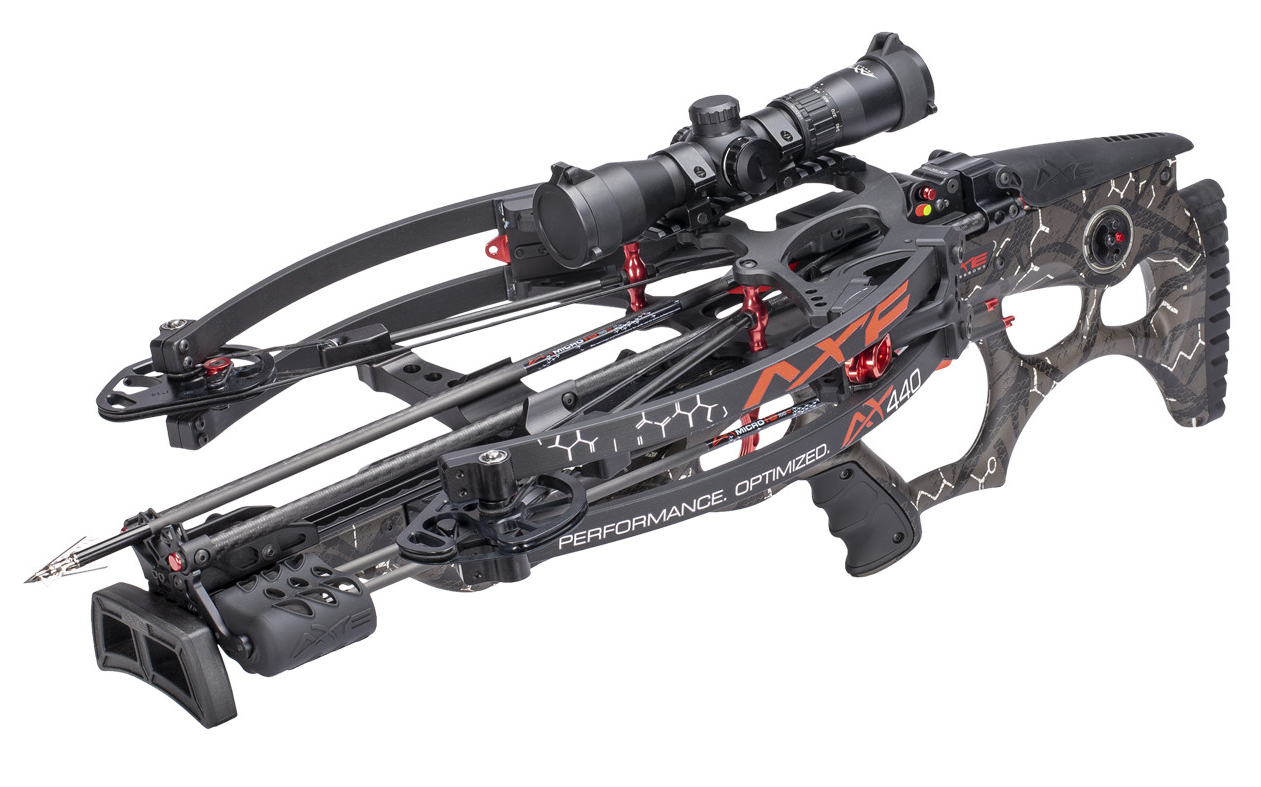
4. AXE Crossbows AX440
Axe® Crossbows continues to define performance with the introduction of the AX440. At a maneuverable, stable and easily shouldered 30.5 inches long and less than 12 inches axle-to-axle (cocked), the weight of the 440 is centered over the shooter’s hand by way of a balanced shoot-through stock and riser design, and reverse limb system. This configuration empowers the most efficient part of the split limb system from just 15 inches of power stroke to launch bolts at 440 fps. The Axe cam system is linked by cables that run parallel to each other, rather than from the top of one cam to the bottom of the other. This design eliminates cam lean and limb torque, and is further enhanced by a cable brace that engages the riser to aid in the limitation of flex away from the center of the crossbow. The stock of the AX440 also eliminates the rail and utilizes dual carbon guide rods along the entire length of the stock. Combined, all of these features create a free-floating arrow system that minimizes contact, friction and torque along the arrow’s entire path. The result: greater efficiency, accuracy and speed.
MSRP: $2,099.99 | FERADYNE.COM
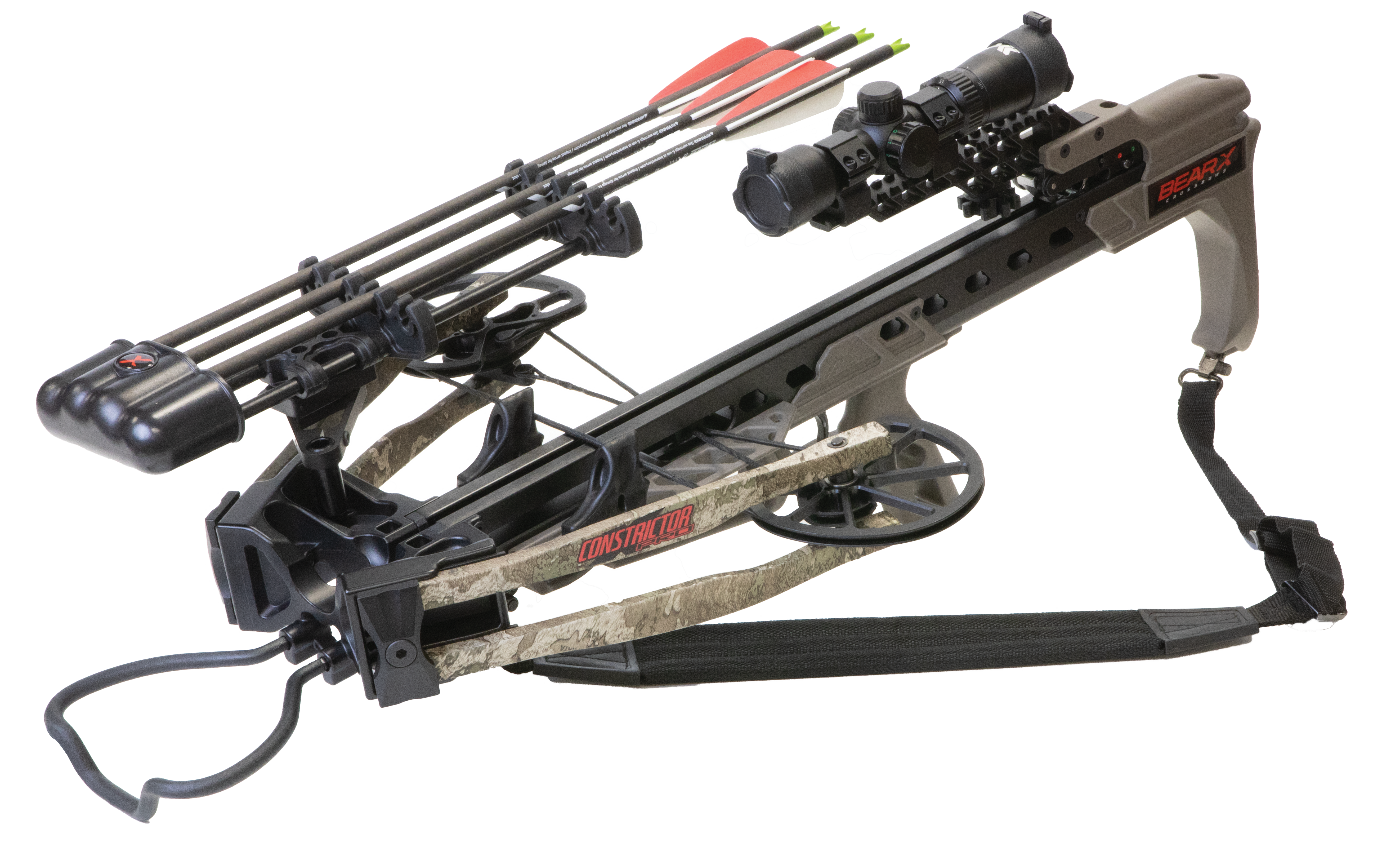
5. Bear Archery Constrictor Pro
The Constrictor Pro is a proven performer, redesigned for even more power on an extremely compact frame. The Constrictor Pro measures a mere 8.125 inches wide cocked, and roughly 12 inches wide uncocked, making it perfect for hunting in tight quarters. The crossbow is equipped with an ambidextrous top mount quiver that sits on a 360-degree pivot and allows the hunter to position the quiver in any orientation. This ready-to-hunt package includes Illuminated Reticle/Speed Adjustable Scope, three Bear X TrueX arrows, a four-arrow quiver, sling, manual cocking sled and arrow lube/string wax. Available in Stone/Veil Whitetail or Stone/TrueTimber Strata color and camo combinations.
Humminbird’s MEGA Live Imaging TargetLock has created a buzz at ICAST 2022 in Orlando. (Photo courtesy of Humminbird)
Note: Check back for updates from ICAST 2022, scheduled July 20-22 in Orlando.
The annual ICAST Show in Orlando is a coming-out party for the best new fishing accessories each year, from gaffs and coolers to sunglasses and apparel.
Some are truly new, some may be a “new” update of a previous model. Whatever the case for the products introduced each year, anglers and industry folks love seeing them. You’ll see these cool new products on store shelves and websites now or in the coming months.
Mr. Crappie Slab Slanger Gloves
Mr. Crappie Slab Slanger Gloves
Cleaning fish is a chore, whether it’s a mess of catfish and crappie or offshore saltwater bigs such as cobia and snapper. Good gloves help the task. The new Mr. Crappie Slab Slanger Cut-Resistant gloves from Smith’s and Wally Marshall have been designed to handle any fish and processing work. The non-slip gloves are manufactured from food-grade high-performance polyethylene, which is four times stronger than leather and provides Cut Level 5 protection. The gloves are machine and hand-washable, shrink-resistant and breathable. Info: smithsproducts.com
Smith’s Regal River Ice Fishing Tool Kit
Smith’s Regal River Ice Fishing Tool Kit
Ice fishing anglers need tough tools such as the seven essentials in the Smith’s Regal River Ice Fishing Tool Kit. When you’re going after pike and walleye on hardwater, you can’t afford to have mistakes. The new Smith’s tool kit includes a 9-inch jaw spreader, 6.5-inch stainless steel pliers and line scissor combo (with sheath and belt hook), line clipper, 4-inch folding flex fillet knife and a marine grade mesh tool bag. Info: smithsproducts.com
Bubba Multi-Flex Interchangeable Set
Bubba Multi-Flex Interchangeable Set
Bubba’s new Multi-Flex Interchangeable knife set features 9-inch serrated and stiff full-tang blades for whatever fish you need to process. The “squeeze and slide” mechanism allows for switching blades easily and also allows for better cleanup. The Flex-Change locking system keeps the blade safe and secure, and a non-slip grip handle offers a consistent feel. With versions for freshwater and saltwater, the set comes in a premium hard-sided carry case with a watertight seal, quick access handle and blade storage, and a flexible organizer for added storage. Info: bubba.com
Humminbird Mega Live Imaging TargetLock
Humminbird Mega Live Imaging TargetLock
No doubt, anglers have wondered if it would be possible to combine Live Imaging with TargetLock, giving them the ability fish more easily. capability? Humminbird has done that with the new Mega Live Imaging TargetLock. This new live sonar accessory provides anglers with the ability to control a Mega Live transducer independently of their Ultrex trolling motor’s steering. This gives anglers the power of Spot-Lock and boat control with their Ultrex motor, while introducing live sonar innovations exclusive to Mega Live TargetLock and Minn Kota Ultrex users. With the push of a button, the TargetLock feature locks the Mega Live onto structure and keeps it in clear view by automatically adjusting the Mega Live transducer as the boat moves position and changes direction. Whether the boat is moving, drifting, or Spot Lock is engaged, TargetLock does all the work to stay focused on structure and fish. Info: humminbird.com
Frogg Toggs Coastal Wading Packs
Frogg Toggs Coastal Wading Packs
Frogg Toggs is introducing a series of coastal wading tackle packs that will work for inshore anglers as well as those wading freshwater streams for bass and panfish. The Coastal Wading Tackle Pack series is designed with high quality, functionality and portability in mind. Items in the series include the Tidal Sling with Waterproof Utility Box, Pursuit Wade Belt, Hightide Chest Pouch, Catchall Chest Pack, and Flats Sling Pack. Info: froggtoggs.com
Plano Edge Frog Box
Plano Edge Frog Box
Storing frogs always has been tricky for anglers. The baits get smooshed, rubber legs twisted, other additions such as blades maybe tangled. The new Plano Edge Frog Box eliminates that problem thanks to a cool design that vertically stores 50 baits by the line tie. Each bait has a hook; no more snags or tangles. The box also includes a WaterWick divider with a reusable moisture-wicking packet, a Dri-Loc O-ring seal and Rustrictor technology. An EZ Label system allows for quick identification of contents, and the DuraView crystal-clear polycarbonate lid shows what is inside. Info: planomolding.com
Frabill ReCharge Deluxe Aerator
Frabill ReCharge Deluxe Aerator
The Frabill ReCharge Deluxe Aerator is a mobile livewell aeration system with an induction motor that provides long use to keep bait lively. Outfitted with a rechargeable lithium battery, the ReCharge Deluxe Aerator can be conveniently recharged with the included 10V adaptor or through a USB cable. A water-resistant gasket designed with an anti-back flow check valve keeps water out and bait alive longer. The universal hang-on clip with stability posts allows anglers to bring it on fly-in trips, shore fishing, or on any boat. Now a bucket or nearly any waterproof container can become a viable minnow bucket. Info: frabill.com
Magma Crossover Series
Magma Crossover Series
Cook pizza, hibachi or whatever you’re craving on your next adventure with Magma’s new Crossover Series. This portable cooking system quickly transforms from stove into a grill, pizza oven and griddle via interchangeable tops. The Magma is made with high-end stainless steel for ultimate durability. The Magma versatile cooker is perfect for RVing, tailgating, car camping and overlanding. It also is available in marine versions with corrosion-free stainless steel. Info: magmaproducts.com
Bajio Roca Sunglasses
Bajio Roca Sunglasses
For the last few months I’ve been wearing the new Bajio Roca sunglasses in a variety of situations: on the lake fishing, at the golf course, around town. They’re lightweight, thanks to the bio-based nylon construction. Frames are comfortable but tight; I’ve experienced no nose-slipping even in sweaty conditions. One thing I love about them is the oversized frame that protects my eyes while preventing peripheral light and glare intrusion. Polarized lenses are crisp and clear; I’ve easily spotted bass and bluegill on beds in shady conditions or bright light shallow and deep. Smallmouth bass were easy to spot on beds on the Niagara River. The lenses also have Bajio’s blue light-blocking tech to minimize eye fatigue and strain. Bajio hit the scene with a splash in 2020 and continues to grow its mission-based company each year. The new Roca, which is named for the Roca Flat near Campeche, Mexico, is a great addition to the lineup. Info: bajiosunglasses.com
Hobie Monarch Float Sunglasses
Hobie Monarch Float Sunglasses
Hobie’s new Monarch Float sunglasses have two interesting features: they’re lightweight, which is a good thing for anyone wearing them, and they float. That’s also a good thing for anglers who sometimes, well, slip up and let their glasses fly off a deck, gunwale or their head. Hey, things happen. Quality lenses in four shades allow you to peer through water to find cover and fish; removable side shields and an adjustable neoprene retainer offer more comfort while blocking peripheral light and glare. Info: hobieeyewear.com
Ocean Waves Greenhorn Illuminator
Ocean Waves Greenhorn Illuminator Sunglasses
Ocean Waves Luminator lenses excel when fishing in low light or murky water. The glasses have two layers of Japanese Crown Glass, mirror-between-the-glass technology that prevents the mirror from getting scratched, polarization that blocks 100% of UV-A and UV-B radiation, and a resilient anti-reflective coating that absorbs glare and bounce-back of UV light. Luminator lenses give anglers additional advantages by brightening the entire visual field – perfect when fishing early or late in the day, under a cloudy sky or shady trees – while eliminating halos and unnatural light refraction. The Greenhorn frame combines a classic look with excellent eye coverage and a comfortable, secure fit. Available in either black or tortoise for men and women. Info: oceanwaves.com
Yeti Roadie 48, 60 Wheeled Coolers
Yeti Roadie Wheeled Coolers
Two new coolers from Yeti — the Roadie 48 Wheeled Cooler and Roadie 60 Wheeled Cooler — are maneuverable and durable. They’re built for your favorite trips: fishing, tailgating, hunting or wherever you need a solid cooler to keep things cold. Wheels and handles are built to last, and the coolers are designed to keep ice frozen and items cold for days. Info: yeti.com
Smith’s 60-Inch Insulated Cooler Bag
Smith’s 60-Inch Insulated Cooler Bag
Bait? Check. Fish after the day is over? Check. Sodas and brews for on the water, at the dock or around the campfire? Check. Smith’s new 60-inch Insulated Cooler Bag is designed for long-lasting hard use. I got to see this bag in action back in May at Kentucky Lake and it’s a champ. The bag has a non-corrosive zipper with pulls. It’s made from marine-grade tarpaulin inside and out, with a half-inch of dense, closed-cell insulation between. An adjustable, padded shoulder strap makes loading and carrying a breeze. Four heavy-duty grab handles – including two center padded handles and two large end handles – allow for a four-person carry when the bag is fully loaded. One uber-cool feature is the integrated drain port. Another is the sit-flat bottom that keeps the bag upright, even when loaded. It has a capacity of 205 quarts. Info: smithsproducts.com
Frogg Toggs FTX Elite Lite
Frogg Toggs FTX Elite Lite
Frogg Toggs is following its successful launch last year of its FTX Armor line with the new FTX Elite jacket and bibs, and the FTX Lite jacket and pants. The FTX Elite jacket and bibs feature the highest water hold-out in the Frogg Toggs line, along with an innovative wrist gasket and closure system, fully sealed and reinforced seams, two-way zipper with storm flap, vented hood and more. It’s available in sizes SM-3X. The FTX Lite jacket and pant combo is light, packable, portable and comfortable. It has similar features of the Elite line, but is more affordable. Info: froggtoggs.com
AFTCO Cocoboardies
AFTCO Cocoboardies
Recycling is vogue. Coconut fibers seem to be the rage this year and Aftco is on board with its new Cocoboardie boardshorts. They’re made with Cocotex fabric, a polyester that “is infused with activated charcoal from repurposed coconuts.” The shorts repel water, resist odor and dry quickly, thanks to the lightweight and moisture-wicking 4-way stretch material. They also have a reinforced pliers pocket for keeping tools or other items easily at hand. Info: aftco.com
Huk Waypoint Jacket
Huk Waypoint Jacket
The new Huk Waypoint jacket is perfect for cool mornings aboard the boat or brisk evenings around the beach fire, when more than a hoodie is needed. The Waypoint Eco-Smart collection is made from recycled bottles; the Waypoint is at least 60 percent recycled consumer content. The Waypoint jacket adds warmth without weight thanks to its Primaloft ECO black 80-gram insulation. It is packable into its own pocket for storage and convenience. The Waypoint jacket’s shell is water-resistant and features a stretch binding at the cuffs and the hem to provide the right fit and block out cold air. It comes in sizes SM-3XL in five colors. Info: hukgear.com
Huk Women’s Rogue Wave Boots
Huk Women’s Rogue Wave Boots
Huk’s new Rogue Wave boots for women are designed for wet weather, slimy decks, sand, rocks and more. The slip-on boots are constructed of durable neoprene rubber. For positive traction in wet conditions, Huk developed the Grip-X Slice outsole traction pattern that grabs in all directions. Additionally, micro channel openings allow water to escape. The boots have heel and toe reinforced grab loops, breathable mesh liners, a rounded toe and a non-marking outer sole. They’re available in sizes 5-11 (full sizes only) in two colors. Info: hukgear.com



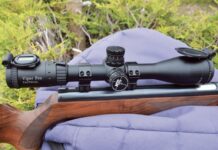
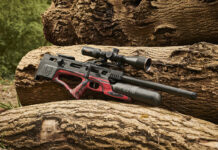
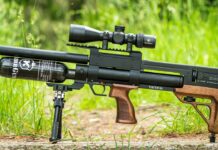
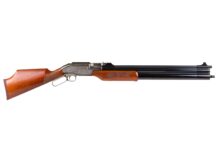





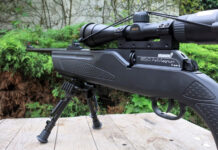
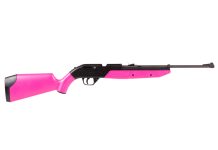

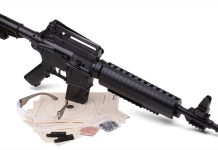
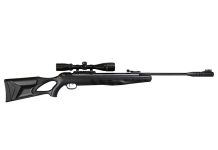
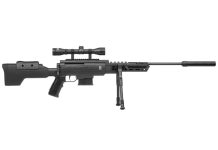


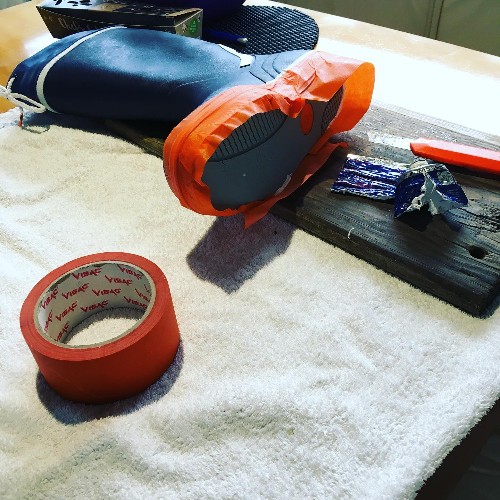
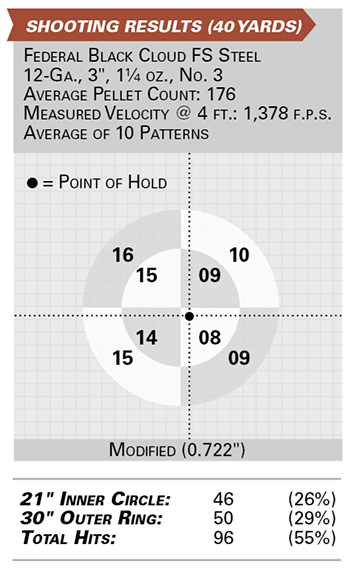 Of the three included flush-fitting Invector-Plus-style choke tubes (full, modified and improved cylinder), we chose the modified to pattern test the Black Cloud FS Steel ammunition. After averaging 10 patterns, we recorded an impact area that was only about 1″ high and 3″ left from our point of aim on the 40-yard targets. As this is a steel load, we noticed that the pattern had become rather large at that distance, putting even more pellets into the outer ring than it had the inner circle.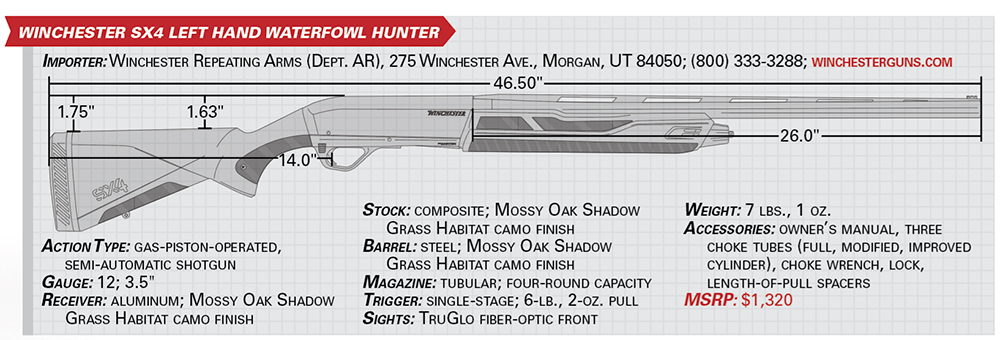
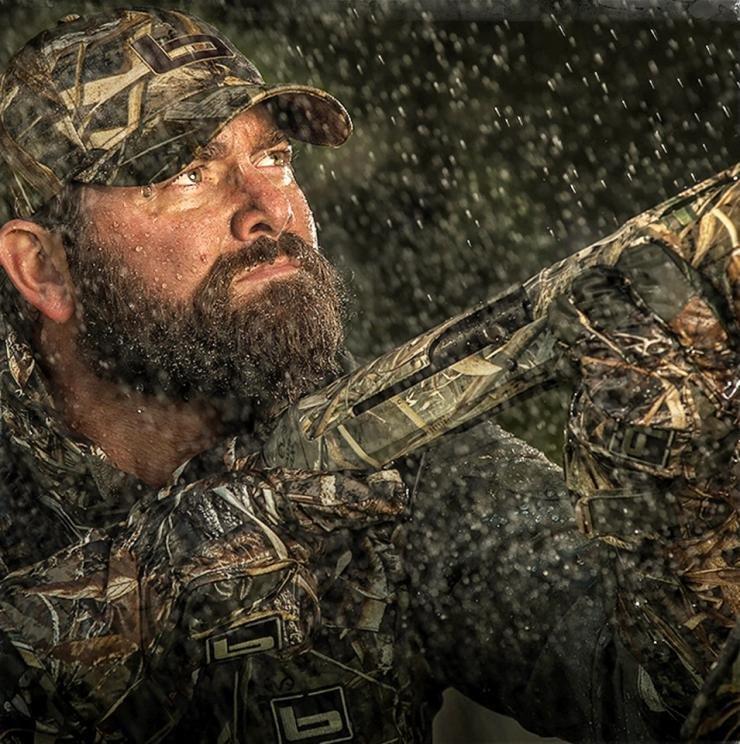 Folks often associate rain with ducks and great waterfowl hunting. Ducky weather, they’ll often say, sounding as trite as a Midwesterner complaining about the gosh-darn humidity during summer.