The woods and wild places are drawing people to them. A weekend in the woods can wash away the stain of florescent lighting and it can reset your circadian rhythm. It seems that most of us understand the damage that our hyper convenient, over digitized, and sedentary lifestyle is doing to us.
More people are seeking the “tonic of the wilderness” as Thoreau called it.
Making wilderness shelter is something that calls to people on these wild adventures. So, let’s talk about how you can make the most fundamental and one of the most effective wilderness shelters of them all. I am talking about the lean-to shelter.
The Importance of Wilderness Shelter
What is the main reason for learning to build these wilderness shelters? Aside from just the fun of building your own fort out in the woods, there is a very important reason for studying and learning to make wilderness shelter.
This is your answer to needing shelter in a wilderness survival situation. When you need to get out of the elements and you need to affect your core body temperature a good shelter can capture your body heat and combined with fire could even save your life!
The lean-to can be a quick answer to that wilderness shelter to help you survive a wilderness emergency.
What is a Lean To Shelter?
It is called a lean-to shelter because the main wall of the shelter leans on a ridge pole. The leaning wall does double duty to protect you from the weather that could be falling above you and also the wind coming from behind. This leaning wall also traps some of your heat and holds it in your shelter.
Be sure you choose a nice flat area to build your shelter and it would help if you set up near some water sources to assure you can stay hydrated.
These shelters are easy to build and require minimal materials. This is why they are so popular when it comes to building a shelter for wilderness survival.
Gear Needed to Build a Lean To Shelter
The gear you need to build your lean-to shelter is minimal but if you have the right tools it will make an easy job even simpler.
Folding Saw
Cordage
Tarp
Survival Knife
Lean To Between Trees
The most common build for the lean-to shelter is between two trees. The hardest part about this build is finding the two trees to place the shelter between.
You are looking for 2 sturdy trees that are about 7 feet apart from one another. Pay attention to the land between those two trees. The more level the ground the better.
Now you are going to find yourself a nice sturdy ridge pole that is about 8 feet long. I find that cutting down some greenwood is best for this. I usually seek out some young American Holly. It’s strong wood and will be nice and sturdy as a ridge pole. Cut yourself an 8-foot ridge pole.
Set the ridgepole up no more than 4 feet tall. Lash the ridge pole three times with paracord. If you have 2 people this process is a lot easier. If not you can still pull it off.
With the same cord lash three times to the tree. Then three more to one side of the ridge pole and again three lashes around the tree. I run the remaining cordage between the tree and the pole warping to create tension. Tie your cordage off and move to the next side of the ridge pole.
Repeat the process on the opposite side of the pole and the second tree.
With your ridge pole in place, you can start looking for green branches to start leaning on the shelter. Green pine branches are great for this and will become the ribs of your shelter. Lean them on the ridge pole at about a 45-degree angle.
Once you achieve a collection of these branches all lined up then you can place pine boughs or just use a tarp to finish off the shelter.
Attach the tarp first at the ridge pole. You can tie it down to the trees or the ridge pole on either side. Then pull it tight and stake it to the ground.
If you have a nice big tarp then you might even want to create a simple A-frame shelter for yourself.
Detached Lean To
The detached lean-to shelter is built on the very same principle but your ridge pole is not lashed to trees. This is a good shelter to know how to build if you are in sparse forests. It can be a challenge to find trees that are set apart in just the right manner with the right ground underneath them.
In this case, you can create a couple strong tripods. You might think that building a tripod is only for smoking meats or cooking over a fire but the tripod can become the basis for your entire shelter. Look for some nice thick pine branches. You are going to need 6 of these in total.
To create your simple tripod you are going to lash the first branch three times with paracord, grab the next branch and continue with the paracord by lashing this next one. Then finally lash three times on the last branch and this will connect them all. The cordage will also keep the tripod nice and snug.
If you want you can create your tripod and then wrap more cordage around where all the sticks meet.
When you have created two similar-sized tripods you are going to place your ridge pole on top of both tripods and build your lean-to shelter normally.
Inside the Lean To
No matter what lean-to you have constructed you can also consider the inside of the shelter and how you would like to sit and sleep and store your gear.
You can make smaller lean-tos but I like to have room to store gear and get things out of the rain if need be. You can scoop up pine needles and put your sleeping pad and bag on top of them. This will add some cushion beneath you and also keep you from losing lots of heat to the hard ground through convection.
Some people will cut logs and create a wood floor in the bottom of their lean-to shelter. It is also nice to shove those pine needles to the back of the shelter to trap more of your heat inside the shelter. Pine boughs can make a nice bed, too.
You can customize this quick emergency shelter how you see fit.
Wilderness shelter with fire reflector wall
Warm and Dry Through the Night
The lean-to wilderness survival shelter is a simple design that every woodsman should try to assemble. If you have the right gear and a little knowledge you can set yourself up with a comfortable shelter that will keep you warm and dry through the night.
Wilderness survival shelters could be the difference between a cold night or hypothermia if you find yourself in a wilderness survival emergency.
Bowhunting turkeys is the ultimate challenge. Bowhunters are tasked with convincing a mature Tom to go against its natural breeding style and come within range, and then they have to make a clean and ethical shot while remaining undetected. Every single piece of equipment for a turkey hunter matters—especially the broadheads.
Turkey hunting is incredibly tough to start with. The birds have keen eyesight and a relatively small kill zone compared to common big-game animals pursued with compound bows, such as whitetail or elk.
Thus, the small game is going to require a deadly-sharp broadhead and ideally an impressive cutting diameter.
Our list is a mix of fixed blade broadheads and expanding mechanical broadheads, so there are options for beginners or different preferences on turkey hunting.
Be sure to check out our other turkey hunting tips to help nab a big gobbler this season. But for our top six picks for the best turkey broadheads that will get the job done, read on.
1. Rage XTreme Turkey Broadhead
Rage’s dedication to broadhead design is clearly evident in the X-Treme. The Meat Hook cut-on-contact tip makes this broadhead extremely lethal, and the patented Shock Collar is a familiar and effective design.
Specs and Features:
2.125″ cutting diameter
Ferrule Alignment Technology
Meat Hook cut-on-contact tip
.035″ Thick stainless steel blades
2. NAP Gobbler Getter
newarchery.com
The Gobbler Getter by NAP has been around longer than most turkey broadheads on the current market and earned its reputation as “Ol’ Faithful.” The innovative blunted tip is what makes it stand out from most other broadheads. The trauma from that tip, which allows the broadhead to crush bones and stay in the kill zone as the expandable blades to do their job, is what makes these broadheads so effective on turkeys.
Specs and Features:
1.5″ cutting diameter
Blunted “turkey tip”
Diamize blades
3. Magnus Bullhead
While some broadheads are designed for more reliable and risk avoidant body shots, the Magnus Bullhead fixed blade broadheads opt for the more deadly head and neck shots, while mitigating some of that risk through their large and large cutting diameter. With incredibly durable .048″ thick razor blades, as well as a 2 ¾” cutting diameter, it’s easy to see why these broadheads are turkey slayers.
Specs and Features:
2 ¾” cutting diameter
.048″ thick, replaceable stainless steel blades
Straw and shield free
Replacement blades iIncluded
4. Xecutioner Turkey Necker
With a similar design to the Bullhead by Magnus, the Turkey Necker was designed for hunters that are looking for those meat saving neck shots. The four massive, razor-sharp blades ensure hunters can execute those shots ethically with peace of mind. Those thunder chickens don’t stand a chance.
Specs and Features:
4″ cutting diameter (160 grain head)
.060″ thick blades
4 heads per pack
Ferrule 7570 aluminum construction
5. Solid Turkey D-Cap
Relatively new to the scene, the turkey D-Cap broadhead is making a name for itself as one of the most dependable and deadly turkey hunting broadheads on the market today. This one is 200 grains, so it can be tricky to get used to for most archery hunters. It packs a powerful punch! The kinetic energy is unmatched, and with a 4″ cutting diameter, this thing is deadly in the spring woods.
Specs and Features:
4″ cutting diameter (200 grain head)
.060″ thick blades
Field point accuracy up to 50 yards
3 blade design
6. G5 Deadmeat
The Deadmeat by G5 Outdoors doesn’t typically standout as the ideal turkey broadhead, but initial looks can be deceiving. The SnapLock retention system is one of the most reliable systems on the broadhead market, and the .044″ thick blades are insanely sharp, while still producing a 1 ½” cutting diameter, which is somewhat conservative for these tough birds, but the results speak for themselves.
Barnyard grass (Echinochloa crusgalli) is an annual grass weed most commonly found in newly established turf. Barnyard grass tends to be more prevalent when turf is newly seeded during the hot conditions of summer. It grows faster than the desirable grasses that need cooler temperatures to germinate.
Barnyard grass is a coarse annual grass reaching 1 to 4 feet tall, if not mowed. Stems are thick, coarse, mostly upright branching at the base with a purplish-green color. Flower head or seed head is reddish, purplish or greenish color.
Fortunately, coarse Barnyard grass will be killed by the first frost in Fall. The coarse brown grass decomposes in the Spring and the desirable thin bladed grasses fill in the areas with Spring rains and an application of slow release fertilizer.
Planting Rate: 25 lbs/acre
Barnyard Grass Seeds
Barnyard Grass (Echinochloa crus-galii) is the wild millet that ducks have been eating since the beginning of time. It is easy to grow and ducks love it. It does great in wetlands. Other names it is called are Wild Millet, Barnyard Millet, and Common Barnyard Grass.
Barnyard Grass Planting Guide
Barnyard Grass is a prolific seeder. It makes a small seed that ducks love. It will volunteer several years after the initial planting with proper management. It grows 1’-3’ tall. In wetlands, it performs best with late-growing season water drawdowns. The combination of heat, wet soil, and day length getting shorter puts the plant into high gear! When planting Barnyard Grass seed, it is best to plant it late in the growing season to mimic nature. Plus, it has a short maturity, often 45-60 days. When planted too early in the growing season the first crop may grow and produce seed too early for the ducks to use. You want the seed available for when the ducks show up.
The seeding rate is 12 lbs. – 15 lbs. per acre. There are approximately 175,000 seeds per pound. It does not take much seed per acre to get a good stand of Barnyard Grass.
Barnyard Grass can be planted with a seed drill or by broadcasting. The most common method is broadcasting onto a well-prepared seed bed and covering the seed lightly. Do not cover the seed too deep as it is a small seed. ½” deep is plenty.
There are a few herbicides that can be used to control broad leaves in Barnyard Grass. 2,4-D, Aim and Blazer work well on millets. It is important to spray the weeds when they are young (<4” tall) and actively growing. In drought situations, weeds may not be actively growing and will not uptake the herbicides as well as when they are actively growing. Be sure to follow the herbicide’s label.
Does Barnyard Grass need fertilizer? Barnyard Grass does not require a lot of fertilizer. Waterfowl impoundments are naturally rich due to them being in low-lying areas. They can be high in organic material creating natural fertilizer. It is recommended to pull a soil sample and amend the soil with lime and fertilize per the soil test recommendations. Without a soil sample, a rule of thumb would be to fertilize with 20 units of Nitrogen. So for a fertilizer like 13-13-13 that has 13 units of nitrogen per 100 lbs., the rate would be 154 lbs of 13-13-13 per acre.
Barnyard Grass for Waterfowl
When Barnyard Grass is planted, it cannot be manipulated and hunted over or near for ducks and geese. If a volunteer crop is produced in subsequent years, it can be manipulated and hunted over per Federal rule. It is recommended to contact your state wildlife agency to be sure management actions do not violate any hunting regulations.
Barnyard Grass seed has a high percentage of “hard” seed. This hard seed characteristic is what preserves the seed, keeping it from deteriorating. The seed will persist for a long time under water which is good for feeding ducks. It will also last a long time in the seed bank which will allow it to grow for many years after the initial planting with proper management.
In the following years after the initial planting of Barnyard Grass, keep the water on the impoundment late into the growing season. For example, in the southeast United States holding water until August can produce good stands of wild barnyard grass. In August, if your impoundment is at full pool, you would want to release the water slowly. This may be 4″ per week. A lot of times evaporation can do this for you if you have kept all the boards in. You may need to disk the impoundment once every 3rd year to set back succession. Barnyard grass is a great moist soil plant for ducks.
Barnyard Grass Seeds for Sale
If you’re looking to add Barnyard Grass to an impoundment or food plot for waterfowl or other game, check out our selection at Specialty Seeds Inc. We have everything you’ll need for successful Barnyard Grass planting.
What is the difference between a regulated PCP and an unregged one?
by Nigel Allen
Precharged pneumatic (PCP) air rifles are powered by compressed air contained in either an integral air cylinder or buddy-bottle. Although the PCP is the serious airgun shooter’s choice, its concept is inherently simple: a hammer strikes a valve which releases some air to thrust the pellet out of the barrel. The hammer always strikes with the same force, so the amount of air released by the opening valve changes as the rifle’s on-board air pressure behind it drops. This affects the velocity (power) output of the rifle as it progresses through its air charge, resulting in what’s known as a power curve.
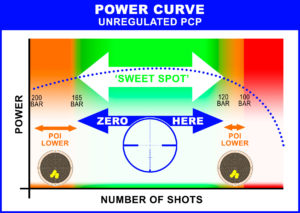
The specific shape of the power curve varies according to the rifle’s design. Generally, an unregulated PCP’s power output will rise to a peak before dropping off to the point it needs recharging. A power output that’s dependent on the air rifle’s pressure is not ideal because the pellet’s downrange point of impact (POI) will alter accordingly. Because of this, many airgunmakers incorporate an air regulator into their guns. In a regulated PCP, the power output stays consistent throughout its entire air charge.
Comparison of typical power outputs from a regulated and non-regulated precharged pneumatic air rifle
So, which to choose? Although a regulated PCP may seem the ideal, unregged PCPs have been around for many years and are still popular. Indeed, much R&D has been undertaken in the PCP world, so the simple ‘knock-open’ valve of old is a far cry from what we see on today’s airgun hardware. The Slingshot hammer/valve set-up used in the unregulated Daystate PCPs is one such example of how far unregged PCP design has evolved. Nevertheless, characteristics of unregged and regged systems are an important consideration when choosing a PCP for your specific shooting needs.
UNREGULATED PCP
Between the first and last shots of an unregged PCP’s charge of air – its ‘usable’ range – the output will follow a power curve, peaking somewhere around the mid-point of the curve. While the duration of the peak depends solely on the rifle’s inherent design, this part of the curve is referred to as the ‘sweet spot’. It’s where the shot-to-shot consistency – and so the rifle’s accuracy – will be at its best. The longer the sweet spot, the better. Ideally, that is where you want to be doing most of your shooting (and where you should zero your scope).
Of course, you can shoot either side of the sweet spot, but you may well see a slight change in the pellets’ POI. At relatively close ranges this probably isn’t a problem, but it may shift your pellets outside acceptable limits for hunting or competitive target shooting at longer distances. Therefore, with any unregulated PCP, it pays to familiarise yourself with the characteristics of its power curve so that you can compensate for POI shift if required.
Although an unregged PCP lets you shoot throughout its usable pressure range (200 down to 100 BAR in this example), the best consistency, power and accuracy will be obtained by shooting in its ‘sweet spot’ (165 down to 120 BAR in this example)
For example, your rifle may fill to 200 BAR and then, 150 shots later, need a refill at 100 BAR. Let’s assume its sweet spot spans 65 of those 150 shots. Then it would be worth noting on the rifle’s manometer what pressure range relates to that 65-shot section – perhaps between 165 and 120 BAR. If the number of shots you get per charge of air doesn’t bother you, you could choose to fill the rifle only to 165 BAR each time, and always refill it at 120 BAR. Yes, the trade-off is that you’d be reducing the rifle’s shot-count, but in return you’d be getting an output performance on a par with a regged PCP. Plus, by starting at lower pressures, charging the rifle from a manual pump will be less effort, and you’ll get longer periods between scuba tank fill-ups.
REGULATED PCP
Where an air regulator is fitted to a PCP, air release is far more controlled for the entirety of the rifle’s charge and there is therefore no power curve. Effectively, a regulateded PCP offers a sweet spot that extends from the first to the last shots of the usable shot range. In some cases, because a regulator deals with air delivery more efficiently, the rifle also returns more shots between fill-ups.
Generally, a regulator system incorporates a secondary air chamber (the plenum chamber) which is designed to operate at a constant pressure. This means that as the rifle’s air pressure drops, the main firing valve always delivers an exactly-metered volume/pressure of air. The benefit of this is that the rifle’s power output is the same, no matter where it is within its charge cycle.
That said, it is important not to let the pressure in the rifle’s main air reservoir drop below that of the regulator’s operating pressure, else the regulator effectively becomes redundant in the air flow chain. Many gunmakers now incorporate an additional gauge on their regged PCPs to specifically indicate the regulator status, like on the Brocock Commander PCP.
The regulated Brocock Commander has two manometers – one for its HUMA regulator’s fixed pressure (top) and one to show the pressure status of the rifle’s main air reservoir
While ‘managing’ the power curve of an unregged PCP isn’t exactly a headache for most shooters, there’s no denying that the fill-and-forget operation of a regulated PCP is more straightforward. However, regulated PCPs cost more than their unregged counterparts, so you have to weigh up their worth in your particular scenario.
FT, HFT and benchrest competition shooters, who seek ultimate precision in every aspect of their sport, may be able to justify the outlay for a regged PCP, but for everyday shooting/hunting assignments, a good quality, unregged PCP is equally as good if you have a full understanding of its power curve.
Yet never dismiss the addition of a PCP regulator as ‘just another thing to go wrong’. That may have been the case when airgunsmiths were experimenting with them many decades ago. But just like knock-open systems have evolved, the PCP regulator has also graduated. Specialist regulator manufacturers have risen to the forefront of the airgun industry, with many gunmakers incorporating their proven designs in their regulated PCP. Daystate, for instance, have partnered with the world renowned HUMA to develop a metering system in the new regulated HR Huntsman Regal, Renegade HR and Wolverine R air rifles.
Palmetto State Armory’s PSA Dagger is getting a lot of attention because it is a GLOCK-style pistol chambered for the exceptionally popular 9mm cartridge. TLDR: The results were better than expected!
It’s probably safe to assume the AR-15 has claimed the title of “America’s Rifle.” As for pistols, the 1911 Government Model was – and possibly still is – the American champ. But given the undiminished popularity of the Austrian borne GLOCK, even in the USA, it can’t lag far behind. And imitation being the sincerest form of flattery, a growing list of polymer clones only narrows whatever gap exists.
Some are higher end versions sold for greater costs. But, apparently, another way to move a knockoff is to market it for less money. This is my review of such a pistol, Palmetto State Armory’s Dagger. Priced less than a GLOCK 19 but bearing a strong resemblance, the question begging for an answer is: How does the PSA Dagger perform?
The PSA Dagger Introduction
Produced by Palmetto State Armory – a firm known for AR-15s (see our article on building a low-cost AR-15 with Palmetto State Armory) – this polymer pistol was introduced during 2020. Since then, the Dagger has gone through several iterations. Supposedly, it’s been debugged along the way (a fairly common evolutionary practice). Based on a 9mm GLOCK 19 Gen-3, the Dagger bears a strong resemblance that extends to the internals but it’s not an identical clone. It will, however, fit inside a Glock 19 holster. More on that in a moment.
Another big difference is cost. The basic Dagger lists for around $300, a couple hundred bucks less than the GLOCK.
The 9mm Dagger Compact I received sported a flat dark earth finish. Its slide was protected by Cerakote that blended nicely with the polymer frame. Sold as a package, it was handed to me in a well-made color-coordinated soft-case – containing ten magazines! Surprised by the bubble-packed windfall, I checked the Palmetto State Armory website.
Low and behold, the same magazine rich package appeared for under $400. Upon viewing it initially, my first thought was “Prepper Kit.”
PSA Dagger Compact Specifications:
Capacity is 15 +1.
Unloaded with an empty magazine, it weighed 23 ounces on my scale.
Fully loaded with 16 rounds (124 grain bullets) it weighed 29.8 ounces.
The barrel measured 3.875 inches.
Overall length was 7-inches and at its thickest point, the grip, it measured 1.25-inches.
GLOCK 19 Similarities:
The Dagger uses the same magazines as a GLOCK 19.
The ten packed with the Dagger were PMAGS.
Supposedly most of its other parts will also interchange with a G-19, to include its frame, slide and barrel.
The Dagger disassembles per the GLOCK process.
Dagger Review – GLOCK Comparison
Continuing the comparison to the GLOCK 19, I reviewed the PSA Dagger through that lens.
Dagger Disassembly
Basic disassembly – or field stripping – is relatively simple.
Verify the pistol is completely unloaded, to include removal of the magazine.
Pull the trigger (dry-fire).
Retract the slide around ¼”, and two opposing tabs in the frame are pulled downward.
The entire slide assembly can now be drawn forward off the frame for removal of the guide rod and the barrel.
Because it’s a simple process, it encourages ongoing maintenance.
Reassembly is in reverse order. It’s also simpler since fiddling with the small takedown tabs is unnecessary. Still, my first couple attempts with the Dagger resulted in some minor alignment hassles. But once I got the hang of it, the slide assembly slipped on to the frame without further difficulties.
A cautionary disassembly reminder that shouldn’t be necessary – but is. Perform the “completely unloaded” step at least twice (I’ve seen this go to hell). Also, isolate the firearm from any live ammo. Better to be safe than sorry!
More Comparisons to the GLOCK 19
Following the design of a GLOCK, the Dagger’s polymer frame houses steel rail-inserts held in place by pins. However the latter’s forward locking-block insert is longer. Sans interchangeable grip inserts, the serial-numbered polymer shell features aggressive but not-irritating textured panels, a high-cut trigger guard, and a GLOCK-type accessory rail. Also, the bottom of its mag well incorporates relief cuts, useful for the removal of recalcitrant magazines. But the slide-stop and mag catch are non-reversible.
Although it was finished in flat dark earth, the slide is stainless steel, and has fore and aft cocking serrations. Touted as a “Carry Cut” design, its front and rear edges are “smoother” for snag-free draws.
The sights are mounted per a GLOCK, opening the door to a plethora of aftermarket options. The Dagger I received had a standard slide, but an optics-ready version is offered, machined to locate a miniaturized red dot ahead of the rear sight.
The barrel, also stainless, is rifled with six conventional lands and grooves (more suitable for lead bullets). Near as I can determine, it’s rifled 1:10 – the same twist today’s bullet manufacturers use to test expanding projectiles. The muzzle sits flush with the slide, and has a cleanly cut recessed face, similar to the 11-degree crown seen on many HB rifles.
Like a GLOCK, the Dagger’s recoil spring is captive, but its guide rod is stainless steel.
The front and rear sights are steel (instead of plastic). The set on this PSA Dagger were fixed three-dots, and the rear was shaped to permit single-handed slide racks. It’s also drift-adjustable for windage.
One obvious departure was the trigger which differs from a GLOCK. Instead of a separate blade, PSA went with an articulated version similar to an S&W M&P. To me it was completely familiar. If it’s not your cup of tea, supposedly, it can be swapped out for one of many GLOCK versions. I didn’t try this.
The magazine release appeared to have an ample pad, but didn’t want to let go – at least, not without exaggerated efforts. It was a real bear for me and a couple others who tried it.
On a positive note, the Dagger’s fit and finish were better than expected. Play between the slide and frame was minimal in battery and the barrel was a tight fit. In theory, at least, it should shoot. Before hitting the range to find out, I gave it a cursory cleaning and lube to begin with a “clean” slate.
Range Results
December’s range conditions hovered in the low 30s but the day was calm and overcast, ideal for a meaningful accuracy assessment. No snow either, helpful for the recovery and inspection of fired cases. I started out by loading three magazines with five rounds each, to check for function while allowing the Dagger’s parts to “settle in.”
All shooting occurred from a “ready” position. The loads are listed in their firing orders.
9mm Speer 124-grain Lawman TMJ
Speer’s FMJ-type “Total Metal Jacket” is a cut above many so-called Q-loads. It’s performed very well for me in a number of 9mm pistols. Initial five-shot groups on 15-yard steel silhouettes were encouraging, and function was 100 %. The ejection pattern was consistent, and the recovered cases appeared normal.
The slide locked open as designed on the last shot, and each magazine popped free – once the release was fully depressed. This turned out to be an even greater challenge due to the chilly weather.
Full magazines came next BUT loading them with a full 15-rounds turned into a real battle! The last couple were nigh-impossible, and my seldom-used loading device didn’t fit. But perseverance finally triumphed and the final few rounds could be easily stripped out through a push of the thumb.
They chambered normally, too. Satisfied with the Dagger’s function, I zeroed back in on a trio of repainted 15-yard silhouettes and fired a 10-shot group on each, offhand (using both hands). A good omen: Tight clusters developed directly above the sights, each of which measured around two inches.
The 25-yard accuracy tests were shot on cardboard targets, off sandbags, to capture the results. Three 5-shot groups with the same TMJs produced consistent results averaging less than 2 ½-inches – better than many pistols costing two or three times as much! And once again, the groups were close to the sights.
9mm Speer 124-grain Gold Dot JHPs
The next load up, Speer’s nickel-plated defensive offering is another high-confidence round. From the Dagger, it produced similar downrange results and functioned without issues. The ejection pattern was also consistent, and the fired cases showed no signs of problems.
9mm Federal 135-grain HYDRA-SHOK JHP “Low Recoil”
The last load tested, results were on par with the other loads and free of negative surprises. As for recoil, there may have been less. But, overall, the Dagger was completely manageable.
Hits & Misses
I wrapped up the Dagger’s range session by shooting it from various angles with Speer TMJs, some of which were fired exclusively with my support (left) hand. The pistol ran without a hitch, and, across the board, accuracy was better than expected.
The trigger behaved similarly to many other striker-fired designs. It combined a distinct reset with a consistent pull (the above listed 6 ¼ lb. weight was recorded after the range session).
My only real gripe was the magazine release. As a full-time range rat, I’ve had the opportunity to play with lots of different pistols. A few had fiddly mag releases, but this one was in a league all its own.
The oft-taught partial flip failed to remedy this issue, which is apparently hit or miss. I think it’s more a matter of the shooter’s hand size relative to the grip design. For those that encounter the problem, a possible fix is an aftermarket GLOCK release.
Not a fault of the pistol, but fully loading the PMAGS with 15 rounds was a battle (my frame of reference includes sub-gun mags). The process became easier once they’d been loaded for a few days, but I’d spring for a loading device – or different mags.
As for handling, I’m more of an S&W M&P guy. Typically, a standard GLOCK indexes muzzle-up. But, despite the absence of interchangeable grip inserts, the Dagger was more of a natural pointer for me.
Another huge plus: It shot to its sights. Speaking of which, more options are available there to include night sights, etc.
The Dagger will no doubt fit some unmolded GLOCK 19 designs. It fit two different GLOCK 19 holsters that came from Falco Holsters.
Lights and Lasers
I slipped a small QD Olight PL Mini 2 Valkyrie on the Dagger’s accessory rail, using its supplied GLOCK adapter. It locked securely in place and was a nice match for the pistol.
The Dagger does lack a loaded chamber indicator, but nickel-plated cartridges were visible in the small gap adjacent to its extractor. As a “two-fer” they also provide a useful means to differentiate defensive and practice loads.
Parting Shots
A post-shooting examination (and cleaning session) indicated no obvious problems. Then again, in total, I only fired around 200 rounds – far from a comprehensive test. However, the Dagger does come with a lifetime warranty. Is the Dagger worth it? Maybe…
The original 9mm GLOCK-17 gained rapid acceptance among law enforcement agencies and civilians. The compact 15 +1 G-19 was a logical progression. Decades later, both remain polymer gold standards regarding reliability and durability. Most GLOCK devotees will have little reason to switch, but not everyone is wedded to this brand.
Also, some shoot infrequently at best, and money is often a concern. Further rationale for the purchase of a Dagger? Maybe for use as a squirreled-away spare, or even a home defense gun. Tricked-out higher end pistols can invoke litigious perils and, the expense of a competent attorney aside, a firearm used for such purposes will likely do time in an evidence locker.
Further rationale? Returning to the Prepper Kit thought, I dragged out a 9mm Windham Weaponry AR-15 carbine, configured to run on GLOCK-17 magazines. Both the 15-shot Dagger Compact and “pistol caliber carbine” functioned with magazines of either design – a reassuring footnote, given the ten PMAGS that came with the pistol.
In closing, unlike the AR-15, like a GLOCK, the PSA Dagger has no frame-mounted safety lever. However, the” safe action” system (and its variants) is safe enough – if supported by proper training. That, and adherence to Rule #3 which stipulates strict finger-off-trigger discipline.
For more about this system and other handguns of all kinds, see my book Handguns: A Buyer’s and Shooter’s Guide.
When thinking of pigs and the icons among them the Chester White has been severely overlooked. A colonial legend, this pig breed has been around for almost two centuries.
In heartland U.S.A, Chester County Pennsylvania, the larger than life and charismatic Chester White was born and bred on every pig farmers land in the county.
Originally known as the Chester County White, the unique breed is a product of the Woburn Pig which mated with other white pigs that were brought over from England to America somewhere between 1815 and 1817.
This Breed has the iconic pinkish white colouration like the pot belly and Yorkshire breeds, but usually present bulkier and grow quite large.
In 1890, the unification of the American Chester White Record Association and the Standard Chester White Record Association into the “Chester White Swine Record Association” saw the permanent recognition and moderation of this sought-after breed in America.
One of the many reasons this breed became so popular in the states among farmers is this pig’s ability to gain mass at an incredible rate. When conditions are optimal and the right quality food is used, the pig can convert 1.4 kg of grain into 620 grams of weight.
Thus, this breed is quick to increase flesh content which is known for a savoury taste and high-fat percentage. In a video, by Akudinulo Farms it is explained that these pigs are the “king of crossbreeding” as they represent all the desirable intermediate traits of the races that precede them.
This crossbreeding king has thus set a standard for modern pigs to adhere to in terms of flavour and family values.
A well-known consideration for pale pig owners is the fact that these animals require permanent access to shaded areas to avoid getting sunburn. Sunburn in livestock such as pigs can have deleterious effects on their health and well-being.
Despite these concerns with white skinned breeds, the Chester White Pig is the most durable of the pale breeds when considering this qualm. These breeds are known for their docility as well as other trait associated with positive sociality towards humans and other animals.
These pigs are wanted for their brilliant mothering abilities, which is essential for producing healthy generations of future mothers and fathers. With an iconic white belly and slightly dished face, this breed has superior bone density and structure when compared to other breeds.
The feet of these pigs are often used as a good indicator of overall animal well-being, as they tend to indicate how well these animals are being fed when considering the age that the trotter indicates.
A statement of an animal, these larger-than-life pigs are iconic when one thinks of the classic big hog, but what makes a Chester White a Chester White?
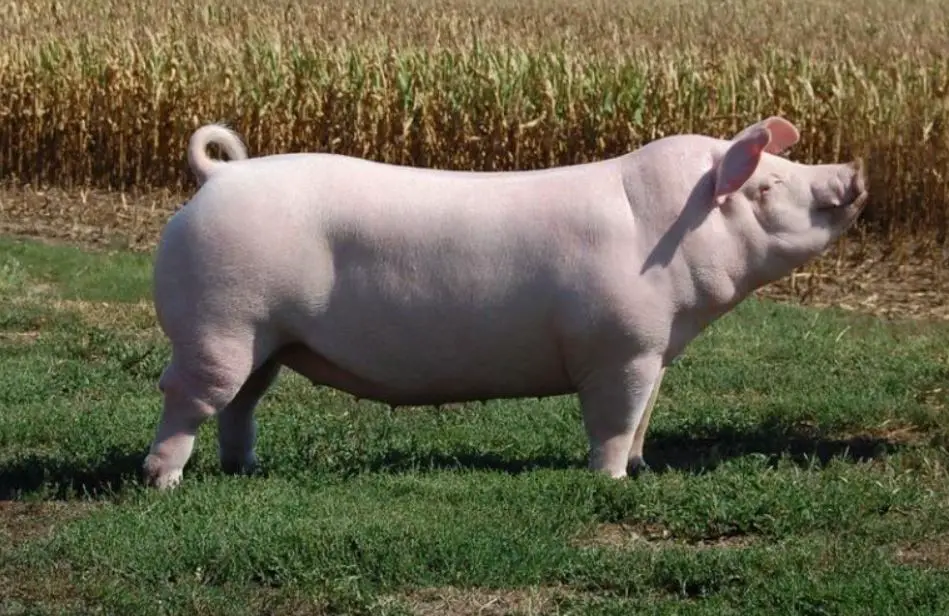
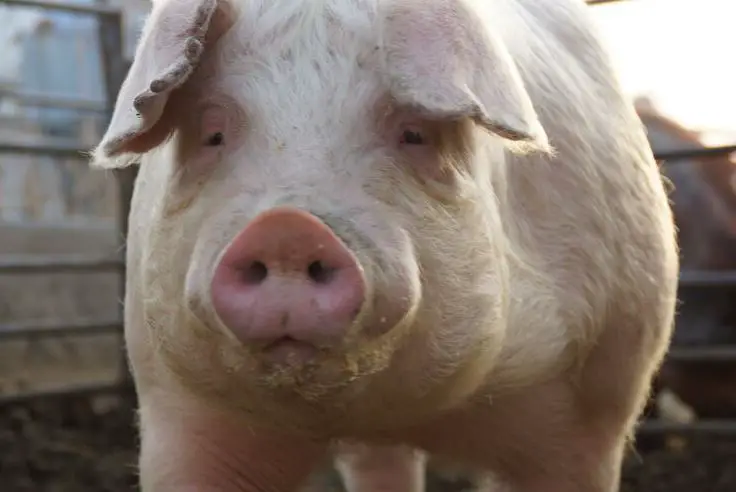
The defining characteristics between selection bred animals can get complex, but typically a Chester White will have a completely white coat with no significant colour variations, and drooping ears within a few days of births are also a strong indicator.
The texture of the coat is associated with a straight hairstyle rather than a curly one. When viewed from the side, a Chester white has a flat (horizontal) to slightly arched back.
The legs are stretched with good body depth without obstructing walking excessively. Strong hind legs with straight hinges and smooth ham forms are also charismatic in the breed.
The white and clean look of the fat and flesh when packed into meat production is associated by farmers and marketers alike with good taste and high quality.
The highly efficient and nutritious nature of this pig breed, combined with its desirable reproductive habits, will see that the Chester White remains an important breed in the world of Pig Farming for the foreseeable future.
Chester White Overview Table
Size Medium-sized
Mature weights:
Female: 227-295kg
Male: 250-363kg
Personality Docile breed of pig with high intelligence. Temperament Kind and easy to bond with. These pigs are selected for their kind mothering nature. Tendency To Bite When compared to animals of the same social stature these pigs have a very relaxed calm nature with low to no tendency for biting. It is to be considered that all pigs can bite painfully and first aid attention might be necessary in such a case. Dangerous? Because all pigs have tusks and can grow to a considerable size, they are to be respected and treated with admiration. However, when respected and comfortable, these animals pose no danger to humans. Tendency To Root? Their social nature and low energy personality mean they have a low tendency to root. Maintenance 6/10
These animals require basic clean shelter food and water with shaded shelter during summer months. They are not particularly high maintenance.
Family Pet 3/5
They could potentially be wonderful pets and only have their size and spatial requirements to consider as setbacks.
Intelligence These animals have been selected for their gentle nature and before this selection, these animals have evolved highly social cognitive abilities making them exceptionally intelligent for a domesticated farm animal. Exercise Needs Low to moderate. If these animals are offered mud and stimulation such as tyre toys or hay bales, they should have more than enough to be happy with. Health Issues Health considerations for this pig breed include skincare and caution when the animal is kept in a tropical area with a high UV index. They are also quite fatty animals, making exercise very important. Life Expectancy These animals are relatively short-lived but given proper care and attention they will live six to eight years. Price Approximately six dollars per pound
Chester White Pros
Hardy animals
Apart from desirable traits associated with the breeding behaviour of this animal, it also is known to thrive in relatively extreme environments. The most durable pale breed, it can withstand temperatures associated with arid environments, such as South Africa’s Northern Cape province where they are successfully farmed.
However, an animal that produces that much fat and protein while living in warm environments are ultimately faced with a temperature problem. The key to their thermoregulatory success is in the fact that they are a relatively medium-sized pig breed.
This intermediate size provides them with a body surface to volume ratio that is not too low to not let heat escape, and not too high so as not to let extra moisture escape.
Intelligent
They are intelligent animals that can adapt behaviourally to escape intense heat when the necessary shade is provided. In suitable conditions with relatively low maintenance, these pigs are quick to reward owners with high yields in both flesh and litter.
Docile
Since the ham and loin make up approximately 58% of the animal’s body, this is especially good for Chester White’s as their energy stores and nutrients are accumulated in these areas, giving them their characteristically delicious salty taste.
Family animals
Their keen senses and evolutionary development have given them the ability to communicate using pheromones secreted in saliva. The males often use this as a medium to signal mating urges and communicate other social cues which helps these animals’ bond.
Chester White Cons
They need stimulation
In the case of poor living conditions or neglect, these animals with their large intellect can sometimes develop some dysfunctional traits. Without stimulation or the necessary social bonding, it is not uncommon for pigs to become aggressively territorial.
They could be dangerous
If these pigs are neglected to the point of deleterious behaviour trait forming, they could pose a danger to people they meet. A wound sustained from these animals would typically not be fatal if medical treatment is available.
Not the most popular breed
Typically used for bacon, chops, or sausage meat the Chester White is surpassed in popularity only by breeds such as the Duroc and Yorkshire.
Need shade
Where this breed falls short is as with many other pale breeds in that it is susceptible to sunburn and associated health impacts. Without sufficient shade these pigs are in danger of dehydration and in the worst-case scenario, prolonged sun exposure can lead to skin cancer in your pigs.
Slow growing
When compared to their more popular cousins like the Duroc and Yorkshire, these pigs are relatively slow-growing and contain more fat per unit of body mass. Although they have a reputation for being durable, it is vital that these pigs are taken care of as far as their hydration needs are concerned.
Need a lot of water
These large animals require significantly large amounts of water just to thermoregulate and keep their bodies from overheating. Thus it is essential to fit a filtered trough with clean water into the habitat of your Chester White.
The Chester White is famous for being
Tips and facts for potential owners
a good mother. Producing litters of up to eight or more piglets, these animals are adapted to being patient and kind when it comes to feeding and tolerating their young.
The breed also has a great track record of being kept in spaces that are shared with other animals. They will often play or engage in social activities if given the chance.
The historic legacy of Chester County has a rich multi-faceted story to tell about how the Chester Pig has both its genetic and naming origins in the U.K. T
he first pigs in the valley came along much earlier from Swedish and Dutch settlers who introduced the first landrace white pigs, and ancestors of the Chester White.
More than a century ago the literature source known as the Chester White Journal was founded in 1910 by three elder sons of F.F. Moore: Fred, Levi and Jim.
Even though they are considered a “medium” sized breed, the Chester White is often entered into the Largest Boar competition in its hometown of Chester, where it competes and wins against supposedly larger breeds.
Conclusion
With its roots in Europe and the U.K. and made famous and powerful in the land of the free, the Chester White Pig is a classic All-American hog with flavour to boot.
Excellent in terms of meat quality, and extraordinary when it comes to mothering, this animal is obviously an incredibly important part of the human success story.
In many ways this pig ticks the iconic boxes of what we think of when we think modern-day pig, and not only that its kind nature and nutritional excellence is a testament to what we as a species has accomplished in the field of agricultural technology.
The beauty of these creatures lies somewhat in the fact that they can be perceived as so much more than just sustenance. With large brains and many other human-like features, this animal can surprise us with its emotional depth and capacity to form long-standing interpersonal bonds.
Their slightly smarter cousins are known to be used in organizations such as the FBI to sniff out narcotics as well as serve as emotional support animals. Clearly, the versatility of these incredible creatures has made impressions across the globe in more than one way.
Pale-faced and pretty, this humble hog will probably be around on pastures and plates for many generations to come.
How much does a bear weigh exactly? Well, depending on the exact species and gender, they can be as heavy as 1,500 pounds.
But they are not all preying on seals in the Arctic, and some can’t go beyond 150 pounds, such as the Southeast Asian sun bear.
For more on the factors that affect their growth, read below!
How Much Do Bears Weigh?
Bears are massive creatures, but that doesn’t stop them from running at an exceptional speed. They have robust figures with exceptionally sharp claws and jaws, hence the reputation of ferocious predators that can pose a danger to humans.
But what about the weight? How much does the average bear weigh?
Although many factors contribute to a bear’s weight, most of these animals have an average body mass that ranges between 200 and 500 pounds. That number can change when the animal is either pregnant or hibernating.
However, many bear species are much smaller than the average, while some exceed that limit to a large degree. For instance, the sun bear rarely weighs more than 100 pounds, while the average male polar bear can grow to a startling 1,100 pounds.
Now, let’s take a look at the average bear weight of all eight extant bear species that can still be found in the world. Below we rank them from the largest to the smallest.
1. Polar Bears (Ursus Maritimus)
The polar bear is already known to be the largest bear breed, so it’s not surprising that the heaviest recorded bear in history is a 2,209-pound male polar bear that was hunted in 1960 in Alaska.
Astonishingly, this creature managed to double the already enormous 1,100-pound average bear weight that these species are known for.
2. Brown Bears (Ursus Arctos)
The largest recorded brown bear had a body mass of over 1,200 pounds and was discovered by a taxidermist in 1976. In 2014, there was another great discovery of a grizzly skull, which measured 27 and 6/16th inches in length.
A close runner-up, a captive Dakota Zoo Kodiak bear, had a body weight of 2,130 pounds with a nine-inch thick fat layer at the time of his death in 1987. It’s speculated that a year prior to that, the predator weighed 2,400 pounds. However, there was no way to prove this definitely.
3. Asian Black Bears (Ursus Thibetanus)
American black bears already have a substantial 340-pound physique, but back in 1972, a 902-pound male was discovered in New Brunswick. It’s estimated to have weighed 1,100 pounds and was 7.9 feet long.
Imagine what it would look like if a person stood next to these enormous creatures! Considering their massive physique, does it really come as a shock that a male grizzly is five times stronger than an average human being?
4. Panda Bears (Ailuropoda Melanoleuca)
5. Sloth bear (Melursus Ursinus)
6. Andean Bear (Tremarctos Ornatus)
7. North American Black Bear (Ursus Americanus)
8. Sun Bear (Ursus Malayanus)
How Heavy Is a Bear: Determining Factors
Even among members of the same species, bears can vary in weight based on several factors, which we explore in detail below.
1. Species
As demonstrated above, the bear’s species is the most important factor in determining its specific weight and body type.
Generally, some
Smaller breeds—that don’t need to be exceptionally huge to survive—usually weigh under 300 pounds. In contrast, omnivore bear species that need to hunt or need that additional skin and fur to survive in the cool climate will be bulkier.
2. Age
It surely is no surprise that aging predominantly affects an animal’s body weight. Cubs start off relatively small, usually around a pound, and gradually raise more body mass until they reach their full-grown potential.
When they are still young, before reaching maturity, bears weigh under 100 pounds. Their size substantially increases in most cases, but some species don’t grow much.
Bears won’t hunt as much as they age, which can lead to a certain weight loss, but nothing would drastically change.
3. Sex
4. Time of the Year
How much do bears weigh when hibernating?
Hibernation influences a bear’s size throughout the year. During winter, bears completely shut down. They don’t need to eat or drink and rarely urinate or defecate.
To endure that state of hibernation, bears have to cram down as much food as possible during summer, especially carbohydrate-rich berries. This results in a significant weight gain during this season, which can increase by 30 pounds in just one week.
A similar thing happens when a female bear gets pregnant. Right after the mating season, these animals can put on 100 pounds. Polar bears, specifically, can even double up their size while carrying a cub.
Key Takeaways
So how much does the average bear weigh? As you can see, their weight varies greatly among the different species, subspecies, and genders. That said, the brown bear and the American black bear are most prevalent in the U.S., and their adult males weigh around 900 pounds and 600 pounds, correspondingly.
FAQs
How much does a grizzly bear weigh?
While their size varies between subspecies, male grizzlies can grow up to 900 pounds on average, with females weighing around 200 to 300 pounds less.
How much does a bear weigh at birth?
It depends on the species. For instance, male brown bear cubs weigh around a pound, and by the end of their first year, they grow up to 200 pounds.
The health benefits of fish are numerous, as fish are rich in healthy omega-3 fatty acids. But those looking for a luxurious fish dinner experience might want to skip the cod and canned tuna and opt for a high-quality, tasty fish.
The most expensive fish to eat is bluefin tuna, especially specimens caught off the coast of Japan. A single bluefin tuna can sell for more than $2 million! If you’re looking for a domestic fish to chow down on, you’ll want to choose an American glass eel, as these cost upwards of $2,000 per pound.
Let’s take a gander at the most expensive edible fish so that you can choose a luxury-quality filet for your next fish dinner.
Why Are Some Tasty Fish Expensive?
A standard can of tuna often costs less than $2, but it’s bound to pale in comparison to the tastiest (and most expensive) fish in the world. So for the most refined palate-pleasing experience, you’ll need to pay far more.
Still, you might find yourself wondering, “What qualities make some tasty fish so expensive?” Typically, the three factors that contribute to a dinner-friendly fish’s cost include:
Rarity
High demand
Legal restrictions
Let’s take a quick moment to explore why these aspects influence cost.
Rarity
Rare fish are often the most expensive type of seafood, as diners are willing to pay a high price to enjoy something that few ever get to enjoy. But a rare and tasty fish is even costlier, as it tastes far better than the standard fish filet and is nearly impossible to obtain.
But scarcity alone doesn’t make an edible fish expensive. High demand is just as crucial to a fish’s price.
High Demand
What do the most expensive steak cuts and fish have in common? The tastier they are, the more people want to try a bite!
The most costly types of fish have unique flavors and melt-in-your-mouth textures that make them culinary delights. Unlike a fried cod filet, these tasty fish are often served lightly cooked or raw to ensure diners get an unspoiled experience.
Legal Restrictions
For better or worse, some of the world’s priciest fish are endangered or close to reaching endangerment. After all, the more scarce and delicious a fish is, the more demand there is!
Some regions have strict regulations about specific fish species, limiting the number of certain types of fish that anglers are allowed to catch each year. Unfortunately, these legal restrictions only make these delectable fish more valuable and desirable. An estimated 20% of wild-caught fish imported to the United States are illegal in some way.
Still, if you’re determined to try the priciest fish in the sea, be sure that you’re choosing specimens that are legally obtained. Otherwise, you could be looking at some hefty fines that outdo the initial cost of the fish.
Most Expensive Fish to Eat: Summary List
Bluefin Tuna
American Glass Eel
Pufferfish
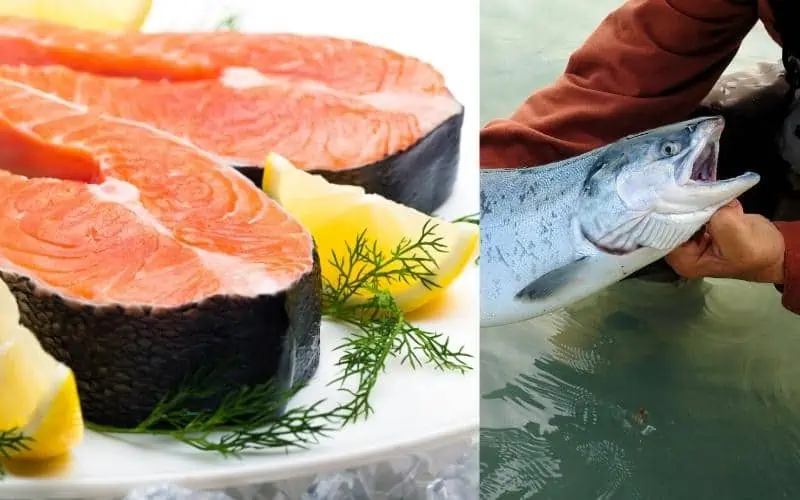
Alaskan Wild King Salmon
Swordfish
Yellowfin Tuna
Chinook Salmon
Halibut
Dover Sole
Sockeye Salmon
10. Sockeye Salmon
Salmon is one of the priciest fish species in the world, though some types are more expensive than others. Sockeye salmon tends to fall on the lower spectrum in terms of price, though it’s one of the tastiest types of fish you can add to your shopping list.
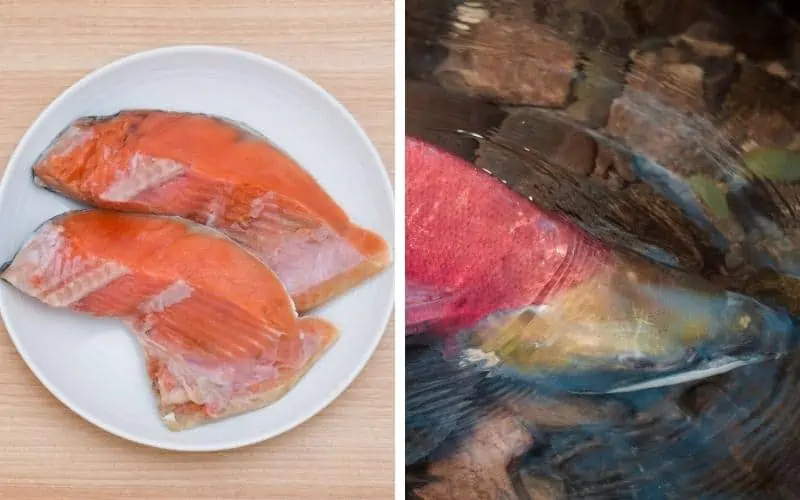
Notably, this type of salmon is hard to forget, especially if ordered whole. It has bright red scales across most of its body but a distinctly green head. Overall, this fish is considered the most flavorful salmon, though it’s often smoked to accentuate its natural taste.
At $20 per pound, sockeye salmon isn’t the priciest type of salmon, but it will cost you more than cod, tilapia, or mackerel.
Why It’s Expensive
Wild-caught sockeye salmon tend to command the highest prices, as they’re often much larger than farm-bred fish. Larger fish means heftier portions, so heavier specimens always cost more than smaller ones. Still, high demand and transportation costs have helped make this fish comparatively expensive.
9. Dover Sole
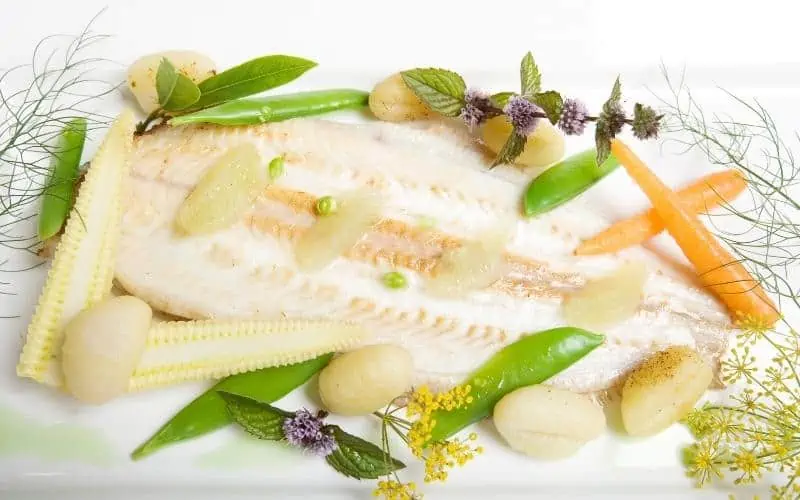
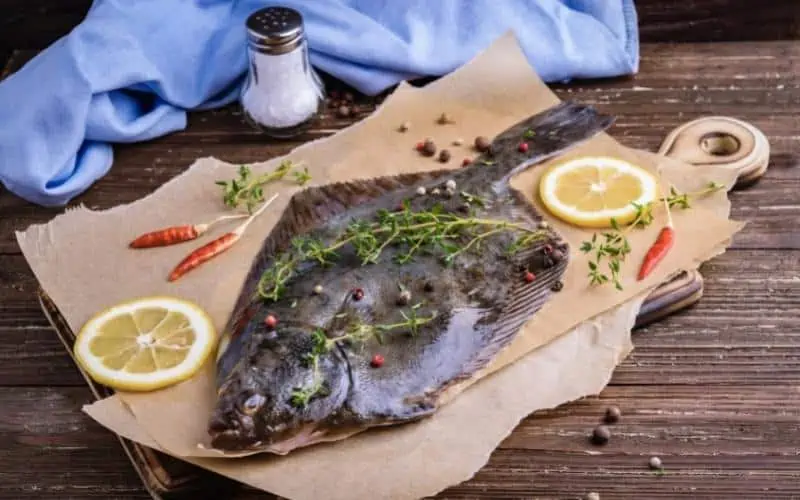
The Dover sole might look like the most appetizing fish. It has a muddy brown body that’s far flatter than a fresh-caught, round-bellied tuna. But it has a uniquely sweet flavor that’s often compared to spiced chicken or beef.
This flavor profile is unusual, as the Dover sole are saltwater fish. Still, they’re the least “fishy” type of fish you can enjoy, making them an ideal choice for those that tend to avoid seafood.
And with a price tag of about $29 per pound, these flatfish are far costlier than other species of edible fish. Naturally, wild-caught specimens are more expensive than farmed options.
Why It’s Expensive
The primary reason Dover sole fish are expensive is that they’re so tasty. This species is also easy to prepare, with most professional chefs and at-home cooks baking them whole. Because they have a mild flavor profile, they’re a favorite among diners that enjoy the benefits of eating fish but don’t enjoy the taste of seafood.
8. Halibut
Halibut is also a type of flatfish, but they can grow to jaw-dropping sizes, making full-grown Dover sole fish look like babies. For example, Pacific halibut can weigh more than 400lbs, and their Atlantic cousins often weigh in at more than 300lbs.
This species is also notable for its low fat content and sweet taste. Many people compare the taste of halibut to tilapia, but milder and thicker. As a result, halibut filets are ideal for fish burgers or filling fish dinners.
However, wild-caught halibut isn’t as common as it once was, making it one of the pricier types of edible fish. Generally, you can expect to spend about $30 per pound to enjoy this saltwater fish.
Why It’s Expensive
Halibut is one of the tastiest and most filling types of fish, and as a result, it’s become one of the most popular types of fish around the world. However, this high demand has boosted the price of halibut filets and made wild specimens scarce. These factors make it pricier than similarly flavored species like tilapia.
7. Chinook Salmon
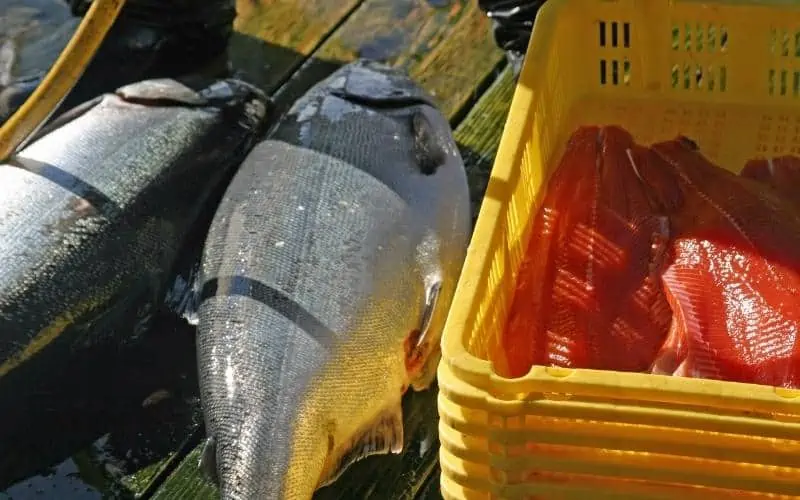
Unlike sockeye salmon, Chinook salmon tend to have greenish-white bodies with small brushstrokes of red along their abdomens. However, they can be almost as enormous as their bright ride relatives, making them easy to slice into hefty portions ideal for meals.
Native to the Pacific Ocean, these fish are prized for their savory, buttery flavor and soft texture. But this mouthwatering taste has also made Chinook salmon endangered in some areas and rare in others.
You’ll likely spend about $30 per pound on farmed Chinook salmon.
Why It’s Expensive
There are two reasons why Chinook salmon is one of the most expensive types of edible fish. Firstly, they’re well-known for being one of the most delicious types of salmon, with a rich flavor that’s rarely found in other species.
However, Chinook salmon are also threatened by overfishing, making them increasingly scarce. This rarity and superior flavor profile make it pricier than other anadromous (living in saltwater and freshwater environments) fish.
6. Yellowfin Tuna
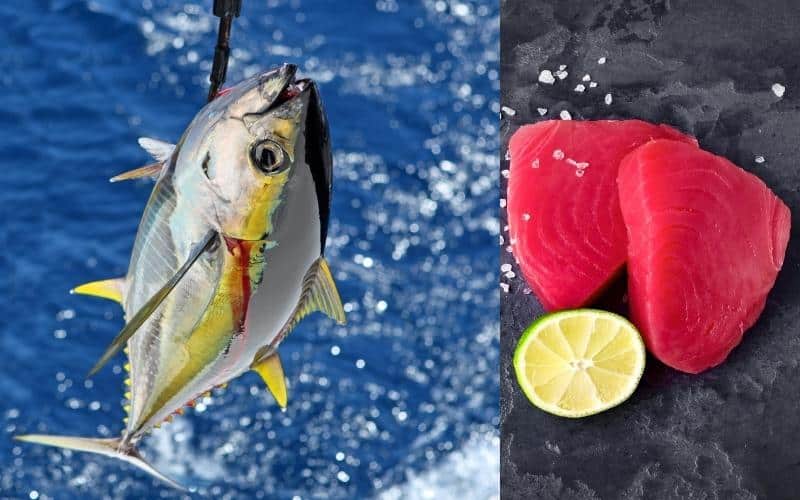
Yellowfin tuna (ahi) are gorgeous edible fish with glittering silver bellies and colorful blue-green spines. Native to tropical waters, particularly those off the coastlines of Hawaii, these fish tend to grow into enormous creatures. It’s not uncommon to see anglers catching 300lb or 400lb yellowfin tuna.
Because these fish can grow to impressive sizes, they’re often used for a variety of meals, including sushi and fish patties. But their mild taste and significant portions also make them a popular choice. Ahi typically costs about $30 per pound, but prices may be higher for those living far from tropical regions or coastal areas.
Still, once you’ve tried yellowfin tuna for yourself, you might never be able to go back to albacore! Adding a small handful of some of the world’s most expensive mushrooms to your tuna dinner can make things even better.
Why It’s Expensive
Yellowfin tuna is pricier than other types of fish because it’s gigantic, tasty, and in high demand. Additionally, some diners may pay more for this fish due to high transport costs.
5. Swordfish
The swordfish gets its name from the long, blade-like protrusion sticking out from its head. It’s been a treasured catch among anglers for centuries, but it’s also prized for its meaty filets and mild flavor.
Like other costly fish from around the world, swordfish can grow to jaw-dropping sizes. While it might not be quite as hefty as some tuna or salmon, the average swordfish can weigh about 200lbs. Consequently, a single swordfish can feed quite a few people!
At about $60 per pound, this tasty fish is also one of the most expensive types of seafood.
Why It’s Expensive
It’s impossible to raise swordfish on standard fish farms, as these fish require plenty of space and saltwater to thrive. But marine fisheries are far more costly to maintain than terrestrial fish farms. Additionally, wild-caught swordfish are becoming a rare sight to the high demand for this delicately flavored fish.
4. Alaskan Wild King Salmon
Technically, Alaskan Wild King salmon and Chinook salmon are the same species. However, Chinook salmon is the more generic term and often refers to fish bred on fish farms or wild-caught throughout the continental United States.
On the other hand, Alaskan Wild King salmon is almost always a wild-caught Chinook originating from Alaska’s pristine rivers and coastlines. Because these fish have more unspoiled areas to explore and thrive in, they can grow larger than their continental cousins.
Diners may prefer Alaskan Wild King salmon over farm-bred Chinook due to the cleaner Alaskan environment. But the higher demand for Alaskan-caught Chinook salmon results in a noticeable price difference of over $30. For example, Alaskan Wild King salmon often costs $70 or more per pound.
Why It’s Expensive
A cleaner and more expansive environment can result in better-tasting and larger fish. Of course, the same is true of any other commonly eaten animal, including chickens and cows. So you can think of Alaskan Wild King salmon as free-range or grass-fed beef.
It’s higher quality than standard Chinook salmon, which means that folks are often willing to pay a higher price for it. And because it’s caught in Alaska (almost 3,000 miles away from the continental United States), transportation costs are high.
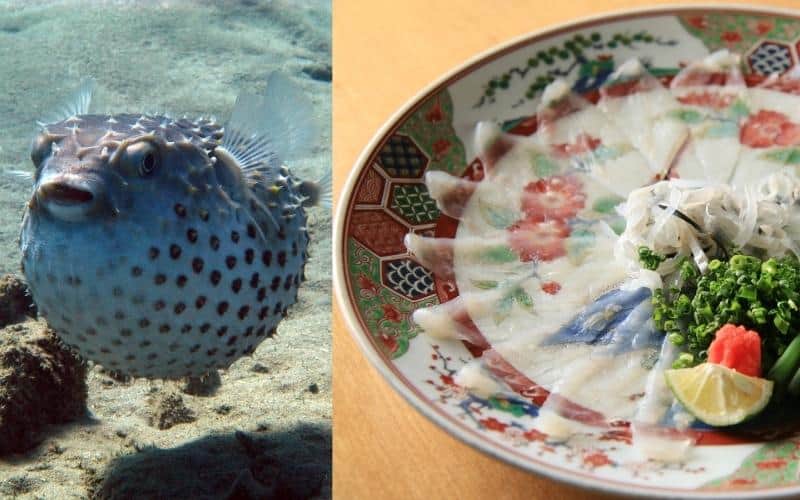
3. Pufferfish
The pufferfish (also called fugu) is one of the most expensive seafood items on the planet. Unfortunately, it also happens to be one of the most dangerous, as pufferfish contain a combination of potentially lethal toxins.
If prepared incorrectly, pufferfish toxin can kill you in just four hours! And while you might think that this dangerous quality makes pufferfish one of the least-desired fish in the world, it only increases demand.
The most skillful chefs in the world know how to prepare pufferfish in a way that makes it entirely safe to consume. As such, many daredevil diners are more than willing to give this fish a try.
Still, you’ll need to be willing to invest some money to give this fish a try. A single fugu sushi dish can cost $60, and this fish is known to cost $200 or more per pound.
Why It’s Expensive
Pufferfish has a taste that’s challenging to describe, with most diners describing it as absolutely unforgettable. But it can also prove deadly if poorly prepared.
This combination of unique flavor and high risk makes it fugu an attractive experience for many. Still, the primary reason it’s expensive is the skillful preparation needed to make it safe to eat.
2. American Glass Eel
The American glass eel (sometimes called the bay eel) is native to northeast coastlines in North America. However, it’s not nearly as common as it used to be. As a result, anglers in Maine can now charge outrageous prices for a single pound of fresh-caught eel.
In 2009, the per-pound price for Maine glass eels was about $100. But in 2019, that price tag stood at a hefty $3,000 per pound!
Still, eel typically isn’t the first dish people imagine an exquisite and expensive fish dinner. So, why is the price of American glass eels so high?
Why It’s Expensive
The glass eel is often compared to chicken and catfish in terms of taste, and it’s not beloved due to its flavor profile. That said, this slim snake-like fish is one of the most expensive because it’s become scarce.
Poaching and illegal catching are significant problems, leading to substantial catching restrictions that have inflated the price of these fish. The American glass eel can also grow to an astounding length, occasionally reaching up to six feet long.
This quality makes them ideal specimens for sushi, and the most expensive sushi platters often include at least one cut of glass eel.
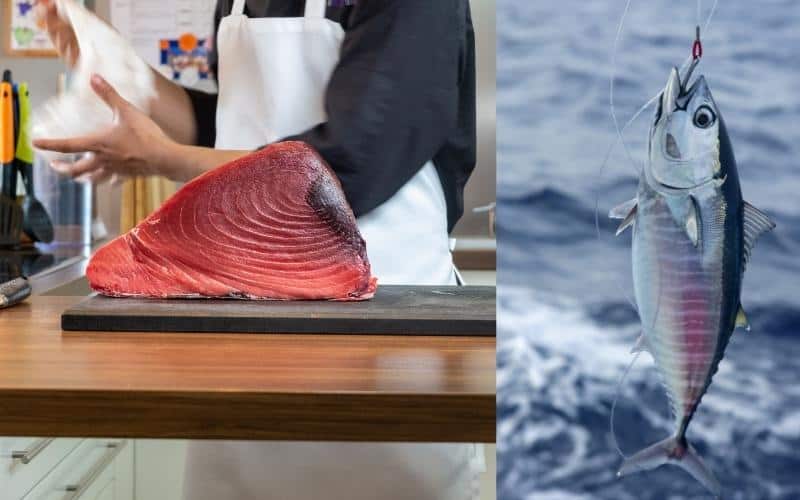
1. Bluefin Tuna
Bluefin tuna is the most expensive edible fish on the planet. In 2019, a whopping 600-pound bluefin tuna sold for ¥333.6 million (that’s about $3 million). That’s nearly $5,000 per pound!
This type of tuna is native to the North Atlantic Ocean and the Meditteranean Sea. But the costliest specimens are often found in the Pacific Ocean, off the coast of Japan.
While many types of tuna fish grow to enormous sizes, bluefin tuna is one of the largest types of tasty fish. It’s also considered a delicacy due to its increasing rarity and distinct flavor. Still, these aren’t the only reasons bluefin tuna are so expensive.
Why It’s Expensive
Bluefin tuna is one of the most prized sushi ingredients. It’s also constantly in high demand due to its international reputation for being the best-tasting type of tuna.
But this massive and tasty fish isn’t plentiful, primarily due to overfishing and enormous demand. In addition, larger specimens have become increasingly rare over the last several decades, making the heaviest catches incredibly expensive.
Try These Tasty Fish
The most expensive fish to eat is Japanese bluefin tuna. That’s because these fish are massive, rare, and in high demand. That said, bluefin tuna isn’t the only tasty fish that costs a pretty penny.
If you’re feeling in the mood to treat yourself, be sure to consider any of the above options. Though your wallet might be lighter, your belly is bound to feel a little fuller!
Are you hungry for more of the world’s most expensive foods, experiences, and items? If so, be sure to check out our blog now!
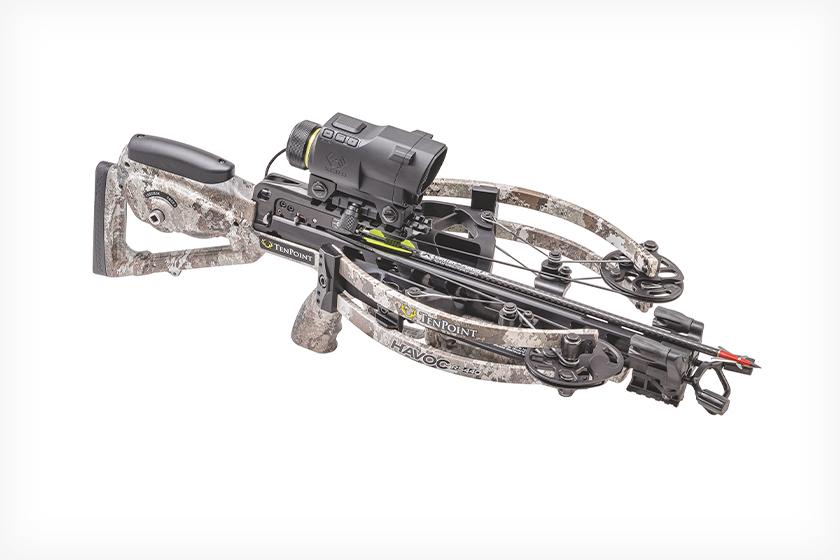
The TenPoint Havoc RS440 Xero, which comes with the Garmin Xero X1i laser-rangefinding scope, has an axle-to-axle measurement of just 7 1/2 inches when cocked. (Photo courtesy of TenPoint)
Timing is often critical to getting a shot while bowhunting. Whether hunting with a crossbow or a compound, preparing to shoot typically takes longer than when hunting with firearm.
With a compound, it also requires more movement. These are challenges that bowhunters readily accept and that bow manufacturers seek to help them overcome.
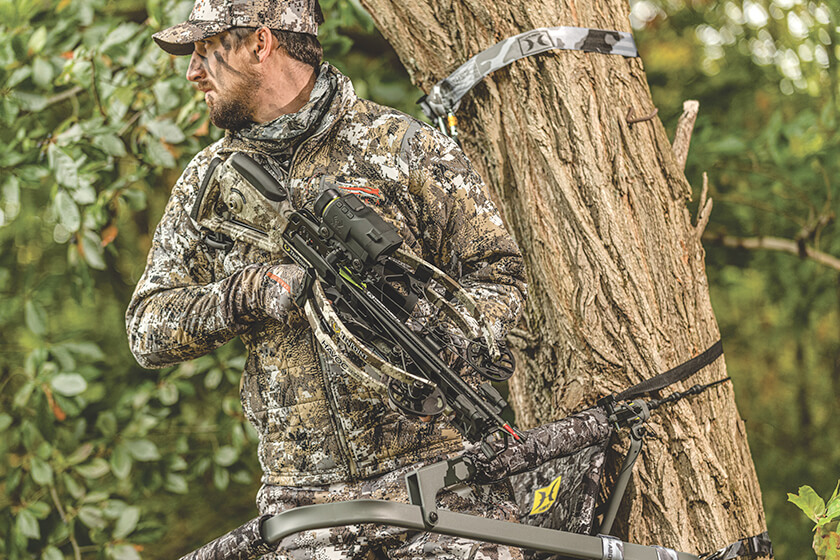
Being able to deftly maneuver a bow is key to capitalizing on a shot opportunity. No matter if the hunt occurs in a treestand or a ground blind, or even in the form of spot-and-stalk, crossbows with narrow widths and compounds with short axle-to-axle lengths shine in tight quarters.
They are easier to carry off the beaten path and guide around brush, branches and vegetation without hang-ups. New technology allows manufacturers to build easy-handling bows that are not only fast, but also accurate and comfortable to shoot.
Here are seven new models that are among the most compact on the market. They might buy you those extra few moments you need to make a shot.
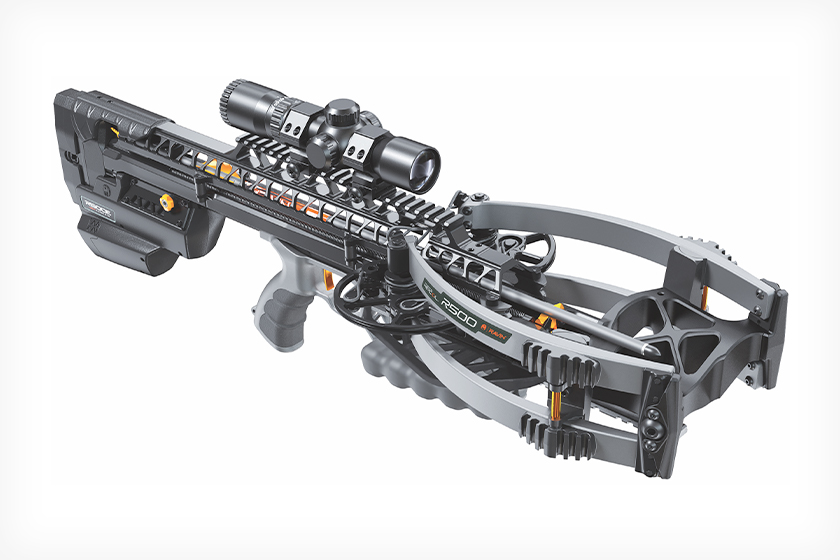
Ravin R500E
Ravin R500E
Ravin promises the R500E will deliver 500 fps with the 400-grain arrows that come with the bow. Unprecedented speed is exciting, but the cocking system is just as impressive. The battery-powered Ravin Electric Drive System allows shooters to cock and decock the crossbow with just a push of a button. This cocking system is detachable and includes a charger, and the R500E can still be cocked manually with Ravin’s VersaDrive System. The R500E has an axle-to-axle spec of just 3.6 inches when cocked. While the overall width of the crossbow is certainly wider than the axle-to-axle figure, it’s still ultra-narrow. The R500E’s 28-inch length also contributes to the compact nature of this crossbow.
Axle-to-Axle, Cocked: 3.6″
Axle-to-Axle, Uncocked: 7.6″
Power Stroke: 15″
Length: 28″
Weight: 9.9 lbs
Speed: 500 fps
MSRP: $3,349
ravincrossbows.com
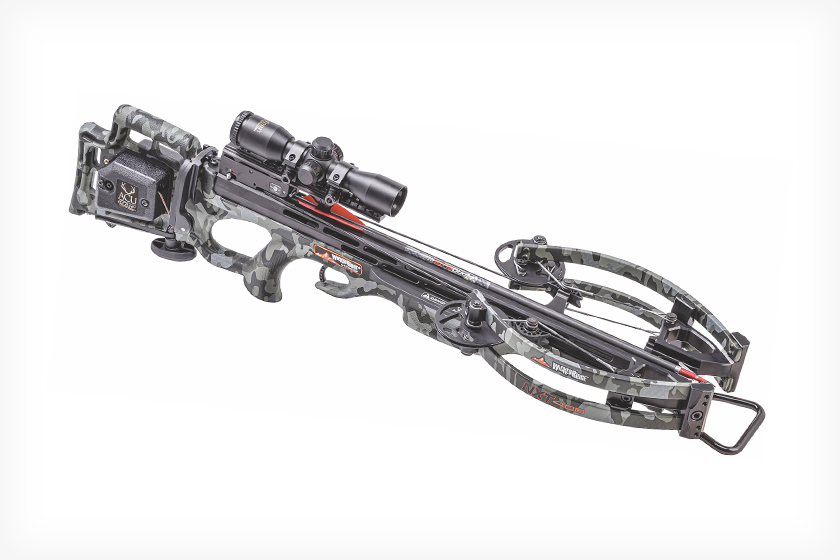
Wicked Ridge NXT 400
Wicked Ridge NXT 400
At just six inches wide axle-to-axle when cocked, the NXT 400 is Wicked Ridge’s narrowest crossbow ever. Its XR6 Cams and Vector-Quad cable technology uses four cables instead of two to power 200-pound limbs. The result is a speed of up to 400 fps with 400-grain arrows. Without the foot stirrup, the NXT 400 is 33 inches long and weighs less than 7 1/2 pounds. The NXT 400 package includes an ACUdraw cocking device, TenPoint 3X Pro-View scope, three-arrow quiver, and three Pro Elite 400 carbon arrows with practice points.
Axle-to-Axle, Cocked: 6″
Axle-to-Axle, Uncocked: 11.3″
Power Stroke: 15 1/2″
Length: 33″
Weight: 7.4 lbs
Speed: 400 fps
MSRP: $1,099.99
wickedridgecrossbows.com
TenPoint Havoc RS440 Xero
TenPoint Havoc RS440 Xero
The TenPoint Havoc RS440 Xero is a top-quality crossbow, but it’s what’s on top of the Havoc that sets it apart. This crossbow ships with the Garmin Xero X1i rangefinding scope. Press a button, and the scope determines the distance to the target then automatically provides an illuminated aiming point based on the range (see “Gear: How It Works,” page 100). The Havoc RS440 includes TenPoint’s ACUslide System, which makes cocking and decocking quiet, safe and nearly effortless. Easy to handle, the Havoc measures less than 27 inches long without the foot stirrup and 28 3/4 inches with the stirrup. The two-stage S1 trigger is silky smooth, and pull weight is a smidge under 3 pounds. The Havoc RS440 is also available with a more conventional EVO-X scope that features a holdover reticle.
Axle-to-Axle, Cocked: 7 1/2″
Axle-to-Axle, Uncocked: 12.3″
Power Stroke: 13 1/2″
Length: 26 1/2″
Weight: 7 1/2 lbs
Speed: 440 fps
MSRP: $3,649.99
tenpointcrossbows.com
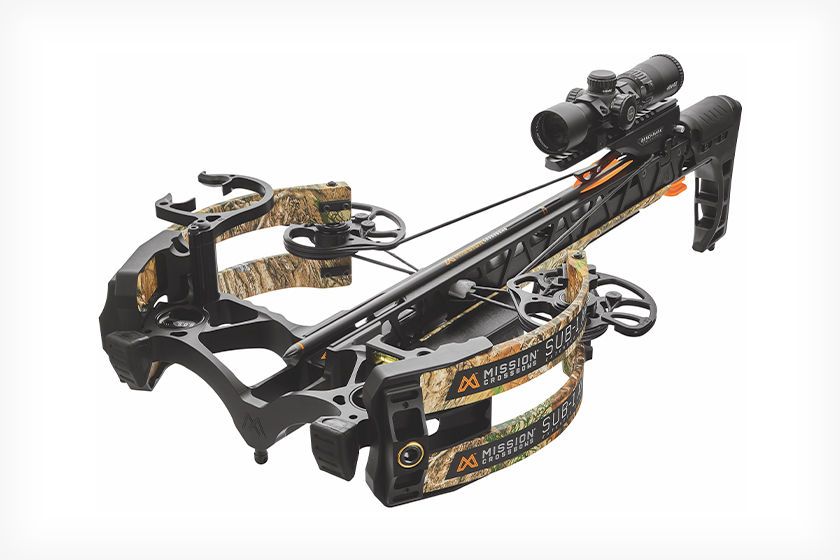
Mission Sub-1 XR
Mission Sub-1 XR
When cocked, the Mission Sub-1 XR measures 9.1 inches axle-to-axle and 13 inches at its widest point. It produces arrow speeds of up to 410 fps. The Sub-1 XR is easy to cock without a cranking device, but a silent Mission RSD Crank is an optional add-on. A speed-compensating Hawke scope is included in the package, along with a quiver and soft case. (The Sub-1 XR can also be purchased without the scope, quiver and arrows for $200 less.) This crossbow is incredibly accurate, thanks in part to a match-grade trigger that breaks crisply at about 3 pounds of pull weight. And if the hunt doesn’t end with a shot, the Sub-1 XR can be decocked easily. It is arguably the safest and easiest crossbow to decock without a crank system.
Axle-to-Axle, Cocked: 9.1″
Axle-to-Axle, Uncocked: 12 1/2″
Power Stroke: 14 5/8″
Length: 30 1/2″
Weight: 7.6 lbs
Speed: 410 fps
MSRP: $1,899
missioncrossbows.com
Mathews V3 27
Mathews V3 27
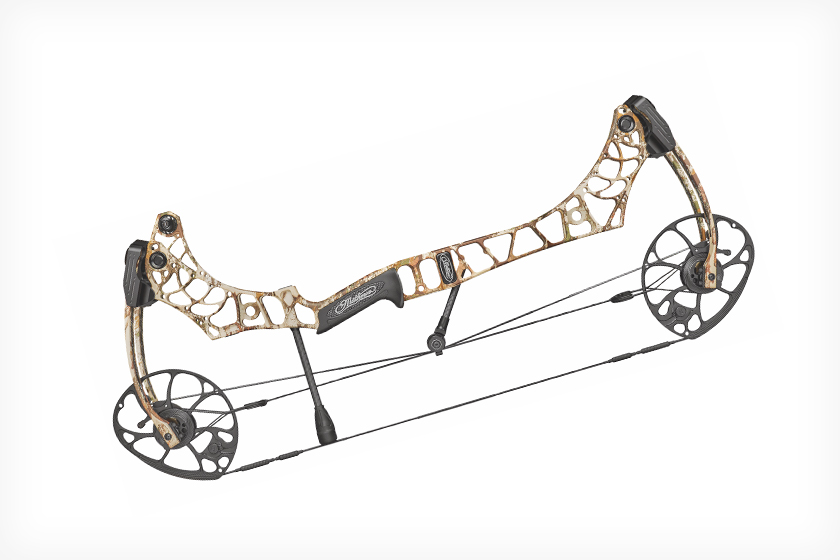
It’s not often you find a pair of flagship bows, especially with different axle-to-axle lengths, that mirror each other in almost every way. Mathews’ V3 27 and 31 models, however, are the exception to this rule. Both have a brace height of 6 inches and an IBO speed rating of 342 fps. The main difference is the length between the axles. The V3 27 is the company’s most compact bow to date. It, like the V3 31, makes use of Mathews’ Crosscentric cam to permit easy draw-length and draw-weight changes, the new Nano 740 damping system, and redesigned limbs and limb cups to reduce weight.
Axle-to-Axle: 27″
Brace Height: 6″
Let-Off: 80, 85%
Draw Weight: 60, 65, 70, 75 lbs
Draw Length: 25 to 29.5″
Weight: 4.29 lbs
Speed: 342 fps
MSRP: $1,199
mathewsinc.com
Hoyt Carbon RX-5
Hoyt Carbon RX-5
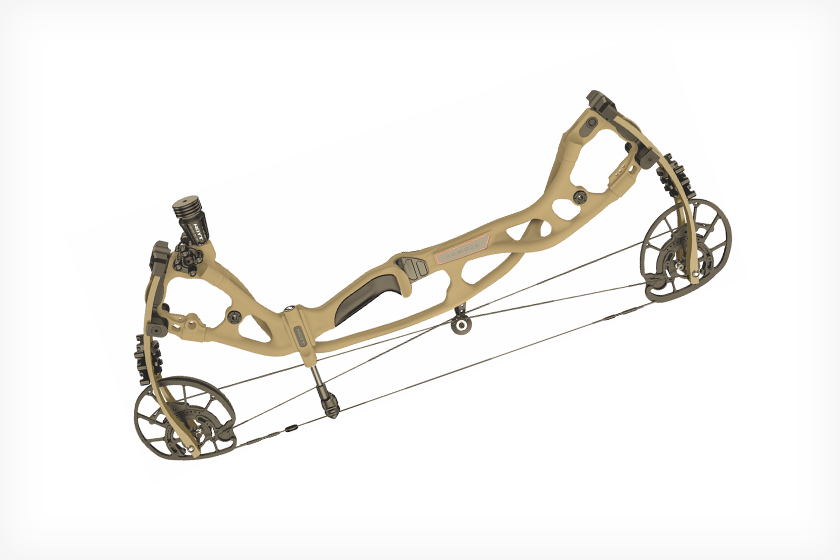
Hoyt heralds its latest carbon incarnation, the RX-5, as its best carbon model to date. The bow is fitted with an all-new HBX Cam that promises smoothness and speed, plus redesigned Limb Shox to minimize vibration and noise. Measuring 30 inches between the axles and having a 6 1/4-inch brace height, the RX-5 can hit speeds up to 342 fps. Other notable features of this 4.4-pound compound include the Integrate Rest Mount, which puts QAD’s Integrate MX drop-away in line with the riser, and a lower stabilizer position. The bow is also offered in an Ultra model with a 34-inch axle-to-axle length and 7-inch brace height.
Axle-to-Axle: 30″
Brace Height: 6 1/4″
Let-Off: 80, 85%
Draw Weight: 30 to 80 lbs
Draw Length: 25 to 30″
Weight: 4.4 lbs
Speed: 342 fps
MSRP: $1,699
hoyt.com
Bowtech Solution SD
Bowtech Solution SD
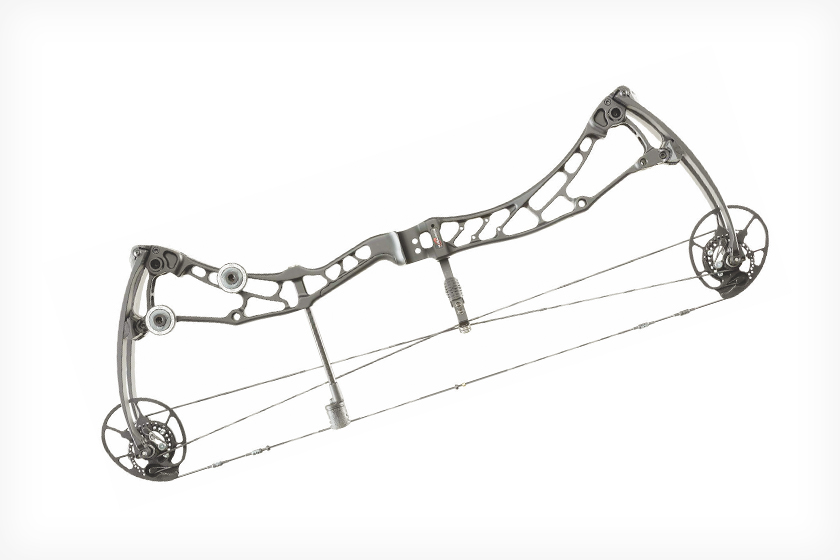
Optimized for bowhunters with draw lengths of 23 1/2 to 28 1/2 inches, the new Solution SD offers speed and performance in a short-draw compound. Bowtech reports arrow speeds up to 323 fps, and the company builds the Solution SD with its DeadLock Cam System. The Deadlock cams can be moved left or right on the axles by just turning a screw for easy tuning to achieve perfect arrow flight. Deadlock cable containment reduces torque, and Orbit dampeners can be strategically placed on the riser to offset accessory weight while minimizing vibration.
Introducing Break Barrel Air Rifle Oil: Enhance Your Shooting Performance with Superior Lubrication. Designed specifically for break barrel air rifles, our advanced formula ensures smooth and consistent operation, enhancing accuracy and longevity. Say goodbye to friction and wear, as our high-quality oil reduces noise and recoil while protecting vital components. Elevate your shooting experience with Break Barrel Air Rifle Oil – the ultimate choice for every avid shooter.
break barrel air rifle oil
When it comes to maintaining your break barrel air rifle, using the right oil is crucial. Break barrel air rifles require regular lubrication to ensure smooth operation and extend their lifespan. Break barrel air rifle oil is specially formulated to provide superior lubrication and protect the internal components of your rifle. It helps reduce friction between moving parts, preventing wear and tear, and ensuring consistent performance shot after shot. Whether you are a seasoned shooter or a beginner, investing in high-quality break barrel air rifle oil is essential for optimal maintenance.
One of the key benefits of using break barrel air rifle oil is its ability to prevent rust and corrosion. As break barrel air rifles are often used outdoors, they are exposed to various weather conditions that can cause metal parts to deteriorate over time. Applying a thin layer of oil on the metal surfaces creates a protective barrier against moisture and other elements, significantly reducing the risk of rust formation. Regular application of break barrel air rifle oil not only keeps your rifle looking great but also ensures its longevity.
In addition to lubrication and rust prevention, break barrel air rifle oil also helps improve overall accuracy. By reducing friction between critical components such as the piston and spring, it allows for smoother cocking and firing cycles. This translates into more consistent power output and enhanced precision with each shot. Whether you use your break barrel air rifle for target shooting or hunting, utilizing the right oil will contribute to better performance and increased enjoyment of your shooting experience.
In conclusion, using the right oil for your break barrel air rifle is crucial for its maintenance and longevity. Regular lubrication with high-quality oils will ensure smooth and efficient performance, preventing damage to the mechanism. Remember to follow manufacturer guidelines and consult experts if needed. Keep your break barrel air rifle well-oiled for optimal shooting experiences.