If you’re looking for a live bait that will attract fish, mealworms are a great option. These small worms are high in protein and fat, making them irresistible to many fish species. In addition, they’re easy to find and relatively inexpensive. Here’s everything you need to know about using mealworms for fishing.
Benefits of Using Mealworms as Bait
There are several benefits to using mealworms as bait. First, they’re a natural food source for many fish species. This means that fish are more likely to bite on a mealworm than something they don’t typically eat.
Second, mealworms are high in nutrition, making them an ideal food source for fish, as it gives them the energy they need to grow and thrive.
Third, mealworms are relatively easy to find and purchase. You can find them at most bait shops or online. They’re also relatively inexpensive, making them a great option for budget-minded anglers.
How to Use Mealworms as Bait
Using mealworms is simple – thread them onto your hook and cast your line into the water. The mealworms will wiggle and squirm, attracting fish to your line. In addition, their soft bodies make them easy for fish to eat. The size of the hook depends on the size of the fish you are hoping to catch.
Ways to use mealworms for fishing also depend on the fish you’re targeting. For example, if you’re fishing for trout, you can thread the mealworm onto a hook and cast your line into a pool or stream.
The movement of the mealworm will attract the trout, and when they bite, you can reel them in. If you’re fishing for catfish, you can drop a handful of mealworms into the water and wait for the catfish to bite.
What Type of Fish Can You Catch with Mealworms as a Bait? Mealworms are effective for many different fish species, including trout, bass, panfish, and catfish. When fishing for trout, try using a small mealworm. For bass, use a larger worm. And for catfish, use a handful of worms.
How to Buy Mealworms
You can find mealworms at most bait shops or online. If you’re buying them online, make sure to purchase them from a reputable source. Look for a supplier that offers guaranteed live delivery and ships their worms in a breathable container. Also, be sure to choose the correct size worm for the fish you’re hoping to catch.
How to Keep the Mealworms Fresh for Fishing
Mealworms are live bait, so it’s essential to keep them alive and fresh. The best way to do this is to purchase a breathable container, such as a mesh bag, and store them in a cool, dark place. Change the bedding regularly and mist the worms with water to keep them hydrated. You can also purchase a live bait aerator to keep the mealworms alive and fresh for longer periods.
Buy Mealworms for Fishing from Sunshine State Worms
If you’re looking for high-quality mealworms as bait for fishing, look no further than Sunshine State Worms. We offer live delivery and guaranteed live arrival on all our worms.
We also ship our worms in a breathable container to ensure they arrive alive and fresh. Plus, we have a wide variety of sizes to choose from, so you can find the perfect worm for your fishing needs. Visit our website today to learn more and place your order.
The .22lr is one of the most bought and shot calibers in the United States. This caliber is available in a variety of rimfire cartridges and is used from casual plinking to small game hunting. In any shooting situation, the use of a .22lr scope can be extremely beneficial. Because of this, it is in your best interest to become familiar with the best scope for 22lr rifles that are available.
In this article, we will take a look at some components and performance characteristics that are associated with quality rimfire scopes. We will then take a look at four scopes that can easily be considered the best scope for 22lr rifles.
DIANA 2-7×20 HD Riflescope
High quality and clear vision
With multiple adjustment from 2-7x
Weather resistant
Thick aiming reticle
Small eye relief
$98 Shop NowClick to read my review Nikon P-Rimfire Scope
Weather resistant
Incredible low light performance
Crisp reticle
Heavy
Poor field of view at higher magnification range
$179 Shop NowClick to read my review Leupold FX-1 Rimfire Scope
Compact and lightweight
Excellent field of view for quick target acquisition
Top quality lenses
Pricey
$299 Shop NowClick to read my review Vortex Crossfire II Rimfire Scope
Well built and sturdy scope
Great eye relief
Good performance in low light
Hard to Zero
Focus slides in and out at high magnification
$129 Shop NowClick to read my review
.22 Rifle Scope Buyerâs Guide
Purpose: Letâs take some time to discuss the purpose of optics on rimfire, specifically .22lr chambered firearms. There are a lot of scopes that are going out on the market that might seem like better options than the scopes we are going to list here.The bottom line is that you don’t need extreme magnification. This is because this caliber is not going to reach out to 500 yards and high power magnification scopes are generally much more expensive. The best 22 scope is going to be durable, reliable, lightweight, and have the necessary performance standards for any scope.
Durability: Any scope that is going to be put on your firearm, whether a rimfire or high caliber, needs to be built of quality materials that can handle environmental conditions as well as stand up to bumps and scrapes that accrue over trips to the woods.You want a scope built from a single piece tube, as this helps increase durability and you want the scope built from materials such as aluminum or possibly a high-quality graphite. You also want to these scopes to be purged and sealed in key areas to keep the scopes water and fog proof. And even though we are only dealing with a .22 caliber you want a scope that is going to hold zero consistently over many outings.
Glass: A scope is going to worthless unless is has the lenses able to perform in a variety of conditions and be able to provide a bright and clear image. You are going to want a scope that can transmit a good deal of light from the ocular lens to your pupil, especially for those with hunting purposes in mind. It always seems the most squirrels are out at those first rays of light coming down through the trees.Lens coatings help as well as the diameter of the objective lens with most scopes that work well for rimfire rifles being 33mm or less in diameter. Lens coatings also help cut down on glare and light reflection on your lens and an abrasion resistance coating will help increase the longevity of your glass and make those frustrating scratches less likely.
Weight: For optics going on your .22, itâs important that your scope of choice does not throw off the balance. .22 rifles are generally lightweight and throwing on a heavy scope can throw the balance of the rifle off.You shouldn’t have an issue with any of the scopes we will cover in this article being too heavy for your .22 rifle, but it is something you should keep in mind if you decide to venture out and look for a 22lr scope. While we can’t tell you what the cut off is without handling your particular rifle, and scope used on a .22 shouldn’t be over 15oz.
Magnification Power: As we keep saying, for most shooting scenarios that occur with a .22lr rifle are not going to be over 150 yards. Because of this, the need for high-powered magnification scopes is overkill. A 3-9X variable scope is going to be more magnification than you will ever need and it also provides enough settings for most target shooting scenarios.A lot of plinkers or hunting situations do not even require a variable powered scope, and a fixed scope has a lot of benefits. They are most often cheaper, and they are also more durable as there are less moving parts. Weâre not here to tell you which type of .22 rifle scope you should put on your rifle, but simply let you know there are options and to think about the shooting applications you have in mind.
Reticle: Building of the purpose section, remember what you are shooting. A .22lr chambered rifle is not meant nor is it capable of taking shots at long distances. There might be situations where you want a more technical reticle that features bullet drop compensation, but for the most part, a simple and crisp duplex reticle is more than enough for .22lr chambered firearms. Now, if that’s not what you’re about then more power to you and go with a reticle that you feel the most comfortable with.
The 4 Best Scopes for .22lr Rifles
Following the criteria outlined above, the next section will provide a selection of scopes that perform well in combination with the .22lr caliber.
DIANA 2-7×20 HD Riflescope
Diana 2-7×20 HD is one of the most popular brands on the market today. This scope is suitable for your .22lr chambered rifle. This is a well-made, durable aluminum alloy scope that can handle most of the abuse you put it through on a day out. In fact, when it comes to its quality, we can say that it can definitely give a good fight to other brands out there. It is also sealed to be water and fog-proof. So whatever the weather conditions, it can be used properly.
This scope features a variable magnification range of 2-7X. Making it ideal for hunting and range shooting. You will see your target in focus and clear at 100 yards using its parallax adjustment. It has an excellent optical coating that changes how light is reflected. And transmitted in the optic to improve transmission, reflection, and polarization qualities. Another benefit of this scope is its high precision and enhanced shooting target. Which allows you to have a better shooting experience.
This is a compact and lightweight scope that is easy to carry everywhere. However, one of its drawbacks is the small eye relief. Nonetheless, for us, this isn’t a major concern, so we can say this scope is still an excellent pick. After-sale, it will provide you with the finest guarantee. Thanks to the strong impact test that Diana scope assured. Because we experience it firsthand, which is why this scope is worth an investment.
Nikon P-Rimfire Scope
This 22 rifle scope is a 2-7X variable powered scope that is specifically designed for use with smaller rimfire rifles. It is both fog and waterproof and performs well in less than ideal weather conditions often encountered when hunting.We love the lenses used in this scope. They transmit a lot of the light through the scope tube, and at low light settings, the image appears brighter through the scope than the surrounding field of view.
At the 7X magnification the field of view drops off, and you’re not going to be able to key in on the target directly from the 7X and will need to work your way through the magnification range. For target shooting, it’s not a problem, but while hunting small game long distance shots can be difficult to zoom in on your target quickly.
This scope has high tactical turrets that are extremely easy to adjust while in the field and also have audible finger clicks that make it much easier to adjust when keeping your sight down the scope.
The Nikoplex reticle, which is a simple duplex reticle is extremely crisp and clear throughout the scopes magnification range and is very easy to center targets.The biggest issue we have with this particular scope is that it is pretty heavy at 16.1oz. It will fit just fine on your .22 rifle and has great eye relief. If you are using a heavier .22 tactical rifle, this is one of the best 22lr scopes on the market, and the heaviness helps keep recoil down when rattling off dozens of shots in a small time frame.
Leupold FX-1 Rimfire Scope
If you havenât noticed, we really like Leupold scopes and for good reason. The quality and performance of Leupold glass are unrivaled.We have presented two variable scopes, but a lot of hunters/marksmen prefer a simple fixed scope on their .22 chambered firearms. Like we mentioned in our buyerâs guide itâs all personal preference and what type of shooting you will be doing. 2.5X, 4X, or 5X fixed power all have their advantages and disadvantages.
The FX-1 Rimfire Scope by Leupold is a 4X fixed magnification scope. 4X is an excellent small game hunting magnification power for small game in more wooded environments. This particular scope is great with a 25.5′ FOV at 100yards. What this allows is quick target acquisition which is important when chasing after smaller game. We also like the fine duplex reticle that features thick bases that taper into fine lines along the crosshairs that help you center your shot quickly.
This is a compact and lightweight scope that balances well with just about any .22lr rifle. It also has very generous eye relief that allows you some flexibility for where on the rail you mount the scope and provides you the chance to set up the outfit for comfortable shooting.Like any Leupold scope, the lenses are fantastic and give you optimal low light performance. You won’t have an issue with these lenses fogging up and will be pleased with the how water beads and rolls right of the lens.
All of this technology and scope features result in a highly accurate and precise scope once zeroed. This is a contender for the best 22 rifle scope as it paired with a reliable firearm can be a tack driver from 50 to 100 yards.
Vortex Crossfire II Rimfire Scope
Our final scope for 22lr rifles is the Vortex Crossfire II. This is another variable powered scope with a magnification range of 2-7X. This is a well-built and sturdy scope made from anodized aluminum. It is also treated and sealed to be water and fog-proof. You shouldn’t have any issue with this scope throwing off the balance of your firearm, and it has fantastic eye relief so you should be able to place this scope to give you optimal shooting posture.With the size of the objective lens and the lens treatment, you will be happy with this scope’s performance in low light conditions.
This scope has a fast-focus eyepiece although there is some issue with keeping the scope in focus at its highest magnification setting. The V-Plex reticle can be a pro or con depending on your personal preferences. Itâs a simple duplex reticle, but it features bold lines with little tapering that we think feels a bit bulky when trying to line up a shot.
Once you get this scope zeroed it holds it extremely well. The problem you might run into is getting it zeroed in at 50-75yards. The windage and elevation turrets are easy to adjust and have a useful zero resettable turret feature for quick adjustments in the field, but some users have had trouble with the reliability of adjustments.
Winner & Conclusion
Before we wrap up the article, we need to decide which of the four scopes wins top honors. The title for best 22 scope goes to the Leupold FX–1 Rimfire Scope. As far as scopes for 22lr rifles go, this scope excels in all categories. Right out of the gate it comes with all of the top qualities associated with Leupold optics. Itâs going to hold up in any weather conditions and take all kinds of passive abuse our shooting and hunting gear often encounters. You have a wide range of magnification power with each setting providing a clear and crisp image in minimal light conditions. It will be compatible with nearly every .22 rifle, it zeroes with little effort, it holds that zero, and is a tack driver when paired with a good rifle.
The only real downside with the Leupold is its price. If you are in the market for a bit more wallet-friendly version we recommend the DIANA 2-7×20 HD Riflescope. It gets the job done and costs less than $100.
After extensive research, I did find the quietest air rifle that offers both excellent performances as well as less noise.
To be honest, no air rifle is extremely quiet. But, there are definitely some that are less noisy than the rest.
In this guide, we will go through the 23 quietest air rifles, their benefits, and some limitations .
Let’s dive in!
23 Quietest Air Rifles That You Need to Know About
Different air rifles have different benefits to offer you. One rifle that may be good for small game hunting wouldn’t be suitable for big game hunting.
Similarly, you may also prefer a .177 pellet gun over a .22 one.
This list covers almost every type of gun for every type of air rifle enthusiast.
The best part about this rifle is its phenomenal accuracy. You can also adjust the velocity as per your requirements following the manual instructions.
As for the pellet size, the .177 version is suitable for paper. A .22 version is much more efficient for small hunting games, like squirrels, rabbits, and even raccoons!
At the maximum velocity setting and a .25 pellet, Benjamin Marauder is great for hunting coyotes too .
Another great thing is that you can easily buy a Marauder at an affordable price.
One major drawback is that if there’s less air pressure, you won’t have enough air in the reservoir to hunt an animal. So, you need to ensure that your tank is fully filled.
Pros
Cons
Very accurate
Highly customizable and adjustable in terms of velocity
Less noisy
Power-packed performance
Great for hunting
Less power in the pellets due to less air pressure
The Gamo Whisper Silent Cat is powerful, but also one of the quietest pellet guns for hunting squirrels and pest control. Presently, it is available in .177 caliber.
This rifle offers just the perfect accuracy for squirrels and other small game hunting animals.
It also has a maximum velocity of around 1200 ft/s which makes it extremely powerful.
This air rifle is also relatively easy to use as it has an easy to cock barrel, along with an efficient spring piston mechanism.
It is lightweight and well-structured. You can also expect this rifle to last for years due to its synthetic stock material.
As the name suggests, this air rifle is built with a Whisper Noise Dampener. This helps in reducing the sound by almost 52%.
From the price point of view, this air rifle is definitely on the cheaper side and is easily affordable.
It also doesn’t require much maintenance and comes with a one-year warranty.
There are only a few drawbacks to this air rifle that include an average or poor scope. It is quiet in the mechanism but may make some sound when the piston hits the barrel.
3. Hatsan AT44-10 QE Air Rifle – Quietest Air Rifle For Backyard Pest Control
Pests are certainly the worst of the lot for your backyard. Yet, you cannot use noisy air rifles to hunt them or your neighbors will have a lot to say. Maybe even the police too!
Thankfully, Hatsan AT44-10 is here to save the day with its accurate and powerful performance.
This air rifle comes in 0.22, and 0.26 calibers, both of which are excellent for backyard hunting and pest control.
The Air Arms TX200 is an extraordinary and quiet spring-piston rifle for neighborhood use. You get both .177 and .22 caliber guns here.
There are plenty of things to like about this air rifle.
First of all, it may even be more accurate than any other market in the gun as per hundreds of user reviews.
It also has a beautiful and high-quality structure and design. You can definitely see the value of money aspect here.
It has a maximum velocity of around 930 FPS with a .177 caliber and 870 FPS with a .22 caliber. So, you can use it for hunting birds or even backyard pests.
It also comes with a special shrouded barrel that dampens the sound. The loudness level here is 3-medium which is certainly good for neighborhood use.
Even though it is a spring-piston, it has minimal recoil. This is due to the presence of a ventilated rubber recoil pad.
There are mainly two drawbacks here. One, this air rifle weighs around 9.3lbs which makes it quite heavy. Two, it is very expensive but worth the money.
If you’re looking for a more advanced version of a spring-piston with .177 caliber and less noise, then Benjamin Trail NP2 won’t disappoint you.
This air rifle features a nitro-filled cylinder instead of a spring. Hence, you can see some positive modifications here such as high accuracy, increased power, and velocity.
This quiet air rifle offers a maximum velocity of around 1400 FPS which is higher than many other rifles!
Moreover, this air rifle is extremely quiet as its loudness is only around 2-low. It also features a shrouded barrel that dampens the sound.
It’s easy to use due to its quick cocking mechanism. This rifle is also on the affordable side.
You can use this rifle for hunting squirrels, large birds, and some small animals too.
A few drawbacks to this rifle include poor scope and trigger. Hence, it is better to buy those separately.
This rifle also consists of a sleek and smart design. The ergonomics make it comfortable and easy to use. It also has an anti-knock system to reduce air leakage when you drop the rifle.
As this rifle has an in-built Hatsan’s proprietary QuietEnergy Technology, it can dampen the sound by 32%. This is exceptional from a rifle as powerful as BullBoss.
Moreover, you can easily get this rifle at a good and budget-friendly price.
Some drawbacks to this air rifle include its heavyweight. You may have issues with the butt pad as it’s not adjustable either.
7. Hatsan 135 QE Vortex Air Rifle – Quietest .30 Cal Air Rifle
It’s hard to find a .30 caliber gun that is both quiet and powerful. Yet, the Hatsan 135 air rifle is an exceptional piece. It’s available in .177, .22, .25, and .30 calibers.
Hatsan 135 QE air rifle offers a fiber-optic sight mechanism for the best accuracy. It also comes with a scope for better accuracy.
The design and feel of this rifle are phenomenal with a fantastic walnut stock.
It also offers a maximum velocity of 550 FPS (.30 caliber) which is enough for an excellent performance.
The Beeman R7 Air Rifle is a spring rifle that offers both simplicity and ease.
Hence, if you don’t wish to have a complicated rifle with complex features, then this one would suit your requirements.
Currently, it is available in .177 and .20 calibers.
When it comes to the accuracy of the air rifle, you can expect excellent performance.
There are some limitations to the power as the velocity offered is only 700 FPS (.177) 620 FPS (.20) which isn’t enough.
Hence, this air rifle isn’t the best for hunting big or medium-sized animals. Instead, you can use it for plinking, target-shooting, and hunting rats and mice.
The best part about this air rifle is how compact and lightweight it is. So, if you’re a beginner who doesn’t want heavy rifles, just go for this one.
Spring rifles are a bit noisier than the rest. However, as Beeman R7 is on the simpler side with less power, the sound produced is backyard-friendly.
Its appearance is quite similar to R1 Supermagnum. But, this one has a simple look and feel. It’s also smaller.
The drawbacks of this rifle are quite obvious. It’s made for plinking and target purposes and not for hunting purposes. It’s also not so suitable for veterans and experts, being very much a beginner to an intermediate rifle.
Break barrel guns are quite famous in the air rifle industry today due to their great performance. One such amazing break barrel rifle that offers a quiet mechanism too, is the Gamo Swarm Whisper.
You can get a .177 and .22 caliber option in this rifle. It is mainly for plinking and small game hunting.
This rifle is quite accurate. The best part is that its accuracy is consistent with different pellets too.
As for the velocity, the maximum it can reach is 975 FPS (.22) and 1300 FPS (.177) with alloy pellets. Hence, you can expect excellent power and performance.
13. Benjamin Titan GP Nitro Piston Air Rifle – Quietest Nitro Piston Air Rifle
Nitro pistons or gas pistons have an edge over spring pistons.
Benjamin Titan GP is no exception. It’s one of the best nitro piston rifles and certainly the quietest too.
This rifle is usually available in .177 and .22 caliber.
As it is a break barrel, you can expect high-grade accuracy. It is because the barrel makes a bullet spin which increases stability and accuracy.
It also comes with a muzzle brake which gives the muzzle stability and reduces shakiness while firing.
This rifle has a maximum velocity of 1200 FPS (.177) and 950 FPS (.22) which shows in its phenomenal performance.
You can use it for small-game hunting and plinking purposes.
You can also expect this rifle to stay quiet as it produces only around 86 dB of noise compared to the 100 dB of other break barrels.
The Benjamin Titan GP has a lovely wooden finish. This makes it more durable and wear-and-tear resistant. It also requires less maintenance compared to other rifles.
This rifle is available at a much cheaper cost with excellent gas-pistol benefits like better storage, no spring fatigue, and easy cocking.
The only two drawbacks here are that the trigger may get too long and heavy for some. The scope is also poor.
You can expect a powerful performance as the maximum velocity reaches around 1000 FPS! In fact, the well-thought-out design increases the muzzle velocity too.
You can use it for small-game hunting and plinking.
Now, bear in mind that it doesn’t have an in-built silencer. Yet, according to user reviews, it is very silent with its 3-medium loudness and heavier bullets.
One of the major reasons why this rifle is great is because of its sleek and traditional design. The wood stock gives it a classic feel.
Keep in mind that it’s not very budget-friendly. Another drawback is definitely how heavy it is. The plastic moderator could also be improved.
15.Gamo Swarm Fusion 10X Gen2 Multi-shot Air Rifle – Most Powerful and Quietest Air Rifle
Another Gamo Swarm Fusion that exceeds expectations, without any noise, is the Gamo Swarm Fusion 10X rifle.
This air rifle is available in both .177 and .22 calibers.
The special feature of this rifle is that it comes with a 10-shot repeater. Moreover, it also offers consistency along with accuracy.
It offers excellent performance as the maximum velocity is around 1300 FPS (.177) and 975 FPS (.22)! The fiber optic sight also helps with better targeting.
This rifle also has a beautiful design and finish just like other Gamo rifles. As it is a gas-piston rifle, it also requires less maintenance than other rifles.
It has a loudness of 2-low-medium. Now, there are some complaints about the noise. But, it’s quite low considering the punch it packs.
This rifle definitely offers value for the price as it’s pretty affordable and comes with advanced features.
However, keep in mind that you need to put in more effort while cocking the gun. Moreover, the safety and scope could be improved too.
The Gamo Raptor Whisper air rifle is another masterpiece from the Gamo company. It’s one of the quietest and the most accurate rifles out there.
Currently, this IGT gas piston is available in both .177 and .22 options.
It offers extraordinary accuracy even at longer distances. You can use it for pest control or hunting smaller animals like rabbits.
It has a maximum velocity of 1300 FPS with .177 and 950 FPS with .22 caliber. Hence, it delivers great power with accuracy too.
Like other Gamo rifles, this one comes with a sound dampening technology too which reduces the noise by 52%.
The structure and finish of this air rifle are commendable. It is also lightweight. The metals used are durable enough. You can also use this rifle in extreme temperatures.
The Raptor Whisper air rifle is extremely cheap for the quality you get. So, if you’re looking for an affordable option, go for this one!
The only major drawback here is the poor scope (like in other Gamo rifles too). You may also not like the feel of the plastic trigger.
It has an astonishing level of accuracy with an even better-shot count of around 120 rounds.
The .22 caliber rifle specifically has a velocity of around 800 FPS. It is enough to kill a raccoon with the right technique (i.e. if you catch it in the right spot).
According to many users, this gun is deadly quiet. So, it won’t alarm the raccoon. It’s also very backyard-friendly for every hunter. It has a 2-low-medium loudness.
The structure of the gun has excellent ergonomics. It makes the rifle user-friendly and efficient.
Its price is somewhere in the middle as it’s not too costly nor too cheap.
As it comes with a plastic trigger, you may want to get a better one. The stock is average too.
Coyotes are bigger and you require a powerful gun to hunt them. The Hatsan Mod rifle with the .30 caliber is the one you should consider.
It has commendable accuracy. And, with the maximum velocity of 590 FPS in the .30 caliber rifle, you will be able to hunt a coyote for sure! You can use it for small-game hunting and plinking too.
Despite its excellent performance, it comes at a budget rate under $300.
The structure and finish of this air rifle have gotten mixed reviews. But for the most part, it is quite good. It’s up to you whether you like a synthetic stock or not.
As this rifle is more powerful for killing coyotes, the noise might be slightly more with 3-medium loudness. Still, it is less noisy than many other rifles for killing coyotes.
Keep in mind that this air rifle is a bit harder to cock. It’s also slightly heavy even for experienced hunters.
The maximum velocity offered is around 935 FPS for .177, 800 FPS for .20, and 740 FPS for .22. It may not be that much but the performance of the rifle makes up for it.
It also offers a very smooth trigger and cocking mechanism.
This rifle doesn’t come with a sound-dampening technology as such. Still, it is quiet in comparison to other rifles with 3-medium loudness.
This rifle is priced higher than many other rifles. But, it’s worth it for hunting rabbits.
The only issue with this rifle is the position of safety. Other than that, the users only praise this rifle.
Hence, you should opt for Benjamin Marauder in Synthetic Stock for noise-free hunting. It’s available in .22 caliber and packs a spectacular performance.
This PCP air rifle shoots with extreme accuracy.
It also has a maximum velocity of 1000 FPS which is uncommon in .22 caliber. You can also tune the muzzle velocity as per your requirements. So, you can expect a powerful shot.
The muzzle velocity consistency is less compared to other rifles here.
You will also be surprised by how quiet this gun is due to an internal shroud. It has received praises from various rifle testers as it’s a quiet pellet gun for sure.
It’s lightweight which makes it easy to operate and use. Just like other Benjamin Marauder rifles, this one is also affordable.
This rifle comes with a synthetic stock which is appealing. However, it could definitely be a bit better.
The one major drawback here is that this rifle is huge which may get uncomfortable for some users.
Big gun air rifles usually have a loudness between 4-medium-high or 5-high. There’s almost no big gun available below that.
The AirForce Texan Big Bore rifle is less noisy than other big bore guns. It has better accuracy than many other guns. Moreover, even at .45 caliber, it has a maximum velocity of 935 FPS which is simply mind-boggling!
It offers an ergonomic design that makes the rifle user-friendly and comfortable. It is also relatively lighter.
The moderator does an extraordinary job by reducing the rifle’s noise significantly.
Just like other big bore air rifles, this one’s definitely very pricey. There are no specific complaints but some users are asking for a bigger butt pad. You may also have to buy a better scope.
22. Gamo Whisper Fusion Air Rifle – Quietest Air Rifle For Hunting
If you’re an experienced hunter, then the Gamo Whisper Fusion won’t disappoint you. But, if you’re a beginner this rifle may not be the best one.
This rifle offers excellent accuracy with all types of pellets. So, it is certainly consistent.
The maximum velocity for .22 caliber is near about 975 FPS which is great!
Now, even though the muzzle velocity is high, the trigger is very easy to handle. The cocking mechanism is smooth too.
This rifle is mainly for hunting purposes and offers value for money. It’s also quite affordable.
Again, this Gamo rifle comes with special noise-dampening technology that reduces noise by 89.5%. Yet, there’s no proper proof for this right now except the manufacturer’s word.
The Gamo rifle has a shock wave absorber that can reduce recoil impact too.
There’s only one major drawback here that is of poor scope. Rest all user experiences are positive with this rifle.
All of this makes the rifle a must-have for hunting!
Bullpup rifles are known to be noisier than traditional ones. But, the Puncher Breaker air rifle breaks the norm with its silent mechanism.
This rifle provides great accuracy with power.
It also has an amazing maximum velocity of 1100 FPS for .177 caliber, 975 FPS for .22 caliber, and 825 FPS for .25 caliber. This assures a powerful shot.
It has a half-shrouded barrel which makes the rifle noise-free, unlike other bullpups.
The overall look and structure of the air rifle are pretty good too. However, it may be a bit heavy for some users. You may also have to put in more effort for cocking.
It’s a bit expensive but offers great value for money.
This concludes our list of the 23 quietest air rifles that you could find in 2021.
Thankfully, all of them have laudable accuracy and charged performance. Hence, you can easily find a silent air rifle that suits your requirements best.
Frequently Asked Questions
1.How Quiet Are Air Rifles?
Air rifles have a noise level between 74 to 90 decibels. Yet, you’ll find some less noisy models available too.
Air rifles are divided into loudness levels like:
2-Low-Medium for the quietest air rifles
3-Medium for somewhat quiet air rifles
4-Medium-High and 5-High for relatively loud air rifles
Most big bore guns have loudness levels around 4 and 5. Simpler ones have it around 2 and 3.
2.Which Type of Air Rifle Is The Quietest?
The answer totally depends on the rifle you’re using. But, PCPs are usually the quietest air rifles.
Moreover, if we observe the trend, gas piston rifles are quieter than spring pistons.
3.Who Makes The Quietest Air Rifles?
According to our research, Gamo and Benjamin offer some of the quietest air rifles. Both of them have special noise suppressing technologies that result in quiet and noise-free rifles.
4.What Is The Quietest Gamo Air Rifle?
Gamo Whisper Cat seems like the quietest Gamo air rifle, in general, as it produces only 64.6 dB of noise.
5.How to Quieten An Air Rifle?
If you wish to quieten your air rifle, you can consider getting a silencer or making a DIY one.
Keep in mind that you need to ask for a legal permit, be it readymade or DIY, for a silencer. This also depends upon where you live.
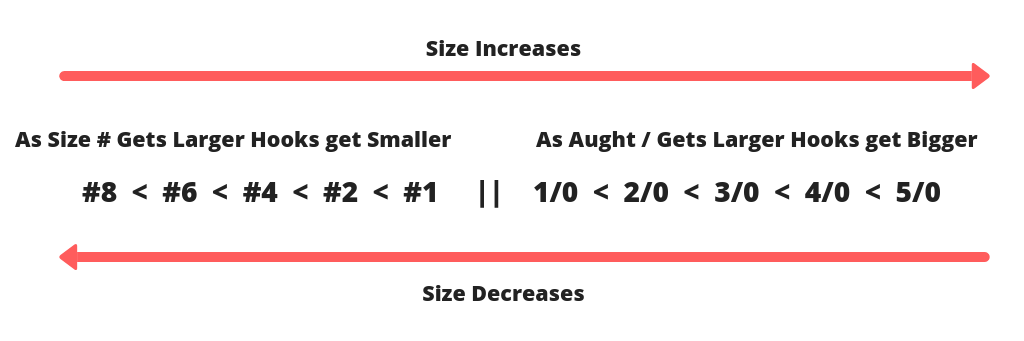
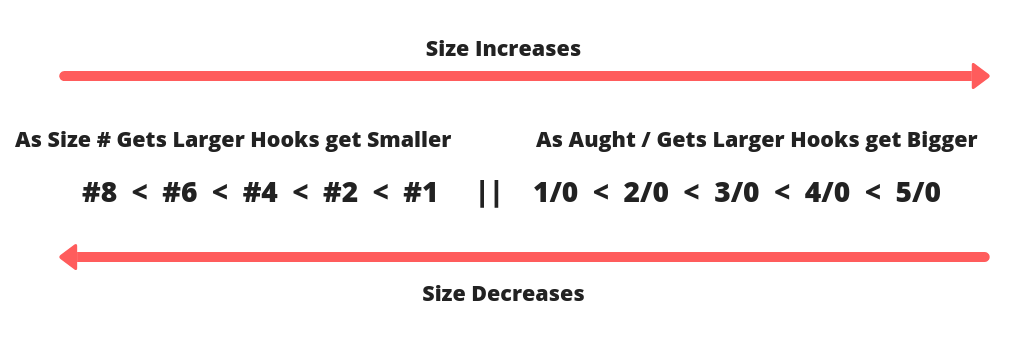
You can save a lot of money buying hooks online, but do not get burned buying the wrong size hook. Here is a useful diagram I made to help show how fishing hook sizes work.
Fishing Hook Size (#) and Aught (/)
A hook’s measurement is defined on a spectrum by “Sizes” and “Aughts”. “Sizes” are smaller while “Aughts” are larger, with 1/0 (Pronounced One – Aught) being the middle or median of the scale. On the smaller end of the spectrum you would have a Size 10, on the larger end of the spectrum you would have a 10/0 (Pronounced Ten-Aught) with 1/0 generally in the middle.”Sizes” are the inverse of “Aughts”, as “Size” gets larger the hooks are smaller, as “Aught” gets larger the hooks are larger. Example: A Size 6 hook is 10 times smaller than a 6/0 hook. You would fish for Panfish with a Size 6, you would fish for Sturgeon with a 6/0.
The Baitholder Hook is the best hook to get started fishing
The Baitholder is a very versatile hook that allows you to start fishing the basics. Use this hook for worms, insects, and grocery store concoctions. The baitholder hook is great for using natural bait because it has 2 barbs on the shank that keep the bait from falling off the hook.
Pair a #4 Baitholder hook with a 1″ cut of worm. This is a basic freshwater rig effective for Sunfish, Crappie and Perch.
Alternatives to worms include 3-4 kernels of corn, a slice of hotdog, or a balled piece of bread. You may want to go down a size to #6 for pesky panfish, but this will be more challenging to bait and remove from the fish for those just starting out. Use the Larger #2 with a full Nightcrawler for Walleye, and move up to a larger 1/0 with a full Nightcrawler on a Texas Rig or Carolina Rig for Bass.
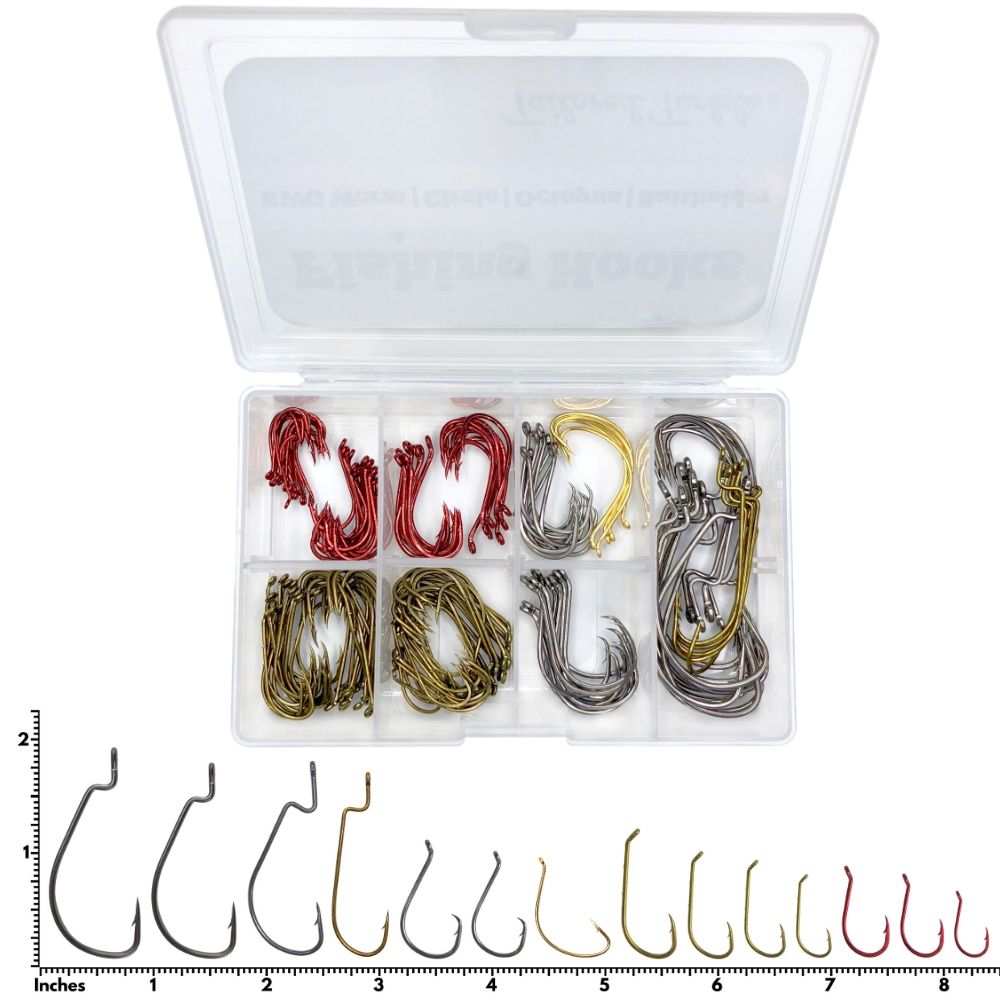
Common Baitholder Hook Sizes & 1″ Cut of Nightcrawler on a #4 Baitholder Hook
Octopus Hook for Live Minnows & Leeches
Best for Live Minnows and Leeches, the short shank with a wide gap on an Octopus hook is great for hooking large fish. Use a smaller #6 or #4 for 1-2″ minnows and small leeches to target Perch and Crappie. Use the medium size #4 & #2 on larger 3-4″ minnows and jumbo leeches for Walleye. Lastly, the 1/0 is great with larger 4-6″ minnows used to target Pike and Bass. Red is a popular color for Octopus Hooks as it signals to your presentation at deeper depths.
Aberdeen Hooks for Insects & Removal
Thin, long wire shanks make these hooks great for fragile bait, removing swallowed hooks, and freeing up your line in a snag. Aberdeen hooks will bend, but that’s great because it serves their purpose. The thin wire makes this hook an ideal design for bottom fishing cats. When you are snagged the hook will bend and twist for an easier release. Use the smaller #4 for insects like crickets and grasshoppers to target Trout and Panfish. The light wire keeps these fragile baits in tact, and the long shank lets you easily remove the hook. Use the #2 & 1/0 with a ball of Nightcrawlers for Catfish.
Popular hooks can be found with the sizes above in our Fishing Hooks Kit.
Wide Gap Hooks
The less common Wide Gap hooks are used with large Minnows or Cut-Bait. Think of them as a narrower version of the Circle Hook. The Wide Gap allows you to target big Cats and Largemouth Bass, while keeping a tighter profile for Live Bait presentations or covering your hook shank more thoroughly with Cutbait. 2/0 is a popular size for both techniques.
Treble Hook for Dough Bait & Lure Replacement
Treble hooks are often associated with Lures such as Crankbaits, Spoons, and Spinners. However, Treble Hooks are also effective for Dough Baits and Nuggets as the 3 prongs secure your soluble bait longer than a single barbed hook.
For targeting Catfish, we recommend using a Size 4 Treble Hook to pair with your Dough Bait.
For Trout, a Size 12 Treble Hook is a small, precise medium for securing Trout Nuggets.
Most of the common lures, in popular sizes have #6 Treble Hooks attached. It is a good idea to keep a a few of these on hand for rusty or dull hooks that need replacement.
Worm Hooks for Soft Plastic Baits
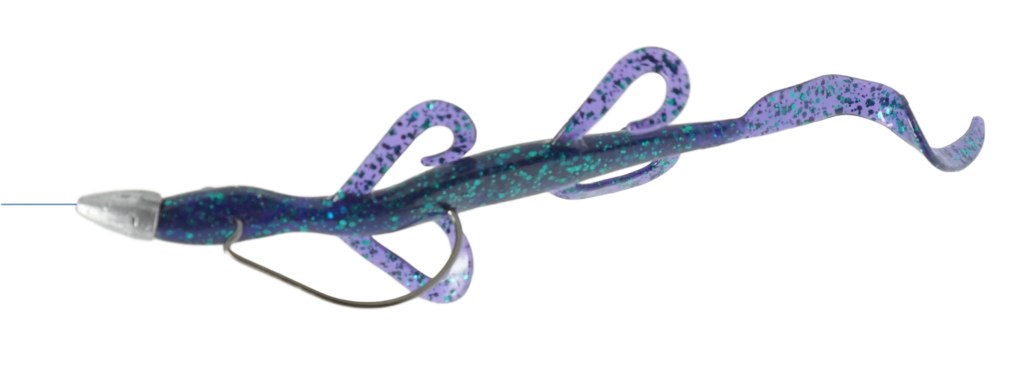
Worm hooks pair with soft plastic worms are a popular staple among Bass fishermen. These artificial models are typically 4-8″ in length, while profile depends on the style of lure. The most popular hook is an EWG Worm Hook, and the most common sizes range in 2/0-4/0. Use a3/0 EWG Worm Hook for the majority of soft plastic Bass baits. Round Bend Worm Hooks are also a popular option and are often used in more finesse situations rigged with slender plastic worms. Use a 1/0 Round Bend hook for Worms 6 to 7 inches and a 2/0 for worms 8-10 inches.
Hook Pairings for Soft Plastics
EWG Worm Hooks are often paired with thicker diameter soft plastics such as Stick Worms, Soft Jerkbaits, Beaver Baits, and Creature Baits. However, EWG Hooks are common to use with every style. Round Bend Worm Hooks are used to target Bass with slender profile soft baits. Often paired with Finesse Worms and Ribbon Worms which are longer and narrow for a concealed presentation.
3/0 EWG Worm Hook with a 6″ Creature Bait (Texas Rig)
1/0 Round Worm Hook with a 6″ Ribbon Tail Worm
Circle Hooks
Popular among saltwater anglers and great for conservation efforts. However, these are less common in Freshwater, as they facilitate “Cut-Bait” most effectively. Use a 5/0 Circle Hooks when targeting Catfish with Cut pieces of Shad or Carp.
Final Note on Hook Size
Fishing hook sizes can be confusing, so reference these diagrams when you are making purchases online. Hooks in the Size # range get smaller as the numbers get larger. Hooks in the Aught / range get bigger as the numbers get larger.
Ohio deer hunting continues to top the list of trophy whitetail destinations due in large part to an excellent deer management program. Ohio’s deer management program is designed to control the state’s deer herd by harvesting does, while maintaining a very conservative buck harvest. Deer hunters are allowed to harvest one antlered deer in Ohio per year. This allows for a balanced population while maintaining the necessary conditions to produce world class deer like the ones below.
Record Setting Ohio Whitetails
Ohio’s World Famous Hole in the Horn Buck
Ohio is home to some of the biggest whitetail bucks in the world, including the #2 non-typical of all time.The “Hole in the Horn” buck. This unbelievable buck is not the biggest buck ever killed in Ohio because it was found dead in Portage county in 1940 and scored an incredible 328 2/8 inches! An amazing Ohio record whitetail.
Ohio’s Beatty Buck
Another huge whitetail buck exceeding 300 inches.Yes, I said 300 inches! The Beaty buck is the biggest buck ever killed in Ohio and was harvested in Greene county on November 8th 2000. The Beatty buck was 4 1/2 years old which was confirmed through laboratory testing in which a tooth is cross sectioned and studied under a microscope, similar to aging a tree. 4 1/2 years old! How is that for genetics! Another incredible Ohio record whitetail.
Ohio’s Jerman Buck
On November 10th 2004 in Warren county, a giant typical buck fell to a well placed shot from Brad Jermans crossbow and became the new Ohio record typical with a score of 201 1/8…Unbelievable Ohio record whitetail!
Ohio’s Mike Rex Buck
In 2005, on opening day of archery season, Mike Rex of Athens, Ohio killed this buck that had 17 points, 15 inch brow tines and scored 218 6/8. What a beautiful Animal!
Ohio’s Amish Buck
Another record buck was harvested on opening day of archery season in 2006. The Ohio Amish buck. Jonathon Schmucker of Seaman Ohio, located in Adams, county downed the 36 point buck on the first afternoon of the 2006 season. The buck scored an incredible 291-2/8, making it the number two whitetail in the state and the biggest buck ever killed in Ohio with a crossbow.
The Amish buck was reportedly fed Lucky Buck deer attractant prior to being killed.
This combination of incredible genetics, proper herd management, and an abundance of agriculture and cover makes Ohio one of our top choices for bagging a trophy whitetail!
Top Areas For Ohio Deer Hunting
While trophy bucks can be found in every corner of the Buckeye State, Coshocton, Licking, and Muskingum counties in east-central Ohio top the list of most deer harvested. These counties consistently produce massive bucks and offer some great opportunities for public land deer hunting.
For harvesting trophy bucks, three Ohio public deer hunting areas come to mind in this part of the state, Dillon Wildlife Area, Woodbury Wildlife area, and the Conesville Coal Lands.
We personally hunted the Dillon Wildlife Area during the first week of November in 2007, and we can tell you that, while receiving a fair amount of pressure, if you look closely, you can find unpressured deer. Study the maps and look for places that other deer hunters will overlook. We did exactly that and had a 150 inch 10 pointer at 40 yards chasing a doe recklessly through the woodlot. There was not another hunter around and we were within 100 yards of a main road!
The Woodbury Wildlife Area comprises almost 20,000 acres of prime whitetail habitat in east central Ohio. There is good public access along state routes 16, 36, 60 and 541, as well as numerous county and township roads. Again, the key to finding a trophy buck is to study maps of the area and find small spots that other hunters will overlook. These spots do not have to be miles into the timber. They can be right under everybody’s noses!
The Conesville Coal Lands are another great place to hunt deer in Ohio and it consists of about 12,000 acres of prime whitetail habitat in Coshocton and Muskingum counties. Hunting here requires a free permit available at local bait shops or by contacting American Electric Power at www.aep.com/. Click here for tips on hunting AEP Land.
Perhaps the best way to bag a trophy buck, is to gain access to private land, and the way to do that is to hire an outfitter. There are many to choose from, but we have hunted with Matt Hopkins and Jim Woodward from Wolf Creek Whitetails and we have been very impressed. These guys provide you with quality, unpressured, private land to hunt with treestands already hung and plenty of food plots. You can also bring your best climbing tree stand if you prefer. They have access to some of the best land in Morgan County. Check out their Ohio trail camera pictures!
Another Ohio outfitter that we have heard good things about is Joe Miller from Woodbury Outfitters. They offer unguided and semi guided hunts for antlered deer. Whichever outfitter that you choose to hunt deer in Ohio, be sure to book early in order to get the dates that you want, good rut weeks fill up fast.
In addition to the east central part of the state, southwestern Ohio is rapidly gaining fame as a trophy buck hotspot, thanks in part to the Amish Buck and the Metzner Buck both taken in Adams county.
Ohio’s Metzner Buck
Taken in Adams county in 2006 on land bordering Brush Creek State Forest. Justin Metzner’s buck scores and incredible 196-6/8, making it the second biggest buck ever killed in Ohio by a bowhunter!
Top Ohio Public Deer Hunting Areas In Southwest Part of the State
RELATED: How Many Hunters In The US
Brush Creek State Forest
Brush Creek consists of over 13,000 acres of steep hillsides, deep hollows, and narrow ridge tops. Prime hardwood forests with supplemental feed for the whitetails on the private farms bordering the forest. This is where the Metzner buck was taken in 2006. Look for more huge Ohio bucks from this area in the future!
Tranquility Wildlife Area
Tranquility consists of over 4000 acres, about 400 of which are dedicated to food plots. Approximately half of this area is mature hardwoods and there are plenty of places for big bucks to hide, as evidenced by a 165 inch buck taken during the December muzzleloader season! Don’t overlook this Adams county gem for antlered deer.
Shawnee State Forest
Consisting of over 60,000 acres, Shawnee is the largest state forest in Ohio. Ongoing logging operations make access easier along the many logging roads. This is extremely rugged country…So be prepared. There is a lot of 5 to 6 year old new growth which provides prime habitat for big Ohio bucks to grow old. Look for some monsters to come out of here in the next few years!
If you are looking for access to private land…Our choice for Ohio outfitters in this part of the state is David Lusk at Southern Ohio Outfitters. David has over 6,500 acres of prime whitetail habitat, including food plots, that has been managed to produce some of the biggest bucks Ohio can offer. Again, be sure to book early, good rut weeks go fast!
Here is our summary of why you should try your hand at Ohio deer hunting
Ohio has the right terrain, habitat, crops, food plots and genetics that consistently produce big bucks.
Ohio has a short gun season, held after the rut and only allows shotguns and straight walled cartridge rifles.
Ohio sells Non Resident hunting licenses and deer tags over the counter for only $149.
Ohio has a one-buck per year limit and can be taken with any weapon, any county or in any zone on the same deer permit.
The Ohio deer hunting season runs from September until February, making it a four month season.
Ohio Department of Natural Resources has very consistent regulations with a great website www.dnr.state.oh.us/
Another option for hunting deer in the Buckeye state is to get an Ohio deer hunting lease of your own.
Ohio Deer Hunting Season
Ohio deer hunting season is one of the most liberal in the United States. The archery season season begins on September 27 and goes all the way to February 1st, with Sunday hunting allowed, that means a possible 127 days afield. That is a lot of time in the woods and reason enough to take up bowhunting. Keep in mind that crossbows are allowed in Ohio during archery season.
The deer gun season in Ohio is for shotgun and straight walled cartridge rifles, and is typically held after the rut.
The state also has a youth deer gun season that is held before the regular deer gun season.
There is also a muzzleloader season in January. This can be a great time to hunt big deer in Ohio, as they try to fatten up after the rigors of the rut.
If you are serious about harvesting a mature buck in Ohio, then you must hunt during archery season in order to take advantage of the rut.
Click on the link to visit the Ohio Department of Natural Resources website complete regulations regarding the Ohio season dates.
The best time to harvest a mature buck in Ohio is during archery season and the November rut!
Ohio Trail Camera Pictures
Check out these trail camera pictures submitted by Ohio deer hunting outfitters Wolf Creek Whitetails
Holy Ohio big bucks.com batman!
Click here for more Ohio trail cam pics.
Planning Your Ohio Deer Hunting Trip
It doesn’t matter if you are hunting public land or with one of the top Ohio deer hunting outfitters, you need to be prepared.
So we have put together a checklist of some of the commonly forgotten items that you need for your deer hunting trip.
Hunting License – You’d be surprised how many people forget this!
Boots and Socks – Click here for the best hunting socks you can buy.
Bow or Crossbow – You’d be surprised how many hunters have to turn around after they’ve started their trip because they forgot their weapon. Here is our guide to the best beginner compound bow.
Broadheads – Here is our guide to the best broadheads for deer.
Flashlight or headlight
Rain Gear – Some of the best deer hunting in Ohio that I have had was in the rain. Don’t forget your hunting rain gear and your best tree stand umbrella.
Hand Warmers
Thermos – Very handy for all day hunts.
Knife – Check out our guide to choosing the Best Deer Hunting Knife.
Target – Always good to take some shots when you get to Ohio. Here is a guide to the best archery target for broadheads and field points.
Calls – I like to bring a grunt call, bleat call and a set of rattling antlers.
Tree Stand – Here is our guide to the best tree stand. Even if you are hunting with an outfitter, consider bringing a climbing tree stand. It will give you the ability to move on your own, if you see a pattern to the deer movement.
Safety Harness and Rope or strap – Bring the best hunting safety harness that you can afford.
Binoculars – Here’s our guide to the best hunting binoculars.
Rangefinder – I actually bring two of these. Here is our guide to the best rangefinder for bow hunting.
Cooler – For getting your meat home.
Those are just a few of the more common items that deer hunters forget to bring when they travel to hunt deer in ohio.
Leave your comments below. We would love to hear about your experiences or just leave us an Ohio deer hunting report.
There are a million different ways to catch trout. Bobbers and bait, spinners, crankbaits, and flies are all effective. But if I had to pick one way to fish for trout forever, it would be with spoons.
That’s because not only are spoons incredibly versatile, but they’re also one of the most fun and active ways to fish. You can troll them deep for lake trout, cast and retrieve them in lakes or big rivers, or flutter them through small streams. Spoon fishing can feel like an art, but it’s much more beginner-friendly than fly fishing.
There are about as many different spoons as there are anglers, but the best of the best spoons have stood the test of time. In this article, I’m going to go over the only 7 spoons you’ll ever need to catch trout. They each have their own subtly different advantages, and if you carry a few of them with you then you’ll always have a trout-slaying lure in your tackle box.
When it comes to trout fishing, simple is usually best, and spoons are about as simple as they come. Essentially, a spoon is just a single piece of oblong-shaped shiny metal with a concave surface (hence the name “spoon”). Actions vary, but they’re generally designed to wobble and flutter around when they’re retrieved, reflecting light at all angles as they go.
Their wobbling and flashy action is supposed to imitate small baitfish that aggressive, adult trout feed on. But even trout that feed primarily on insects will hit spoons, too, because that irresistible wobble triggers their instinct to strike.
This article is about spoons, so of course, I’m sticking to spoons. But if you want the lowdown on the best trout lures (including spinners, jigs, and crankbaits), check out my article on it.
And if you’re totally new to trout fishing and want a rundown on how to do it, check out my post on trout fishing 101.
You can skip this section if you’d like, but I want to give some background before I get into my rankings. The genius of a trout spoon is that it can be fished in more ways than you can count, and each spoon has advantages that work better for different situations.
Trout spoons are great for their versatility. You can crank them in, slow retrieve for a heavy wobble effect, or jig and drop to let them flutter on the fall. But you need to know what to try and when, so here are some basic rules.
Best Line For Spoon Fishing Trout
Spoons are for aggressive trout, so you don’t have to worry as much about using light line. Still, I like to use 4-6 pound test monofilament line for easier casting. If I know the water has potential for lunker brown trout or 20-inch rainbows, I’ll size that line up to 8 or even 10-pound test. When I fish for steelhead, I’ll use anywhere from 12-20 pound test line (usually depending on water clarity).
I also like to use fluorocarbon leaders (when I can afford it; check out my post on the best fluorocarbon line for any budget). Fluorocarbon sinks, helping spoons get down quicker in fast water. Fluorocarbon is best paired with 10-pound test braid, which is very thin and cuts through current easier than mono.
I wrote an entire post on the best fishing line for trout, broken down by species and situation, so check that out if you need more detailed info.
How To Retrieve Spoons
Every spoon lends itself to different kinds of retrieves, which I get into in my rankings below. But a typical spoon retrieve is steady, and just a little slower than you would need to fish an average spinner.
Certain spoons, like the Kastmaster, also work really well when retrieved erratically. Spoons like these have a lot of action when falling through the water column, so letting them stop and drop every now and then can be the key to getting strikes.
Then there are what I like to call “flutter spoons” like the Little Cleo. These spoons work great when cast upstream and reeled very slowly through a run or tailout. The current will do most of the work, and they’ll flutter and roll as they move downstream. Reel in just fast enough to keep them off the bottom, and let them swing across the current when they get downstream of you.
Finally there are spoons that work great for trolling, like the Krocodile. These can be cast and retrieved, too, but they’re also great for trolling deep for lake trout or big lakes rainbow trout.
Overall, the best way to retrieve a spoon is the way that’s working that day. Being adaptable is key. Mix up slow, fast, and jigging retrieves until you figure out what’s working.
Honestly, ranking trout spoons is hard. There are standouts, and every spoon on this list has stood the test of time. But the reality is that any of them might be best for any given river, day, or trout species. They’re all proven to catch trout and they all deserve a place in your tackle box.
With that said, here are the best trout spoons, ranked by popularity, reliability, and of course, my own personal opinion.
As many trout anglers will tell you, if you only buy one spoon, make it a Kastmaster.
That’s because of all the spoons on the market, the Kastmaster is the most versatile. Its unique flat shape allows it to be fished in any way imaginable. You can troll at high speeds without sacrificing action, you can cast it a country mile, and you can even jig it vertically for incredible results. It’s so versatile that I even wrote a whole post about it, so check that out for more details (LINK).
Kastmaster comes in a ridiculous amount of colors, but like any good trout spoon, the best colors are gold and silver. Anywhere from 1/12 oz to 1/4 oz work great for trout fishing, but 1/8 oz seems to be the sweet spot for rivers and lakes, and I like 1/12 oz in shallow creeks.
#2. Acme Little Cleo
Being from the northwest, I really wanted to make the Acme Little Cleo lure my number one. It’s a steelhead killer (steelhead are just ocean-going rainbow trout), and the coastal guides and locals swear by it. The Kastmaster is a tiny bit more versatile, but if you were only going to buy two spoons, the Little Cleo and the Kastmaster complement each other perfectly.
While the Kastmaster has a quick, aggressive action that triggers a quick bite, the Little Cleo is a bit more on the finesse side. Letting river current do most of the work is key, and the way that current deflects off of a slowly sinking Cleo can be absolute magic.
Cleo’s excel when swinging through tailouts and slower water. Their perfect flutter as the current slows down is a trout magnet, perfectly imitating a wounded baitfish that got swept through the faster current above. The best way to fish them is to cast slightly upstream and keep the line tight, reeling very slowly to keep them moving downstream and fluttering the whole way through.
When it comes to Little Cleos, blue and silver in 1/6oz or 1/4oz is my go-to color. But solid silver, solid gold, and silver and red have all been solid trout catchers for me and the folks I fish with.
#3. Luhr Jensen Krocodile
The Luhr Jensen Krocidile comes in at number three because it’s one of the best trout lures for trolling. Its elongated design and spin create a more aggressive flash than most other spoons, and it’s killer when the trout are super aggressive. At 2 1/4 inches for the smallest option, it’s the longest lure on this list.
It might not be the best trout spoon for finicky fish, but when the bite is hot, the Krocodile can bring in more fish from longer distances. It’s a great option for speedy trolling in lakes, too, because their weight and elongated body keep them deeper down in the strike zone. I also like it for bank casting during the fall when big trout start to feed more aggressively.
I like these lures in silver and gold, but with the hammered finish. I think the dimples provide even more flash than the smooth versions, and that’s exactly what I use them for. Size totally depends on what I’m fishing for. When trolling for big lake rainbows I’ll use the 3 1/4 inch, 1 oz size, but I’ll size down when casting from the bank for smaller trout.
#4. Thomas Buoyant
The Thomas Bouyant comes in at #4 on my list because it does something that few spoons do: it works exceptionally well at slow speeds. That’s why it’s one of my go-to’s for high mountain streams or shallow creeks. It can be fished effectively at slower speeds than any other spoon on this list, but it still provides a ton of flash and wobble.
With the Buoyant, don’t even tie it on if you want to crank it in. It spins more than it wobbles, and it’ll quickly twist your line up if you’re not careful. Just flutter it and retrieve it slowly, which is great for inducing a strike from wary lurkers.
Copper is my go-to color, but the Rasta-esque “firetiger” can sometimes be the ticket to catching finicky biters. Since it’s a great small stream lure for me, I usually stick to the 1/6 oz option.
#5. Acme Phoebe
When I was first given a few Acme Phoebes, my first impression was “gimmicky”. The fact that it’s cut out into the shape of an actual baitfish seemed weird, given that spoons are really just for flash. But after fishing with them, I realized that something about those offset fin cuts gives the Acme Phoebe a unique action. Make no mistake: the Phoebe catches trout with the best of them.
Like the Thomas Buoyant spoon, it spins rather than wobbles, and it doesn’t sink as fast as most spoons. It works really well for fishing at slow speeds, which makes it a great option for small streams and shallow creeks. Silver and gold in 1/12 oz or 1/8 oz are standbys, but the rainbow trout color has also been great for me.
#6. Eppinger Dardevle
Though there are spoons that I like a little better these days, the Dardevle is still the classic of classics. It was originally released in 1918, and has probably caught more trout in its history than any other trout lure. When my grandpa gave me his old fishing tackle it was chock full of Dardevles, and he swore that those were his go-to trout catchers.
The classic Dardevle spoon color is red and white stripes. Probably because of nostalgia more than anything, that color is what I usually fish with. But trout love silver and gold, too, and there are plenty of color variations to try out. I like this heavy spoon best with a fast retrieve, which is killer for everything from lake trout to big river rainbows to northern pike.
Because it works best on big, aggressive fish, I usually fish for trout with Dardevle’s in the 1/4-1/2 oz size.
#7. Blue Fox Pixee
As a Northwest native, I have to give the Pixee a place on this list. My dad grew up fishing with them for king salmon in Alaska, and they have a special place in every salmon angler’s heart. But trout and salmon are in the same family, and Pixee’s catch tons of trout, too.
Pixees are big and heavy (the smallest option is 1/4oz), so they work best for long casts in deep water. Because I mostly fish smaller creeks, I don’t use them that often. But when the water is fast and deep, there are few better spoons than a Pixee.
My favorite colors are silver with fluorescent red or orange. They make a variety, so any classic trout color should work well.
#8. Everything Else
Spoons are pretty simple, so in all honesty, even Wal-Mart brand spoons will catch trout. But the lures on this list have earned their spots. They’ve been proven fish-catchers for decades, they last forever, and they’re made with quality hooks and materials. They also do something a little different than the rest, and most off-brand spoons are designed to imitate one of these classic 7.
If you do want to try out some cheaper brands, definitely go for it. But check out the hooks for sharpness, try to avoid painted ones (cheap paint is a common way to cut corners), and if it looks like one of the lures on this list, that’s probably a good sign.
FAQ
Spoons are trout fishing at its finest. They have survival kit-level reliability, are easy to use, and have enough versatility to fish any water you can find. If you keep a few of these spoons in your tackle box, you’ll never be without a secret weapon for catching trout.
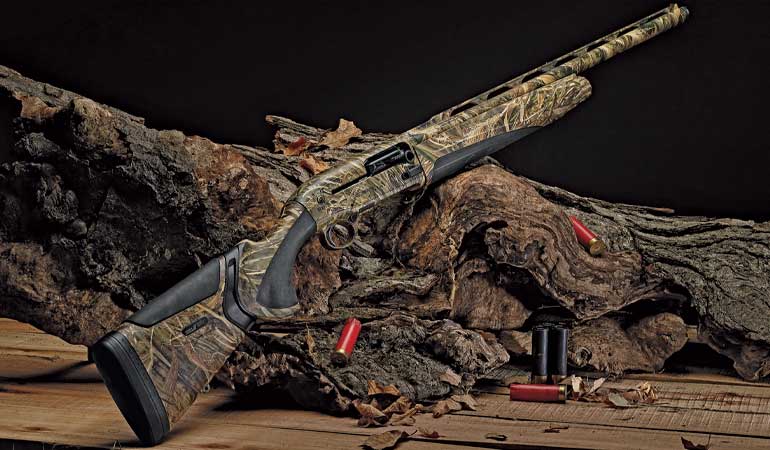
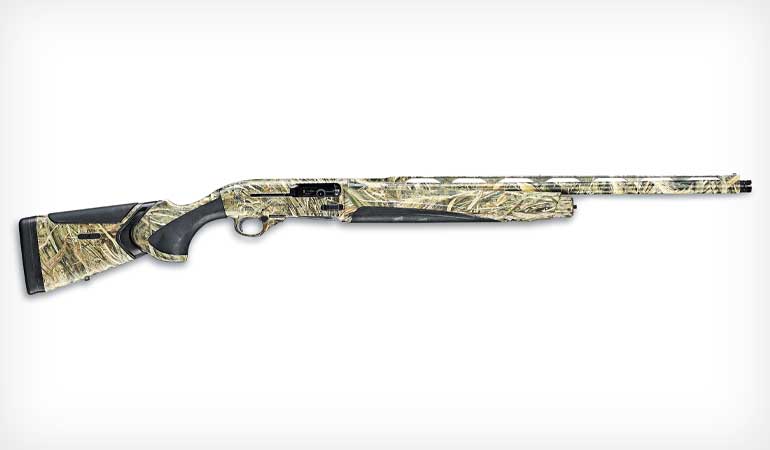
The Beretta autoloader has been a mainstay in sporting circles and in game fields for many years, and the line has continued to evolve and improve. Beginning with the Model 300 in the late 1980s, the 300 quickly morphed into numerous specialty versions for target shooting, waterfowl, and upland game hunting. The latest iteration is the A400 Xtreme Plus (“A400XP” for short). The new model draws on its history, respects the past, and employs the latest in high-tech shotgun technology. The result is a superior product.
The Beretta A400 Xtreme Plus was unveiled on May 5, 2018, at the NRA Annual Meeting in Dallas. It’s built in Italy and is billed as the ultimate for superior reliability for all conditions encountered in waterfowl hunting. It offers advanced barrel technology and a host of ergonomic features that will surely tantalize the clay-target shooter. It is packed with features that make it evolutionary, darn functional, and pleasant to shoot.
High-Tech Features
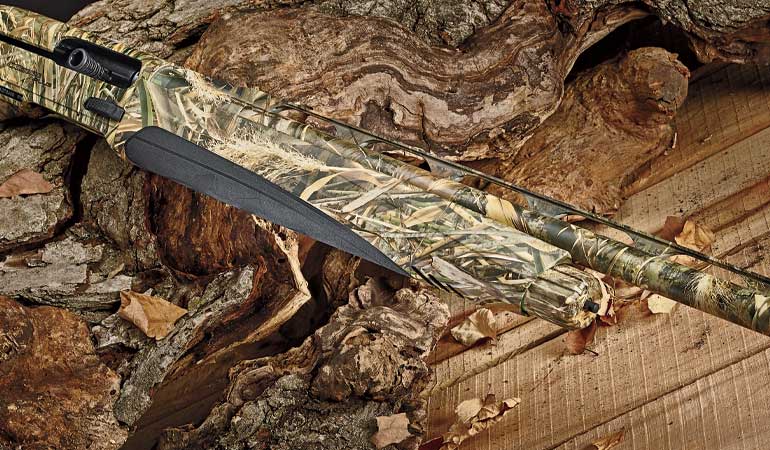
I recently received a new A400XP for testing, and I was impressed. One of its more unique features is the configuration and construction of the barrel. This multifaceted process is called the Beretta Steelium Plus barrel technology. Beretta proudly notes that it makes more than 500,000 barrels a year, and the company doesn’t skimp on the A400XP barrels. They are made of steel alloyed with molybdenum, chromium, and nickel that results in a superior shotgun barrel. A400XP barrels are drilled, reamed, and cold-hammer-forged, just like a fine rifle barrel. Then they are vacuum-relieved, giving the steel what Beretta says are the ideal characteristics for optimal ballistic performance.
The A400XP barrel has an “Optima-Bore” profile with a 14-inch forcing cone, instead of the more usual 6 inches. This gradual taper results in a reduction in perceived recoil, better patterns, and long-range performance, even with steel shot. The ventilated rib has a 7×7 stepped design with a red fiber-optic front sight and a metal mid-bead.
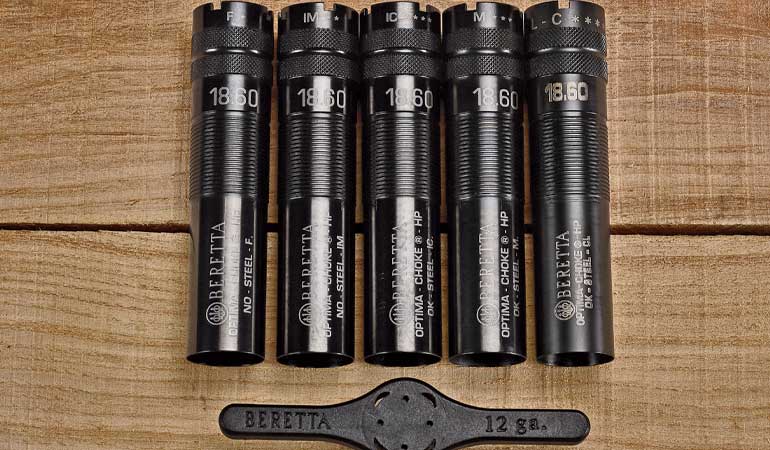
The A400 Xtreme Plus comes with five screw-in Optima-Choke HD choke tubes, including Full, Modified, Improved Modified, Improved Cylinder, and Cylinder.
The A400XP uses what Beretta calls “Optima-Choke HP” choke tubes. They extend about a half-inch from the muzzle and are clearly marked as to choke constriction. Five constrictions are provided, from Cylinder to Full. Steel shot is okay in all except Full and Improved Modified.
The action is equally unique with the “Blink” gas-operating system, as in “quick as the blink of an eye.” The rotating bolt head and the new gas valve make the A400XP 36 percent faster cycling than other shotguns. The design of the gas piston keeps powder gases from “leaking out,” so the gun can cycle faster. This also reduces the amount of gases that get into the action by about one-half, so cleaning intervals are substantially lengthened.
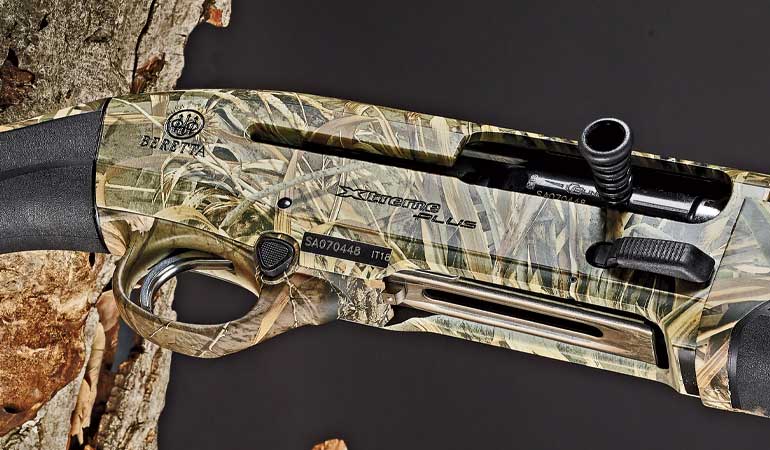
The receiver is a half-inch shorter than its predecessor, reducing the gun’s overall length. A great feature is that the aluminum-alloy receiver is drilled and tapped (for husky 8-40 screws), so adding a scope or dot sight for turkey hunting is a snap.
The receiver has an enlarged loading port, an extended charging handle, and a long lever-like bolt release for easier operation with gloves. The trigger is very good, breaking cleanly at 5 pounds, 6 ounces. The magazine capacity is four rounds, and a plug to reduce it to two is provided.
A terrific feature of the A400XP is the cartridge cut-off lever on the left side of the receiver, reminiscent of the Browning A-5. This allows a live round to be ejected from the chamber and the bolt to be locked open. This is great for crossing a fence or getting back into the truck for the jaunt to the next hedgerow. It also allows the hunter to quickly switch loads without disturbing the rounds in the magazine. This is especially handy if a fat Canada goose is gliding toward your decoys when your gun is stoked with duck loads.
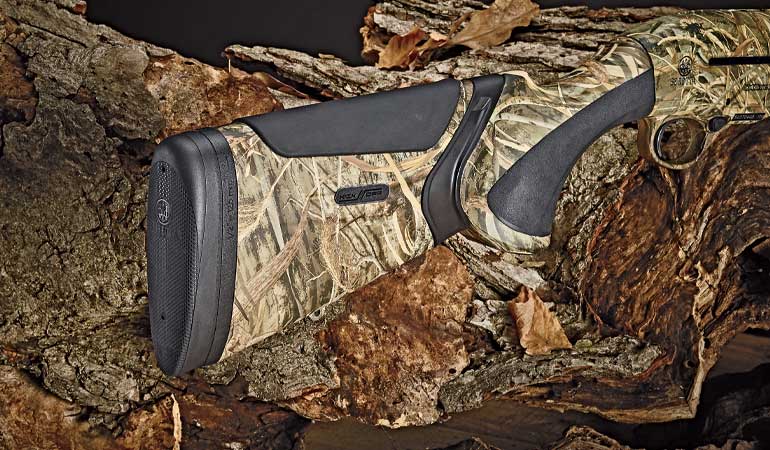
The stock has a really effective recoil-reduction system, a big plus for waterfowlers and high-volume target shooters. Tests have shown that a shotgun has two distinct recoil impulses. The first is when the shell goes off, and the second is when the bolt slams back into the receiver. The “Kick-Off Mega” in the A400XP stock is a hydraulic recoil-dampening system positioned between the pistol grip area and the buttstock proper. It reduces the axial movement that makes the stock smack the shooter’s cheek from that second impulse. The soft comb pad helps here, too. In addition, there is a traditional rubber recoil pad on the end of the stock. The forearm and pistol grip areas have nice, soft padding that not only provide a good handhold, but also soak up a little kick. The A400XP’s stock fit me perfectly, but a shim kit is provided, so the user can adjust the drop and cast, if desired.
Steve liked the A400 Xtreme Plus’s trigger pull. It broke at a crisp and clean 5.38 pounds.
The A400XP is available in 12 gauge only and with a 26- or a 28-inch barrel. My test gun has a 26-inch barrel with the Max-5 camo finish, and it is really attractive. It is also available in several other finishes.
Crushing Clays
Guns are made to be shot, so I proceeded to put all sorts of ammo through the new A400XP. There were no bird seasons open when I had the gun, but clay targets are always in season. I have a trailer-mounted target thrower, so I towed it out to the pasture north of my vineyard and proceeded to crush clays—and in the process scare the daylights out of every grape-eating scavenger in the area.
I wanted to give the new gun and myself every advantage, so I screwed the Cylinder choke tube into the barrel and blazed away. The targets were pretty close, and the wide-open Optima HP tube literally smoked every target I centered. As a test of the recoil sensation, my wife whacked a few clays with the gun and pronounced the recoil “mild.” However, she was not enamored with the A400XP’s 8-pound heft and quickly returned to her 6-pound 20 gauge.
The A400XP has a 3.5-inch chamber, so it can shoot 2¾-, 3-, and 3½-inch shells without any adjustment. I had several target loads with 7/8, 1, 11/16, and 11/8 ounces of shot, plus a couple of lighter handloads. The gun’s operator’s manual states the gun will digest loads down to 7/8 ounce, presumably at a velocity of around 1,200 fps, but suggests that “best initial performance” is with shells loaded with “11/8 ounces of shot.” This is code for “break the gun in” first with full-charge target loads before shooting the wimp loads, and my functioning tests proved Beretta right.
The author says the A400 Xtreme Plus swings smoothly. Its balance and handling characteristics are spot-on.
Few folks chronograph shotshells because it is a bit tricky. But just as with rifles and handguns, it’s really the only way the shooter can get an idea what a given load is doing in his or her gun. This is especially true with shotshells. The velocities of handloads and even high-dollar factory loads can vary all over the place. I shot my test loads over the Oehler Model 35P chronograph to see what kind of performance they delivered. As a rough index of momentum, I borrowed the pistol shooter’s “power factor.” This is just the weight of the shot charge in grains, times the velocity in fps, divided by 1,000. Basically, you need a power factor of about 500 or higher to work the action.
Of course, all of the ammo with 11/16 ounces of shot and up worked peachy-keen. However, neither my light skeet hand-loads with 7/8 ounce of shot at a velocity of 1,044 fps nor my shells with 1-ounce shot loads at 1,182 fps would work the A400XP’s action. The empties would usually eject, but not feed a second round from the magazine or lock the bolt back if the magazine was empty. The same is true of Winchester’s “Low Recoil” load with 26 grams (0.917 ounce) of #9 shot that likewise would not cycle the action. This is a very light load—the listed velocity is just 980 fps—and it averaged only 958 fps out of the A400XP.
The results with these last three loads are of little consequence, as few folks are going to shoot such light loads in their duck guns anyway. As the saying goes, it was only a test.
The forearm and pistol grip areas have soft padding that provides a good handhold and also soaks up a little kick, and Steve thinks the Realtree Max-5 camo finish is very attractive.
Two of the best shooting loads I tried were Federal’s new Gold Medal Grand and Grand Handicap ammo. Both are loaded with 11/8 ounces of hard #7½ shot. The Grand is listed at 1,200 fps, and it averaged 1,142 fps out of the A400 Xtreme Plus. The Handicap, which is listed at 1,235 fps, measured 1,199 fps. Frankly, I couldn’t tell the difference between shooting them. Both crushed clays with authority, and cycling was 100 percent reliable. As best I could determine, the A400XP patterned “50 percent/50 percent,” and my best hits on clay targets were when I aimed dead center at the target.
Overall, the A400XP is a pretty impressive shotgun. It handles great and is well balanced. It never malfunctioned as long as it was fed a proper diet. The Max-5 camo not only is good-looking, but also blends well in marshes and upland cover.
My first impression was that the gun was a little heavy, but shooting and swinging soon proved that the balance and handling characteristics were spot-on. It swung smoothly and encouraged a good follow-through—critical for hits on crossing targets. If I just pointed the gun correctly and kept it moving, it smashed clays convincingly. Plus, the soft comb pad helped me keep my head on the stock (“Stay in the gun,” as the great Nick Sisley says). And the cumulative effects of recoil seemed modest over the course of shooting several boxes of ammo.
The A400XP’s push-button manual safety is in front of the trigger, and at first it perplexed me. Every other pump or autoloader I’ve shot had the safety behind the trigger, so it took me a while to get used to it.
I must caution users to keep their fingers and other body parts away from the ejection port when the action is open. The breechbolt release button is a lever about an inch long. It has a lot of leverage and is very easy to press and release. It is not difficult at all to accidentally close the bolt on your finger or fingers.
Viewed retrospectively, the new A400XP is traditional and brand-new at the same time. It’s interesting to review what the “experts” of the early 20th century thought were the established norms for the weight and barrel length of the “perfect shotgun.” In W.W. Greener’s opus The Gun and Its Development, the ninth edition of which was published in 1910, the shotgun’s perfect weight was determined to be 96 times its shot charge. In those days, the British considered 1 ounce of shot about right, so this suggested a gun weight of exactly 6 pounds. For a 11/8-ounce charge, it came out to 6.75 pounds.
The buttstock features Beretta’s “Kick-Off Mega” hydraulic recoil-reduction system that is very effective, a rubber recoil pad, and soft comb pads.
The classic work The Shotgunner (1949) by Bob Nichols was published just at the beginning of a new era of shotguns and their ammo. In those days, it was gospel from across the pond that a shotgun’s barrel length should be about 40 times its bore diameter. For a 12-gauge bore of 0.729 inch, this equates to 29.16 inches, and indeed, most European game guns had 30-inch barrels. However, even Greener later equivocated on barrel length somewhat and admitted that good results could be had with 28-inch barrels.
The barrel length and weight of the A400XP are fairly close to the ideals of Greener and Nichols. The gun I tested weighs exactly 8 pounds. This translates to a ratio of 113.8, not radically different from the 96 Greener envisioned. And the available barrel lengths of 26 and 28 inches are fairly close to Nichols’s suggestion of 29 inches.
So it is good that things that have worked for decades are perpetuated, while at the same time incorporating advanced features that make the shotgun even better. Greener and Nichols, eat your hearts out.
Air rifles have been around for centuries, but only recently have they become popular in the United States. There are a number of air rifle manufacturers in the country, each with their own unique products. In this blog post, we’ll take a look at some of the best air rifles made in America. Whether you’re looking for a plinking gun or a serious hunting tool, there’s sure to be an American-made air rifle that’s perfect for you.
Air rifle brands made in the USA
Benjamin
Walter Benjamin introduced the first Benjamin air gun in 1882. They were one of many high-powered rifles that came about as a result, but this particular design grew in popularity over time and led to him creating his own company called “Benjamin Gun Company.” The name has since been acquired by Crosman who only helped make it more popular than ever before! There are various styles available with updated technologies for both professionals looking for something classic or enthusiasts wanting new challenges alike – all backed up by 24/7 customer service at Crosman.
Benjamin Airgun selection includes everything from its breakthrough multi-pump pneumatics, break barrels, and even some of the best-precharged pneumatic (PCP) on today’s market (Like the Benjamin Marauder). In addition to their great rifle line up, they also offer a wide variety in pistols as well offering single shots or multiple shots at any time you please!
American Air Arms
Tom Costan had been dreaming of a company that manufactured shooting sports equipment with American labor for years when he finally got his wish. He founded American Air Arms, which specializes in high-quality PCP air rifles and shotguns made from nearly 100% domestic materials – all to ensure customers get only top-grade performance at an affordable price point
Umarex USA
Umarex USA, Inc. is a premier provider of airguns and airgun accessories to North America, designing, developing, and marketing sport shooting products under the RWS, Walther, Hämmerli, Beretta, Colt, Smith & Wesson, HK, Ruger ®, Browning, Makarov, Tactical Force, and Combat Zone brands. Umarex USA moved into a new 117000 square foot facility in July of 2010 located at Chaffee Crossing in Fort Smith Arkansas. The new facility is home to its warehousing and distribution operations as well as its corporate offices which include marketing sales and a fully staffed customer service department that handles product refurbishment warranty work and technical advice. Future operations at this facility will also include manufacturing. Umarex sporting guns can be purchased at many retail locations or your local firearm dealer can order them from several firearm distributors.
Airforce Air Guns
AirForce is a company that specializes in creating the most accurate and high-quality air rifles for all types of shooters. With over 20 years of experience, they have built their reputation on being dedicated to only producing American-made products with passion as well as excellence from both manufacturing facilities located around Texas (Fort Worth) and Tennessee( Minor Hill).
The world of hunting has witnessed an unparalleled revolution since the first introduction of hunting saddles in the 1960s. With an ever-increasing demand for reliable, comfortable, and adjustable hunting gear, the saddle market has transformed and adapted to offer some of the most versatile solutions for contemporary hunters. At the heart of this evolution, Trophyline® has carved a niche for itself, setting the gold standard in hunting saddles and creating a legacy that outshines many.
Trophyline’s® primary objective, since its inception, has always been to design a quality product that ensures the hunter remains both mobile and safe during the pursuit of their game. This commitment is reflected in the impressive range of saddles they’ve developed over the years, with a particular emphasis on the needs of hunters, Comfort, Adjustability, Customization, Mobility, Weight, Dependability, and above all, Safety. Let’s dive into the factors you should consider when finding the best saddle in 2024:
Video: Deciding on a new saddle or an upgrade to your current saddle hunting setup? Robert from Trophyline ® walks you through a a detailed guide on what saddle might be best for you.
Comfort-This factor is slightly subjective and also obvious. Can you sit in your saddle all day? Is it comfortable? Does it support you in all the right places and eliminate things like hip pinch?
Adjustability/Customization-You want to be able to streamline the saddle to your individual figure. Can you adjust it to fit your body? Are the Pouches and attachment points easy to reach? Are there enough places to attach your needed accessories?
Mobility- Can you wear your saddle when walking in miles deep? Is it cumbersome? Loud? Or too bulky to get into your hunting zone stealthily and comfortably?
Weight –At the end of the day you’re either wearing or packing a saddle in, and if it seems too heavy or bulky you won’t take it. Weight is one of the largest contributing factors for a lot of people diving into saddle hunting, so it is in the list of considerations. Too heavy? Too Light? Goldilocks zone?
Dependability-What materials are used to build the saddle and how were they tested? This is the actual physical construction of the saddle. Will it break, rip or come apart? Or was it all built to stay together.
Safety-Safety factors are the features built into the saddle, separate linemans loops, bridge loops, leg straps, fully adjustable belts. These are the things that keep you safe in the tree and should be looked at when considering your safety in a saddle.
Saddle Hunting – It’s a System Not Just a Saddle
Today, saddle hunting is no longer just about having a simple piece of gear. It’s about creating an integrated system that molds to your specific hunting style and scenario, providing an unparalleled level of adjustability and customization. A saddle is the pivot point around which your hunting experience revolves, and Trophyline® understands this better than anyone.
Whether you are walking through the woods or packing your saddle in your backpack, mobility plays a critical role. With the relaunch and introduction of the renowned Ambush saddle (which is no longer available), Trophyline® redefined the standards of mobility and safety. The Ambush saddle was a leap forward in design and technology, merging comfort and convenience seamlessly, thus simplifying the hunt and making it more efficient.
Continuing our commitment to innovation, Trophyline® has launched new additions to our saddle range, such as the Covert Lite 2.0, the Covert Pro 2.0 , and the Venatic. Each of these models has been designed keeping in mind the varying demands of hunters, from the beginner to the veteran. All three models have been rigorously third-party tested, ensuring they uphold the highest standards of safety and quality that Trophyline is synonymous with.
A break barrel air rifle is a great investment for anyone who enjoys hunting or shooting. However, like any other firearm, it requires regular maintenance to keep it in good working condition. In this blog post, we’ll walk you through the steps of how to clean a break barrel air rifle so that you can keep it in a top shape.
Clean The Barrel (Internal)
Use a bore guide to protect the muzzle and chamber of your air rifle while you clean the barrel. Insert a cleaning rod into the bore guide, and attach a patch jag to the end of the rod. Soak a cleaning patch in gun solvent, and run it through the barrel from breech to muzzle several times. Repeat this process with a dry patch until the patches come out clean. Finally, run a few patches soaked in gun oil through the barrel to protect it from rust.
Clean the Barrel (External)
Use a soft cloth to wipe down the outside of the barrel. Be sure to pay special attention to the breach area, as this is where dirt and debris are most likely to build up.
Clean the scope
Use a soft cloth or lens brush to remove any dust or fingerprints from the surface of your scope lens. If there is any build-up on the lens, you can use lens cleaner and a soft cloth to gently remove it. Never use harsh chemicals or abrasive materials on your scope lens, as this could damage it.
Clean The Woodwork
Use a soft cloth or polish specifically designed for wood surfaces to wipe down your air rifle’s stock. Be sure not to use any harsh chemicals or cleaners, as these can damage the wood.
Clean The Action
The action is the part of your air rifle that loads, cocks, and fires the pellets. To clean it, start by removing any dirt and debris with a soft brush or cloth. Once you’ve removed all of the visible dirt, lightly lubricate all moving parts with gun oil before reassembling your air rifle.
Clean The Trigger
Remove any dirt or debris from around the trigger using a small brush or toothpick. Then, lightly lubricate the trigger mechanism with gun oil before reassembling your air rifle.
Conclusion
By following these simple steps, you can easily clean your break barrel air rifle and keep it in good working condition for years to come. Regular cleaning and maintenance will also help increase its accuracy and lifespan. Thanks for reading!
Wyatt Earp has said:
Fast is fine, but accuracy is everything
And I just thought how many airgunners are obsessed with muzzle velocity and muzzle energy,...




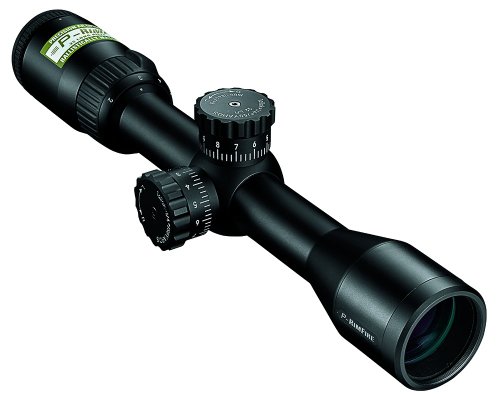 Nikon P-Rimfire Scope
 Shop NowClick to read my review Leupold FX-1 Rimfire Scope
  Shop NowClick to read my review Vortex Crossfire II Rimfire Scope