As Thanksgiving is just around the corner, I and my friends decided to go on a Turkey hunt. Laced with all the basic gear, we devised a hunting plan, however, one question that bugged us was that Can Turkeys smell? Can they trace a hunter with their sense of smell? After thorough research, I got some answers which are worth sharing this Thanksgiving.
Turkey belongs to the genus Meleagris and has two extant species the Wild turkey and Ocellated turkey. Over the years, Turkey has become a staple of Thanksgiving feast and Christmas dinner for its delicious and lean meat.
So, back to our quest, can turkey smell? Let’s elaborate on the subject to give you a better understanding.
Can Turkeys Smell?
Turkeys have a poor sense of smell which often works in the hunter’s favor. Many people fret about the fact that Turkey’s sense of smell might ruin an otherwise perfect hunt.
So when tracking down a gobbler in the hunt, it is highly likely that poor Turkey is not going to sense danger. Though, Turkey has a poor sense of smell it will outsmart the hunter in many other ways.
Turkey’s Sense of Smell
According to Journals of uchicago Unlike dogs and some other animals, wild Turkeys possess a poor sense of smell. The sense of smell is associated with the olfactory lobes, located in the forepart of the brain. Turkey has a poor sense of smell because of the under-developed olfactory lobes.
Unlike Turkey, Canine has an extremely sharp sense of smell because of the highly developed olfactory lobes. Vultures, condors, and griffons are considered exceptions as they are bestowed with a sharp sense of smell.
Do Turkeys Lack a Sense of Smell?
This saying is always linked with Turkey’s sense of smell ” If they could smell you, you’d never kill them.”
Turkeys do not lack a sense of smell but it is almost non-existent. Because of small under-developed olfactory lobes, many scientists believe their sense of smell to be equivalent to lacking.
Can Turkeys Smell Food Items?
Yes, They can. Even though the Turkeys have a poor sense of smell, but they can discern food items.
They are capable of sensing food items through smell. Turkeys lose the bet when it comes to taste and smell. Turkeys do not have a well-developed sense of taste and smell they mostly rely on their incredible vision and hearing.
Can Turkeys Locate food Using the Olfactory Gland?
Even though it is said that Turkeys have a poor sense of smell and taste, which leads to another question of how do they select only certain types of seeds, fruit, and suet from the feed?
That can be explained by the fact that they do have a sense of smell and taste even if it’s poor, the Olfactory glands are sufficient enough to help them distinguish their favorite food items. Some wild turkeys eat ticks by smelling.
How the development of Olfactory lobes affect Turkey’s sense of smell?
Turkeys are not blessed with a sharp sense of smell. Turkeys do not have a developed sense of smell as the brain region that controls olfaction is smaller in size. Smaller olfactory lobes are the reason Turkeys have little to no sense of smell.
Do Turkeys Have Nostrils?
Yes, they have well-developed see-through nostrils but that does not mean it helps in magically improving Turkey’s sense of smell. Turkey’s sense of odor is not heightened or weakened by the presence of nostrils or their size rather it is controlled by the brain.
Turkeys sniff
Turkeys can sniff but that does not mean they are going to smell far off things. Turkeys’ poor sense of odor comes in the way every time they try to sniff or smell something.
Does Scent Control help in hunting wild Turkeys?
No, there is no need to apply scent control when hunting a wild Turkey. They are not going to smell a hunter’s presence anyway thanks to their poor sense of smell. However, to not lure other wild animals when hunting in a forest, a hunter might want the help of scent control.
Does lust scent work for Turkeys?
No, lust scent would not be able to draw Turkey closer to the hunter. They would not be able to smell the scent in the first place let alone come closer.
Do Turkeys have Highly developed five senses?
Turkey does not even book a spot in the Top 10 when it comes to their sense of smell and taste. However, Turkey’s daylight vision is amazing, it is often said that they can see through a knothole. The sense of hearing and touch is also stronger in Turkeys.
Frequently Asked Questions
In brief, before going on a Turkey hunt, the hunter needs a better understanding of Turkey’s senses to devise a clever strategy to track down the gobbler. Turkeys do not have a well-developed sense of smell because of the relatively smaller size of the olfactory lobes. So, they are not going to smell out a hunter tracking them, however, they may outsmart him with their incredible vision and hearing.
This article covers the rangefinders the top precision rifle shooters in the country carry in long-range competitions. This is the first year I’ve asked about rangefinders, so it was exciting to see which brands these experts trust to give them an accurate target distances. The data is based on a recent survey I conducted of the top-ranked shooters across the country in both the Precision Rifle Series (PRS) and National Rifle League (NRL). (Learn more about the PRS & NRL). This is a very unique data set, because it includes a wide sample size (170+ shooters) who also represent the leading experts in the field. (View all the What The Pros Use articles)
Many pieces of gear are simply nice-to-haves, but most long range shooters would agree that a good rangefinder is one of the most critical pieces of gear in your kit. If you don’t know the exact distance to the target, your odds of connecting on the first round plummet dramatically. (Want to see how much an accurate range matters? Read this post.) Almost all stages in precision rifle competitions are comprised of known distance targets (aka “KD” targets), which means the match director or range officer provides all shooters with the target distances. You don’t have to range them yourself. However, I can say from experience that there are typically at least a couple targets at every match where the distances provided are wrong by more than 5 yards, which could be enough to result in a miss. I usually carry a Vectronix PLRF rangefinder, which is a military-grade rangefinder that is EXTREMELY accurate, and I carefully double-check all the ranges before a stage. I’d estimate that 95% of the targets are within 3-4 yards of what is provided, which rarely would cause a miss, but many veteran shooters double-check ranges to increase their odds on that last 5%.
But here is the dilemma with rangefinders: The further the target, the more critical an accurate range becomes. Yet at the same time, the further the target is the harder it is to acquire an accurate range. In a long range competition, many targets may be set between 300 to 600 yards, which most rangefinders can easily get a reading for. At the same time, the exact range at those distances usually isn’t that critical (unless it’s a very small target). But when targets start approaching 1,000 yards and beyond it is critical to have an accurate range, which can be difficult for some rangefinders to pull off in bright/midday conditions. While targets at 1,000+ yards don’t represent the majority of targets in a match, it’s those scenarios we’re thinking about when choosing which rangefinder to trust. That’s especially true among these fiercely competitive shooters, where just a couple of hits could be the difference between 1st place and 10th place! Having an accurate range is key!
One last note is that many guys prefer to carry ranging binos, like the Leica Geovid HD-B 3000 Rangefinder Binoculars or maybe the new Sig Kilo 3000BDX 10×42 Ranging Binoculars that so many seem to be talking about. Having ranging binoculars can be really convenient, because you just carry one piece of gear for both observation and ranging, and don’t have to pack or fumble between two devices. However, some of the most accurate rangefinders may only be available as a monocular, like the Vectronix Terrapin X, so the “right” rangefinder may come down to striking the right balance for your application between ranging performance, convenience, optical clarity, etc. If you’re not willing to compromise on any of those, you could end up spending a lot! Recently a few new ranging binos have been released, which is a welcomed change. A few new monocular rangefinders feature 7x magnification (compared to the more common 5x), which is also trending in the right direction. Hopefully more manufacturers will move to 7x or even more magnification for pocket rangefinders, which seems more appropriate to help you pinpoint targets at the distances these devices are capable of. The majority of the time these guys are ranging targets from a supported position (like off a tripod) for the best accuracy, where the old 5x magnification might be more appropriate for closer range targets that are primarily used off-hand. Higher magnifications will also make monocular rangefinders more useful for observation as well. (Hint, hint, manufacturers!)
Most Popular Long Range Rangefinders
So let’s dive into the data and see which brands of rangefinders these shooters chose to put their trust in when every shot counts! Here’s the data:
The various colors on the chart represent the league and rank of the shooters. For example, black indicates shooters who finished in the top 10 in the PRS, dark blue is those who finished 11-25 in the PRS, and the lighter the blue, the further out they finished in PRS Open Division season standings. The green colors represents the top shooters in the NRL, where the darkest green is the top 10, medium green is 11-25, and light green are 26th to 50th. <strong>The legend on the chart itemizes the league and ranks each color represents, but basically the darker the color, the higher up the shooters placed.
Sig Sauer and Vectronix are the most popular rangefinders, combining to represent 50% of the 170+ shooters surveyed! They were followed by Leica, Swarovski, Nikon and Bushnell, who combined to represent 42% of these elite marksmen. The remaining 8% of shooters were split among several brands.
Sig Sauer was the most popular overall, representing 28% of the top competitors in the nation. Sig has been very aggressive in the expansion of their optics line, and have quickly taken the place as one of the industry leaders in terms of both value and performance. The Sig Kilo 2400 ABS Rangefinder ($1300 street) is a very popular pocket rangefinder capable of ranging long distances, and it’s equipped with the Applied Ballistics engine for calculating a full firing solution on the fly. Sig recently released the Sig Kilo 3000BDX 10×42 Ranging Binoculars, which also features the Applied Ballistics engine on-board. I’ve heard an early report from a trusted laser expert that this new rangefinding binocular from Sig offers world-class performance compared to other 905nm, consumer-grade rangefinders. The optical clarity of the binos may not be to the same level as Leica or Swarovski, but the price tag is less than half of those brands. The street price for the SIG Sauer Kilo3000BDX Laser Range Finding Binocular is just $1,200! Like I said before, Sig is really competitive in terms of both performance and value.
22% of these top shooters said they used a Vectronix rangefinder. I also noticed Vectronix was the most popular brand among the top 10 shooters in the PRS, with 4 shooters represented among those top competitors. Vectronix is considered by many to be the gold standard when it comes to rangefinders. Vectronix primarily serves military customers, and until recently their lowest priced model on the market was the Vectronix PLRF 25C, which is a military-grade rangefinder with a street price of $9,300 that is capable of ranging beyond 6,000 yards even in bright/midday conditions (see my field test showing that). A military rangefinder is based on a 1550nm wavelength laser and the pulse produced might have 100,000 watts of peak power, compared to a 905nm wavelength consumer-grade rangefinder that produces 10-25 watts of peak power. There is a lot of technical details behind the differences, which I explain in this post, but the executive summary is the parts in a military-grade rangefinder are MUCH more expensive and overkill for distances 99% of shooters will ever engage. It’s really only the guys shooting Extreme Long Range that need the level of performance the PLRF is capable of, although I have seen some of these guys carry a PLRF at matches. Many of these guys are shoot A LOT (like 5,000+ rounds per year), so having a rangefinder that will give you a ridiculously accurate range on virtually any target you might ever point it at is a pretty compelling proposition. They may not drive a new truck or own a bass boat, but they have a killer rangefinder! It’s all about priorities, I guess.
Vectronix released the Terrapin X a few months ago, which is a consumer-grade rangefinder with a street price of $1800. While it doesn’t have the same extreme performance as its military-grade big brother, it is capable of ranging beyond 2000 yards, even in bright/midday conditions (see field test data). The Vectronix Terrapin X provides very accurate ranges well beyond the ranges most long range shooters will ever want to engage, and you won’t have to sell a kidney to be able to afford one! I’m sure a few of these guys already had their hands on a Terrapin X, but I’d expect that number to grow in the future since this product was still relatively new last year.
Leica rangefinders were used by 15% of these top shooters, which landed it as the 3rd most popular brand among this group of pros. One interesting note was that 4 of the top 10 shooters in the NRL said they were using a Leica rangefinder, which made it the most popular brand among those top finishers in that league.
The Leica Geovid HD-B Ranging Binoculars seem to be very popular among this group. Leica HD-B binos offer both world-class optical clarity and outstanding ranging performance. While they may not be quite as capable as the Vectronix models, they are far better than the average rangefinder. When I tested several rangefinding binoculars a couple years ago, the Leica HD-B’s were standouts among the group (see the data), and what I personally ended up investing in after conducting that test. The latest model, the Leica HD-B 3000 is even better than the model I tested, and it has a street price around $3000.
Leica also recently released the Leica Rangemaster CRF 2800.COM Laser Rangefinder, which is really compact, pocket rangefinder capable of long range performance. It also features Bluetooth connectivity so that you can link to your Kestrel Ballistic Weather Meter, and once you range the target it will wirelessly transmit the distance to your Kestrel, the Kestrel calculates the firing solution and sends that back to the rangefinder, which displays it in the field of view. That makes for a very quick and smooth workflow from seeing the target to getting on the rifle and applying the necessary adjustment. The Leica CRF 2800.COM rangefinder has a street price of $1100.
Swarovski rangefinders were used by 12% of these shooters overall. Like Leica, Swarovski does offer a monocular rangefinder, but it seems like more of these competitors use their ranging binoculars. The Swarovski EL Range Binocular offers the legendary optical clarity that Swarovski is known for, and also offers rangefinding capabilities. However, according to Nick Vitalbo’s epic rangefinder test that was published in Modern Advancements in Long Range Shooting Volume II, the Swarovski rangefinders don’t perform as well as the Leica products when it comes to ranging. The street price for the EL Range bino is around $3300.
Nikon rangefinders were used by 8.1% of shooters. The Nikon BLACK RANGEX 4K rangefinder claims to be capable out to 4000 yards on reflective targets with its “8-Second Sustained Measurement.” I’m a bit skeptical that it’d be able to range that distance on real-world targets, although it might could range the side of a barn that far in ideal conditions. However, an independent industry expert tells me the ranging performance is exceptional for the price, with ranging performance similar to Leica rangefinders. The Nikon Black RangeX 4K rangefinder has a street price of just $450, so it’s MUCH less expensive than any of the other models referenced so far, and based on that performance report it has be one of the highest value rangefinders on this list!
Bushnell rangefinders were used by 7.6% of these top shooters. I know some see Bushnell as a “cheap” brand, but I’ll say that once I really started doing objective, data-driven testing, my perception of Bushnell changed dramatically. Yes, they do make some entry-level products, but they also make some higher performance equipment that typically offers exceptional performance for the price. In fact, I can’t remember a field test I’ve done where I included a Bushnell product and they didn’t end up having the best performance per dollar spent. Case in point, is the Bushnell Elite 1 Mile CONX Rangefinder/Kestrel Combo, which includes both a rangefinder and a Kestrel Sportsman Weather Meter with Applied Ballistics and Link for $1000! Normally that Kestrel model sells for $400, and you’re also getting a fairly capable rangefinder with it – and the two can connect wirelessly for a seamless solution. I tested the Bushnell 1 Mile Ranging Binoculars in a field test a couple years ago, and you can see how it performed in this post.
Those brands of rangefinders already mentioned represent 92% of the top shooters, and the remaining 8% were split among a few different brands:
4 shooters used a Leupold rangefinder. In my last post, one of my readers mentioned that they used the Leupold RX-2800 Rangefinder in the field and had this to say about it: “I cannot speak to its ‘true’ accuracy, but I was able to range bluffs and eroded hills in the North Dakota badlands out to 2200+ yards consistently in midday and late day conditions.” That unit is priced at $600, and Leupold also offers a new ranging bino for $3000.
2 shooters used a Vortex rangefinder. Vortex’s best performing rangefinder is the Vortex Razor HD 4000 monocular rangefinder for $500, and they also offer a Vortex Fury HD 5000 Gen II 10×42 Rangefinding Binocular for $1200.
1 of the top 25 shooters in the PRS used a Gunwerks rangefinder. The Gunwerks G7 BR2500 Rangefinder is a very capable device with an accurate ballistic engine on-board, which I’ve personally used to get first-round hits out to 1 mile. I also believe it’s one of the easiest to program and use in the field. The street price is $1600.
1 shooter said they used a Kahles ranging binocular. Kahles is the tactical sister-company to Swarovski, so their products typically have amazing optical clarity. I personally hadn’t heard about Kahles offering a ranging binocular, but was able to find some info on the Kahles Helia Rangefinder Binoculars.
1 shooter used a Steiner rangefinder. According to Nick Vitalbo’s rangefinder test data published in Modern Advancements in Long Range Shooting Volume II, the Steiner Military 8×30 Rangefinder Binocular was one of the top performers, with very similar performance to the Leica HD-B Rangefinder Binoculars. It has a street price of $2250, which makes it one of the highest values among ranging binoculars.
1 shooter used a Zeiss rangefinder. I included the Zeiss Victory Rangefinder Binoculars in a field test I did a couple years ago, and you can see those results here.
4 of the 170+ shooters surveyed said they didn’t use a rangefinder, or they just borrowed one at matches from someone in their squad. That only makes up 2% of these guys, but many shooters are more than willing to share ranges they measure with whoever asks. I certainly would. So if you’re on a tight budget, don’t feel like you absolutely HAVE to own one before you try out your first match. You can get by without one, but long-term a reliable and trustworthy rangefinder is a worthwhile investment for a long range shooter. I hope this helps you guys narrow down your search to find the best rangefinder for your application.
If you’re interested in learning more about rangefinders, here are a few good posts you’d probably be interested in:
How Do Rangefinders Work?
Ranging Binoculars Field Test Results
How Much Does Accurate Ranging Matter?
Extreme Long Range Tips: Rangefinders
2019 Pocket Rangefinder Field Test Results
If you REALLY want to learn more, I’d recommend reading Nick Vitalbo’s expert explanation of rangefinders in Modern Advancements in Long Range Shooting Volume 1, and see his epic rangefinder test in Modern Advancements in Long Range Shooting Volume 2. That is BY FAR the best information I’ve ever come across on rangefinders, and I still go back and reread and reference it occasionally. GREAT resource!
Fiskars is a great choice If you need a kindling hatchet for the homestead, cottage, or camping. But Fiskars offers many options, and it’s not always clear what the best choice is.
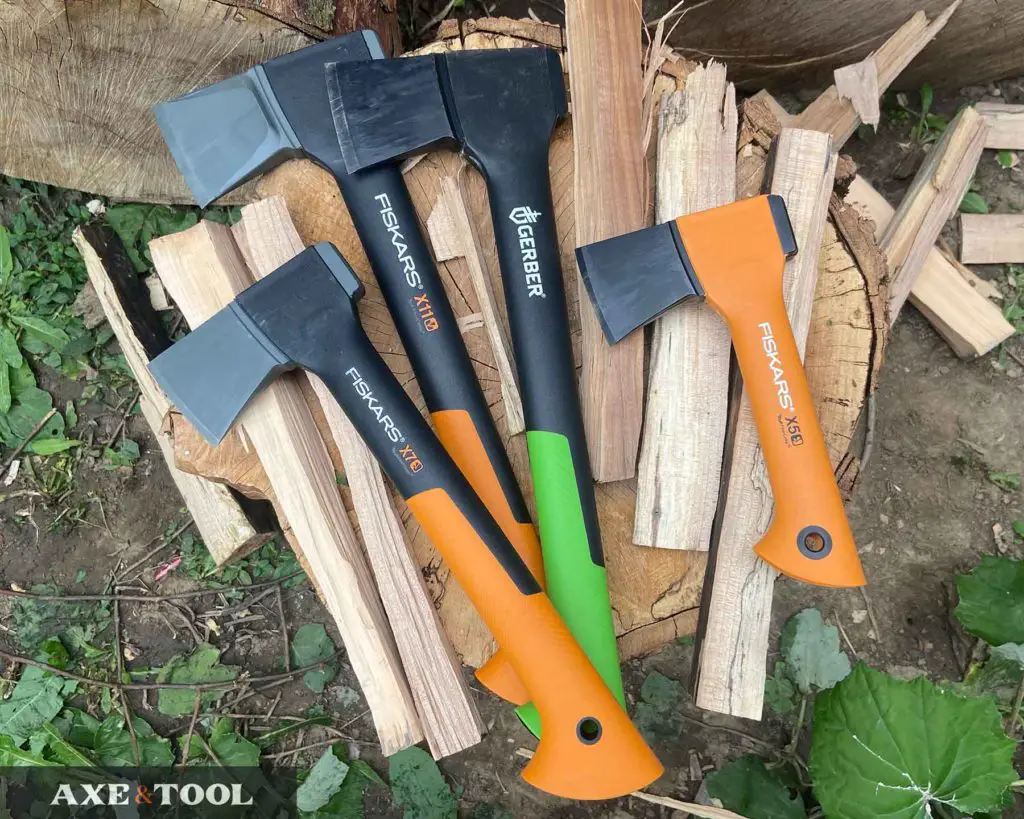
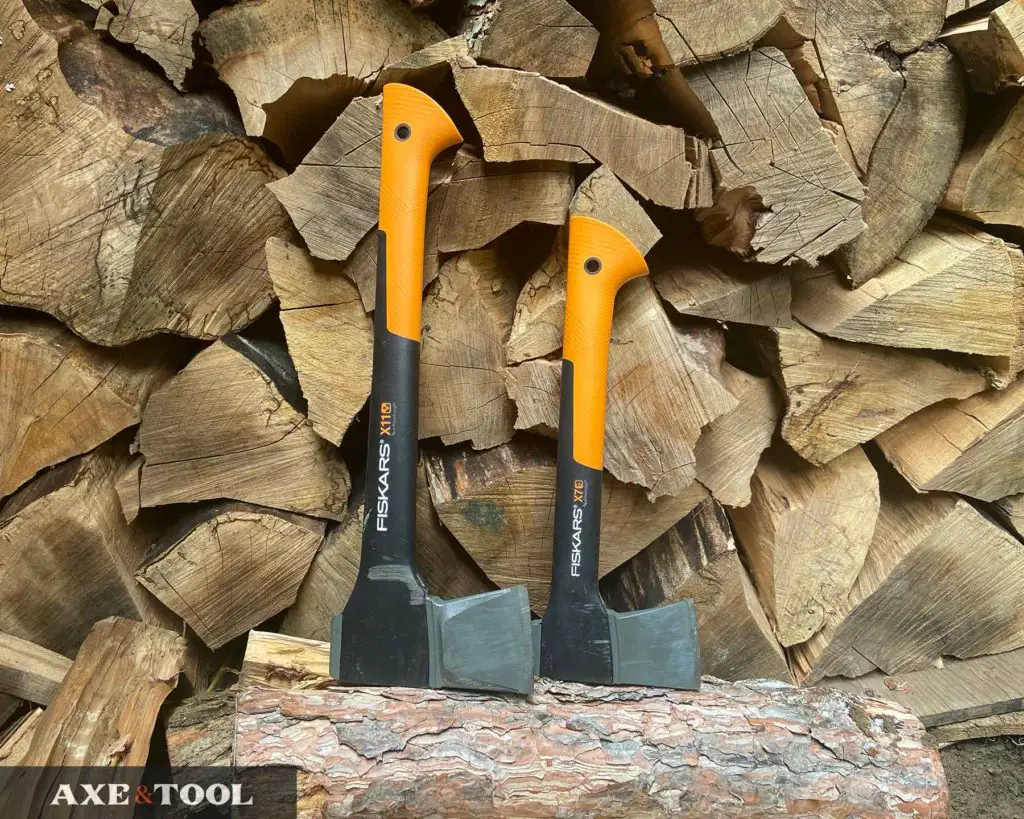
I tested the Fiskars X5, X7, X10, X11 and compared a few alternative versions of these models.
While I think there is a clear winner for a dedicated kindling hatchet, there are some serious alternatives that can do quite a bit more and still be a decent kindling tool.
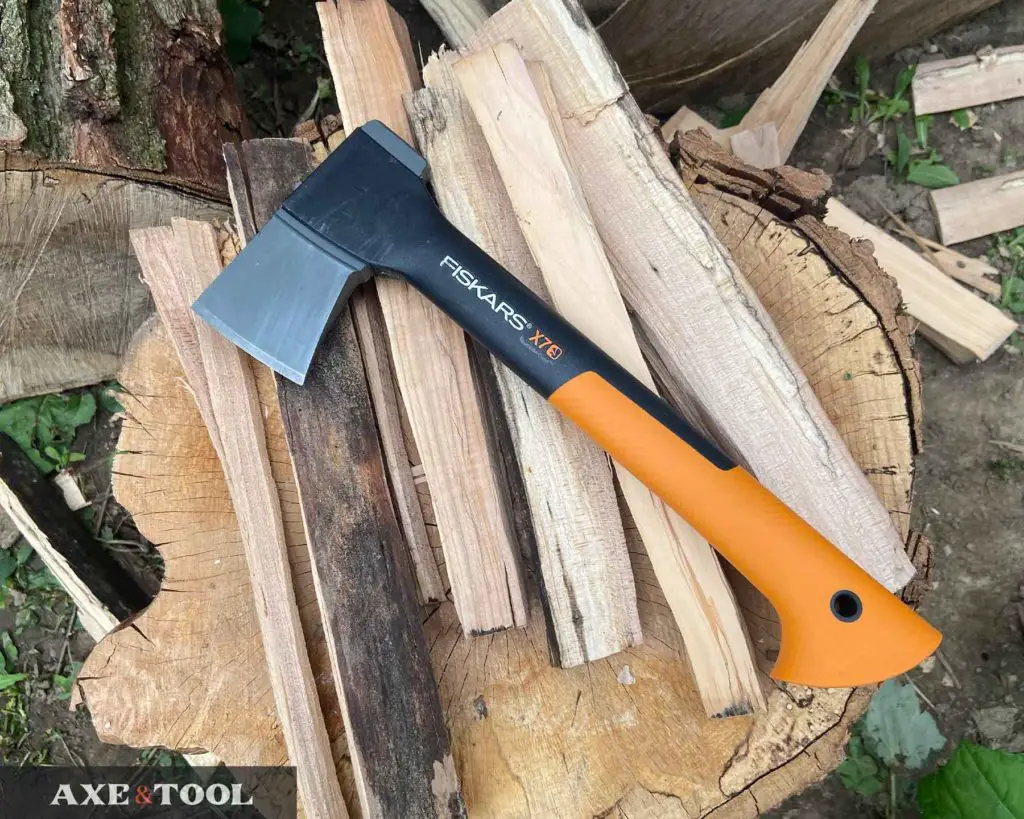
The Fiskars X7 is ideal for kindling
The 14” X7 is the best overall Fiskars hatchet for kindling. The stout wedge pattern head pops wood apart, and the handle is short for close work but long and tough enough to pry twisted grain apart. However, you might consider other models that can handle kindling and also flex into other rolls.
The X7 is small, light, and a great all-around hatchet. It can be handled easily by new and experienced users alike and is surprisingly capable in this role. It can split 4.5-5 inch pieces pretty easily. So you don’t need to worry about which log you start making kindling from.
The X7 head splits well
The wide-angle of the short wedge shape helps pop the grains apart quickly with less penetration than a traditional hatchet. This can mean less power is needed and you can be more accurate.
Longer thinner blades can be better for other tasks but have the potential to stick when splitting vertically.
Fiskars axes also come quite sharp for an inexpensive axe. There is a uniform 30-degree edge that will cut in for smaller tinder, even if the head shape isn’t suited for slicing.
The X7 handle length is perfect for splitting kindling
The tough 14-inch nylon handle is long enough to get leverage and act as a pry bar If you take on a piece of wood that is a little too big or has twisted grain. It won’t be damaged.
The length is also an ideal distance away for kindling, as it’s easy to keep aim and be precise. While its total length is 14” (13.875 to be precise), the last inch gets taken up by the massive hook on the bottom, so it handles like a 13”.
I’m not complaining about the hook – it’s one of the best features of the entire Fiskars line. It keeps your hand locked in the axe.
Making tinder with a Fiskars X7
If you need to get down to the really small stuff (like tinder), you may wish you had a thinner blade. They are sharp enough, but the wide wedge tends to break off strands before you can get them very long. So shaving tinder or making a feather-sticks is a little trickier.
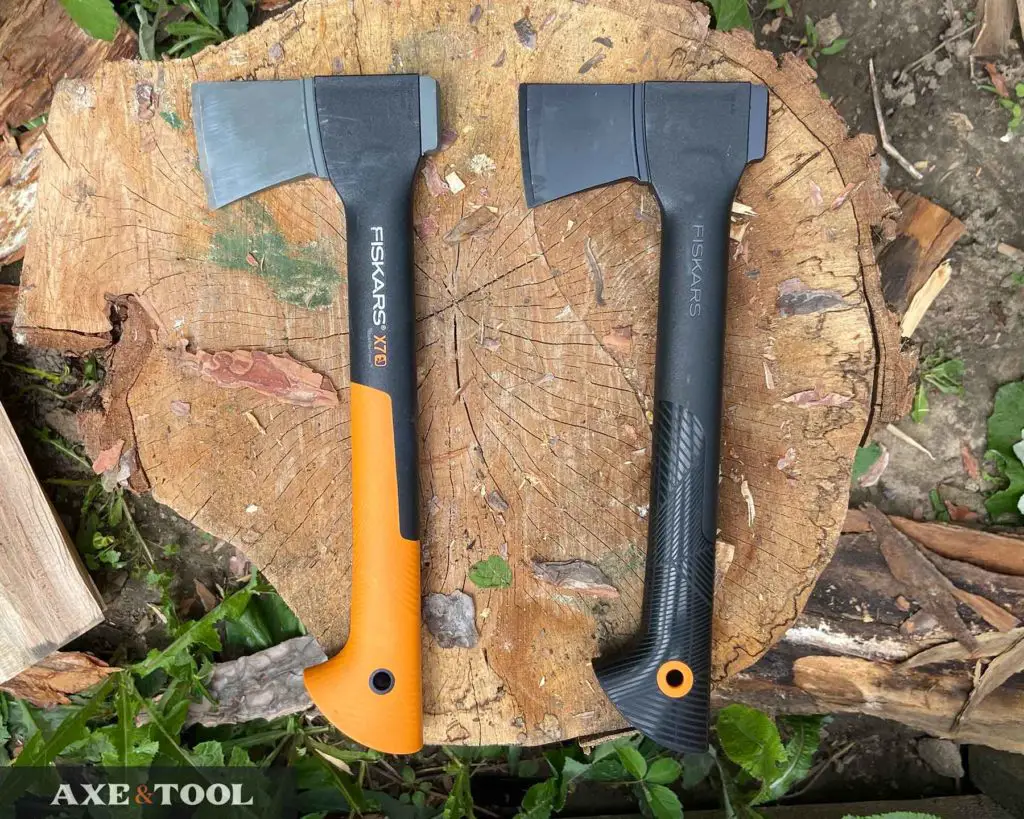
X7 vs 14” Black Chopping Axe
The Fiskars X7 and Black 14” hatchet (A6) are essentially the same hatchets except for the overmold grip on the X7. The head size and performance of these axes are identical but the overmold does improve the grip and perceived vibration.
I would get the X7. I was originally skeptical but the over-mold does make a difference, and the price is almost identical.
Gerber Freescape 14
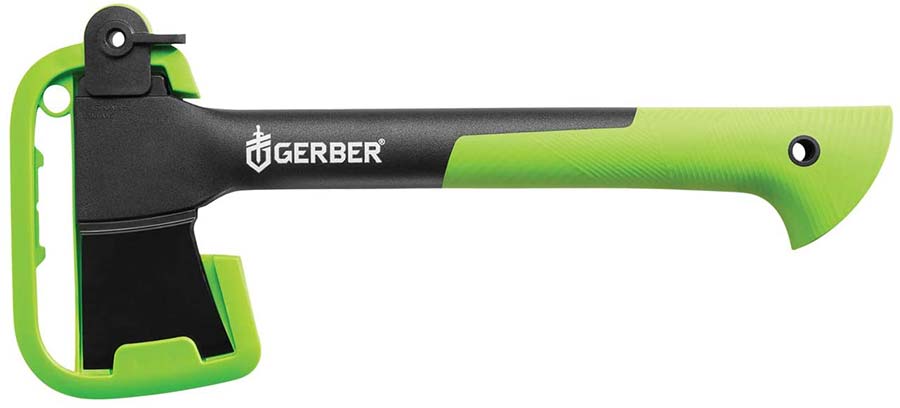
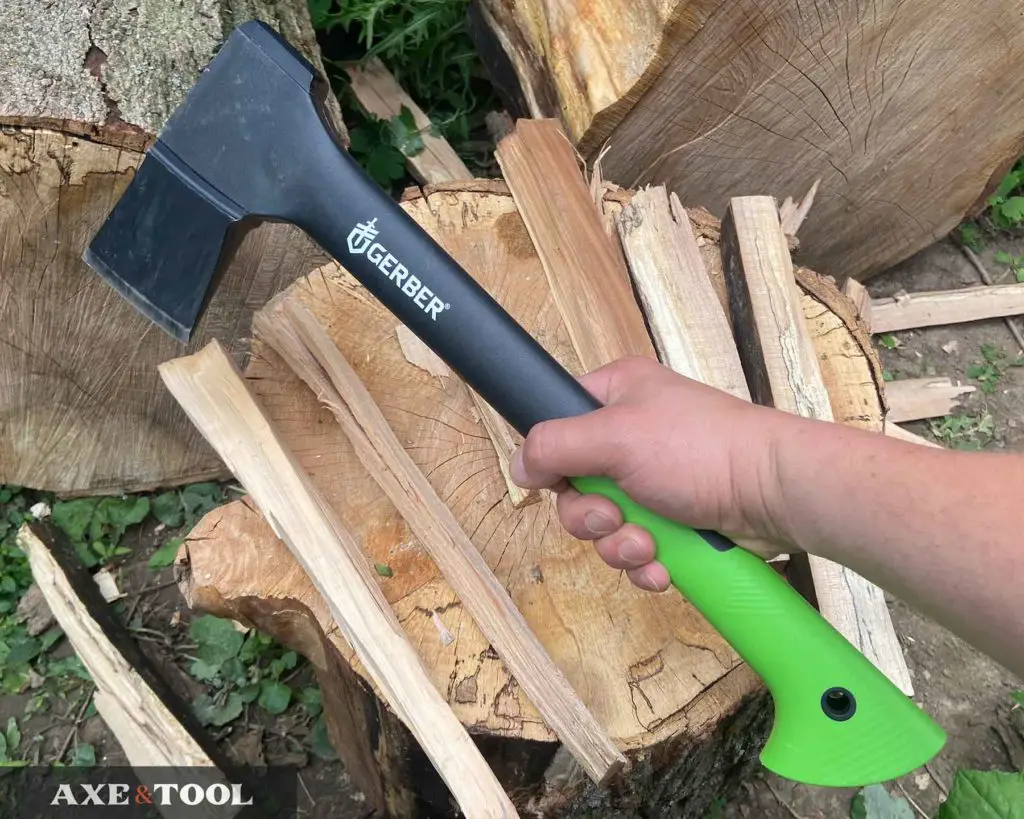
Gerber is owned by Fiskars. This is the same axe with a green handle and black blade, BUT the Gerber also comes with a lighter pack-focused sheath for the woods. The X7 can come with the pack sheath, but I’ve found it usually has the older wall hanger sheath.
If you like Green and want to make sure you get the pack sheath I would go Gerber – but be aware it’s often $5-$10 more than the X7. Check the Gerber on amazon.
Fiskars Norden N7 vs X7
The Fiskars N7 has the same head and overall length as the X7, but it has a hybrid composite/wood handle. The nylon upper handle provides the standard Fiskars durability while the lower handle wood offers a traditional feel in hand.
While I love the feel of a wood handle, the price would make me pick the X7 every time. The X7 is like $40, and the N7 is like $90 (see on amazon). But it offers identical performance and is certainly an option if it speaks to you.
Fiskars X11 is for the woodpile
The X11 should be a serious contender for anyone with a homestead or cottage that keeps and uses a woodpile.
As the smallest Fiskars splitting axe, it’s just shy of 17.5” long with roughly a 2lb flared splitting head. This axe can flex between one-handed use for kindling and two-handed use splitting larger logs. It can go up to about 8″ wide logs.
The extra weight in the head helps split kindling and even tinder. An easy tap will usually get things started. You won’t need big swings to pop small pieces apart.
Why isn’t the X11 my first choice?
Originally, I thought the X11 was going to be a no brainer – but after a summer of testing I found I kept wanting to use the X7.
The X11 is powerful for big swings, but can be awkward working one-handed close up. The larger head can feel clumsy when working with small pieces. Even a light swing is harder to aim than the X7 and the inertia carries much further. It feels a bit like overkill if you are making kindling from typical pieces of pre-cut firewood (at your campsite or fireplace).
It will easily blow through typical kindling size wood and has more potential to be dangerous to less experienced users. The blade could find your other hand or your shins very easily if used incorrectly.
As evidence – I cut my thumb with this axe like a dumbass processing kindling, ONE DAY AFTER I finished this article.
But, if you like the idea of having more power if needed – The X11 worth considering. (See on Amazon).
X10/Gerber Freescape 17.5 for the wilderness
The actual X10 doesn’t seem to be sold in North America, just the Gerber branded Freescape 17.5. These axes are identical (again Gerber is owned by Fiskars).
The X7 is probably the better for basic car camping – where your wood comes pre-cut and you might just need to pop a few pieces apart for kindling. The X10 is more of a forest axe and chopper that can also be a kindling maker.
It’s 17.5” (ish) in length and can be used one or two-handed. The larger head is uniquely longer and thinner than all the other Fiskars axes, making it well suited for the wilderness and bushcraft. It’s a very versatile chopper.
Similar to the X11 it’s a little too big and awkward for a dedicated kindling hatchet. You will often find yourself holding mid-handle and the larger blade feels like overkill for smaller pieces.
So this is a good option if you want a more capable axe for camping, or around the property that can do more serious chopping and kindling. I just wouldn’t pick it for kindling specifically.
This axe can be harder to find in store, since it’s more “Bushcrafty”. I bought mine on Amazon (see here).
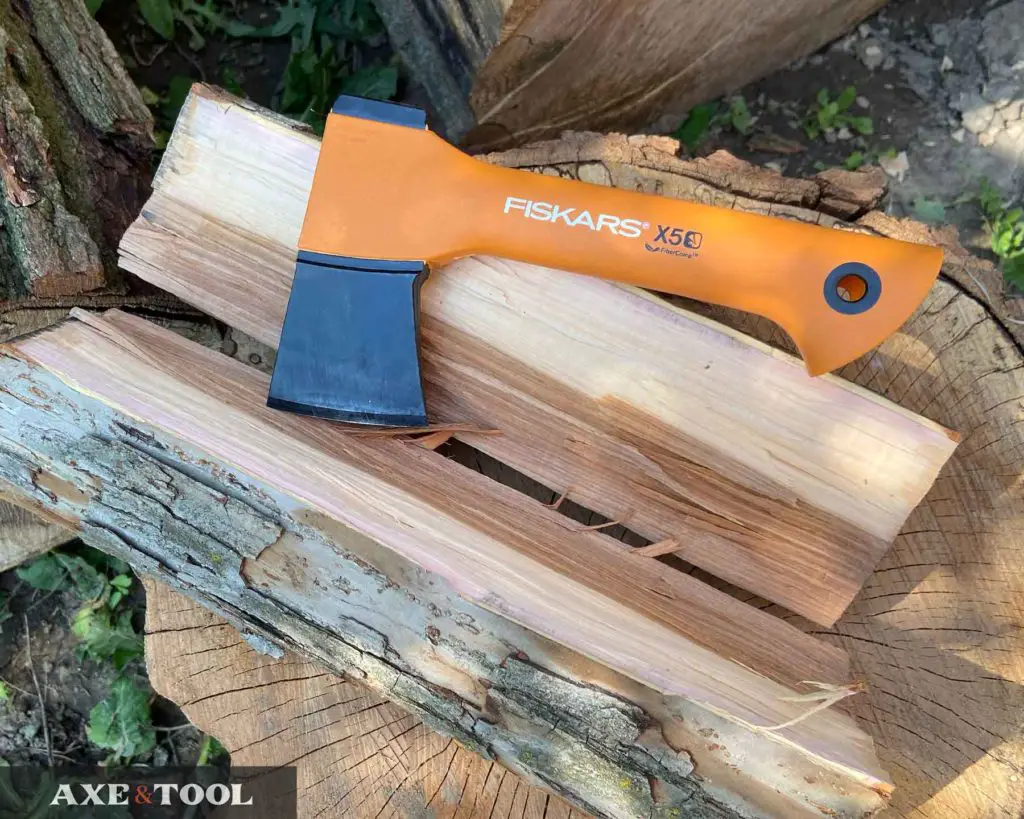
Fiskars X5 pack axe
This little pack hatchet is surprisingly good at splitting too. It uses the same head as the X7, it just has a shorter overall length of 9.5 in. It’s my first choice for backpacking (often even over some of the more expensive options). It only weighs 0.56kg (1.3lbs), which makes it the lightest “real” axe out there. (see my article X5 vs Gerber Pack Axe)
In testing, it was splitting 4-inch pieces of firewood easily, just like the X7. However, there are 2 reasons I would pick an X7 over the X5 if you can take the size:
zzzThe handle is too short to be effective prying wood apart if it doesn’t split fully on the first hit, or if the grain is twisted.
There is always a certain fear for your knuckles when splitting larger pieces. You need to swing hard enough that it would hurt if your aim was off.
The hook at the bottom is smaller than the other models so you can hold that in a half-hand manner and get a little more clearance. But the hollow end of the handle can dig into your palm and isn’t super comfortable for extended use this way.
So if size and weight are the most important factors – then this is a capable little hatchet. But I would go for the X7 if possible.
The X5 can be harder to find, even on amazon (try here). But, there is a black Gerber branded version that is identical to the X5 (it’s made by Fiskars) which can sometimes be easier to find in USA/Canada. Here is the alternate Gerber 9 on amazon.
Avoid the Gerber Gator, which looks like, but is not a Fiskars. Gerber Gator axes are lower quality and made in Thailand).
Since I was hunting and harvesting meat in my teens, I was trying to come up with ideas on how to honor and add extra value to the meat I worked for in the wild.
Now 20 or so years later, I still use a lot of wild venison meat cuts for many projects, and often for meat curing and salami making.
I wanted to provide some information about what I cook and use with the various cuts of venison meat. It’s a little different in New Zealand, where I do most of my hunting with an abundance of wild deer and many are semi-farmed also.
I’ve eaten/butchered farmed venison and been able to contrast the differences.
This article relates to both with some generic aspects due to the slight variation in the deer species (ie. fat vs lean meat). In New Zealand we have about 6 species of deer.
We aren’t required by hunting regulations to remove the whole carcass hunting public land, often we are semi-burying the meat or just leaving it for the scavengers.
The most common cuts to harvest and use are the loin along each side of the spine “back steaks” as well as back legs (hind leg). Since this is where the majority of the meat from the animal is.
If you think about most cuts and edible aspects of the deer, here is the framework.
Many cuts and areas of the deer can be used for slow cooking to tenderize. Whilst other cuts like the loin and tenderloin are best for fast cooking methods. The deer’s heart and liver are the best parts for cooking first after the animal is killed whilst the offal is fresh.
I assume you have a basic idea of butchering a deer, since this is about what you can do with the deer meat, including all the major muscle groups and subprime muscle groups.
Most hunters I know will look at mincing a good percentage of the meat they harvest. The other aspect is cubing or dicing the meat for dishes like stews and curries.
How To Use Different Cuts of Deer or Venison Meat
There are so many ways you can look at the muscles and edible parts, to make it simple, the basic categories for how you cook the venison are slow or fast. Then after this, I will look at it from the sections or different areas of the deer/venison animal with some added thoughts.
Slow Cooking Venison= Often Cooked in a liquid
Fast Cooking Venison = Often Cooked under Direct Heat until rare to medium done
Slow Cooking Venison
Neck
Shank
Ribs
Any Meat of the Deer
Bones for Marrow
Trotter/Hoof
For slow cooking, I like braising methods, but I’ve always found the ribs hard work since many deer in New Zealand are so lean.
I hunt with just a knife often, I don’t have a bone saw to take bone on shanks or neck cuts. Unless the hunt is on friendly farmers land, where we can drive a 4wd or quad motorbike to retrieve the whole carcass.
Unless the deer is small, often isn’t the case where we hunt locally.
The main deer across wide aspects of New Zealand is the red deer, which is often a large-bodied animal.
If you simmer or slow cook any aspect of the meat, you can break down the muscle fibers with a stew or other liquid-based broth. I’ve found this just takes time and patience. Depending on the deer species and toughness of the meat, after 3-4 hours this can be achieved.
Since there is a lack of collagen or sinew in the loin or tenderloin. These cuts of meat aren’t very successful when slow cooked I have found.
Browning slow cook cuts of the meat will bring the natural sugars to the surface and helps the overall flavor a lot I’ve found.
Fast Cooking Venison
Heart
Liver
Back Steak
Tenderloin
Aged Rump (Hind Leg)
Aged Sirloin (Hind leg)
If you are harvesting a deer, heart and liver are the first and most logical things to eat, as long as they are fresh and not overcooked. They are rich in minerals and can be sliced and fried or cooked on an open fire very easily with a stick.
TIP – Overcooking is easily done with offal, so keep a close eye on it whilst frying!
The tenderloin would be the next option for me, then it would depend on the age and type of deer whether the loin could or would be used, normally aged.
Cooking or Frying a loin until rare done-ness is another way of making it pleasant to eat without aging.
Aging other cuts of the hind leg are often necessary to make it enjoyable and break down the toughness.
Edible Parts of a Deer in Detail
Now I will look at the deer areas and meat sections of the venison/deer.
Loin (Backsteak)
Tenderloin
Hind Quarter (Back Leg)
Forequarter (Front Leg)
Neck Cuts
Offal & Organs
Ribs
For each of these above categories, I will go into detail based on what I know and what I have used to make food or wish to try in the near future.
If you dry age or wet age different subprime cuts of the front or back legs, you can ‘technically’ get more fast frying or cooking cuts.
Loin (Backsteak)
Options for Venison Loin
Steak Cuts
Salt Cured and Hot Smoked
Dry Cured (Lonza, Lonzino, braesola but with venison)
Italian Style Biltong Dried (or Cold Smoked)
Lean meat from the area adjacent to the spine.
Depending on the species of the deer, this could be short or long. The diameter may vary somewhat as well. The cut goes from in front of the back leg muscles, right up until the upper neck.
In a fine dining restaurant I was associated with in Scotland, the head chef showed me the technique they used for aged cuts, submerge in extra virgin olive oil with fresh rosemary sprigs and juniper. It was left in the fridge and cooked when needed.
Because the oil protected the meat from oxidation, it was able to be kept for up to 2 weeks and cooked when needed.
Traditional most harvesters and hunters of meat will use this cut for steak. However, it can be used for many salted then possibly cold or hot smoked recipes.
Venison Loin Recipe Links
Venison Loin with Red Peppers
Venison Steak Diane
If you need some tips on wet aging steak cuts of venison in your fridge – here is an article I wrote on how.
Tenderloin
Options for Tenderloin Venison
Fast frying – oil, salt, pepper
BBQing – direct heat and hot
Roasting
Very soft meat from a deer, some love it. Some find it lacks flavor, it’s one of the cuts that could be used straight after harvesting to some extent I’ve found. I treat it very similar to the loin, in terms of cooking.
Personally, I like to add some spices and flavor, such as juniper berries, rosemary, pepper, or other hard green herbs.
This a fast fry cut, soft and cooked fast. The muscle isn’t used a lot by the animal, so it tends to have soft intramuscular aspect to it.
Really very similar to the loin or back steak in some ways, maybe some folks can taste the difference.
I do eat sugar and saturated fat, however, they are often used as shortcuts to flavor, in my opinion, I see many recipes where bacon is wrapped around or criss-crossed lean meats. Sure this works, however, cooking rare is my personal preference to taste quality meat instead.
Tenderloin Recipe Links:
Venison Tenderloin in Blueberry Sauce
Roasted Tenderloin
Hind Quarter (Back Leg)
Rump
Top Side
Bottom Round
Eye of Round
Sirloin Tip
Tri-Tip
Shank
Hind Leg Bone
Here is a very informative article on deboning a hind leg of venison I found online.
Rump, Top Side, Bottom Round, Eye of Round, Sirloin Tip, Tri-Tip
Roast
Indirect Hot Smoked
Aged and Sliced for Steak
Wet Pickled/Brined and Pastrami Style (Acidic Brine)
Cube or Mince Meat
Dry Curing any of these Cuts
Jerky or Biltong
Either slow or fast cooking can be done with many of these venison hind leg muscles.
Once you have removed the sinew binding between the different muscle groups, there are so many options!
Venison Pastrami has been amazing! I have used a simple portable smoker, as well as a pellet grill smoker for this.
Hot Smoking Indirect, otherwise known as Low and Slow Smoking coined the Modern term, developed from German and Czech-Slovakia early American immigrants. Basically, heat on one side and passing or surrounding meat at temperatures of approximately 200-250°F (with either charcoal/wood or pure offset wood chunks)
I love to make slow cooker stews or many different types of masala-based curry with venison also.
Any venison makes great mince/ground meat. I even did a blind tasting with a bolognese I made with beef mince and venison mince. Since my partner was reluctant to eat venison I harvested when I met her.
Guess what?
She could not taste the difference! Although, I know that based on the time of the year, diet, and species of deer there are a milder or more intense game meats.
The easiest ways to age the rump meat is, ideally hanging the entire hind leg in a chiller or fridge environment for 7-12 days.
Often I don’t have the use of a chiller fridge.
Here is an article I wrote on wet aging venison meat, or another simple technique is to vacpac the cuts, for 1-3 weeks in your fridge (although I don’t like the single-use plastic aspect of this, there are environmentally friendly vacpac bags available).
Summary of Aging Venison
We take the subprime cuts like sirloin, rump, and loin (back steak or backstrap), place them on a non-reactive grill to create distance, then onto a baking tray. It then is wrapped with cling film / cling wrap (which again I am not fond of). The goal here is to have it aging in the normal kitchen fridge.
However, not sitting in the blood or juices that comes off the meat is what ‘spoils’ meat quickly. From what I have learned, the temperature being barely above freezing will also mean the unwanted bacteria growth will be minimal.
Unwanted bacteria on meat is exponential as the temperature increases. This is why from harvesting venison through to any type of cooking or dry curing/salami making. Keeping the temperature as cold as possible is very important.
7-10 days with this method, which we have been using for many years.
Another method that uses too much plastic in my opinion, is vac packing this fast cooking cuts for 2-3 weeks in the back of the kitchen fridge. You can also marinate at the same time using this method as well.
I have also been reviewing a dry aging and dry curing cabinet fridge from the USA. Here is a link to the article I wrote on it, this could be use for dry aging venison.
Main Hind Leg Recipes
Venison Roast
Simple Slow Cooker Venison Recipe
My Biltong and Jerky Article
Whole Venison Leg Roast Recipe
Shank
One of the toughest parts of the deer, long slow cooking in liquid is the key here.
Definitely slow cooking in liquid is needed for this tough area which is lean and has a lot of connective tissue, the collagen-rich aspects will create a wonderful broth with a few herbs, spices, and vegetables.
It is also one of my favorite parts of the deer!
Hind Leg Bone
Ideal for stock, or a wonderful treat for a dog. On the farm, we would freeze bones, and give the dog a treat every now and then. A frozen bone will give a dog a longer level of enjoyment!
Forequarter (Front Leg)
Shoulder
Chuck
Shank
Options for Forequarter Meat
Minced Meat
Cubed Meat
Deboned, Wet Brined, and Smoked/Cooked
Dry Cured
Most of the time when we are processing the front leg of the deer, it’s extra labor and takes time to remove a lot of the sinew. If you are hunting the venison, often you have to work around the hole from the bullet (or arrow/bolt).
There is a fair amount of meat, but it takes that extra time to get the tough sinew off from a wild animal.
Once trimmed of sinew, blood clotting, etc, the meat is often in the diced or minced pile. I will highlight below some of my favorite recipes around this.
I haven’t aged any front leg muscles, but I am sure with patience you could get a tender fast cooking chunk or muscle. Generally, I have always cubed or minced the meat from the front leg.
Shank of Forequarter
Same as Hind/Back Leg, slow cooking in liquid is best! The bone can be utilised in the same way, I’ve read that as humans we weren’t really hunter/gathers so much as scavengers who would brake bones for the marrow, tens of thousands of years ago!
Front Leg Recipe List & Links
Any red meat cubed or minced recipe could be used for this meat. It would literally be 10,000s of recipes, just use google.
Same as Hind Leg in some ways, expect more sinew, however.
Neck Cuts
Options for Neck Cuts
You need a bone saw to work through the bone/meat section of the neck, there is meat but of course a lot of bone and connective tissue. This is definitely long slow cooking, again ideally in liquid in my option.
Venison Neck Recipes
Osso Bucco (shank or neck could be used)
Neck Braised
Pressure Cooker
Flank
Options for Venison Flank
Tenderized and Crumbed (Schnitzel)
A thin cut of meat, often I am not focused on.
Has potential, if you are willing to take the time to extract and trim the flank properly.
Here is a guy on u tube way more interested in flank than me.
Organs and Offal
Heart
Liver
Options for Heart and Liver
Fast frying, Sauteed
Terrine or set in aspic (using collagen to gelatine to create a jelly structure)
Crumbed and deep fried
Liver Pate
Sliced and Fast frying is my favorite method since these are the best fresh and soon after harvesting.
It’s often forgotten about, the offal carries so many minerals and vitamins. The issue is, if it is a wild animal, often there is a penetrating, expanded bullet going through this region.
Now let’s move on to the ground or minced venison in more detail with some more ideas.
What To Do With Ground Venison
Fresh Sausage
Hot Smoked Salami
Dry Cured Salami
Minced Jerky
Cottage Pie
Burger Patties
Tartar (raw option, Hungarian Style)
Minced meat is a beneficial thing, however when you have minced pork, beef, or other farmed animals of the red meat type. For any sausage or salami, you have to use a minimum of 20% pork fat (because it’s neutral in flavor), I focus on 28-30% pork fat for nearly all my fresh sausage links and salami.
It can be embedded with fat generally speaking, red meat like venison from the wild isn’t. The farmed venison I’ve come across has a minimal amount of fat, apart from the odd animal.
Fat from some certain deer in America, I’ve heard doesn’t taste too nice. I’ve never experienced that though in New Zealand where I hunt.
Pork fat is the neutral flavored fat that is used generally speaking, for sausage, salami, or even burger patties.
Venison meat is lean, but I’ve found cooking with it, basically it is the same as cooking with beef mince, unless you overcook it to the point of complete dryness or if you have cooked it would some kind of liquid to keep the cooking environment wet.
My favorite uses for minced venison is to use it for, sausages, salami, lasagne, cottage pie and many other dishes/recipes.
In some ways minced and cubed venison meat is the most versatile for cooking or making smallgoods like sausages or salami. I often cube the meat and freeze it if I am going to make dry cured salami.
Minced Venison Meat Recipes
Venison Salami Recipes
Venison Sausage Recipes
Minced Jerky Recipe
Basic Pemmican (Fat, Dried Fruit, Meat)
Venison Patties Recipe
Biltong
For venison, many different cuts can be used for this basic type of cured and dried product. Unlike jerky, this meat-based snack is preserved, whilst also having a lot of flavor!
I am a big fan of Biltong made from venison, I often used many of the subprime cuts in the hind leg.
I am using salt and often malt vinegar to ‘cure’ the meat, using the salt to inhibit the unwanted bacteria that spoils it. The other preserving ingredient is vinegar, I have used red wine or malt vinegar mainly. Vinegar creates a more acidic environment which the unwanted spoiling bacteria don’t like very much.
The vinegar also has the same effect as cooking, called ‘denaturing’ the proteins. I can’t explain the exact science. It definitely works though!
Here is something I wrote about biltong.
Pickling and Preserving Venison Meat
Canning or preserving venison cubes in a jar are other ways of preserving the meat without refrigeration.
I haven’t tried these methods yet, but have been reading and researching them. Here is some detailed information about it.
You have 2 options, either pressured sterilization with a pressure cooker.
For pressure cooking, there is hot or raw packing, here is an article with a lot more info on this.
Sous Vide
The key to sous vide is all about cooking in a water bath at a precise temperature with little variation. Also, often it’s placed into a vac-packed sealed bag to seal in all the flavor.
I’ve eaten sous vide venison, and you can truly get the precise rare vs cooked aspect you desire. Although, it’s in a way a lot more work, and often using single-use plastic vac seal bags, which I try to avoid.
I have found reusable sous vide bags, they do last for multiple cooks.
Difference Between Wild Deer and Farmed Deer
Most wild deer I have come across are lean, I have heard of deer across USA and Europe that have fat. From my experience fat is more likely with farmed deer, it can also add flavor. I think it goes back to the saying, it is what it eats.
Some of the finest deer I have eaten have been wild animals, with access from the forest onto fertile grass farmland. Which creates more fat development for the red or fallow deer, and the fat was very mild.
Forget everything you thought you knew about air rifles. Today’s big bore airguns pack enough punch to drop a whitetail at 50 yards, with some models delivering more energy than a .44 Magnum.
This isn’t your childhood BB gun—it’s the cutting edge of an ancient technology reborn for modern hunters seeking a new challenge. Now legal in 22 states and growing, airgun deer hunting combines the precision of rifle hunting with the intimate range of archery, creating an experience that’s attracting dedicated hunters nationwide.
The Evolution of Big Bore Airguns
The journey of airguns from backyard plinking tools to legitimate big game hunting implements represents one of the most significant evolutions in modern hunting. Traditional air rifles, typically chambered in .177 or .22 caliber, have long been used for small game hunting and pest control. However, the development of pre-charged pneumatic (PCP) technology and larger calibers has dramatically expanded their capabilities.
Today’s big bore airguns—available in calibers ranging from .30 to .72—deliver impressive ballistic performance. Top-tier models can propel heavy projectiles at velocities approaching 1,000 feet per second, generating 700-800 foot-pounds of energy at the muzzle. For context, a .44 Magnum handgun typically produces around 900 foot-pounds of energy, placing these airguns firmly in centerfire handgun territory in terms of power.
Legal Status Across the United States
Initially, regulations were a significant barrier for hunters interested in using airguns for bigger game. Most jurisdictions had separate deer seasons specifically for firearms, muzzleloaders, and archery with no provisions for air-powered weapons. However, grassroots advocacy has led to significant regulatory changes in recent years.
Currently, 22 states explicitly allow air rifles for big game hunting:
Alabama
Arizona
Arkansas
California
Florida
Georgia
Idaho
Indiana
Kentucky
Maine
Maryland
Michigan
Mississippi
Missouri
North Carolina
North Dakota
South Carolina
Tennessee
Texas
Utah
Vermont
Virginia
Many of these states place specific restrictions on the airguns permitted for deer hunting:
Caliber Requirements: Most states require a minimum caliber, typically .35 or larger. Texas, for instance, requires at least a .30 caliber projectile.
Projectile Weight: Some states specify minimum projectile weights (e.g., Texas requires 150 grains or more).
Muzzle Energy: Energy requirements generally range from 215 foot-pounds (Texas) to 400 foot-pounds (Indiana) at the muzzle.
Velocity Standards: Minimum velocity standards often hover around 800 feet per second.
These requirements ensure that hunters use airguns with sufficient power to ethically harvest deer-sized game. However, regulations change frequently, so it’s essential to check your state’s wildlife management agency for the most current rules before planning an airgun hunt.
Equipment Considerations for Deer Hunting
Selecting the right equipment is critical for successful and ethical airgun deer hunting. Here’s what prospective hunters need to consider:
The Air Rifle
For deer-sized game, experts recommend:
Caliber: Minimum .35 caliber, with .45 and .50 caliber being preferred
Muzzle Energy: At least 400 foot-pounds, with 700-800 foot-pounds being ideal
Action Type: Pre-charged pneumatic (PCP) designs dominate this category
Shot Capacity: Most big bores offer only 2-3 full-power shots before needing to be refilled
Accuracy: Quality air rifles should be capable of 1-inch groups at 50 yards
Recommended models from industry experts include:
AirForce Texan: Considered the industry standard, available in multiple calibers
Hatsan Piledriver: A newer but proven contender in the market
Umarex Hammer: Notable for being the only multi-shot option in this category
Budget considerations are significant, with quality hunting airguns ranging from $550 to $3,500. This investment is comparable to many centerfire rifles, reflecting the sophisticated engineering required for these high-performance air weapons.
Ammunition
Ammunition selection is particularly important with airguns, which can be notoriously finicky about which projectiles they shoot accurately. Options include:
Traditional Diabolo Pellets: Less common in the largest calibers but still available
Cast Lead Bullets: Similar to muzzleloader projectiles
Specialty Designs: Including hollow points from manufacturers like Mr. Hollowpoint
Major manufacturers producing big bore airgun ammunition include Hatsan, Hunters Supply, Nosler, and specialty makers like Mr. Hollowpoint. Weights typically range from 150 to 550 grains depending on caliber and intended game.
Each individual gun may prefer a specific projectile weight and design for optimal accuracy, making testing essential. Many hunters also switch between lighter projectiles for smaller game and heavier ones for deer-sized animals.
Air Supply Systems
One unique aspect of PCP airgun hunting is the need for a compressed air source. Three main options exist:
Hand Pumps: While inexpensive, these are generally impractical for big bore airguns due to the high pressure (often 3,000-4,500 psi) and large volume of air required.
Carbon Fiber Tanks: These portable tanks can be filled at dive shops or paintball facilities and then used to fill the gun in the field. They’re convenient but require access to commercial filling stations.
Personal Compressors: Once prohibitively expensive at $3,500+, more affordable options have recently entered the market. These allow complete independence but add to the initial investment.
Most serious big bore hunters eventually opt for a combination of a carbon fiber tank and a personal compressor, using the tank for field fills and the compressor to keep the tank topped off.
Field Tactics for Airgun Deer Hunting
Successfully hunting deer with an air rifle requires adapting traditional hunting approaches to accommodate the unique characteristics of these weapons:
Range Management
The most significant adaptation involves range management. While modern airguns are capable of accuracy at extended ranges, ethical considerations and ballistic limitations lead most experts to recommend:
Ideal Range: 40-50 yards
Maximum Range: 75 yards for experienced shooters with quality equipment
Trajectory Awareness: Due to slower velocities, airguns experience more pronounced bullet drop than centerfire rifles
This necessitates hunting approaches more similar to bowhunting than rifle hunting, with an emphasis on concealment, favorable wind conditions, and patience.
Shot Considerations
Several factors influence shot selection with airguns:
Audible Report Before Impact: Since airgun projectiles travel slower than sound, deer may hear the shot and react before the projectile arrives, similar to “jumping the string” in archery.
Limited Follow-up Shots: With only 2-3 full-power shots available before needing to refill, hunters must make the first shot count.
Shot Placement Priority: Heart-lung shots remain the standard, though some hunters opt for head shots on does due to the clean kill potential with precise placement.
These factors collectively push airgun deer hunters toward a more deliberate, careful approach than might be typical with centerfire rifles.
International Perspectives
While much of the focus has been on North American hunting, big bore airguns have proven their capability worldwide. South Africa has permitted airgun hunting for plains game since 2003, with species including kudu, wildebeest, blesbok, impala, springbok, warthog, and bushbuck being ethically harvested.
These international successes further validate the capabilities of modern big bore airguns when used appropriately and ethically. As regulations continue to evolve, we may see expansion of airgun hunting opportunities in additional regions and for various game species.
Common Misconceptions
Despite growing acceptance, several misconceptions persist about big bore airgun hunting:
“It’s Not Legal”: As detailed above, many states now explicitly permit big bore airguns for deer hunting.
“It’s Not Ethical”: When used within appropriate parameters by skilled hunters, modern big bore airguns are as ethical as other hunting methods.
“They’re Just Toys”: This confusion stems from associating all airguns with low-powered recreational models. Modern big bores deliver energy comparable to centerfire handguns.
“They’re Completely Silent”: While quieter than firearms, big bore airguns still produce significant sound—enough that deer will react to the report.
Education within the hunting community continues to address these misconceptions as the practice becomes more mainstream.
The Future of Airgun Deer Hunting
Several trends suggest continued growth for this hunting segment:
Regulatory Expansion: More states are considering or implementing provisions for airgun big game hunting.
Technological Advancement: Continued refinement of airgun technology is likely to further enhance performance.
Growing Community: An expanding base of experienced hunters is helping to develop and share best practices.
Manufacturer Investment: Major hunting equipment manufacturers are entering the airgun market with dedicated hunting models.
As these trends continue, we can expect to see airgun deer hunting transition from a niche pursuit to a mainstream option alongside traditional methods.
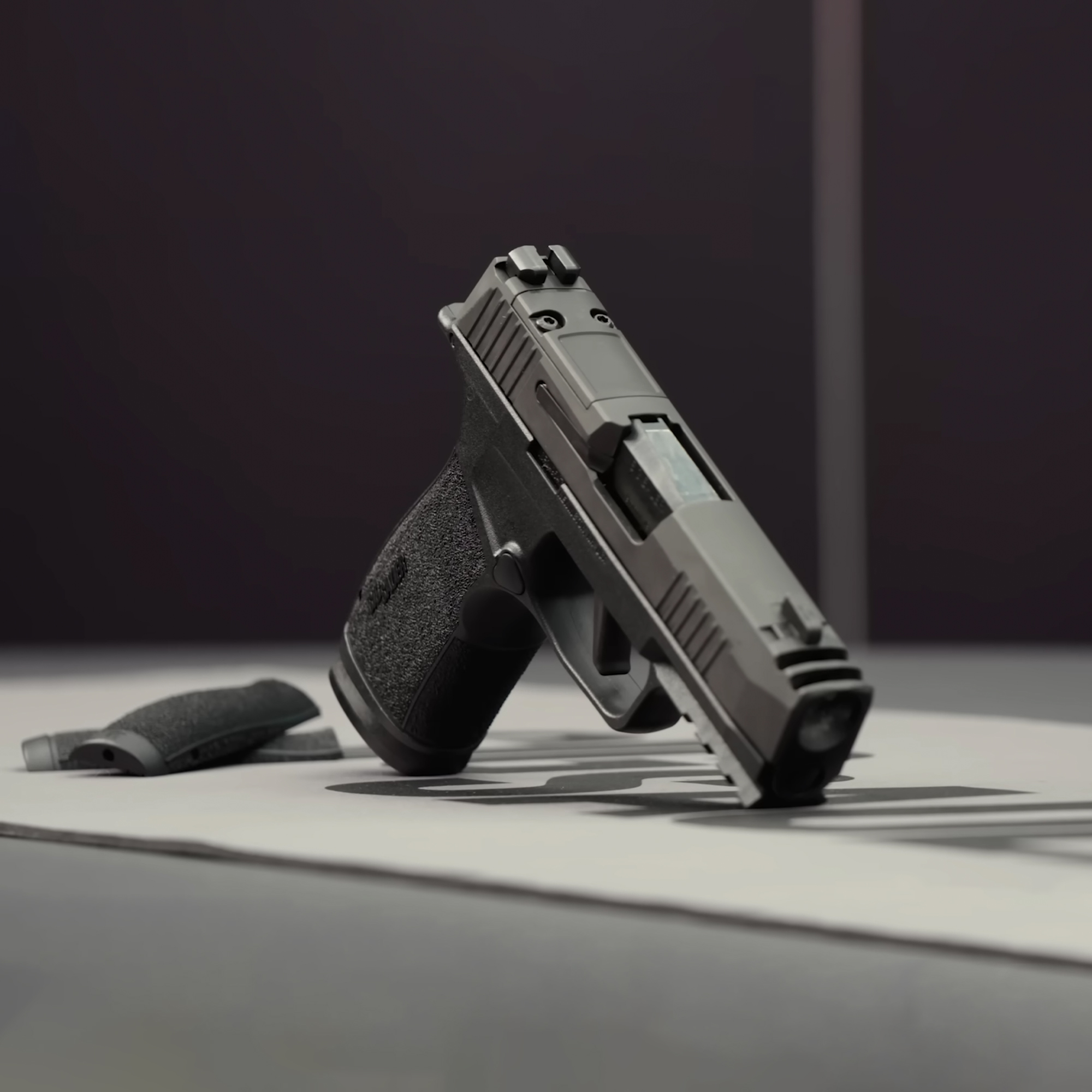
Just when we thought the P365 series couldn’t get any better, Sig Sauer announced the release of the new and improved P365 X-MACRO.
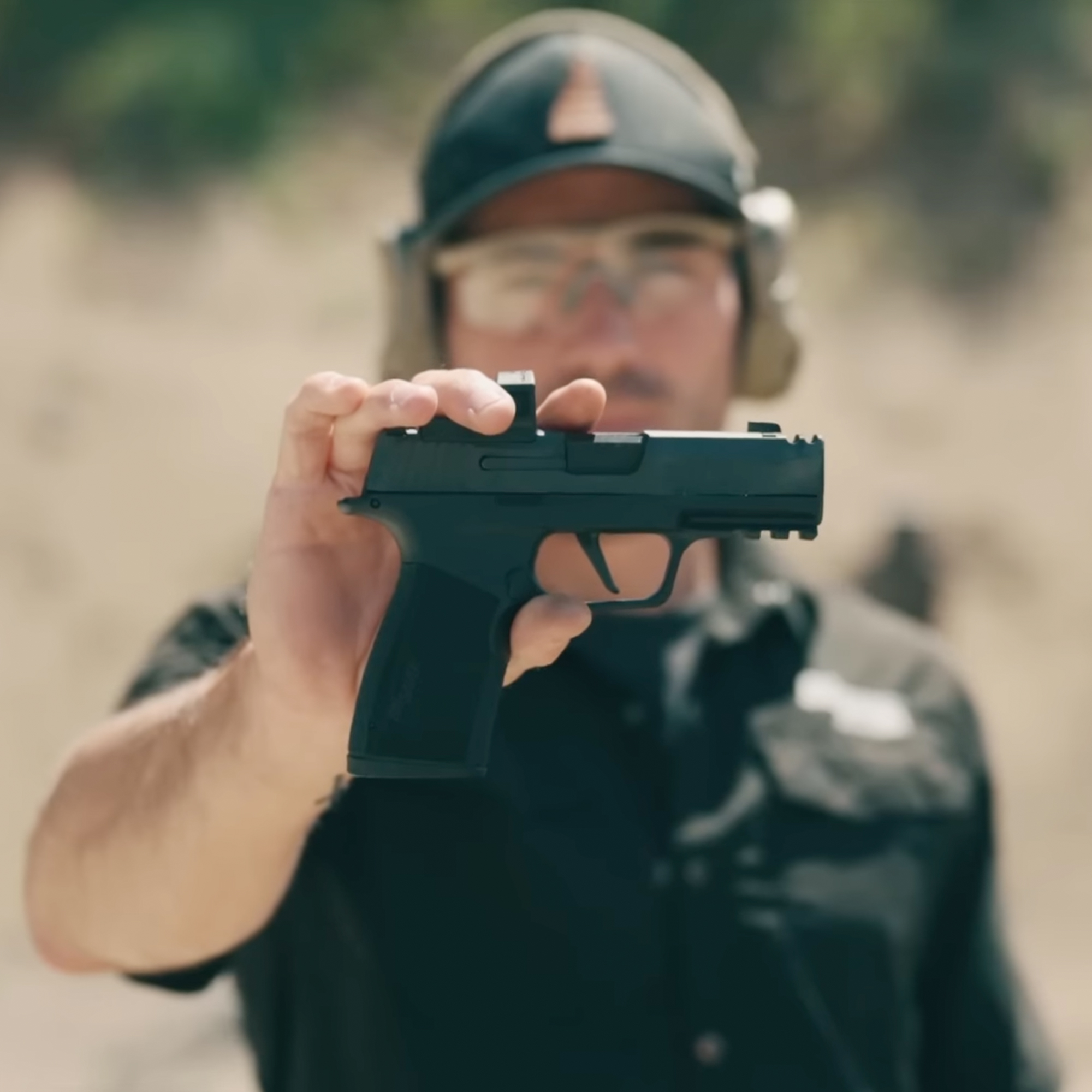
Sig released the X-MACRO in August, saying the new compact pistol was designed to include everything the best-selling P365 has to offer, and more. The X-MACRO is said to be more accurate and easier to conceal than its predecessors, all with a higher round capacity and a similar thin frame.
This slim design has landed the X-MACRO at the top of the list as the most comfortable and concealable 17-round handgun on the market.
“When the P365 was introduced, it reimagined the possibilities of everyday carry, and the P365 X-MACRO continues this tradition delivering more on everything that made the P365 the number one selling, and most award-winning gun in America,” Tom Taylor, Sig Sauer’s CFO and Executive Vice President of Commercial Sales, says in a media release. “With the P365 X-MACRO you get more of everything you want in an everyday carry pistol, and you no longer need to compromise your capacity for concealability or shootability.”
Let’s go over the specs and features that make the new Sig Sauer P365 X-MACRO one of the hottest new firearms around.
P365 X-MACRO Specs
Features
Size and Capacity
Compact with an impressive round capacity, the P365 X-MACRO is specifically designed for concealed carry – and it shows.
Weighing only 21.5 ounces and measuring 5.2” tall, 6.6” long, and 1.1” wide with a barrel length of 3.1”, this 9mm pistol is built to hold a whopping 17+1 rounds.
The firearm comes with two 17-round newly-designed Sig Sauer magazines built with high-visibility followers. These new mags were designed with the same thin frame as the traditional P365, only with the ability to hold more rounds.
The X-MACRO’s high round capacity squeezed into a 1.1” wide frame makes this weapon more comfortable and easy to conceal than any other 17-round pistol currently on the market.
Frame, Slide and Barrel
The Sig P365 X-MACRO is built with a polymer frame and a stainless steel slide coated in a durable corrosion- and scratch-resistant Nitron finish, well-designed to protect it from the elements.
The pistol comes optics-ready and features a standard 1913 accessory rail, making it easy to add various sights, lights, and lasers, depending on your preference. The X-MACRO is specifically designed to work well with Sig’s popular Electro-Optics FOXTROT1 rail-mounted flashlight.
While the firearm’s carbon steel barrel does not come threaded, it does feature an integrated compensator designedto reduce muzzle flip for faster and more accurate successive shots.
Grip
The X-MACRO has a black polymer grip and comes with Sig’s brand new Macro-Compact grip module.
The pistol also comes with interchangeable backstraps, so you can adjust the grip to be more comfortable for small, medium, or large hand sizes.
Sights
Complete with Sig’s famous X-RAY3 day and night sights, a 3-dot Tritium system designed to provide a glowing illumination in low-light conditions, the X-MACRO has a 5.1” sight radius.
The pistol is optimized for use with Sig’s ROMEOZero red dot sights, which might be a great option if you’re looking to upgrade to more compact red dot reflex sights known for their compact size.
Trigger
The striker-fired P365 X-MACRO is built with a flat trigger, providing a larger surface area and more leverage than its curved counterpart, making firing successive shots both easier and faster.
The X-MACRO’s trigger is also designed with a slight lip at the end, which more advanced shooters know can aid in indexing – or transitioning between targets.
Safety
Like the P365 and P365 XL, the Sig Sauer P365 X-MACRO was designed without a manual thumb safety.
Final Thoughts
The Sig Sauer P365 X-MACRO was designed with a small frame, high round capacity, and optics-ready build, making it an easy and comfortable choice for concealed carry – or whatever else you may need it for.
You can get your hands on this new release at Guns.com or through your local firearms dealer.
If you do decide to grab one of these pistols for concealed carry, be sure to check out our selection of Kydex and hybrid IWB, OWB, and pocket carry P365 X-MACRO holsters.
If you’re looking for belts or holsters for other handgun models, we recommend visiting our Holsters by Gun Model page if you are looking for holsters that are custom-made for your weapon of choice. For all of our belt and holster options and for more information to help you choose the carry system that works best for you, visit our Vedder Holsters website.
Looking for items beyond holsters and belts, check out our Resources Page for popular product links like lights, lasers, first aid, maintenance, and more.
It’s that time of year again; temperatures are creeping up, sweaters are being traded for tank tops, and people are taking off on vacation. But how do you successfully conceal carry through all of this?
You may be surprised to learn that concealed carry in the summer is just as easy as it is in colder months. The trick is to piece together the right wardrobe, wear the right holster, and do your research before taking any trips.
While you will probably have to make some adjustments and exceptions while learning how to conceal carry in the summer, it’s not as difficult as it sounds. The first thing to do is make sure you have the proper equipment.
What are the Best Summer Concealed Carry Holsters?
We don’t have to tell you that different holsters work better in different situations. But what is the best holster for summertime concealed carry?
The first thing you want to look at when it comes to CCW in the summer is your carry position. Inside the waistband holsters are generally considered the best way to conceal carry in summer. These holsters can be concealed under even a simple T-shirt, making them much easier to dress for in warmer seasons.
The next thing to consider is holster material. Hands down, the best holster material for summertime is Kydex. While leather is always a comfortable option, it does tend to get a bit sticky when it comes in contact with water, humidity, or sweat.
The Vedder Holsters LightTuck™ Kydex IWB holster is an excellent choice of summer concealed carry holsters. While it’s our most popular holster year-round, its slim design and built-in sweat shield make it easy to hide under lighter clothing and protect your weapon from moisture on your body.
If you just can’t bear to give up your comfortable hybrid holster during the summer months, an easy trick to avoid a sticky situation is to wear an undershirt. Yes, it’s an added layer of clothing, but having that thin layer of fabric between your holster and your skin provides a sweat barrier that allows you to carry a hybrid holster, or any holster for that matter, more comfortably.
Guns: Concealed Carry Options for Summer
In the winter, when thick layers of clothing are the norm, it’s easy to carry a gun of any size. In the summer, when these extra layers are shed for lighter, smaller articles of clothing, the smaller the gun the easier it will be to conceal.
Trading your full-sized weapon for a compact one will make concealed carrying in the summer a much easier task. If you’re looking for ideas, check out our lists of the best Glocks, Rugers, and Berettas for concealed carry.
That being said, you can successfully conceal most pistols in the summer, even larger ones, with the right holster, belt, and clothing combination. So let’s talk about how to dress for concealed carry in summer.
Concealed Carry Clothing for Summer
If you’re like most people, the minute those temperatures start to creep up, you’re trading your thick jackets and jeans for lightweight tank tops and shorts.
Not only does this make it harder to hide your muffin top, but it also makes concealing your carry pistol more difficult. But don’t worry, we have some tips and tricks for keeping things hidden under summer clothing (two birds, one stone, if you know what we mean!).
Luckily, it’s not as daunting as it seems. Concealed carry in the summer is just as easy as it is in the winter, you just have to get a bit more creative.
If you can pull them off, cargo shorts are your best friend. They are usually loose and riddled with pockets, making them an excellent choice for both waistband and pocket carry.
A concealable IWB holster, like the Vedder LightTuck™, is also surprisingly easy to conceal under a simple cotton T-shirt or tank top. If you prefer OWB carry, or your T-shirt just isn’t cutting it, a light, loose button-up shirt does wonders to conceal even larger pistols. Look for things like fishing shirts and Hawaiian shirts to wear either over a T-shirt or on their own.
When it comes to women’s concealed carry clothing for summer, skirts with belt loops are a great option. You can also easily conceal your gun under a loose-fitting shirt or wear a tighter shirt with a lightweight wrap or shawl-type garment to prevent printing. Any sort of shirt with an embellishment, like a knot, front tie, or another distracting style, also work well.
One of the best parts of summer fashion is that patterns and bright, distracting colors are everywhere (yet another reason Hawaiian shirts are great for CCW!). These patterns and bold colors work well to hide printing, no matter what shirt you wear.
Preventing Chaffing
Look, it’s nothing to be embarrassed about. Lots of people experience chaffing from their holster and firearm during the summer, and it’s one of the main reasons people decide to leave their weapon at home during warmer months.
If chafing has got you down, don’t worry. There are a few things you can do to help mitigate this uncomfortable situation. First, consider wearing an undershirt tucked into your pants to prevent contact between your body and carry system. If you live in a really hot and humid environment (ahem, Florida) and don’t want to wear an added layer, you can always try anti-chafing powders or rollers, which are quite effective.
Invest in a Good Gun Belt
Few things reduce printing and make CCW more comfortable, like a quality gun belt. Whether you like tactical belts or stylish leather ones, a good gun belt is an easy way to make summer concealed carry a success. Unlike regular belts, EDC belts are designed to be thicker, stiffer, and more durable, preventing belt sag and reducing printing.
Use a Holster Claw
A holster claw is always a good idea and is especially useful in the summer. Holster claws are designed to reduce printing by pressing against your gun belt to draw the grip of your pistol closer to your body. You can order any Vedder LightTuck™ with an optional Holster Claw or buy one separately to add to an existing holster. It really does make a difference!
Carry Off Body
Off body carry is a bit of a controversial topic in the gun community, but sometimes it’s a good option if you’re struggling to conceal your weapon under summer clothing. If you are going to use this means of carry, it’s essential that you pair it with a proper holster. A pocket holster often works well for slipping into a purse or backpack.
Read more about the pros and cons of off body carry here.
Concealed Carrying While on Vacation
Ah, summer. The kids are out of school, the weather is warm, and the days are longer. It’s the ideal time to take that much-needed vacation. But how does concealed carry fit into your travel plans?
There are plenty of reasons why you might want to have your gun while on a trip. You’ll likely be around large groups of people and wandering into unfamiliar places, all of which warrant having a self-defense plan. But, with new places comes new rules, so how do you conceal carry while on vacation?
Concealed Carry While Driving
If you’re taking a road trip this summer, you’re probably wondering if you can have your gun in your vehicle with you. So long as you have a valid concealed carry permit, you can safely have a firearm in your car in most circumstances, though different rules may apply.
If you will be traveling through multiple states, it’s imperative to read up on their individual laws. Every state has different regulations when it comes to firearms, so you’ll want to make sure you’re complying with the laws where you’re going, even if you’re just passing through. You’ll also need to verify that the states you’re going to have a reciprocity agreement with the state where your carry permit is from so you don’t run into any issues.
You should also note that if you are pulled over, some states require you to disclose that you have a gun in the vehicle to the officer. Once again, read up on the laws in the states where you will be traveling before your trip so you can be prepared.
If you can bring your pistol, you’ll want to figure out how to carry comfortably while driving. You may want to consider a carry position that won’t be uncomfortable for long periods of sitting. Appendix and 4 o’clock carry are generally not recommended for driving as they tend to dig into your back or thigh after a while. Carrying strong side or cross draw works well in a vehicle as the gun sits out of the way on your hip.
You can always have your firearm off-body somewhere in your car, but if you choose to carry that way, be prepared to take it with you anytime you get out of the vehicle. You should also keep your vehicle locked while you’re fueling up so there’s no chance of someone walking away with your pistol.
Check out our article “Can You Concealed Carry While Driving?” for more tips.
Concealed Carry While Flying
We hope we don’t have to tell you that you can’t wear your gun on a plane (if you don’t know, TSA will be sure to inform you with a trip to airport jail). But you may not know that you can have a gun in your checked baggage, so long as you comply with certain rules.
The Transportation Security Administration (TSA) has a number of regulations that must be followed to check a firearm, including securing your unloaded gun in a hard-sided, locked container and checking in with airport security. Be sure to review all the rules before attempting to check a gun in your luggage.
As long as you follow the rules to the letter, you shouldn’t have any issues checking your firearm. You should be prepared to get to the airport a little early as the process does take additional time.
It’s also important to consider the city and state you will be flying into before bringing your gun. Like when taking a road trip, make sure to read up on the state’s individual laws and verify that your concealed carry permit is recognized there.
To learn more about concealed carrying while traveling by plane, check out our article here.
Other Factors to Consider
Vacation Activities: Before you decide to travel with a gun, think about the activities you’ll be doing on your trip and where you will be staying.
If you’re planning a trip out here to Central Florida where you will be visiting one of our many theme parks, you won’t be able to take your weapon with you into the park and, therefore, may not want to bring it at all. On the other hand, if you’re taking a road trip to visit family, go camping, or visit some gun-friendly attractions, bringing your firearm should work out just fine.
Wherever you’re going, just be sure to check out local and state laws and think about the activities you will be participating in once you’re there. Many businesses and parks reserve the right to prohibit weapons in their establishment, so make sure you know the rules before you go.
Hotels: Another thing to consider when deciding whether or not to bring your gun on vacation is where you’re staying. If you’re staying with friends or family that you trust and are okay with you bringing your weapon into the house, then, by all means, bring your sidearm. It may be a different story if you’re staying in a hotel or rental home.
First, you must ensure the place where you will be staying doesn’t have any policies against firearms. Second, think about whether you will be able to take your gun with you when you leave your room. Whether or not you leave the “do not disturb” sign on your door, hotel staff have a key to your room and may access it at any time.
One way to help mitigate any potential issues is to bring a small travel gun safe to lock your weapon in while you leave. You can find lightweight, inexpensive options online.
Vehicle Rentals: If you’re planning to rent a car during your vacation, don’t just assume that you can have a gun in the vehicle. While many rental car agencies don’t have a specific policy against weapons in their cars, some do, so make sure you do your research beforehand.
Summary
With the right gun, holster, and clothing combo, concealed carry during warmer months doesn’t have to be difficult. When you’re learning how to conceal carry in the summer, consider the types of activities you will be participating in, the kinds of places you may visit, and the wardrobe you currently have.
If you’re looking for belts or holsters that are custom-made for your weapon of choice, we recommend visiting our Holsters by Gun Model page. For all of our belt and holster options and for more information to help you choose the carry system that works best for you, visit our Vedder Holsters website.
Looking for items beyond holsters and belts, check out our Resources Page for popular product links like lights, lasers, first aid, maintenance, and more.
*This page contains affiliate links. When you purchase a product included on this list, we receive a commission at no extra cost to you.
The 7mm PRC is HERE! In this story I’ll give a complete overview of this new cartridge including specs, a comparison with other cartridges in its class, talk 7mm PRC ballistics, and give you a preview of much more 7mm PRC content that’s coming!
Disclaimer
Ultimate Reloader LLC / Making with Metal Disclaimer: (by reading this article and/or watching video content you accept these terms)
The content on this website (including videos, articles, ammunition reloading data, technical articles, gunsmithing and other information) is for demonstration purposes only.
Do not attempt any of the processes or procedures shown or described on this website.
All gunsmithing procedures should be carried out by a qualified and licensed gunsmith at their own risk.
Do not attempt to repair or modify any firearms based on information on this website
Ultimate Reloader, LLC and Making With Metal can not be held liable for property or personal damage due to viewers/readers of this website performing activities, procedures, techniques, or practices described in whole or part on this website.
By accepting these terms, you agree that you alone are solely responsible for your own safety and property as it pertains to activities, procedures, techniques, or practices described in whole or part on this website.
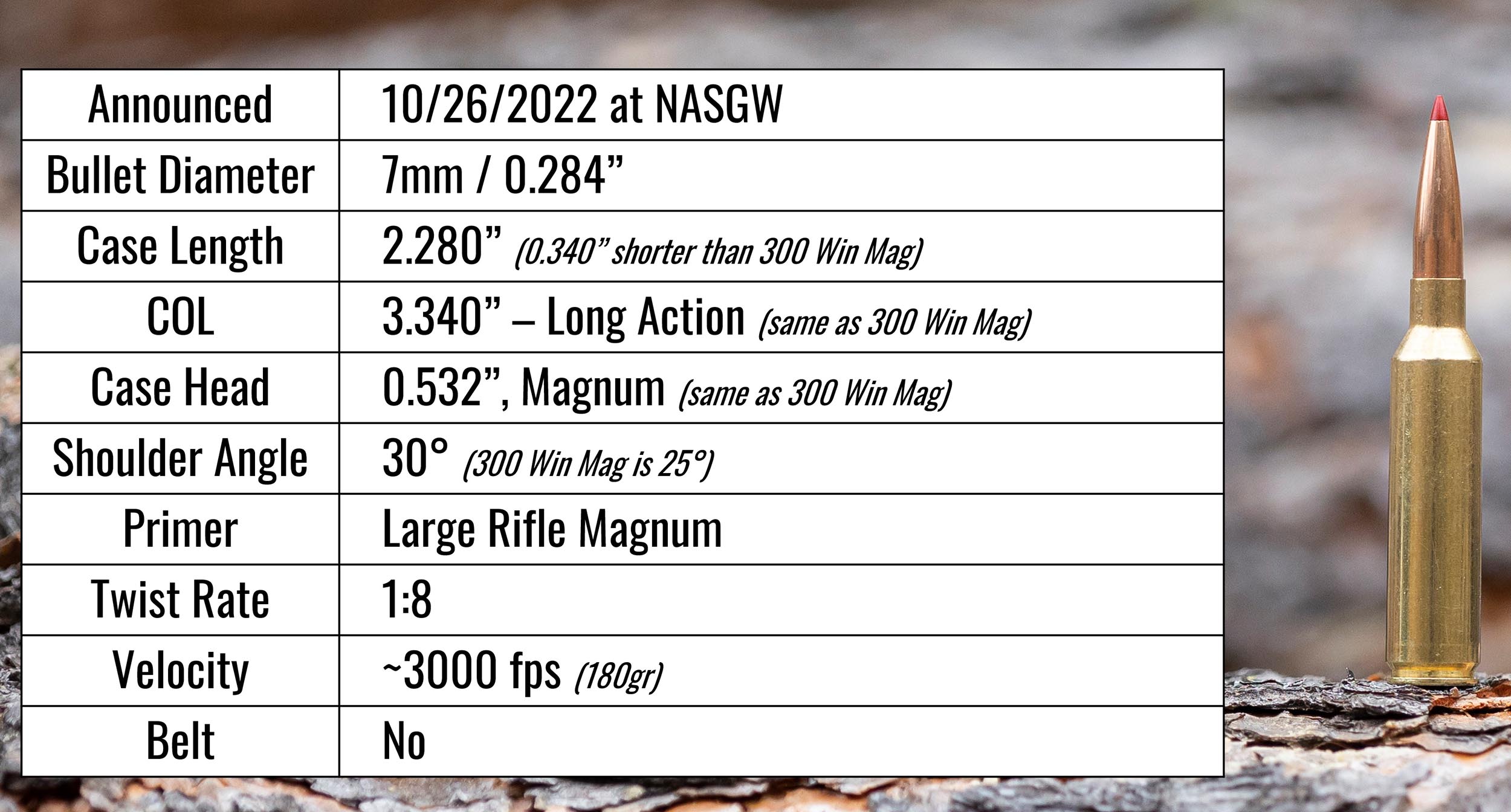
7mm PRC Quick Facts
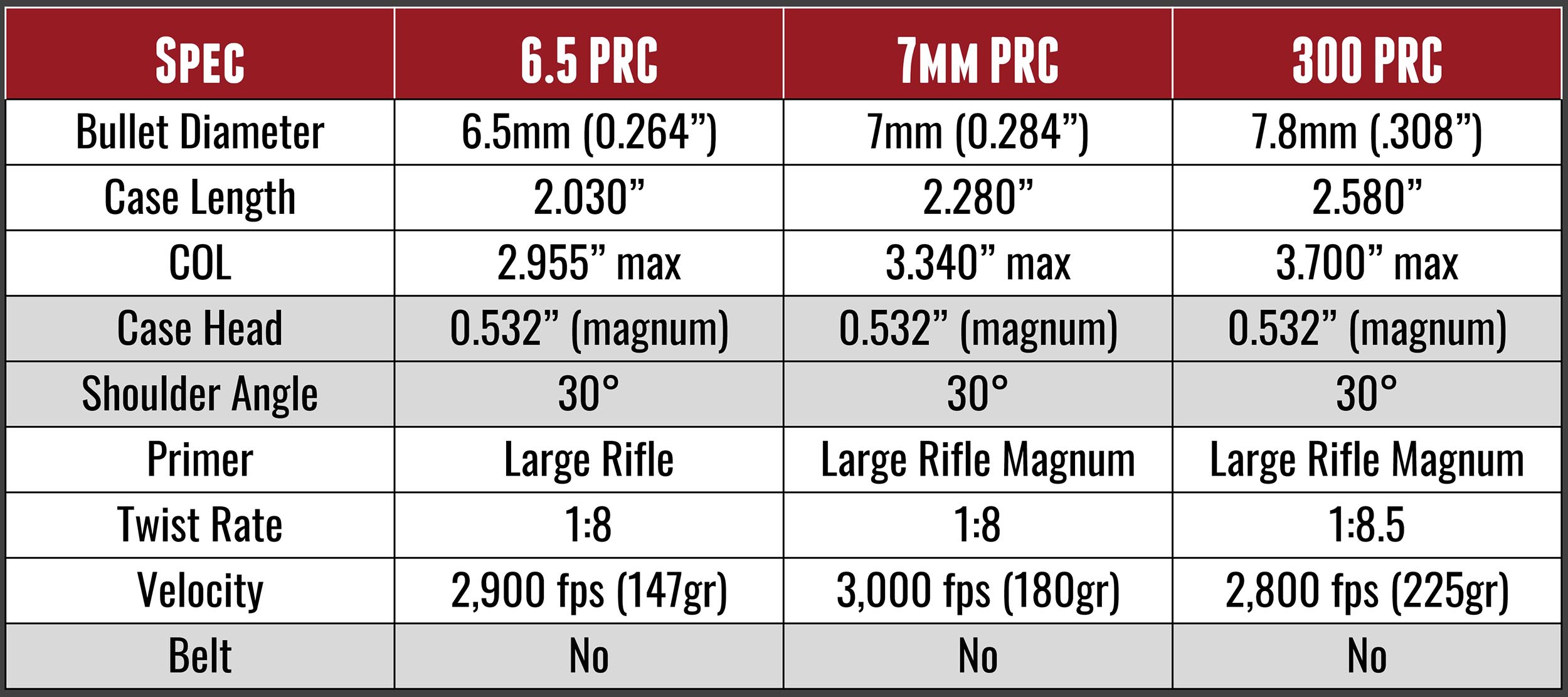
7mm PRC is its own cartridge, different from the 6.5 PRC and 300 PRC fundamentally. Here’s some quick specs:
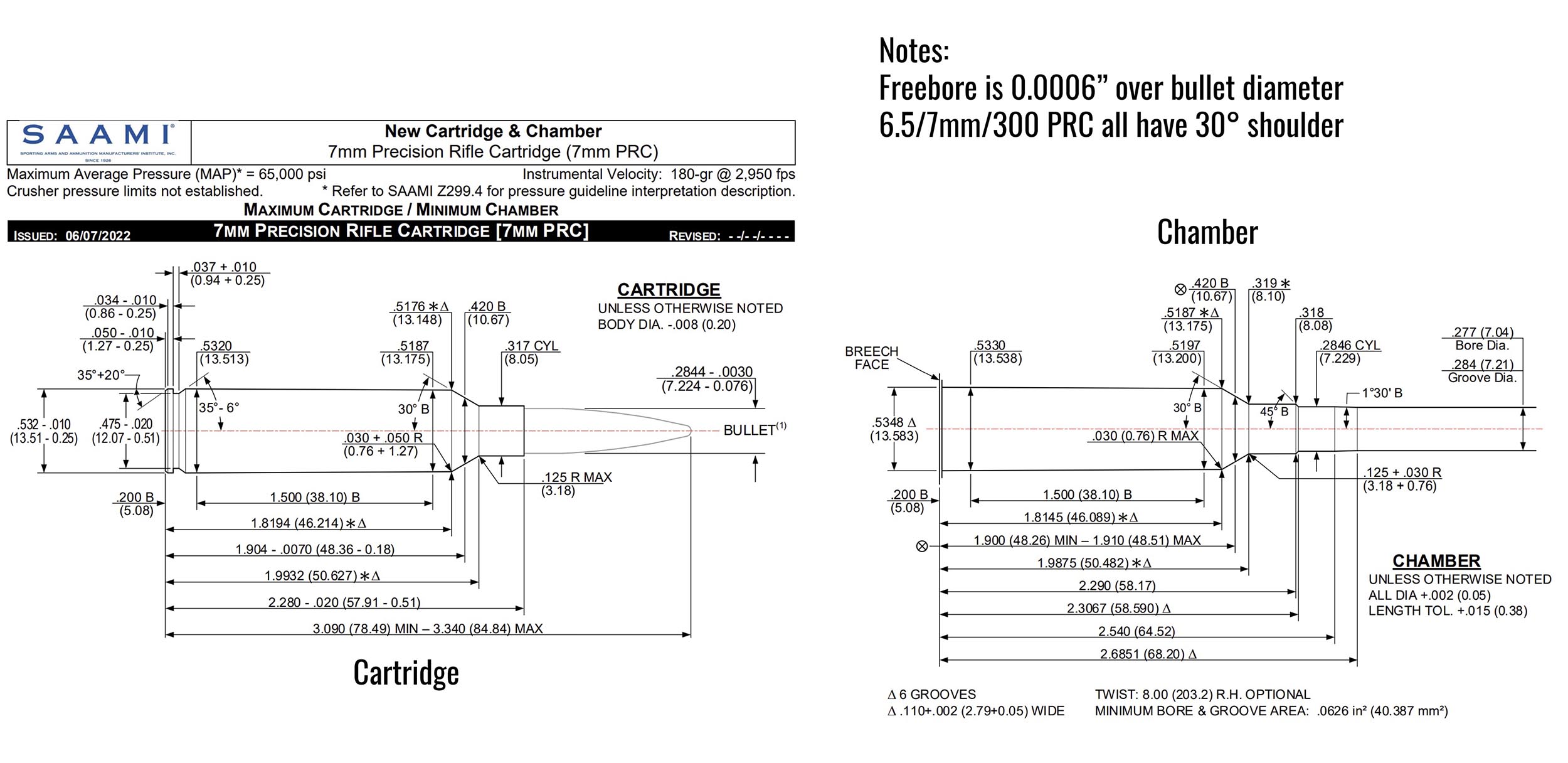
7mm PRC SAAMI Specs
On June 28, 2022 SAAMI officially released the specifications for the 7mm PRC which you can download HERE.
With a limit of 65,000 PSI, and compatibility with 300 Win Mag and similar rifle platforms (including magazines), the 7mm PRC has great power and flexibility. If you have a long action magnum rifle (with 0.532″ bolt face), upgrading to 7mm PRC is likely just a barrel change!
7mm PRC Bergara / Boyds Build Preview
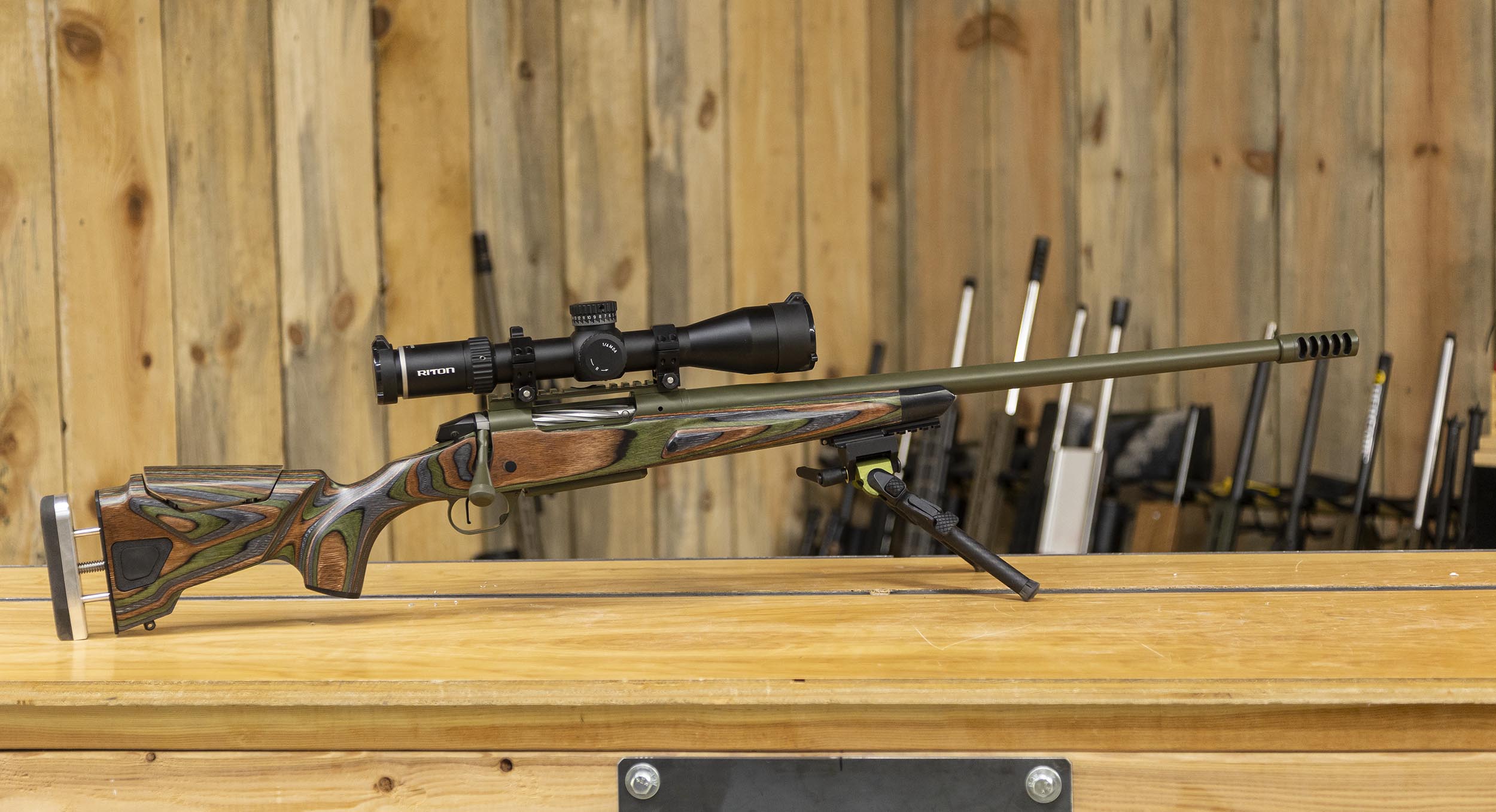
Rifle #1 for this project is built on the following:
Plus, a full Cerakote job on the barreled action. There will be a dedicated story on this build!
7mm PRC Bat / MDT “Freedom Rifle” Build Preview
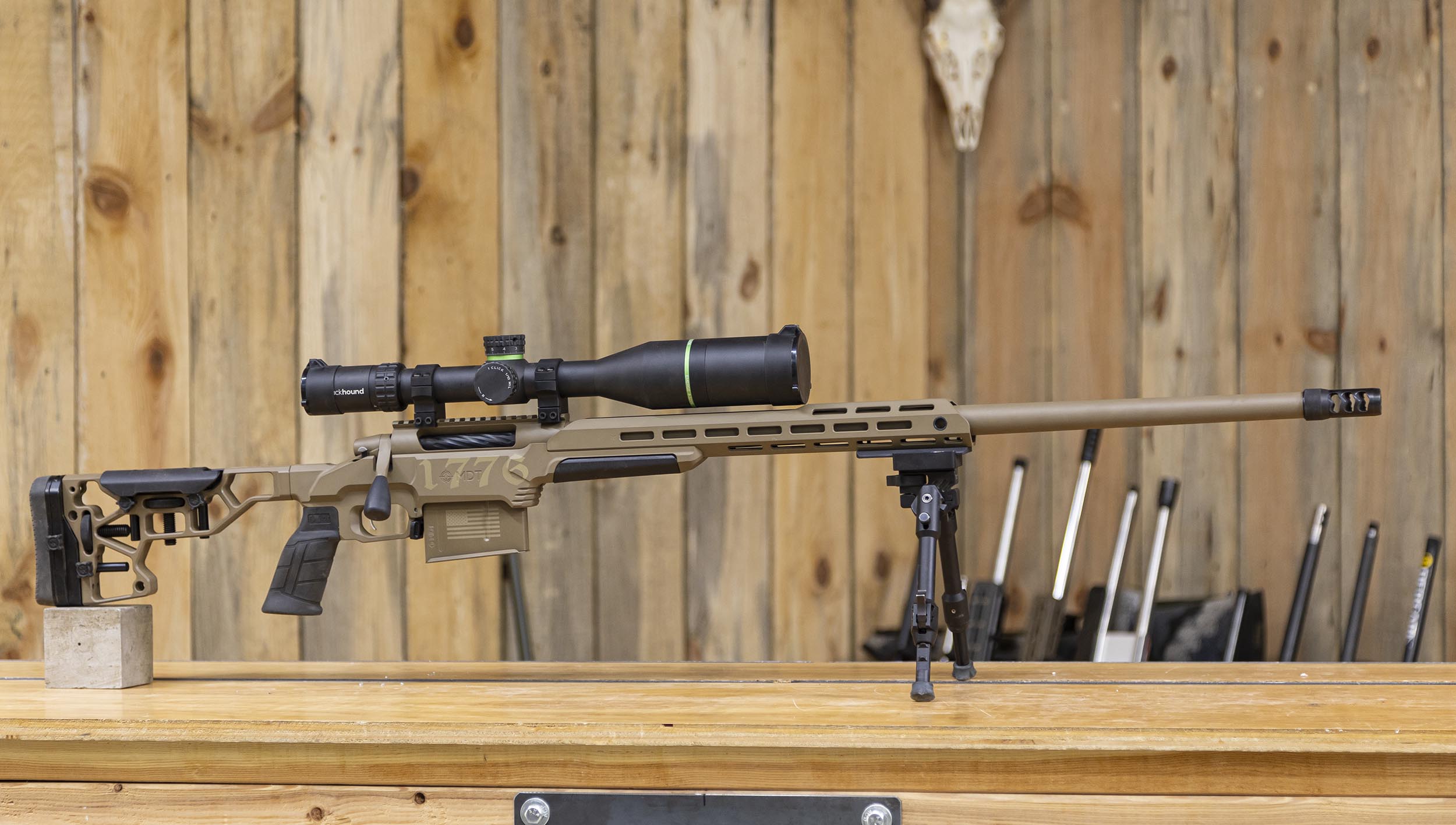
Rifle #2 for this project is a spare-no-expenses top-shelf build focused on long-range target shooting. Here’s what makes up this build:
Bat HR Action (LA)
Bartlein 7mm 5R Barrel Blank 1:8
MDT ESS Chassis (With FDE + engraving on barreled action)
Blackhound Emerge 4-32x56mm Scope (MIL)
Like with the Bergara build, there will also be a dedicated story for this Bat/MDT build!
Quick Look: All Three PRCs Compared
The “Three PRCs” share a lot in common. All three of these magnums are serious long-range cartridges with 0.532″ case rims, 30° shoulders, and optimized around long, slender high-BC bullets. 6.5 PRC can fit in a short action, where 7mm PRC and 300 PRC both require a long action.
7mm PRC Ballistics
I was surprised at how well the 7mm PRC performs with ballistics!
PRC Reference Ballistics
For ballistic comparisons, the following were used as a baseline: (taken from SAAMI references)
6.5 PRC: 147gr @ 2,900 fps
7mm PRC: 180gr @ 3,000 fps
300 PRC: 225gr @ 2,800 fps
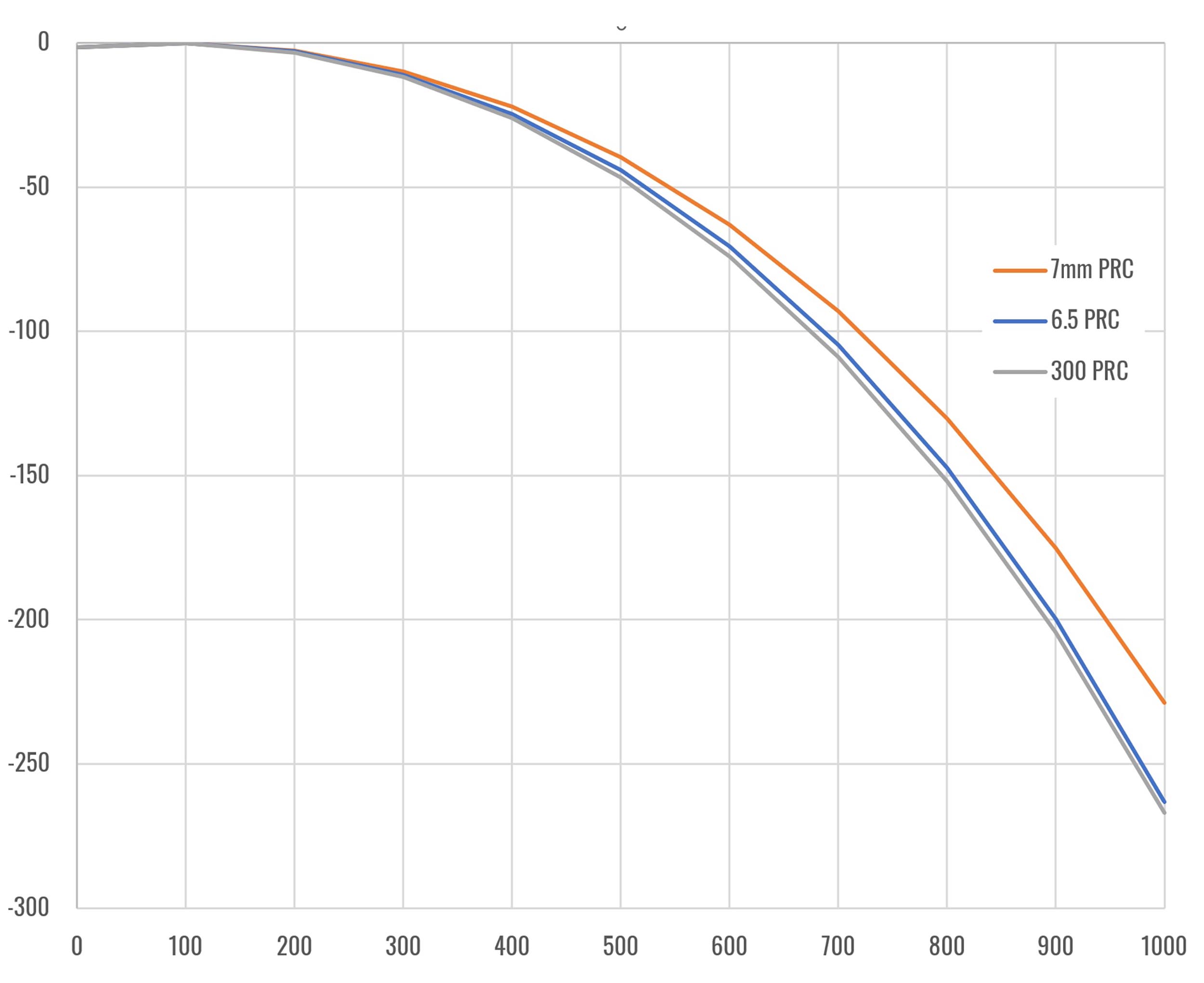
Drop Comparison: The Three PRCs
Can the 7mm PRC beat both the 6.5 PRC and the 300 PRC?
The answer is YES. Here’s the data for the above chart:
This was a bit of a surprise for me to find out!
Drop Comparison: 7mm PRC -vs- Popular Hunting Cartridges
While this is NOT an “Apples to Apples” comparison, I thought it would be interesting to compare 7mm PRC with other popular hunting cartridges for drop to 1,000 yards. Check this out:
All drop chart calculations were based on Hornady ELD-X bullets, using typical twist rate for guidance on bullet weight: (based on 100 yard zero)
You can see how well 7mm PRC does in terms of having a flat trajectory! Also, per our recent story, we showed that 30-06 and the 6.5 Creedmoor can share nearly the same trajectory!
Initial Testing Results
For testing, I only had two boxes of factory ammunition to start break-in on two rifles! One box of Hornady 7mm PRC 180 grain ELD-M Match ammunition, and one box of Hornady 7mm PRC 175 grain ELD-X Precision Hunter ammunition. So I kept shooting to a minimum as I wanted to keep some cartridges on hand for future reference. The initial results were GREAT.
First Break-In Group on Paper: Bat/MDT 7mm PRC “Freedom Rifle”
First Break-In Group on Paper: Bergara/Boyd’s Custom Rifle
Velocity Data Summary, All Testing
The following is a summary of velocity data collected during break-in (all in feet per second):
Here we see approximately 150 fps difference between the 22″ barreled Bergara, and the 28″ barreled Bat custom. Further data will be included in later stories when more shots can be fired (above data utilized 3-shot strings due to limited ammunition being available). This is some impressive performance!
Conclusion
The 7mm PRC brings a very well rounded new option to the table for both match/long-range shooters and for hunters as well. With a simplified beltless case, optimized case geometry, and Hornady’s industry-wide efforts bring this cartridge to market, don’t be surprised to see the 7mm PRC become one of the more popular new cartridges in the long-action class. I’m looking forward to bringing you many more stories featuring this great new cartridge.
Get the Gear
Bat HR Rifle Action
MDT ESS Chassis
Bergara Premier Long Action at Brownells
Boyd’s Agility Stock
Bartlein Barrels
Additional product links will be provided when available!
Don’t miss out on Ultimate Reloader updates, make sure you’re subscribed!
Explore dove hunting tactics, gear, seasons, and more in this complete guide to dove hunting
If you are new to wingshooting, then dove hunting is the perfect introduction for first-timers wanting to get into bird hunting. It lays the basic foundation for all the other upland disciplines. It’s a laid-back and enjoyable experience for beginners, and it’s a social hunting event. The action can go from zero to sixty in nothing flat.
Depending on where you live in the United States, the seasons and species for dove hunting fill up all 365 days a year offering a wide variety of situations and experiences to help fill the gaps of other bird hunting pursuits. From the iconic mourning dove, to the year round season of the invasive Eurasian collared dove the fun and food can be never-ending. To other less known species like the white-winged dove.
Dove hunting is as simplistic as you are going to get. The basic premise for dove hunting includes carrying a shotgun from a vehicle to a field, sit (bucket) or stand, wait for passing or decoying doves to fly close, and shoot. That, in a nutshell, is Dove Hunting 101. Just like in any type of hunting, there are those that go “all out” when dove hunting, but it is not necessary to do so. So, how do you get started?
Dove season dates and licenses
September 1st is the day that signals hunting season has begun! For a first-time dove hunter, the first thing at the top of the list should be to check season dates. Some states have an early and a late dove season. Being familiar with regulations is very important. Checking the state game and fish websites or visiting the local office should provide all the information needed. Most sites will also provide photos for proper dove identification.
Besides purchasing a regular hunting license, dove hunters are required by law to participate in the Harvest Information Program (HIP). This may require buying an additional permit or “stamp” if hunting migratory birds— dove, coot, rail, snipe, sandhill crane, waterfowl, and woodcock. Typically, the cost is only a couple of dollars. When the stamp is purchased, hunters will be asked to indicate which birds were hunted the previous year. At the end of the hunting season, HIP stamp purchasers will be randomly surveyed by the U.S. Fish and Wildlife Service. Responding to the survey provides important information for setting and justifying future migratory game bird seasons.
Choosing a shotgun for doves
Is there such a thing as a perfect shotgun for hunting doves? Maybe, but the truth is nearly any shotgun will work. If each hunter could draw up their ideal shotgun for dove hunting, you would get hundreds of different opinions, each one valid. Beginners shouldn’t allow themselves to get sucked into the “shotgun vortex” that defines what gun to use for dove hunting.
For the beginner, any shotgun that’s available will work. Most shotguns will be in the 12- or 20-gauge range. Whether owned or borrowed, these gauges will be the norm in most dove fields. Yes, once in the field, an array of shotguns will echo their presence—from hand-me down wooden pumps to slick black and camouflaged semi-autos, to single-shots and doubles, to over/unders and side-by-sides. Gauges will read like a ruler: 12-, 16-, 20- and 28-gauges and .410 caliber. All are great choices but the 28 and .410 are going to be carried by those with years of experience shooting grey rockets with little toy-like cartridges.
New dove hunters should be aware that repeating shotguns, which include both pump action and semi-automatic, have tubular magazines. These types of shotguns MUST be limited to holding only three shotshells (“plugged”) while dove hunting. Federal regulations require that when hunting migratory birds, the tubular magazine must have a plug inserted so that the total holding capacity of the shotgun does not exceed three shot-shells (one in the chamber, two in the magazine).
Beginners shouldn’t allow choosing a shotgun to be difficult. Use what you have or what you can get your hands on. As with learning anything new, ask a hunting mentor for assistance and advice.
READ: Choosing a Shotgun for Dove Hunting
Choosing ammunition and chokes for dove
If choosing a shotgun for dove hunting is confusing, then staring at all the variety of shotshells will send a new dove hunter into a frenzied panic. Take a deep breath and step back. Novice dove hunters will see an array of colorful cardboard ammo boxes adorned with artwork and photos of flying doves and with alluring words such as “dove” and “small” Game Loads.
READ: What Chokes and Shot Size to Use for Dove Hunting
Regardless of the temptation, beginners should stick to the most popular of the smaller shot sizes: 7, 7-1/2, or 8s. This range of shot is best suited for both early and late season doves. It doesn’t take a whole lot of pellets to bring down a dove, and smaller shot sizes offer more pellets down range. Because doves are fast flyers and tricky to hit, open shotgun chokes such as Improved Cylinder or Modified are recommended to allow the pellets to spread out and create a larger, more open pattern.
Dove hunters should pay attention to area rules and regulations pertaining to the type of shot allowed. While lead is still the most popular, shooters should check their respective state regulations. Many areas managed by the state require steel or other non-toxic shot (tungsten or bismuth) when dove hunting on public accessed lands.
READ: Why I Stopped Shooting Lead at Doves
Shooting skills are a factor for each dove hunter. Shooters should bring along more ammunition than they think they’ll need as September speedsters can prove even the most skilled wingshooter wrong.
Dove hunting clothing
Let’s be real: a pair of jeans (earth tones if possible) and a camo shirt will work. I know I may get some flack for saying that, but truth be told, khaki or brown pants paired with a green shirt or whatever camouflaged pattern of the day is can be worn effectively on a dove hunt. Dove hunters should find some type of camo or earth tone bird vest or wingshooters belt to carry the basic essentials such as ammo, doves, and water. Dove hunters should locate a good place to conceal themselves and wait until it’s time to pull the trigger. Enough said.
Where to dove hunt
Dove hunting is as simple as finding a location where doves are congregating and feeding. Harvested wheat stubble or corn silage fields, ponds with exposed banks and weed cover, and harvested sunflower fields are all excellent locations to target. Refer to state websites again and check for state-managed dove fields on publicly-accessible lands.
Read: How to Identify Mourning Dove Habitat
Basic dove hunting methods
Pass-shooting (shooting birds as they fly over) is probably the most common method of hunting doves. If hunting in the morning, dove hunters should set up no later than sunrise. Evening shooters will be most successful right before dusk. Both beginners and experienced dove hunters must resist the temptation to fire off rounds until doves cross into range. This means knowing the effective range of your choke. For most, that’s forty yards or less.
The other method is to use dove decoys to draw them in close for possible shots. Motion dove decoys are best, as movement lures doves in. Adding a few stationary decoys will add to the overall effectiveness.
READ: Duping Doves with Decoys – The Three D’s
For those that cannot sit still you can explore the idea of walking up doves while hunting.
Eating dove is delicious
For beginning dove hunters, whether it’s a small pile or a limit of grey birds, cooking up doves is the culmination of a successful hunt. The easiest way to savor those tasty doves is also the traditional way—wrap ’em up in bacon with a slice of jalapeño. As any dove hunter knows, there’s no greater mouth-watering delicacy!
To find our more about dove hunting on Project Upland check out the category: Dove Hunting
SUBSCRIBE to the AUDIO VERSION brought to us by: ESP – Digital Hearing Protectionfor FREE : Google | Apple | Spotify
Why I Stopped Shooting Lead at Doves
What Chokes and Shot Size to Use for Dove Hunting
Hunting Eurasian Collared-Dove in the Summers of the United States
Many anglers have a hard time telling saugeye apart from walleye, due to their very close resemblance.
However, it’s important to be able to tell the difference between walleye and saugeye, since the two species have different limits in most fisheries.
So if you don’t know what fish you’re holding in your hand, you can’t be sure if you’re allowed to keep it or not.
That’s why we put together this detailed guide on the primary differences between saugeye and walleye, to help you identify them easily on your next fishing trip.
What is a saugeye?
A saugeye is a hybrid resulting from a cross between a male sauger (Sander canadensis) and a female walleye (Sander vitreus). Saugeye closely resemble walleye, which can make it hard to identify them as hybrid walleye.
A study conducted in the Illinois River in 1995 showed that 4% of fish belonging to the genus Sander (ie., walleye, sauger, and saugeye) were saugeye. This suggests that hybridization between walleye and sauger happens quite frequently in the wild.
Saugeye occur naturally in many lakes and rivers in North America that have breeding populations of both walleye and sauger.
In addition to naturally occurring in these locations, saugeye are also stocked in increasing numbers of reservoirs in several states of the midwest, including Ohio and Kansas.
A key difference in biology between walleye and saugeye is that saugeye can thrive in reservoirs with turbid water, whereas walleye only thrive in clear water bodies.
Walleye vs saugeye identification guide
Saugeye have the same basic body shape as walleye, and can be hard to tell apart from walleye, especially if it’s not possible to compare both fish species side by side.
However, with a little practice, telling walleye apart from saugeye can become fairly easy.
The primary difference between saugeye and walleye is that saugeye have distinct dark blotches on their flanks, which extend well below the lateral line, while the dark blotches on the flanks of walleye are less distinct, and don’t extend below the lateral line.
In fact, the dark body markings of saugeye are actually more similar to those of sauger than walleye (more on that below).
A second difference between walleye and saugeye is that walleye have smooth cheeks with few scales on them, while saugeye have rough cheeks with many scales.
Finally, another difference is that walleye come with a white patch at the bottom of their tail fin, and saugeye usually don’t have this white patch on their caudal fin.
However, this difference is less reliable than the other two, as some saugeye do have a white patch on their tail fin that looks pretty similar to that of walleye.
How do you tell the difference between a saugeye and a sauger?
Next, let’s talk about the difference between saugeye and sauger (Sander canadensis), since you also need to be able to tell these two species apart in any water body where saugeye, walleye, and sauger co-occur.
Overall, sauger tend to be smaller and have a more slender body shape than saugeye. Also the body color of saugeye is generally of a lighter color than the body color of sauger.
The best way to tell sauger and saugeye apart is by examining their spiny dorsal fins (the first dorsal fin). While saugeye have a dark blotch at the base of their spiny dorsal fin, sauger do not.
In addition to this, sauger also have more distinct round dark spots covering the whole dorsal fin, while saugeye have less distinct black dots that are confined to the bottom part of the dorsal fin.
Key saugeye facts
Now let’s talk about the most important saugeye facts that are good to know.
Can saugeye reproduce?
Scientists originally thought that saugeye can’t reproduce (since most hybrid species are sterile). However, a study conducted in Tennessee in 2011 showed that saugeye can indeed reproduce with both saugeye and walleye.
Due to this revelation, saugeye are no longer stocked in bodies of water that have either native walleye or sauger populations, in order to avoid affecting the gene pool of the native species.
Instead, they are now only introduced into reservoirs where there is a minimal chance of mixing with either walleye or sauger populations.
Finally, even though saugeye are capable of reproducing, their reproductive success is not high enough to maintain a strong population without regular stocking efforts (due to a low survival rate of their offspring).
How big do saugeye get?
Saugeye can get as big as 30 inches long and reach a maximum weight of 14 pounds. However, fish this big are very rare, and their average size is much smaller.
Saugeye have an average length of 14 to 22 inches, and their average weight is 2 to 4 pounds. In other words, they generally tend to be smaller than walleye, but larger than sauger.
In some fisheries, it’s very rare to catch saugeye over 5 pounds, while double digit walleye are relatively common in most lakes where they occur.
What do saugeye eat?
Adult saugeye are predatory fish that feed primarily on smaller freshwater fish, including yellow perch, shad, and minnows. Similar to sauger and walleye, they also feed on invertebrates, including worms, leeches, and crayfish.
And while the diet of saugeye is very similar to that of walleye, saugeye tend to be more aggressive in their feeding behavior, which makes them easier to catch.
Where can you find saugeye?
Saugeye can be found in any lake or river that has breeding populations of both sauger and walleye.
Saugeye distribution map
The map above shows the distribution of saugeye in North America. They are mostly found in water bodies of the northern midwest.
In addition to naturally occurring in these locations, saugeye are also stocked in an increasing number of reservoirs in the midwest, especially in reservoirs where walleye stocking has been unsuccessful.
Why are saugeye stocked in some lakes?
Saugeye are stocked in reservoirs where walleye stocking has been unsuccessful. Walleye generally require a high degree of water clarity, and don’t do well in stained or turbid water bodies.
Saugeye, on the other hand, thrive in turbid waters, and have done very well in many of the water bodies into which they were introduced.
In addition to this, saugeye also feed much more aggressively than walleye, which makes them easier to catch. Saugeye also often feed in more shallow waters than walleye, which means you can readily catch them from shore.
Due to their advantages for sportfishing, saugeye have become increasingly popular among fishermen, and some anglers now prefer targeting saugeye over walleye. This has led to greater saugeye stocking efforts by several state authorities in the midwest.
Are saugeye good eating fish?
Yes, saugeye are very popular eating fish, and taste delicious. However, similar to other types of freshwater fish, the taste of saugeye can be negatively affected by its environment if it lives in a polluted water body.
What does saugeye taste like?
Saugeye has a delicate flavor that is similar to walleye, but slightly milder. Saugeye meat has a flaky consistency and comes with a mild flavor that has almost no fishy taste to it.
A great way to cook saugeye is by frying it, though baked and deep fried saugeye also tastes delicious.
Saugeye vs walleye taste compared
There are two camps on this topic: While many anglers claim that saugeye taste better than walleye, others say that both fish taste the same.
A friend of mine once did a blind taste test where he asked a group of his friends to taste both saugeye and walleye that had been caught in the same lake, and that were freshly prepared. The guests did not know which was which.
Most of his friends expressed a preference for saugeye over walleye, which would suggest that under the right circumstances, saugeye can indeed taste better than walleye.
Saugeye fishing tips
In general, most methods that work for walleye fishing also work for saugeye. However, since they feed more aggressively than walleye, saugeye fishing is generally easier than targeting walleye.
That means you can catch saugeye with many different artificial lures or natural baits, and with a wide variety of fishing tactics. And since saugeye are less finicky than walleye, you’ll need to spend less time worrying about finesse applications to entice shy fish to bite.
Personally, I like to fish for saugeye with jigs, soft plastics, or live bait rigged with a slip bobber. In the most productive fisheries, it’s not uncommon for anglers to catch bags of more than 20 saugeye per day.
When fishing for saugeye, keep in mind that they stay very close to the bottom, and don’t suspend higher in the water column (which walleye like to do sometimes).
If you find a productive saugeye location, mark it with a waypoint, as you’ll probably be able to find saugeye there again on your next fishing trip.
What is the best time to catch saugeye?
Since saugeye are most active around dusk and dawn, these are the best times to catch them. However, saugeye also feed intermittently throughout the whole day, which means you can get lucky at other times as well.
During spring and summer, saugeye often hunt in very shallow water, and can be caught just a few feet away from the bank in 2 or 3 feet of water. This distinguishes them from walleye, which generally prefer deeper water.
"Unleash the Power: Mastering Break Barrel Air Rifles for Maximum Performance. Discover expert tips and techniques to enhance the power and precision of your...