I don’t know how much you paid for your antique duck decoy, but you’re about to be frazzled by how much people have paid for them in the past.
These aren’t out-of-the-packaging duck decoys (and some are not even decoy ducks), but they all have one thing in common: they cost a ton of money.
Over the last few decades, we’ve seen some of the most expensive duck decoys ever sold, and the details are quite interesting.
Vintage duck decoys can be ridiculously expensive. Does this make them more usable or viable than inexpensive, brand-new models?
Not necessarily, but you have to understand that black duck hunting is a pastime. It’s a rite of passage for a lot of young men.
You incorporate it into your life, and other eccentric duck hunters with deep pockets will stop at nothing to claim some of the most coveted factory-made decoys in history.
If you’d like to see a graphical breakdown of expensive wooden decoys, we got you covered:
1. The Crowell Bundle
I’m calling it this because two decoys were sold together for a whopping $1,130,000.
On record, this is the most expensive decoy purchase to date, but it comes with some interesting and unique details.
If you didn’t know, A. Elmer Crowell was a Massachusetts native, who had an eye for carving.
Some people pick up carving vintage or whittling as a hobby, but this man did it so excessively that his work is still revered over a century later.
He began carving vintage and selling his decoys in 1912, up until his passing in 1952, and as we all know, dead artists can make a ton of money.
And that’s what it was: art. Crowell put so much detail into these decoys, that they were picked up by the Fine Arts of Boston (though the timeline is unclear).
They held onto these until their value escalated. In 2007, his pintail drake and Canada goose decoys sold as a bundle.
We know the amount, and the date, but the buyer went completely undisclosed.
The reason these were so expensive is that they were some of Crowell’s first documented decoys.
They were carved sometime around 1915-1917, shortly after he began carving and have held their aesthetics and shape for over a century.
It’s believed that this is because America’s history continues to go on and on. Even though we’re a relatively young country, our rich heritage becomes valuable at an accelerated rate.
It’s like having a piece of history, from your favorite thing, sitting right on a shelf somewhere.
We’re giving Crowell his dues here, and while he isn’t included further down the list since we’ve already mentioned him, it’s important to state that this 1.13 million dollar purchase for two decoys was actually part of a large sale of 31 Crowell decoys, which in total ended up costing about $7,500,000.
2. Red-Breasted Merganser Hen Carving, by Lothrop Holmes
Crowell has been the only one to fetch over a million for a decoy purchase, but that was a pair even then.
An inseparable pair, but more than just a single decoy.
The individual most expensive decoy actually belongs to Lothrop Holmes, but since it was still purchased for a lower denomination, it comes in at number two.
This wooden hen sold for an insane $856,000 and held a record as the most expensive decoy sale for quite some time.
Much like Crowell, Lothrop Holmes actually came from Massachusetts as well, where duck hunting was a common sport.
Lothrop didn’t start out with decoys; it was more of a side hobby that later turned into a career.
Holmes spent his time as a ship’s carpenter for years, which allowed him to grow his proficiency in woodworking.
I’m not mentioning the same creators over and over again, so for the sake of transparency, it’s also important to note that Lothrop’s Ruddy Turnstone sold for $470,000 back in 2000.
3. The Eider Drake Decoy On Monhegan Island
We’re still in New England guys, but this time we’re in Maine.
There’s a ton of mystery shrouding The Eider Drake because even to this day, I can’t credit the original manufacturer.
Truth is, nobody has a definitive answer on that, and we likely never will.
It’s a fetching decoy, but nothing like Crowell or Holmes could make, yet it still sold for a hefty price tag of $767,000 back in 2014. You may recognize it as being the center of the James McCleery collection until it was eventually sold.
Recent research points to a man by the name of Eben Weed being the original creator of this decoy, but some of the evidence is inconclusive.
4. Unattributed Slot Neck Canada Goose Decoy
Because most duck decoys of merit were made in the 1830s to the 1880s, documentation (especially for a hobby) was largely unavailable.
Much like The Eider Drake, this remains unattributed but without potential leads as well, really leaving us all in the dark.
This brought in $553,600 back in 2007 when it was sold by Guyette, Schmidt, and Deeter.
It’s fetching, and for its time, it shows a great level of attention to detail with the colors and shades.
5. The Wilson Merganser Drake Duck Decoy
Gus Wilson may not be the first name that comes to mind when you think of famous decoy designers, but he’s one of the most recent record-holders for duck decoy sales.
This decoy was purchased in 2017, whereas most of the others on this list were bought about a decade ago or longer.
Wilson’s decoy pulled in $330,000, partially because he didn’t make a lot of decoys.
Of the ones that he did make that we’re aware of, their beaks weren’t the best.
Many of them snapped off and were replaced, but this one hit such a high price point because the original beak is still completely intact.
6. The Lincoln Hisser
When it comes to expensive duck decoys, Joe Lincoln is a name that often comes up. He made one of the most realistic goose decoys out there, showing a Canada goose in mid-motion that really makes it look like they’re scurrying along the water while the decoy bobs.
It was the highest ticket item at an $800,000 auction, bringing in $299,000 individually, which greatly surpassed the average for the dozens of other items in the auction.
Joe Lincoln painted decoys well into his 70s and remains an underdog in the decoy world.
7. Graves Mallards
It’s nothing compared to some of these world-famous decoys, but the Graves Mallards brought in $218,500 at another G&S auction.
It was one of the largest amounts of money they made at their 2006 auction.
Bert Graves was a more recent carver than Crowell or Holmes because he made his last decoy in 1956.
For once, we’re not in New England with this origin story, either; Bert is actually from Peoria, IL, and has set the scene for high-quality duck decoys ever since.
8. The Blair Mallard
John Blair was another small-timer in the decoy world, but his ability to carve a fantastic mallard earned him a top spot in the record books.
This simple mallard has an excellent definition, which is part of the reason that it fetched $214,000 and is considered one of the most valuable decoys.
Interestingly, some John Blair decoys have gone for $12,000 or less, but this one mallard has been trading hands and increasing in value for years.
John Blair was a PA native and spent most of his time outdoors when he wasn’t carving duck decoys.
9. Thomas Chambers Simple Wood Duck
It’s simply called a wood duck, but this Thomas Chambers decoy sold for a decent price at $187,000 back in 2004.
Chambers is the only one on this list who wasn’t American-born. Instead, he hailed from Ontario, Canada.
Like many others on this list, he lived until the 1940s but didn’t enjoy much of his work being sold.
To date, he’s reined in close to seven figures from beyond the grave in duck decoy auction sales.
10. Cobb Brant Mallard
Quite simply put, Cobb Brant was one of the oldest duck decoy crafters out there, being born in 1825, but his work still didn’t gain quite the necessary amount of recognition that his peers did.
Still, he brought in $168,000 almost a century later for this single duck decoy.
There’s not a ton of information available on Brant. Though much of his earlier years aren’t recorded, he lived a simple life.
11. Bernie Madoff’s Decoy
The guy we all know and hate. Bernie Madoff might just go down as this century’s biggest American villain, but his decoy fetched a rather handsome amount of money during the auctioning of his estate.
While it’s nothing compared to Crowell, Madoff’s decoy sold $4,750 at auction.
However, as these terms are often interchangeable, it’s important to note that this decoy was actually a structure, not just a carving or decoy duck.
This fact sheet serves as a reference for the safe preservation of venison, defined by United States Department of Agriculture (USDA) as meat from deer, elk, moose, caribou, antelope, and pronghorn. Venison is typically a very lean meat and may contain a “gamey” flavor. Because wild game is more active, it may be less tender, and the fat may have an unpleasant taste, which you may want to remove before storage or use.
Food Safety Concerns During Harvest and Transport
Proper field dressing of wild game, such as deer, is the first step in reducing the risk of food borne illnesses caused by pathogens such as E.coli, Salmonella, and Toxoplasma. E.coli, for example, is found in the intestines of wild game and can be easily transferred to the meat during butchering.
Also be aware that parasites and tapeworms are commonly present in wild game. One common parasite is Toxoplasma gondii, the cause of the disease toxoplasmosis. Symptoms of illnesses caused from consuming parasites can range from mild discomfort to severe illness and possibly death.
Considerations
How do I keep the unprocessed venison safe?
Planning ahead is the key to having a safe meat supply. Here are a few things to consider before the hunt to make sure that your meat is properly cared for.
Time/temperature on the day of the hunt: During warm hunting seasons (over 40 F), meat will need to be chilled within three to four hours of the kill. Refrigerate as soon as possible for best quality. Freezing the carcass may cause the meat to toughen. Cool the meat quickly by filling the cavity with bags of ice. Keep meat in the shade with good air circulation. Use of ground pepper and cheesecloth to cover the meat can help with deterring flies. DO NOT use tarps or wrap tightly in material that would hold heat which could cause the meat to spoil.
Transporting the meat: Wrap the carcass in a clean sheet but do not tie to the hood of a car or keep in the trunk. Keep the meat cool until processed and out of direct sunlight while allowing for good air circulation.
Aging the Meat: The process used to tenderize and enhance the flavor of venison is called aging the meat. Temperatures must be controlled between 34 F and 37 F from seven to 14 days for the process. DO NOT AGE meat harvested during warm weather and not chilled, as the meat is not safe for human consumption. If the animal was severely stressed prior to the kill, if gunshot wound was extensive, or if under one year of age, the quantity of usable meat will be reduced.
Other Safety Precautions
The Centers for Disease Control recommend that “hunters should avoid eating meat from deer and elk that look sick or test positive for chronic wasting disease.” Some symptoms of chronic wasting disease include loss of body condition, listlessness, blank facial expression, excessive salivation, and drooling. If you suspect the deer is unhealthy, check with the local game warden or a commercial venison processor to determine if the meat is safe to consume.
Parasites and tapeworms are common in venison. Freezing for 24-48 hours prior or cooking to internal temperature of 160 F will destroy parasites. If you are planning to pressure process the meat, both raw pack and hot pack methods will safely destroy parasites.
Field Dressing
Have questions on how to safely field dress an animal? The Ohio Department of Natural Resources publication “Field Dressing Your Deer,” (ODNR #111) wildlife.ohiodnr.gov/portals/wildlife/pdfs/publications/hunting/pub111.pdf provides a step-by-step guide for safely handling venison once the animal has been harvested. It also addresses aging the meat and how to create various cuts of meat. You may decide the simplest and safest way for you to handle the previously listed food safety concerns is to have the venison commercially processed at a licensed meat processing facility.
Preparation of the Meat for Long-Term Storage
In order to reduce the wild game taste of the meat you may want to try one of these two methods.
Soak the meat in salt-water brine made using 1 tablespoon of salt per quart of cold water.
Soak the meat in a vinegar solution made using 1 cup of white vinegar per quart of cold water.
Regardless of which brine solution you choose, soak the meat for at least one hour to overnight in the refrigerator. Meat needs to be completely covered with the solution. Discard solution after soaking.
Storing Raw Venison
If you decide to home process the venison, whole cuts of venison may be stored in the refrigerator for three to five days (at 40 F or below) before canning or freezing. Ground venison may be stored in the refrigerator for one to two days (at 40 F or below) before canning or freezing.
Food Safety Concerns During Processing
Clostridium botulinum (C. botulinum) bacteria grow in a reduced-oxygen environment. Precautions need to be taken regardless of whether you are vacuum-sealing venison for freezing or canning venison, since both of these methods provide part of the conditions needed for pathogen growth.
Freezing venison in vacuum-sealed packaging increases the risk of C. botulinum growth when thawing the meat. Be sure to use one of the approved methods of thawing such as thawing in the refrigerator, thawing in the microwave and then immediately cooking, or thawing as a part of the cooking process. Be sure to remove venison from the packaging prior to thawing it in the refrigerator or microwave.
When canning venison (or any other food product) it is important to make sure the canner is operated correctly and has been tested for accuracy. Because venison is a low-acid meat, it must be processed in a pressure canner. If the canner is not functioning correctly, it may result in an under-processed product which has an increased risk for C. botulinum.
Canning Venison
Venison must be processed in a pressure canner. For more information on pressure canning, refer to the “Canning Basics” fact sheet at ohioline.osu.edu/factsheet/HYG-5338.
Strips, Cubes, or Chunks
Choose quality chilled meat. Remove excess fat. Remove large bones. Cut into uniform strips, cubes, or chunks.
Hot Pack
Precook meat until rare by roasting, stewing, or browning in a small amount of fat. If desired, add 2 teaspoons of salt per quart to the jar. Fill jars with meat; add boiling broth, meat drippings, water or tomato juice, leaving 1 inch of headspace. The hot pack is preferred for best liquid cover and quality during storage. The natural amount of fat and juices in today’s leaner meat cuts are usually not enough to cover most of the meat in raw packs.
Raw Pack
If desired, add 2 teaspoons of salt per quart. Fill with raw meat pieces, leaving 1 inch of headspace. Do not add liquid. Adjust lids and process.
Ground or Chopped Meat
Choose quality chilled meat. Avoid flavoring sausage with sage; canning may cause a bitter, off-flavor. If desired, add 1 part high-quality pork fat to 3-4 parts venison before grinding. Shape chopped meat into patties or balls, or cut cased sausage into 3- to 4-inch links. Cook until lightly browned. Ground meat may be sautéed without shaping. Remove excess fat and fill jars. Add boiling meat broth, tomato juice, or water, leaving 1 inch of headspace. If desired, add 2 teaspoons of salt per quart. Adjust lids and process.
Table 2. Recommended Processing Times for VenisonStyle of PackJar SizeProcess Time (in minutes)Canner PressureDial GaugeWeighted Gauge0-2,000 ft.0-1,000 ft.1,000+ ft. Hot or Raw (strips, cubes or chunks of meat) Pints 75 11 lbs. 10 lbs. 15 lbs. Quarts 90 Hot (ground or chopped meat) Pints 75 11 lbs. 10 lbs. 15 lbs. Quarts 90 Note: Processing times will vary for elevations over 2,000 feet. See USDA Canning Guide for additional information: nchfp.uga.edu/publications/usda/GUIDE05_HomeCan_rev0715.pdf.
Freezing Venison
If not freezing immediately, the meat should be chilled without delay to 40 F or lower to prevent spoilage. Freeze meat using proper freezer wrapping materials (be sure freezer wrap is designed for freezing). Wrap meat tightly, pushing out as much air as possible. Consider packaging meat in portion control sizes to reduce waste. Freeze and store at 0 F or lower.
Deer, antelope, moose, and other large game can be handled for freezing like any other meats. Trim and discard bloodshot meat before freezing. Package the meat, seal, and freeze.
Storage Guidelines
Most cuts of venison may be stored for six to nine months in a freezer with the temperature at 0 F or below. Liver, heart, kidney, or tongue may be frozen for six months for best quality.
If interested in making jerky, please reference the fact sheet “Making Jerky” at ohioline.osu.edu/factsheet/hyg-5362.
Preparation of Work Area
Regular cleaning and sanitizing of the equipment, utensils, and work surfaces reduces the possibility of food contamination and the transmission of disease-causing organisms. Although cleaning removes the visible soil, sanitizing reduces the unseen microorganisms that might be present on cutting boards, countertops, knives, pans, and other equipment used for processing raw meats. They should be sanitized before use and allowed to air dry.
Both wood and plastic cutting boards can be used. Nonporous surfaces are easier to clean and sanitize. Wash them in hot, soapy water, scrubbing vigorously. Rinse with clear water, sanitize, and let air dry. When a cutting board becomes excessively scarred and difficult to clean, it should be discarded.
Chlorine bleach can be used to make a sanitizing solution for food-contact surfaces. Use standard chlorine bleach for this purpose rather than the scented varieties. For cleaning and sanitizing equipment and utensils:
Add 1 tablespoon of chlorine bleach to 1 gallon of water.
Add 1 teaspoon of chlorine bleach to 1 quart of water.
Change the bleach water solution often. Food particles will dilute the bleach.
Wash hands with warm, running water and soap. Hands should be washed for at least 20 seconds and dried with a single-use paper towel. Be sure to clean cuticles and fingernails, as these are places that are more difficult to clean. Jewelry should not be worn while butchering.
Cloths used for wiping down equipment and other surfaces should be wrung out frequently in a sanitizing solution and stored in the solution when not in use. Launder cleaning cloths daily or more, if necessary. Keep cloths used for food-contact surfaces separate from other cloths.
Additional Resources
The USDA Meat and Poultry Hotline is another resource if you have questions regarding food safety and storage of venison: fsis.usda.gov/food-safety/safe-food-handling-and-preparation/usda-meat-and-poultry-hotline.
Sources
Chronic Wasting Disease and Potential Transmission to Humans. (2004). Centers for Disease Control and Prevention, wwwnc.cdc.gov/eid/article/10/6/03-1082_article.
Complete Guide to Home Canning: Preparing and Canning Poultry, Red Meats, and Seafoods. (2015). U.S. Department of Agriculture, nchfp.uga.edu/publications/usda/GUIDE05_HomeCan_rev0715.pdf.
Field Dressing Your Deer. (2006). Ohio Department of Natural Resources, Publication #111, wildlife.ohiodnr.gov/portals/wildlife/pdfs/publications/hunting/pub111.pdf.
Game from Farm to Table. (2011). U.S. Department of Agriculture Food Safety and Inspection Service, s3.amazonaws.com/assets.cce.cornell.edu/attachments/19032/Game_from_Farm_to_Table.pdf?1481131140.
Goard, Linnette. (2015). ”Canning Meat, Poultry and Game.” Ohio State University Extension, ohioline.osu.edu/factsheet/HYG-5330.
Goard, Linnette. (2015). ”Freezing Meat, Poultry and Game,” Ohio State University Extension, ohioline.osu.edu/factsheet/HYG-5334.
Let’s Preserve Meat and Poultry (2015). Purdue Extension Health and Human Services, extension.purdue.edu/extmedia/HHS/HHS-801-W.pdf.
Parasites and Foodborne Illness. (2017). U.S. Department of Agriculture Food Safety and Inspection Service, fsis.usda.gov/food-safety/foodborne-illness-and-disease/pathogens/parasites-and-foodborne-illness.
Proper Field Dressing and Handling of Wild Game and Fish. (2011). Penn State University Extension, extension.psu.edu/proper-field-dressing-and-handling-of-wild-game-and-fish.
“Safe Handling of Wild Game Meats.” (2007, revised). Clemson Extension HGIC 3516, hgic.clemson.edu/factsheet/safe-handling-of-wild-game-meats.
Wild Game Meat. Illinois Department of Public Health.
Squirrel hunting can produce a substantial amount of extra meat for your dinner table, but once you have a squirrel in hand…how do you process it? Processing squirrel meat is a pretty simple process that requires just a little time and a sharp knife. As with anything that has been around as long as the processing wild game, there are several ways one can complete the task. For simplicity purposes we will examine just one, the one I use and find to be the simplest.
Before we begin processing the squirrel I’m going to assume a few things.
The squirrel has previously been skinned (field dressed) and all organs have been removed.
The feet on all legs, head and tail have been removed. If these are not completed, please do so before moving on.
If you were using a shotgun to get the squirrels, search the outer parts of the meat for pellets. There is nothing worse than chipping a tooth over dinner. Also, if the meat is bruised due to pellet or bullet penetration you may want to consider soaking the squirrel for a few hours (or overnight) in a solution of salt water. This usually “draws out” the bruising in the meat considerably well.
How to Process Squirrel Meat
Let’s begin:
Front Legs:
Cut from underneath the front leg (armpit area) in an upward motion severing the leg from the body. The socket where the front legs meet the shoulder isn’t very strong and should slice through rather easily. Repeat for other front leg.
Rear Legs:
Cut along the spine (tailbone) until you are able to “bend” the entire leg downward, breaking the socket loose, to remove the leg. Repeat for the other rear leg.
Another thing to do with the rear legs is to remove the small pocket of fatty tissue that is hidden below the surface of the meat, behind the knee. Slide the knife into the meat just enough to puncture it and dig the fatty tissue out. It isn’t a requirement to remove this but most people do so. Leaving it will not adversely affect the taste of the meat.
Torso:
Remove the “flappy skin” that covered the organ casing (belly meat) if you like. Some people choose to trip this meat from the rib cage down to the hip area while others keep it for the small amount of extra meat value. The choice is yours. I usually trim it if I’m going to fry the squirrel but if I use it for a stew or pull the meat from the bone, I’ll leave it attached.
Cut upward just below the bottom rib until you make contact with the backbone. Repeat for the opposite side. Grip the rib cage in one hand and the remaining bottom section in the other and twist. This will break the rib cage free for discarding (there is hardly any usable meat there). This will leave the area from just below the rib cage to the tailbone. Along the back is the loin area and can be cooked along with the legs.
Final
Lastly, remove the lower section of the tailbone (from the back section mentioned above) where no meat is present and discard the tailbone. You will now have all four legs and the back meat section to use for cooking, grilling or stews.
Note: Some people choose to soak the meat overnight in salt water or buttermilk. Some claim that this takes the “gamey” flavor out of the meat. I’ve tried this and do not notice a difference in taste. Plus, if you have an aversion to the flavor of squirrel…I have to ask…what are you doing reading this anyway?
Watch the video tutorial below:
How to preserve a squirrel hide
Preserving a squirrel hide acquired during squirrel hunting can be a fun activity for any young hunter. It can enable them to save their first squirrel or to learn about hiding preservation. Of course you have many other reasons to want to preserve a squirrel hide but before we begin, I must note that “preserving” a hide is different than “tanning” a hide. While Tanning leaves the hide soft and pliable, preserving it usually yields a much stiffer product. This stiffer product may not be as desirable, but with the only required chemical being table salt…many people prefer this method.
If you have a leftover hide from field dressing a previous squirrel, that will work fine but personally I like to get a better looking pelt by skinning it so that I have a much more complete and less damaged hide. Keep this in mind before skinning your squirrel, they way you clean it will determine how intact the hide will be.
Here’s what you’ll need:
Sharp knife
Large flat working surface or a sheet of plywood
Denatured alcohol
Non-iodized salt
Instructions:
Begin by slicing along the underside of the squirrel, from the chin to the anus. You only need to get under the skin so do not stick the knife in far or you risk opening the body cavity. The goal is to remove the skin, not disembowel the squirrel.
Once you have exposed much of the underside meat from the skin, work the skin free slowly and gently. It’s recommended to go ahead and remove the feet so that the legs can be pulled free of the skin. Leaving the feet attached risks allowing rot to take over and ruin your hide.
Split the underside of the tail slowly as you work out the tail. It’s difficult to get it 100{6eed75c7f8c195edd1162272d31c56c9d78bf8d95bfa341f234a4c2acf0cac3e} removed so if you are unable, stop at a reasonable spot and snap it off.
If you decide you want to keep the head on your hide you’re taking on the more difficult part of the skinning process. But with a little patient, you can do it. I choose to remove the head from the body (but not severed from the hide) and save this part for last, slowly work back the skin with your knife. Next, use a staple gun, tacks, small nails, etc to hold the hide open. I recommend taking it to a piece of plywood. Try to keep it on the very edge of the hide.
Add a generous amount of non-iodized salt to the hide, others have stated that regular table salt (with iodine in it works fine but I have not tested it). Be sure to get around the edges and make sure there are not any folds in the skin where the salt cannot reach. Work the salt into the head and tail.As you salt, remember this: Any unsalted spot is not protected and will rot!In a day or two the salt will become saturated or crusty with the moisture it has drawn out of the flesh. Scrape away the old salt and reapply a second generous layer. Allow the second layer of salt to remain for about ten to fourteen days.
To finish off the process, remove the salt and scrape away anything still remaining on the skin. Apply a small layer of Neatsfoot oil or other leather conditioner to give your pet some pliability. Allow it to absorb for a few hours then add another layer.
How to preserve a squirrel tail
Every hunter (squirrel hunters included) enjoys showing off their hunting prowess. Deer hunters often have a head or antlers mounted, fishermen sometimes have a nice size fish preserved and mounted on their wall. Squirrel hunters usually don’t have their squirrels taxidermied but often enough, we like to keep the tails so in this article we will see a simple way to preserve a squirrel tail.
When keeping tails as a record of your successful hunts there really isn’t too much involved in the preservation process. With some non-iodized salt, you can start collecting your squirrel tails as well.
Instructions:
Start with a pair of pliers and remove the bone. You can also try slicing down the tail to remove the bone but the pliers often remove it completely, reducing the chance of it rotting.
Once the bone has been removed, pour a generous amount of salt on the fleshy part of the tail (the inside). This is best done as soon as the bone is removed as some of the inside skin is exposed.
Turn it right-side-in again and pour some additional salt into it. Let this sit (on a flat surface) for at least 24 hours.
After 24 hours, wipe or scrape away the old salt and reapply another generous layer. Place it on a flat surface to dry for another couple days and the tail should stay preserved for many years.
How to Tan a Squirrel Hide
Squirrel hunting can provide many squirrel hides that can be turned into durable leather or made into nice decorative pieces in just a few simple steps. We will examine how to tan a squirrel hide in a simple and effective manner.
Squirrel pelts were traditionally used as a durable leather that had many uses, such as being sewn into patterns to make coats and other articles of clothing to keep our ancestors warm. Even though you can run down to the local Walmart store and buy a coat eliminating the NEED to tan a hide, the process of tanning a hide can still be an interesting and entertaining activity, even if it’s just done for fun.
Here’s What You’ll Need:
5-gallon bucket
Salt
Dull knife
Alum (tanning chemical, short for Aluminum) can be purchased many places, including Amazon.com. Do a quick Google search for a place that carries it near you.
Hide from a squirrel
Neat’s Foot Oil (purchased at any leather shop)
Instructions:
Prepare the pelt by scraping away as much visible meat and fleshy tissue as possible from the hairless underside of the hide. A dull knife is recommended, as it will scrape the hide without slicing through.
In a 5 gallon bucket, prepare a solution of salt water: 5 cups of salt to 1 gallon. Submerge the hide in the salt solution for a minimum of 24 hours. Remove and scrape away any remaining flesh and membrane that has come loose during the soaking process.
To prepare your tanning solution, begin with 2 lbs. of salt mixed into 4 gallons of water. You can reuse the same bucket as before. Stir it to dissolve the salt completely. In a separate container, mix 2 lbs. of alum in just enough water to dissolve and mix thoroughly. Add this to the salt mixture.
Place the scraped pelt into the tanning solution. Allow it to sit for 24 hours and stir it a minimum of two times during the tanning process.
Remove from the solution and rinse the entire pelt under clear running water. Hang the pelt outside with the fur side up, over a clothesline or railing out of direct sunlight. Let it hang for several days.
Rub the hide, back and forth, over a straight edge to soften the leather. A patio railings will work well for this process.
Work Neat’s Foot or other leather lubricants into the underside (leather) with your fingers to insure the tanned hide becomes both soft and pliable. Use a dog brush or other comb to work out any mats or tangles on the fur side of the hide.
Now you have your very own squirrel pelt. A set of them placed over the arms of your couch looks great!
Things to note:
The chemicals, salt and alum, are non-toxic to humans but should NOT be digested. Wear gloves and wash hands frequently. As always, you should read the product label before using any chemical.
This method can be used to tan almost any type of animal hide. Increase times and amounts of tanning solution for larger hides.
Squirrel hides can be frozen in the freezer until ready to tan if you choose to tan several at the same time.
Alum can usually be purchased at any pharmacy or drug store.
The tanned hide is NOT WATERPROOF. Exposing it to water can cause hair to fall out or the hide to stiffen. However this method is still good for preserving hides.
When it comes to Rocky Mountain bighorn sheep hunting, Montana should be on everyone’s radar. To many, drawing a Missouri Breaks sheep tag in units 482, 622, or 680 is at the very top of their hunting bucket list. Last year, 5,300 non-resident sheep applicants applied for a ram tag in one of the three famed units of the Missouri Breaks. Only four of them were successful in drawing a tag. Unit 482 is still going to give you your best chance at a 180″+ ram. Half of the rams harvested here in 2022 are estimated to have broken that mark, followed by 25% in 680 and 10% in 622.
Go on More Hunts with Better Information, Join Huntin’ Fool Today!
Unfortunately, the bighorn sheep hunts in the Breaks are not quite what they were four or five years ago. Some of the better genetics, especially for mass, are starting to be shot out. The drought over the past three years and the apocalyptic grasshopper hatch that came with it have severely reduced the amount of quality feed these rams need to thrive. These conditions have also contributed to lower lamb production, forcing FWP to reduce the number of ewe tags available in each of the Breaks units. Additionally, ram tags were cut in unit 482 from 20 to 15 in 2022, limiting non-residents to only one permit on this hunt. It’s not all doom and gloom in the Breaks, however, as precipitation levels are off to a great start in 2024. There were also at least one or two mid to upper 80s rams that are known to have made it through the season in each of the three units. The Breaks units are still going to give a hunter the best shot at a 190″ ram, hunters will just need to be good at judging and passing up rams if their goal is taking home a book ram.
Those hoping for better odds of hitting on a Montana bighorn sheep tag will need to consider looking past the Breaks units and instead focus on other second tier units that are available for non-residents. Excluding the unlimited hunts last year, 2,035 non-residents applied for ram tags in units other than the Breaks and four were successful in drawing their tag. For 2024, hunts in units 100, 102, 250, 380, and 423 will each be available for non-residents. On each of these hunts, beginning in early November, most of the rams will come down from their summer range in search of ewes. As the rut takes place, these sheep will stay in highly visible areas and offer a hunter a physically easier lower elevation hunt. The exception to this is in unit 423. The area where most of the sheep stage for the rut can’t be accessed by road. It’s also worth noting that less than 20 total sheep permits are being proposed in region one in 2024. This would mean that only one non-resident permit will be available between units 100 and 102, and when one non-resident is drawn for either unit, the non-resident draw will be shut down in the other.
Montana is the only state that offers over-the-counter bighorn sheep tags. This year, hunters can choose from five units – 300, 303, 500, 501, and 502. The tags must be purchased or applied for by May 1st. The odds of harvesting a ram are typically around 2%, but every year, some lucky hunters take rams home. Last year, eight hunters harvested rams in the unlimited areas. See the “Unlimited Bighorn Sheep” section for more information on all of the units and hunts.
For 2024, Montana has once again shuffled the units that non-residents are able to apply for, so be sure to look over our bighorn sheep table as we have included all non-resident sheep hunts available this fall. If you are a Montana resident and you would like to talk about the other units available to you, give us a call. Despite the long draw odds, anyone who wants a chance to hunt giant rams someday has to be applying in Montana!
Our Memberships Include The Most Accurate Draw Odds Available, Join Now!
Self Guided DIY Montana Bighorn Sheep Hunts
Over the last 20+ years, we’ve collected hunting research and data, so join Huntin’ Fool today and access the best research tools for hunting bighorn sheep in Montana, including 3D Maps, Draw Odds, Consultations, and much more. Go on more hunts with better information!
Private Land, Semi-Guided, and Guided Bighorn Sheep Hunts
Search our database for Montana Bighorn Sheep opportunities.
Application Deadline
The Montana Bighorn Sheep application deadline is May 1, 2024.
Our magazine, which is available in print and online, has everything in one location – application info, draw details and odds, fees, hunter requirements, point structure, age restrictions, youth information, weapon restrictions, other tag opportunities, hunt planning, and much more. If you would like access to all of our research join today!
Consult with Hunters Who Have Hunted in Your Unit, Join Now!
2024 MONTANA NON-RESIDENT FEES Up-Front Fees Base Hunting License $15 Conservation License $10 Bonus Points (optional/per species) $20 Sheep, Moose, Goat, and Bison Application Fee $50 Post Draw License Fees (if successful) Bighorn Sheep Permit $1,250 Bow and Arrow License (required for all archery hunts) $10 *Fees do not include the additional 2.5% convenience fee.
MT Bighorn Hunting Articles from Huntin’ Fool Magazine
Season’s eatings! The weather may be getting colder, but Dining Month on OnMilwaukee is just cooking up, dishing out your winning picks in this year’s Best of Dining poll. Dining Month is brought to you by Fein Brothers, your premier food service equipment and supply dealer in Wisconsin since 1929. Congratulations to all of the winners, and happy eating for all those who voted! See all the winners for the month so far here.
It was a gorgeous day for a hunt – to go out into nature, surround myself with the autumnal beauty of the Midwestern woods before taking my place as an apex predator on the top of the animal kingdom, using careful skill and prowess to find and shoot a deer, and then feast on the butchered fruits of my labor, filling myself with sustenance, a sense of accomplishment and a primal connection with the wild and humanity’s early ancestors.
But instead, I stopped by an Arby’s drive-thru and ordered one of their venison sandwiches with a large Dr. Pepper. Truly I felt dominion over God’s great creation.
Last fall, in its quest to live up to Ving Rhames’ beefy boast that WE HAVE THE MEATS, the fast food restaurant introduced a venison sandwich – a slab of deer steak topped with crispy onions and a juniper berry sauce – to a test-sample 17 locations in five particularly hunt-happy states. The meal (somehow not called the Bambi Burger) was a hit, reportedly selling out at several locations within hours, so a year later, Arby’s brought the deer dish back – this time at all of its restaurants. The only catch? It’s only available today, Saturday, Oct. 21.
So, around noon, I wheeled into a fairly quiet Arby’s drive-thru and ordered a venison sandwich meal, complete with a large drink and that all-important garnish for any respectable deer dish: curly fries.
After scarfing down a few of those salty spirals, I popped open the box for the main event and found myself face-to-face with an image somehow sadder than Bambi’s mom dying. The venison meat itself was a pallid grey burger – a distant far cry from the perfectly pink deer steak in the press photos. But whatever; if I cared that much about food presentation, I wouldn’t be eating a venison burger from the drive-thru home of the Meat Mountain.
However, the venison sandwich’s texture unfortunately tastes about as good as it looks. My first bite into the misshapen meat lump was mushy and mealy – chewy and moist not in a good way but in a “did somebody already gnaw on this and then put it between two buns?” way. And that’s not even including the unappealing vein of translucent gummy fat that treated me inside that initial bite.
Things got a little better for the venison when noshed with the rest of the toppings. The crispy onions were a little soggy, but still gave the sandwich at least a semblance of a textured crunch to fend off the meat’s mushiness, while the juniper berry sauce brought a nice tartness to the table. Sure, it was probably just tangy barbecue sauce, but the flavor was pleasant and played well with the mild, slightly garlicy gaminess of the meat. They all teamed up to make a sandwich I was technically able to finish – though I wasn’t happy about the experience at all.
So, naturally, I tried a second one.
I had originally bought a second sandwich for my girlfriend – more of a venison aficionado than yours truly – to try for herself. After one unimpressed bite, however, her sandwich quickly became my sandwich. Perfect, I thought; I could try another one to make sure my burger wasn’t just one fluky go-around. After one big bite into the heart of the sandwich resulted in a grossly fatty, chewy and sinewy chunk of gristly venison my teeth had to tug and tear away with a gag like Leonardo DiCaprio eating raw bison liver in “The Revenant,” however, my sandwich quickly became the garbage’s sandwich.
Here’s to Arby’s new elk sandwich – currently testing the waters with its own limited-time, one-day-only rollout in Colorado, Wyoming and Montana – faring better.
And if not, well, the curly fries are always good.
In this guide I’m going to show you the best varmint scope.
In fact:
These are the same scopes that many optic experts and competitive shooters use.
The best part?
I’ve sorted the scopes by use. So whether you’re on a budget or need a solid AR 15 varmint scope, you’ll find it here.
Let’s get started!
The 5 Best Varmint Scope
If you’re pressed on time, here’s a quick list of the best varmint scope:
Nightforce SHV 5-20×56: Best For AR-15
Leupold VX-3i 6.5-20×50: Best for 223
Vortex Crossfire II 6-18×44: Best For 17 HMR
Athlon Argos BTR 6-24×50: Best Varmint Scope for the Money
Sightron SIII SS 6-24×50: Best For 22-250
1. Nightforce SHV 5-20×56: Best For AR-15
Every once in a while a really high-end company will listen to the masses and make a product that’s top of the line while still being affordable.
This is one of those times.
Nightforce is well known as the pinnacle of high-end precision scopes.
Their scopes are so tough that one literally took a bullet through the scope in the middle of combat and it kept working.
That’s a level of quality you’re just not going to see on a budget scope.
The average firearm owner is finally in luck though, because Nightforce has released the Nightforce SHV.
This is the perfect AR-15 varmint scope.
It’s got all of the quality, most of the features, and it’s a third of the price.
Keep reading and I’ll tell you exactly why you need to add this scope to your collection.
Glass Clarity & Reticle
The glass on this lens is pristine.
The clarity even when cranked up to 20x power is unbelievable.
The FOV is huge and the edge to edge images have incredible color contrast.
I’ve used this scope to look out to 1,000 yards and I could still see everything clearly like it was right in front of me.
The glass is fully multi-coated and thanks to that it has super high light transmissions.
Whether you’re shooting in full daylight, dawn, dusk, or anywhere in between you’ll be able to see everything you’re aiming at.
The Nightforce SHV comes with an etched SFP MOAR reticle which you can choose to have illuminated or not.
You want the illuminated option.
Without it, you’re not going to be able to see at 20x power at dawn or dusk.
With it though, it makes sighting and zeroing a breeze.
Some people aren’t fans of the extra hash marks on the MOAR reticle, and if you’re one of them you can get an IHR reticle on it instead.
Either way, if you’re shooting in low light often get the illuminated reticle.
It eliminates distortion due to low light conditions and it’s gonna make your life easier.
Eye Relief & Eye Box
The eye relief is 3.15”-3.54”.
That’s pretty standard and works well for me on my AR.
If you’re looking for an option with a little more room, check out these AR scopes
It’s got a generous eye box and the turrets are extremely adjustable to make it work for you.
Add to that the fast focus eyepiece it comes with and you’ve got a great scope on your hands.
Durability
This thing is a beast.
At 29.1oz it’s absolutely massive, so you’ll want to take that into account if you’re going to be lugging it around.
On the other hand, it’s extremely durable.
It’s made of a solid 30mm piece of aircraft-grade aluminum that’s reinforced with hardened bronze throughout it.
The walls of the scope are also 3x thicker than any of its competitors which helps reduce stress and improves thermal stability.
On top of that, it’s water, fog, and shockproof.
Literally whatever you can think to throw at this scope it’ll be able to withstand.
I had a sling malfunction while hauling my rifle on a hunt and my rifle dropped and landed right on the scope.
It took no damage.
Not a scratch, not a ding or dent, and it still held it’s zero when I shot it afterward.
For me that more than made up for its weight.
Elevation & Windage Knobs
The turrets are capped and have metal dials that allow for fingertip adjustments.
They move easily and click audibly and keep their position when they’re supposed to.
It also comes with a zero-set feature that allows a quick return to zero.
It doesn’t matter how many elevation adjustments you’ve made, it’ll return to your initial zero in a snap.
It took me three shots to get it perfectly zeroed, and I’ve never had an issue with it since.
I’ve shot it from 100-600 yards and the return to zero was spot on each time.
Parallax & Magnification
The magnification range is 5-20x, and it’s got a 56mm objective lens.
It’s the perfect scope for any kind of hunting you want to do.
I’ve used it to pick off varmints on my land, to take down 8pt bucks, and for target practice.
The clarity is as perfect at 20x as it is at 5x, and I’ve never had an issue with tunneling like I have with other scopes.
This scope comes with a side parallax adjustment knob to manually fix any parallax you might encounter.
It starts at 25 yards and goes to infinity, and it’s clearly marked with the distances
Mounting & Rings
It doesn’t come with rings or a mount, so you’ll need to order one separately.
I decided to stick with Nightorce and picked up their 1.125 Titanium Alloy Ring Set and it’s worked great for me.
I’ve also recently discovered how great ghillie suits are when hunting, so check out these suits if you’re interested.
Is the Nightforce SHV 5-20×56 worth it?
Without a doubt.
This is an insane amount of quality and features at what is a steal of a price for Nightforce.
Let’s Review:
5-20x magnification
Water, fog, & shockproof
Super clear at every power
Illuminated MOAR or IHR reticle
Capped turrets and hugely adjustable knobs
Great for varmints, hunting, or target practice
Incredible durability with aircraft-grade aluminum & hardened bronze
On top of all that is the Nightforce transferable limited lifetime warranty.
This is an incredible scope from an incredible company.
Don’t just take my word for it though, check out the Nightforce SHV for yourself.
2. Leupold VX-3i 6.5-20×50: Best for 223
If you want a scope that pairs perfectly with your 223, the Leupold VX-3i is the best.
In fact, its low light capabilities make it one of the best scopes around for hunting.
It has quickly become one of my all time favorite scopes.
Want to know why? Keep reading.
Glass Clarity & Reticle
With this scope you get crystal clear glass for optimum clarity.
Leupold uses their own lens coating, called DiamondCoat2, that cuts back on glare, protects from scratches, and lets in tons of light! This, by itself, provides you with an amazing sight picture.
Plus, they have the Twilight Max Light Management system, which gives you better clarity at dawn, dusk, or any low light conditions. You’ll get an average of 20 extra minutes of hunting time at the beginning and end of the day.
While it’s not a night vision scope, it’s the closest you’ll get in a regular scope.
If that’s not enough, this scope has a Fine Duplex CDS reticle.
CDS stands for Custom Dial System. What this allows you to do is customize it to your weapon and ammo. Then it calculates ballistics and holdovers for you, which means long range shots just became a piece of cake!
The fine duplex draws your eye right to the center of the target with thicker edges that melt into fine lines at the center, making target acquisition fast and easy.
Eye Relief & Eye Box
The eye relief on this scope is 3.7 at high magnification and 4.5 at low magnification.
For the most part, I find this to be more than adequate, but it can be a little tight at those super long ranges. It’s easy to manage with a good cheek weld though.
The nice, wide field of view from the eyebox allows you to cover a larger area, which makes this a great 223 varmint scope.
Durability
Leupold makes scopes that are rugged and highly durable and the VX-3i is no exception.
In fact, Leupold puts all their scopes through 5000 impacts with their recoil simulation machine, aptly named the Punisher, to ensure that their scopes will survive anything you can throw at it.
The aircraft quality aluminum that this scope is made from keeps it lightweight, while also being tough as nails.
The VX-3i also has Leupold’s proprietary gas blend and seals that safeguard the scope from water and keep it from fogging up.
On top of that, Leupold offers a lifetime warranty on this scope, so if you have any problems, they’ll take care of it for you.
Elevation & Windage Knobs
The elevation and windage turrets are ¼ MOA precision finger clicks.
They are easy to adjust and you get audible, solid clicks each time. The numbers on the dials are pretty big too, so they’re easy to see even if your eyesight isn’t so great.
What about zeroing?
I had mine zeroed in just a few shots. It was quick and painless.
Not only that, I’ve easily shot over 5000 rounds and have yet to readjust the zero. It’s held true for me.
Parallax & Magnification
With this scope you’ll get a variable magnification of 6.5-20x.
If you’re like me, you use your 223 for varmint hunting, which makes this scope perfect for those intermediate to long range targets.
If you’re looking for something that will help you with short to medium ranges, check out this list of the best 1-6x scopes.
What I love most about the VX-3i is that it has a side focus parallax adjustment. It’s easy to use and means you’ll never have to worry about distortion.
Mounting & Rings
While this doesn’t come with any type of mount, it does come with a bikini lens cover.
However, I didn’t really like that cover much and ended up buying the Alumina flip cover instead. It works much better and is easier to use.
For the mount, I purchased these Leupold Savage rings, but you can get whichever rings you prefer as long as they’re 30mm.
Is the Leupold VX-3i 6.5-20×50 worth it?
Varmint hunting with a 223 at dusk and dawn has never been easier than with this scope.
It has:
Clear glass
DiamondCoat2
Fine Duplex CDS reticle
Precision ¼ MOA turrets
6.5-20x variable magnification
Rugged, light-weight, durability
Side focus parallax adjustment
Twilight Max Light Management System
If you’re looking for the best scope for your 223, try the Leupold VX-3i 6.5-20×50. You won’t be disappointed.
3. Vortex Crossfire II 6-18×44: Best For 17 HMR
I don’t always use an HMR rifle, but it’s perfect for getting rid of varmints on my property.
In that case, I’m not going to use just any scope.
I want a 17 HMR scope that’s going to work perfectly with my HMR.
If you’re looking for something with more power check out these Ruger scopes.
But if you’re just wanting to do some close to mid-range hunting, then that’s where the Vortex Crossfire II comes in.
It’s a redesigned version of Vortex’s best selling rifle and you can pick it up for an incredible price.
The original was fantastic, but somehow they’ve managed to improve it even more.
Keep reading and I’ll tell you why the Vortex Crossfire II is the perfect scope for you.
Glass Clarity & Reticle
The lenses are fully multi-coated with an anti-reflective coating which gives you great light transmission and clarity.
That means this scope is perfect for low-light shooting and for catching varmints just before dawn.
It’s not the clearest glass on the market, but to find anything comparable you’ll be paying at least twice the amount.
For the insanely low price though the clarity and glass are pretty darn great.
I was able to shoot a coyote at 300 yards and it felt like it was only 50 yards away.
Once you start getting past 700 yards or so though tunneling became an issue for me.
I was able to adjust it, but it was still noticeable.
In short, use it for close to mid-range shooting and it’ll treat you right.
If you’re looking for a long-range scope, check out these scout scopes instead.
It comes with an illuminated Dead-Hold BDC reticle, which is fantastic once you get used to it.
It’s great for experienced shooters as it helps eliminate guesswork from holdover and windage corrections.
If you’re new to shooting, you may want to stick with a more basic reticle.
Eye Relief & Eye Box
The eye relief is 3.7-4.4”.
That’s perfect for most rifles, and I found it incredibly comfortable.
Combined with the fast-focus eyepiece and the generous eye box, I had no issues easily acquiring my targets.
Durability
This scope is made of a single solid piece of aircraft-grade aluminum which makes it incredibly durable.
I dropped it out of a blind one day on accident and I just knew it was gonna be wrecked.
When I retrieved it not only was it still intact and functioning, but it still held my zero perfectly.
It’s fog and shockproof, plus it’s nitrogen purged and O-ring sealed.
That means it’s 100% waterproof in any environment.
Vortex is known for the incredible durability of their scopes, and they back it with a lifetime warranty.
At this price, you’re not going to find another scope that’s anywhere close to this level of quality.
Elevation & Windage Knobs
The ¼ MOA turrets are capped and finger adjustable, so you don’t need any tools to get the job done.
They audibly click and easily reset to zero.
It only took me 3 shots to zero it, and it’s held that zero for over 500 rounds now.
Parallax & Magnification
It’s got a 6-18x magnification range with a 44mm objective lens.
The magnification changes are smooth and there are tons of adjustments you can make.
The Vortex Crossfire II comes with a parallax adjustment knob that starts at 10 yds and goes to infinity.
The tunneling I mentioned earlier at higher mags was easily and quickly fixed with that feature.
Mounting & Rings
No mounts or rings are included, so you’ll need to buy them.
I use the Game Reaper Marlin Medium Mount and it’s worked perfectly for me.
Is the Vortex Crossfire II 6-18×44 worth it?
For the price, there’s no other scope on the market that comes close.
When you factor in all its great features this scope is a steal.
Let’s look at the best features again:
6-18x mag
3.7-4.4” eye relief
Incredible durability
Water, fog, shockproof
Illuminated Dead-Hold BDC reticle
Fully multi-coated, anti-reflective lenses
Finger adjustable ¼ MOA capped turrets
As if all of that weren’t great enough, Vortex adds their amazing Lifetime Warranty.
If anything ever happens to your scope they’ll replace or repair it.
That’s a pretty solid statement for a company to put behind their products.
Go look at it for yourself. Check out the Vortex Crossfire II here.
4. Athlon Argos BTR 6-24×50: Best Varmint Scope for the Money
The Athlon Argos BTR 6-24×50 is the best budget friendly scope for varmint hunting.
In fact:
I bought this scope in a hurry because I needed something affordable and effective for hunting coyotes. Now it’s my go-to for varmint my ar 15.
Here’s why it works…
Glass Clarity & Reticle
For a sub-$400 optic, I wasn’t expecting much. But when I mounted it on my AR, I was blown away.
The glass is clear and crisp with plenty of light.
That glass quality struggled at higher magnifications (18x-24x), but only in comparison to top dollar scopes. For $300, I can’t complain.
The lenses are fully multicoated to reduce reflected light so no more worrying about advertising your position. The coating also increases light transmission which gives the optic its crisp image.
I went with the APMR MIL etched reticle. It’s also available in MOA.
The reason why I like this Christmas tree design is because it has a lot of windage and elevation lines. I don’t particularly like relying on turrets to line up my shots at distances out to 1000 yards.
When it comes to hunting, I like to move fast. With the APMR MIL, I could easily sight my scope from 100 to 1000 yards by knowing what each line corresponded to in yardage.
It also helped that the reticle was first focal plane, a feature normally only seen in top dollar scopes.
This means that the reticle shrinks and grows with your target as you zoom in or out, making target engagement quicker at low power while offering precise holdover positions in finer detail.
Finally, the reticle has a red LED illumination feature.
It’s no Trijicon, and thus not daylight bright to my standard, but it’s proved more than helpful at night.
In dark lighting conditions, the illumination is crisp and not overpowering, handy for hunting down the skunk in your neighborhood.
Eye Relief & Eye Box
For an otherwise versatile scope, the Argos BTR’s eye relief is its most limiting factor.
Only 3.3 inches of eye relief makes it tight for heavy recoiling calibers, but so long as you’re aware of it and practice good cheek weld, you’ll be fine. I’ve had no issues so far.
Overall, the eye box is generous. It does get a bit snug at those higher magnifications (18x-22x).
Durability
Despite the affordable price point, this scope isn’t cheaply made.
The scope body is single piece machined from 6061T6 aircraft grade aluminum meaning fewer moving parts and less points of failure so the scope can withstand serious recoil.
Not to mention that it’s completely waterproof, shockproof, and fogproof.
The factory argon purging removes any moisture from the tube which ensures that it remains fogproof with better thermal stability.
The lenses are also protected with a XPL coating to protect them from dirt, grease, and weather. Although I still use the included lens caps just in case.
I’d also like to add that the Argos BTR is the shortest, lightest rifle scope of this magnification on the market. I didn’t have to make any carrying adjustments or gym visits, the scope was ready to grab and go.
Elevation & Windage Knobs
The turrets are accurate and hold well, although they were a bit mushy until I removed some of the factory heavy grease.
Re-greasing the turrets was a quick ten-minute process that made a world of difference for me.
All it takes is wiping out the factory grease with a long cotton swab and re-greasing with some Halofun Green Slime Lubricant.
After that, the clicks were positive and audible. The hash marks on the turrets make adjustments quick, as well as returning to zero easily.
Speaking of, I was zeroed within 7 shots of getting on paper. It held zero, despite being dropped twice, heavy recoil, and a couple hundred rounds.
Parallax & Magnification
The 6x-24x magnification makes this optic versatile for multiple shooting disciplines.
At 55 yards, I took out a hog that I could only see through the scope.
The magnification from 6x – 20x is very clear. Above that, it does lose some clarity and become a bit blurry.
The side parallax adjustment knob is smooth to turn and accurate, good for adjustments from 10 yards to infinity.
Mounting & Rings
I use the GG&G Flt Accucam Mount W/30Mm Rings. They’re sturdy, adjustable, and lightweight, although a little pricey.
If you want to save some money for more ammo, I recommend the Burris PEPR 30mm Mount. It works just as well, but any 30 mm rings should do.
No products found.
I also recommend a lens shade for sunny conditions. The Athlon Sunshade (50mm) works well to reduce glare and sun reflection.
Is the Athlon Argos BTR 6-24×50 worth it?
If you’re looking for a scope that can fill a variety of shooting disciplines and needs, then I highly recommend the Athlon Argos BTR 6-24×50.
There isn’t another scope in its price range that can match its brightness, clarity, and durability.
Here’s why:
Durable build
Rapid zero adjustment
Fully multi-coated lenses
Athlon “Gold Medal” Warranty
If you need a reliable varmint scope but can’t justify dropping a couple grand on an optic, I recommend the Athlon Argos BTR 6-24×50.
5. Sightron SIII SS 6-24×50: Best For 22-250
Sightron is one of the less popular scope makers in the market, and that’s a shame.
Their scopes are extremely durable, high quality, and they come with a killer warranty.
Plus the clarity of their glass is on par with Nightforce lenses for less than half the price.
I personally use this one on my Remington as my go-to varmint rifle scope.
There are other scopes you could use for you .22-250, but the Sightron SIII SS is my favorite.
If you’re looking for a top of the line scope without the price tag, then keep reading.
Glass Clarity & Reticle
The glass on this scope is crystal clear.
We’re talking I can see out to 1600 yards like it’s right in front of me clear.
Whether I have it at 6x or 24x magnification, the image quality is exactly the same.
It’s got fully multi-coated anti-reflective lenses which allow for a huge amount of light transmission.
That means I can see as clearly at dawn as I can mid-day.
When I’m shooting coyotes before the sun comes up at 300 yards on my land that’s an amazing feature.
The sharpness and clarity of this scope far exceed its price point.
It’s got a MOA-2 glass etched reticle which is a perfect companion to the fast-focus eyepiece.
That combination makes for extremely fast target acquisition so you always know where your target is.
Eye Relief & Eye Box
It’s got 3.6-3.8” of eye relief.
On my .22 Remington, that’s perfect.
It gives me just enough room that I don’t feel crowded.
Even at the higher magnifications, it’s not cramped.
Durability
This is a very sturdy scope.
It’s made from a single 30mm tube of high-quality aircraft-grade aluminum.
It’s nitrogen-filled to prevent fogging at any temperature.
That’s a huge advantage when you’re hunting in the chill early morning.
Add to that the fact that it’s water and shockproof and you’ve got a scope that you can use in any situation, elevation, or climate.
It’s a little hefty at 24.3oz, but the added weight allows for the scope walls to be twice as thick as its competitors.
Even if it gets knocked around a bit, this scope is going to hold up.
I mainly use mine for varmint hunting, so if you’re planning on going hunting with an AR instead, you should take a look at these scopes.
Elevation & Windage Knobs
This scope comes with tactical turrets that are designed to withstand extreme weather conditions.
They’re not going to budge if they get accidentally tapped.
With that said, they’re still finger adjustable and fairly easy to rotate, but they’re a little harder to maneuver than others.
The elevation and windage knobs both adjust to 100 MOA.
That combined with the ExacTrack adjustment system makes it insanely customizable to whatever situation your shot requires.
It’s also a breeze to zero, it took me less than three shots.
The turrets are clearly marked, so it’s super easy to reset them to zero regardless of how many adjustments you make.
Parallax & Magnification
The magnification range is 6-24x with a 50mm objective lens.
It provides incredible range and clarity whether you’re varmint hunting or running a 3 gun competition. Speaking of competition, check out my best 3-gun scope guide.
This scope also has a side parallax adjustment which ranges from 40 yards to infinity.
I’ve never had an issue with it tunneling, but if you do it’s easily fixable.
Mounting & Rings
There aren’t any mounts or rings included, so make sure you grab one.
I recommend Midwest Industries QD Offset Mount. It works great for this scope and for varmint hunting.
Is the Sightron SIII SS 6-24×50 worth it?
It’s an amazing scope that offers a level of quality you normally only see for 2-3 times the price.
Let’s review:
6-24x mag range
Incredible durability
Water, fog, and shockproof
Glass etched MOA-2 reticle
Crystal clear up to 1600 yards
Nitrogen purged to eliminate fogging
Tactical turrets and ExacTrack windage & elevation system
While definitely not the cheapest scope on the market, I believe it’s well worth the asking price.
On top of everything else, Sightron offers a Lifetime Replacement Warranty which can’t be beaten.
Go check out the Sightron SIII SS for yourself.
Now It’s Your Turn
I hope you enjoyed my best varmint scopeguide.
Now I want to turn it over to you:
Which scope will you pick for your firearm?
Let me know by leaving a quick comment down below.
As I mentioned in my previous articles on patterning my shotgun, the basics of turkey hunting, and camouflaging my shotgun, I’m in the process of preparing for an upcoming turkey hunt during Memorial Day weekend. For my next article in my series on turkey hunting, I’m writing about the differences between some of the various types of turkey calls commonly used by turkey hunters. Since spring turkey season overlaps with mating season for turkeys in most of the United States, imitating turkey vocalizations is the most popular and most effective technique used by turkey hunters to call in a big gobbler. There are a wide variety of turkey calls available on the market today, and I hope to provide some useful information on the advantages and disadvantages of each in this article.
Before we begin, please note that I’m not necessarily endorsing any particular type or brand of turkey call in this article. Indeed, I haven’t actually used any of them on a turkey hunt yet, so I’m not really in a position to say which type or brand works “best.” Instead, I’m merely presenting some of the pros and cons of each type of call as well as some things to consider when getting ready to purchase one.
The push button call is probably the easiest turkey call to use. Made from wood (primarily walnut) and/or plastic, push button calls can produce realistic sounds imitating turkey hen clucks, purrs, and yelps. Since they are so easy to use, push button calls are very popular among new turkey hunters. Another advantage of the push button call is that a hunter can also easily operate one with only one hand, or even mount it on the stock of a shotgun for quick and easy access.
Unfortunately, push button turkey calls are very sensitive to moisture. While turkeys will still move during a spring rain shower, a little rain can silence a push button call and ruin a hunt for a hunter who relies solely upon push button calls. Additionally, push button calls can present problems for a hunter going after turkeys subject to heavy hunting pressure. Since they are so popular, and since push button calls do not produce quite as wide of a variety of sounds as other turkey calls (particularly diaphragm or pot and striker calls), mature gobblers may quickly wise up and become less responsive to a hunter using a push button call midway through the season.
Like the push button call, the box call is also extremely popular and very easy to use. Box calls are most often made of wood such as walnut, cedar, or mahogany, among others. However, some box calls are now made out of metal. In the hands of a skilled caller, a box call can produce a very wide variety of turkey vocalizations. Additionally, box calls are great for calling over long distances, as they can mimic turkey vocalizations at loud, as well as soft volumes.
Like push button calls, box calls are also sensitive to moisture and don’t work nearly as well when wet. However, this is not as big of a problem as it used to be because some companies now manufacture waterproof box calls (like the call pictured above). Another problem with box calls is that most of them require two hands to operate. This makes it more difficult for a hunter to transition from operating the call to aiming his or her shotgun without being spotted by a sharp eyed gobbler.
Finally, box calls have the same disadvantage as box calls when hunting heavily pressured turkeys. Since they are so popular, turkeys sometimes learn what a box call sounds like and become less responsive to them. Since the goal of a hunter is to sound like a turkey, not a turkey hunter, this can be a problem.
Pot and striker calls consist of a round disc, usually made from glass, slate, or ceramic materials, and a striker usually made of wood, aluminum, or carbon. To use, apply pressure to the pot with the striker at varying pressures, angles, and patterns to create different sounds. Using these calls, a skilled caller can produce a dizzying array of turkey calls. Additionally, most pot and striker calls are much more tolerant of wet conditions than box or push button calls are.
While pot and striker calls are great options for a turkey hunter, they are not without disadvantages. Like a box call, pot and striker calls have the disadvantage that they require two hands to operate. Additionally, they are more difficult to learn to use effectively when compared to push button calls or box calls.
Also known as mouth calls, diaphragm calls are small, horseshoe shaped calls with rubber or latex reeds that vibrate when air is forced across them. Many different manufacturers produce diaphragm calls in a wide variety of variations that can imitate virtually any turkey vocalization. Diaphragm calls are inexpensive, small, lightweight, and weatherproof. They also do not require the hunter to use his or her hands for operation. This significantly cuts down on movement and allows the hunter to use the call right up until the point that they take the shot without spooking the bird.
The biggest disadvantage to the diaphragm call is that they are the most difficult turkey calls for a hunter to learn how to use properly. Indeed, many experienced and successful turkey hunters do not know how to use a diaphragm call to its fullest potential. The other disadvantage to a diaphragm call is that they are not as loud as other turkey calls, especially box calls.
As you can see, each of the different types of turkey calls I described here fits into a particular niche. None is perfect, but they can complement each other very well if used appropriately. As a result, instead of looking for the “best” call, it’s probably a better idea for a turkey hunter to purchase and master the use of 2-3 different turkey calls. This will give the hunter several options if he or she out in turkey hunting and gets caught in a rain shower or the turkeys stop responding to a particular call. By having a different, but complementary, call on hand that he or she can use well, that hunter may be able to change things up and end the hunt with a big gobbler on the ground.
Make sure you follow The Big Game Hunting Blog on Facebook, Instagram, Twitter, and YouTube.
NEXT: BEST 6.5 CREEDMOOR AMMO FOR HUNTING ELK, DEER, AND OTHER BIG GAME
When life gives you gizzards, you need to learn how to clean gizzards. Amiright? Yeah, yeah, I can hear you thinking: “Ew, why would I eat that?”
Because they’re good. One of the more unloved giblets, gizzards are both an internal organ and dense nuggets of deep burgundy meat. That’s right, I said meat. A gizzard is made of muscle, just like the breast or thigh meat. You just have to get to it first.
Photo by Hank Shaw
Most gizzards are sold partially cleaned — you normally only need to remove the silverskin membrane on either side of the meat nugget before you put them in the pot or fry them up. But what if you get a whole gizzard? It happens a lot in Asian markets, where they sell them just as they come out of the bird. And of course hunters get whole gizzards with every bird we bring home.
Cleaning gizzards is a necessary skill both for hunters and for those interested in nose-to-tail eating. So here’s how to clean gizzards.
It’s stupid easy. So easy, I need to tell you a quick story first. Years ago, when I was writing my cookbook Duck, Duck, Goose, I included instructions on how to clean duck gizzards. These instructions had you split the gizzard, carefully clean out all the grit, and then slice the grinder plates away.
When I toured to promote this book, I did some cooking demonstrations. At one, I was cleaning gizzards. A woman from Arkansas piped up. “I don’t mean to be rude, but…” No, go ahead, I said. “Well… that’s a stupid way to clean gizzards.” She was embarrassed to call me out, but I was all ears. Only idiots are set in their ways.
So she stood up, took a gizzard, and with two quick slices, had it cleaned. Dayum! Well, hell, I said, that’s much better!
And so here you go.
Take a small sharp knife and slice the two lobes of meat off the grinder plate. The only things you need so remember are that one lobe is almost always larger than the other, and that they arc over the grinder plate, so you slice not straight down, but in an arcing motion to get the most meat.
Photo by Hank Shaw
There. That’s how to clean gizzards.
What about the silverskin? Well, you don’t really need to care about it if you are cooking them all day in a crockpot, which is what I mostly do. The silverskin melts away and you don’t notice it after many hours of slow cooking.
That said, fried gizzards are a thing, and I’ve even made gizzard carpaccio, which was weird, but very good. In that case, you need to remove the silverskin. This is easy. Use the tip of the knife to dislodge where it attaches at the outer end of the lobe — farthest away from where you sliced it off the grinder plate — then use the edge of the knife to scrape it straight down to the base.
Then, a quick slice and it’s out of your life.
Photo by Hank Shaw
Super easy. Pro tip: Wait to remove silverskin on gizzards until you are ready to cook. It comes off way easier from a thawed gizzard than a fresh one.
Now that you know how to clean gizzards, what do you do with them? Hands down the best way to cook gizzards is to slow cook them. I prefer to cure them exactly like my corned venison, then cook them in homemade duck stock (or any stock, really), in a slow cooker for… wait for it… 24 hours.
Why this long? Because then you can squash the gizzards with a fork. And they taste almost exactly like corned beef. Seriously. Here is how I love to make corned gizzards. Follow the technique in that recipe and you can modify the ingredients to suit your taste.
Different gizzards cook differently. Mostly I work with duck and pheasant gizzards, and can accumulate lots of them, vac sealed in the freezer, for meals. Goose gizzards, as well as turkey gizzards, can be huge.
Photo by Holly A. Heyser
See that? That’s a snow goose gizzard next to an entire hen teal. Crazy, eh?
You can certainly corn or confit these the way you would smaller gizzards, but I often grind them. It’s a lot of good, healthy meat to add to a grind pile for whatever you want to make, from picadillo to meatballs to my all time favorite: Giblet bolognese sauce.
Conventional wisdom holds that many gobblers are alone and seeking hens late in the season, and that’s true many days — but not always. Image by Russell Graves
Pity the poor late-season turkey hunter, as he often doesn’t know who to believe.
On one hand, barstool wisdom holds that most seasons starts too late and birds are done gobbling by the late season, so it doesn’t pay to hunt. Conversely, every outdoor writer with a degree in cliché-ology maintains that the late season is truly prime time — a period when sharp-spurred gobblers that have been henned-up most of spring are suddenly lonely and will run to the call.
Many folks wonder who’s right. And that question seems to ring louder nowadays, especially as many states are opening seasons later and running them through weeks previously reserved for fishing. So what should hunters who have traditionally quit before Mother’s Day expect from the extreme late season? After a few decades of hunting through May and even into June, I’ve learned that the late turkey season can be a glorious mosh-up of heart-pounding action and confounding questions. Here’s what you need to know.
The Stories Are True — Sometimes
Biology and anecdotal evidence suggest that many hens are incubating nests late in the season, leaving gobblers alone, on the prowl, and susceptible to calling. And in fact, I’ve witnessed some incredible late-May, strike-’em-up, run-to-the-call hunts. The largest-spurred gobbler I’ve ever taken sprinted in like a 2-year-old one late-May morning.
But that doesn’t mean such scenarios are the daily norm. Consider these examples: On May 29, 2017 — the next-to-last day of Wisconsin’s spring season — I sat in ambush along a brushy fence line and watched a gobbler breed a hen soon after fly-down and then follow about 10 girls as they fed just out of range in a stubble field. After two hours, I finally managed to irritate a nearby hen, which then attracted the flock into range, and I shot the longbeard.
On May 29, 2018 — the final day of that campaign — I struck a gobbler across a town road, probably 500 yards distant. After my next calling series, it became obvious the bird was coming, and I barely had time to find a tree and ready my gun before the longbeard half-sprinted into range. Which turkey is typical of the extreme late season? Both.
True, many hens are on nests during the late season. However, many other hens have lost nests to predation, and non-breeding jennies also dot the landscape, leaving ample single ladies for gobblers to chase. I’ve found that it’s just as common to encounter henned-up late-season birds as it is to find solo longbeards.
Also, expect some moodiness with late-season gobblers. I’ve experienced mornings when, despite seemingly ideal conditions, nothing gobbled anywhere. Songbirds and waterfowl sounded off in typical fashion, but turkeys remained so tight-lipped it was as though they’d vanished. I don’t know why. Then again, I cannot explain why turkeys tear it up one day during the gobbling peak but then gobble perhaps half as much the next day. It’s just a turkey thing.
Those quiet mornings don’t spell doom. Turkeys haven’t gone anywhere, and you can often fire up previously silent hens and gobblers later in the morning.
(DON’T MISS: 3 GREAT TURKEY CALLING SETUPS)
Don’t Buy the BS
As mentioned, some amateur biologists often claim that turkeys are “gobbled out” or done breeding when the late season rolls around. As evidence, they’ll mention seeing gobblers strutting during late winter.
Hogwash. Sure, many hens have been bred and are sitting on nests or building clutches when the late season rolls around. But gobblers don’t simply turn off their testosterone taps. Their breeding urge might wane a bit, but most remain eager and willing to tend to hens well into the late season and often after the campaign closes. A friend in Minnesota often runs during early mornings and keeps track of gobbling activity. The best gobbling day he’s witnessed? June 17.
During the late season, you might experience some days when gobblers act like they want to drift back into summer bachelor groups. They seem more interested in gobbling at each other and hooking up than in chasing hens. However, that’s a small sample size, and it usually changes daily. When that happens, don’t assume those gobblers are done with hens. They’re just not interested at the time — just like a longbeard you encounter at midseason might appear disinterested for whatever reason. (On another note, if gobblers act like they prefer a boys’ club, give them one with jake and gobbler yelping, and maybe jake gobbling and gobbling.)
Many other late-season detractors point to harvest statistics — in states that keep such records — which typically show steadily declining success as the season progresses. That makes sense. As more gobblers — and likely, relatively easy or eager gobblers — are killed, hunting prospects become more difficult statistically. In addition, any hunter knows that many surviving birds have probably been bumped, boogered and spooked, making them tougher customers. Further, hunter effort typically declines as the season wanes. Many folks kill a turkey early and are then happy to start fishing or playing golf. Those numbers don’t lie, but they shouldn’t dissuade you from hunting. You might encounter more birds earlier in the season. However, your odds of encountering the right turkey are often better than ever.
Some other folks eschew the late season because they don’t see as many big groups of turkeys or find them at spots they frequented through most of spring. That’s often true, but it doesn’t affect much. Remember, during late spring, turkeys are the most dispersed they’ll be during the year. Those hen and gobbler flocks you saw in late winter have long since busted up, with hens making nests in secluded spots with thick cover, and gobblers often running solo or with a buddy. Likewise, food sources have sprung up everywhere, and turkeys can find good eats at many spots, not just pastures, crop fields or oak flats. During that time, turkeys, as the cliché holds, are where you find them.
Thick late-season foliage can help but also hinder your efforts. It provides cover to hide your movement but can make shooting more difficult. Image by Bill Konway
Mind the Weather and Foliage
No one can argue that late season conditions differ greatly from those weeks earlier. Temperatures are typically warm — even hot — and the foliage has grown tall and thick. Those factors greatly affect hunting.
Watch the weather, and hunt accordingly. Heat shuts down gobbling as quick as any other factor. When temperatures reach a specific level — often about 70 in the North but warmer elsewhere — those big black birds with heavy plumage get hot and won’t expend much energy gobbling. As a result, you’ll want to make the most of opportunities during relatively cooler conditions during early mornings and evenings.
During warm, sunny midday lulls, turkeys often seek cool, shady areas to loaf. Out West, those might include cedar groves or pine-rimmed canyons. In the Midwest and Northeast, they could be shaded creek bottoms or heavily timbered hollows. Focus on these spots at midday. Sit and call at likely spots for an hour or more. If you can’t sit still, use a turkey chair to boost comfort or a blind to hide your fidgeting. Many folks dislike this style of hunting, but it’s darned effective. And remember, if you hear a distant bird gobble, you can always move.
Foliage can also throw you changeups, good and bad. On one hand, cover provided by understory plants and leafed-out trees lets you move through the woods easier without being seen. In many cases, you can slither tight to turkeys you wouldn’t dare have approached in the open woods of March and April. Further, thick stuff such as gooseberry creates edges turkeys must navigate, much like terrain rises and bends in logging roads. When you set up within gun range of those obstacles and make a turkey search for your calling, you can often shoot him the instant he pops into view and cranes his neck to look for the “hen.”
On the down side, foliage can make shooting more difficult. Find setups where you have clear, distinct lanes that allow sure shots. You’ll often have to shoot through a bit of brush or similar cover, but don’t force the issue, as even a few branches or leaves can blow up your pattern.
Likewise, thick foliage can also affect your perception of a turkey’s location, as gobbling will sound a bit muted and muffled amid all that greenery. Just be mindful about when you need to sit down and set up. One step too far is all it takes to send a gobbler out of your life.
Some folks wonder about late-season decoys and calling tactics. I’ve found that decoy basics still apply, but don’t be afraid to pare things down a bit. Single hens work great, especially if you’re near potential nesting cover. Likewise, single jakes work great, too, with the theory being that the gobbler searches for the hen it hears but then encounters a jake. The largest late-season decoy setup I use is a jake and hen combo.
Calling? Don’t change a thing. You must yelp a bit differently to every turkey you work, and the late season is no different. Take his temperature. See what makes him gobble and, more important, come toward you. Get aggressive if he likes it, but pare things down as needed. Basically, work that late-season turkey like you would any other gobbler.
Keep Perspective
The extreme late season carries challenges, but it’s a great time to hunt. Bottom line: During the extreme late season, your odds of finding a lonely gobbler willing to work to calling are likely never better.
And hey, it’s your last chance to hunt turkeys until autumn. That alone should prompt you to get out of bed and greet the dawn.
(DON’T MISS: IS A HUNTING TRIP FOR 1 TURKEY WORTH IT?)
Hunting’s post-kill rituals aren’t spontaneous gestures like high-fives or war-whoops, but perhaps that’s where they began.
Maybe those instinctive, visceral celebrations evolved as ancient hunters and their tribes considered what they gained at the animal’s expense. From there, things got complicated as time and culture took hunters’ thoughts and hunting’s utilitarian tasks, and shaped them into formal tributes to the animal’s life and the meat it provided.
That process created ceremonies—large and small, personal and communal—to instill and sustain ancient reverence. Maybe that’s why post-kill hollering, laughing and chest-thumping can appear disrespectful to others. Ignoring post-kill tributes—even those silent and subtle—suggests we’ve forgotten the old ways, never took time to learn them, or never knew of them in the first place.
Either way, today’s post-kill rituals are rooted in history and traditions, and mostly of European or Native American origins. The Germans, for instance, prayed to St. Hubert, the patron saint of hunters. They built forest chapels on their hunting lands and made worship mandatory. American Indians, meanwhile, have long dropped pinches of tobacco onto the animal’s body to offer respect, believing that tobacco—crumbled or smoked—connects them to the spirit world.
Many hunters still practice post-kill rituals, borrowing from history, other cultures and their own imaginations to honor the fact that life requires death, which warrants respect. With that in mind, here are some post-kill rituals you might recognize.
Blooding: This common ritual varies widely, but usually involves a parent or the camp’s senior member taking blood from a hunter’s first kill and applying it to his or her face. Some elders carefully streak the hunter’s cheeks with a blooded finger, while others hastily smear blood all over the hunter’s face.
This rite traces back to the 700s A.D. as a tribute to St. Hubert. To receive the patron saint’s blessing for the kill, the group placed a knife in the animal’s fatal wound to coat it in blood. One of them then used the knife to gently apply red crucifixes on the hunter’s forehead and both cheeks. The hunter then accepted everyone’s congratulations.
Joe Hamilton, director of development for the Quality Deer Management Association, recalls a similar ritual from his younger days. In this case, an older hunter explained the symbolism while applying blood: The streak down the first-timer’s nose honored the quarry’s sense of smell; a second streak over one eye honored the quarry’s sense of sight; a final streak over the other eye honored the hunter’s accomplishment. “They honored the hunter for being quiet, patient and stealthy to overcome the animal’s natural defenses,” Hamilton explains.
Horn Blowing: Houndsmen hunting deer often blew horns to communicate with the dogs and each other. To make the sounds, they used everything from a bull’s actual horn sheath, to horns or bugles made of brass or pewter. Today many huntmasters in Europe still blow horns to communicate to their charges. Some American hunters do, too. Regardless where it’s blown, the sound of a horn reverberating through a hardwoods swamp or a deep forest can make the hair on hunters’ arms stand up.
The Last Bite: The “letzebissen” or “letzer bissen” is practiced in Austria, Holland and Germany, and by some Americans. Valerius Geist, 78, of British Columbia, is a retired zoology professor and hunting authority who was raised in Germany and Austria. Geist says Germans break (never cut) a twig from one of five tree species in descending preference: oak, pine, spruce, fir and alder. With the animal placed on its right side, they pull the broken twig through its mouth from one side to the other and leave it clamped between its jaws.
Eating Raw Liver: Al Hofacker, founding editor of Deer & Deer Hunting magazine, recalls hunters in 1960s-era deer camps in northeastern Wisconsin that brought the liver of their first kill back to camp each year. “At night they’d slice small pieces of the raw liver and each eat a piece,” he says.
Slitting the Throat: Hofacker also recalls a once-routine practice he could never explain. “Decades ago it was common to slit the deer’s throat before field-dressing it,” he says. “It never made sense because the heart has stopped beating, but they thought they were ‘bleeding it out.’ That’s pretty much gone now.”
Meat, Skulls, Shoulder Mounts: Long after the kill, hunters continue honoring their quarry by cherishing and consuming its meat, and displaying its skull or full-shoulder taxidermy mount. Such honors, however, are easily tarnished. “You should never desecrate head mounts by placing cigarettes in the mouths, sunglasses over the eyes, or hats or Santa Claus caps on their heads,” Geist says. “You also don’t sit on the animal’s body after you’ve killed it. That dishonors the creature.”
This is obviously an incomplete list, but perhaps it reminds us that honoring our quarry is largely a matter of the heart. And that, Geist says, should focus on the kill itself.
“Rituals aren’t a bad idea; I see their value,” Geist says. “But you show the utmost respect by concentrating on killing the animal quickly. Hunters’ conduct toward wildlife and nature should be consistent with their conduct toward other humans.”






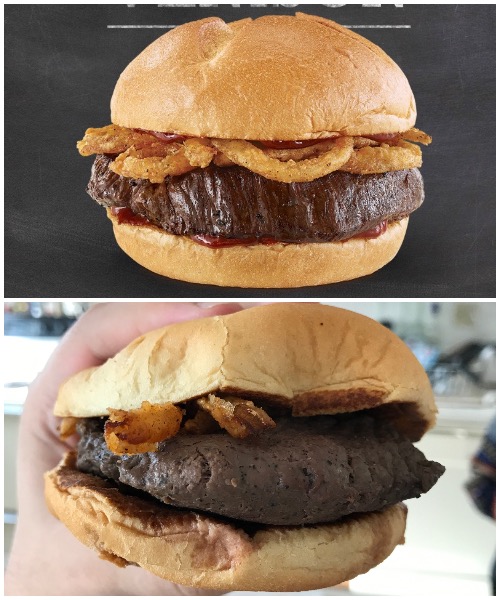


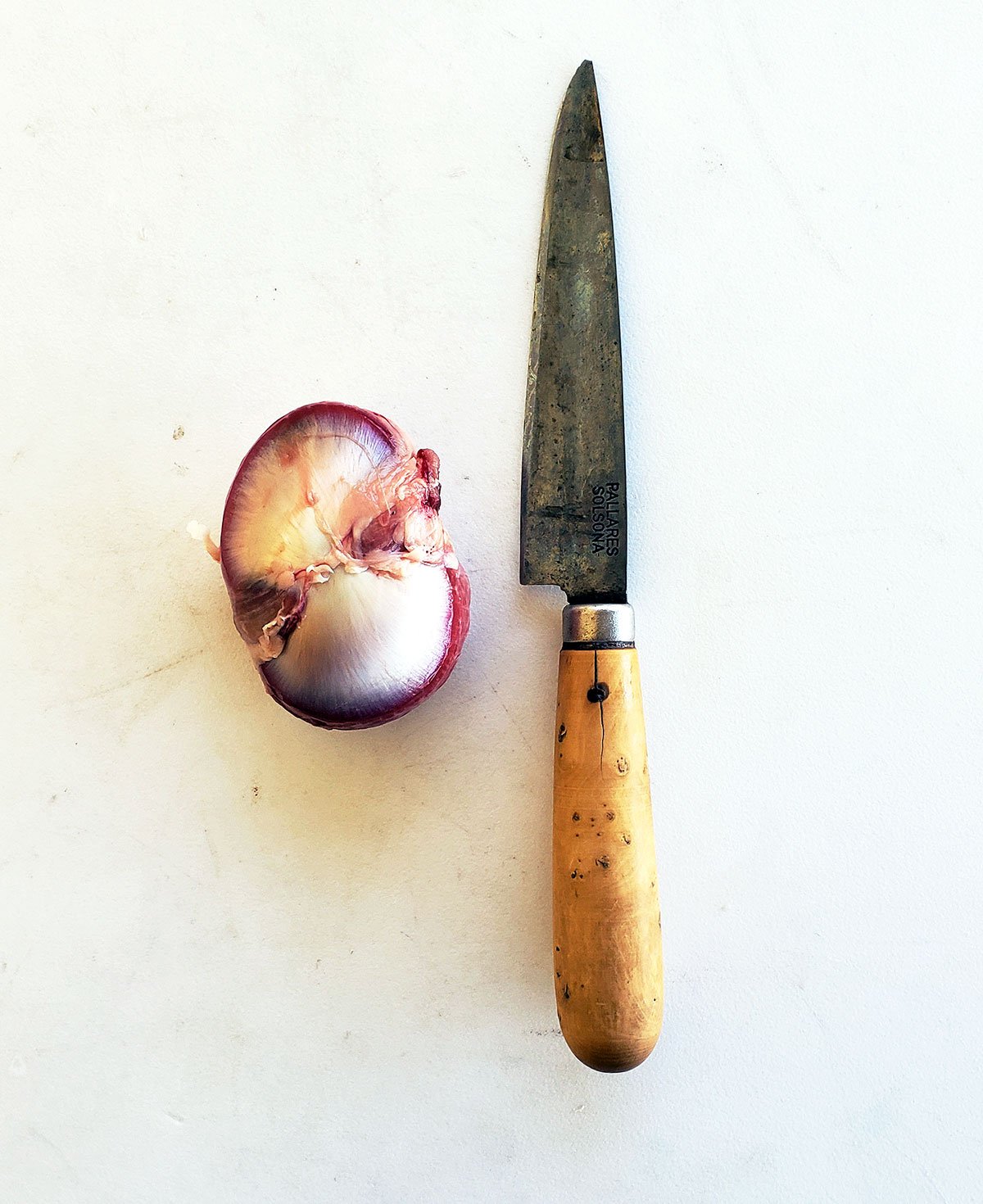
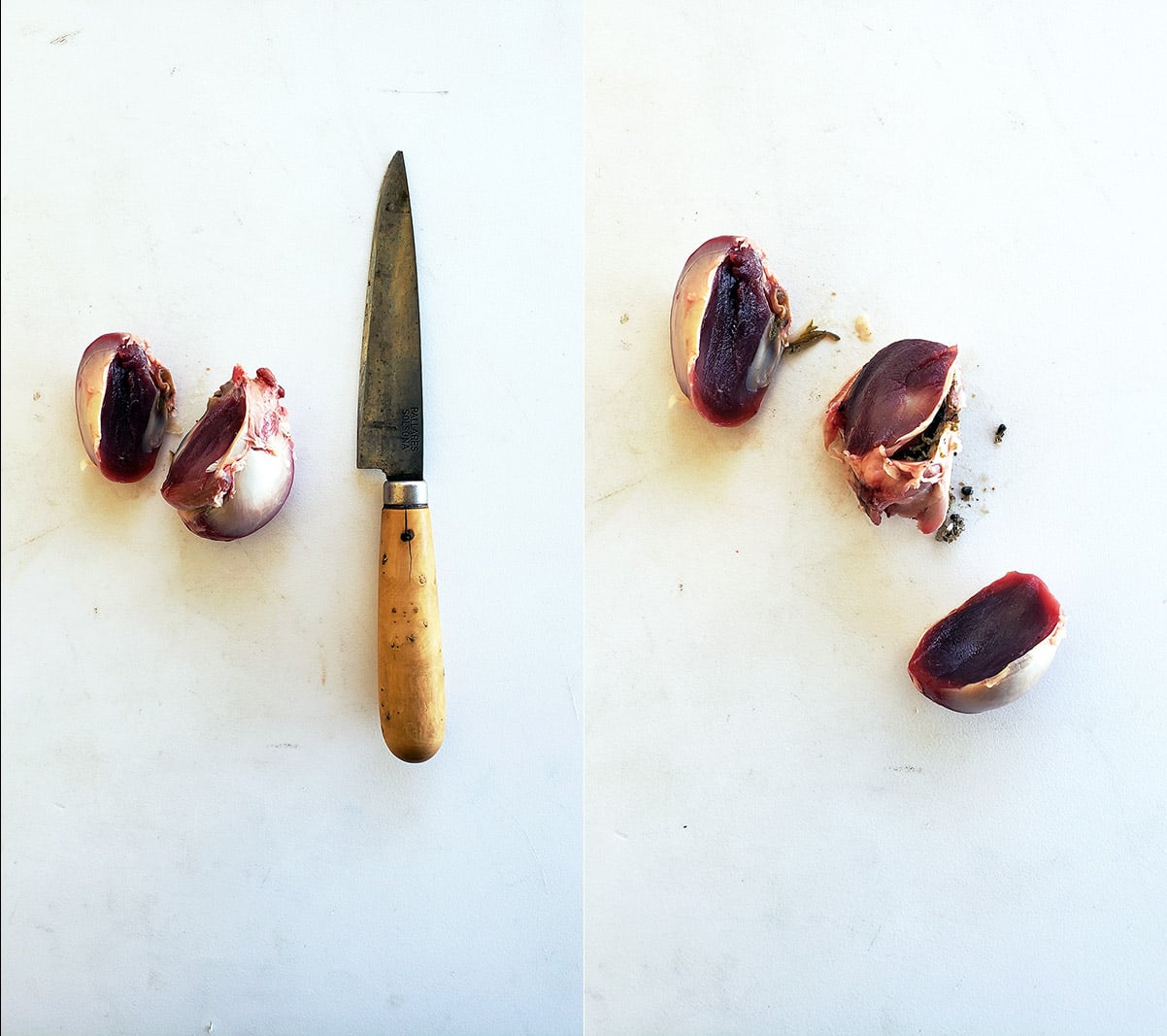
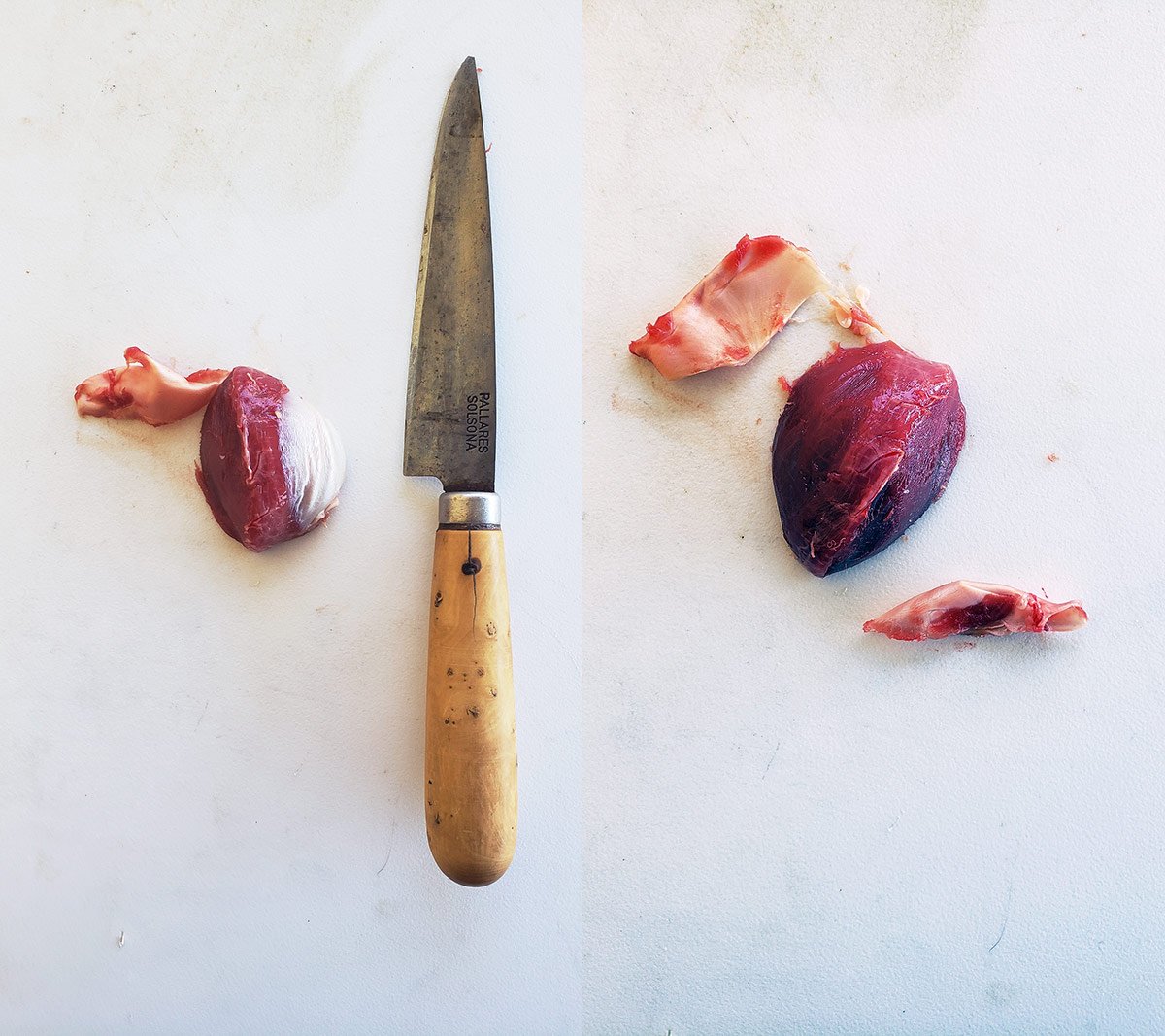
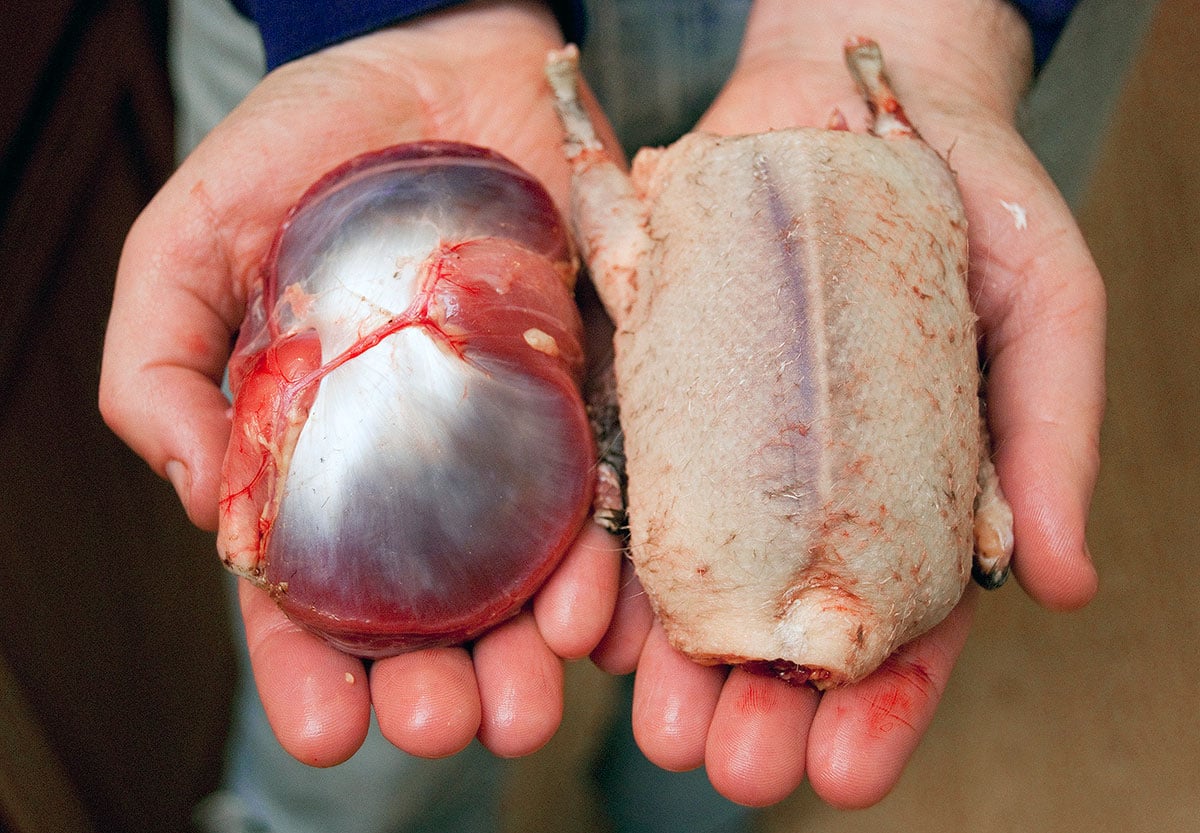
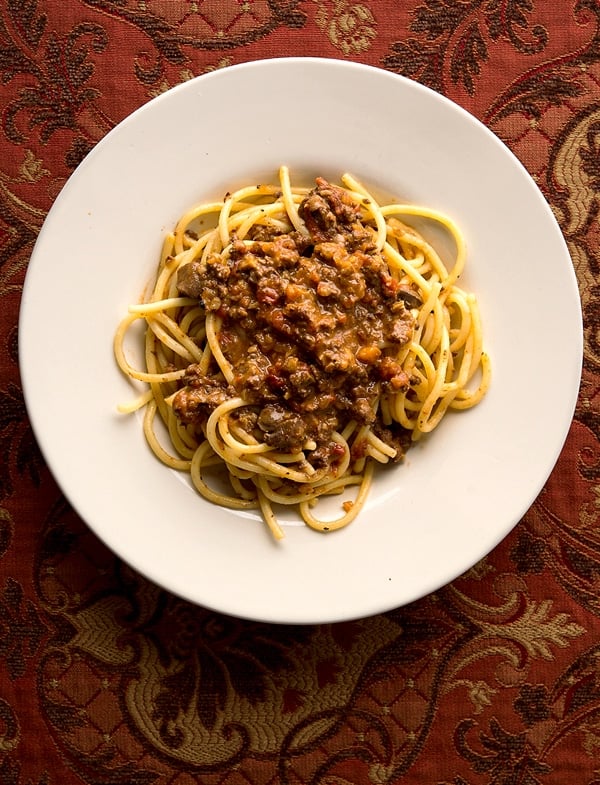
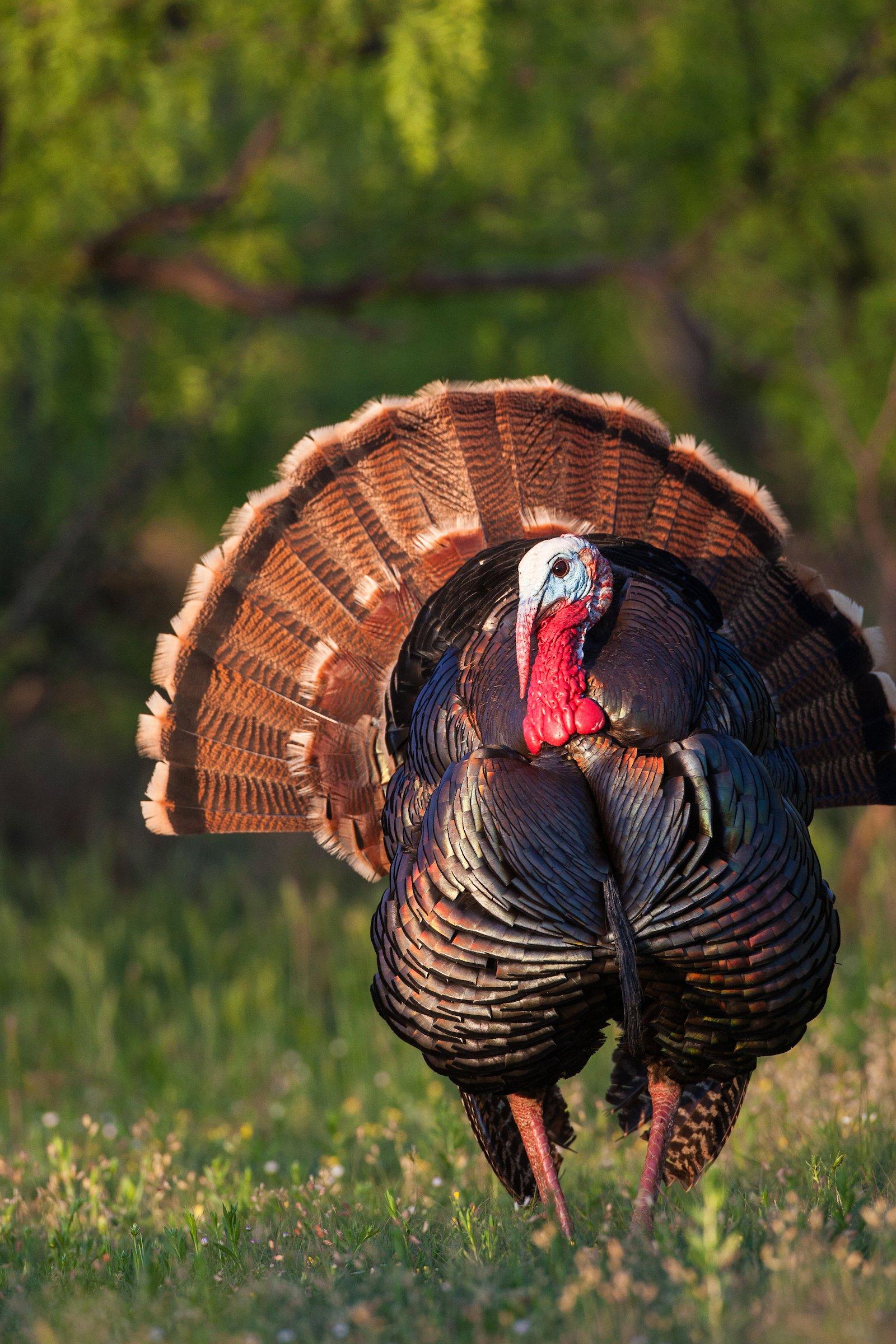
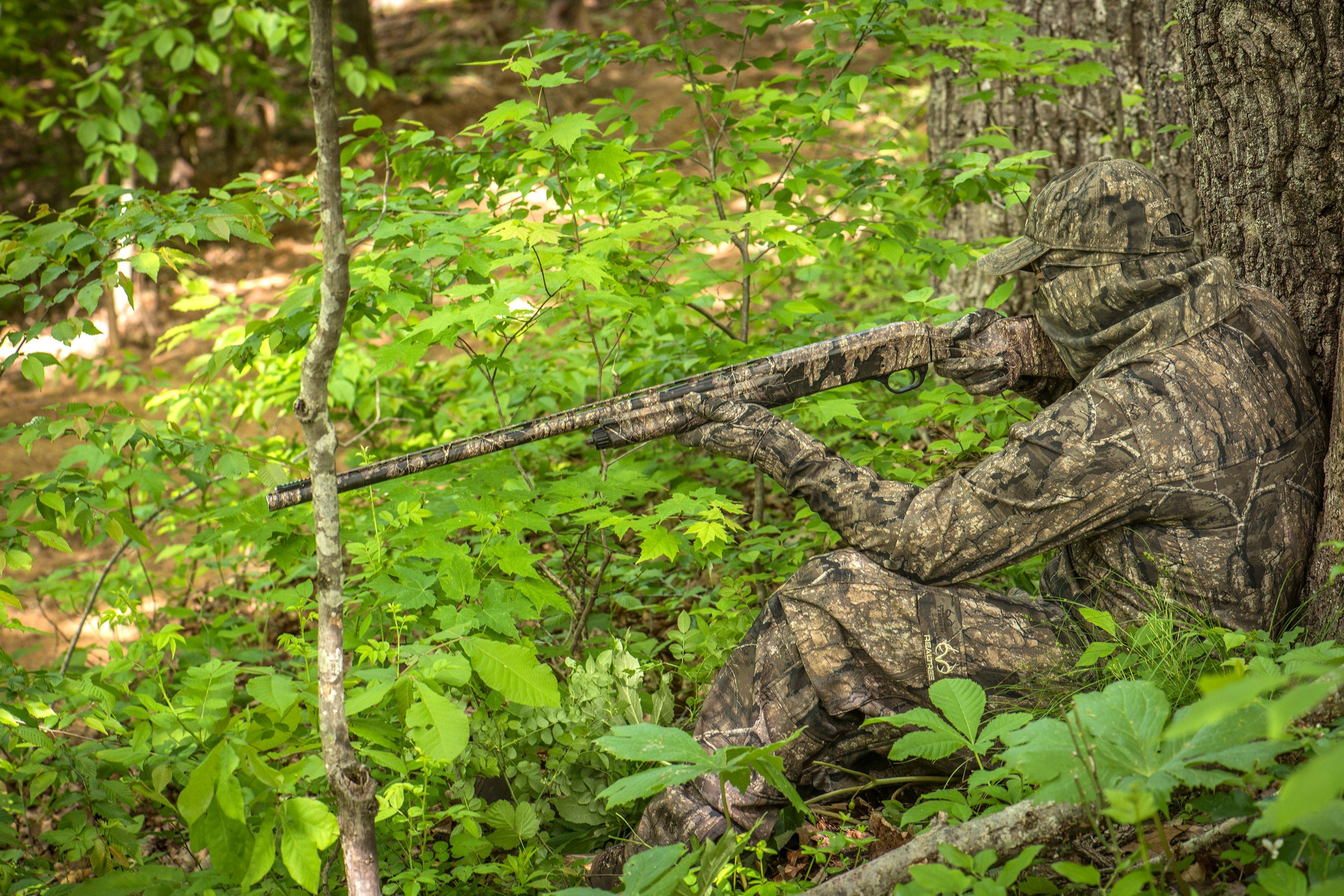
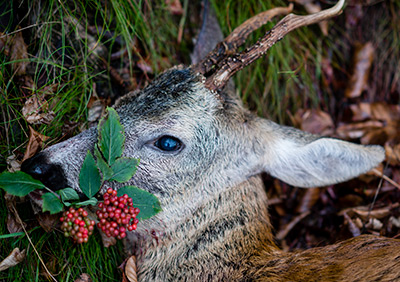 Blooding: This common ritual varies widely, but usually involves a parent or the camp’s senior member taking blood from a hunter’s first kill and applying it to his or her face. Some elders carefully streak the hunter’s cheeks with a blooded finger, while others hastily smear blood all over the hunter’s face.