Home Blog Page 79

How to Hold a Bass

0

Learning how to properly hold a bass is a big part of bass fishing. Many bass anglers are quick to get out on the water and reel in a largemouth bass. Unfortunately, they aren’t sure what to do when they land it. You need to know how to hold and handle a bass safely. This is especially true for catch and release fishing. You want to cause as little harm to your bass as possible.

There is a right way and a wrong way to hold a bass. Or, more specifically, there is more than one right way, but many wrong ways.

You need to take a few things into account when you hold a bass. How you’re placing your hands. Where your thumb goes and where the rest of your fingers go. If you’re going to do a horizontal or a vertical hold. The body weight of the bass and whether you can grab its bottom lip. Not to mention the problems with the slime coat and the teeth. Yes, bass have teeth! Make sure to avoid them when you can.

Let’s take a look at some techniques for maintaining a vertical hold or horizontal hold. These will prevent you from dropping the fish. They’ll also protect you from the teeth and ensure you can easily catch and release your bass.

Vertical Hold for Bass

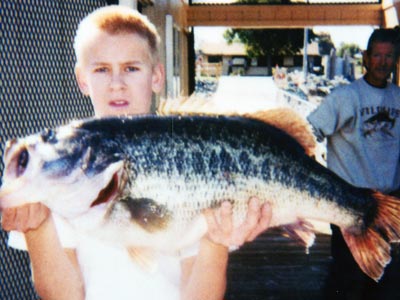
Holding a bass with a vertical hold is an easy and relatively safe way to hold the fish. You need to be aware of the angle you’re holding the bass at, though. Whether it’s a smallmouth bass, largemouth bass or striped bass, try to keep it straight up and down. The more you tilt the fish, the more damage you can do to its lower lip. This can damage its teeth as well. That will affect its ability to hunt when you release it.

Holding it straight up and down relieves pressure on the jaw. Place your thumb firmly in the bass’ mouth and grip the lower lip. Hold it with the rest of your fingers outside the lip firmly. You should avoid the teeth this way. It will allow for a firm but non-damaging grip on the jaw. It also helps avoid that slime coat. That way you’re less likely to drop the fish.

This method of holding bass is not supported by all anglers. That’s because not every angler is able to maintain the correct angle. There is some science behind why this is bad for a bass. Let’s look.

How a Bass Catches Prey

A bass does not eat food like a human does. Without hands, a bass needs to get food in its mouth through suction power. The muscles in the jaw of a bass are able to create a vacuum in the fish’s mouth. They suck in water and prey, expelling the water from their gills. The food is then swallowed, and the fish keeps hunting.

Imagine how much strength it would require you to suck in your dinner rather than lifting it. There is a lot of muscle power required. When you hold a fish by the lip, it puts strain on the muscles. Even if the jaw itself isn’t damaged, the muscles are connected to a fulcrum point in it. If the weight of the fish is not precisely distributed, it rests on that point. So both the jaw and the muscles can suffer. This means even if you catch and release, the fish may be unable to properly hunt.

For this reason, many anglers recommend the horizontal hold method.

Horizontal Hold for Bass

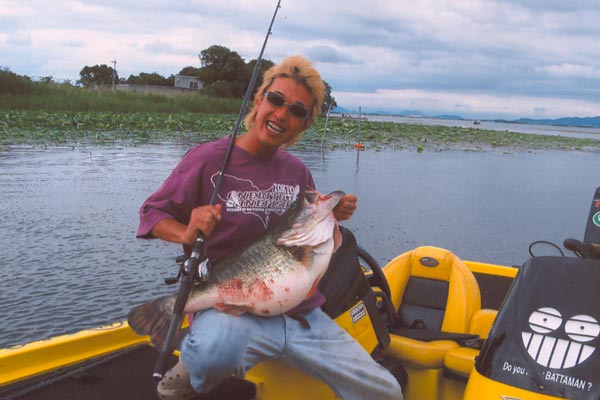
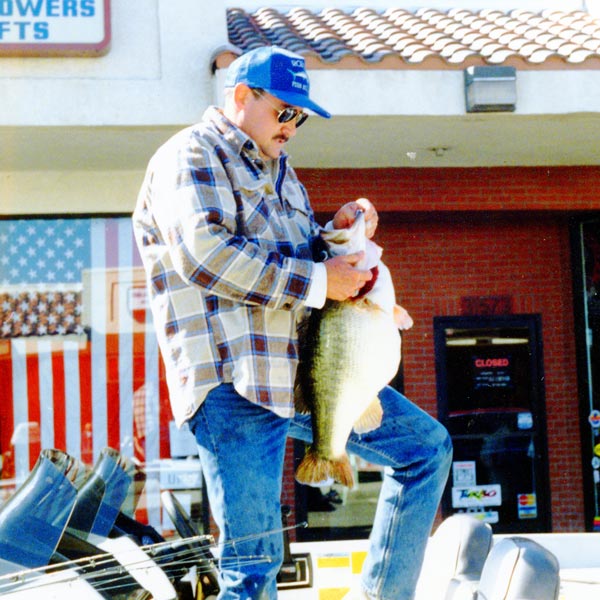
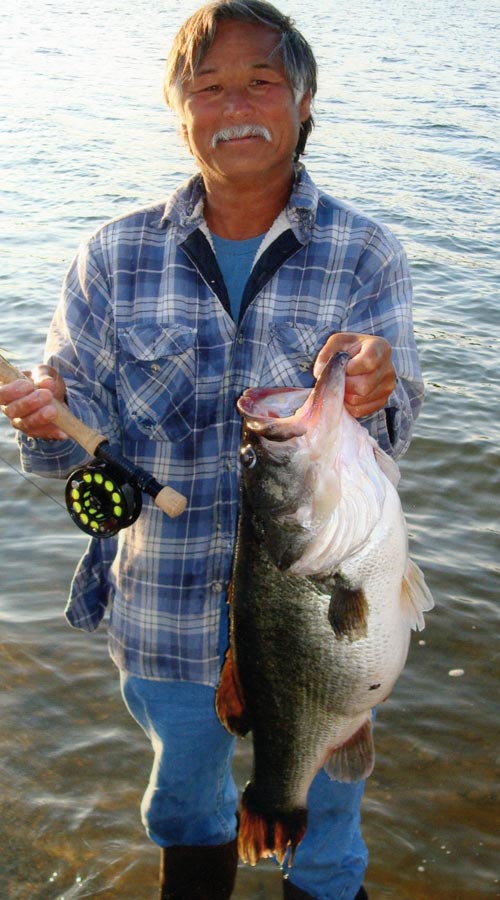
The horizontal hold is what you want when you’re looking to take a pic of your catch. It’s visually more appealing and gives a better idea of the size of the trout. It also requires that you’re more careful.

Basically, you’re going to do the exact same thing you’ll do for the vertical hold. Grab the fish by the lower lip and avoid the teeth. Keep your other fingers below the lip for a good grip. But then, use your other hand to lift up the body of the bass. You’re going to want to grip it like you’re holding a taco. Thumb on one side and your other fingers on the opposite side. Keep the fish’s head slightly above the body. This relieves jaw pressure.

Holding Bass at an Angle

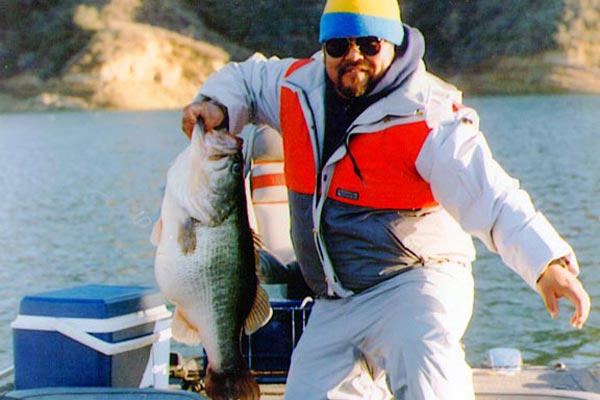
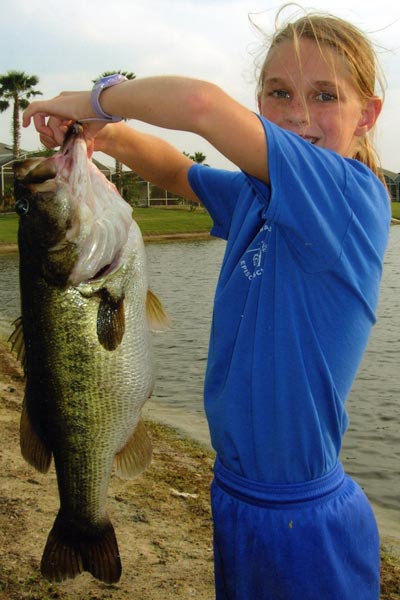
You may have seen photos of anglers holding their bass at an angle. The angled hold usually involves letting the body hang over your hand at an angle. This is a bad way to hold a bass. It puts too much pressure on the jaw. Any angle that puts the body at a 10 degree or more angle from the head is unhealthy. When you put the bass back into the water, they may have permanent damage.

Small bass, just a few pounds at most, may be safe at an angle. Their bodies are not heavy enough to put too much strain in this grip. But larger bass should not be held this way.

Why Holding a Bass is Important

No doubt you have seen some anglers let a fish flop around on the shore or a dock. Sometimes this is unavoidable, fish can be slippery. But that’s also the reason you need to avoid this as much as possible. That slime coat on a bass is not by accident. The layer is what is called the mucoprotein barrier. It is actually part of the fish’s immune system. If an improperly held fish loses that layer as it struggles, it will be endangered. This is important for any species of fish you’re after. You’ll need to be wary of this if you want to hold a catfish or a trout or anything.

As we have seen, the jaw muscles and bones are at risk if the fish is mishandled. Responsible angling means concern not just for your own catch, but for everyone else’s. Many fish species have been fished nearly to the point of extinction, and that includes some bass. Preserving the sport is an important part of enjoying it.

How to Avoid Bass Teeth

Bass have teeth that are sharp. Many a hasty angler has achieved “bass thumb” from putting their thumb too far in the fish’s mouth. This happens most often when you try to remove the bass from the water. When you still have it hooked and you’re ready to pull it in. Many anglers refer to this as lipping the bass.

In order to lip a bass, you just need to get your thumb over its lip and in its mouth. This allows you to maintain control until you are able to hold the bass. However, it will probably still be struggling. There’s also a chance your adrenaline will be pumping. Many anglers overreach at this point. Then your thumb goes too deep and scrapes the teeth of the bass. This can potentially bleed or lead to an infection.

The best way to avoid bass teeth is to be calm. It’s hard sometimes with a struggling fish, and you need to act fast. But do your best to maintain control. Don’t let your thumb go too deep in the fish’s mouth. Whenever possible, use your other hand to lift the bass right away. That minimizes any potential contact.

Things to Remember

Bass fishing is one of the most popular sports in angling. But to maintain bass populations so everyone can enjoy it, you need to be responsible. Knowing how to hold a bass is key. Follow these bass fishing rules whenever possible.

  • Keep contact minimal. Overhandling fish is bad for the animal and can be dangerous for you as well if you get hit by the teeth.
  • If you are catch and release fishing, make sure you get the bass off the hook as soon as you can.
  • Use the horizontal method if you want a picture. Remember, you don’t need a picture of every fish, just the impressive ones.
  • Keep aware of the slime coat and release the fish as soon as you are able. The less stress for the fish, the better.
  • Consider using some fish grabbing aides. A net or a fish-grab tool can help and are less damaging to the fish.
  • If you are fishing for sea bass, you can use the sea itself to help hold the fish. Wait for a rise in the waves to scoop up the fish, minimizing stress.
  • However you hold the bass, remember not to squeeze. Squeezing a fish’s body, even if you don’t think it’s very hard, can be dangerous. The internal organs of a bass are very delicate. A wrongly placed thumb with too much pressure behind it can kill.
  • Avoid the gills. This is hard to do sometimes, but you want to avoid the gill plate at all costs. As with any fish, this could cause serious damage to their respiratory system.
  • When returning a bass to the water, slide it in head first. You may want to keep your hands under it for gentle support at first. Many fish will be stunned or shocked after being caught. This gives them a chance to orient themselves.

Best Glock 43X and G48 MOS Holosun Red Dot Sights and Adapter Plates

0

As a huge fan of Glocks I am excited to write this post about the Glock 43X MOS and the G48 MOS. If you purchased one or are thinking of purchasing one, they are one of the best sub-compact optics ready pistols you can get your hands on.

What you are probably wondering is which red dot and green dot optics fit it and which are the best to put on it. Well in this article I am going to explain everything you need to know so keep reading.

What’s the difference between the Glock 43X MOS and the G48 MOS?

I want to quickly mention that the only difference between the Glock 43X MOS and the G48 MOS is the length of the slide. The G48 is longer. The optics footprint for both is exactly the same so all the optics and adapter plates mentioned in this article will fit both the G48 and G43X the same.

What footprint is the Glock 43X MOS and G48 MOS?

G43X and G48 MOS Footprint RMSc

The Glock 43X MOS and G48 MOS have an RMSc footprint. This means it has four recoil lugs, two in the front and two in the rear. The optics we recommend are the Holosun 407K, 507K, and EPS Carry. The only issue is these optics have a “modified RMSc” fooptrint which means they have spots for recoil lugs only on the front. This means you will need to use an adapter plate or need to file down the rear lugs (which we will explain below) in order to fit these Holosun Optics.

Learn more about Holosun’s Modified RMSc footprint here.

Why do we recommend the Holosun Optics vs other options?

  • They are affordable but not cheap.
  • They are built sturdily with strong aluminum housings and glass.
  • They have convenient features like Shake Awake and Side Mounted Batteries.
  • They have a Limited Lifetime Warranty.
  • They are reliable.
  • They are waterproof.

When you compare them to other options like Crimson Trace, Bushnell, or others you will find prices are similar but the other options do not have as good of a track record and do not have as many features.

How do you mount a Holosun 407K/507K or EPS Carry to a G43X MOS or G48 MOS?

There are two options to mount the Holosun optics to your G43X MOS or G48 MOS.

1. Buy an adapter plate.

You can buy a Glock 43X/48 MOS Adapter Plate which will give you everything you need to mount a Holosun K Series footprint optic to your Glock 43X or 48 MOS. These plates act like a shim which gives you the correct footprint. They also comes with the proper screws.

  • Calculated Kinetics Glock 43X/G48 MOS to 407K/507K/EPS Carry Adapter Plate
  • CHPWs Glock 43X/G48 MOS to 407K/507K/EPS Carry Adapter Plate
  • CHPWS Glock 43X/G48 MOS to EPS Carry Adapter Plate
  • DPP Glock 43X/48 MOS to 407K/507K Adapter Plate

2. Modify your slide (at your own risk)

The second option is to modify your slide. You can do this by grinding down the rear recoil lugs and possibly the front ones a bit. We have heard this could void your warranty but aren’t sure, and we don’t recommend doing this, but if you did feel comfortable doing it – have at it!

Here is a video that shows someone doing it on their G43X so you can get an idea of what to do and how much is involved.

The Best Holosun Red & Green Dots Optics for Your Glock 43X MOS and G48 MOS That We Recommend.

In our opinion these are the best bang for your buck optics for your Glock 43X MOS and G48 MOS. Just make sure you understand how to mount them based on what we mentioned above.

1. Holosun 407K. Most Budget Friendly Option.

407K Buy the 407K At The Best Price

Available in Red Dot or Green Dot

Features:

  • 6 MOA dot
  • Shake Awake
  • 50,000 Hr Battery Life
  • Removable Side Battery
  • IP67 Waterproof
  • 10 Daylight Brightness Settings and 2 Night Vision
  • Aluminum Housing

The 407K is an affordable optic. It’s lightweight, made out of aluminum, and has really nice controls. The 6 MOA dot is a great size for a pistol.

2. Holosun 507K. The Next Step Up.

507K Buy the 507K At The Best Price

Available in Red Dot and Green Dot.

Features:

  • MRS Reticle – 32 MOA Circle + 2 MOA Dot
  • Shake Awake
  • 50,000 Hr Battery Life
  • Removable Side Battery
  • IP67 Waterproof
  • 10 Daylight Brightness Settings and 2 Night Vision
  • Aluminum Housing

This optic is exactly like the 407K except it has Holosun’s famous MRS reticle which is a 32 MOA circle and 2 MOA dot. The MRS reticle can be toggled by hitting the “-“ button. So you can use the 32 MOA circle plus 2 MOA dot, just the 2 MOA dot, or just the 32 MOA circle.

3. Holosun EPS Carry – Closed Emitter Option

EPS Carry MRS Buy the EPS Carry At The Best Price

Available in 2 MOA Dot, 6 MOA Dot, and MRS, Red Dot or Green Dot.

Features:

  • MRS Reticle or 2 MOA Reticle or 6 MOA Reticle
  • Shake Awake
  • 50,000 Hr Battery Life
  • Removable Side Battery
  • IPX8 Waterproof
  • 8 Daylight Brightness Settings and 4 Night Vision
  • Aluminum Housing
  • Enclosed Emitter

The EPS Carry is very similar to the 407K and 507K except it has one major difference, it is an enclosed emitter optic. This means the laser emitter is protected by a hood. So dirt, mud, or debris will never get in the way of the emitter to distort the reticle.

There are 3 versions of the EPS Carry. The 2MOA, 6MOA, and MRS Versions

The MRS version has a solar panel on it which acts as a solar fail safe to power the reticle of the battery dies. It also gives you an extra auto brightness feature which can be toggled on or off.

4. Holosun 507K ACSS Vulcan Green & Red Dot

Holosun 507K ACSS Vulcan

Buy the 507K ACSS Vulcan At The Best Price

The 507K ACSS Vulcan is exactly like the 507K except is has the ACSS Vulcan reticle. This reticle has a 230 MOA dotted outer ring and a 3 MOA center dot.

The purpose of this reticle is to help you find the center dot quickly if you are off center. To learn more about the ACSS Vulcan check out our article here.

The dotted outer ring can be turned off by holding down the “-” button for 3 seconds.

The main advantage of the ACSS Vulcan reticle is to be able to find the center dot quickly when drawing the pistol.

All the features are the same as the 507K except for the reticle, and this is available in both red & green.

Choosing between Red or Green Reticles

Best Glock 43X and G48 MOS Holosun Red Dot Sights and Adapter PlatesYou may be wondering if you should get a red or green dot reticle. We get this question a lot so I am going to list a few bullet points for you to consider.

  • Green reticles are less straining for the eye to see.
  • Green reticles can help with astigmatism. If you have astigmatism you will see a blurry dot, we have been told by a few customers that Green dots help with their astigmatism, making the dot look more crisp than the red version.
  • Green will not washout on backdrops like green grass, foliage, or green colors.
  • In theory Green dots can have a longer battery life because Green is brighter, so for example a green dot on brightness setting 6 may be the same brightness as a red dot on setting 7 – which would save battery life.

If you want to learn more check out our full article about Red vs Green Dot Pros & Cons here.

Choosing between Open vs Closed Emitters

The simplest way we can break down open vs closed emitters is to look at how you plan on carrying the pistol. If you plan on being outdoors in the elements with rain, snow, sleet, then a closed emitter will be beneficial.

If you plan on carrying OWB most of the time and plan on being outside then closed emitter would be beneficial.

If you plan on carrying IWB or don’t plan on being outside using your red dot in the pouring rain or heavy snow then an open reflex is fine.

Open reflexes will still work in the rain or snow but the closed emitter will give you extra peace of mind.

An open reflex can collect dust and debris on the inside of the reticle over time, so you’ll want to clean it out from time to time. An enclosed emitter is easier to clean in this aspect.

To learn more about Open vs Closed emitters you can check out our Open vs Closed Emitter Guide here.

How to decide which reticle style is best for you

In this guide we covered a few different reticle options. If you need some help deciding which is best for you here are some of our thoughts on each.

  • 2 MOA only (EPS Carry 2 MOA): This dot is quite small which makes it precise. The downside is that it can be hard to “pick up” upon drawing the weapon. If you are experienced shooting red dot sights on pistols then this may not be an issue for you. If you are new, we recommend you practice “finding the dot” at home to become proficient. If you can train your muscle memory to find the dot then 2 MOA is a great choice.
  • 6 MOA only (407K, EPS Carry 6 MOA): This dot is decently larger than the 2 MOA dot. We classify this as more user friendly than the 2 MOA dot as it’s a bit easier to pick up upon drawing. The 6 MOA dot will not be as precise as the 2 MOA dot at long distances (50+ yards) but it is still plenty accurate at all distance ranges. The 6 MOA dot is a nice size and it gives you a less cluttered reticle. Some people prefer it over the MRS.
  • MRS Reticle (32 MOA Ring + 2 MOA Dot) (507K, EPS Carry MRS: This reticle is a good combination of both large and small. You have the 2 MOA dot to be precise with, and the 32 MOA Ring to help “find the dot”. The 32 MOA Circle is quite hard to miss. The nice thing about this reticle is the flexibility. You can use the 32 MOA Ring only or the 2 MOA dot only or both together. This way you can find what you prefer and stick to it.
  • ACSS Vulcan with 3 MOA Dot and 230 MOA Dotted Outer Ring (507K ACSS Vulcan): This reticle is going to have a 3 moa dot and the 230 MOA dotted outer ring. The outer ring is only visible when the dot is not centered. The purpose is to help you find the dot quicker upon drawing the weapon. The 3 MOA dot give you a slightly larger dot than the 2 MOA dot, but it’s not that noticeable. The real value to this reticle is the outer ring and it’s assistance with helping you get on target faster by quickly adjusting your grip to “find the dot”

Conclusion

All of these optics are fantastic for your Glock 43X MOS and G48 MOS. You won’t find a better combination of quality and affordability.

Each optic also has it’s unique features and benefits. I wouldn’t say one is better than the other.

The 407K’s 6 MOA dot is really nice and some people prefer it over the MRS Reticle. The MRS reticle is larger which makes it easier to pick up when drawing. The EPS Carry is super cool because of the enclosed emitter.

If you have any questions, reach out to us on chat or leave a comment!

Thanks for reading!

Late Season Deer Hunting Strategy for Pennsylvania Bucks

0

The first day of deer rifle season is a tradition in Pennsylvania. Whether you enjoy archery or muzzleloader hunting, everyone marks the opening day of Pennsylvania’s rifle season on their calendar. All that hype, anticipation, and year-long excitement is over in one short day. Prepared, and lucky, hunters, will have one hanging at the end of the first day but many more will have to re-evaluate and adapt their deer hunting strategy if they want to harvest a late season buck in the Keystone State.

Late Season Deer Hunting Opportunities in Pennsylvania

Deer hunting the late season starts the beginning of the second week of rifle season and runs all the way to the conclusion of deer hunting in Pennsylvania, which is the last day of flintlock season.

Deer Hunting Season in Pennsylvania

Deer firearms season: November 26 – December 8.

  • Wildlife Management Units (WMUs) 2B, 5C and 5D both antlered and antlerless deer can be harvested with each required license.
  • WMUs 1A, 1B, 2A, 2C, 2D, 2E, 2F, 2G, 2H, 3A, 3B, 3C, 3D, 4A, 4B, 4C, 4D, 4E, 5A and 5B are antlered harvest only November 26 – November 30 except for those hunters having a DMAP antlerless permit, who can harvest an antlerless deer in a DMAP zone. From December 1 – December 8, both antlered and antlerless deer can be harvested.

Deer flintlock and archery after Christmas season: December 26 – January 12.

  • One antlered or antlerless deer can be harvested with a buck tag and additional antlerless deer can be harvested with each additional doe tag.

All Pennsylvania deer hunting season and bag limit regulations.

Late season deer hunting in Pennsylvania can be split into two distinct phases. The first is the second week of the deer firearms season. Deer hunting on public land in Pennsylvania has been overloaded with hunters the first week of rifle season and now hunting pressure is slowly decreasing. These last few days of rifle season can be productive if you know how to hunt deer.

The second phase of the late season is the after Christmas flintlock and archery season. Roughly 3 weeks after the end of the rifle season, late season flintlock and archery season provide hunters one last chance at Pennsylvania deer hunting. Hunters are restricted to using traditional flintlock muzzleloaders or archery setups during this season. It takes a completely different deer hunting strategy during these weeks, however, to score a last minute buck.

Deer Hunting Strategy for the Last Week of Rifle Season

If you are not seeing any deer while hunting the second week of rifle season, it may be time to adapt your deer hunting tactics. Here are four tips to up your deer hunting strategy in the second week.

  1. Still-hunt bad weather days – The rifle season only lasts for two weeks in most WMUs in the state so you have to hunt when you can. This includes bad weather days. Still-hunt along ridges and on old logging roads where you can stop and glass often. The weather (rain, snow or wind) will allow you to sneak quietly and possibly make something happen and spot an unsuspecting buck. A good deer rifle scope goes a long way here if you have to take a long shot at a buck.
  2. Re-visit your opening day plan – A buck that has been pushed from his core area on opening day will come back as pressure subsides in the second week. Go back to your opening deer hunting strategy and wait for him to come back.
  3. Use any hunting pressure to your advantage – Some more mature bucks will go nocturnal during rifle season. The only way they will move in daylight hours is by getting bumped. Don’t be afraid to hunt where others are hunting. Let them move around and spook up a buck to your position.
  4. Try some rut tactics – In some areas, bucks will still be in rut mode. Either late estrous does or second rut action can be found in the second week. It is not a bad idea to have your grunt call, doe bleat and even rattling horns with you. Be cautious, however, as rattling and blowing a grunt call in areas with a lot of hunting pressure may yield unwanted hunters to your area.

How to See More Deer While Hunting after Christmas

Some of the same deer hunting tips used in the second week of rifle season can also be effective in the after Christmas flintlock season. Although, deer are now back into predictable patterns, particularly their winter patterns. This deer hunting season in Pennsylvania requires more attention to basic deer needs and less around hunting pressure. Consider these three deer hunting tips and strategies when hunting the flintlock season.

  1. Hunt mid-day – Winter will be in full force and even the deer will notice the cold temperatures. With reduced hunting pressure, bucks will move more during mid-day when temperatures warm. You want to be hunting when the sun is the highest and bucks are taking advantage of the few extra degrees of warmth.
  2. Focus on late season food sources – Deer will be back into feeding mode trying to recover from the rut and maintain themselves during the cold. Groups of deer will usually gather around remaining food sources like mast producing ridges and remaining agricultural fields with leftover crops. Both of these locations are ideal ambush spots for late season deer hunting. Having quality hunting clothing will help you sit over these areas in the evening as temperatures drop.
  3. Key in on deer sign – Deer sign is probably more important now than any other time of the year besides the peak rut. In winter deer are not traveling great distances. They are going from bedding areas to feeding areas and back again on a fairly consistent pattern. Areas with fresh deer sign mean deer are in the area and will be back through at some point. Hunt fresh sign and hope one of the tracks or pile of scat you find belongs to a leftover buck.

Don’t get discouraged if you have not filled your buck tag yet. There are many more days left for deer hunting in Pennsylvania besides the first day of buck season. Focus and adapt your deer hunting strategy during the second week of rifle season and during flintlock season to tag out a late season buck.

Best Caliber for Deer Hunting

0

William W (Bill) Gabbard

deer calibers
Left to right 223, 25-06, 7mm08, 270, 280, 308, 7mm Rem Mag, 300 Win Mag

What is the best caliber for deer hunting?

This question has been discussed over campfires, in hunting camps, and during Monday morning quarterbacking sessions for ages! I watched two co-workers nearly ruin a good friendship over the difference in a 243 Winchester and a 6MM Remington. A fellow that I used to work with had a 264 Winchester Magnum named “Big Joe” that in his mind was the only viable caliber for deer hunting.

When I started deer hunting in the 1970s, most of my friends either used a 30-06 or a 30-30. A few folks used a 243 Winchester (the smallest caliber that was legal for deer hunting in Kentucky at that time), a couple of fellows that I knew used a 270 Winchester, and one guy used a 280 Remington. The guy with the 280 handloaded because of the limited availability of ammo. Back then, no one that I knew used a “magnum” anything for deer hunting. Magnums were what those folks that went out west used!

Boy how times have changed! When I began this article, I asked many friends of mine who deer hunt what caliber they used and why they thought it was the best. The variety of calibers used has expanded greatly in the last 40 years. Just from my friends and family, the list now goes from 222 Remington to 300 Remington Ultra Magnum. I personally have killed deer with rifles ranging from 204 Ruger to 300 Win Mag. The reasons for this change are many and could possibly be an article all its own, but let’s look at what hunters are using now and why. Keep in mind that I am not attempting to cover every caliber available, so if I miss your favorite, let us know what it is and why it’s your favorite.

204 Ruger

While this round will kill deer, is exceptionally accurate, and has almost no recoil, I cannot recommend it for deer hunting. The bullets are just a little too light and not constructed heavily enough to hold together for clean consistent kills.

222 Remington

Henley McIntosh, a cousin of mine, loves this round and has killed several deer with it. But again, due to the light bullets in most factory ammo, I would only recommend it in the hands of a competent marksman.

223 Remington

Randy Bryant, Vice President of the local Sportsman’s Club and competitive shooter, is a big fan of the 223 using heavy bullets in an AR style rifle. He is hunting at fairly close ranges and is a great shot. Bullet selection is critical if using the 223 for deer hunting.

243 Winchester

Maddi
Maddi’s deer with 243

More than one of the folks surveyed said that this is their number one choice for deer. Ashley Sandlin, local Deputy Sherriff, said that it kills good, doesn’t kick, and that her kids love to borrow it when they go hunting. Henley Mcintosh stated that this was probably the best all-around caliber because of lack of recoil, accuracy, and all the energy is used up in the deer. My brother, my granddaughter (Maddi Mastin) and lots of other folks mentioned 243 in their answer.

caliber grouping
Maddi’s 243 on paper

244/6mm Remington

Very similar to the 243 Winchester but limited availability of factory ammo is an issue.

257 Roberts

A wonderful caliber for deer but hardly anyone in my circle of friends even mentioned it. A good friend of mine who passed away a few years ago loved this caliber for its accuracy and lack of recoil. Limited supply of readily available factory ammo is a shortfall.

25-06 Remington

Another old classic that seems to be getting passed by these days has great accuracy, light recoil, and great long-range capabilities. Trish Bishop has tried different calibers but keeps coming back to her 25-06.

6.5 Grendel

Jon Allen of Nighthawk Tactical Solutions uses the Grendel on hogs and is planning to deer hunt with it this year. Jon says accuracy (which I must back him up on), almost no recoil, as well as dramatic kills have him excited about this caliber. My granddaughter Maddi is already eyeing my bolt-action Grendel. The growing supply of ammunition, and choices of types of bullets and the ability to use AR style rifles as well as bolt guns are all positives for the Grendel.

6.5 Creedmoor

The Creedmoor has taken the hunting world as well as the shooting world by storm. While none of my folks surveyed have taken a deer with this caliber, at least four said that they are planning to use it this year. Most are citing accuracy, long-range capabilities, and light recoil as their reason. Gun-Nut Dustin Cooper has killed deer with 243, 270, 30-06 and 300 Win Mag and said, “I just want to see what it does on a big ol buck.”

260 Remington

Mike Gross, custom gun builder and competitive shooter, uses a Model 7 Remington in 260. Light recoil, incredible accuracy and “drop in their tracks” kills are his reasons.

264 Winchester Magnum

I must mention the 264 out of respect to my friend Dexter Evans, as it is the only caliber he recognizes. As far as I know, the Remington Sendero SF II is the only production rifle currently available, and factory ammo is limited.

270 Winchester

This long-time favorite was mentioned by several folks. The 270 has been available as a factory round since 1925 and is showing no signs of letting up. Extremely accurate, incredible kills, long-range capabilities, manageable recoil, incredible variety, and ready availability of factory ammunition are on its long list of attributes. It is available in bolt action, pump, semi-auto and even lever action rifles.

ad for bottomland camo

7mm-08 Remington

The cross between a 243 and a 308 the 7mm-08, offers an incredible array of possibilities. This caliber has a tremendous following and for good reason. Paul Johnson mentioned the amount of versatility in tailoring loads, lack of recoil, incredible accuracy and great knock-down power. Carl Cooper laid down his 300 Win Mag for the 7mm-08 because of the lighter recoil and plans to never look back because of the killing power of the little round. Phyllis Cornett likes it because of the accuracy and lack of recoil. Mossy Oak’s Walt Gabbard said, “It is still hard to beat the 7mm-08.”

280 Remington

While the 280 has never seen the commercial success that the 270 Win has, most gun writers agree that it is ballistically superior to the 270. Factory ammo is available with bullets ranging from Norma’s 125 gr to Remington’s 165 gr. The availability of ammo from online and big box outdoor stores are just a few of the reasons that this great caliber is staying alive.

7mm Remington Magnum

7mm-08 grouping
3-shot group with 7mm Rem Mag from a Browning BBR

This is the caliber that a many choose when they first get a case of “Magnum Fever.” The choices in factory ammo are staggering as are the options in building a suitable handload. The 7mm, as most folks call it, is accurate and hard hitting making it a favorite. When Walt Gabbard was 14, he got his first case of “Magnum Fever” when he killed an 8-point buck. Its only drawback is that with a poorly designed or ill-fitting rifle stock, the 7mm Rem Mag can be a little bit uncomfortable to shoot.

30-30 Winchester

The 30-30 was one of the most popular calibers around years ago and it is still hanging in there. However, based on my small sample of local hunters, not nearly as many folks use it now. Retired U.S. Army Colonel Brad Turner is still a fan though. Col. Turner stated that where he hunts 100 yards is a long shot and the 30-30 still drops them in their tracks!

308 Winchester

The 308 is one of the most popular calibers around, and there are plenty of reasons. Accuracy, long-range capabilities, good knock-down, manageable recoil, an incredible array of choice for factory loaded ammo as well as an almost endless list of components for the hand loader are just a few. The 308 is available in bolt, pump, lever, and single shot as well semi-auto rifles. Sheriff Kelly Shouse quickly replied 308 when asked what his favorite deer caliber was, an answer that was echoed by his son Hunter, as well as Benny Gabbard and his son Ben. Several others mentioned it as their second choice.

30-06

The old 30-06 has been around since 1906 and is still extremely popular. Several people mentioned it as their all time favorite or as their second choice. Availability of ammo, knockdown power, and just about any style of rifle being available are among the first attributes listed for the 06. Its only drawback can be recoil if it is in an ill-fitting stock.

300 Winchester Magnum

You might be surprised by the number of hunters that use the 300 as their primary deer rifle. An exceptional round for long range, it gives no quarter in performance on whitetail. When paired with the proper rifle and proper bullet weight the 300’s main drawbacks would be recoil and that a fairly long barrel is required to maximize its performance. Gary Deaton, Mike Gabbard and Hank Patton, all accomplished deer hunters, can usually be seen carrying well-worn 300 Win Mags that they are very comfortable with. Patton said, “I just love watching them smack the ground at the drop of the hammer, no tracking involved.” 300 Remington Ultra Magnum

Only one of my friends uses this caliber. Jamie Thomas said that hands down this is his favorite. “It flat kills – no tracking, no chasing. I pull the trigger and the game is over!” Limited selection of factory ammo and recoil are the only two downsides to this caliber.

This article is not a scientifically researched article quoting feet per second and foot pounds of energy retained at specific distances. It is a collection of observations calling on the knowledge of experienced and successful deer hunters. Each of the hunters that I have discussed here fits this description. Some of them have been deer hunting for more than 50 years, while some are new to the sport. So my conclusion to the best caliber of deer hunting is the caliber your centerfire rifle with properly constructed bullets will shoot comfortably. It is every hunter’s responsibility to be familiar with and know the capabilities and limitations of their rifle in order to become proficient with it.
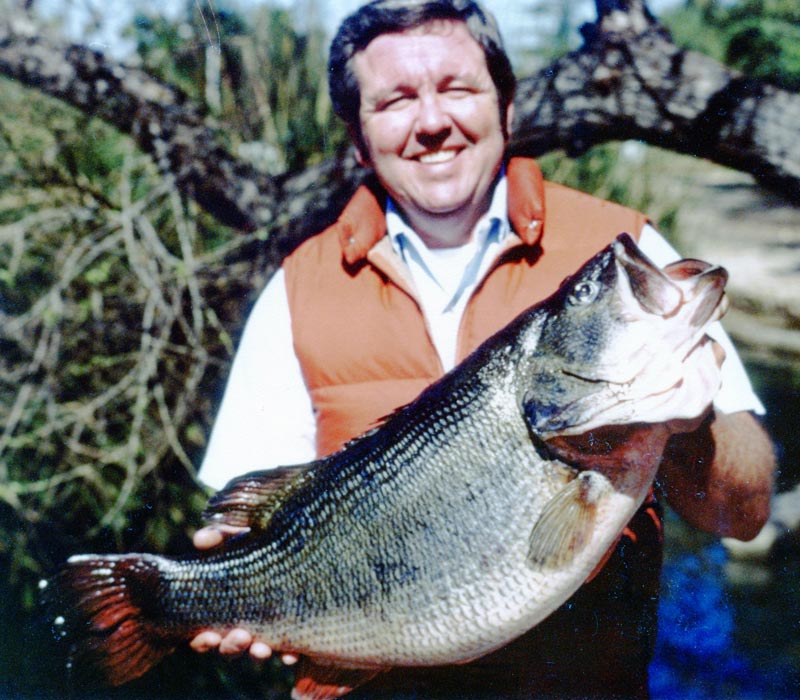
Oh, and to the guy in the back there asking, “Hey Bill what do you use,” I always put a lot of thought into what I am going to hunt with, accuracy, energy, my comfort level with the rifle and for the past 12 years here in Kentucky, I reach in the vault and pull out the same rifle. An old Remington 700 chambered in 7mm Weatherby Magnum. Nobody else I know hunts with one, but it shoots 0.3 in groups with my handloads, just fits me, recoil is not an issue and results on the other end are incredible!

Bill Gabbard deer

.20 caliber air rifle pellets guide

0

Introducing the power-packed .20 caliber air rifle pellets, designed to revolutionize your shooting experience. With superior accuracy and exceptional velocity, these pellets deliver maximum impact on targets. Ideal for hunting, target practice, or competitive shooting, embrace precision and performance with our top-notch .20 caliber air rifle pellets.

.20 caliber air rifle pellets

.20 caliber air rifle pellets

.20 caliber air rifle pellets are a popular choice for shooting enthusiasts due to their accuracy and versatility. These pellets, also known as.20 caliber pellets or 5mm pellets, are designed specifically for use with air rifles and offer several advantages over other calibers.

One of the main benefits of.20 caliber air rifle pellets is their superior accuracy. The smaller size of these pellets allows for tighter groupings and increased precision, making them ideal for target shooting or small game hunting. Additionally, the reduced weight of.20 caliber pellets results in less wind drift, further enhancing their accuracy even at longer distances.

Another advantage of.20 caliber air rifle pellets is their versatility. They can be used for a variety of purposes including target shooting, pest control, and small game hunting. The kinetic energy delivered by these pellets is sufficient to take down pests such as rodents or birds while still being safe enough for backyard plinking or target practice.

In conclusion,.20 caliber air rifle pellets offer a promising option for enthusiasts seeking accuracy and precision in their shooting activities. With their smaller size, these pellets provide higher velocities and improved long-range performance. Additionally, they offer reduced noise levels and are suitable for various shooting applications, making them a popular choice among experienced shooters.

Can an Air Rifle Really Take Down a Deer?

0

“Debunking the Myth: Can an Air Rifle Take Down a Deer? Exploring the Feasibility of Using Air Rifles for Hunting Large Game.”

can a air rifle kill a deer

can a air rifle kill a deer

When it comes to hunting large game like deer, using an air rifle raises some important considerations. While air rifles have come a long way in terms of power and accuracy, the ability to successfully take down a deer with an air rifle remains debatable. The majority of air rifles on the market are designed for smaller game such as small mammals or birds, and may not possess enough power to deliver a lethal shot to a deer.

However, there are some high-powered air rifles specifically designed for hunting larger game that can potentially kill a deer. These rifles typically have higher muzzle velocities and greater stopping power than traditional air rifles. Additionally, they often use ammunition with larger calibers, which can increase the chances of effectively taking down a deer. Nevertheless, it is crucial to check local hunting laws and regulations before attempting to hunt deer with an air rifle, as many jurisdictions have specific requirements regarding minimum caliber size and muzzle energy for hunting big game.
In conclusion, while an air rifle may be capable of inflicting harm on a deer, it is unlikely to deliver a humane and ethical kill. Therefore, it is advisable to use more appropriate and powerful firearms for hunting deer to ensure a quick and efficient harvest.

How to Hunt Crows

0

Crow hunting is a bit like duck hunting, as decoys and calling can often pull birds in for a shot from a camouflaged or natural blind.

Crow hunting is also completely different from anything else you may have done.

And yes, because some of you are no doubt wondering, I’ve eaten every crow I’ve ever shot.

The dark breast meat looks (and tastes) a bit like a duck’s as well, and you can even use waterfowl recipes.

Some tips for crow hunting follow here.

How to Hunt Crows (© Maciej Olszewski-Shutterstock photo)

Calling Crows

If you’re a turkey hunter, chances are you carry a crow call to locate roosted spring gobblers, which often shock gobble to it.

That same tool can be carried along during crow season, of course, to call crows in.

Crow calls tend to work to your position best on calm, still daybreak morning as these loud, raucous birds gather, interact and begin their morning’s business – which often involves feeding in pastures and farm fields.

Some crow callers also employ electronic calls (often legal; check your lawbook).

In my experience, windy gusts and rain showers dampen (pun intended) crow activity. Crow call and hunt these birds with this in mind.

Two vocalizations, among others, you make might include:

1. The so-called rallying call is a series of caw-caw-caw notes.

2. The distressful wailing crow call, a kind of painful, pleading effort, will bring them in as well.

In short, listen to crows on their daily patterns – they’ll teach you plenty about varying vocalizations.

Where to Look

Sure enough, the habits of crows can change on a daily basis, so regular scouting – as with other forms of hunting – is essential. Find their preferred local flyways.

And these birds migrate in late summer and early fall, gathering into a “murder of crows,” the collective noun for a group of crows.

Enough of the bookish stuff. Finding crows is as easy as talking to your local farmers.

Most will enthusiastically greet your request to hunt these black birds with affirmative responses.

Once crow hunting access is gained, arrive in the pre-dawn (as you would for waterfowl) and watch the early movements of crows.

Where are they roosting?

Where are they flying to feed and hang out as daytime arrives?

What food sources are they using?

This will set you up for your crow hunt, seasons providing.

Decoying Crows

You can use a dozen black plastic decoys or even bigger spreads to fool your crows (just as we’d increase the size of the spread in duck hunting).

Consider putting some in the trees surrounding your setup, as well as on the ground in front of you, in gun range.

Place one on a nearby fencepost or two, and try to envision how the decoying birds might see your hunting setup from the air.

As always, check your regs, but I’ve used a number of off-beat tricks to pull them in.

An old fox pelt can be propped in an open field, and this will definitely draw a look from nearby crows, often resulting in a band of the black birds coming in looking for a fight. A deer hide might pull them in, especially if you fashion it to look like a dead one.

Be inventive.

New Federal Premium Hi-Bird Load for Crows and More . . .

Go here.

Guns and Loads

Your old 870 pump will do fine for crow duty, as will your dedicated waterfowl shotgun. Either 12 or 20 gauge, it’s your decision.

A modified or improved-cylinder choke, shotgun depending, is likely best for your plans.

As shotgun loads go, No. 6 shot, to even No. 7 1/2s or 8s are a good bet.

You’re Hunting What?

Okay, well crow hunting might seem perfectly fine to us, but to some, it’s a bit odd.

And that’s fine.

However, keep in mind that perfectly legal daybreak gun blasts during the late summer months, and at times not perceived as “hunting season,” might draw some attention and even a phone call or two to the authorities.

I’ve heard of more than a couple guys who’ve had some unusual experiences as legal crow hunting goes.

At best, maybe a knock on a local door or two might help clear the air and let bystanders know what you’re doing – expecially on properties bordering farmland where you’re hunting.

Hide your face and head with BUFF® UV Multifunctional Realtree Headwear

Camouflage

Wearing camouflage from head to toe, including a facemask, is essential for crow hunting.

Many Realtree camouflage options will work to match the habitat you’re crow hunting.
“Crow hunting is a bit like duck hunting, as decoys and calling can often pull birds in for a shot from a camouflaged or natural blind.

Crow hunting is also completely different from anything else you may have done.”

Some state opportunities are available in summer, location providing; some in late winter and early spring, so match your surroundings.

As always, check your hunting regulations as well.
Go here for Realtree small game hunting and guns and shooting tips.
Follow us on Facebook.
Have you ever hunted crows? Any tips to add?

Please comment below.

Editor’s note: This Realtree.com post was first published August 15, 2017.

Common Mushrooms That Grow on Trees

0

If you’re out on a hike, or just poking around the back 40, you’re likely to see mushrooms growing from trees in the woods. Some of them are edible, some aren’t. For the purposes here, I’ve gathered useful, common mushrooms you can eat, since that’s what I’m usually looking for.

An old oak tree with orange mushrooms growing out of the side.

It’s important to know that the title is a little misleading. While mushrooms may appear to grow on trees, what we see is only the fruiting body that will eventually make spores and attempt to reproduce. The mushroom life force, or mycelium, is inside of the tree, waiting for the right conditions (temperature, rain, and seasonality) to fruit.

Mushrooms That Grow on Living Trees

Most of the mushrooms I look for that grow on trees grow on living, or injured trees. As you’ll see, there is some overlap between the two. Here’s a few very common mushrooms you might see on your next hike.

Oyster Mushrooms (Pluerotus and others)

Oyster mushrooms (Pluerotus species and relatives) are some of the most common mushrooms found on trees. Most of these are easy to identify, and all are edible with no poisonous mushroom look alikes.

Elm oysters or Hypsizygus ulmarius on a tree
H. ulmarius.
Golden Oyster Mushrooms or Pleurotus citrinopileatus
P. citrinopileatus.
S. serotina. (photo credit Ariel Bonkoski)
P. dryinus.
P. populina.

Depending on where you are and what kind of trees are in your area, there can be a number of different species to look for. All oyster mushrooms have gills and white spore prints.

  • Elm oyster mushrooms (Hypsizygus ulmarius) grow on elm trees and box elder.
  • Aspen oyster mushroom (Pluerotus populina) grows on aspen.
  • Pluerotus dryinus is found late in the season growing on oak and beech.
  • Late Fall Oyster (Sarcomyxa serotina or Mukitake) is eaten in Japan. There’s been confusion over claims it contains carcinogens, but that information has been disproven and the mushroom is fine to eat. Reference.
  • Golden Oyster Mushrooms are a new, invasive species that grows on elms, cherry and other hardwoods.

Chicken of the Woods (Laetiporus)

A close up of a yellow and orange mushroom growing on a tree.

Chicken of the woods are extremely common, edible, and found around the world. They grow from living and dead trees, stumps, and over roots. Depending on the species they can grow from coniferous or deciduous trees. There’s a number of species, and all of them are edible, with caution. Read more about them in my post Chicken of the Woods Mushrooms.

Hen of the Woods or Maitake Mushrooms (Grifola frondosa)

A very young hen of the woods growing at the base of a maple tree.

Similar to chicken of the woods, maitake are a parasite of trees, typically white and red oak, but occasionally on maple. They cause a butt rot in the host tree, and are common on stumps, downed trees, and living trees.

Long appreciated in Japan where they’re known as maitake (dancing mushroom) they’re edible, delicious, and widely appreciated by many foragers East of the Rocky Mountains. Read more about them in my post on Hen of the Woods.

Resinous Polypore (Ischnoderma resinosum)

ischnoderma resinosum or resinous polypore mushrooms on a tree

This common parasite of hardwood trees appears in the summer and is common on oaks. It’s a good mushroom for foragers to know as it’s edible and underappreciated, meaning it tastes great, but not a lot of people harvest it.

Some people call it salisbury steak of the woods, or beef of the woods, and that’s a pretty good comparison. Read more about them in my post on Resinous Polypore/Ischnoderma resinosum.

Hericiums

A Hericium coralloides or coral tooth mushroom on a log covered in moss.

The genus Hericium includes lions mane and its cousins is commonly found on dying oak trees. While the coral tooth fungus (Hericium coralloides) and bearded tooth mushroom (Hericium americanum) seem to prefer dying and fallen oak trees covered in moss, lions mane (Hericium erinaceous) also likes to grow on trees that are still standing. All Hericium are edible, and taste great. Read more about them in my post Lions Mane and Hericium Mushrooms.

Enokitake (Flammulina velutipes)

Wild enokitake growing on an elm tree.

Enokitake, also known as enoki and the velvet shank mushroom, are parasitic, saprobic decomposers of wood, especially elms. These are the same species of edible mushroom found in stores, but have brown stems and a yellow to orangeish cap when exposed to sunlight.

They appear in the Spring and will continue to fruit throughout the year. Make sure to be able to identify Galerina marginata if you plant to eat them. Read more about them in my post on Enokitake or Velvet Shank Mushrooms.

Pheasant Back (Cerioporus squamosus)

cerioporus squamosus dryad saddle or pheasant back mushroom

Also known as the dryad saddle, the pheasant back is a parasite and decomposer of hardwood trees, especially box elder and elms. Named for it’s cap scales that resembles pheasant feathers, it’s a common Spring mushroom, but can be found throughout the year.

It’s edible, and tastes very good, but gets tough quickly as it grows so it must be sliced thinly. Read more about them in my post on Dryad Saddle or Pheasant Back Mushrooms.

Wood Ear (Auricularia judae)

Wood ear mushrooms growing on a tree.

Wood Ear Mushrooms, also known by the outdated name of “Jews Ear” are a common decomposer of hardwood trees, often seen growing on branches. Long enjoyed in Asian cuisine, they can be added to soups and broths, especially wood ear mushroom ramen.

Witches Butter (Tremella mesenterica)

A small yellow witches butter mushroom growing on a tree.

Another common tree mushroom is witches butter. This is a commonly found yellow jelly fungus often seen on fallen branches. It has a lobed appearance, and is slimy or sticky when wet.

It’s an edible mushroom, and some foragers like to simmer it in sugar syrup to make mushroom jelly candies. If you want to try that, you can substitute them in my recipe for candied black trumpet mushrooms.

Mushrooms That Prefer Dead Trees

Some mushrooms prefer dead or rotting trees over living ones, although some species like Hericium enjoy feeding on both. Here’s two very common ones you might come across.

Turkey tail (Trametes versicolor)

A top-down image of turkey tail mushrooms growing on a tree.

One of the most common mushrooms on trees in North America, and a popular mushroom mostly known for its “medicinal” benefits. Turkey tails are a decomposer of logs and stumps of deciduous trees, and on the rare occasion, coniferous trees. They’re widely used as a medicinal in things like mushroom tinctures.

Crown coral (Artomyces pyxidatus)

Crown Coral Mushrooms or Artomyces pyxidatus on a piece of slate

The crown coral mushroom is very common where I live in Minnesota. These only grow from dead, fallen logs that are decaying, and will never grow from live wood. They’re commonly confused with species of coral mushroom or Ramaria, some of which are edible. The key to separating the two genera of fungi is that Ramaria will only grow from the ground, where crown corals only grow from dead and dying wood. Learn more about them in my post on Crown-Tipped Coral Mushrooms.

Tree Feeding Mushrooms and Other Fungi

Besides the mushrooms mentioned here, there’s also many other mushrooms that may grow on trees that you may not notice. One of the most common are crust fungus. There’s many different genera here, including Phlebia, Stereum, and Thelephora. They’re common wood-decomposing fungi.

Another example is cherry knot fungus (Apiosporina morbosa), also known as black knot. It appears as charcoal-like swelling black growths on branches of cherry trees that have been injured, as well as plum trees. Cherry knot fungus will inhibit fruiting, but can be kept in check by regular pruning or fungicides.

black knot fungus on a cherry branch

MRAD vs. MOA: The Ultimate Showdown

0

When it comes to long-range shooting, there are two commonly used types of scope measurements, known as the milliradian (MRAD or MIL) and minutes-of-angle (MOA) systems. These are two separate but equally useful approaches for aligning rifle scopes, used to accurately zero in on a target via a segmented circle.

The style you choose will depend much on your personal preferences when shooting at a distance. But there are many things that may influence your decision. Here, we’ll cover the main differences between MOA and MRAD/MIL, and what they mean for your scope accuracy.

Use the links to skip ahead if you know what you want to learn about:

Some Background on How Scope Reticles and Turrets Work

There are two main components of aligning your scope properly: the reticle and turret. The reticle, either a crosshair or a red dot, provides an aiming point within the scope’s field of view. In the old days, shooters would stretch two pieces of horse hair across their scope to help guide their shot, hence the origin of the name crosshairs. In today’s shooting world, however, reticles are usually either laser-etched directly on the glass or made from simple wire. Reticles have become so advanced in recent years that some are capable of compensating for both bullet drop and windage, otherwise known as Bullet Drop Compensating (BDC) scopes.

A turret is a turnable knob on your scope used to adjust the reticle, and is normally located on the top and left side, and sometimes on both sides of the scope. There are two main types of turrets: target turrets and ballistic turrets. Target turrets were originally developed to assist long-range target shooters during competition. Using a tall turret with external markings in MOA, it allowed them to make fine adjustments when raising or lowering bullet impact. Ballistic turrets are raised as well but contain markings that usually come in 100-yard increments, providing a simpler and quicker way to adjust bullet trajectory.

When sighting or zeroing in on an optic, the reticle and turret are used in conjunction with each other to achieve the most precise long-range shot possible. This involves turning the turrets purposefully in order to move the crosshair left and right, up and down, ever so slightly.

Today’s scopes offer more accurate measuring capabilities, higher magnification, and better clarity to provide the shooter with more precision, power, and best of all, control over long-range shots. However, with more complex scope products available than ever, it can be hard to understand how to properly utilize all the marks and measurements so you can gain an accurate alignment. To help, you’ll first need to understand the difference between the two independent systems for scope alignment: MOA and MRAD.

What Is MRAD (Milliradians)?

Designed in a base-10 formula and developed for artillery purposes in the late 1800s, the MRAD method offers high-precision, easy-to-adjust scope alignment. Milliradian units (MRADs or MILs) are especially popular in military, police, and other highly tactical situations because of the measurement’s consistency over any range—a MIL is a MIL at 10 yards or a thousand yards. For that reason, they are also growing in popularity within the civilian market.

What Does MRAD Stand For?

MRAD stands for Milliradian, sometimes also abbreviated as MIL or MilRad. It’s a standard unit of angular measure, applicable throughout many areas of mathematics. In shooting, however, they are considered one-tenth increments, and the measurements work out to produce whole numbers. In realistic terms, MRAD established deflection is precisely .9999 centimeters at 100 meters or 99.99 centimeters at 1,000 meters. As you can see, the difference is negligible in terms of accuracy, so you can confidently count one centimeter at 100 meters, five centimeters at 500 meters, 10 centimeters at 1,000 meters, and so on. Because of this, MRAD is normally thought of as the easier and quicker method in terms of setting up long-distance shots, compared to the MOA method.

How Does MRAD Apply to Shooting?

MRAD-style scopes are best used in tactical scenarios when high-precision shooting is required. For example, U.S. Military forces use MIL-based scopes for certain weapon sets like snipers, machine guns, and mortars, largely because they’re capable of quickly measuring targets and compensating for changes in distance. Once you’re able to master the adjustments, they provide the ability for more precise measurements in a smaller amount of time. This video shows how an MRAD scope looks when zeroing in a rifle.

What is MOA (Minute-of-Angle)?

The other form of measurement is known as MOA, and was created by ancient Sumerians for astrological purposes. It’s set up in a base-60 format and then further broken down from there to provide an accurate measure of distance. In shooting, MOA is used to measure group size, target size, or shot dispersion, which has a circumference of approximately one inch at 100 yards on impact.

What Does MOA Stand For?

MOA stands for minute-of-angle and represents an angular measurement using a 360-degree circle. Splitting that 360-degree circle further, one MOA is equal to 1/60th of one degree. There are 21,600 MOAs in a full circle, giving the shooter precise marks to make adjustments against when zeroing in on a target. In simple terms, MOA is 1/60 of one degree of a 360-degree circle. At 100 yards, one MOA is close to one inch (1.047 inches exactly), at 200 yards MOA would be two inches, three inches at 300 yards, and so on. The caveat with MOA measurements, however, unlike with MRAD, is that the larger the distance, the more skewed your measurement gets when you round down. At 1,000 yards, for example, it’d be approximately 10 inches, but the real measurement is actually 10.47 inches. If not adjusted for, that half-inch could seriously affect the result of your shot.

What is an MOA Scope?

When searching for an MOA scope, you’ll find the majority of precision scopes come in one-eighth MOA, while standard scopes come in one-fourth MOA and red-dot scopes in one-half MOA. What this means is that with each turn of the dial you’re adjusting the scope in fractions of an inch. For example, every four clicks on a one-fourth MOA adjustable scope is one MOA, which is an inch at 100 yards. Because of this variety, many shooters find reticle alignment more difficult, in that some scopes do not produce whole numbers. Rather, it resembles something similar to .25 inches at 100 yards, .50 inches at 200 yards, and .75 inches at 300 yards.

Let’s say you’re shooting at a 100-yard target and the bullet misses your target. Using an MOA scope, you can turn the turrets to adjust the reticle for a more accurate shot. How much of an adjustment you make will depend on how far off your shot was. For instance, if you’re an inch above the bullseye, you’d want to adjust the point of aim by that same amount—or by one MOA. If your scope is calibrated at one-fourth MOA per click, then you’d need to adjust the down-position turret by four clicks (¼ * 4 = 1 MOA). Similar adjustments for left and right aiming can be made using the other available turret.

MRAD vs. MOA for Hunters

As with everything in the firearms world, there’s debate about the maximum distance you should be able to ethically shoot game. And, with ever-improving scope and rifle accuracy, it seems there will never be a clear-cut answer. It ultimately rests with what you’re personally comfortable with. That being said, the concept of one MOA at 100 yards is quick and easy to grasp, and it’s accurate enough for medium-range distances (the higher the distance the more accurate math required of 1.047 inches vs. a rounded-down one inch). However a MIL-based scope is still probably a better tool of measurement when hunting moving targets at a longer distance.

It’s true that MOA provides more precision, but because of this, it also requires more adjustment turns on a turret. MIL-based turrets, on the other hand, require fewer clicks to make a needed correction—something that can come in handy when you’re tracking an elk at 500 yards, for example. Either way, you can train yourself in any system that you’re comfortable with, and even mix if you’re good at making on-the-go calculations in your head. At the end of the day, the simplest method for you is most likely the smartest choice.

MRAD vs. MOA for Competitive Shooters

In competitive shooting scenarios, it’s generally recommended to use the MRAD system, unless you’re a seasoned competitor who is used to MOA. MOA is technically more precise, but realistically, the average person won’t be able to shoot the difference of one-tenth of a meter vs. one-fourth of an inch.

Another benefit of using MRAD in competitive shooting is that the majority of competitors will be using it as well, making it much easier to communicate with others. Most long-range sport shooters are migrating to the MRAD system if they haven’t already, and for simplicity’s sake, it makes sense to be on the same page as those you’re competing with or against.

As you begin participating in more and more competitive shooting events, you’ll find that most things—from wind holds to elevation holds to called misses to target size and beyond—will use an angular measurement (for example, “adjust one-tenth right and quarter MIL down”). As such, making changes to the scope’s reticle is easier when fellow shooters can provide instruction without you or others translating measurements.

MRAD to MOA Conversion

In general, it’s best to avoid mixing and matching MOA/MRAD turrets and reticles. Doing so results in some complicated math and having to do calculations on the fly, whereas sticking to one or the other requires fewer conversions and generally keeps it simple. For example, an MOA reticle with MOA turrets keeps measurements under the imperial system umbrella. However, if you do need to convert MRAD to MOA or vice versa, use the following formulas:

  • MOA to MIL: MOA / 3.438 = MIL
  • MIL to MOA: MIL * 3.438 = MOA

Which is Easier to Use: MIL (MRAD) or MOA?

The type of scope you choose will ultimately depend on what you’re more comfortable with. Those that prefer the metric system will find MRAD calculations easier, while if you use the imperial system, an MOA scope is ideal. Even though the two styles are very close in accuracy, the wide majority of shooters prefer MRAD due to the fact that it’s standardized in the military. For instance, one-fourth MOA gives slightly finer adjustments than one-tenth MRAD, but it’d be hard for even the best shooters to see a noticeable difference in precision. However, because of its popularity among these two communities, that popularity tends to carry over into the civilian realm, as well.

The Choice is Yours

Ultimately, it’s up to you which style of scope you purchase. The differences between MOA and MRAD mainly lie in which system of measurement you’re most comfortable with—metric vs. imperial—and your ability to conduct quick conversions or employ formulas that improve shot accuracy at long distances.

The best advice we can give you is to try both systems out. If you’re new to one or the other, put effort into learning that system of measurement to figure out what fits in with your shooting style. In general, each system provides a high level of precision, and just because the military and police stick to MIL doesn’t mean that it’s any more effective than MOA. At the end of the day, they’re both standard measurements that you can become proficient in.

Want to make your shooting experience quieter and more accurate? Look to Silencer Central, the number one provider of silencers and accessories.

We’re the only silencer dealer on the ATF advisory board and have simplified the process involved in purchasing Class 3 firearm suppressors. We quickly obtain inventory and expedite interactions with the ATF so you can spend less time waiting around and more time sharpening your shooting skills. From rifles to shotguns to pistols and beyond, we can outfit your gun with the proper silencer for your needs and help you improve your long-range shooting.

Take a look at our silencer selection for more information about our products.

Buy a BANISH 30 Suppressor >>

A Guide to Gator Hunting

0

Phillip Gentry

How to Hunt Alligators

Chances are pretty good that if you’re interested in hunting alligators on a recreational basis, you’ve already applied for one or more of the state alligator hunting lottery drawings available in every coastal state from North Carolina to Texas (plus Arkansas). Recreational alligator seasons are available in all of these states and season dates typically fall between August and October, depending on which state you’re hunting in. Lottery drawings take place during the summer to allot a limited number of harvest tags to a large number of interested hunters and most alligator states have made their selections and notified their lucky hunters by the end of July.

Recreational alligator hunts are a relatively new concept in most of these states, with the exception of Florida, Texas, and Louisiana, the states with the larger alligator populations, which have historically relied more on commercial harvest to control gator numbers.

gator hunt

The American alligator, once hunted nearly to extinction, has now recovered to the point that regulated recreational harvest of the animals is now allowed in Southeastern coastal states.

Lottery hunt selections are typically for a certain segment or zone of each state in an attempt to spread the harvest and hunting pressure evenly. Baiting for alligators is illegal in recreational hunting except in Florida, Texas, and Louisiana where it is restricted to mostly private lands.

American alligators are riverine in nature, mostly preferring fresh water but will venture into brackish and salt waters at times. Accordingly, alligators can be found in rivers, swamps, sloughs, lakes and ponds. Adult alligators are opportunistic feeders. Food sources include birds, fish, and mammals, as well as other reptiles and amphibians, either dead or alive.

Selected hunters typically spend a few days, or nights where allowed, afield in their allotted hunt area trying to pattern alligator traffic before the season opens. From telemetry studies, most alligators maintain a home range that varies between 1 and 13 square miles. These same studies also document strong fidelity to their individual territories. Alligators mate during the months of May and June, during which time both male and female gators may travel outside their ranges, but later in the year, during alligator hunting seasons, remain within their home ranges.

alligator

All alligator hunting states require the animal be tagged immediately after harvest.

Finding and Patterning Alligators

While a host of environmental factors such as food, water levels and water quality may dictate how far and wide an alligator may travel across it’s territory, seeing an alligator in a particular area is the most utilized patterning practice in preparation of hunting. Larger and older specimens are solitary creatures and prefer to be far removed from human activity and will reside in remote, hard-to-reach locations. While American alligators are not entirely nocturnal, these animals are definitely more active after dark.

Like many predatory species, alligators are vocal creatures. Both male and female gators have a range of vocalizations. Some hunters swear by an ability to call gators into an area, or at least make them show themselves, by making a low-pitched kissing sound produced by mouth with their lips sucked in. Another auditory method is to imitate prey by making splashing sounds that mimic a small mammal in distress.

Try This Recipe: Nashville Hot Alligator

In states that allow night hunting, many hunters rely on chance encounters with gators by shining search lights on the water. An alligator’s eyes will shine bright red when light is reflected off of them. The hunter then attempts to ease in close enough to attach a line to the animal before it submerges.

Because alligators spend the majority of the time under water than above it, the best way to estimate the size of one is judging the distance between its nostrils and it’s eyes, which is all the animal typically shows above water when cruising or hunting. Scientific studies support a scale of 1 inch distance between eyes and nostrils to 1 foot of overall body length.

Alligator Hunting Gear and Training

The methods for attachment of a line, which vary by state, include hand-held snatch hooks Thrown by hand or cast with rod and reel), harpoons, snares, or bowfishing archery tackle. In the majority of states that allow recreational alligator hunting, it is illegal to shoot an alligator with a firearm until the animal is brought under control with a rope firmly attached.

Realizing the complexities of alligator hunting and the relative newness of the sport, most alligator states offer either online training, in-person seminars, or both to educate hunters on what equipment is legal in that state and how to best use the equipment to harvest an alligator.

gators

Legal hunting methods vary by state. Most states do not allow the shooting of an alligator until it is roped under control.

Because wrestling a large alligator boatside is usually more work than one person can handle, most states allow “assistant” hunters to participate in the hunt. These individuals do not have to be drawn or randomly selected, but must accompany an alligator tag bearer and may have separate license requirements in order to participate in the hunt.

A Nod to Conservation

American alligators were on the brink of extinction as recent as the early 1970’s, mostly due to unregulated hunting. Since that time, gators in the southern coastal states have rebounded in number to the point that limited harvest is allowed. This harvest is highly monitored with the issuance of tags to only a few selected hunters and requirements that all animals be tagged immediately upon harvest as well as the labelling of alligator parts once processing has taken place. Harvest reports are also required and each state compiles hunter success, participation and animal length and weight calculations in order to properly monitor harvest.

Alligator hunting seasons are in themselves a success story in animal conservation. By allowing limited harvest of these magnificent animals, hunters can help reduce the amount of unintended alligator/human interactions, which often leads to the destruction of the offending alligator, and provide recreational opportunities, population control, and make full use of the animal.

MORE ON ALLIGATOR HUNTING: Listen to Gamekeeper Podcast’s ALLIGATOR SEASON WITH RICKY FLYNT

Best Air Rifle Deals

Popular Posts

Pump Air Rifles vs Break Barrel

0
Exploring the Pros and Cons: Pump Air Rifle vs Break Barrel - Unveiling the key differences and advantages between two popular air rifle mechanisms....

Can a 22 air rifle kill a deer?

0
"Debate over whether a 22 air rifle can effectively take down a deer has sparked curiosity among hunting enthusiasts. With its lower muzzle velocity...

Best Air Rifle Brands – Who Makes the Best Pellet Gun?

0
In Jeff Bezos’ own words: "A brand for a company is like a reputation for a person. You earn reputation by trying to do hard...