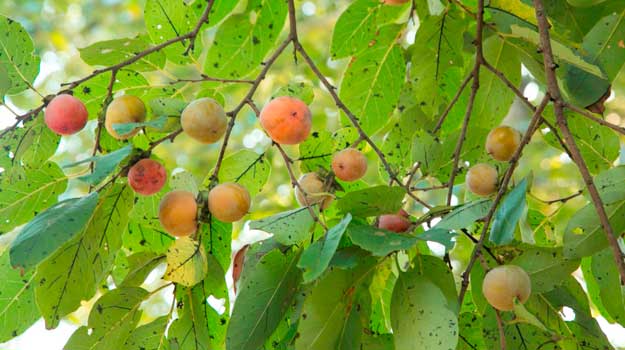
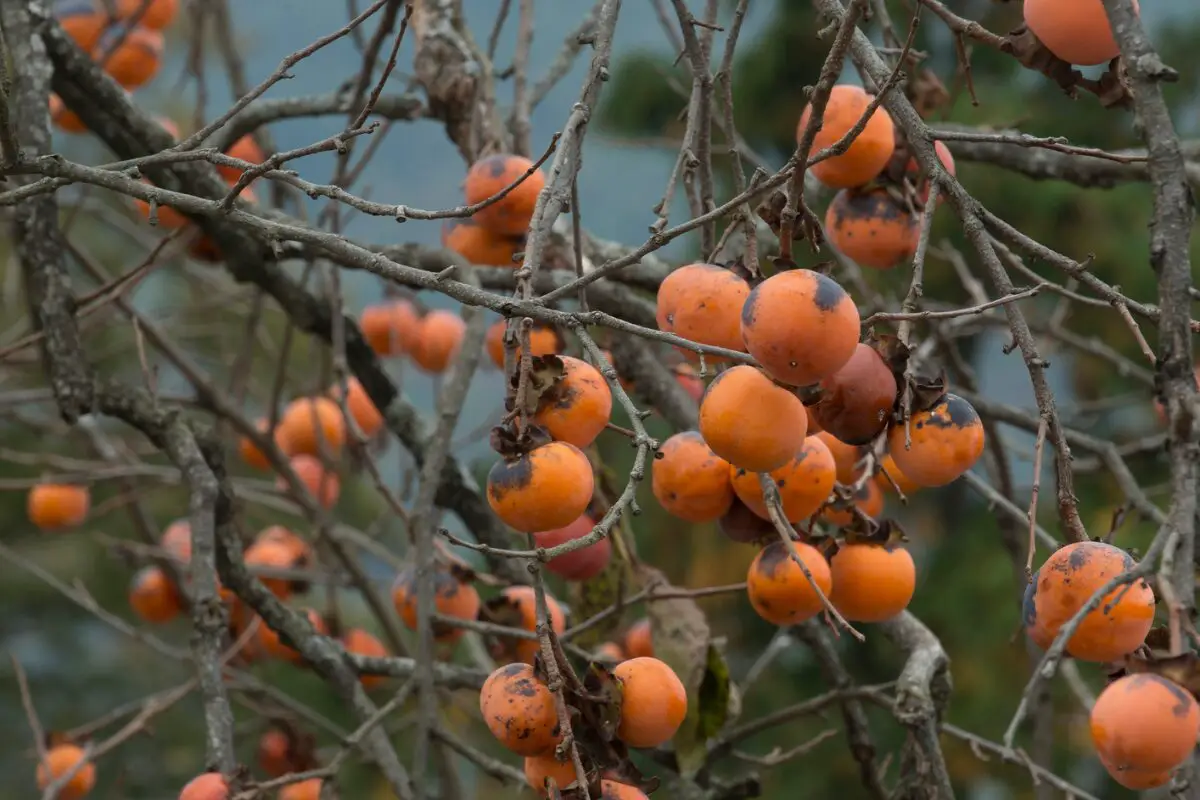
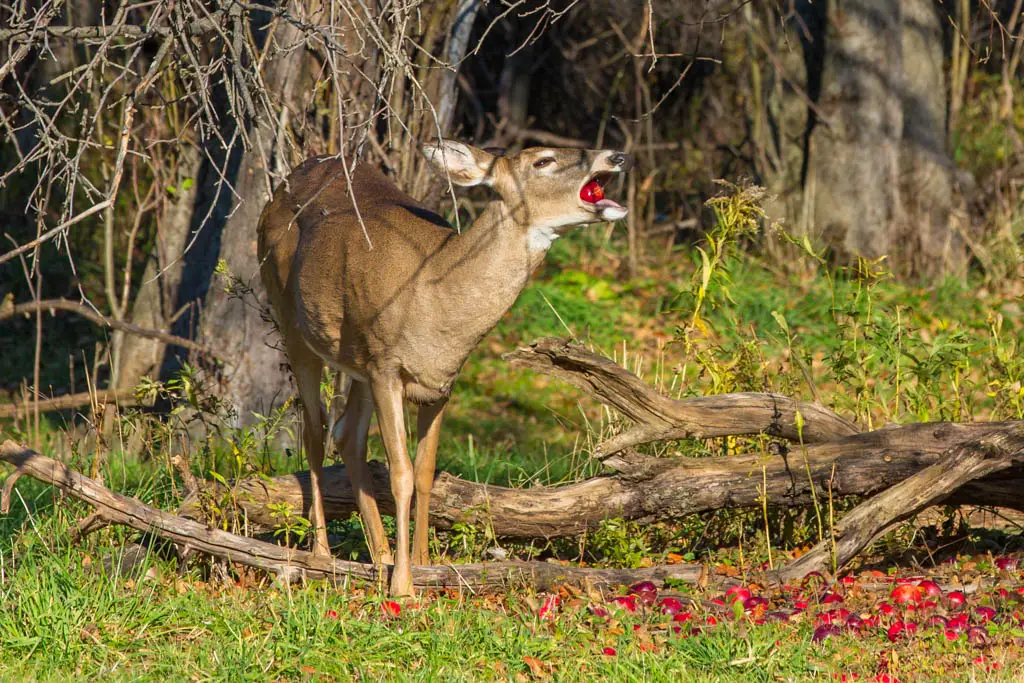
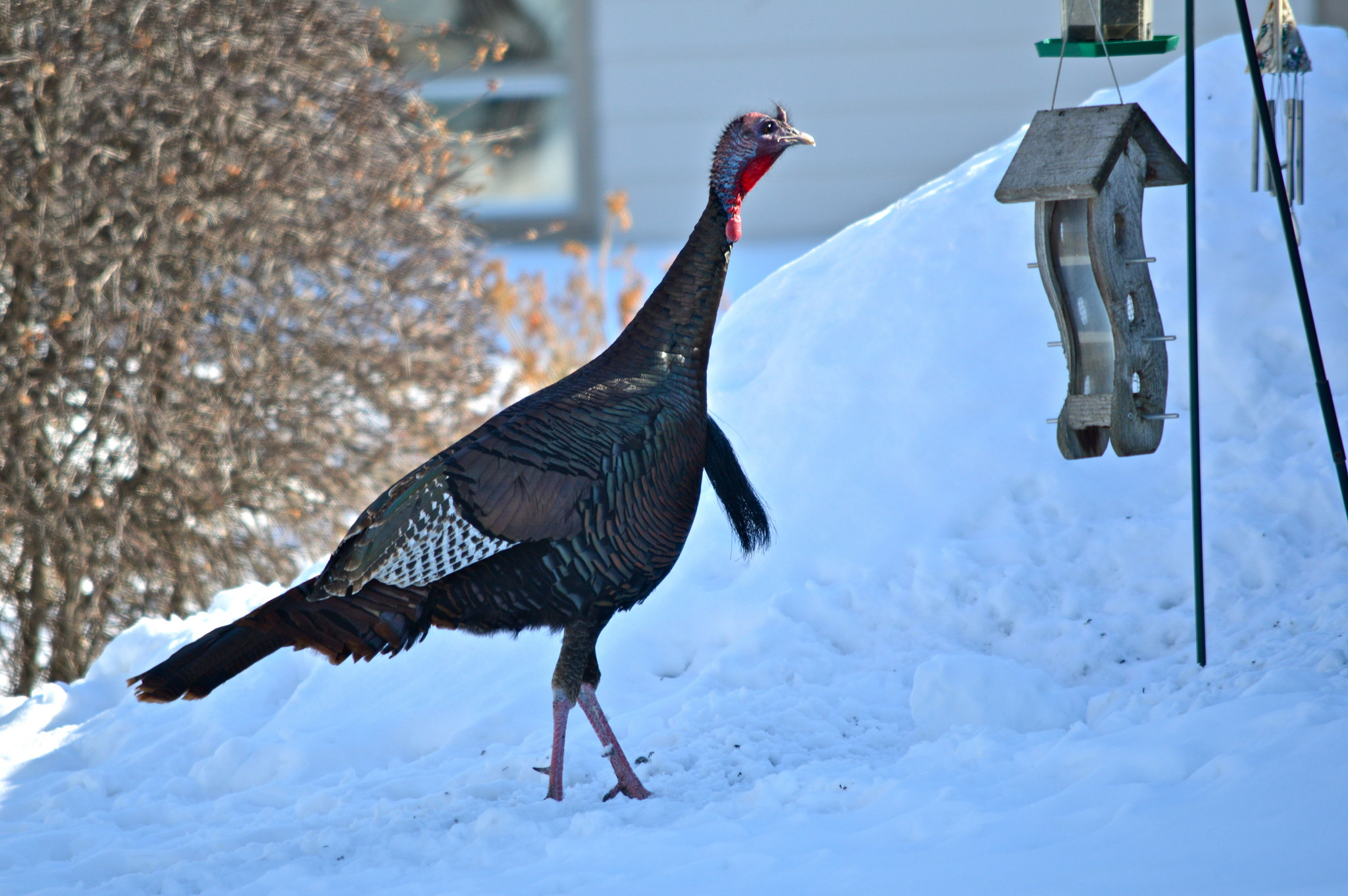
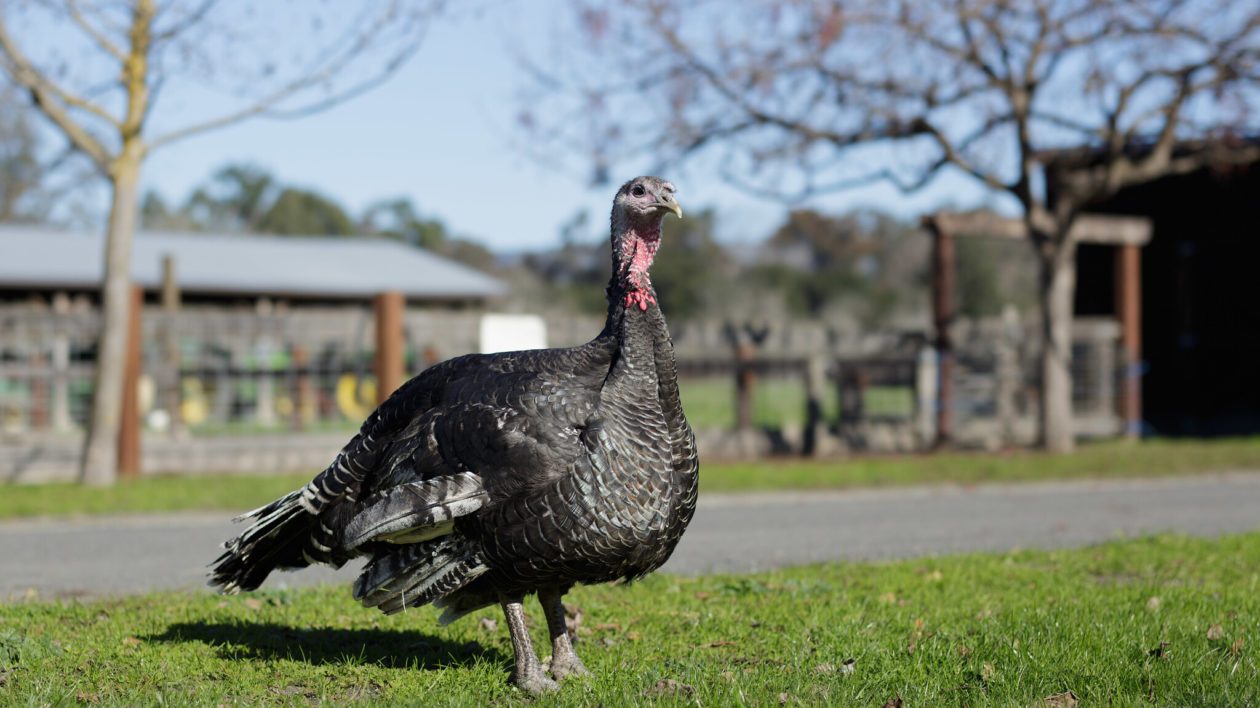
As many of us in the United States prepare to eat turkey, let’s take a look at what wild turkeys eat. The list might surprise you, and their dietary choices may help us figure out what the future holds for wild turkeys.
Like that certain uncle at your holiday dinner, wild turkeys will eat just about anything that fits into their mouths. They are the quintessential omnivores.
Acorns and azalea galls, bluegills and blueberries, crabgrass and caterpillars … they all go right in.
Prickly pear and panic grass, toothwort and tadpoles, grasshoppers and grapes, pecans and paw paws, sedges and snakes … and the list goes on.
Depending on the plants species and time of year, turkeys will eat roots, bulbs, stems, buds, leaves, flowers, fruits and seeds.
In search of protein, they move about the woods like a pack of velociraptors, thrashing up the leaf litter and eating anything that moves.
Their quarry includes all manner of insects as well as salamanders, lizards and frogs.
From the treetops, to the ground and across forests, fields and suburban yards, turkeys make use of every inch of habitat available to them.
They are even known to venture into the water to eat aquatic plants, fish and crayfish.
Peak Turkey?
The return of the wild turkey is a triumph of wildlife management. Careful regulation of hunting combined with reintroductions has produced a thriving turkey flock that nearly matches the population that existed before North America was colonized. But credit must also be given to the turkey itself.
Thanks to their dietary versatility, turkeys can thrive almost anywhere. Wet or dry, high or low, hot or cold, turkeys can make any habitat work. They only require some trees for roosting at night.
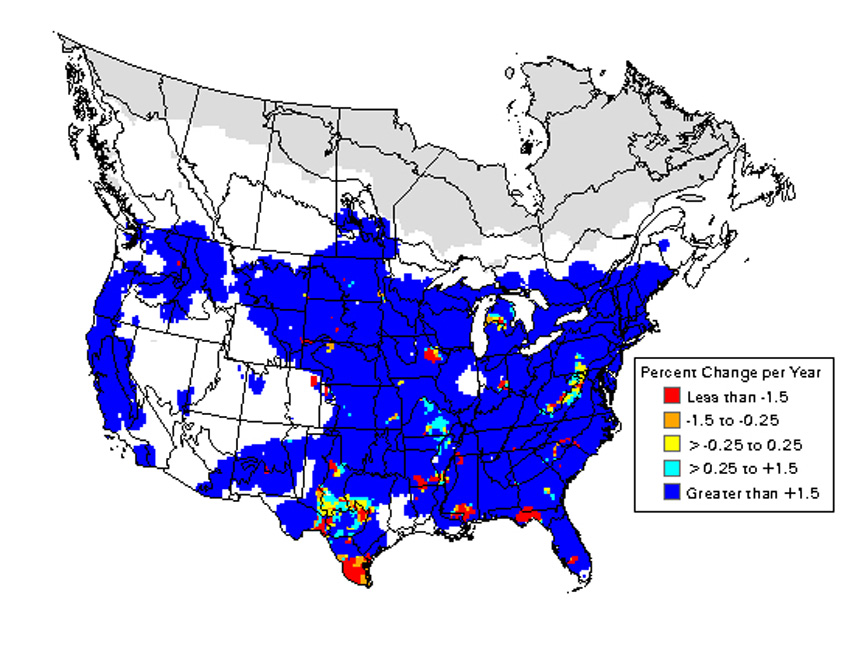
Wild turkey populations continue to grow. Across the U.S., the population is increasing by an average of 9 percent each year, according to the Breeding Bird Survey.
But how long can the population recovery continue? When do we reach “Peak Turkey”?
All animal populations have limits to growth. Food, disease, predation and environmental conditions each play a role.
But for turkeys, we can rule out food as a limiting factor. Given this bird’s extreme omnivory, other factors would likely come into to play before turkeys begin starving to death.
For example, even in the depths of winter when snow cover blocks access to the ground, turkeys can make do. Until thaw comes, they subsist on white pine and hemlock needles, mosses, lichen and the buds and stems of beech, sugar maple and hop hornbeam trees.
Predation, on the other hand, may play a central role in turkey population regulation. As most of us know, turkey is delicious!
Surprisingly, the usual suspects – coyote, bobcat and raccoon – do not commonly prey on adult turkeys. These carnivores instead focus on less formidable and wary prey such as rabbits and rodents.
Hunters kill turkeys, but regulations are set to manage for population growth. They allow hunters to take a limited number of mostly male birds.
It is nesting time that brings the most risk to a turkey. The above predators and many more seek out turkey eggs and chicks. And a hen turkey’s risk of being killed by a predator is also highest when she is sitting on the ground incubating her eggs.
A recent analysis of data from 15 Southern and Midwestern states shows that continued growth of turkey populations is limited by nest predation, combined with the limited availability of high quality nesting habitat.
In parts of this study area, peak turkey has arrived: the turkey population has begun to level off.
The research reveals that in places with the largest turkey populations, hen turkeys are less likely to have a successful brood of turkey poults.
According to the authors, this may be because all the best nesting sites tend to be occupied when populations are high. Many turkeys are then forced to choose nest sites that expose them to a higher chance of predation.
Overall the production of young turkeys tapers off while adult turkey survival remains high, resulting in a stable population.
Another factor to consider as we approach peak turkey is how higher turkey populations affect the ecosystems around them.
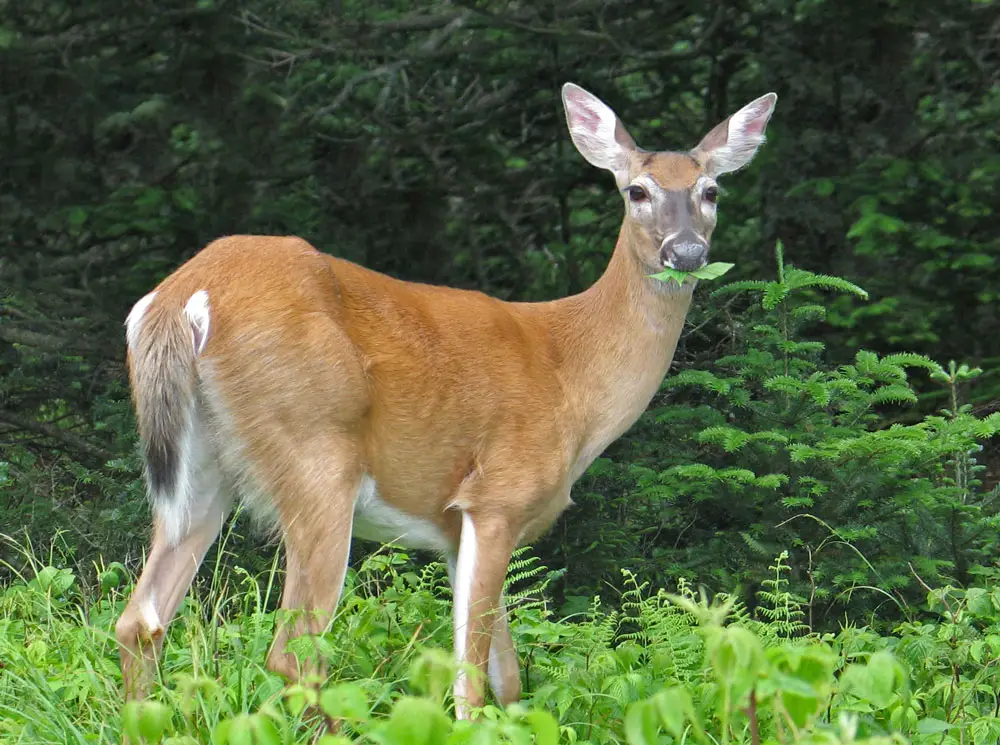
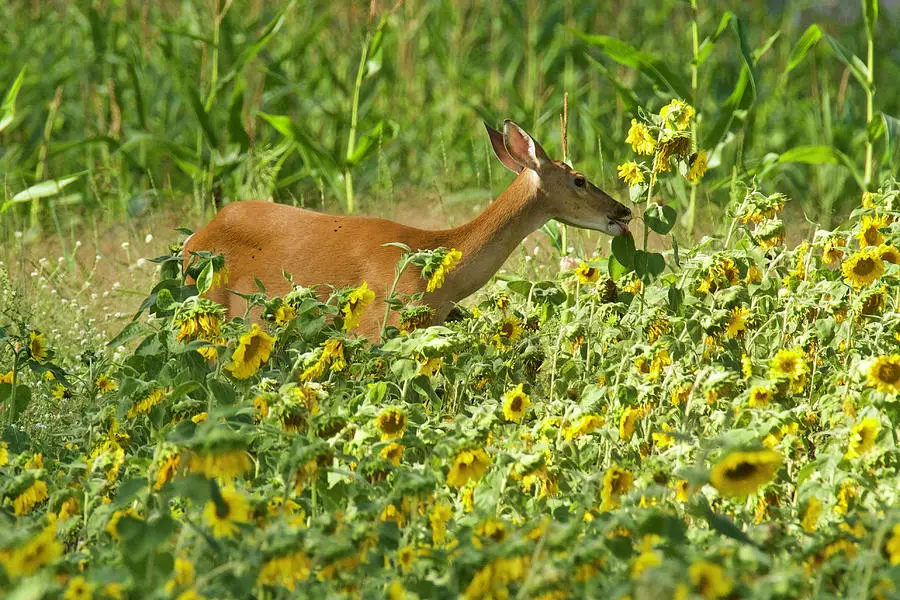
Consider white-tailed deer. This is a classic example of a wildlife management success gone wild.
Deer populations in the absence of large predators such as wolves can easily exceed the ecological carrying capacity of their habitat. When this happens, understory plants disappear and tree seedlings are eaten before they can grow. Such dramatic changes to the understory begin to affect other animals that depend on these habitats.
Few researchers have given attention to any potential effects of expanding turkey populations on the abundance and distribution of the things they eat.
Diet is a product of preference and availability. We know that turkeys eat almost anything, but we know little about what they prefer. Their preferences are important to know because preferred items will be the first thing to disappear from the pantry as turkeys become more abundant.
If these preferred items are plants or animals of conservation concern that aren’t able to thrive while being hunted by packs of modern-day velociraptors, then we might have a problem. To put it another way, are turkeys themselves a limiting factor for other organisms?
For example, turkeys like to scratch up spring ephemeral wildflowers and eat their roots. Although deer eat such plants too, how culpable are turkeys in the decline of these flowers that crop up in early spring woodlands before trees leaf out?
One study did focus on turkey impacts by excluding them from patches of forest. The results showed that turkeys hindered the regeneration of oak trees by scratching up leaf litter in search of food. Deer cause the similar problems with reduced tree seedling regeneration.
It may be a while yet before researchers, wildlife managers and hunters come to terms with the success of wild turkey management and the possibility that we are at or near the ecological carrying capacity for wild turkey in many places. The focus of wildlife managers remains on propelling population growth.
We still have much to learn about how turkeys influence the ecosystems around them.
Filling our knowledge gaps may be important as we make decisions about managing for wild turkey population stability or growth into the future.
Only then can we be sure whether gaultheria and gartersnakes, spring beauty and skinks can still thrive in a post-peak turkey world.
This is a very extensive list of the best trout lures for pond fishing and gives you, the angler, an opportunity to try new lures. There are a few more things to consider when fishing ponds for trout:
What is the best bait for trout in a pond?
Catch and Release Fishing has covered lures extensively in this blog, and we have considered some baits as well with the Gulp line of products. The one thing Catch and Release Fishing has not talked about are the actual, natural baits. There are plenty of natural bait options for trout in ponds. Here are the best baits compiled by the team at Catch and Release Fishing.
Nightcrawlers – The humble worm found all over the world is one of the absolute best baits you can use for trout. Buy, or dig your own in soft earth like your home garden. Either way works equally well for trout. Some anglers have nightcrawler beds at home as well. You can too.
Corn – Plain, yellow corn from a can is something people use frequently for trout in ponds and on rivers. Corn is cheap, and you can cook the leftovers with your creel full of trout.
Salmon eggs – There are plenty of brands available. Check out the Gulp Salmon Eggs. These work as well or better than the actual salmon egg and are considerably more durable on the end of the line.
What do you use to catch trout in a pond?
Most people who fish for trout in a pond use conventional rod and reel gear and leave the fly rods at home. This is not to say you cannot use a fly rod if the angler chooses to do so. Conventional tackle simply works better.
That is why Catch and Release Fishing recommends the QUDRAKAST Fishing Rod and Reel Combo. This combo features everything needed to start fishing for trout and other species as well. The telescopic rod collapses down for convenient storage and carry.
This combo is also ideal for new anglers learning the sport. The reel is very easy to learn to use and casts exceptional distances.
What color lure is best for trout?
Trout can be incredibly finicky when it comes to what they will and will not strike in terms of a lure presentation. There are three things to consider when looking for the best lure for trout:
Current feeding – Trout in streams and rivers feed on what is hatching. Trout in ponds are after different forage like minnows. Match your colors to what the trout are eating in the pond
Water clarity – Clear water calls for colors like red and orange. Stained water means contrasting colors like pinks and chartreuse. Silver and black are good no matter what the water clarity looks like.
Light penetration – Water in ponds can be very deep. In deeper water, use black, blue and green. Metallic colors – silver and gold work well in full sun and in deep water.
It is always a good idea to take a selection of lures with you when heading for a pond, stream or river. This way you can find what the trout are after.
Catch and Release Fishing has always had better luck with conventional tackle than with fly fishing gear. These lures have always produced for us as well.
Some of these lures do have treble hooks and are much more likely to provide a solid hook up and get more trout to the bank. However, this also means there is a better chance of doing harm to the fish when trying to get the hooks out and release the trout back into the water.
Any treble hook can be replaced with a single trout hook, and if you plan on releasing the fish, please consider using barbless trout hooks.
Catch and Release Fishing is about good practices and conservation. It is a hope you will do the same.
Mark Drury explains the key factors that influence whitetail behavior, advice for beginning hunters and the benefits of onX Hunt and his new DeerCast hunting app.
What if the forecast could tell you where the whitetail will be the night before you head out into the field? What if you could look at a new swath of public hunting ground and know intuitively where the whitetail will be?
Missouri-based Mark Drury, co-owner of Drury Outdoors and a lifetime hunter with 40+ years of whitetail hunting experience, is a firm believer that it’s possible. In his “Thirteen” video series, he talks about 13 different indicators that dictate whitetail behavior and patterning. In a recent phone interview with onX, he noted three factors he always looks for when evaluating a potential hunting location:
– Bed- Food- Water
Food, he reiterated, is perhaps the most important factor.
“Whitetail are slaves to their stomachs,” he shared. “Really focus on your food plots. Befriend a local farmer or someone at the local co-op—they will know crop timing, what sprays and fertilizers to use and more.” That farmer or co-op member may end up being your best friend in the plot-planning game. Consider possibly calling up your local Farm Service Agency office and asking for information; usually they are more than happy to help.
Food is a moving target: a whitetail’s preferred source differs by both region and time of year and can also change on a day-by-day basis. If a deer is feeding on beans and then acorns suddenly start to drop, they’re likely to shift to eating acorns, therefore changing current eating habits and—most likely—movement patterns.
Mark is a steady user of onX Hunt as a tool to manage his food plots. “I absolutely love onX,” he shared. “I like using it to establish the size on all of my food plots. By calculating the correct acreages, it really helps estimate seed and fertilizer needs, which helps reduce costs. No need to guess anymore.”
Pending the time of year, a good water source and potential bedding spots may overtake the need for food.
“At certain times of year, water, food or bed may be the most important,” Mark noted. It’s up to the hunter to problem solve in certain areas—and to look for opportunities. “If they’re lacking cover or food, you can help provide it.”
Another crucial factor for whitetail hunters is weather. “It’s a big one,” commented Mark. “Weather influences whitetail behavior and movement on a minute-by-minute basis.” It’s this level of importance that helped inspire Mark, along with his brother Terry, to develop the DeerCast hunting app. It also inspired us to create our own deer hunting weather and forecasting capability in onX Hunt. Utilizing current weather reports and weather forecasting, DeerCast helps whitetail hunters predict deer movement in the field.
One of the last key factors Mark looks at is overall rut interpretation and dynamics. What does the herd ratio look like? For example, a high doe-to-buck ratio can lead to a prolonged, less-defined rut. Take some time to research the herd you’re hoping to hunt—game cameras are your friend here.
And perhaps most of all: don’t be afraid to get your hands dirty and just learn. As a child, Mark lived in a rural town of roughly 400 residents. His father didn’t hunt, but he knew he wanted to be outside.
“Since the time I was little I just wanted to be in the woods,” he shared. “I took up hunting myself—that’s just what people did in our town; how they approached things. It was a lot of learning by trial-and-error.”
It was that same learning process that has now led to a 40-plus-year career as a whitetail hunter. “Hunters can never stop learning; you need to go at it with an open mind—hunting keeps us learning,” Mark added.
That same spirit of learning dictates the hunting lifestyle, for both first-year and seasoned hunters. Mark notes that 25 years ago, hunting media was largely limited to print magazines such as Field & Stream and Outdoor Life; now it’s easy to find all manner of information online.
His advice for new hunters? “Sit there and soak up as much as possible online—and never stop wanting to learn.”
It’s savvy advice for hunters of all levels, backgrounds, and locales.
Shotguns deliver a solid bang! for your buck and are one of the most popular home defense choices today. Shotguns are simple, affordable, and typically extremely reliable. While there are many different types, the classic pump-action is likely the one that comes to mind most often when people hear the word shotgun. The Winchester SXP Defender was often recommended to me over the years. When an opportunity to pick up an SXP came along, I eagerly opened my wallet.
Unboxing
Unboxing the SXP when I got home was a quick process and revealed basic packaging. It came in a branded Winchester cardboard box with a Styrofoam insert to hold the shotgun in place. Aside from the shotgun, there was a lock, manual and plug in case you need to limit your capacity for hunting.
Everything was secured nicely in its own cut out within the Styrofoam that kept it safe in transit. I would’ve liked to see a basic soft case to be included — as a minimum — but it was not a deal breaker.
Winchester SXP Features
“The SXP is exactly what I was looking for and nothing more.” That was the thought that crossed my mind when after unboxing the SPX, shooting it, and reflecting on the experience. I wanted something relatively lightweight, with a shorter barrel for home defense purposes, a total capacity of at least six shells, and the availability of plenty of aftermarket accessories. Check, check, check, and… check.
The chamber and bore are both hard chrome-plated to reduce wear and corrosion. The SPX comes standard with a fixed cylinder choke. For those of you who prefer to run a scope or red dot on your shotgun, the alloy receiver is drilled and tapped to easily add your scope bases. The Winchester SPX features a standard brass bead front sight, drop-out trigger group, and crossbolt safety placed at the front of the trigger guard for easy access.
Specifications
Gauge: 12Capacity: 5+1Action: Pump Overall Length: 38 ½ inchesSights: Bead Front SightChamber: 3 inches (accepts 3-inch and 2 ¾-inch shells)Magazine Type: TubularBarrel Length: 18 inchesWeight: 6 pounds, 8 ounces
Range Thoughts: Handling and Reliability
One of the most enjoyable aspects about this gun was the smoothness of the action. Since it’s inertia-assisted, follow-up shots were quick and simple.
The texture on the stock and ribbing on the forearm were just enough to assist with a secure grip if your hands got wet, without being gritty and uncomfortable. The recoil pad was sufficient, but I would’ve appreciated a little bit more recoil absorption.
Short shooting sessions would not have been an issue, but for testing, I put a lot of rounds through it. With that being said, for hunting scenarios or normal shotgun range time , I think it would be more than adequate.
From a reliability standpoint, I had very few issues. Over the last four range trips, I put a total of 250 rounds downrange at both indoor and outdoor ranges, with temperatures down to the single digits. Out of the 250 rounds used for the test, 100 were various buckshot rounds, 100 were various birdshot rounds, and 50 were slugs.
I wound up experiencing two failures, both of which were failures to eject and near the tail end of the 250. Perhaps it was operator error. I can not say for sure whether I short-stroked the gun, so I hate to blame the gun.
The accuracy was as expected from an 18-inch 12 gauge. For my original accuracy test, I chose to use #4 buckshot, from 15 to 75 feet at 15-foot intervals. Of course, the groupings spaced out after 30 feet as expected. For the most part, within 45 feet, the “intruder” would be getting hit with most, if not all, of the pellets.
Winchester SXP: Final Thoughts
The Winchester SXP Defender is a solid, entry-level 12 gauge shotgun with plenty of after-market accessories to take it to the next level. Given its combination of reliability and affordability, I would recommend at least checking it out, if you are in the market for a new shotgun. I’ve been having a blast, pun intended, shooting the SXP and think you will too.
Have you had the chance to shoot the Winchester SXP Defender? Share your review and experiences in the comment section.
Bio: Ryan Domke is a freelance writer, photographer, and social media consultant with a passion for guns and tactical gear. He works with some of the largest manufacturers in the firearms industry, allowing him the opportunity to continuously learn from and knowledge share with the 2A community.
When he’s not spending time with his family, you’ll likely find him at the range or starting a new DIY project. If you’d like to check out some of his other content, you can find him on Instagram at (@TheGuyGearReview).
In 1949, their SIG P49, which was used by the Swiss army, quickly became a legend on the battlefield as well as in competition.
Later, they started product lines of hunting rifles, which were also really successful and well-known worldwide.
In 1980, they reached the US market.
American success played an important role in making SIG an international leader in the small arms industry.
Nowadays, they produce the toughest, most precise rifles, pistols, suppressors, optics, ammunition, and airguns, many of which are used by the world’s best militaries.
Their philosophies are to cherish freedom, not compromise, and to be the very best.
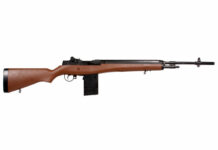
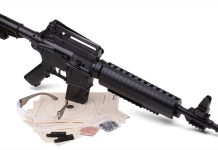
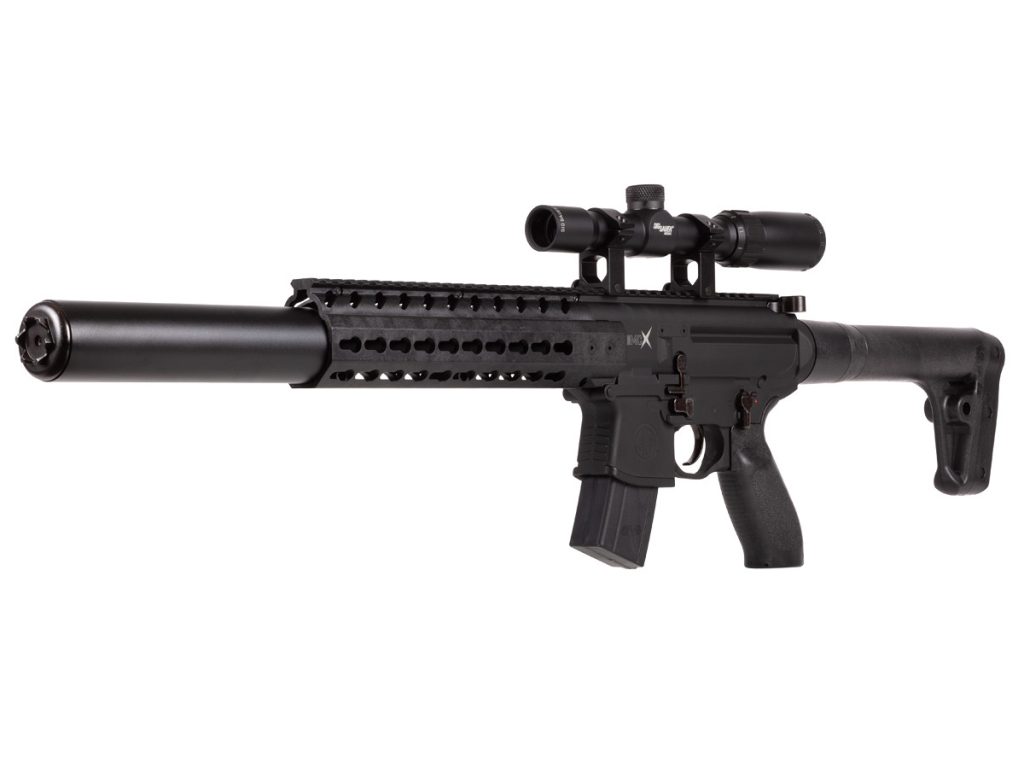
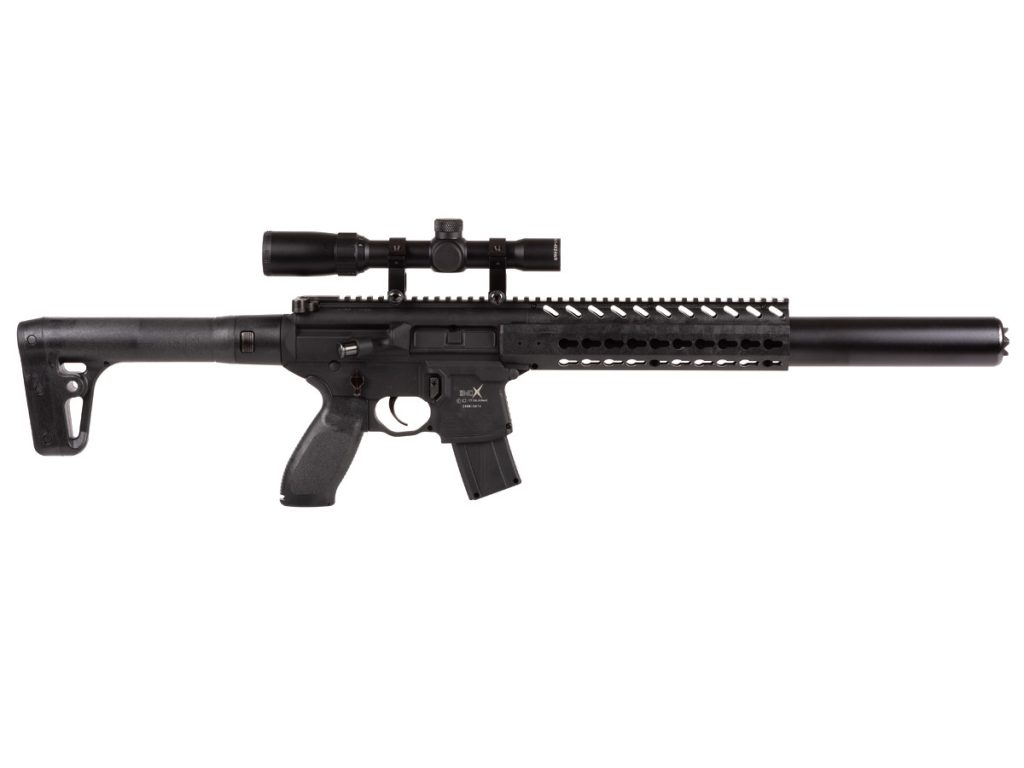
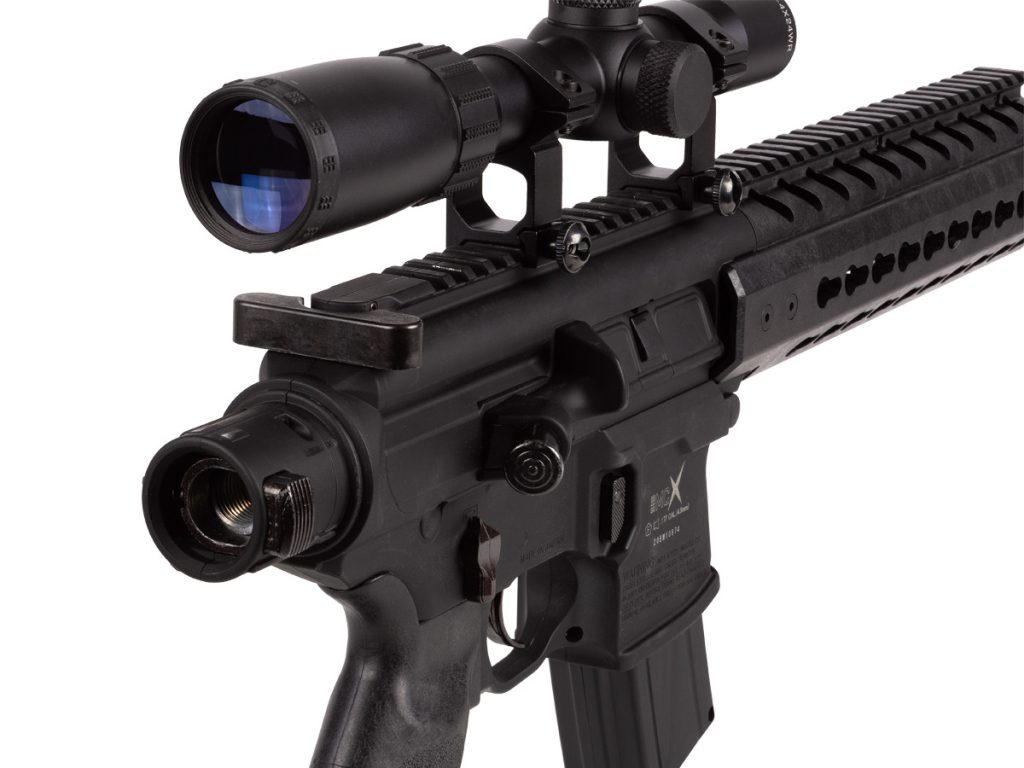
The Sig Sauer MCX .177 is a really fun gun — you can see that just by looking at the rifle.
The stock is made of synthetic, and the barrel is made of rifled steel. The butt plate is made of plastic.
It comes in all black.
You can use either the Weaver or Picatinny scope on this gun. The overall length is 34.7 inches.
The barrel length is 17.7 inches – the short length makes the gun shoot even faster.
The gun uses CO2 gas as the power source.
It’s a semi-auto rifle that can shoot 30 .177 caliber pellets per load.
The max velocity is 700 fps – not so fast.
The rifle shoots loudly but accurately.
The gun is used for fun plinking, not for hunting as its power is not quite there.
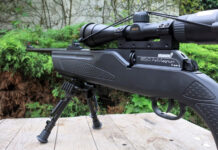
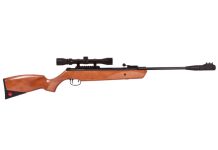
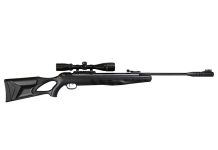
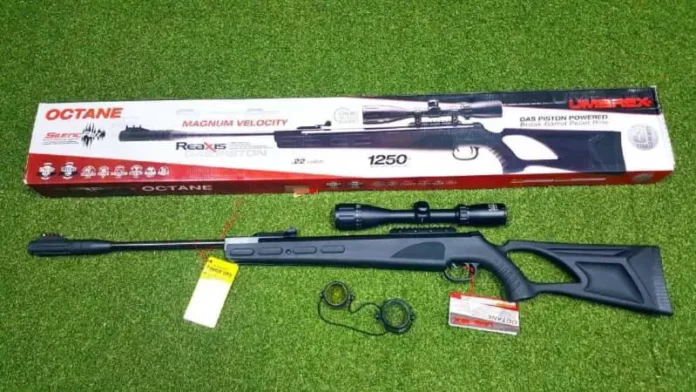
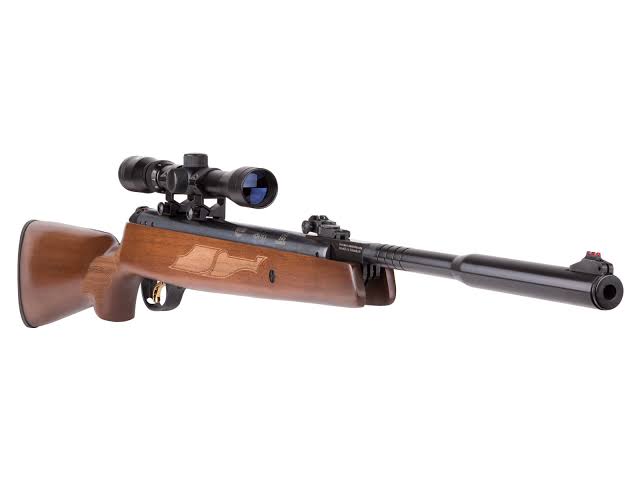
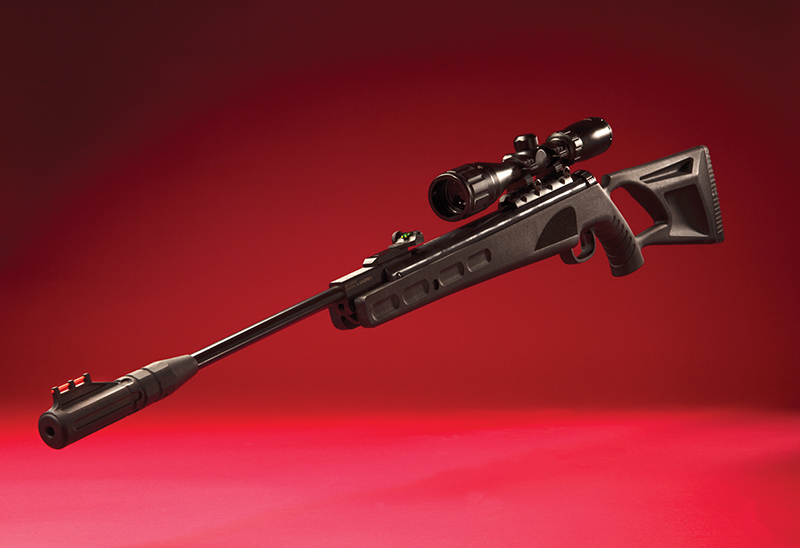
The Umarex Octane Air Rifle features a ReAxis gas-piston that can give you smoother cocking, smoother shooting, no recoil, no spring torque, and no spring fatigue, even if you leave it cocked for hours.
Besides, the Umarex Octane is a single-shot break-barrel air rifle.
The gun discharges .177 caliber pellets 1450 fps – a really amazing velocity with a $300 air rifle.
There is some sound while shooting, but not too loud thanks to the integrated silencer.
Its length is 48.5 inches, with a barrel length of 19.5 inches. It weighs 9.5 pounds.
The rifle has an adjustable two-stage trigger, a rubber recoil pad on the butt plate, a grooved grip for better grip feeling, but no raised cheekpiece.
You can use a Weaver/Picatinny scope on Umarex Octane Air Rifle and it also comes with a 3-9×40 AO scope.
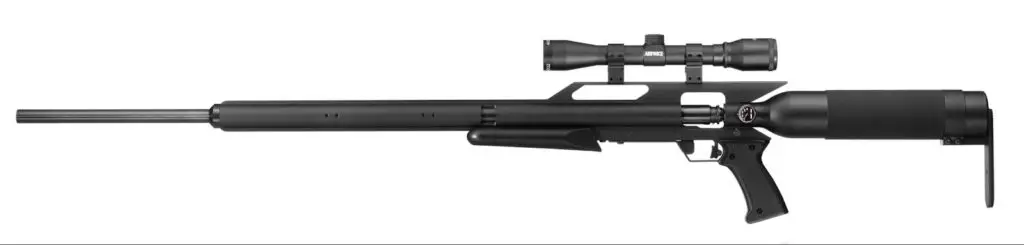
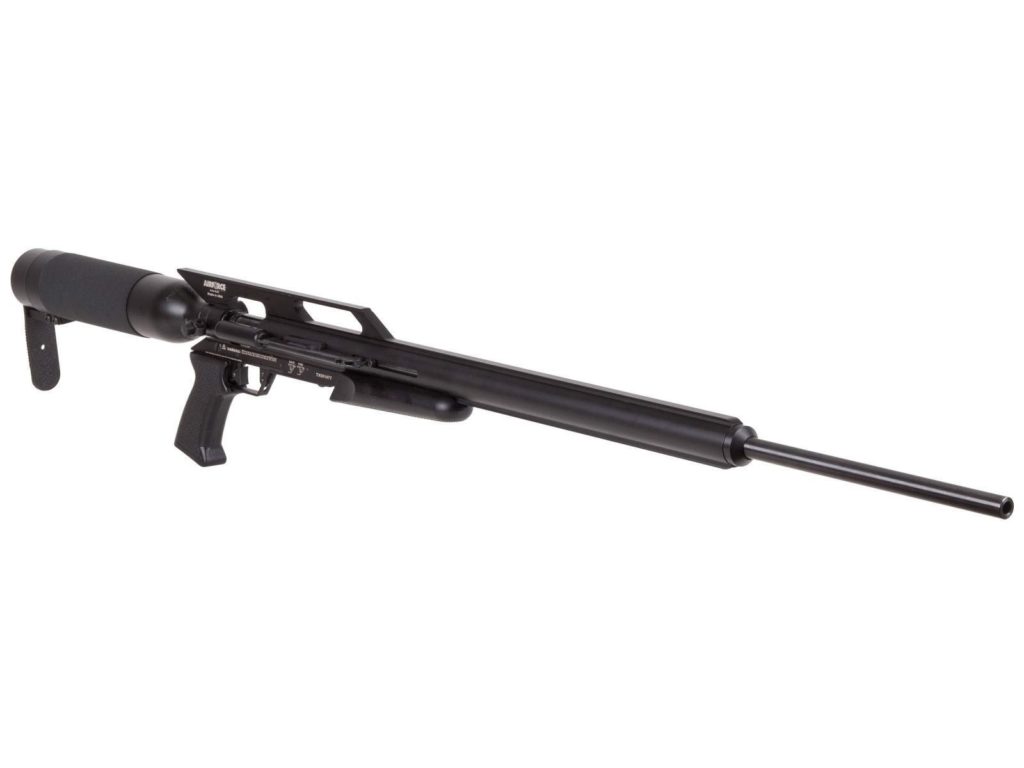
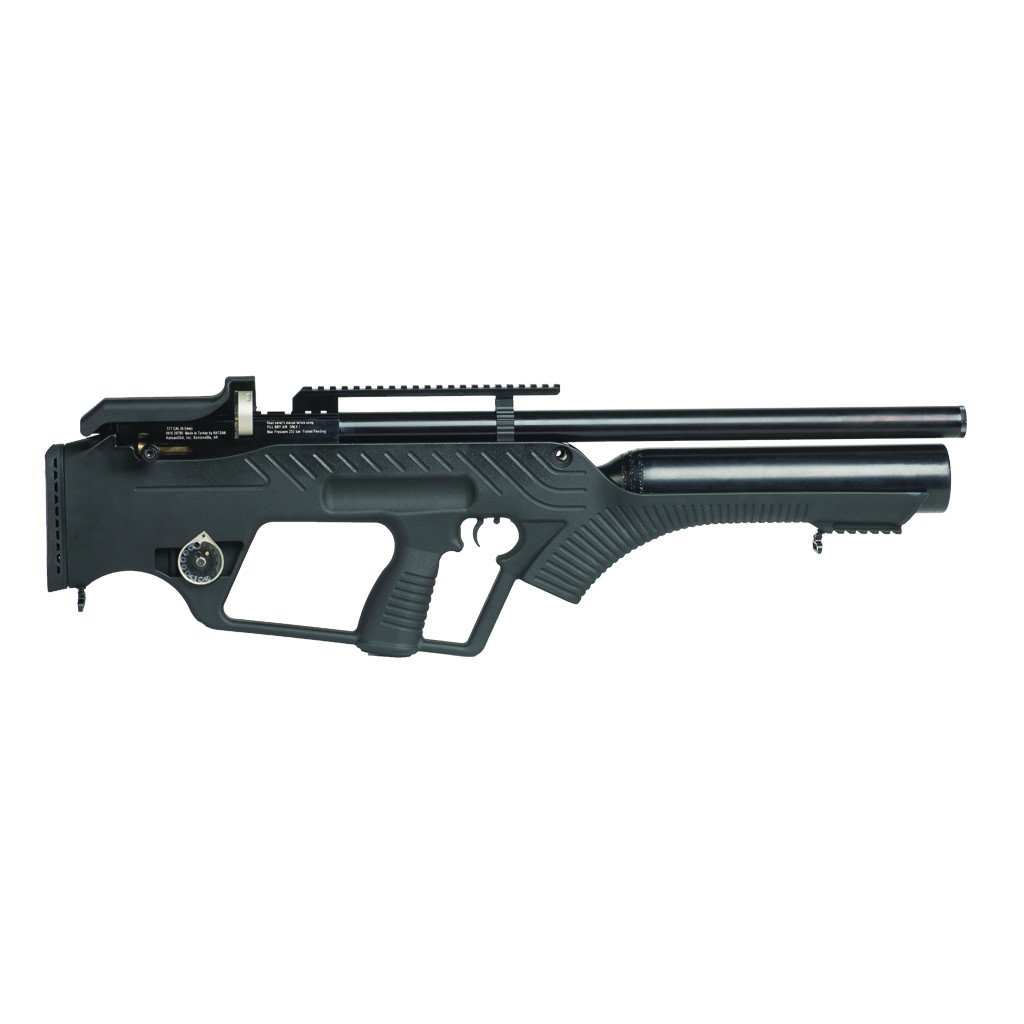
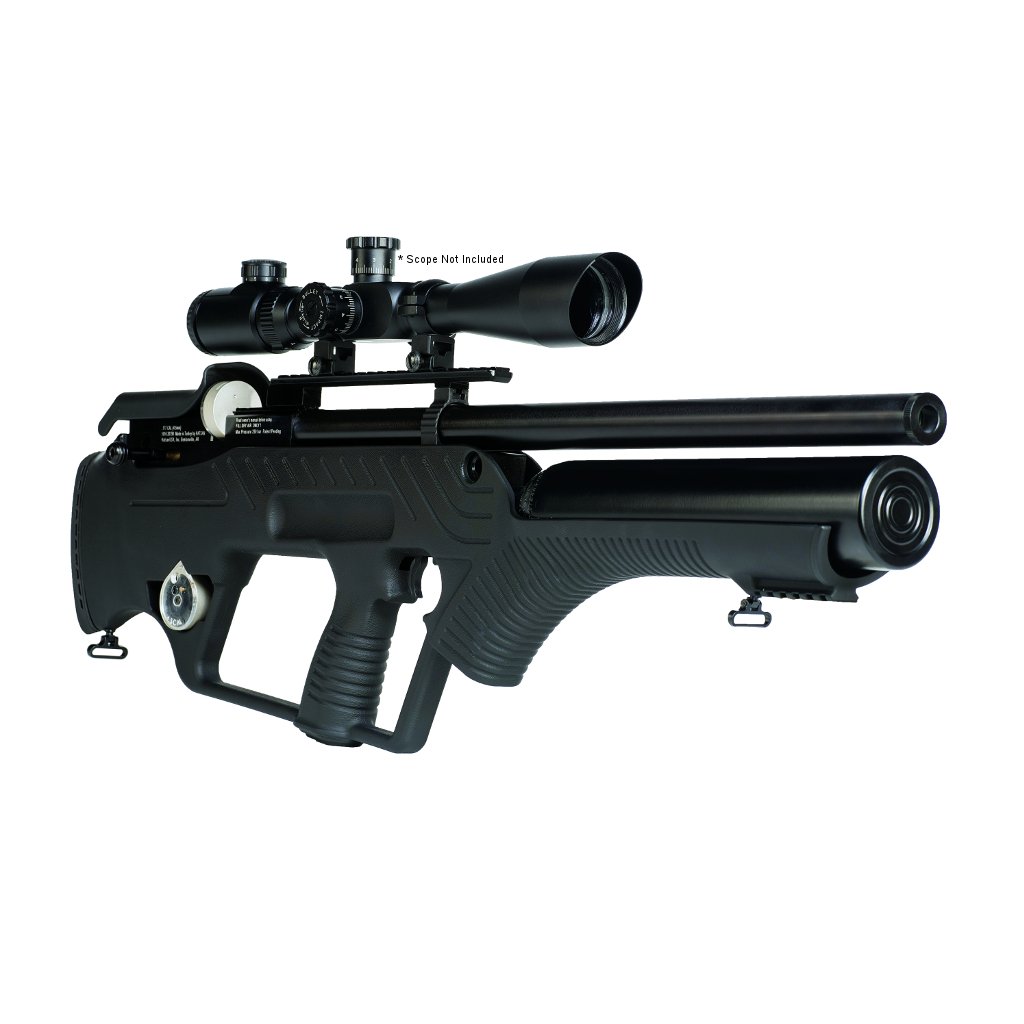
The Hatsan BullMaster Semi-Auto PCP Air Rifle uses compressed air as the power source.
PCP is the most powerful air rifle type, as in comparison to other types of power sources, compressed air is held at a much higher pressure than the CO2 and the Spring.
Pressurized air is also not affected by temperature changes like CO2 is.
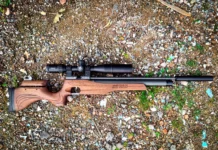
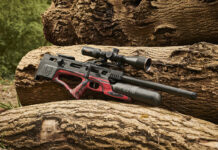
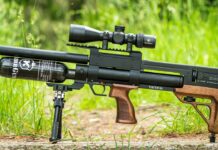
Hatsan BullMaster Semi-Auto PCP Air Rifle looks cool .
The advantage is the short barrel makes the round come out of the barrel faster, and you don’t have to hold the gun s steadily.
The disadvantage is that it will reduce the distance that the round can go.
The weight of the gun is 10.3 lbs.
The air rifle comes with 3 magazines: 14-shot .177, 12-shot .22, and 10-shot .25 calibers, so you can choose the best type of caliber for your shooting needs, from pigeon to deer.
The velocity for .177 pellets is 1,100 fps, for .22 pellets is 1,000 fps, for .25 pellets is 900 fps.
However, it is not consistent — the velocity fluctuates quite a bit.
The cylinder is 500cc and capable of being filled to 250 bar (3,625 psi).
This is a high-pressure capacity in comparison to other models of PCP air rifles.
Hatsan BullMaster Semi-Auto PCP Air Rifle is Semi-Automatic and has 2 magazine carrying slots, so you can shoot very quickly, up to 28 shots — Really impressive.
The gun costs about $900.
This is the best .177 air rifle in terms of enjoyment:
[an error occurred while processing this directive]
Salting has always been one of the most common methods for preserving meats, so after coming across reference after reference to salted meats in medieval cookbooks, I decided to try it out.
The theory is simple – a sufficiently high amount of salt will dehydrate the meat and prevent any bacteria or mold from growing. However, to the modern mind which is accustomed to refrigeration, the practice of leaving raw meat out on the counter for a couple of weeks seems more than a bit creepy.
Each time I’ve done this, the end result has been safe to eat (or at least apparently so – it tasted good and I stayed healthy). For anyone following these directions though, you do so at your own risk. If the end result smells nasty, you eat it anyways, and you get sick and die, then don’t come complaining to me.
For this experiment, I took approximately one pound of raw venison cut into half inch thick steaks. It had been previously frozen, but was thawed completely, rinsed, and patted dry with a paper towel.
raw venison
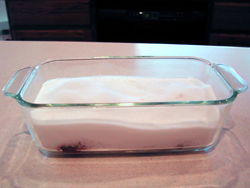
I put a thick layer of salt into the bottom of a glass baking dish, put the venison on top, and covered it with more salt. I then repeated this with a second layer. I then covered the whole thing with plastic wrap and left the dish out on the counter for 24 hours.
venison packed in salt
the same dish a day later
The next day the salt had developed a disturbing pink color and there was a layer of thick red liquid at the bottom. I pulled the steaks out and brushed the salt off them, dumped the pink salt and nasty red liquid down the drain, and re-packed the steaks with fresh salt.
steaks after one day in salt
I was prepared to repeat this process the next day, but the salt didn’t discolor at all and no further red liquid formed.
fourteen days later
After two weeks I decided it was time to check the results. The salt had solidified into a crust, and the venison had turned dark and was very hard.
salted venison steaks
I cut one of the steaks in half to check the inside, and while it was a lighter color than the outside, it was still just as hard and dry. At this point the meat smelled substantially better than it did when raw. It’s worth noting though that throughout the whole process it never smelled unpleasant.
steak cut in half
the inside is lighter in color
The proof of course is in the eating. I rinsed the steaks in water and then boiled them in a mixture of water and cheap red wine. After an hour of this, I dumped the liquid out and did it again. The liquid tasted quite salty after the second boiling, so I replaced it once more and boiled it for another 20 minutes.
I then cut the meat into thin slices and served it with mustard. The venison was slightly salty and had developed a bit of a smoky flavor. The whole process was somewhat tedious, but very easy. I’ll have to see how well it works for camp cooking.
Source [Le Ménagier de Paris, J. Hinson (trans.)]: Venison of Deer or Other Beast, If you wish to salt it in summer, it is appropriate to salt it in a wash-tub or bath, ground coarse salt, and after dry it in the sun. Haunch, that is the rump, which is salted, should be cooked first in water and wine for the first boiling to draw out the salt: and then throw out the water and wine, and after put to partly cook in a bouillon of meat and turnips, and serve in slices with some of the liquid in a dish and venison.
[an error occurred while processing this directive]
There is nothing better than going out into the wilderness, relaxing, and target shooting with your friends and family. While it is nice to be out in nature shooting your guns, there are many dangers in doing so if you do not take the proper precautions.
When you are at a standard range, they take make rules and enforce specific precautions for you to follow. The biggest benefit in utilizing a range is that you have targets that you can hang up in a safe area, you can bring the target to you without having to put yourself downrange, and there are walls in between you and the people next to you shooting, which helps ensure a controlled environment.
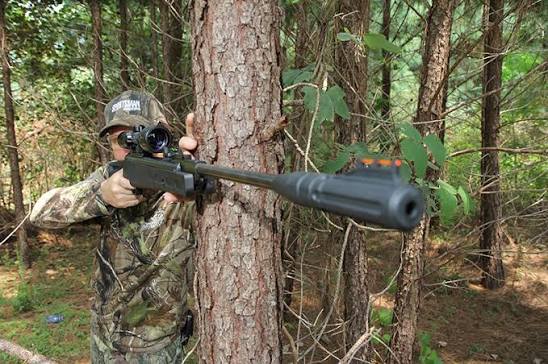
Unfortunately, the outdoors and shooting with a group of people in an open environment is not necessarily the most controlled and safe environment to do so. One potentially hazardous scenario when shooting outdoors is ricochet bullets. In this post we look at whether choosing to hang a target on a tree is a good idea.
So, Is Shooting a Tree Safe to Do?
In general, shooting at trees is not a safe practice. Not to mention, this practice may harm or destroy trees in doing so. Damaging natural resources, especially on public lands, is often illegal in the United States. Shooting into trees can cause a ricochet to occur, which can cause your bullet to come back and hit you, someone, you are shooting with, or valuable personal property.
Will the Bullet Ricochet Off of the Tree?
Shooting at a tree can cause the bullet to ricochet off and change direction. While trees are softer than rocks and metal, they still can cause your bullet to bounce and sometimes come back at you. It is impossible to project the trajectory of the bullet if a ricochet does occur. This is extremely important to keep in mind because when you shoot it may not just be yourself who is in the line of fire.
Factors Impacting Whether the Bullet will Ricochet
Depending on how close you are to the tree, and what type of gun you are shooting, there is a risk of your bullet changing direction to come back at you which could cause you, or your friends and family to be shot by the stray bullet causing injury or worse.
If you are extremely close, you could run the risk of also having the tree splinter off in your direction causing some nasty cuts and splinters. While numerous factors will impact bullet ricochet, two of the most impactful factors is the type of tree being shot and what caliber of gun is being used.
Does the Type Of Tree Matter?
There are a ton of different types of trees in our national forests. Cedar, pine, oak, redwood, and many other types of trees that can be found in a forest. It typically will not matter what type of tree you shoot into, but there are some types of trees that have a “harder” wood core than others, so your chances of ricochet might go up depending on what you shoot at. Oak trees tend to be much more hardwood than a cedar tree.
Pine on the other hand is a softer wood. Keep in mind that the softer the tree is, the more likely the tree will be damaged by you deciding to shoot it. Even if you have shot at a “softer” tree in the past without issue, it does not guarantee your safety in the future. Something as simple as a knot in the tree can send your bullet flying right back towards you or a loved one.
Does The Caliber of the Gun Matter?
When thinking about tree damage and ricochet, the higher the velocity of the bullet, the more chance you have for it to bounce or ricochet. Shotguns utilizing bird shot at a distance will probably have the lowest ricochet potential because they are a scattergun, and the lead pellets are normally pretty soft. The problem with shotguns is that they can do a lot more damage to the tree. The typical bullets you will want to use extreme caution with are going to be 9mm, 45, 22, and larger caliber guns. High powered rifles might actually go completely through the tree causing it to hit something else.
Below is a video of a bullet ricochet that occurred after shooting a brick at 10 yards.
How Does Shooting a Tree with a Gun Hurt It?
Trees are living things, so just like if you shot a real person, shooting at a tree can injure it. It may not kill the tree after one, two, or even thirty shots, it is certainly not great for it. While you might not think this is a big deal, there are US laws that prevents you from harming trees and foliage, which could land you a hefty fine, and possible jail time.
While trees cannot instantly react to harm being done to them, over time they can stop producing fruit, seeds, and even oxygen, which is an integral part of the ecosystem. There could also be wildlife living in the tree, and if you shoot it and it dies, the wildlife might have to move, especially if the tree dies and falls over.
While we do not want to tell you what to do, at least think of what you might be doing when you shoot at a tree. It is difficult to measure the outcomes of these types of decisions over time.
If you love the outdoors, it is your responsibility to protect the resources that you value. The number of active hunters and people who fish are continually decreasing and being a good steward of the activities we love is becoming more and more important.
Safer Target Options than Shooting at a Tree
Mentioned above, going to a quality indoor shooting range can be a safer choice than going outside and slapping a target onto a tree. Shooting outdoors is also a safe option if the proper precautions are followed. Risk cannot fully be eliminated during an activity such as shooting, but the risks can be reduced. Three other safer outdoor shooting options include:
Shooting a free standing target in front with a hill as a backstop.
Shooting at a soft object, such as a box, with a target on it with a hill as a back stop.
Shooting a target in a large open field with a slight up-trending grade behind it.
All of the above options helps to ensure that the bullets shot will end up striking the ground after passing through the target. This provides peace of mind that the bullet will not continue on and strike someone a distance away from where you are. Ricochets could still technically happen, it reduces the risk of it occurring.
In Summary
There are tons of options for target shooting in the woods other than hanging targets up on a tree. Always be aware of your surroundings and find a safe spot for you and your friends to shoot without causing any damage to the forest or each other. Find a nice place with a good backstop so that it will stop your bullets and not have any issues of ricochet. Always clean up your mess, never leave any targets or used bullet casings in your spot when you leave, and above all else, enjoy yourself!
There’s no shortage of hunting adventure in the largest state east of the Mississippi River. Whether you’re a seasoned peach-state hunter or just passing through – there’s something for everyone. All you need is a hunting license to access these wild public lands.
Big Hammock WMA
Glennville – Tattnall County
A squirrel hunter’s paradise. All but 1,000 acres of this WMA is dominated by large acorn bearing hardwood forests. Twenty miles of foot access trails wind through swamp allowing hunters to quietly slip through the area that is very navigable even for beginners. There’s plenty of room for more adventurous hunters to journey “uncharted territory” where you may not even see another hunter, too. Don’t knock squirrel until you try it! There are some great squirrel recipes out there and the season runs from August 15th til the end of February.
Coopers Creek WMA
Suches – Union County
Chase some game in the foothills of the Appalachian Trail at Cooper’s Creek WMA. Part of the Chattahoochee National Forest, you’ll have 30,000 acres of beautiful mountain scenery to hunt on. Muzzleloader season is a fan-favorite offering great chances to harvest deer, bear, or hog. For a complete primitive experience, there’s plenty of opportunity for camping alongside mountain streams stocked with trout. Not in the mood for camping? No problem. You’re only a short drive from nearby Blairsville.
Crockford Pigeon Mountain WMA
Lafayette – Walker County
Put this place on your hunting destination bucket list. Crockford Pigeon Mountain is your one stop shop for a herd of quality hunting opportunities. Turkey and deer are on the menu for hunting success. You may come to the area to hunt, but you’ll fall in love with its beautiful natural features. Gorgeous overlooks, refreshing waterfalls, miles of trails await your arrival. There’s something here for all of the approximately 200,000 people a year who visit this natural wonder in the WMA system. Don’t worry hunters, the area is closed to all non-hunting activities while hunting is going on for safety.
Elmodel WMA
Newton – Baker County
Looking to shoot a few doves this season? C’mon down to southwest Georgia. Elmodel WMA has the Division’s only irrigated dove field complete with seventy-four acres of corn, sunflower and peanuts. There’s also another 100 plus acres of non-irrigated fields planted with sunflower and brown top millet you can drop a limit of birds on. Believe it or not, there is some good dove hunting after opening weekend. Late season hunts here have not only cooler weather, but good harvests!
Penholoway Swamp WMA
Jesup – Wayne County
Don’t let the name confuse you. There’s more than just swamp at Penholoway. From easily accessible upland pine and wildlife openings to a 6,000 acre boat only accessible island full of bottomland hardwoods. Whatever you flavor, there’s something for every hunter to try and nab the rabbit, turkey, or deer they’re after. Spend a day in the woods hunting the dramatic bluff line that divides upland and bottomland habitat. The property features so much early successional habitat (weed patches necessary for critters) that it’ll feel gamey just driving through it.
Sprewell Bluff-East WMA and Sprewell Bluff-West WMA
Thomaston – Upson County
Sprewell Bluff is the best option for anyone looking to take home some deer meat. Split by the Flint River, each side of the property has something to offer. The East side of the area offers archery deer hunting while the wild West side offers firearms opportunities.
Have questions? Here’s some hunter resources to help answer them. Want to find more areas? We have over a million acres of public land and we are certain that there is a WMA for you! Check out our interactive map to find what is special about all 100+ of our WMAs.
Testing with the Gamo Raptor 9.7 grain pellets in the .22 caliber yields muzzle velocities of up to 1040 fps, with a muzzle energy of 23 FPE.
For heavier pellets, such as the H&N Baracuda Match 21.14 grain pellets, the muzzle velocity drops to 843 fps, which is equivalent to a muzzle energy of 33 FPE.
These energy values are more than enough to kill small and medium-sized games such as pigeons, raccoons, and rabbits or for pest control purposes.
As mentioned earlier, you have the option to adjust the trigger pull weight, and the position of the trigger blade and make changes to the first and second stages of pulling the trigger.
Just make sure you keep all things safe.
Accuracy
Calibers
Pellets
Distances
Groups
.25
JSB Match Diabolo Heavies 33.95 Gr
50 yards
dime size
.25
JSB Match Diabolo Heavies 33.95 Gr
30 yards
3/8"
.177
H&N Baracuda Match 10.65gr
30 yards
1/4"
.177
JSB Match Diabolo Exact 8.44 Gr
27 yards
one hole
.22
JSB Diabolo Exact Jumbo Heavy 18.13 gr
30 yards
1/4"
.25
JSB Match Diabolo Exact King 25.39 Gr
40 yards
1/4"
.22
JSB Diablo 18.13 gr
40 yards
dime size
.25
JSB Exact King 25.4 Gr
50 yards
quarter size
.22
H&N Field Target 16.36 Gr
10 yards
one hole
.22
RWS Meisterkugeln 14.0 Gr
10 yards
one hole
.177
Crosman Premiers 10.5 gr
30 yards
dime size
.25
JSB Exact King 25.39 gr
35 yards
one hole
.177
JSB 10.3 gr
50 yards
dime size
.22
Crosman Premier 14.3 Gr
50 yards
0.5"
.22
Crosman Premier Domed 14.3 Gr
50 feet
one hole
.22
JSB Jumbo Heavy 18.13 gr
50 yards
0.6"
.22
Crosman Premier Domed 14.3 Gr
40 yards
1/2"
.22
Crosman Premier Ultra Magnum 14.3 gr
48 yards
0.45"
.177
Crosman Premier 7.9 gr
45 yards
1/2"
.22
Crosman Premier Domed 14.3 Gr
20 yards
0.16"
.22
Crosman Premier Domed 14.3 Gr
75 yards
3/4"
.22
Crosman Premier Domed 14.3 Gr
100 yards
1.5"
.25
JSB Match Diabolo Exact King 25.39gr
30 yards
3/4"
.22
Crosman Premier pointed 14.3gr
22 yards
1/16"
.25
JSB Match Diabolo Exact King 25.39 Gr
45 yards
dime size
.25
JSB Match Diabolo Exact King 25.39 Gr
25 yards
3/8"
.25
JSB Match Diabolo Exact King 25.39 Gr
50 yards
dime size
.25
JSB Match Diabolo Exact King 25.39 Gr
45 yards
1/4"
.22
JSB Diabolo Exact Jumbo 14.35 gr
43 yards
one hole
.25
JSB Match Diabolo Exact King 25.39 Gr
50 yards
quarter size
.25
Air Arms Diabolo Field 25.4 gr
50 yards
0.74"
.25
JSB Match Diabolo Exact King 25.39 Gr
50 yards
0.61"
.25
JSB Match Diabolo Exact King 25.39 Gr
100 yards
3/4"
.22
Air Arms Diabolo Field 16 gr
50 yards
0.57"
.22
JSB Exact Jumbo 14.35 gr
50 yards
0.77"
.22
Crosman Premier Dome 14.3gr
50 yards
0.62"
.22
Crosman Premier Dome 14.3gr
100 yards
2.38"
.22
Air Arms Diabolo Field 16 gr
100 yards
1.96"
.25
JSB Match Diabolo Exact King 25.39 Gr
50 yards
3/4"
.22
Crosman Premier Hollow Point Pellets 14.3 Gr
30 yards
0.3"
.25
JSB Match Diabolo Exact King 25.39 Gr
30 yards
one hole
.25
JSB Match Diabolo Exact King 25.39 Gr
50 yards
0.75"
.22
JSB Match Diabolo Exact Jumbo Heavy 18.13gr
30 yards
1/4"
.22
Crosman Premier 14.3 Gr
35 yards
dime size
.22
JSB Match Diabolo Exact Jumbo Heavy 18.13gr
50 yards
0.5"
.25
JSB Match Diabolo Exact King 25.39 Gr
55 yards
0.5"
.25
JSB Match Diabolo Exact King 25.39 Gr
50 yards
one hole
.22
Crosman Premier 14.3 Gr
40 yards
one hole
.25
JSB Match Diabolo Exact King 25.39 Gr
35 yards
one hole
.177
JSB Diabolo Exact Heavy 10.34 Gr
48 yards
0.87
.25
JSB Match Diabolo Exact King 25.39 Gr
100 yards
1.4"
.25
JSB Match Diabolo Exact King 25.39 Gr
50 yards
one hole
.25
JSB Match Diabolo Exact King 25.39 Gr
75 yards
0.75"
.25
Predator Polymag 26 Gr
50 yards
3/4"
.177
Crosman Premier 10.5 Gr
50 yards
0.75"
.25
JSB Match Diabolo Exact King 25.39 Gr
75 yards
0.5"
.25
Air Arms Diabolo Fields 25.4 gr
50 yards
0.74"
.25
JSB Match Diabolo Exact King 25.39 Gr
50 yards
0.61"
.22
Air Arms Diabolo Field 16gr
50 yards
0.57"
Chrony tests
Calibers
Pellets
FPS
FPE
.177
H&N Baracuda Match 10.65gr
887
18.61
.22
JSB Jumbo Monster 25.39 gr
815
37.46
.22
JSB Diablo 18.13 gr
950
36.34
.177
JSB Diabolo Exact 8.44 Gr
1010
19.12
.177
Crosman Premiers 10.5 gr
915
19.52
.22
JSB Jumbo Express 14.35 gr
910
26.39
.177
JSB 10.3 gr
890
18.12
.177
Crosman Premier Domed 10.5 Gr
960
21.49
.177
Crosman Premier 7.9 gr
1050
19.34
.22
H&N Crow Magnum 18.21 Gr
775
24.29
.22
Predator Polymag 15.89 gr
815
23.44
.22
JSB Diabolo Exact Jumbo 14.35 gr
910
26.39
.22
Crosman Premiere 14.3 gr
882
24.71
.25
Air Arms Diabolo Field 25.4 gr
879
43.59
.25
JSB Match Diabolo Exact King 25.39 Gr
874
43.08
.22
Air Arms Diabolo Field 16 gr
757
20.36
.22
JSB Exact Jumbo 14.35 gr
792
19.99
.22
Crosman Premier Dome 14.3gr
786
19.62
.22
Crosman Premier Dome 14.3gr
1015
32.72
.25
JSB Match Diabolo Exact King 25.39 Gr
860
41.71
.22
JSB Diabolo Exact Jumbo Heavy 18.13 gr
875
30.83
.25
JSB Exact Kings 25.39 grain
838
39.6
.22
RWS Hobby 11.9 Gr
920
22.37
.177
H&N Baracuda 10.65 gr
908
19.5
.22
Crosman Premier Hollow Point 14.3 Gr
845
22.68
.25
JSB Match Diabolo Exact King 25.39 Gr
900
45.68
.25
Predator Polymag 26 Gr
874
44.11
.22
H&N Baracuda Match 21.14 gr
853
34.16
.25
Air Arms Diabolo Fields 25.4 gr
880
43.69
.25
JSB Diabolo King 25.39 gr
875
43.18
Recommended uses:
Target shooting/plinking
Pest control/small game hunting: squirrels, rabbits, crows, starlings, groundhogs, raccoons, tree rats.
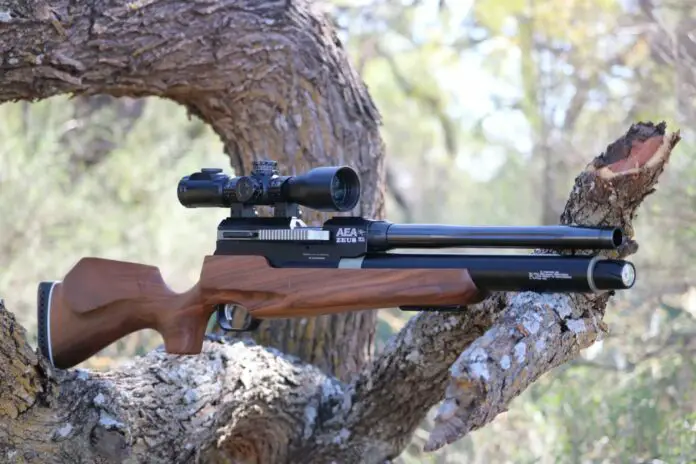
Best air rifle for medium game hunting: FX Impact M3
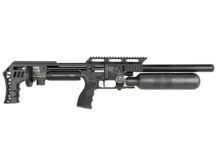
Designed to advance and evolve beyond traditional limitations to push the boundaries of accuracy and power capabilities, the FX Impact M3 will take your shooting experience to the next level.
Beginning with its dual regulator system, the smooth transfer of air from the first regulator to the second provides outstanding consistency in output pressure, as well as greater accuracy for hunters, outdoor enthusiasts, and serious air rifle shooters alike.
The versatility of this weapon also extends to features such as its integrated universal moderator, a handy fill probe device that comes standard with an extended high-capacity magazine.
As if that weren’t enough, users can configure this adaptable platform according to their specifications with multiple user-changeable parts and accessories available.
From barrels in various calibers to an array of stocks – designed specifically to deliver ergonomic manipulation while allowing you precise control over your shot velocity – you have a choice when it comes to customizing your impact.
All told, compared to competing models on the market today, there is no substitute for the masterful engineering behind this iconic compressed air rifle – packed dueling power and precision into one attractive piece of machinery.
The heart of the Impact M3 is the Power Plenum 720 – a 72cc chamber that’s more spacious than your average airgun powerplant, allowing for more precise airflow that propels the projectile further and with greater accuracy.
With energy-dense compressed air, you have resolute confidence when taking shots from far distances – perfect for those long hunting trips.
But what really sets the Impact M3 apart is its Quick Tune System, which allows for nearly limitless adjustment capabilities to get precisely tuned performance no matter your skill level or preferred type of shooting.
This tool-free system gives users complete control over their rifle’s accuracy without having to do any complex work. It truly is a remarkable feature you won’t find on other air rifles today.
This powerhouse of an air rifle allows you to adjust the air pressure with dual regulators, adjust the length of time the valve stays open with a front valve adjuster, and adjust the strength of the hammer even further with its redesigned Micro and Macro Power Adjustments.
Experience incredible accuracy that was never before possible thanks to 16-step power wheel adjustments on the Rear Macro Power Wheel, allowing you to tailor your firepower from 5-15 FPS depending on caliber and regulator pressure.
It even gets better with the Micro Fine Adjustment, offering incredibly precise increments of 1-2 FPS per click of the barrel roller – the possibilities are endless with this exquisite piece of engineering.
With an ambidextrous short throw cocking lever and enlarged handle, dual transfer ports on most calibers, barrel housing tolerances that are tightened for a snugger fit and better accuracy, breech adjustments to house the Side-Shot Magazine, a crisp trigger, 20 MOA built into the scope rail and Dual Wika manometers as well as more forthcoming accessories available today – all these improvements make the FX Impact an ideal choice not only for shooting enthusiasts but also for hunters looking for maximum power with each shot.
Features:
FX Smooth Twist X Superior (STX) barrel system
Interchangeable calibers and barrel liners (sold separately)
Externally adjustable dual AMP (Adjustable Match Precision) regulators
Externally adjustable hammer spring tension with macro and micro adjustments
Externally adjustable valve control
Quick Tune System for virtually tool-free adjustments
Power Block, redesigned rear block
Improved, Wika dual pressure gauges: one for air cylinder pressure, one for second regulator pressure. First regulator has a standard FX gauge.
Forward-mounted reversible side lever cocking
250 BAR (3,625 PSI) max. fill pressure
Equipped with improved 72cc Power Plenum 720 – allowing for an even wider range of power adjustment
.22 and .25 cal M3’s feature Dual transfer ports – one optimized for pellets, one for slugs
Male Quick Disconnect fitting
Picatinny/Weaver optics mounting rail with 20 MOA compensation
Picatinny accessory rails below the cylinder and on each side of the forearm
Two-stage adjustable match trigger
Height adjustable rubber buttpad
AR15 style Hogue pistol grip
AR15 style manual safety
Side Shot magazine capacity: 38 rds. in .177, 28 rds. in .22, 25 rds. in .25, 21 rds. in .30
Maximum muzzle energy*: 35 FPE in .177, 79 FPE in .22, 89 FPE in .25, 124 FPE in .30
Includes one side-shot magazine and 3 year transferable warranty
Accuracy
Calibers
Pellets
Distances
Groups
.177
JSB Match Diabolo Exact 8.4 Gr
50 yards
3/4"
.30
Slugs 67 Gr
50 yards
3/4"
.30
Slugs 67 Gr
100 yards
1 1/2"
.30
JSB Match Diabolo Hades 44.75 gr
50 yards
.557"
.25
JSB King Heavy Mark II 33.95 gr
100 yards
1"
.30
Nielson Slug 47 gr.
50 yards
one hole
.22
JSB Diabolo Exact Jumbo Heavy 18.13 gr
50 yards
one hole
.30
JSB Diabolo Exact 50.15 Gr
60 yards
one hole
.25
JSB Match Diabolo Hades 26.54gr
35 yards
one hole
.35
JSB Match Diabolo Exact 81.02 Gr
100 yards
1"
.22
JSB Diabolo Exact Jumbo Heavy 18.13 gr
95 yards
3/4"
.177
NSA Slugs 12.5 gr
50 yards
nickel size
.22
JSB Match Diabolo Exact Jumbo Heavy 18.13gr
50 yards
dime size
.25
JSB Exact King 25.39gr
50 yards
3/4"
.22
JSB Exact Jumbo 15.89gr
50 yards
1/2"
.25
JSB Exact King Diabolo 25.39gr
50 yards
0.37"
.25
Air Arms Diabolo Field 25.4gr
50 yards
0.47"
.25
JSB Diabolo King Heavy MKII 33.95gr
50 yards
0.71"
.25
JSB Exact King Diabolo 25.39gr
100 yards
1.34"
.30
JSB Exact 44.75 gr
50 yards
0.557"
.177
NSA Slugs 12.5 gr
50 yards
Nickel-size
.25
JSB King Heavy Mark II 33.95 gr
100 yards
1.5"
.30
JTS Dead Center 45.06 gr
45 yards
5/8"
.30
FX Hybrid Slugs 44.5 gr
45 yards
5/8"
.30
H&N Slug HP II 50 gr
45 yards
3/4"
.30
Zan Projectile 45.5 gr
45 yards
3/8"
Chrony tests
Calibers
Pellets
FPS
FPE
.35
JSB Match Diabolo Exact 81.02 Gr
845
128.49
.30
JSB Match Diabolo Hades 44.75 gr
870
75.23
.177
JSB Exact Heavy 10.34g
900
18.6
.25
JSB Diabolo Exact King Heavy 33.95 gr
875
57.73
.35
JSB Match Diabolo Exact 81.02 Gr
915
150.66
.35
JSB Match Diabolo Exact 81.02 Gr
877
138.4
.22
JSB Diabolo Exact Jumbo Heavy 18.13 gr
940
35.58
.177
NSA 12.5 gr
977
26.5
.22
JSB Diabolo Exact Jumbo 15.89 gr
940
31.18
.22
JSB Jumbo Express 14.35gr
1003
32.06
.22
JSB Jumbo Heavies 18.13gr
863
29.99
.25
JSB Exact King 25.4 gr
893
44.99
.25
JSB King Heavies MKII 33.95gr
849
54.35
.30
JSB Exact 44.75 gr
829
68.31
.25
Air Arms Diabolo Field 25.4gr
938
49.64
.25
JSB Exact King Diabolo 25.39gr
907
46.39
.25
Air Arms Diabolo Field 25.4gr
897
45.39
.25
JSB Diabolo King Heavy MKII 33.95gr
816
50.21
.25
JSB Exact King 25.39 Gr
1100
68.23
.30
JSB Exact 44.75 gr
675
45.29
.177
NSA Slugs 12.5 gr
977
26.5
.25
JSB King Heavy Mark II 33.95
748
42.19
.22
JSB Exact Jumbo Diablo 15.89 gr
940
31.18
.30
Zan Projectile 45.5 gr
813
66.8
Recommended uses:
Pest control and Small/medium/large game hunting: coyotes, iguanas, groundhogs, rabbits, squirrels, gooses, woodchucks, prairie dogs.
With high-end features at an entry-level price, the Avenger sets a new standard for similarly priced PCPs to live up to.
Featuring an externally adjustable regulator and externally adjustable hammer spring, the Avenger provides the user with a seemingly infinite amount of performance adjustability never seen at this price point.
A smooth side lever action allows for quick follow-up shots, and the fully shrouded barrel keeps your shooting quiet. Available in .177, .22, and .25 caliber.
The Air Venturi Avenger PCP Air Rifle is the perfect addition to any outdoors enthusiast’s arsenal.
Combining power and affordability, this high-powered PCP air rifle weighs about 6 lbs., and features a fully shrouded barrel with either a synthetic or wooden stock.
It even has an 11-millimeter dovetail/weaver combo rail to fit most scope mounts, so you can customize your mount to your specific needs.
The Avenger comes with a Picatinny rail section on the fore-end of the stock for adding bipods, lights, and lasers.
The externally adjustable regulator goes up to 3,000 psi/210 bar and boasts a max-fill pressure of 4,351 psi/300 bar – making it more than capable enough for even the toughest jobs.
Plus, thanks to its two-stage adjustable trigger and manual safety you can be sure that it’ll fire accurately and safely time after time!
The Air Venturi Avenger PCP Air Rifle is the ideal air rifle to take you from novice shooters to experts.
Whether you’re an avid hunter or an air gunner, this sleek and agile PCP air rifle is the perfect fit. It sports a unique design with front and rear swivel studs for mounting a sling, making it easy to maneuver through the woods for an enjoyable hunting experience.
Features:
Shoots up to 100 FPS (.177), 930 FPS (.22), 900 FPS (.177)
Side lever Cocking
Externally Adjustable Regulator (Up to 3,000 PSI / 210 BAR)
Easily accessible Hammer Spring Adjustment Screw and Degassing Screw
Two-Stage Adjustable Trigger
Max Fill Pressure: 4,351 PSI (300 BAR) , Male Quick Disconnect Fill Fitting
Fully Shrouded Barrel
Dual Gauges – Reg Pressure (RH Side) and Fill Pressure (LH Side)
Accuracy
Calibers
Pellets
Distances
Groups
.22
JSB Diabolo Exact Jumbo Heavy 18.13 gr
50 yards
1/2"
.25
JSB Match Diabolo Exact King 25.39 Gr
35 yards
nickel size
.22
JSB Diabolo Exact Jumbo Heavy 18.13 gr
10 yards
one hole
.22
JSB Match Diabolo Hades 15.89 Gr
25 yards
0.41"
.22
JSB Match Diabolo Hades 15.89 Gr
50 yards
one hole
.25
JSB Match Diabolo Exact King 25.39 Gr
30 yards
one hole
.22
Air Arms Diabolo Field Heavy 18 grain
50 yards
1"
.177
JSB Exact heavy Diablo 10.34 gr
25 yards
1/4"
.177
JSB Exact heavy Diablo 10.34 gr
50 yards
1/2"
.177
JSB Exact heavy Diablo 10.34 gr
100 yards
1 1/2"
.177
JSB Exact heavy Diablo 10.34 gr
27 yards
0.26"
.22
JSB Match Diabolo Hades 15.89 Gr
107 yards
2"
.22
JSB Diabolo Exact Jumbo Heavy 18.13 gr
50 yards
3/4"
.22
H&N Barracuda Match 21.14 gr
25 yards
one hole
.22
H&N Barracuda Match 21.14 gr
50 yards
1/4"
.22
JSB 18 gr
50 yards
one hole
.22
JSB Diabolo Exact Jumbo Heavy 18.13 gr
40 yards
dime size
.22
JSB Diabolo Exact Jumbo Heavy 18.13 gr
50 yards
nickel size
.22
JSB Match Diabolo Exact Jumbo Monster 25.39gr
30 yards
one hole
.22
JSB Beast Jumbo 34 Gr
50 yards
dime size
.22
Crosman Premier Hollow Point 14.3 Gr
20 yards
one hole
.22
JSB Diabolo Exact Jumbo Heavy 18.13 gr
50 yards
0.5"
.22
JSB Diabolo Exact Jumbo Heavy 18.13 gr
75 yards
.688"
.22
JSB Diabolo Exact Jumbo Heavy 18.13 gr
100 yards
1.25"
.25
JSB Match Diabolo Exact King 25.39 Gr
50 yards
one hole
.22
Crosman Premier 14.3 Gr
45 yards
one hole
.25
JSB Match Diabolo Exact King 25.39 Gr
50 yards
0.45"
.22
JSB Exact Jumbo Monster 25.39 gr
50 yards
0.33"
.22
JSB Diabolo Exact Jumbo Heavy 18.13 gr
50 yards
0.38"
.22
NSA Slugs 20.2 gr
50 yards
0.59"
.22
FX Hybrid Slugs 22gr
50 yards
0.48"
.22
H&N Slug HP 21 gr
50 yards
0.62"
.22
FX Hybrid Slugs 22gr
100 yards
1.55"
.22
FX Hybrid Slugs 22gr
50 yards
0.42"
.22
Jumbo Exact 16 gr
50 yards
1.07"
.22
Patriot Javelin Slugs 23 gr
50 yards
0.63"
.22
Patriot Javelin Slugs 23 gr
100 yards
1.67"
Chrony tests
Calibers
Pellets
FPS
FPE
.25
JSB Diablo MKII Heavies, 33.95 gr
843
53.59
.22
JSB Diabolo Exact Jumbo Heavy 18.13 gr
865
30.13
.22
JSB Monster 25.39 gr
873
42.98
.22
JSB Match Diabolo Hades 15.89 Gr
850
25.5
.25
JSB Match Diabolo Exact King 25.39 Gr
910
46.7
.25
JSB Match Diabolo Exact King 25.39 Gr
900
45.68
.25
H&N Barracuda 31.02 gr
833
47.81
.22
JSB Match Diabolo Hades 15.89 Gr
880
27.33
.22
JSB Monster 25.39 gr
912
46.9
.22
JSB Match Diabolo Hades 15.89 Gr
890
27.96
.22
JSB Diabolo Exact Jumbo Heavy 18.13 gr
900
32.62
.25
Slug 41 gr
785
56.12
.22
Slug 25 gr
825
37.79
.22
JSB Diabolo Exact Jumbo Heavy 18.1 Gr
932
34.92
.22
Crosman Premier 14.3 Gr
950
28.66
.25
JSB Hades 26.54 gr
917
49.57
.22
JSB Beast Jumbo 34 Gr
850
54.56
.22
Crosman Premier Hollow Point 14.3 Gr
822
21.46
.25
NSA Slugs 26.8gr
902
48.43
.25
JSB Match Diabolo Exact King 25.39 Gr
944
50.25
.25
JSB Match Diabolo Hades 26.54gr
875
45.13
.22
Crosman Premier Hollow Point 14.3 Gr
976
30.25
.22
JSB Exact Jumbo Monster 25.39 gr
890
44.67
.22
JSB Diabolo Exact Jumbo Heavy 18.13 gr
867
30.27
.22
NSA Slugs 20.2 gr
948
40.32
.22
FX Hybrid Slugs 22gr
908
40.29
.22
H&N Slug HP 21 gr
846
33.38
Recommended uses:
Target shooting/plinking
Pest control/small game hunting: squirrels, raccoons, jackrabbits.
Pros and Cons
Pros
Cons
Excellent value for the money
Lightweight and well-balanced
Powerful and easy-to-use
Light weight and easy to load magazines
Easy to cycle the bolt for loading
Great trigger adjustment and regulator pressure adjustment
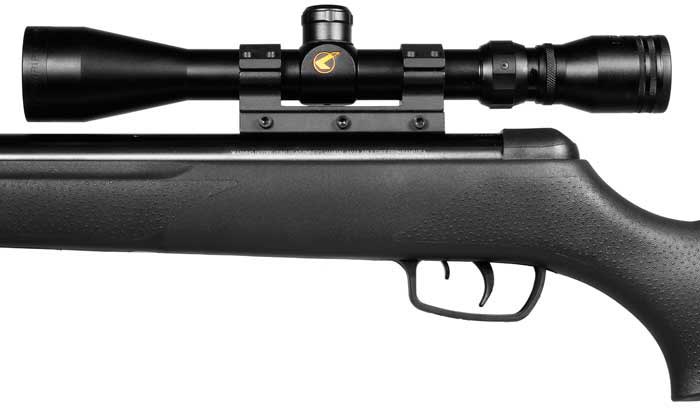
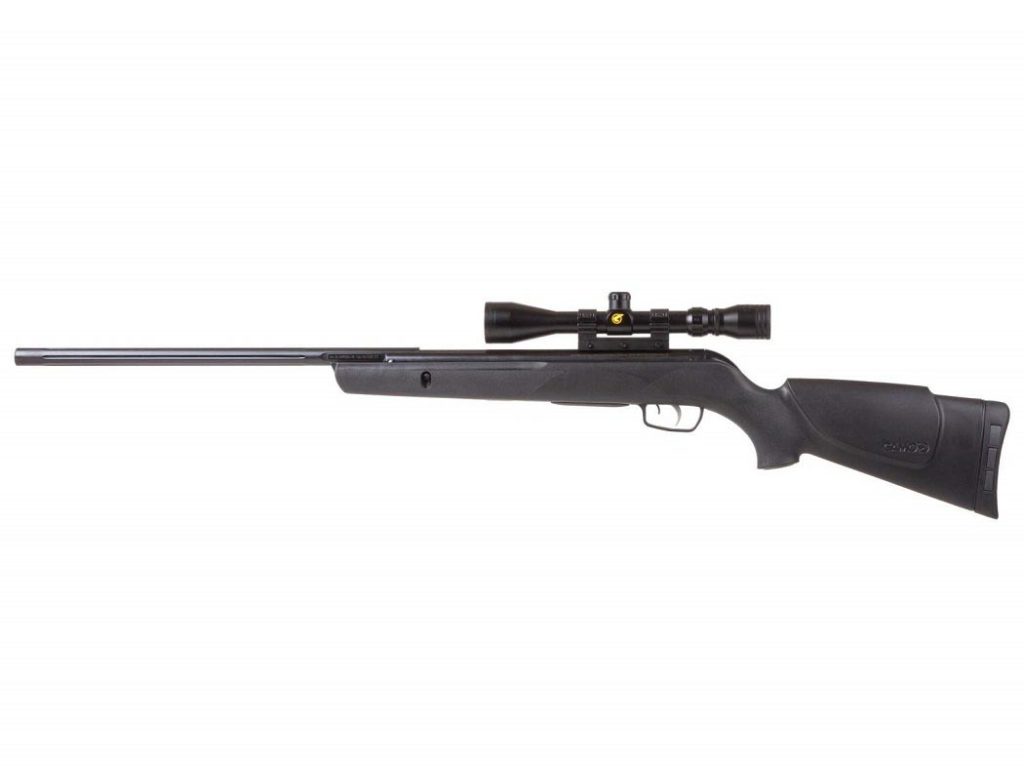
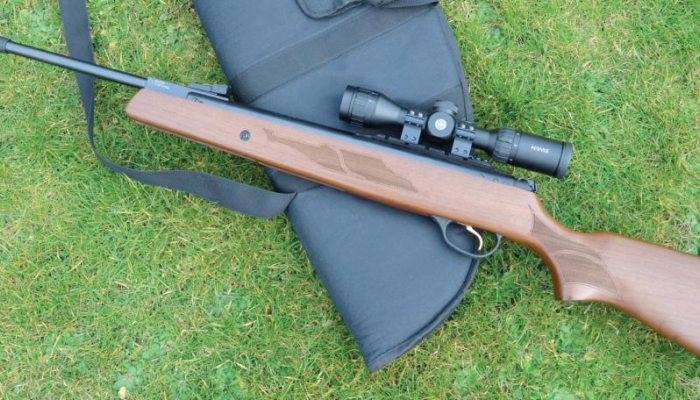
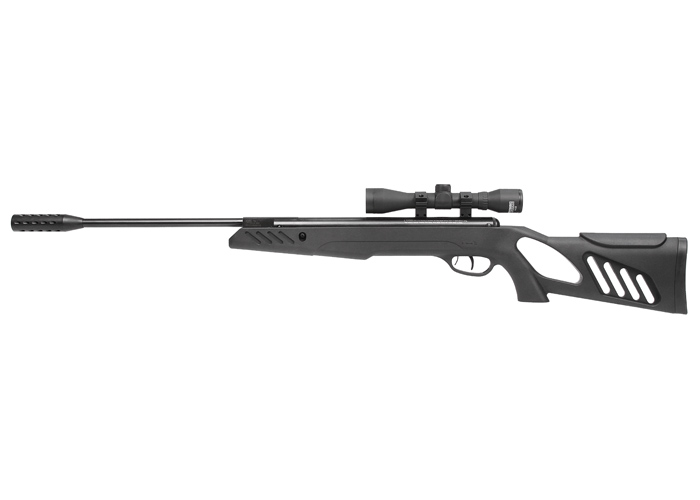
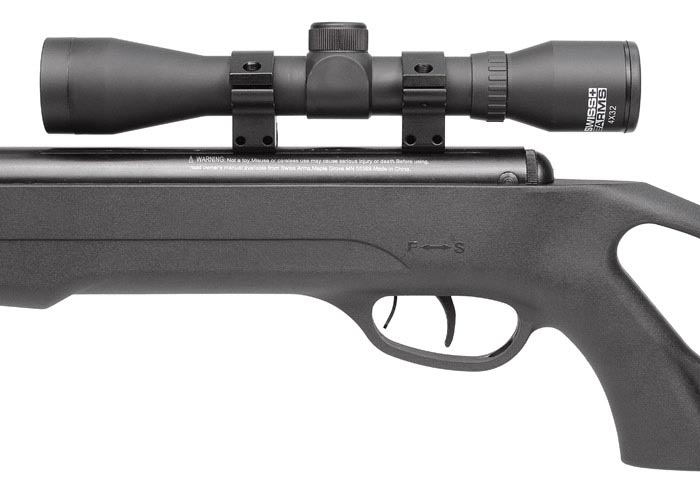
The Gamo Swarm Magnum 10X GEN3i Gas piston Air Rifle is an impressive piece of gear that makes firing your shots quick and accurate.
This high-powered air rifle can fire alloy .177 caliber pellets at up to 1,650 FPS.
With a horizontal inertia-fed magazine, you’ll get lightning-fast follow-up shots with a 10-shot capacity.
Furthermore, enjoy complete peace of mind knowing you won’t annoy anyone in the vicinity thanks to Gamo’s Whole Fusion noise-dampening technology – one of the quietest technologies designed by Gamo.
The Gamo Swarm Magnum 10X GEN3i Air Rifle is the latest in advanced air rifle technology.
Featuring a 33-millimeter IGT Mach1 Gas Piston, the Swarm Magnum has superior velocity and terminal penetration compared to other standard spring power plants.
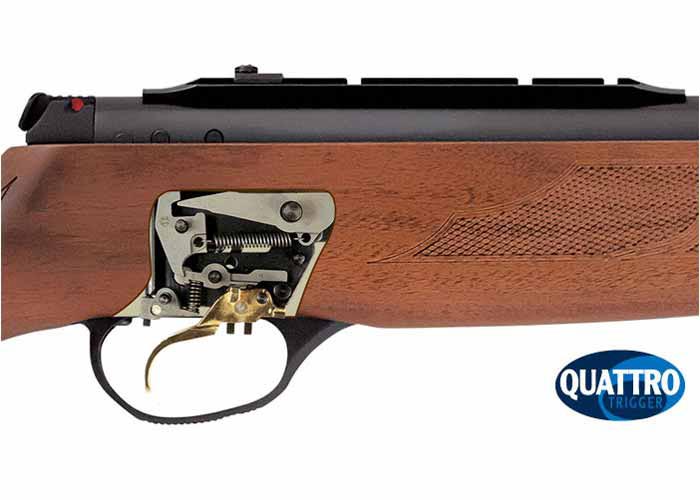
The Custom Action Trigger (CAT) allows users to independently adjust both stages of the trigger so they can customize their rifle’s trigger pull and crispness to their exact specifications.
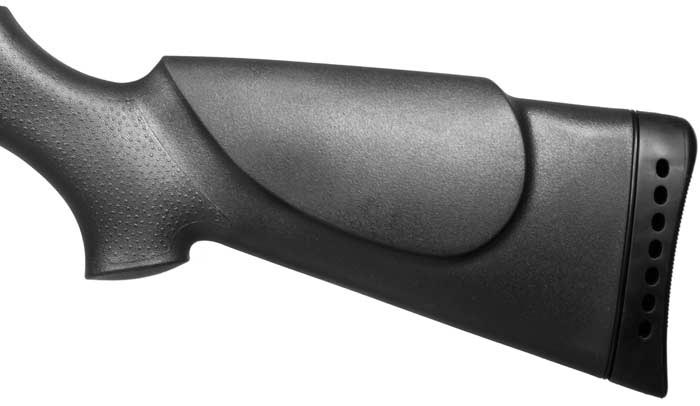
The Recoil Reducing Rail (RRR) has been specifically designed to dampen the intense recoil of high-powered rifles and also reduce the stress placed on your scope.
As a testament to its durability, the Swarm Magnum is backed by 5 Year Warranty and proudly made in Barcelona, Spain.
Features
10X GEN 2 Quick-Shot inertia-fed magazine
Max velocity: 1300 fps with alloy, 975 fps with lead
The cheekpiece is a bit raised for added stability when aiming.
It is professionally blued which further adds to the beauty of the gun.
For added safety, the Air Arms TX200 includes an automatic safety and a two-stage trigger.
Testing this air rifle with the pellets supplied with it, the maximum muzzle velocity for the .177 caliber comes to 930 fps, and 755 fps for the .22 caliber.
The only thing that may discourage you from purchasing this air rifle is the fact that it does not come with either a scope or open sights.
Make sure to get yourself a good quality one so as to fully realize the great accuracy of the rifle.
Best variable pump pneumatic air rifle: Seneca Dragonfly MKII
The Seneca Dragonfly MKII Multi-Pump Air Rifle is the perfect choice for outdoor enthusiasts, hunters, and air rifle shooters.
Its sleek design and patented butterfly pump high-efficiency system make it a desirable gun for anyone looking for quality performance without having to put in too much effort.
It is designed to reduce the amount of effort needed per pump by half compared to the older model, and the effort stays consistent from pump stroke to pump stroke.
Equipped with variable power capabilities, this air rifle can reach velocities up to 950 FPS in .177 and 800 FPS in .22 making it powerful enough for a variety of uses including plinking, pest control, or small-game hunting.
With an elevation and windage adjustable rear sight, an 11-millimeter dovetail optics rail, and a fixed fiber-optic front sight to make it easy to line up your target with precision accuracy every time – this air rifle is the perfect tool for hunters and outdoors enthusiasts.
This pistol grip-style action makes it ideal for long hours in the field or at the shooting range, so you can enjoy accuracy and reliability every time.
Built for safety and security, the Seneca Dragonfly MKII also comes fitted with a manual safety mechanism and single-shot tray that helps make loading a breeze. Each package also includes one magazine and a single-shot tray, so you’ll always have your ammo ready to go.
Best air rifle under $100: Crosman Diamonback SBD NP Elite
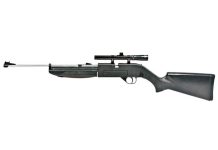
The Crosman® Diamondback .22 Break Barrel Air Rifle offers the perfect combination of power, accuracy, and convenience.
With Nitro Piston Elite technology, this gun is up to 70% quieter than other models in its class.
It also delivers a noticeably lighter, smoother cocking force.
Featuring a durable synthetic stock that stands up to any weather conditions and a rifled steel barrel for longer-range shooting, this rifle is fit for even the most serious hunter or outdoors enthusiast.
Equipped with QuietFire sound suppression technology and an adjustable two-stage CleanBreak Trigger, you can make your shot cleanly and quietly time after time with the Diamondback air rifle.
And with velocities of up to 1100 FPS, this gun has the power and accuracy needed for both short and long-range shooting. Outfitted with adjustable rear and front sights for easy target acquisition, this makes this one package that you’ll be sure to love!
The Umarex AirJavelin is the perfect choice for any serious outdoorsman.
This high-powered and accurate CO2-powered air rifle launches cutting-edge Straight Flight Technology arrows at an impressive 300 FPS, packing a punch with 34 foot pounds of energy!
With easy to install open sights, shooters have the option of coupling it with their favorite dot sight or scope for an incredibly precise shooting experience.
The AirJavelin’s full-length Picatinny rail on top and M-LOK slots on both sides provide plenty of attachment opportunities so you can customize your setup to your hearts’ content.
And best of all, you don’t need to worry about refilling frequently either – the AirJavelin accepts 88-gram CO2 tanks which will launch dozens of arrows downrange in a single filling; for shorter shooting sessions, a Umarex 2x12g adapter (not included) can also be installed.
Features
CO2 Powered Arrow Gun
Powered by (1) 88 gram CO2 Cartridge
Straight Pull Bolt Action
120 Grain Carbon Fiber Shaft Arrow with 50 grain Field Tip
Straight Flight Technology Arrows
M-LOK Slots
Top integrated accessory rail
Bottom Accessory Rail
Arrows Accept Broadheads
Manual Safety
Multi-Position Adjustable Stock
Accepts 2x12g CO2 Adapter (sold separately)
Fixed Front & Rear Sights
Comes with 3 Umarex AirJavelin Arrows with field tips
Chrony tests
Calibers
Pellets
FPS
FPE
170 gr
338
43.14
Recommended uses
Target shooting/plinking
Pest control/small game hunting
Pros and Cons
Pros
Cons
Easy to shoot and handle
Powerful and accurate
Light and compact
Full-length Picatinny Rail
Easily readable and conveniently located manometer
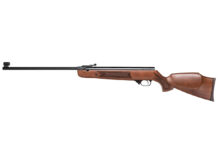
Enjoy the legendary precision and quality of a Diana airgun with the RWS 460 Magnum spring-piston air rifle. Powered by a spring piston mechanism and made in Germany by the renowned Diana company, this rifle is designed to offer exceptional performance.
The 460 Magnum offers outstanding power, firing lead pellets at 900 fps in .22 caliber while delivering unbeatable accuracy. With a fixed barrel and underlever cocking system, hold small groups with each shot.
The right-handed Monte Carlo stock crafted from beech wood gives you a comfortable grip and provides you with checkering on both the pistol grip and forearm.
Iron sights come standard with this model but mount up your favorite scope onto the 11mm dovetails for even better results.
Even if you’re new to shooting rifles, this one offers an easy 36 lbs cocking effort so you don’t have to shell out for weights or accessories for extra strength. For pest control or varmint hunting this is the perfect tool for conveniently dispatching vermin without delay!
Featuring an under-lever cocking mechanism for effortless operation, this premium spring-piston airgun has a top-side loading port for easy loading and micro-adjustable sights to ensure accuracy when firing.
With a fixed barrel providing stability and a supple rubber butt pad for comfort, you will experience the performance, power, and grace expected from a valuable RWS rifle. For those who prefer to use a scope, it can be easily added as an accessory.
Features
Underlever action
1100 FPS (.177), 900 FPS (.22)
Loudness: 3 – medium
Single shot
Cocking effort: 36 lbs.
Blade & ramp front sight
Micrometer adjustable rear sight
11mm dovetail scope mount
Two-stage, adjustable T06 trigger
Rifled steel barrel
Ventilated rubber buttplate
3.3-lb. trigger pull
Automatic safety
Spring piston power plant
Hardwood stock
Checkered forestock and grip
Monte Carlo stock with raised right-hand cheekpiece
Accuracy
Calibers
Pellets
Distances
Groups
.22
Crosman Premier Hollow Point Pellets 14.3 Gr
20 yards
nickel size
.22
JSB Diabolo Exact Jumbo 15.89 Gr
30 yards
dime size
.22
Predator Polymag 15.89 gr
30 yards
3/4"
.22
Predator Polymag 15.89 gr
50 yards
1.5"
.22
JSB Diabolo Exact Jumbo Heavy 18.13 gr
20 meters
dime size
.22
RWS Super H Point 14.2 Gr
60 yards
1.5"
.22
JSB Diabolo Exact Jumbo 15.89 Gr
25 yards
quarter size
.22
JSB Diabolo Exact Jumbo 15.89 Gr
10 meters
one hole
.22
JSB Diabolo Exact Jumbo 15.89 Gr
25 meters
0.5"
.22
JSB Diabolo Exact Jumbo 15.89 Gr
45 yards
0.5"
Chrony tests
Calibers
Pellets
FPS
FPE
.22
Crosman Premier Hollow Point Pellets 14.3 Gr
890
25.16
.22
JSB Diabolo Exact Jumbo Heavy 18.13 gr
775
24.19
.22
JSB Diabolo Exact Jumbo 15.89 Gr
749
19.8
.22
Gamo Raptor 9.9 Gr
911
18.25
.22
H&N Sniper Light 14 gr
825
21.16
.22
RWS Superdome 14.5 Gr
815
21.39
.22
Beeman FTS Copper Plated 14.72 gr
905
26.78
.22
RWS Hobby 11.9 gr
897
21.27
.22
RWS Superpoint 14.5 Gr
820
21.65
.22
RWS Super H Point 14.2 Gr
801
20.24
.22
JSB Diabolo Exact Jumbo 15.89 Gr
777
21.31
.22
Beeman Kodiak 21.14 Gr
585
16.07
Pros and Cons
Pros
Cons
Beautiful and well-made construction
Excellent trigger
Extremely easy to be accurate
You don't need a scope for shooting up to 30 yards
I hope this detailed review has given you great insight into choosing air rifles.
Generally, you first have to identify your needs.
Are you after hunting or plinking? If hunting, are you looking at small or big game?
If plinking, what distances are you looking at?
Additionally, what are the state guidelines for owning air rifles?
What is your budget?
If you can answer these, and several other questions, you will make an informed decision that won’t make you regret later.
"Master the art of precision shooting with dry firing air rifles. Enhance your aiming skills, trigger control, and muscle memory without using ammunition. Discover...












 raw venison
  venison packed in salt
  the same dish a day later
  steaks after one day in salt
  fourteen days later
  salted venison steaks
  steak cut in half
  the inside is lighter in color
  Unfortunately, the outdoors and shooting with a group of people in an open environment is not necessarily the most controlled and safe environment to do so. One potentially hazardous scenario when shooting outdoors is ricochet bullets. In this post we look at whether choosing to hang a target on a tree is a good idea.