Bullfrogs and green frogs look similar but are easy to tell apart from other frogs in Missouri, due to their relatively large size at maturity. They prefer aquatic edge habitats that offer still, shallow water with aquatic and/or terrestrial vegetation. This provides both cover and food, such as insects and nearly any other small animal that will fit in their mouths. Ponds, lakes and river banks, wetlands, and other vegetated waterways are all great places to find frogs.
Frog Hunting
Methods
Frogs can be hunted in Missouri using many different methods.
With a fishing permit, frogs may be taken by gig, trotline, throw line, limb line, bank line, jug line, snagging, snaring, grabbing, or pole and line.
With a hunting permit, frogs may be taken by crossbow, pellet gun, or .22 or smaller caliber rim-fire rifle or pistol.
With either permit frogs may be taken by hand, hand net, bow, or atlatl.
Green Frog
When to Hunt Frogs
Frogs may be pursued during the day or at night with an artificial light.
During a full moon frogs are typically more skittish because they feel more exposed, and are thus more difficult to approach.
During a new moon it is usually easier to get closer to them.
Because frogs are amphibious and must keep their skin moist, they spend more time in the water and weeds during the day and are generally less visible around the banks than at night. Whether they’re hiding or not, their location is often given away by their assertive croaks.
Getting Started
Frog-Hunting Gear
Rubber knee boots or hip waders
Flashlight
Gig or net
Something to keep your harvested frogs in
Choosing a Location
Public and private landowners typically do not manage for frogs. Instead, frog populations are often the result of management for another species such as waterfowl or fish. Frogs are also common in aquatic edge habitats not subject to management or maintenance of any kind.
Waters with few to no predators will yield the best frog populations, which is why newer ponds or very old ponds are generally plentiful with frogs. Bullfrogs and green frogs can be found along nearly all waterways on MDC conservation areas but especially on wetland areas and along rivers and lakes.
Bullfrogs are ambush-style predators that will eat any live prey they can fit in their mouths, including insects, fish, mice, birds, and snakes! Focus on shallow water areas and mud flats along the margins of ponds, lakes and wetlands where cattails, willows, grasses, and other aquatic vegetation is present.
Tips and Tricks
If you are hunting with a partner, have them blind the frog using a light so that you can stalk the frog from behind. Frogs can feel the vibrations of you approaching on foot, sometimes causing them to flee before you locate them.
Consider using a canoe to stealthily locate and get close enough to grab, net, or gig.
Try Hunting During the Day
Most frogs are caught with the use of a gig or by bare hands at night. For a little different experience, try fishing during the day. Simply use a long fishing pole, like a cane poll or crappie rod, with a short piece of fishing line and a small treble hook tied to the end. Attach a small piece of red cloth to the hook and dangle in front of the frog. Often temptation will get the best of the frog and it will strike at the cloth. The only thing left to do is set the hook.
Let’s look at some of the methods that can aid in getting rid of the squirrels:
Repellants
If you visit any pet store you can be sure to get a repellant that gets rid of squirrels.
Apply them to the bark of the trees in the backyard for the squirrels to sniff as they come to steal your birdseed.
Pros
Cons
Cheap to procure
Easy to use
Washes away with the rain
The repellants may affect some other pets like dogs and cats
Bottle-spraying individual trees is tiresome
Trapping the squirrels
A Grey Squirrel rodent in a wire trap ready for release in another location
This is used in situations where the squirrels are not high in population.
The traps work easily because the squirrels are curious once they spot anything that resembles a hole.
They want to go through and that’s how you catch them.
Pros
Cons
Efficient if the squirrels are not densely populated
Easy method since it naturally attracts the squirrels
Some are difficult to set up
Trapping does not eliminate the squirrels
You have to check with the state laws for catch release laws
Deterrent odors
This acts as an augmentation of other methods.
If you hang ammonia bags or use cotton balls soaked in ammonia you are likely to keep the squirrels from approaching your house.
Pros
Cons
The smell keeps the squirrel away
They irritate the squirrel’s nose and eyes enough to keep them off
You have also to put up with the ugly odor yourself
It is not wise if other pets are around
Ammonia is corrosive and thus requires more attention and care
Shooting the squirrels
You only need some pellets and an airgun.
The hunting method helps you get rid of the squirrels, all sizes considered, and at any time.
Pros
Cons
The smell keeps the squirrel away
They irritate the squirrel’s nose and eyes enough to keep them off
You have also to put up with the ugly odor yourself
It is not wise if other pets are around
Ammonia is corrosive and thus requires more attention and care
In the opinion of many, shooting squirrels is great because it does not involve the use of chemicals that additionally pose danger to other animals and people.
Also, shooting directly eliminates the squirrels, rather than keeping them away.
You also get to treat yourself to a sumptuous meal if you’re feeling adventurous, provided you ascertain that the squirrel meat is safe.
Their meat is easy to prepare and could certainly make up a part of your diet .
An air gun is your go-to weapon for squirrel eradication.
Read along to find out which are the best air rifles to hunt squirrels.
With high-end features at an entry-level price, the Avenger sets a new standard for similarly priced PCPs to live up to.
Featuring an externally adjustable regulator and externally adjustable hammer spring, the Avenger provides the user with a seemingly infinite amount of performance adjustability never seen at this price point.
A smooth side lever action allows for quick follow-up shots, and the fully shrouded barrel keeps your shooting quiet. Available in .177, .22, and .25 caliber.
Features
Pre-Charged Pneumatic
Sidelever Cocking
Synthetic Stock
Externally Adjustable Regulator (Up to 3,000 PSI / 210 BAR)
Easily accessible Hammer Spring Adjustment Screw
Two-Stage Adjustable Trigger
Max Fill Pressure: 4,351 PSI (300 BAR)
Fully Shrouded Barrel
Picatinny Rail on Fore-end of stock
Holes in front and rear of stock for mounting swivel studs for a sling
Dual Gauges – Reg Pressure (RH Side) and Fill Pressure (LH Side)
The Gamo Swarm Magnum 10X GEN3i Multi-Shot Air Rifle is an ideal choice for shooters looking for an affordable break barrel airgun to take care of squirrels.
With velocities of up to 1650 FPS (with alloy) in .177 caliber, this rifle offers superior accuracy and power. Furthermore, the 10X GEN 3i Quick-Shot inertia-fed magazine makes reloading a breeze – allowing users to make 10 shots without needing to fumble with pellets.
Thanks to its IGT Mach 1 inert gas piston powerplant, you get smoother cocking than with traditional spring piston air rifles, while an adjustable two-stage Custom Action trigger offers independent adjustments of the first and second stages for travel.
Features
10X GEN3i Quick-Shot inertia-fed magazine
Break barrel
Max. velocity (.177): 1650 FPS with alloy
Max velocity (.22) 1300 fps with alloy, 975 fps with lead
The Diana RWS 460 Magnum Breakbarrel Air Rifle is an engineering masterpiece from the fabled German airgun manufacturer.
From the powerful .22 caliber spring-piston set-up to the beechwood Monte Carlo stock with the checkered forearm and pistol grip, every detail of this air rifle was meticulously considered in its design.
Each shot you take will go downrange with a whopping 900 fps velocity, ensuring precise accuracy for varmint hunting and pest control.
With only 36 lbs. cocking effort, you can comfortably spend afternoons outdoors spending your time efficiently and accurately shooting those pests away.
And with its 11mm dovetail mounting, you can rest assured that your scope won’t easily come off making it easier to get small groupings.
The RWS 460 Magnum is a break-barrel air rifle that is perfect for any outdoor enthusiast looking to stay on target every time they shoot!
Features:
Underlever action
1100 FPS (.177), 900 FPS (.22)
Loudness: 3 – medium
Single shot
Cocking effort: 36 lbs.
Blade & ramp front sight
Micrometer adjustable rear sight
11mm dovetail scope mount
Two-stage, adjustable T06 trigger
Rifled steel barrel
Ventilated rubber buttplate
3.3-lb. trigger pull
Automatic safety
Spring piston power plant
Hardwood stock
Checkered forestock and grip
Monte Carlo stock with raised right-hand cheek piece
The HW50S spring piston air rifle from Weihrauch Sport is a high-quality gun perfect for plinking and hunting small rodents. With a state-of-the-art German design and construction, this gun is built to last.
The HW50S features a precision rifled barrel, making it accurate and reliable. The rugged stock is made from durable hardwood, making it sturdy and stable.
The HW50S also has an adjustable trigger, so you can customize it to your specific needs. Whether you’re looking for a gun for plinking or hunting, the HW50S is a perfect choice.
You can easily avoid fatal accidents if you inform people.
Airguns are low-powered in comparison with other types of guns.
This makes them safe for backyard practice. But people can be scared of guns.
You should not use your hunting activity as a means to disrupt your neighbors.
If you are hunting in your backyard you should ensure you have limits for your pellets range.
You can also use a pellet backstop to keep the pellets within limits.
You can also target the clang your metal makes to avoid noise pollution.
Handle with caution
You should always treat a rifle as loaded.
To be human is to err.
You might think a rifle is not loaded and cause the worst mistake of your lifetime.
Never point a gun at any person.
Air rifles can cause considerable damage if not well handled.
Before storing your airgun, ensure it is not loaded.
This helps to avoid indecisive decisions before your hunting begins.
You can even hurt yourself if you mishandle a rifle.
Once you are out there, never load a rifle until it’s time to fire it. Before firing, ensure that you have a safe shot and no one is around or in the direction, you aim at shooting.
When you entice one to step in the 4-inch circle of earth you prepared, there are not too many other feelings of accomplishment that compare to trapping bobcats.
Plus, with bobcat pelt prices staying consistently high, the full wallet at the end of the process is pretty satisfying too.
I did not include the number one most well-known trapping tip, just because everybody should know it: set on sign.
Here are nine additional tips I’ve picked up over the years, mostly from trapping with and observing some truly talented Wyoming bobcat trappers.
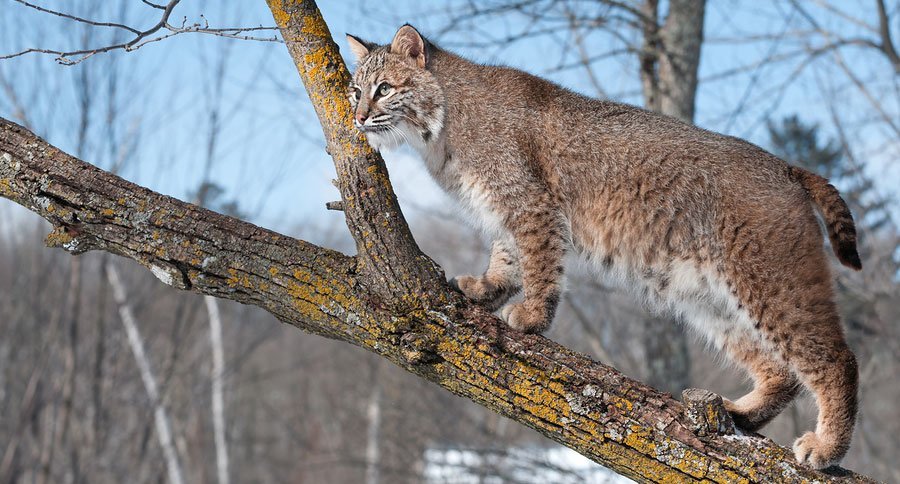
They’re Just Big Cats, So Observe Small Ones
An old timer told me this: “Cats are cats, whether they’re de-clawed house cats or mountain lions. These critters are carnivores. They all hunt and are attracted to the same sense triggers.” He advised me to observe “domesticated” house/barn cats whenever possible. You will likely notice many parallels in bobcat populations that will make it much easier to lure one into your coil spring, foothold traps, or cage trap.
Visual Attraction
Just like a house cat will stalk and pounce at a red laser light or a piece of string that you are wiggling, bobcats can’t hardly resist investigating moving objects they can’t immediately identify. Near each bobcat set, you should place some type of visual attraction.
One of my favorite techniques is to hammer a masonry nail into a rock wall near the set. Wrap a length of baling wire on the nail and protrude it about a foot straight out from the wall. At the end of the wire, bend a loop. Take a second small length of wire and loop the end through the first loop, so that the wire hangs loosely straight down. On the end of the second wire, attach something shiny and reflective. I’ve found silver Christmas garland or aluminum foil works well. Just make sure to check your local trapping regulations to make sure what you are doing is legal first.
The bobcats will see the reflection first, then notice the movement in the wind. As they curiously approach the movement from the bush, they will then pick up the scent of the bait – and hopefully move into the set.
Double Up the Springs
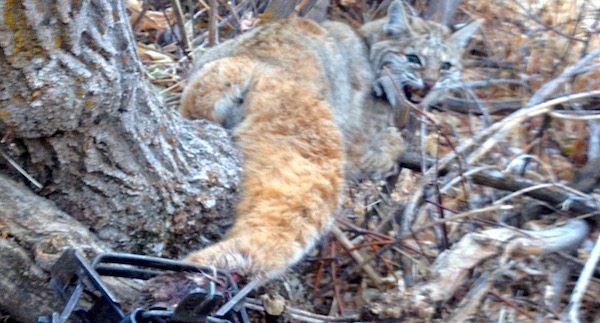
Use #10 traps for bobcat, but install a second set of springs. This will ensure the bobcat will not be able to pull out. Plus, cats paws are extremely sensitive, so, the more pressure on the paw, the less the bobcat will try to pull out.
Use Peat Moss
Because fur trapping is a winter pursuit, the temperature will more than likely be below freezing the majority of the time. Since the traps are buried in the ground, moisture from temperature changes can freeze the traps open.
The best way to avert this situation is to cover the trap with a layer of peat moss prior to sifting natural dirt over the trap. The organic materials within the peat moss emit methane, which when released, is warm. This will keep the trap from freezing up.
Cut Off a Paw
This is good trick for both bobcats as well as coyote. Cut off and preserve one of the front paws. Attach the paw to the end of a broom handle (cut in half) or a short stick. After you make your trap set and you have sifted the dirt over the trap to look completely natural, CAREFULLY and gently make a paw print directly over the trap pan.
Bobcats, especially big toms, are smart, and they instinctively know that if another bobcat has stepped in a certain spot, it must be safe to also step there.
Rocks/Ledges
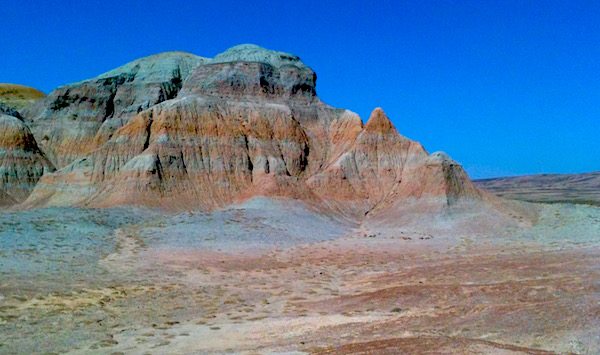
When scouting a bobcat trapping location, always start with rock ledges. That’s where they live, especially in the Western states of America.
Rock ledges give bobcats a higher perspective to see prey below as well as affords them an extra level of protection from larger predators. First look for rock ledges and outcroppings, then look for sign – prints or scat. Those are all good indicators that you’re amongst good set locations.
Don’t Piss
This tip applies to bobcat hunting too and is a good rule of thumb for any furbearer you may target. Do not answer the call of nature where you hope to ambush one of these big cats. They have a great sense of small and you can ruin an entire area – no matter how catty it is – by urinating within your bobcat trap zone. Pee at the truck before you venture into your trapline, and hold it until you get out.
Don’t Disturb the Landscape
Disturbed landscape is another warning sign to bobcats. If you accidentally turn over a large rock, return it to it’s original position. Cover your tracks as you back away from your sets.
Cats Wander, Dogs Go Straight
In areas where bobcats and coyote share the landscape, a good rule of thumb when identifying animal tracks from a distance is that bobcats and lynx like to move in a serpentine pattern while coyotes tend to move in straight lines. Once you know this, it can make snaring your target species a whole lot easier if legal.
I just wrote 10 tips and realized I didn’t even get to choking trails into sets or bobcat bait. That will be for a future article.
Happy trapping!
Products featured on Wide Open Spaces are independently selected by our editors. However, when you buy something through our links, we may earn a commission.
Baby deer are enchanting creatures, and they grow up to be some of the most graceful animals in the forest. But what do you call a baby deer? In this blog post, we’ll explore the different names of baby deer, as well as their characteristics, and where they live. Stay tuned to learn more!
What is a baby deer called?
A baby deer is called a fawn. Fawns are usually born in the spring, and they have a spotted coat that helps them camouflage in the forest. Their mother will take care of them for the first year of their lives, teaching them how to survive in the wild. After that, they will join a herd and live for around 10 years.
It’s interesting to note that elk, moose, and reindeer are all species of deer but instead are called calves. So, why are smaller deer species known by a different name?
The origin of fawn as the name for baby deer comes from the word fawn. In Old, English fawn meant rejoice or to be glad. Today we might say we “fawn” over a cute baby, but in Old English, the phrase stuck with what we call baby deer!
INTERESTING FACTS ABOUT FAWNS:
-Fawns can run shortly after they are born
-A fawn’s spots will fade as they get older
-Fawns are very curious creatures and are not afraid to approach humans
-If a fawn is lost or abandoned, it is illegal to take them in and care for them yourself. You must contact a wildlife rehabilitator to help
-Fawns are native to Europe, Asia, and North America
THE PURPOSE OF SPOTS ON BABY DEER:
The spots on a fawn’s coat serve two purposes. The first is to camouflage the fawn in the forest, making it harder for predators to spot them. The second is to distract predators from attacking the fawn’s vulnerable body parts, like the neck and belly.
Baby deer, or fawns, drink their mother’s milk for the first few months of their lives. After that, they start to eat leaves, grass, and other plants.
How long do baby deer stay with their mothers?
Fawns stay with their mothers for the first year of their lives. During that time, the mother will protect her fawn from predators and teach it how to survive in the wild.
What is a baby deer’s survival rate?
The Survival Rate for fawns is only about fifty percent. This means that half of all baby deer will not survive to adulthood.
What are the different types of deer?
There are many different types of deer, depending on the region. Some common types of deer include red deer, white-tailed deer, mule deer, and elk.
Where do deer live?
Deer can be found all over the world, but they typically live in forests, meadows, and fields.
What is the life span of a deer?
The average life span for a deer is around 5-9 years.
Conclusion
A baby deer is called a fawn but elk, moose, and reindeer are all species of deer instead are called calves.
Discover the inner workings of an air rifle with our comprehensive guide! From the mechanics behind its powerful shots to the intricate process of propelling pellets, we unravel the secrets of how an air rifle works. Join us as we delve into this fascinating realm of compressed air technology and gain a deeper understanding of this versatile firearm.
The Internal Mechanics of the Air Rifle
Air rifles operate using compressed air or CO2 to propel ammunition, such as pellets, slugs, or BBs. Unlike traditional firearms, they do not rely on gunpowder for propulsion. The firing process of an air rifle happens in just milliseconds and involves a complex sequence of reactions.
One common type of powerplant used in air rifles is the spring-piston mechanism. When the operator flexes the lever of a spring-piston air rifle, a spring-loaded pump piston moves back into the mainspring, causing compression until the rear of the piston engages the sear. When the trigger is pulled, the sear is disengaged, allowing the mainspring to decompress. This releases elastic potential energy and pushes the piston forward, compressing the air in the pump cylinder and increasing pressure. The pressurized air then propels the ammunition.
There are other powerplants used in air rifles as well, such as pneumatics and compressed gas. These powerplants operate slightly differently than spring-pistons but still achieve similar results. Pneumatic powerplants use compressed air that is already pressurized, either through hand pumps or external sources like tanks filled with an air compressor. Pre-Charged Pneumatic (PCP) rifles are one example of pneumatic powerplants that can be easily filled and shoot until their pressurized air store is depleted.
Powerplant Modules
Air rifles utilize various powerplant modules to generate the pressure needed to propel ammunition. The most common powerplant is the spring-piston, where a spring-loaded pump piston compresses air when the lever is flexed. Upon pulling the trigger, the sear disengages and releases the stored energy in the mainspring, pushing the piston forward and pressurizing the air in the pump cylinder.
Pneumatic powerplants operate on compressed air that is already pressurized. Hand pumps are used to pressurize the air in an internal reservoir for some pneumatic air rifles. Pre-Charged Pneumatic (PCP) air rifles, on the other hand, are filled with external sources such as air compressors or paintball/scuba tanks. Once filled, PCP rifles can shoot until their pressurized air store is depleted. Other types are spring powered and CO2 powerplant.
General Operation of An Air Rifle
Air rifles use compressed air or CO2 to propel pellet, slug, or BB ammunition. Unlike traditional firearms, they do not rely on gunpowder for propulsion. One of the most common powerplants used in air rifles is the spring-piston mechanism.
In a spring-piston air rifle, when the operator flexes the lever, a spring-loaded pump piston moves back into the mainspring, causing compression until the rear of the piston engages the sear. When the trigger is pulled, the sear is disengaged and the mainspring decompresses. This releases elastic potential energy and pushes the piston forward, compressing the air in the pump cylinder and increasing pressure. This pressurized air propels the ammunition.
There are other powerplants used in air rifles as well, such as pneumatic and compressed gas mechanisms. Each powerplant operates slightly differently but ultimately controls how an airgun functions. For example, break barrel air rifles require cocking by pulling down on the end of the barrel to compress the piston and mainspring. Pump pneumatic and PCP rifles need to be filled with pressurized air before firing.
In conclusion, an air rifle operates by utilizing compressed air to propel projectiles. The air is stored in a reservoir and released when the trigger is pulled, forcing the pellet or BB out of the barrel with high velocity and accuracy. This mechanism makes air rifles a popular choice for recreational shooting and pest control due to their quietness, safety, and ease of use.
The porcupine is willing and able to defend itself against attack, but really just wants to be left alone to live its mostly solitary life.
After his horse tangled with a porcupine and ended up with an ankle full of quills, a friend grumbled, “Porcupines, what good are they?” This is the same question another friend asked years ago when he chided me for “wasting a column writing about porcupines”.
It isn’t an unusual question. Humans tend to judge the value of just about everything by how they are personally benefited or vexed by it. That seems to be particularly true of wildlife. If a personal or even general benefit isn’t obvious, then clearly we don’t need that species.
A porcupine is a mild mannered creature wanting nothing more than to go about its business and be left alone. When a dog, horse or human can’t abide the live-and-let-live attitude of the porcupine, it can and will defend itself. And for some reason, humans are offended by that.
Here is a small animal, weighing less than 20 pounds, and we won’t tolerate an act of self defense? Perhaps it rocks our world a bit much. As the self-proclaimed rulers of this world is it an attack on our sovereignty to have an animal, especially a small non aggressive one, be able to put us in our place?
A complaint about porcupines is that they damage trees. Absolutely true. However, that viewpoint is literally missing the forest for the trees. Porcupines evolved with the forests and are part of a system of forest replenishment. Trees damaged by porcupines provide critical habitat for dozens of other species. These trees then become part of the nutrient cycling essential to forest health. Chewing on trees only becomes a “problem” when that tree happens to be in a human’s backyard or is part of a commercial plantation.
In a greater context, our ancestors probably had greater respect for the lowly porcupine as they were once a staple of many human diets. Today, few humans eat them but they remain an important part of mountain lion fare. Sure, they may only make up a few percent of the average lion’s chow and if a lion went hungry rather than feast on porcupine, it might be character building. But having porcupines available when other food is scarce or difficult to catch may also mean the difference between life and death for a lion, a species humans seem to value.
Aesthetically, porcupines are just as fun to watch as other wildlife. They may not be as flamboyant as an elk, as personable as an otter or as cute as a marten, but fun just the same. And I actually like knowing that I approach a porcupine at my own peril. There is sport in that.
Regardless of these clear values, porcupines are part of the system and as such are worthwhile. What watch repairman or auto mechanic would discard a part just because he doesn’t understand its function? As Aldo Leopold said, “It is the first rule of intelligent tinkering to save all the parts.”
We shouldn’t have to understand porcupines to appreciate them.
Wildlife License Plates
Idaho Wildlife license plates provide essential funding that benefits the great diversity of native plants and wildlife that are not hunted, fished or trapped—over 10,000 species or 98% of Idaho’s species diversity. Game species that share the same habitats (such as elk, deer, antelope, sage-grouse, salmon, trout) also benefit from these specialty plates.
No state tax dollars are provided for wildlife diversity, conservation education and recreation programs. Neither are any revenues from the sale of hunting or fishing licenses spent on nongame species. Instead, these species depend on direct donations, federal grants, fundraising initiatives—and the Idaho Wildlife license plates.
Both my vehicles have Bluebird Plates. I prefer the bluebird because the nongame program gets 70 percent of the money from bluebird plates, but only 60 percent of the money from elk and trout plates – 10 percent of the money from elk plates supports wildlife disease monitoring and testing programs (to benefit the livestock industry) and 10 percent from cutthroat plates supports non-motorized boat access.
Incidentally, in 2014, the Idaho Legislature denied the Department of Fish and Game the ability to add new plates or even to change the name of the elk and cutthroat plates (very specific) to wildlife and fish plates, a move that would have allowed for changing images occasionally and generating more revenue. It would seem that they believe that we Idahoans don’t want a well funded wildlife program. Go figure.
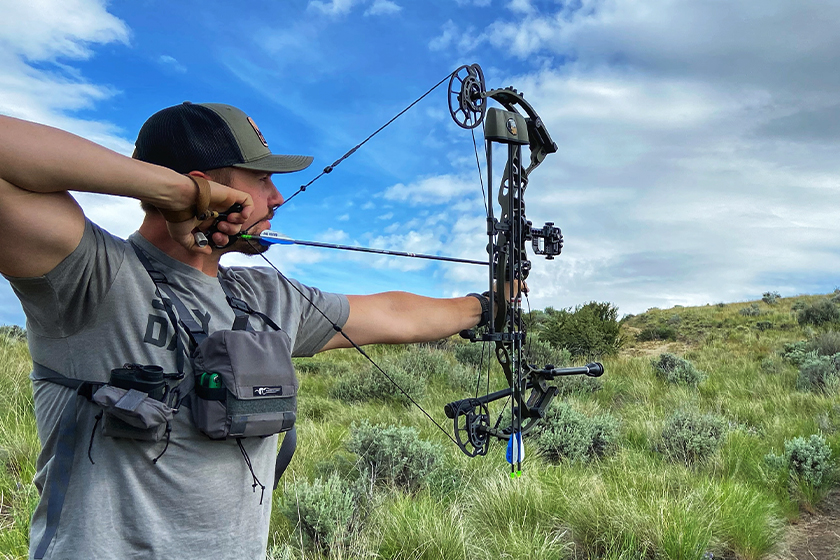
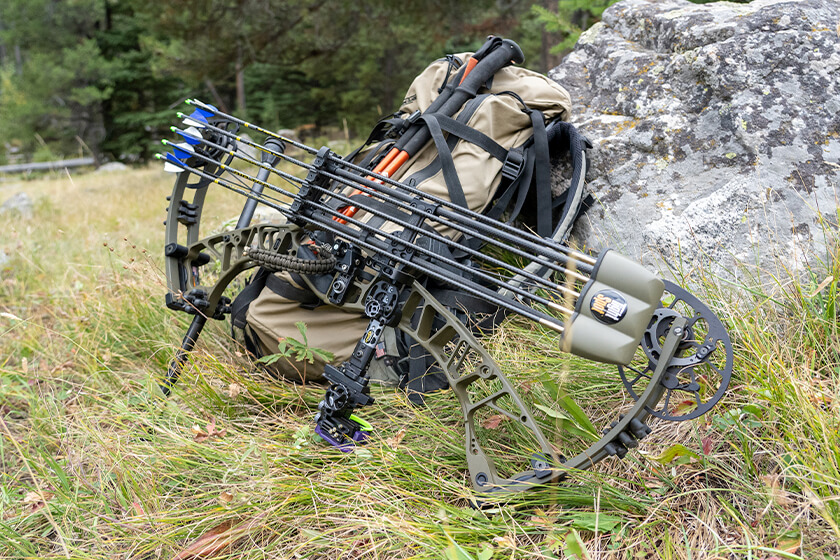
Hoyt’s latest compound bow is designed with the backcountry bowhunter in mind. (Photo courtesy of Joe Ferronato)
Overview: Hoyt Ventum 33 Bow | $1,249
It’s that time of year again. You know, the time where archery-shop parking lots are chock full, and the pro staff are overwhelmed. The time when hunters realize that the “I have time” sentiment is all but gone and the season is starting in mere days—if it hasn’t started already. Hunters across the country will soon be taking to the hills in pursuit of bull elk or velvet mule deer.
I worked as pro staff in an archery shop for several years while in college and if one thing always held true, it was that people procrastinate when getting their equipment ready for hunting season. Bow sales would always skyrocket when the calendar read September.
I am not one to encourage this behavior, but I may be as guilty as the rest. This year my new bow setup came just weeks before the season—I did make sure to practice with my previous setup throughout the off-season to stay prepared, but I’m just now getting acquainted with my new choice in compound bows.
Years of staring at top-end bows on the shelf built a desire for me to always have the “best” model for the year. This year, with the delays in outdoor products everywhere in the industry, my insatiable lust for something new brought me down to the wire.
As I searched through catalogs of new bows, I studied their specs and ended up going with the Hoyt Ventum 33. This is Hoyt’s aluminum-riser flagship model for the year, and it earned its place at the top of the line.
The Ventum offers two axle-to-axle lengths: a 30-inch and a 33-inch. Due to my height and monkey-like arms, I chose the 33-inch axle-to-axle model. I have found over the years that a longer axle-to-axle bow decreases string angle at my long draw length and allows me to shoot more confidently and accurately at farther distances.
The Ventum re-imagines how a bow delivers calm in the shot when nerves are raw and adrenaline feeds on a constant drip. (Photo courtesy of Joe Ferronato)
The Ventum 33 features an ATA speed rating of 334 feet per second, with a 6 3/8-inch brace height that is as forgiving as anyone could ask for. And this sleek backcountry killer weighs in at 4.7 pounds—without accessories.
Hoyt’s Newly Designed Cam System
The updated cam system on the Ventum 33 delivers the ultimate blend of comfort, speed, and tunability to make this a versitle hunting bow. The HBX cams allow for draw-length adjustability from 26 inches to 31 inches by choosing between two modules-one of my favorite things about the design of HBX system.
While many other cams on the market are draw-length adjustable, when you get to the longer draws the draw cycle suffers and the shootability of the bow is diminished. However, with the HBX system, my 31-inch draw shoots the same as someone at a 27-inch draw. As an added bonus, these cams are adjustable between 80- and 85-percent let-off for a more comfortable shooting experience in a hunting situation.
Another thing that makes the Hoyt a great option for backcountry and Western hunters is the draw weight variability. These bows come with limbs that offer max poundage ratings of 40, 50, 60, 65, 70, and even 80 pounds. I chose the 80-pound limbs to get a little more speed out of a heavier arrow—and let’s just say it has worked well.
Riser and Stabilizer Redesign
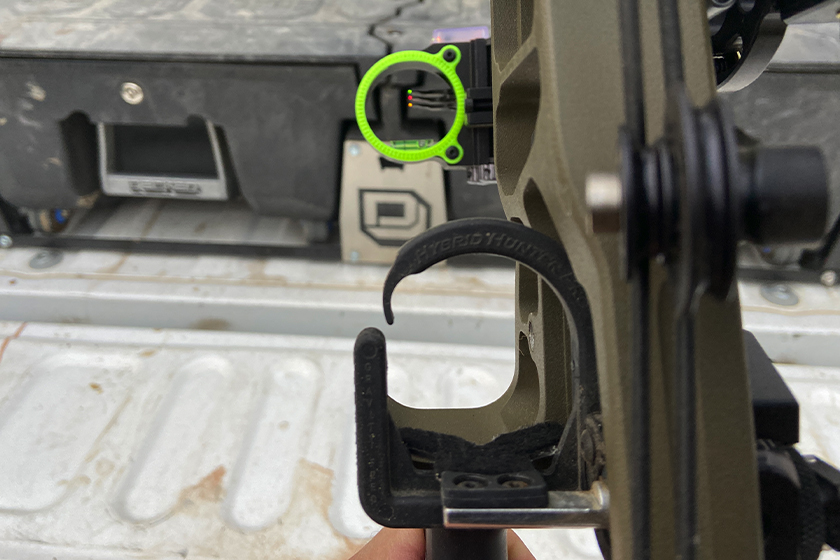
The new riser design features two “integrate” options to ensure the best balance you can get out of your archery setup. Hoyt adopted the same rest integration that companies like Mathews have been using for the past couple of years. Using a dovetail design the QAD Integrate MX will attach directly to the riser in a center-mounted position. In a similar fashion, Hoyt designed the riser to accept a picatinny rail on the front to mount your sight directly in line with the riser. These features can help center-balance your bow by removing a lot of attachment hardware from the outside of the riser.
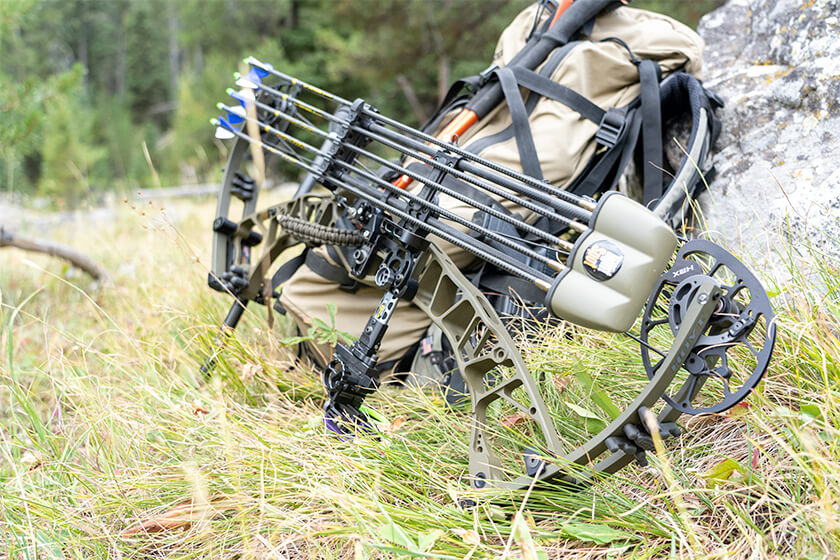
HBX comes in one cam size that covers the full draw length range by using two different module sizes, so you get the fastest performance across all draw lengths. (Photo courtesy of Joe Ferronato)
The biggest change you’ll notice on the riser of all top-of-the-line Hoyt bows this year is the stabilizer mounting location. These bows come with the In-Line Short Stop 2.25 stabilizer mounted just above the limb pocket instead of right below the grip. This all-new positioning gets you more bang for your buck. A 2.25-inch stabilizer has the same effect on balance as a 6-inch stabilizer mounted in the traditional location. This means you can get better balance with a lot less weight—a perfect solution for a dedicated hunting bow. With the addition of a sidebar mounted directly to the riser with Hoyt’s sidebar mount, the bow balances beautifully.
Shootability and Performance from Hoyt
When shooting a bow—especially one that is meant for serious hunting out West—I look for several things: Comfortable, smooth, and silent draw; a firm back wall that holds steady; good balance; and a quiet and shock-free shot. The Ventum met all my criteria from the second I picked it up.
The draw cycle is smooth and comfortable. From initiation to the back wall, the cams pull steady and quietly. There are no hard angles that cause a steep drop off or crash into the valley, making it silent and controllable.
The HBX cams are aggressive, and I was pleasantly surprised to find that the bow holds true when at full draw. The bow doesn’t want to jump forward like many other speed bows on the market. Keep your back muscles engaged and hold for as long as you can. Upon release, the hand shock is minimal.
The smooth and fast HBX Cam is making its debut this year, and you are going to love how it tunes, shoots, and feels. (Photo courtesy of Joe Ferronato)
A quiet bow is a good bow, and the Ventum is nothing short of that. I don’t notice any noise that would make me nervous to hunt with. Yes, the loud bows of the past killed a lot of critters, but the quiet technology of these new bows helps tremendously when taking shots on big game animals. Jumping or ducking the string is very real, and the quieter your bow is the more likely you are to connect on your shot.
I didn’t do myself any favors when it comes to a silent shot. Choosing 80-pound limbs for extra speed on the shot only adds to the possible noise a bow can make. My Ventum is pushing a 500-grain arrow at 301 feet per second—an optimum setup for penetration. This is a speed that is difficult to achieve and many bows that push arrows that fast do it with a snappy, loud shot. The Ventum, though, is quiet—even shooting at an indoor range, the noise was minimal. I wish I had a sound level meter, but unfortunately, you’ll have to take my word for it.
Tuning my Ventum was a breeze. With the HBX cams, yoke tuning is a thing of the past. To tune, you need to remove the axle and cam and place small shims to move the cam left or right to correct your center shot. This was an incredibly simple process—at least with the help of some equipment at the local bow shop. Within minutes we had the Ventum shooting perfect bullet holes through paper. Tuning the bow further I noticed it was incredibly easy to get my desired arrow flight—my broadheads are flying true to my field points and I am ready for the archery season. Follow along in the coming months to see how the Ventum performs on my fall hunts.
Overall, catfish are some of the most abundant species of fish in the world. According to Practical Fishkeeping, there are now over 3,000 species of catfish around the world. Depending on the species, catfish can range in size from 1.5 to 2 inches (4 to 5 cm) to hundreds of pounds, like the behemoths on this list. All of the catfish on this list are over 100 pounds (45.36 kilograms). Nearly all of these catfish are listed as the world record for their species in the International Game Fish Association’s (IGFA) World Records Database. As of the time of this writing the records are accurate.
Record Flathead Catfish
Source: IGFA World Records Database
The record for the largest flathead catfish belongs to Ken Paulie, who landed his big flathead over 20 years ago. Paulie’s flathead catfish weighed 123 pounds (55.79 kilograms) and was over 5 feet (1.55 meters) in length.
While Paulie’s record was verified by the the Kansas Department of Wildlife and Parks and has been standing for over 20 years, many people have questioned the legitimacy of Paulie’s catch. Paulie was using a light tackle while he was crappie fishing and the flathead was a lucky catch.
Did You Know?
Paulie’s flathead catfish was frozen for many years before it was presented to the Kansas Department of Wildlife, Parks, and Tourism in 2016 for further examination. Researchers determined that the record flathead catfish was at least 22 years old, grew very rapidly, and was most likely a male.
Record Redtail Catfish (Pirarara)
Source: IGFA World Records Database
The world’s largest redtail catfish was captured in 2010 by Gilberto Fernandes in Brazil’s Amazon River. Fernandes’ redtail catfish was 123 pounds 7 ounces (56 kilograms) and 4.62 feet (1.408 meters) long. There really isn’t any more details about Fernandes’ catch, but he did use a fiberglass Sportex rod to land the redtail catfish.
According to a news report, Fernandes has over 100 IGFA world fishing records. Just a month before he made his record redtail catfish catch, Fernandes caught another redtail that was 113 pounds 8 ounces (51.5 kilograms).
Did You Know?
Redtail catfish are not picky eaters and in the wild tend to eat fish and crustaceans. In captivity, redtail catfish eat assorted worms, frozen foods, sinking catfish pellets, and dry foods.
Record Blue Catfish
Source: The Roanoake Times
The record blue catfish was caught in 2011 in Kerr Lake, Virginia by a man named Richard Nicholas Anderson. This large blue catfish weighed in at 143 pounds (64.86 kilograms) and was 4.75 feet (1.45 meters) long. It took Anderson about 45 minutes to land the giant blue catfish, whose size surprised Virginia Department of Game and Inland Fisheries chief Gary Martel.
Anderson wanted to keep his blue catfish alive so that it could be put in a tank at a local Bass Pro Shops retail store. However, despite his best efforts, his record blue catfish died.
Did You Know?
Blue catfish were intentionally introduced into rivers in Virginia in the 1970s, but have now become an invasive species that grows and breeds rapidly.
Record Goonch
Source: fiskefuralle.se
The record for the largest Goonch ever caught belongs to Jakub Vágner, the host of National Geographic’s “Fish Warrior.” Vágner’s Goonch was 165 pounds 5 ounces (75 kilograms) and over 5 feet (1.57 meters) long. The Goonch was caught in the River Ramganga in India.
In addition to the large Goonch, Vágner has caught several other large freshwater fish, including and 286.6 pound (130 kilogram) Arapaima and an 242.5 pound (110 kilogram) Wels catfish. In an interview, Vágner said that he is sill after the world record Goliath Tiger Fish of the Kongo river.
Did You Know?
Goonch catfish have reportedly been known to eat corpses from funeral pyres on the Kali River, which runs between Nepal and India. It is speculated that this has allowed the Goonch to grow so large and develop a taste for human flesh.
Dino Ferrari’s Wels Catfish
Source: Adventure Sports Network
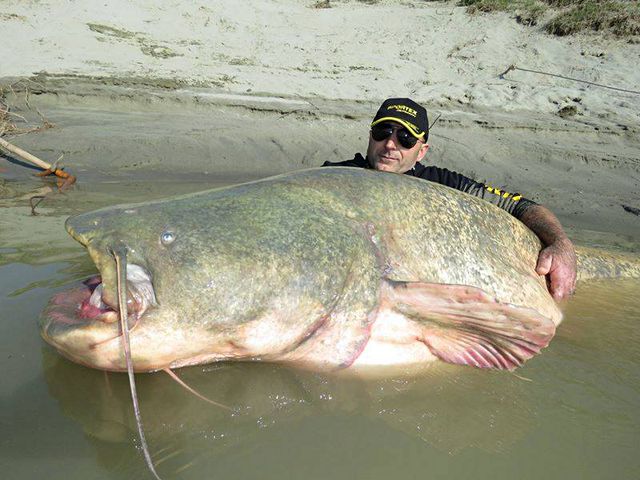
In 2015, an Italian fisherman named Dino Ferrari was featured in international news for capturing a monster Wels catfish in the Po Delta. Ferrari’s Wels catfish weighed 280 pounds (127 kilograms) and was 8.75 feet (2.67 meters) long. Although Ferrari’s catch is impressive, unfortunately he was just shy of the world record for a Wels catfish catch, which weighed 297 pounds 9 ounces (134.97 kilograms).
However, other than the official record listing on the International Game Fish Association’s website, there wasn’t enough information to feature the story of the record Wels catfish. Ferrari’s sponsor did say that his catch may hold the world record for a fish caught with a Torpedo spinning rod made by an Italian manufacturer.
Did You Know?
It took Ferrari 40 minutes to catch the Wels catfish and he decided to release the fish back into the water so he could be caught again in the future.
Record Lau-Lau (Piraiba)
Source: bigfishesoftheworld.blogspot.com
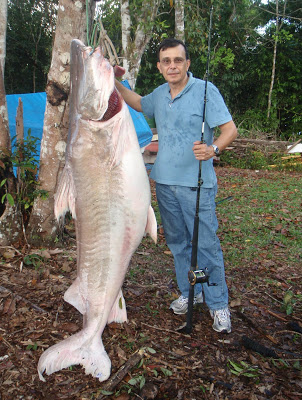
Jorge Masullo de Aguiar currently holds the world record for the largest Lau-Lau (Piraiba), which is a species of catfish that is native to South America. Masullo de Aguiar’s Piraiba was caught in 2009 and weighed 341 pounds 11 ounces (155 kilograms). This giant South American catfish was also over 6.5 feet (2 meters) long.
While Masullo de Aguiar’s Piraiba is the largest officially on record, in general, Piraiba can weigh over 450 pounds (204 kilograms). In fact, the Piraiba is the largest of the catfish species found in the Amazon.
Did You Know?
Piraiba are so large that monkeys, cats, dogs, birds, and other catfish have been found in their stomachs.
Mekong Giant Catfish
Source: NBC News
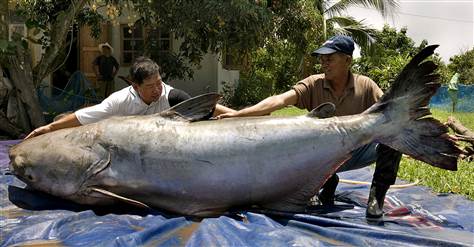
In 2005, a behemoth Mekong giant catfish, weighing in at a scale-tipping 646 pounds (293 kilograms) was caught in a remote village in Thailand near the Mekong River. Experts believe that this monster Mekong giant catfish is not only the largest catfish ever caught in the world, but the largest freshwater fish ever recorded.
In addition to weighing nearly 650 pounds, this Mekong giant catfish was 9 feet (2.7 meters) long. It took over an hour for the Thai fishermen to reel in the heavy catfish. Officials from Thailand’s Inland Fishery Department wanted to use the female Mekong giant catfish for a breeding program, but she ended up dying. The people from the nearby villagers didn’t let the fish go to waste and ended up eating it.
Did You Know?
The Mekong giant catfish is rare and endangered and the one caught in 2005 was the largest ever caught since Thailand began keeping records in 1981.
You may be surprised to learn that the chiltepin is actually a pepper native to the United States. In fact, it’s the only one, making it known to many above the border as “the mother of all peppers”. The chiltepin pepper has a rich history in Native American culture. And its tiny size along with its intense (but short-lived) extra-hot spiciness (50,000 to 100,000 Scoville heat units) and smoky, earthy flavor have made it a unique favorite among today’s hot pepper lovers.
Table of Contents
What are chiltepin peppers?
Chiltepin fast facts
How hot are chiltepin peppers?
Where do chiltepin chilies grow?
What do they look like?
What do chiltepin taste like?
Cooking with chiltepin
Where can you buy chiltepin peppers?
Must-read related posts
Chiltepin fast facts
Scoville heat units (SHU)Median heat (SHU)Jalapeño reference pointCapsicum speciesOriginUseSizeFlavor
How hot are chiltepin peppers?
For such a small size, they pack a pretty big punch. Be careful if you ever get the chance to pop a few of these peppers in your mouth. Chiltepin ranges from 50,000 to 100,000 Scoville heat units (or SHU), with the chance for a bit hotter if a crop had an ideally wet growing season. This makes it equal with Thai peppers in terms of overall heat and roughly six to forty times spicier than your standard jalapeño. Compared to that cayenne pepper in your cupboard (30,000 to 50,000 SHU), the chiltepin begins in heat wear the hottest cayenne stops.
Let’s also compare the chiltepin to another chili that’s often referenced alongside it: the pequin. Pequin chilies are quite a bit milder: 40,000 to 60,000 SHU. Their floor is near equal, but chiltepin can be, at their hottest, nearly double the heat of pequin peppers.
But the heat of a chiltepin is quite different than most other peppers. They zing you with hotness before calming down quickly. Compare that to a ghost pepper where the heat starts seemingly mild and boils over in intensity over time. It’s definitely a different eating experience.
Where do chiltepin chilies grow?
As mentioned, this is the one wild chili native to the United States. It’s found natively in the southwestern U.S. and northern Mexico. For a long time, chiltepin plants pretty much only grew wildly, a treasure of the land. Native Americans adored this chili, and they still do. It’s a food staple and a medicine (due to the capsaicin in the plant).
Rituals were built around the wild harvesting of the chiltepin pepper – it’s something that brought communities and families together. It’s this sort of indigenous North American history and folklore that’s bringing the chiltepin back to the forefront among chilies in America.
Today, chiltepins still grow wildly. The regions of wild growth in the United States are few – totaling 15 locations. But many are all protected national park sites like Coronado National Forest. There are domesticated crops as well, but you’ll find that many packages of dried chiltepins are picked from wild harvests in these regions.
What do they look like?
These are tiny chilies. In fact, chiltepin are sometimes called bird’s eye peppers because of their tininess (not to be confused with the Thai peppers which are also sometimes called bird’s eye chilies.) The chili goes by many other names, too,, including bird pepper, chile tepin, chiltepe, and simply tepin.
Chiltepin are often only a quarter-inch across, so multiple chilies can fit on a United States quarter, and they have a round shape. They follow the common color maturation pattern of most chilies, from green to a beautiful red hue. Overall, they look quite unassuming for the amount of spiciness they hold.
What do chiltepin taste like?
There’s a smoky, earthy flavor surrounding the pepperiness of the chiltepin. And that’s only heightened when they are picked sun-dried from the vine. It’s a common way that these chilies are eaten since they are found natively in the Southwest of the United States.
Cooking with chiltepin
As mentioned, using this chili sun-dried is a favorite for many people. Some simply enjoy this wild North American chili, sun-dried, straight off the vine. Just pop a pepper in your mouth for an intense experience.
And even though these peppers are small, people still cook with them. Chiltepins, in both their dried and fresh forms, are often mixed in with sauces and salsas. They are also ground into powders for spices. They even make their way into spicy desserts. A favorite for many is pickled chiltepins. When pickled, the chili is mixed with other spices to create one of the most unique condiments imaginable.
And, of course, chiltepin are a favorite for Tex-Mex and authentic Mexican foods of all types. It’s an excellent chili for burritos, enchiladas, quesadillas, and more.
More cooking tips:
When cutting into chiltepin, handle with care. The heat level of these chilies is low enough that you can typically handle them whole without concern for chili burn. But cutting into any chiltepin, like with any chili, releases the capsaicin (the compound that creates the spiciness.) Wear gloves when cutting them to keep the potential for pretty significant chili burn at bay.
Use sparingly, then add as you like. The small size of chiltepin can really fool you into overusing them. That’s especially true if you’re swapping chiltepin into a recipe that called for larger chilies. Don’t think that you need to match size for size (like five chiltepin for one jalapeño.) You’ll be in for a surprising amount of spiciness.
Chiltepin are also an excellent chili for read meats and barbecue. It’s that earthy, smoky flavor. It maps very well to the bolder tastes you get from grilled steaks and heavily marinated meats and bolder barbecue sides.
Where can you buy chiltepin peppers?
You won’t often find these peppers in a grocery store outside of the southwestern United States, that’s for sure. And even specialty stores may not carry them. But you’ll definitely find them online,along with chiltepin seeds, whole chilies, and other products.
With its rich North American history and surprising taste, the chiltepin is no longer a forgotten pepper. If you’re a chilihead, exploring what this pepper has to offer is an interesting way to experience both one of the earliest known peppers as well as the rich Native American history of the United States. It may be tiny, but its significance is grand.
Must-read related posts
The Hot Pepper List: The chiltepin is only one of over 150 chilies we profile here at PepperScale. Our list lets you filter chilies by spiciness, flavor, origin, use, and more.
Small Peppers Guide – Tiny Delivers Big: This chili is among the smallest on the Scoville scale. Which others share that distinction? Take a look.
Our Hot Sauce Rankings: We rank over 100 hot sauces, covering overall flavor, heat balance, usability, and collectibility. Explore the rankings and even sort by the chilies used.
Discover the pure essence of Deer Park Spring Water as we unveil its secret ingredients. Uncover the natural wonders hidden within every bottle, sourced from pristine springs and carefully crafted to bring you refreshment like no other. Join us on a journey to explore the components that make this renowned beverage a refreshing and wholesome choice for hydration seekers.
Understanding the Ingredients in Deer Park Spring Water
Deer Park Spring Water is known for its refreshing taste and natural mineral content. The water is sourced from various springs located across the Eastern Seaboard and beyond. These springs include Frontier Spring in New Tripoli, PA; Bangor, PA; Hegins, PA; South Coventry, PA; Pine Grove, PA; Foster Township, PA; Newmanstown, PA; Oakland, MD; Spring of Life in Lake County, FL; White Springs in Liberty County, FL; Madison Blue Spring in Madison County, FL; Glenwood Spring in St. Albans, ME; Swift Springs in Chesterfield County, SC; Sweetwater Falls in Hohenwald, TN; and Roaring Gap Spring in Roaring Gap NC.
The specific mineral content of Deer Park Spring Water may vary slightly depending on the source and bottling location. However, common minerals that are added for taste include calcium, magnesium, and potassium. These minerals not only enhance the flavor of the water but also provide additional health benefits.
It’s important to note that Deer Park provides a water quality report that contains detailed information about the ingredients present in their spring water. This report can be accessed through a PDF file provided by Deer Park.
Overall, Deer Park Spring Water offers a refreshing and naturally sourced option for hydration with added minerals for taste. It’s always recommended to check the label or refer to the water quality report for accurate and up-to-date information on the specific bottle you have.
Exploring the Mineral Content of Deer Park Spring Water
Deer Park Spring Water is known for its refreshing taste, and this can be attributed to the added minerals in the water. The specific mineral content may vary slightly depending on the source and bottling location, but common minerals added for taste include calcium, magnesium, and potassium. These minerals not only enhance the flavor of the water but also provide essential nutrients that are beneficial for our health.
It’s important to note that Deer Park sources its natural spring water from various springs located across the Eastern Seaboard and beyond. Some of the primary sources include Frontier Spring in Pennsylvania, Spring of Life in Florida, Glenwood Spring in Maine, Swift Springs in South Carolina, and many more. Each source has its unique mineral composition, contributing to the distinct taste of Deer Park Spring Water.
To get a more accurate understanding of the mineral content present in a specific bottle of Deer Park Spring Water, it’s recommended to check the label or refer to their Water Quality Report. This report provides detailed information about the water’s composition and any additional substances that may be present.
Overall, Deer Park Spring Water offers a refreshing and hydrating experience with added minerals that contribute to its taste. Whether you prefer it for its natural spring source or enjoy the benefits of added minerals, Deer Park is committed to providing quality drinking water sourced from pristine springs across different regions.
Key Points:
– Deer Park Spring Water contains added minerals such as calcium, magnesium, and potassium for taste enhancement.
– The specific mineral content may vary depending on the source and bottling location.
– Deer Park sources its natural spring water from various springs spanning across different regions.
– Checking the label or referring to their Water Quality Report provides accurate information about mineral composition.
– Deer Park aims to deliver refreshing and hydrating drinking water sourced from pristine springs.
Note: The given paragraphs provide an overview of the mineral content in Deer Park Spring Water. The information is based on the provided content and may not be entirely accurate or comprehensive.
A Closer Look at the Ingredients in Deer Park Natural Spring Water
A Closer Look at the Ingredients in Deer Park Natural Spring Water
Deer Park Natural Spring Water is known for its refreshing taste and natural mineral content. The specific mineral composition may vary slightly depending on the source and bottling location, but common minerals added for taste include calcium, magnesium, and potassium. These minerals not only enhance the flavor of the water but also provide additional health benefits.
Calcium is an essential mineral that plays a crucial role in maintaining strong bones and teeth. It also helps with muscle function and nerve transmission. Magnesium is another important mineral that supports various bodily functions, including energy production, muscle relaxation, and heart health. Potassium is known for its role in regulating fluid balance, muscle contractions, and nerve signals.
The natural spring water used by Deer Park comes from springs located across the Eastern Seaboard and beyond. Some of the primary sources include Frontier Spring in New Tripoli, PA; Bangor, PA; Hegins, PA; South Coventry, PA; Pine Grove, PA; Foster Township, PA; Newmanstown, PA; Oakland, MD; Spring of Life in Lake County, FL; White Springs in Liberty County, FL; Madison Blue Spring in Madison County, FL; Glenwood Spring in St. Albans, ME; Swift Springs in Chesterfield County, SC; Sweetwater Falls in Hohenwald TN; and Roaring Gap Spring in Roaring Gap NC.
It’s important to note that bottled water can pick up naturally occurring substances as it travels over land or through the ground. These substances can include salts and metals (inorganic substances), pesticides and herbicides (from agriculture or urban runoff), organic substances (byproducts of industrial processes), microbial organisms (from wildlife or sewage treatment plants), and substances with radioactive properties (naturally occurring or from oil/gas production).
Deer Park Natural Spring Water undergoes rigorous testing to ensure its safety and quality. The brand provides a Water Quality Report that outlines the water analysis results. If you are interested in knowing the specific mineral content of your bottle, it’s best to check the label or contact the company for the most accurate and up-to-date information.
In conclusion, Deer Park Natural Spring Water contains natural spring water with added minerals for taste. The specific mineral content may vary depending on the source and bottling location, but common minerals added include calcium, magnesium, and potassium. The brand sources its water from various springs across the Eastern Seaboard and undergoes thorough testing to ensure its quality. It’s always recommended to refer to the label or contact the company for detailed information about your specific bottle of Deer Park Natural Spring Water.
What Makes Deer Park Spring Water Refreshing? Discover the Ingredients
Deer Park Spring Water is known for its refreshing taste, and this can be attributed to its unique blend of ingredients. The water is sourced from natural springs located across the Eastern Seaboard and beyond. These springs, such as Frontier Spring in New Tripoli, PA and Glenwood Spring in St. Albans, ME, provide a pure and pristine source of water.
The specific mineral content of Deer Park Spring Water may vary slightly depending on the source and bottling location. However, common minerals added for taste include calcium, magnesium, and potassium. These minerals not only enhance the flavor of the water but also contribute to its overall quality.
It’s important to note that Deer Park Spring Water undergoes strict quality control measures to ensure that it meets the highest standards. The company provides a Water Quality Report that details the analysis of their water sources. This report can be accessed on their website or by contacting their customer service.
In conclusion, Deer Park Spring Water is refreshing due to its natural spring source and added minerals for taste. The combination of these factors creates a crisp and satisfying drinking experience.
Unveiling the Minerals and Ingredients in Deer Park Spring Water
Deer Park Spring Water is known for its refreshing taste and natural mineral content. The water is sourced from various springs located across the Eastern Seaboard and beyond, including places like Pennsylvania, Maryland, Florida, Maine, South Carolina, Tennessee, and North Carolina. Each spring contributes to the unique mineral composition of Deer Park Spring Water.
The specific mineral content may vary slightly depending on the source and bottling location. However, common minerals that are added for taste include calcium, magnesium, and potassium. These minerals not only enhance the flavor of the water but also provide essential nutrients for our bodies.
It’s important to note that the mineral content can be different for each bottle of Deer Park Spring Water. Therefore, it’s always recommended to check the label for the most accurate and up-to-date information on the specific bottle you have.
Overall, Deer Park Spring Water offers a refreshing and naturally enriched drinking experience with its carefully selected minerals. So next time you reach for a bottle of Deer Park Spring Water, you can enjoy not only its crisp taste but also the benefits of these added minerals.
Water Quality Report
Deer Park Brand Natural Spring Water takes pride in ensuring high-quality water for its consumers. The company provides a comprehensive water quality report that highlights important information about their water sources and potential contaminants.
According to their report, bottled water can be sourced from rivers, lakes, streams, ponds, reservoirs, springs, and wells. As water travels through these sources naturally or through underground pathways, it can pick up substances from both natural occurrences and human activities.
Some of the substances that may be present in source water include inorganic substances such as salts and metals (naturally occurring or from farming/industrial activities), pesticides/herbicides (from agriculture/urban runoff), organic substances (byproducts of industrial processes or petroleum production), microbial organisms (from wildlife/sewage treatment plants), and substances with radioactive properties (naturally occurring or from oil/gas production).
It’s important to note that certain individuals, such as immunocompromised persons, may be more vulnerable to contaminants in drinking water. They should seek advice from their healthcare providers regarding the safety of their drinking water.
Deer Park Brand Natural Spring Water follows guidelines provided by the United States Environmental Protection Agency and the Centers for Disease Control and Prevention to ensure the safety of their water.
In conclusion, Deer Park Spring Water goes through a rigorous quality control process to provide consumers with safe and refreshing natural spring water. The company is committed to transparency and provides detailed information about their water sources and potential contaminants in their water quality report.
The Composition of Deer Park Spring Water: Ingredients Revealed
Deer Park Spring Water is known for its refreshing taste and natural mineral content. The specific composition of the water may vary slightly depending on the source and bottling location. However, common minerals that are added for taste include calcium, magnesium, and potassium. These minerals not only enhance the flavor of the water but also contribute to its overall health benefits.
It’s important to note that Deer Park sources its natural spring water from various springs located across the Eastern Seaboard and beyond. Some of the primary sources include Frontier Spring in New Tripoli, PA; Bangor, PA; Hegins, PA; South Coventry, PA; Pine Grove, PA; Foster Township, PA; Newmanstown, PA; Oakland, MD; Spring of Life in Lake County, FL; White Springs in Liberty County, FL; Madison Blue Spring in Madison County, FL; Glenwood Spring in St. Albans, ME; Swift Springs in Chesterfield County, SC; Sweetwater Falls in Hohenwald, TN; and Roaring Gap Spring in Roaring Gap NC.
To get a more accurate understanding of the mineral content present in a specific bottle of Deer Park Spring Water, it is recommended to check the label or refer to the Water Quality Report provided by Deer Park. This report contains detailed information about the water’s composition and any additional substances that may be present.
Overall, Deer Park Spring Water offers a refreshing and mineral-rich option for those seeking a high-quality drinking water choice. Its natural spring sources and carefully selected minerals contribute to its unique taste and potential health benefits.
In conclusion, Deer Park Spring Water is made up of natural ingredients sourced from the springs of the Appalachian Mountains. It is free from any artificial additives or flavors, making it a pure and refreshing choice for hydration.
Unveiling the truth behind dry firing a Gamo air rifle, this intriguing headline delves into the possibility of safely practicing without ammunition. Join us...







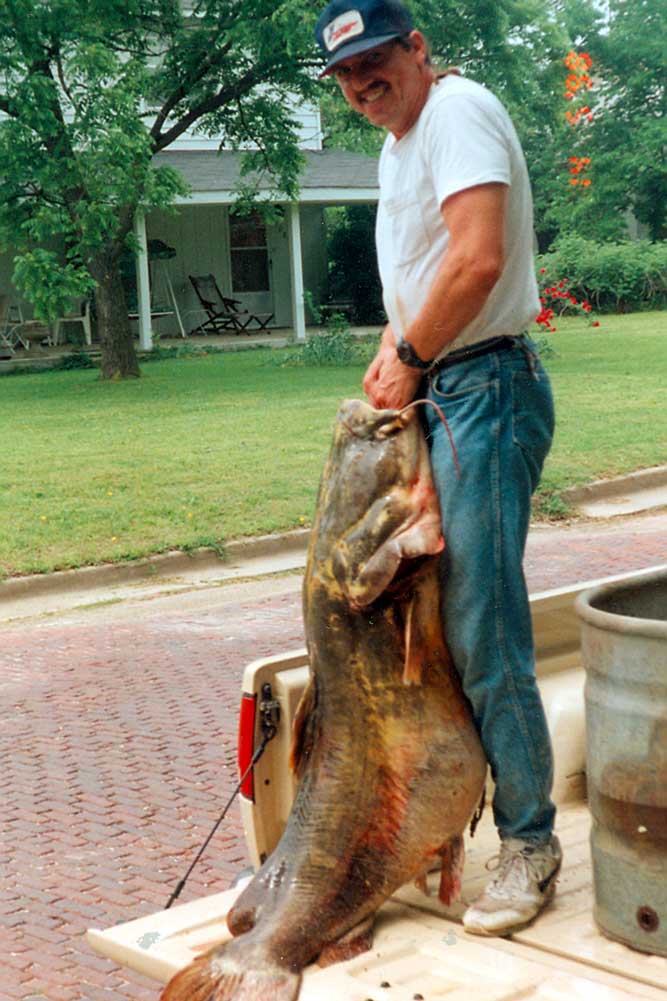 Source: IGFA World Records Database
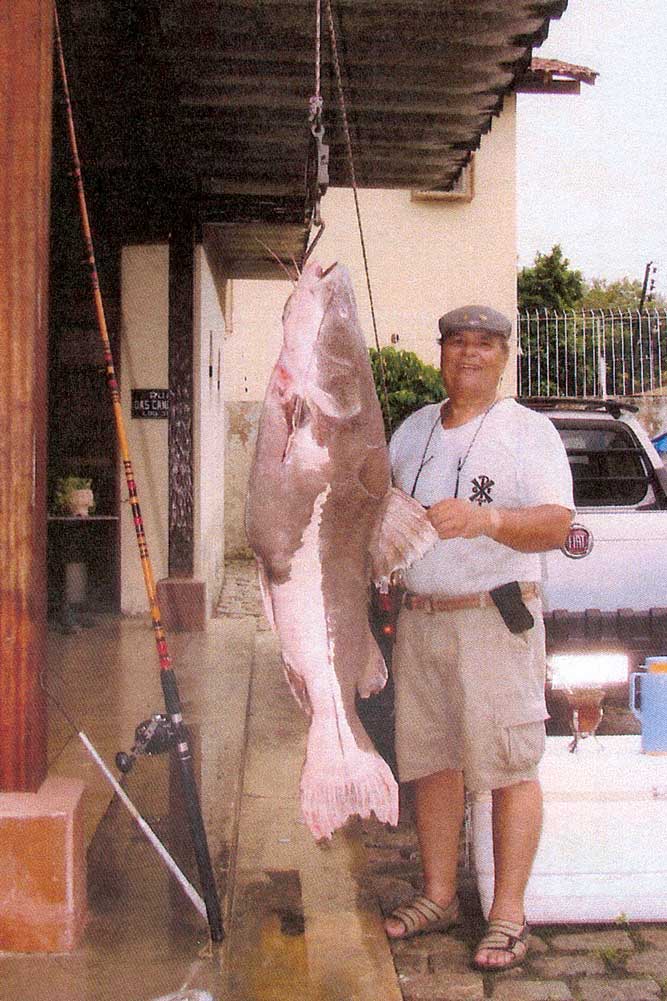 Source: IGFA World Records Database
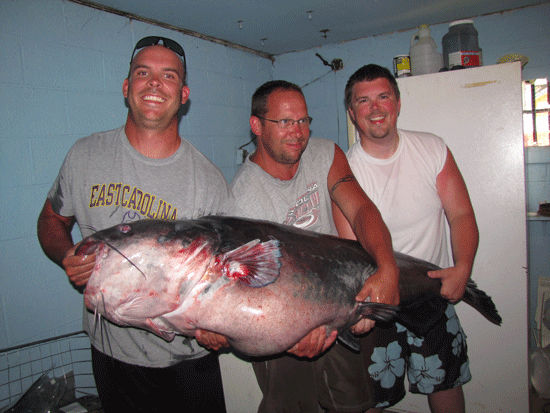 Source: The Roanoake Times
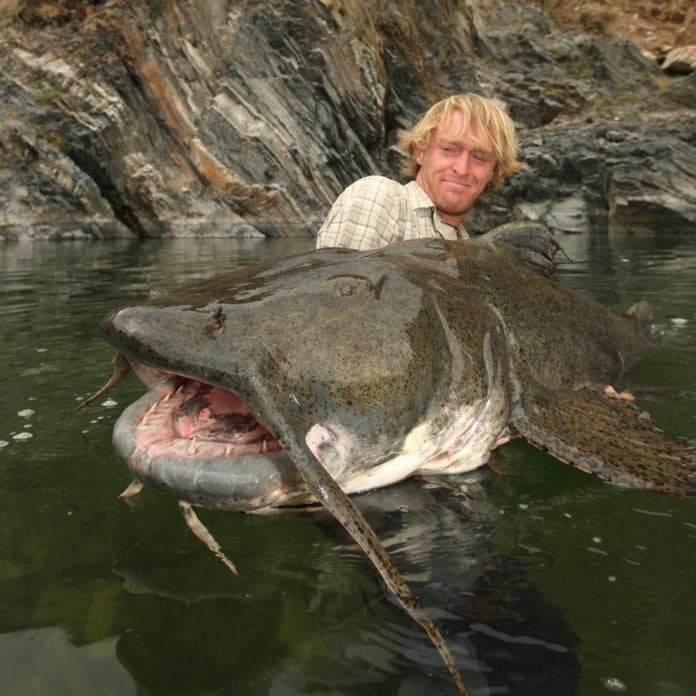 Source: fiskefuralle.se
 Source: Adventure Sports Network
 Source: bigfishesoftheworld.blogspot.com
 Source: NBC News


