Bull Shoals Reservoir is one-of-a-kind. It’s character doesn’t resemble many other man-made lakes in the country. It’s banks are, for the most part, void of docks or buildings. It seems as if it’s lost in time when the Ozark Indians used to use the once White River for their source of life.
Bull Shoals Reservoir is one-of-a-kind. It’s character doesn’t resemble many other man-made lakes in the country. It’s banks are, for the most part, void of docks or buildings. It seems as if it’s lost in time when the Ozark Indians used to use the once White River for their source of life.
What about the fishing?! As many lakes in the midwest, white bass are a sought after trophy, for their meat and for their fight. I remember years ago in Oklahoma, to name one state, white were considered a trash fish and not fit to eat. No limits on this abundant fish didn’t seem to deter the population on most lakes and rivers. There seemed to be an endless number schooling up and down the flats, devouring and schools of shad in their way. Times have changed, as they do, and the white bass, or called sand bass in some other parts of the country, have become coveted as crappie and walleye (well- almost). Most anglers come out of the woodwork on warm, sunny days in March and April to line the banks and fill the channels with their boats to do what? Chase whites.
When do the whites start their march? All depends on the weather. In January, we start to see white bass show up when fishing for winter crappie off mud flat banks or fishing for walleye off the flat channel in deeper water. On into February, more start to show from K-Dock up to Beaver Creek in the main channels and you can usually depend on finding them close to the bottom. How do you locate them? Find them through countless days of drifting and trolling in this 4 to 6 miles stretch… or… read my reports and I’ll tel you where I’ve either caught them or heard of other catching them. I don’t know about you but I can’t afford to spend countless anything but working here at the resort! Once found, they won’t move too far too fast- especially if they are close to say Beaver Creek where they will run up to spawn.
How to catch pre spawn whites- as I said, they will be close to the bottom of the lake. **Bull Shoals is designed to be the holding basin for the White River Chain of lakes- it can hold lots of water. About 15 years ago, they put 40 feet of water over the normal pool- that’s allot of water!! Then normal thin lake went sprawling all over the place and it was difficult to find anything in so much water.** You need a good depth finder, not necessarily to find the whites but to see what kind of depth you’re in. Finding the fish is good too. Lures and techniques- your preference from here. I like jigs. I use 1/18th and even 1/4th oz jigs, depending on the depth and wind conditions. I use marabou mostly when vertical jigging. White, blue, chartreuse, gray, yellow, purple…. I switch around until I find a color to their liking. Some people like to jerk spoons. I’ve never got the hang of that but I know it works. One thing to remember when working either a jig or spoon up and down- look for it to stop before it hits bottom. You won’t feel the proverbial tap like when retrieving a lure- they usually take the lure on the drop. Drifting minnows on the bottom is good. Either with the wind or current. Careful not to use too much weight so as to get hung on the bottom a lot. Trolling deep diving crank baits is also good- blue/silver hot-n-tots, shad raps and heavy rooster tails. If the lake level is low enough, use 1/8th oz lead heads and swimming minnows and work them slowly across the bottom. We use several colored minnows including motor oil, blue, purple, chartreuse and smoke. Powersite will start holding white bass early in the season. Either fishing from a boat or the banks, working crank baits or swimming minnows is current or not can be productive. You really never know what you’ll catch up there too- whites, crappie, black bass, rainbow or brown trout, drum, carp, catfish, walleye- even striper now. That’s why they call it the “Pot Hole”.
Night fishing for pre spawn whites is very popular and productive closer to the spawn. I’ve headed out in my boat from River Run on many a night, while others are heading in. I head down to the “Willows” and anchor in current along the mud bank in about 18 feet of water. I throw a purple swimming minnow (1/16th oz lead head in medium current and 1/8th in heavy current) towards the bank almost at a 90 degree angle and let the lure drop close to the bottom before retrieving it. When the lure makes the swing at the back of the boat, I usually get the strike. This is when we catch a lot of the “sows” or female whites- big whites!! Conditions do have to be just right for this to happen but in most years- we do get water generation at night and we do catch whites this way. Other ways to catch whites at night- off the banks- the same willow bank, the mouth of Swan Creek, up close to Powersite Dam and the mouth of Beaver Creek. Use slow-moving lures like jigs, grubs or swimming minnows and work them close to the bottom. Darker colored lures usually work best.
Spawning whites- when does it really happen? Water conditions in the creeks need to be: warm- 60 degrees or higher; running water preferred; water color- I believe anything but extremely muddy. In the spring, weather fronts and rains play havoc on fishing. “The whites and running- now their not- it’s too muddy- water is too high- too low- too clear- too cold- new moon- old moon.” If you’re like me, you spend half your time chasing “stories” about what happened yesterday and coming up empty. In early to mid April, our white bass are usually in peak spawn and most of the time, you’ll find white spawning on up into May. Whites will certainly stay in the creeks into June sometimes feeding on minnows.
Early mornings and late evenings in low light times, whites generally make a run up in our creeks and are easy pickings. Night time too. Whites will moving up in creeks and then hold in deep pools before continuing on their trek. People wading using minnows in holes below riffles usually do real well. Use 4 lb line with a small split shot and #8 hook. Toss the line in the current and let it settle in the pool. If the pool isn’t real deep, blue rebels are a hot lure to use. Jerk it erratically, triggering the strike. This technique works on post spawn whites too in the main lake and in creeks. Working swimming minnows through these pools also is good. Use different colors- depending on water color- till you find a color they will hit. Fly fishing is a blast for whites in the creeks now. Fly fishing is the best technique for fishing the fast riffles and pockets along these riffles. Use small jigs, streamers and even nymphs like stones and hellgrammites. Whites usually like flashy flies.
Whites bass hang around the same areas for weeks after spawning, usually out closer to the mouths of the creeks and in the main lake. After spawning, they are vivacious feeders and very aggressive. Jerk baits like the blue rebel and sluggos are a blast to use. We fish up in Swan Creek with small sluggos into the month of June and in clear water, you can see the white swarming the lure as you twitch it in. Main lake- rattle traps is one of the best lures to locate and catch whites.
Bottom line- white bass is a great sport fish to fish for and even to eat. I hope this helps you have a successful fishing trip this spring.
I remember how excited I was the first time I finally figured out how to catch seatrout.
My only regret was that I really wish someone had taught me the three shortcuts that I am about to share with you.
Why?
Because I can vividly recall how frustrated I was getting when I was hardly catching anything on our vacation trips to the coast when I was used to consistently catching bass on the lakes in my hometown… it was painfully frustrating!
To me, fishing was not just a basic hobby to fill in free time… it was an absolute passion.
It is what I spent all of my lawn mowing money on. And I would do all I could do to get out on the water as much as humanly possible.
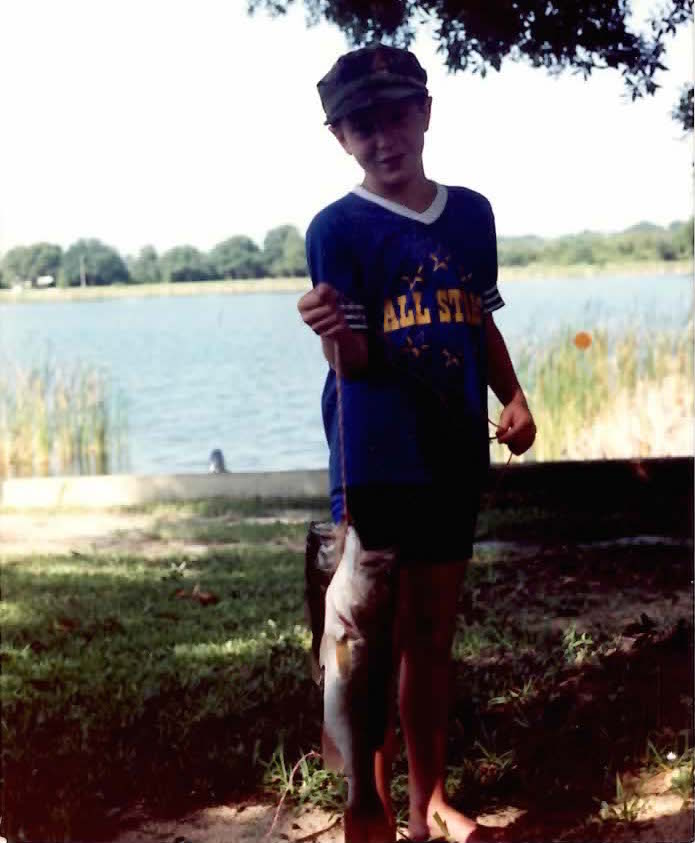
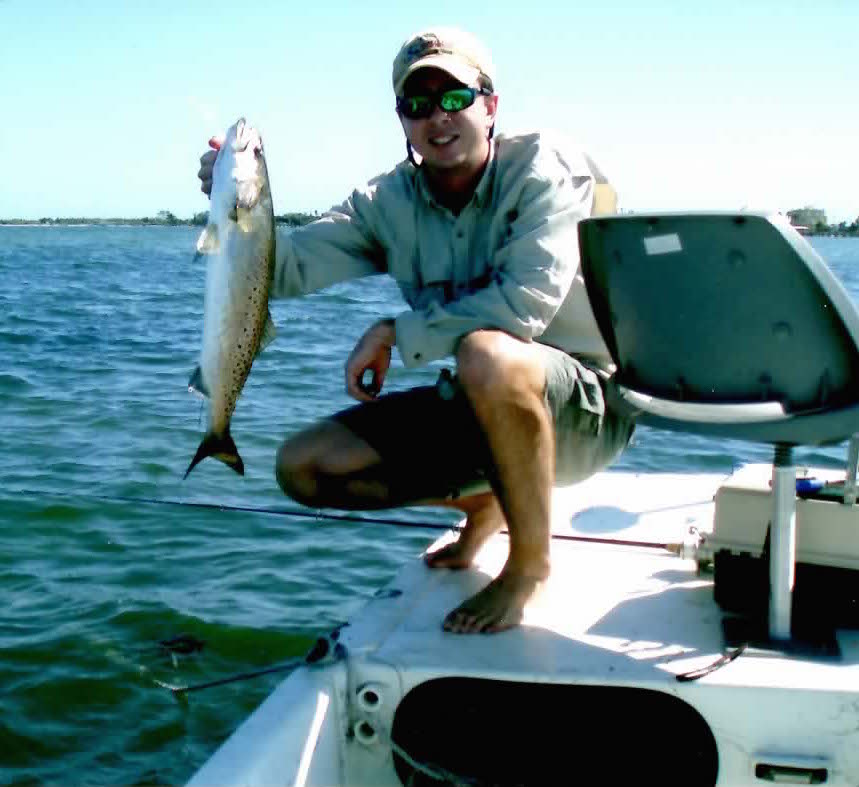
Me @ 9 years old showing off some bass shortly after being allowed to take the john boat out by myself:)
This passion allowed me to become a very accomplished bass angler at a young age, but I had a very difficult time making the proper adjustments to find success along the coast of Florida.
So here are three essential shortcuts that anyone can use for catching seatrout in Florida (and beyond):
1. Learn How To Assess An Area For Feeding Seatrout
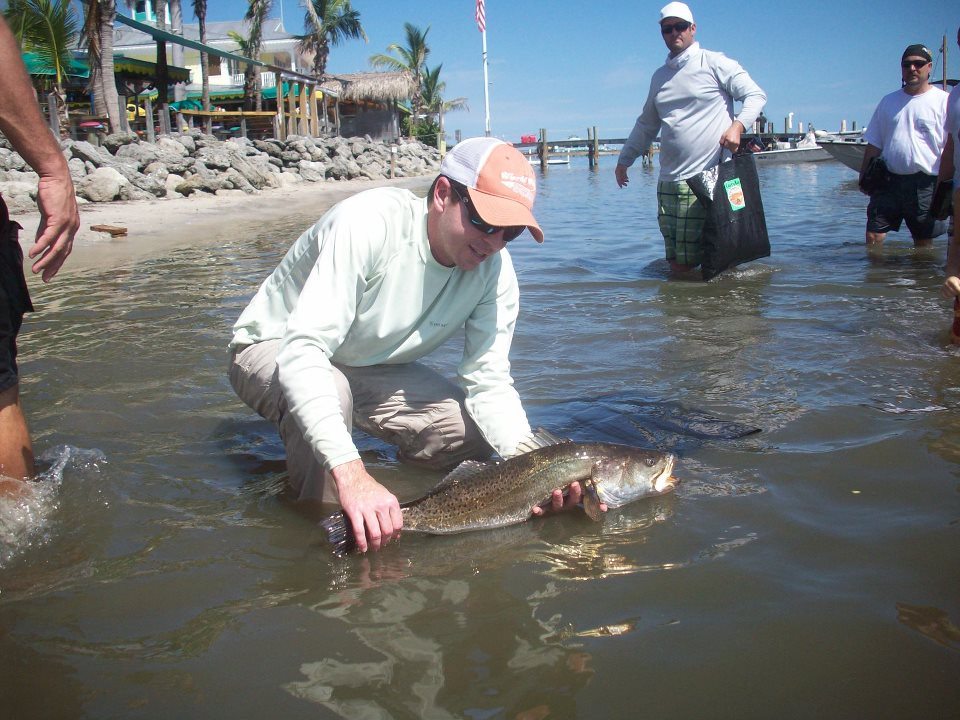
2nd place trout released from weigh-in from one of my first tournaments… caught on soft plastic bullfrog:)
Learning how to assess an area for feeding seatrout is by far the most important shortcut of all.
It is the core factor causing most anglers to come home empty handed… or nothing more than a measly catfish (which many believe are even worse than catching nothing at all).
To be able to consistently catch seatrout, it is absolutely essential to be able to quickly assess an area for it potential to be a good feeding ground.
Without this knowledge, you’ll waste tons of time fishing in spots that have very little chance of success.
Fortunately, finding good seatrout feeding areas isn’t complicated and doesn’t require a sixth sense…
In fact, it’s actually quite easy once you simply focus on these 3 things:
Structure
Bait
Current
Yes, these three simple variables will significantly help you find good areas to catch seatrout… even in regions that you’ve never even been to before which will make vacation trips to a new area even more enjoyable.
Here’s a breakdown of what to consider within each of the variables:
Structure
In saltwater fishing, there are a lot of different forms of structure that often hold predator fish like seatrout, redfish, snook, etc… here’s a brief list:
Seagrass*
Oyster Bars
Points
Trees/Roots/Stumps
Rocks
Docks
*For the quickest shortcut for finding seatrout, I recommend focusing on underwater seagrass because seatrout often stay around seagrass beds where they feed and reproduce.
So focusing on seagrass will be key in consistently catching trout, and these areas can be easy to spot from free online maps with the trained eye…
Note: Secret tips for reading this online map image example for seatrout feeding areas is explained below the putting it all together section.
Bait
If we could read a seatrout’s mind, my guess is that only two things will be there:
Where can I get my next meal?
How can I not be a meal to something else?
Knowing that food is one of their primary concerns, it is extremely important to pay attention to what type of bait is in the area you’re fishing.
If you’re not seeing any type of bait making ripples on the surface or flashing under the water, and you’re also not feeling any slight nibbles on your lure from small pinfish, snapper, etc., then it’s time to move to another spot where more food is present.
When you are seeing bait, make sure to take note of its size and shape so that you can select a lure that resembles the bait that’s in the area.
But when in doubt, a 3 to 4-inch soft plastic jig is a safe bet.
And when using soft plastics, always remember that rigging it is incredibly essential… here’s a video showing how to rig one of my favorite trout jigs:
Current
Seatrout are ambush predators that prefer to stay still and pounce on an unsuspecting prey for an easy meal.
And current significantly helps them get more food with less effort because it allows them to hide in the seagrass while waiting on shrimp or small baitfish to come close to their hiding spot.
So I recommend focusing on areas that are close to passes/inlets that get a good amount of clean running water throughout tidal fluctuations whenever possible.
Putting It All Together: Structure + Bait + Current
Since seatrout are focused on where they’ll find their next meal while being protected from becoming the next meal to something bigger, focusing on areas that have healthy seagrass, bait, and some current is incredibly important.
Having two of those variables is great, but having all 3 should be the core goal.
Wondering how to find areas with good seagrass?
Although nothing beats seeing areas firsthand, there simply isn’t enough time in the day to check out all areas from the water.
And of course not all seagrass areas are created equal… here’s an easy tip that’ll help narrow down your search.
I highly recommend using online maps like Google or Bing so that you can narrow down your search to areas that have grass that’s visible from satellite images.
How To Use Online Maps To Find Seagrass
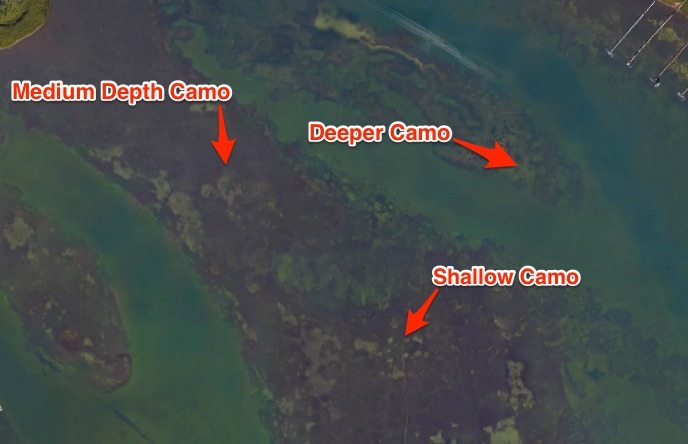
For seatrout, I have the best results fishing areas with healthy grass with potholes scattered around… from online maps, this ideal bottom looks like a camo pattern (see below):
Screenshot of Google Maps view of a nice grass flat.
As you can see, these online satellite maps can show a very good look at the bottom structure and respective contour. And this helpful insight allows you to put together a good plan before you even get out on the water.
For example, you can clearly see the dark regions (which is seagrass)… and the light areas that are mixed in the dark grass areas are potholes that seatrout often use as ambush points.
Further, you can even use the clarity of the bottom to get a pretty good gauge at the depth of the water.
With this knowledge, you now know what specific areas to target during a certain tide.
For example, low tide would make the deeper spots more appealing while a high tide typically has the fish shifting up into shallower areas to feed.
How to Determine Water Depth From Satellite Images
To determine the water depth, you simply can use the clarity of the lines between sand and grass to be able to judge its depth.
For example, the edges of sand to grass in the areas where the “Shallow Camo” text is displayed is much more crisp than the surrounding areas which means that it’s shallower. This spot is so shallow and clear that you can even see prop scars in the grass (the white lines are from Googans running over the flat while their prop is cutting up the grass).
Important Note: Always be very mindful of your motor when going over grassflats because it takes seagrass a very long time to recover from prop damage… slow down to no wake and trim the motor way up so that it’s out of the grass. I even have passengers get up to the front of my boat so that it raises the prop even higher (surprisingly effective for small boats).
2. Use The Right Gear
Tony Acevedo with a nice trout while fishing from his kayak using soft plastics
Many people cringe when thinking about having to go to a store to pick out fishing equipment knowing that the budget seems to get overblown every time.
But for seatrout, the tackle used to catch them does not have to be top of the line. In fact, I find that most people spend way more than necessary when targeting seatrout and redfish on the flats and inshore waterways.
Since seatrout aren’t the strongest fighters, and their teeth (although sharp) are not good at breaking leaders so heavy tackle is not needed.
In fact, I found that I catch way more fish when I’m using my 10 lb braid with 20 lb leader than I ever did when I used to use 20 lb main line to 30+ lb leader… and not just more, I’m catching much bigger fish too.
So here’s what I recommend for seatrout:
Rod – 7′ to 7’6″ Medium to Medium Heavy
Reel – small spinning reel (2000 to 2500 series for most brands)
Line – 8 lb to 10 lb braid
Leader – 20 lb fluorocarbon
Lure – soft plastic bait rigged on a jig head
And here are some specifics for each:
Best Fishing Rod For Seatrout
Although most people seem to focus on the quality of their fishing reels with little attention paid to the rod, I completely disagree with that order of importance.
For example, I’d much rather go fishing with a $10 kids reel attached to a good rod, than use a $400 reel paired with a $10 kids rod.
This is because the rod does a vast majority of the work:
Casts bait
Feels strikes
Sets the hook
Works lure (assuming artificial lure is being used)
Provides necessary bending cushion when fighting fish
Essentially, the fishing rod an extension of your hands and it is in charge of the most important tasks.
So I highly recommend budgeting the most money for a good rod for inshore fishing.
For fishing artificials, I like Medium to Medium-Heavy rods. And if using live bait, it’ll to go with Medium rods (many people seem to like Medium Light rods for live baiting, but I have not yet found a ML rod that I like).
Best Fishing Reel For Seatrout
In contrast to the rod tasks specified above, a reel essentially does only two things:
Retrieves line
Provides drag when fighting a big fish
And although these two tasks are important, the difference in smoothness between a basic reel and a top of the line $400 reel isn’t worth the upgrade for most weekend warrior anglers.
And the drag is of course very important, but that doesn’t even come into play unless the rod handles its tasks effectively.
Plus, seatrout typically do not fight hard at first so they’re easy to pull away from structure when using light line.
And the proper drag setting for a reel is just 20% to 30% of the line strength, so the drag needed when using 10 lb line is just 2 to 3 lbs, which even the most basic reels can provide.
So I now stick with smaller reels (2000 to 2500 series) because they are lighter (more comfortable on a full day of casting) with the added benefit of being more affordable. And although small, they still hold plenty of line and even the inexpensive ones provide plenty of drag.
Best Fishing Line For Seatrout
After I finally was talked into trying out braid after years and years of mono use, I firmly believe that braided line is the way to go for targeting seatrout, redfish, snook, and most other inshore species.
This is because its very thin and non-stretch characteristics combine to allow for much more distance in casting and much better feel of strikes… and these two benefits can be a game-changer for inshore anglers.
But if you’re new to braid or you’re about to make the jump, make sure to know how to spool it properly as well as which knots to tie because adjustments are needed for braid because of its slick surface.
Note: Here are two articles that you should read if you’re not yet comfortable with braid:
Best Fishing Knot For Braided Line
How To Spool A Spinning Reel While Saving Time & Money
Although braid is much thinner than mono, some anglers chose their braid based on the similar diameter to mono theory… thinking that using a 30 lb braid for seatrout is ok because its diameter is equal to a 10 lb mono… but that sort of thinking will hinder your catch results.
Instead of comparing line diameters to other alternatives in mono, simply put your focus on getting the smallest diameter line possible while still having enough power to land your target species.
And my best answer to that for inshore fishing has been 10 lb braid… not only for seatrout of all sizes, but I’ve landed 40+ inch snook, redfish, and tarpon on it too so it’s plenty strong (knot contests with 10 lb PowerPro using the FG Knot have surpassed 20 lbs of strength).
Note: If you’re worried that lightweight rods and small reels won’t be able to handle a big trout or redfish that hits, then watch the video below where a ~50 lb tarpon in landed on a 2500 series spinning reel with 10 lb braid:
Best Leader Line For Seatrout
There seems to be a lot of debate between traditional monofilament line users and those who use the newer Fluorocarbon. In case you haven’t heard of fluoro, it’s a type of monofilament line that has roughly the same density as water, and it’s known to be less visible to fish since it decreases the refraction of light.
The debate against fluoro seems to focus on reflection being the core reason why fish can see line or not (vs. refraction) making the refraction benefit of fluoro a non-issue.
However, there seems to be greater consensus that fluorocarbon is better at withstanding abrasions, so many use it for their leader material knowing that their target species have some sharp teeth.
Whichever type of mono you choose (traditional of fluoro), I recommend using 20 lb leader when targeting seatrout because that’s plenty to land even the gators while being small enough to not spook them on days that they’re leader shy.
Best Lures For Seatrout
Seatrout are a favorite species of many inshore anglers because of their propensity to aggressively attack a very large variety of lures.
My personal favorite in terms of fun is to use topwater lures to get them to come up and attack the lure at the surface of the water.
Many great options are available at almost any tackle shop such as spooks, skitterwalks, etc.
But my go-to lure when wanting the maximize the quantity of seatrout that I’ll catch is undoubtedly a soft plastic bait rigged on a light jig head. These jigs can get strikes all day long. And they can be successfully worked to target any specific depth that they seem to be holding in.
As for jig head size, I almost always stick with 1/8th oz and focus in on areas that are in 2 ft to 5 ft of water.
For the soft plastics used, I’ve found plenty of success with from Berkely, Zman, Zoom, DOA, etc. (there are an absolute ton of options).
3. Learn How To Use The Right Gear
Trout catch in my first boat… a Carolina Skiff J-16 (before I knew that holding trout this way was harmful to them)
The great thing about inshore fishing is that it’s not about having the best boat, kayak, rod, reel, line, lure, fishing clothes, etc… it’s all about knowing how to use what you’ve got.
It’s 100% about knowing how to find areas with good fish and then knowing how to successfully use your tackle to generate strikes.
And many of the best fishing areas are accessible by foot or even the cheapest of all kayaks that can be used to simply paddle across a channel to wade fish a good flat.
Best of all, I’ve found that it’s much better to become an expert at just one lure than to be decent at using a whole tackle shop full, so you can catch a ton of fish with just using one lure and one rod/reel combo.
And if you decide to make the soft plastic bait rigged on a jig head to be your go-to lure, then here’s a video showing some helpful tips on maximizing your results by getting strikes from seatrout that aren’t actively feeding.
Note: If you’re serious about consistently catching seatrout along with other inshore species, then I highly recommend taking advantage of our 30-day risk-free trial of our Inshore Slammer course… click here to learn about this popular online fishing course.
Conclusion
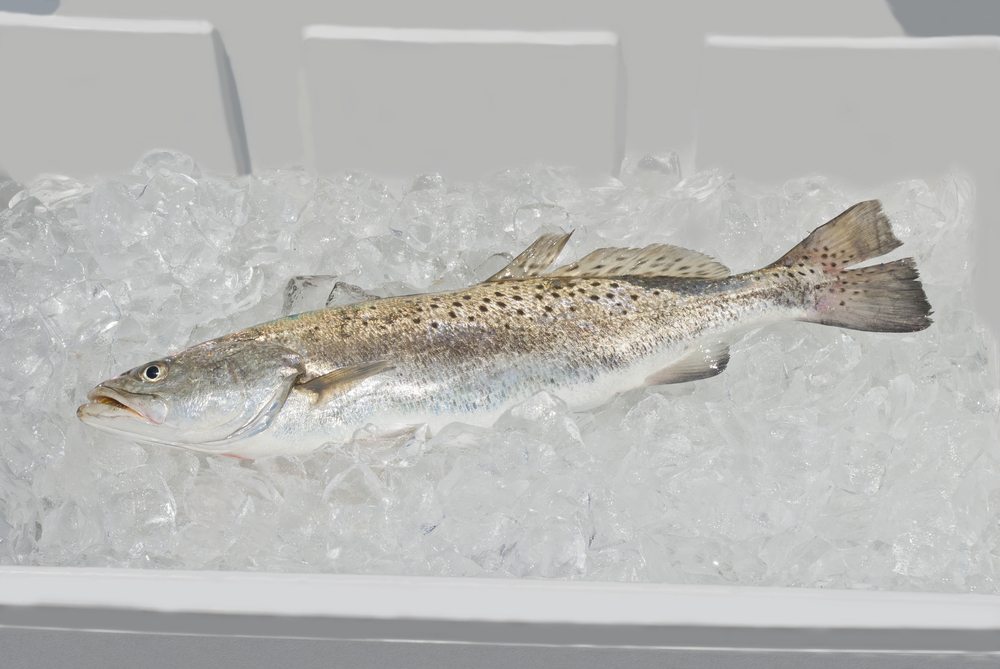
Spotted seatrout on ice
Learning how to catch seatrout can seem like a daunting task. But as you’ll find after focusing on the essentials, it’s truly not as hard as most people think.
And when you combine the art of knowing how to find areas that are prone to have feeding trout along with the art of generating strikes, you’ll find that they days of getting skunked will be a distant memory.
These basic tips should allow you to go out and find the most common sized trout on the grass flats making for many fun memories with friends and family.
If you’re interested in learning the secrets to catching gator trout along with redfish and snook, then I highly recommend giving our online fishing course called the Inshore Slammer Online Fishing Course a shot because we have a 100% Thrilled guarantee behind it…
Meaning that you get a full refund if you’re somehow not 100% thrilled that you took the course.
Click here to learn more about the Inshore Slammer
And if you haven’t seen the 4-part Trout Tutorial video series with Capt. C.A. Richardson, I urge you to click here so you can get all four videos emailed to you for free.
[Important Note]: Of all the inshore fish, spotted seatrout are one of the most fragile of all so it is essential that we take the best possible care of all trout that are going to be released. Click here to see The Complete Guide To Catch, Photo, & Release Fishing.
P.S. – If you have any friends who could use some pointers on consistently catching seatrout, please share this article with them so they can have more fun out on the water.
We can’t think of a better form of social distancing than spending time farming for wildlife. A goal for all GamKeepers and hunters is having a healthy deer herd. Spring and summer are critical months in a whitetail’s life; bucks are rebuilding their bodies from a rigorous winter and starting the amazing antler genesis process. Does have the task of eating for two or three as most of them are carrying fawns to be born later in summer. Consistent, protein-rich food sources are key to helping your deer reach their potential. Mossy Oak BioLogic has a wide variety of spring/summer plantings to fit every wildlife manager’s needs. Invest in the best warm season food plots now, and make sure to give your wildlife the nutrition they need during the critical growing months.
Wildlife Sweet Corn
BioLogic’s Wildlife Sweet Corn is a blend of 3 varieties of conventional, open-pollinated (think heirloom) corn that have over a century of proven reliability. BioLogic’s Wildlife Sweet Corn has a sugar content higher than that of new hybrids, and is generally consumed earlier in the fall/winter especially when planted in areas with surrounding agricultural corn. The higher protein and nutrient content of this “sweet” corn is a major bonus for your wildlife. These proven, open-pollinated varieties of corn are non-GMO, and are not glyphosate resistant, but can be paired with conventional corn herbicides.
When to Plant Wildlife Sweet Corn
Wildlife Sweet Corn needs 90-100 days of warm growing to reach maturity and maximum yield. Plant late April to early June for the South, early May to early June for the North.
How to Plant Wildlife Sweet Corn
Corn should be planted at 1.5-2 inches soil depth. Planters and no-till drills are ideal for planting if available. Corn can also be broadcast planted into a well prepared seed bed. Corn seed should be covered to the suggested depth by using a drag harrow or by lightly disking in. Ideally the field can also then be cultipacked or rolled for increased seedling survival. As a bonus, this sweet corn is awesome to take home a few ears and feed your family with!
Clover Plus
Few plants are more effective at attracting whitetail and turkey than clover. BioLogic’s Clover Plus is a perennial blend of our New Zealand Red and White clovers and extremely successful varieties of chicory. Developed specifically for a whitetails stomach, Clover Plus produces larger, more succulent leaves and thinner stems for higher nutritional value and improved digestibility. Both clover and chicory are extremely hardy and drought-resistant, yielding consistent production through the hot months of summer. It’s a combination of high nutrition, great attraction and consistent growth that deer can’t resist.
When to Plant Clover Plus
In the south, plant Clover Plus in early fall, as soon as soil moisture is sufficient for seed germination. Spring planting isn’t recommended; frequent summer drought conditions could limit root growth. In the north, plant Clover Plus in the spring when soil temperature is 50 degrees or higher and soil moisture is sufficient. Fall planting isn’t recommended; frost may occur before root systems are established. This blend can also be frost-seeded in the spring.
How to Plant Clover Plus
Clover Plus is best planted by spreading on a well-prepared seedbed at 9 pounds per acre, then using a cultipacker or light drag to cover the seed. Grasses can be controlled in Clover Plus using a grass specific herbicide such as clethodim.
Spring Protein Peas
BioLogic Spring Protein Pea is an annual warm season planting that is designed to provide maximum nutrition for your deer herd through the critical growing months. Protein Peas is a very drought and browse tolerant planting that grows in a wide variety of soil types and is great for hot climates. In areas of high deer density, Protein Peas may need protection with BioLogic’s P2 Plot Protector so plants can get established.
When to Plant Spring Protein Peas
Spring Protein Peas can be planted anytime in the spring or summer months. For maximum forage output, plant in spring 2-3 weeks after the last frost for your region when soil temperatures reach 55-60 degrees.
How to Plant Spring Protein Peas
Spring Protein Peas can be broadcast onto a well prepared seed bed and covered to 1 inch of soil depth. Seeds left on the soil surface may have poor germination and be eaten by pests. Without a current soil test to go by, fertilize with 200-300 pounds per acre of 0-20-20 or a comparable low or no nitrogen fertilizer. This blend can also be planted with a no-till drill or similar planters, use the setting for small peas at 30-35 pounds per acre. Set planting depth to 1 inch. Spring Protein Peas can be sprayed with grass specific herbicides to kill any grass competition in the plot.
WhistleBack
This same principal of proper timing and planning applies for other plantings for doves, ducks, pheasants, etc. Planting areas specifically for birds is beneficial for a property not just from a hunting standpoint. Often times these plantings are used in strips or transition zones adjacent to food plots for deer. The step down effect from timber to grassy seed producing plants to lower growing green groceries creates diversity and makes for awesome wildlife habitat including a lot of small mammals, song birds, and insects. BioLogic’s WhistleBack is a warm season blend of sorghum, millets, and sunflowers. This mix is designed to produce massive amounts of seed, and at the same time offer cover for many species of upland birds. This blend contains varieties that all grow and mature at different heights, offering food to birds as small as quail and doves on up to pheasants or turkeys.
When to Plant WhistleBack
Ideally plant late spring and early summer. The plants in WhistleBack are designed to grow and mature by the end of the summer. The seeds will shatter and naturally distribute on the ground, being consumed by birds in the fall and winter.
How to Plant WhistleBack
Sorghums, millets, and sunflowers all require the same basic planting depth and ground preparation should be as follows. No-till drills work great for these seeds, and most drills have a setting for planting all of these seed producing plants. If using traditional planting methods, I would suggest spraying the area to be planted a week to ten days ahead of planting with a non-selective herbicide, such as glyphosate, to kill all existing vegetation. Ground to be planted can then be disked or tilled and then cultipacked or rolled to create a firm seed bed. Seed can then be broadcast and dragged in with a chain harrow or cultipacked again. Ideal planting depth is about 1 inch. Obviously, seed left on the surface of the soil is easy picking for all types of birds and insects.
Turkey Gold Chufa
Another very popular planting for turkey and waterfowl is chufa. BioLogic Turkey Gold Chufa is without a doubt the most attractive planting for turkeys. Chufa needs to be planted in the late spring/early summer when there is at least 90+ days of growing season left before any threat of frost would arrive. This gives the chufa time to establish, build a root structure and begin to develop the tubers that turkey are so crazy about. Chufa is also pretty easy to manage weeds in since it is in the sedge family of plants. This allows you to use a grass specific herbicide to kill any invasive grasses or a broadleaf herbicide such as 2,4D. As the chufa matures in the early fall it can begin to provide food all the way into the next spring and ideally keeping your turkeys at home right up till the season.
When to Plant Chufa
Planting times for BioLogic Chufa are late April to early June for the South, early May to early June for the North.
How to Plant Chufa
Chufa should be planted at 1.5-2 inches soil depth. Planters and no-till drills are ideal for planting if available. Chufa can also be broadcast planted into a well-prepared seed bed. Chufa seed should be covered to the suggested depth by using a drag harrow or by lightly disking in. Ideally the field can also then be cultipacked or rolled for increased seedling survival.
Venison is already delicious and nutritious in itself, but when mixed with pork fat, you can bring even more flavor out of your deer meat.
It’s especially great for burgers, meatloaf, meatballs, and every hunters favorite: snack sticks and sausage!
In this article I’ll go over the best pork-to-venison ratios, when you should mix with beef fat, and a few other helpful tips.
This page contains affiliate links. As an Amazon Associate, I earn from qualifying purchases.
Table of Contents
How Much Pork To Mix With Venison
What Do You Mix With Deer When Grinding?
Why Do You Mix Pork Fat With Deer Meat When Grinding?
What Kind of Pork Do You Mix With Deer Meat?
How Do You Mix Venison and Pork?
Final Thoughts
Sources
How Much Pork To Mix With Venison
You should mix roughly 30% pork fat with venison when making snack sticks, venison sausage should have up to 50% pork fat, and venison burgers and meatballs need only contain about 20% pork fat. The amount of pork fat you need to mix with venison varies depending on the dish you’re making.
What Do You Mix With Deer When Grinding?
You should mix pork and beef fat with deer when grinding. These act as binding agents and flavor enhancers during the grinding process to compensate for the low moisture content of the lean game meat.
The choice and amount of meat to be added typically varies by personal preference. However, it would be best to read up on established golden ratios and meat-venison mixtures to enjoy your favorite ground venison dishes.
You can opt to mix beef fat with venison to make a patty or meatloaf more cohesive or to enjoy juicy snack sticks that would instead feel dry if you stick with pure venison.
If you are sort of a food connoisseur, you may notice, though, that the overall texture and juiciness of the beef-venison combination lacks refinement, in which case, you may want to try mixing it with pork.
Ground pork fat functions similarly to beef fat when mixed with venison, although you might observe a more savory mix when using pork.
An essential factor to watch out for and consider would be the source of pork fat that you mix with venison.
For instance, fat from pork belly may contain too much flavor and could overpower the deer meat.
You will not want this if you are more inclined to highlight venison’s flavor than the former in the ground meat mix.
Meanwhile, opting for back fat may provide you with just the right chewy texture without compromising the authentic venison taste.
Why Do You Mix Pork Fat With Deer Meat When Grinding?
Mixing pork fat with venison provides moisture, flavor, and cohesion to your venison grounds and a soft texture that outperforms beef fat. Additionally, venison is generally lean meat, so it needs pork fat to bind the venison grounds together.
Otherwise, you may find yourself struggling to cook pure venison patties that easily break apart.
Purists may find this problematic, thinking that precious venison meat deserves to be enjoyed free from other types of red meat that are not as lean or healthy.
The thing about the lean nature of venison is that it makes it challenging to prepare several other meat-based dishes without compromising quality.
However, if only you can toss just the right amount of pork fat into your grinder, you can expect a marbly grind that closely resembles the most common patties – beef patties.
The combination of flavorful pork fat and venison also results in a delectable ground mix. When ground, the combination of juicy pork and deer meat leaves you satisfied while also free from the greasy after-taste that comes with, say, beef.
Sausages with the perfect pork fat to venison ratio coupled with the ideal preparation steps can leave you wanting more. Besides the seasoning added to the pork and venison mix, the pork fat itself already adds flavor to your deer meat.
The moisture extracted from different types of pork cuts, such as bacon and belly, makes the entire meal even more satisfying.
The lean nature of venison makes it quickly dry out during meal prep, so the extra fat accords you with the juiciness necessary to enjoy delicious – but dry – meat.
Imagine indulging in protein-rich, saporous venison snack sticks with a hint of bacon. It seems like it could not get any better.
What Kind of Pork Do You Mix With Deer Meat?
As mentioned earlier, to enhance the juiciness and taste of venison, a certain amount of pork fat is needed. So, it’s best to add pork cuts that contain high-fat content in your grind.
Deciding on the pork cut to use depends on the taste of the end product you want. Do you want to retain the gamey taste without the dryness, or would you prefer one with a hint of pork flavor?
You can mix deer meat with any kind of pork, including pork butts or shoulders or a higher fat pork belly. Butts and shoulders are milder in flavor, while pork belly gives you a more pronounced pork taste. It depends on your preference.
If you want the unadulterated taste of venison, grind it together with pork butts or shoulders. These pork cuts are located at the front end of the pig and contain high-fat contents.
However, if you don’t mind a more domesticated taste, go for the pork belly. This slightly more pricey cut is located in the pig’s underside and is where bacon comes from.
It also has a high-fat content and that distinct pork taste that will undoubtedly influence your venison grind.
Meanwhile, back fat provides your ground venison with a soft and chewy texture, perfect for sausages and meatballs.
How Do You Mix Venison and Pork?
To mix venison and pork, start by ensuring the meats are chilled. This will help with handling and grinding. Next, find a ratio of pork to venison that works for your tastes and then grind them separately before mixing them together into a uniform mound. Finally, add any spices at the end to taste.
The amount of pork you add with venison depends on the kind of meal you plan to prepare. You’ll want to experiment on the correct pork to venison ratio and source of pork fat that you will be using.
Different types of pork fat contain varying moisture and flavor, so consider this when deciding whether to opt for savory belly fat or the more low-key back fat.
For venison sausages, you would want a more fatty venison grind. As such, I suggest mixing at least 20% pork fat with 80% venison. Of course, you can go higher than this, depending on your taste.
Just remember that eating sausages with a fat content higher than 50% can make you feel lethargic.
Venison snack sticks are a versatile outdoor treat typically marketed to hunters that may coincidentally hunt for game. If you want to have that extra money for that cool new hunting gear, you can save on buying snack sticks by making them on your own.
You can make venison snack sticks using 100% venison, but most prefer adding a little bit of pork into it (around 30%) to achieve a certain degree of juiciness. Just make sure you have the time to make them before your next hunt.
Lastly, if you’re into burgers, meatballs, and meatloaves, you may want to try burger patties made of venison. Again, you’ll just have to add a little bit of fat to prevent it from drying out and crumbling during the cooking process.
As with patties made of beef, the fat content is essential to grind the meat. Always remember that venison is leaner than beef, and you may want to add a little more fat than you would wish to on your beef patties.
The safe bet is to go for 20% fat to make the taste of your patties richer.
Pro Tip: I always prefer to grind my venison semi-frozen, after it’s been thawed out. This keeps the meat cold, and prevents your grinds from getting too wet or juicy,
Final Thoughts
One of the most rewarding aspects of hunting is the processing of your own game meat. I highly recommend you give it a try.
You May Also Like: Buck, Buck, Moose: Wild Game Cook Book
If you prefer to use your local game processor or butcher, that’s fine too. Just ask them to add some pork fat to your ground venison, and you’ll have a versatile ingredient that can replace nearly any ground beef recipe.
Thanks for reading!
See Also: Why Eating Does Vension Sometimes Give Me Gas?
Neem Oil Deer Repellent: Does It Really Work?
Is It Okay To Burn Bark In a Wood Stove?
Do Deer Eat Morel Mushrooms?
How To Properly Dispose of Wood Stove Ashes (Safely!)
Is Fatwood Safe for Wood Stoves? Here’s What You Should Know
Is Beaver Good to Eat? You May Be Surprised!
Is Bread Bad For Deer? Here’s What You Should Know
Are Roosters Good to Eat?
3 Easy Ways To Tell If Your Wood Stove Is Leaking
Sources
Fox Valley Foodie: How To Butcher a Deer – Grinding Venison
Legendary Whitetails: The Key to Crafting a Better Venison Burger
Allied Kenco Sales: Wild Game Sausage Making Information Sheet
Nassau Foods: Preparing the Perfect Venison
Home Kitchen Talk: Pork to Venison Ratio for Summer Sausage
Home Kitchen Talk: How Much Pork Fat to Add to Venison Sausage?
North American Whitetail: How to Grind Whitetail Deer Venison
Have you been looking for the best hunting dogs with their specialty? Aside from being a great companion, some breeds are also suitable for hunting. However, not all pooches are ideal for such activities. Aside from your hunting gear, let’s take a look at 20 animal breeds that are always ready to come with you on your next hunting adventure.
Pets for hunting are capable of chasing other species, but it is essential that you pick the right breed that focuses primarily on the animal that you want to hunt. So we’ve listed down some of the best specialized hunting dogs in the hunting world. From small to big game hunting, indeed, there’s a pet that would match your game.
20 Best Hunting Dog Breeds
Hunting is now a sport for most people. Some hunters bring their furry pals, which makes it one of their key assets in capturing their prey. Just like humans, pets also have specialties when it comes to hunting. Pooches just need some experiences to unleash its full potential and use these natural talents.
Some breeds are good at catching flying prey, and some are even better at chasing down the wildest animals in hunting. It leads us to the question, what are the best hunting dogs with their specialty? When properly trained, dogs are far more efficient and capable hunters than humans because of their inherent strength, accurate sense of smell, and exceptional hearing abilities.
1. Best Rabbit Hunting Dogs: Beagle
If you love hunting rabbits, Beagles are your best companion. Aside from being an excellent homebody, these breeds are also great in picking up rabbit scents. Moreover, it is also the best canine for chasing bunnies in circles so that you can get a better shot.
For roughly 200 years now, tri-colored Beagles have been reliable when it comes to small game hunting. It may not be obvious, but this breed has one of the best noses in the canine world when it comes to scenting abilities.
The combination of a superior sense of smell, agility, and speed, Beagles are a good candidate for hunting rabbits. Moreover, it also excels in detection due to its keen sense of smell. It may sound like a service dog, but you can also expect a friendly demeanor. In fact, it belongs to the small-size breeds. Hence, you don’t need a large house or yard to give it a home.
Beagles are the best rabbit hunting dogs.
2. Best Duck Hunting Dogs: Labrador Retriever
Labradors have physical attributes that are suitable for cold-water retrieving. Hence, they can help you hunt ducks and other water prey in the water, making it the best all-around waterfowl dog. From the name itself, these dog breeds love water exercises and activities, which include swimming and retrieving. Moreover, Labradors are the most intelligent of all retrievers because they mature faster.
Aside from being smart, this dog breed also has a double coat for warmth and webbed feet for water repellency. It also has a muscled body and thick otter tail for better maneuverability in the water. So, these traits will allow pet owners to train this kind of pet even at younger ages. When it comes to hunting, Labradors can handle the learning curve of hand signals, and whistles, which are essential whenever you are close to your target species.
Still, Labrador Retrievers are also a great family dog. Physically strong outside, but these pets also have friendliness and loyalty to its family. In fact, this dog breed is the most registered dog in America. After you hunt all day, Labradors will always come home and most likely play with children.
3. Best Fox Hunting Dogs: American Foxhound
From the name itself, American Foxhounds are your best fox hunting dogs. These are perfect hunting animals because of its enthusiasm that’s going to chase down everything you’re asking them to do.
Unlike the first two breeds, American foxhounds are specifically bred for hunting. Way back to its rich history of loyalty and capability, you can always rely on these dogs when it comes to hunting, tracking, and more.
At first glimpse, it may look like a Beagle until you realize that that latter is taller and leaner. Thanks to its athletic built, it is one of the most hard-working canines that you will see when it comes to hunting. Moreover, you can maintain it quickly as it only requires little grooming. You may think that it is a very wild dog breed since it loves hunting foxes, but these pooches are also great family dogs and loving companions.
4. Best Land Bird Hunting Dogs: Golden Retriever
Here are other best hunting dogs with their specialty, which is excellent in chasing land birds. It is one of the most popular dog breeds in the United States today due to its friendliness and loyalty. Aside from being a companion pet, these breeds also love to hunt. The beautiful and fierce body built is suitable for hanging out in the sub-urban and doing some fun active sports.
High stamina, extremely intelligent, and physically healthy – these are the traits that make Golden Retrievers excellent in physical sports, especially bird hunting. Moreover, it also has a happy disposition that’s why pet owners love adopting one in their homes. Golden Retrievers will hunt down ducks or small birds and smile all the way through.
You won’t have any problems in training, plus these pooches are fun for the whole family. These dogs could be both a man’s best friend and one of the best hunting breeds that you can find. After all, these breeds are retrievers, known for catching birds and returning them to the hunter without damage.
Golden Retrievers are the best land bird hunting dogs.
5. Best Quail Hunting Dogs: Pointer
Do you want more best hunting dogs with their specialty? The ultimate pooch above all the gun breeds – the slick, fast, and bird-obsessed Pointer will not stop until it gets its bird prey. This dog can work on the hardest terrain just to give you your target.
Don’t worry about staying cool because the thin coat allows them to get through the heat from the sun. Moreover, it has a perpetual endurance, which is suitable for all-day hunting. Still, make sure to bring enough water for your furry hunter.
Pointers have been dominating the field of bird hunting for decades. You can always rely on fast and hard work. Moreover, these dogs will never leave you because they have the willingness to lock and hold on for as long as needed. If you look for them, you can even find Pointers are usually high-energy pets that are suitable for hunting. When trained properly to behave, this dog breed is also ideal as family dogs.
6. Best Racoon Hunting Dogs: Coonhound
If you have been dealing with raccoons, let these sharp-nosed hunters get rid of the pests for you. Coonhounds have the instinct to catch raccoons as well as other prey that you want to find while hunting.
It comes from several variations like Bluetick, Black & Tan, Redbone, American English, and Treeing Walker, but they all came from one family. An ancestry of excellent hunting dogs. Of all Coonhounds, Treeing Walker has the most remarkable tenacity and intelligence.
Regardless, just like Retrievers, Coonhounds consist of dog breeds that are supremely tough with incredible stamina. Moreover, this pet also has excellent noses. In fact, its ancestors have been famous for pursuing cougars and mountain lions. If you’re a hunter who stays outdoors all day long, these are the trains of a dog companion that you must bring with you when it comes to massive hunting games.
7. Best Squirrel Hunting Dogs: Mountain Cur
Still haven’t found the best hunting dogs with their specialty? There are many ways to hunt squirrels. Either you catch them on the spot by walking through the forest while sniping, or stalk until you find the right timing to catch it off guard.
Another way and the best method is to use Mountain Cur dogs to locate, mark, and help you take a shot. Almost every pet may enjoy hunting squirrels, but Mountain Curs are the most special breeds to do this task with enthusiasm.
However, since 1998, UKC hasn’t registered these dog breeds. Still, it has been one of the most all-around dogs used for hunting and protection. With the mixed ancestry of Hounds that have great noses and voices, and Terriers with added tenacity – this is a dog breed for all purposes in the frontier of the wilderness.
Mountain Curs are the best squirrel hunting dogs.
8. Best Deer Hunting Dogs: American Foxhound
Originated in Maryland and Virginia, here’s the best dog for catching deer. It has all the characteristics required to run deer successfully. From energy, high stamina, excellent sense of smell, to enthusiastic natural hunting attitude – the American Foxhound is everything you need as a hunting companion.
Unlike many other scent hounds, American Foxhounds are “running” hounds, as opposed to “treeing” hounds. It means that these breeds love to hunt a lot more and be a part of the process than the outcome of the hunt.
American foxhounds are going to sprint through troubles to catch a deer or a fox. It can put reluctant deer on their feet and keep them going better than many other common breeds, such as the shorter-legged beagle.
9. Best Sea Duck Hunting Dogs: Chesapeake Bay Retriever
If you love sea duck hunting, Chesapeake Bay Retrievers are the only embodiment of real American hunters. This hard-working and utilitarian dog breed can play the cold and rough waters. Moreover, it has a more solid built compared to Labradors
[adwithin]
The thick and oily coats help in repelling cold temperatures while the webbed feet are suitable for swimming. Whether the target sear duck is on icy or running water, the Chesapeake Bay Retriever will always find a way to hunt it down.
This pet may be a slower-maturing dog, but it can be tricky as you teach and train new tricks. However, you must train these pooches with authority without getting too physical. During the old times, Chessies’ job was to protect gear, guns, and boats at the docks as the hunters rested in waterfront saloons. Slowly, the role evolved to being a waterfowl-hunting retriever even in the harshest conditions.
10. Best Pheasant Hunting Dogs: English Springer Spaniel
If pheasants are your thing for hunting, English Springer Spaniel has the stamina to cover ground all day long and an excellent sense of smell to point the locations of the target.
Moreover, it can definitely catch up with the run-and-gun nature of the pheasant hunting game. Springers may be smaller than Labradors, but it can cover up the whole ground due to its high energy levels.
When it comes to retrieving instincts, you wouldn’t have any problems as these breeds have more reliable senses. Even just by picking up scents, springers have a pleasant temperament and are loyal to their owners.
English Springer Spaniels are the best pheasant hunting dogs.
11. Best Small Hunting Game Dogs: Irish Setter
Irish Setters are just like their English counterparts that are always ready to hunt alongside you day and night. However, these dog breeds require relatively high maintenance for its thick, beautiful, and luxurious coat.
From necessary fetching skills to hunting birds, these pets are smart, determined, resourceful, and highly energetic. Moreover, after a day of hunting, it changes its personality to a friendly, loving, and playful companion.
For over 200 years, this breed has been popular to all hunters and even sportspeople. Unlike Labradors, Irish Settles can be a bit boisterous, which means you may need patience in training. The process of learning is challenging for this dog, but it will serve you excellently in the bush while hunting. With those natural trains in hunting, Irish Setters are suitable small hunting games.
12. Best Wild Boar Hunting Dogs: Bloodhound
Unique and tough – these are the top qualities of a Bloodhound. It has superb investigative skills, which makes it suitable for tracking the scent of your target. Some law enforcement agencies use Bloodhounds to assist them in looking for missing persons. For this reason, pet breeders call it the Sherlock Holmes of the canine world.
These dogs will live up to your expectations due to unparalleled tracking abilities, which makes them excellent hunting dogs. Initially bred for big game hunting and other potential challenging outdoor games. It may seem too smart, but Bloodhounds are also a great companion both on and off the hunting game. The nickname suggests like it is a ruthless hunter, but these breeds are friendly, loyal, and playful towards its owners.
Whether you’re hunting for wild boar or deer, Bloodhounds are one of the best companions. However, take note that some are stubborn to follow tricks. So, it is essential to establish authority in the beginning. Moreover, there may be some instances that it will give other dog breeds of the same sex due to its strong personality.
13. Best Upland Birds Hunting Dogs: Weimaraner
Is there a dog that can help you track upland birds? Definitely, and Weimaraners are one of the best bird hunting dogs. It is one of the most unique and elegant breeds in the sporting group. These pups have their roots in Germany, where they were initially bred to hunt anything – from upland birds to bears. These breeds are energetic, but may not be too evident due to its ungracefully thin and tall appearance. Their lean legs make them look awkward at first glance, but it also helps the Weimaraners to be quicker and calmer.
Due to its thin built, expect extreme athleticism, unmatched intelligence, and incredible senses. Moreover, it requires very little maintenance when it comes to grooming the coat. These are the traits, which are perfect for hunting pheasant, quail, or other highlands bird species.
Weimaraners may look ferocious, which they are when it comes to hunting, but this pet bonds well with children and the whole family. Regardless, it has a hunting pedigree that is also suitable for big games in tracing predators like wolves. However, it requires lots of training in discipline and exercise because it can be loafing.
Weimaraners are the best upland birds hunting dogs.
14. Best Grouse Hunting Dogs: English Setter
When it comes to grouse hunting dogs, English Setters have a keen nose to track the scent of spooky birds without scaring it away. At first look, you may think that it is a Dalmatian because of its black spots, and white fur.
However, the thick, long coat and the shape of the face make it different. Setters are famous for propensity to work closely with you during a hunting game. It will stay in sight to hold a point just to give you the best position in taking a shot.
Chasing a grouse can be a challenge, so you must ensure that your dog is comfortable with tracking, retrieving, and force fetches commands. Like other dogs that are popular in hunting, the English setters have two distinct lines: verification and ground. It means this breed excels well in tracking the prey and even chasing it after the hunter made the shot. Due to its popularity even in the past, the first dog registered with the American Kennel Club was an English Setter, named Adonis.
15. Best Pig Hunting Dogs: American Pitbull Terrier
For hunting wild boar and pigs in the forest, American Pitbull Terriers can accompany you. In early history, most farmers and ranchers found one of the most versatile canines. It has the built of a Pitbull and the intelligence of a Terrier.
[adwithin]
These two primary traits make it suitable for forest hunting games. In some countries, they also use it as rescue and police dogs. When trained properly, it can perform narcotics and explosives detection, and border patrol dogs. In competitive dog athletics, the American Pitbull Terriers will prevail in endurance, agility, and weight pulling.
Experimental mating between Bulldogs and terriers started in England, Scotland, and Ireland in the 19th century. The goal was to cross the athleticism of Terriers with the power of Bulldogs. Foreigners eventually brought the bull-and-terrier crosses to the United States. Since then, it has been famous to most ranchers and farmers when it comes to driving livestock and hunting while being a dedicated family companion. The American Staffordshire Terrier and the American Pitbull Terrier came from the same ancestry, but different names are depending on the location of the dog clubs.
16. Best Bird Hunting Dogs: Boykin Spaniel
Boykin Spaniel is a natural when it comes to hunting, especially for birds because it excels well when it comes to flushing and retrieving. The best trait of this breed is intelligence, which makes the training a lot easier.
Moreover, the uncompromising determination when hunting will give you an advantage when tracking down your prey. Aside from bird hunting, this dog also performs well in dense brush and wetlands, which makes it ideal for shooting waterfowls like ducks.
Outside the context of hunting, a Boykin Spaniel is an excellent pet that is loving and easy-going. However, take note that it requires more maintenance due to its long and relatively wavy fur. Boykin Spaniel originated in South Carolina at the beginning of the 20th century. These uncommon best hunting dogs are famous for serious hunters. Therefore, it climbed up the rankings on hunting dog charts all over online hunting dog resources.
Boykin Spaniels are the best bird hunting dogs.
17. Best All-Around Hunting Dogs: Brittany Dog
Brittany Dogs are almost similar to Setters, which are incredibly versatile and talented when it comes to hunting. Whether your game includes flushing, retrieving, pointing, and even agility, this dog breed is an excellent companion. Just like its beautiful name, these dogs are exceptionally handsome or charming with just the right amount of fur. Hence, it requires minimal maintenance when it comes to grooming.
Whether for hunting, adventure, and companion at home, Brittany dogs are loyal and smart. Originated in France in the 1800s, these breeds are originally for pointing and retrieving. It is a cross of distinct Spanish and English setters, resulting in a quick and curious species.
Apart from being merely adorable, loveable, and friendly family dogs, Brittanies are one of the best hunting pets. However, take note that you need to be physically ready when owning this pet because it requires a lot of exercise. Otherwise, it may become restless without activities.
18. Best Rabbit Hunting Dogs: Jack Russel Terrier
Developed in England some 200 years ago, this breed was originally for hunting foxes. In hunting, never belittle small breeds. Jack Russel Terrier is an energetic breed that will help you point the location of your target rabbits. Once properly trained, it is one of the smartest pets for small game. It can do more than flushing and hunting squirmy little species.
If you love hunting rabbits, you should put Jack Russell close to the top of your list. As long as you can reduce their energy in the morning, you won’t get disappointed by this breed.
Even at home or on the game trail, it is bright and extremely loving. Charming, affectionate, lively, and independent, these are the traits that you will love about this dog.
19. Best Turkey Hunting Dogs: Appalachian Turkey Dogs
Let’s continue our list of the best hunting dogs with their specialties. When it comes to hunting turkeys, it is essential that you have a companion that is a big runner while tracking the scent through thin air.
In this case, Appalachian Turkey Dogs are also a popular choice for many turkey hunters. It is a combination of Setters, Plott Hounds, and Pointers.
However, AKC does not recognize such dogs. Still, it has a stylish appearance with excellent stamina, fast speed, and range. Moreover, it has the desire to chase, track, and bark as loud as it could, which are suitable for driving prey. Appalachian Turkey Dogs fill a hunting specialty that requires specific attributes derived from its purebred roots.
[adwithin]
20. Best Hog Hunting Dogs: Dogo Argentino
This cute and extra special breed is stunning from its muscular built to its unique face. Bigger, stronger, and more agile than a Pitbull, Dogo Argentinos have been bred specifically for big-game hunting. Originating in South America, Dogos are also the best hunting dog even during a hot climate and rough terrains.
The well-muscled body of this breed and the thin white coat make it look so beautiful. The intimidating game face look is so fierce whenever this dog goes into hunting.
However, it is still a friendly and loyal companion at home. Just make sure to train it to avoid displaying its aggressiveness towards other people and even other dog breeds.
The Best Hunting Dogs – FAQ
Even in the old days, people have been hunting other species with the assistance of their dogs. However, since not all breeds are suitable for this activity, make sure that you come with the best hunting dogs with their specialty on our list. Depending on the species that you want to catch, some dogs have their unique strengths while others are suitable for all-around hunting games. Finally, let us answer some of the common questions about the best hunting pet companions.
What is the Most Versatile Hunting Dog?
Brittany Dogs are one of the most versatile hunting dogs that are adaptable and flexible to various tasks whenever on the field. From pointing, flushing, to retrieving, this dog breed loves to be a part of every process in catching prey and even join some agility contests. Moreover, it can track down various species from small to large sizes. Whether hunting companions or at home buddies, Brittanys are loyal and intelligent for as long as you train in properly.
We understand that you’re probably looking with the best hunting dogs with their specialty. Brittanies are exceptionally unique and beautiful. It also has thin coats that match the muscular built that requires little maintenance when it comes to grooming. However, this pet needs a lot of exercise. Otherwise, it will become restless. So, whether you go hunting or not, make sure that you do some physical activities at least 30 minutes to one hour every day.
What is the Best Coon Hunting Dog?
Black and Tan Coonhounds are the best coon hunting dog. Judging from its name, it has a great nose to the ground for tracking its prey and barks up when hunted. With its large bone structure, it can move swiftly with rhythmic strides, which is suitable for any kind of hunting game. Moreover, it has impressive stamina that is excellent for running. In fact, it can go for miles and overcome the thick bushes of any forest, and even cross the river.
This canine is recognizable with its distinctive size and color. Moreover, it is relatively larger compared to other coon hunting dogs of the same family tree. As a home buddy, Black and Tan Coonhounds are independent and smart. It may also be playful and gentle towards children. Find out more about the best hunting dog with their specialty for every game.
What is the Best Gun Dog Breed?
Retrievers and Pointers are some of the best gun dog breeds of all time. Both pets have a beautiful appearance and spooky nose to track their prey. These breeds are both smart and have the physical strength to take on any hunting adventures. From its thick otter tail, muscled body, to fierce space, these trains will allow pet owners to train this kind of pet even at younger ages.
Moreover, these breeds have been dominating the game of gun dog hunting for decades now. You can always rely on its fast and hard work because it is always willing to lock and hold whenever needed.
What is the Best Rabbit Hunting Dog?
If you enjoy scavenging rabbits, you should consider Jack Russell dogs. Developed in England about 200 years ago, this breed was originally for hunting foxes. It is energetic and will help you determine the location of your target rabbits. It could be one of the smartest small game pets. As long as you consume their energy every day, you won’t be disappointed by this breed. It’s intelligent and extremely affectionate even at home or on the game routes.
Different types of hunting benefit from their most suited breed. Now you can purchase a hunting breed with confidence and know they will be your best friend and the ideal hunting companion.
Unlock the Perfect Shot: Discover the Best Scope for Break Barrel Air Rifles. Enhance your shooting experience with precision and accuracy, as we delve into the top scopes designed specifically for break barrel air rifles. From crystal-clear optics to adjustable magnification, find the ideal scope to take your shooting skills to new heights. Explore our comprehensive guide now!
Best scope for break barrel air rifle
A break barrel air rifle is a popular choice among shooting enthusiasts for its power and accuracy. To enhance your shooting experience, it is important to find the best scope that suits your needs. The right scope can greatly improve your aim, allowing you to hit targets with precision.
When choosing a scope for your break barrel air rifle, there are several factors to consider. Firstly, the magnification power of the scope is crucial. It determines how close you can see your target and how accurately you can aim. A higher magnification is ideal for long-range shooting, while lower magnifications are suitable for shorter distances or hunting in dense areas.
In addition to magnification, the quality of optics and durability of the scope are important considerations. Look for scopes with high-quality lenses that provide clear and sharp images even in low light conditions. Optics with multiple coatings can reduce glare and improve visibility. Furthermore, a durable construction with shockproof and waterproof features will ensure that your scope withstands the rugged conditions of outdoor shooting.
To conclude, finding the best scope for your break barrel air rifle is crucial in improving your shooting accuracy and overall experience. Consider factors such as magnification power, optics quality, and durability when making your choice. With the right scope mounted on your rifle, you’ll be able to take precise shots and enjoy a more fulfilling shooting session.
In conclusion, break barrel air rifles offer the best scope for various shooting activities. Their versatility, power, and accuracy make them ideal for target practice, small game hunting, and pest control. With proper maintenance and skillful handling, these rifles can provide an enjoyable shooting experience for beginners and experienced shooters alike.
Joe Rogan has a lot of friends. But some of his best friends are people who he met through hunting. There is a certain bond that happens when you go out into the wild, track an animal down, and then share the meat over a fire for dinner.
Since he picked up hunting in 2012, Rogan has been hunting with a lot of different people including, hunting experts Steven Rinella, Doug Duren, Cameron Hanes, John Dudley, Ben O’Brien, Mike Hawkridge, and Ryan Callaghan, and friends Bryan Callen, Jocko Willink, and Andy Stumpf.
Also see: 7 Reasons Why Elk is Joe Rogan’s Favorite Meat
*Joe Rogan and Bryan Callen share a laugh while hunting
Steven Rinella & Ryan Callaghan
For Joe Rogan’s first hunt, he couldn’t have picked a better, more skillful hunting guide than Steven Rinella.
Rinella is one of the best hunters in the world and the host of MeatEater, a show about hunting and eating wild game. He also authored several books, including the popular The Complete Guide to Hunting, Butchering, and Cooking Wild Game.
Ryan Callaghan is a guide who also accompanied Joe Rogan and Bryan Callen on their first hunt. He serves the role of MeatEater‘s Director of Conservation.
Check out this incredible video of Steven Rinella and Ryan Callaghan getting charged by a female grizzle bear and her cubs.
Cameron Hanes
A frequent JRE podcast guest, Hanes is an extremely skilled bow hunter and a really good friend of Rogan. He is a former Under Armour sponsored athlete, now sponsored by Origin, and a complete beast in long distance running.
Hanes helped mentor Rogan’s bowhunting skills and shooting technique. On one particular hunt, Cameron helped Joe hunt a huge mule deer with a rifle when it got out of bow range. They’ve also been elk hunting in Utah together.
He has authored a few books, including Backcountry Bowhunting and Bowhunting Trophy Blacktail and has been on the JRE podcast over 10 times.
Also see: Who Is Cameron Hanes? A Look at His Amazing Life
John Dudley
John Dudley is a professional archery athlete and a world renowned archery coach. He won the International Bowhunting Organization (IBO) National Championship for archery.
Dudley’s brand, Nock On Archery, is complete with a podcast, apparel store, archery instruction, and bowhunting gear.
Dudley and Rogan like to go elk hunting together and then grill out with the guys. He has been on the JRE podcast 5 times.
Also see: The Amazing Life of John Dudley: Nock On Archery & Hunting
Ben O’Brien
O’Brien is the Director of Hunting for MeatEater and the host of The Hunting Collective podcast. He’s been on the JRE podcast twice so far in episodes #987 and #1215.
Petersen’s Hunting magazine featured a fantastic article written by O’Brien called Eat What You Kill: How Joe Rogan is Celebrating the Wild Meat Movement, which is definitely worth checking out.
Mike Hawkridge
Hawkridge, owner of AlphaDog Outdoors, is a lifelong hunter and skilled outdoorsman. He serves as a hunting guide that is available for hire, located in British Colombia, Canada.
Joe Rogan and Ben O’Brien hired Hawkridge for a late season bull moose hunt. The hunt was successful and they tagged a big one.
Here’s what Joe Rogan had to say about Mike Hawkridge:
When you meet him, get a good look at him and take it all in, because in this ever feminized world we’re living in, real men like him are the last of a dying breed.
-Joe Rogan on Mike Hawkridge
Bryan Callen
Rogan and Callen are both stand-up comedians and have known each other for over 20 years.
When Rogan decided to go hunting, Callen was the guy he wanted to go with him. According to Callen, Rogan called him up and pitched him an idea, saying “We’re going hunting man and I need you there.” Callen replied, “Count me in!”
Here is what Joe has said about Bryan:
“Bryan is one of my best friends if not my best friend. We’ve essentially been best friends since the day we met. He’s one of the funniest human beings I’ve ever met in my life.
He’s not a whiner, not a complainer, he’s not a guy that’s not going to be able to deal with the cold. He’s not going to fall apart or freak out. He’s a man. He can do anything, he’s just that dude.”
-Joe Rogan on Bryan Callen being his choice
Bryan explained that his conception of hunters before he went hunting was stereotypical:
“You get a bunch of guys with beer guts in camouflage and they go out and blast whatever they see.
What I came away with was a notion of profound respect for what it takes to be a good hunter and the understanding of the animal you are hunting, it’s behavior and the environment in which you’re in.”
-Bryan Callen
Also see: How Does Joe Rogan Cook Elk Steak: A Mouth-Watering Recipe!
Jocko Willink
Willink, a former Navy Seal and JRE podcast guest, went on a bow hunt in Northern Utah with Joe Rogan, Cameron Hanes, and Andy Stumpf. Jocko said, “You couldn’t really ask for a better crew of people.”
“There is something very primal about going hunting. It’s kind of like jiu-jitsu.”
“You are out, you’re stalking, sneaking around. It has a lot of correlations to my old job (navy seal). You’re trying to be quiet, setting up tactics, trying to maneuver on the enemy, on these animals.”
-Jocko Willink
Andy Stumpf
A formal Navy Seal officer, Stumpf went on the above mentioned hunt with Joe Rogan, Jocko Willink and Cameron Hanes in northern Utah.
In 2015, Stumpf set a world record by skydiving from 36,500 feet in an effort to raise money for the Navy Seal Foundation. He’s also been on the JRE Podcast multiple times.
Also see: 8 Navy SEALS That Have Been on Joe Rogan’s Podcast
Doug Duren
A farmer and conservationist, Duren hosted Joe Rogan, Bryan Callen, and Steven Rinella on his farm to hunt.
In 2014 Duren said, “A year ago I would have been completely against having two comedians come here (his farm) to hunt.”
Joe Rogan, Doug Duren, Bryan Callen, and Steven Rinella
Doug warmed up to the idea after hearing Rogan and Callen on the JRE podcast, realizing that they were two smart, funny as hell guys, who also respectful of hunting and wildlife.
Joe told Doug after the hunt, “ Thanks for being a great host. Thanks for being a great guy and providing us with an opportunity to have an incredible experience. You can’t have a better time, you can have a different time, but you can’t have a better time.”
In today’s high-tech world, the ability to see in the dark is no longer limited to the realm of science fiction. Night vision technology, once the exclusive domain of military and law enforcement, is now widely available for civilian use. Among the various night vision technologies, clip-on night vision devices have gained significant attention. They offer the unique advantage of converting a regular optical scope into a night vision device, ensuring a seamless transition from daylight to nighttime operations. This ease of use, combined with advanced technology, makes them an attractive choice for various applications, from wildlife observation to security surveillance. In the following sections, we delve into the technology behind these devices, the benefits they offer, and how to maintain them for optimal performance.
Night Vision Clip-On Systems: Technologies and Features
Modern advancements in technology have transformed night vision clip-on systems into invaluable tools for various applications. These devices are known for their unique ability to transform twilight into daylight, bringing clarity to the darkest environments. At the core of these instruments is a technology that amplifies ambient light, enhancing your vision in low-light conditions.
A typical clip on night vision scope incorporates an image intensifier tube, a protective casing, and mounting mechanisms. The image intensifier tube is the heart of the device, amplifying available light from sources like stars or moonlight. The protective casing is usually made from durable materials to withstand harsh conditions, while the mount ensures the device can be securely attached to an existing scope or optical system.
The functionality of these devices is further enhanced by features such as infrared illuminators, adjustable gain control, and automatic brightness control. The clip-on night vision scope attachment is another characteristic that stands out. It allows users to switch between standard vision and night vision without needing to re-zero or adjust their scope, offering an unparalleled level of versatility.
Benefits of Night Vision Clip-on
The benefits of using a night vision clip-on are indeed impressive, lending users a substantial edge in low-light conditions. Here are some key advantages summarized:
Enhanced Visibility. The foremost benefit is the ability to see clearly in low-light conditions. This makes night vision clip-ons ideal for activities such as hunting, wildlife observation, and security surveillance.
Compatibility. Clip-on systems are designed to work with existing optical equipment. This means there is no need to invest in an entirely new scope or sighting system. The clip on night vision attaches directly to your existing setup, allowing you to maintain your optical preferences and shooting style, now with the added benefit of night vision.
Ease of Operation. The user-friendliness of these devices is another significant benefit. The simplicity of clipping the device onto your existing scope, coupled with intuitive controls, makes these systems user-friendly. This ease of operation is a considerable advantage, making night vision technology accessible even to beginners.
Versatility. The clip-on systems are versatile, suitable for a range of applications from recreational to professional. Whether you’re a wildlife enthusiast looking to observe nocturnal animals or a security professional requiring enhanced visibility, these devices cater to a broad spectrum of needs.
Cost-Effective. Considering the advanced technology they house, these devices offer a cost-effective solution for night vision. By transforming your existing optical scope into a night vision device, you avoid the cost of purchasing a separate night vision scope.
In sum, the benefits of night vision clip-ons are varied and significant, making them an invaluable tool for anyone operating in low-light conditions.
Maintenance of Night Vision Clip-On Systems
To keep your night vision clip-on functioning at its best, routine maintenance is necessary. This involves cleaning the lenses with a soft cloth and a suitable cleaning solution, ensuring the device is stored in a dry and dust-free environment, and checking the device for any signs of damage or wear. It’s also important to remember that, despite their advanced technology, these devices should not be exposed to bright light when turned on, as this can damage the internal components. Therefore, always remember to turn off your clip-on device when you’re in a well-lit environment.
In conclusion, the clip-on night vision systems offer a game-changing solution for low-light environments. Their unique blend of technology, convenience, and versatility sets them apart from other night vision devices, making them a worthy investment for anyone seeking to enhance their nocturnal adventures or operations.
With so deer hunters many reaching for a bottle of herbicide to “improve” their food plots, are you truly helping your deer herd?
Food plotting has evolved greatly since the days of an “ol’ greenfield.” From Genetically Modified Organisms (GMOs) to precision farm equipment, today’s food plots are comparable to most commercial farming operations. Though heavily used in food plots, herbicides are likely the least understood by those applying them. So are you actually benefitting your food plots and deer by using these chemicals?
Glyphosate (AKA Roundup®)
Likely the most utilized herbicide for food plots, glyphosate or more commonly called by its trade name Roundup®, is one that is used in both food plot preparation, as well as weed and grass control in actively growing plots. Though it is one of the most commonly used herbicides, it is likely one that is least understood.
For instance, many worry about how glyphosate can affect seeds just planted or how long to wait before planting after spraying glyphosate. The answer is simple, you don’t have to wait at all. Glyphosate is a foliar-active herbicide meaning that it typically travels through the leaves of the plant to the roots to kill. So when there are no parts of the plant exposed (as is the case with seeds) then there is no possibility of killing the plant. The only benefit of waiting is to allow competition in the immediate vicinity to die back so the new plant has access to more available nutrients. In this case, it will take approximately 7-10 to start seeing significant results.
USAGE
Most glyphosate products will range in application rate. Typically this is determined by the type of plants you are trying to remove and at what growth stage. For instance, removing something like common ragweed, an annual broadleaf weed, may need 16oz/acre. But a hardy, perennial grass-like fescue could require up to 64oz/acre.
Typical herbicide application requires it to be mixed with water to create a “solution.” The amount of solution applied per acre depends on the application method. For example, if you are using a tractor and 3-point sprayer with 25-foot boom arms, then based on the tractor speed, sprayer pressure, and the number of nozzles, you will determine the amount of solution per acre. This is called “calibrating” the sprayer. Why is this important? Well let’s say your sprayer puts out 15 gallons of solution per acre, and you are wanting to apply 64oz of glyphosate per acre to kill fescue. Then you will need to add 14.5 gallons of water (15 gallons of “solution” less 64oz of glyphosate) for every 64oz of glyphosate to adequately treat an acre.
Calibrating a sprayer ensures that you are killing the plants you want, and at the same time not negatively affecting the crops you want to grow. Too much glyphosate can dramatically reduce yields in crops (like “yellow flash” in soybeans, corn, alfalfa, or wheat) or worse, kill the plants you were trying to release from the competition. Not enough glyphosate applied wastes your time and money, by not effectively removing the weeds and grasses resulting in continued competition and a drop in yield. So as you can see there is a lot more to spraying than just “running and gunning.”
BENEFITS
There is a limited amount of nutrients (Nitrogen, Phosphorus, Potassium, Calcium, etc.) and resources (like water moisture) in the soil available to plants. By removing the competition, we are essentially allowing the plants we want access to more of the requirements needed for optimum growth. More available nutrients in the plant mean more nutrients transferred to your deer during normal grazing behavior.
Glyphosate shows benefits in both food plot preparation and maintenance. Most areas are crowded with undesirable plant species before being planted. You have options, mow it down, till it under, or even both. But typically this only removes the visible vegetation and does not kill the plant. Often, several weeks after planting weeds and grasses will erupt in the plot, sucking valuable nutrients from the crop you are growing. Spraying glyphosate prior to planting, will kill all existing plants and dramatically reduce the number of weeds and grasses that come up after planting.
With the advent of GMO species like “Roundup® Ready” or glyphosate-resistant soybeans, corn, alfalfa, and wheat, glyphosate can be sprayed on actively growing plots to remove any competition and not significantly affect the planted crop. It is worth noting that anytime a crop is sprayed with glyphosate, even at the correct rate, the herbicide will tie up nutrients in the soil, essentially “handcuffing” the plant from taking up critical resources. Though it is a negative, the benefits of releasing it from competing vegetation are typically greater. There are also new products for food plotters and farmers on the market to counter glyphosate’s “handcuff” effect.
HARMFUL EFFECTS ON WILDLIFE
Even though we know that using glyphosate appropriately can effectively reduce competition, and result in increased nutrients to the crops we are promoting, we are still applying a chemical. In school, we are often taught that chemicals are “bad.” In fact, when we hear chemicals often the old skull and crossbones seem to be the first image to appear in our heads. So with that being said, can using glyphosate on food plots hurt the deer we are intending to help?
In 2010, nearly 70% of all corn and 93% of all soybeans were herbicide-resistant. With that many acres being planted, and whitetails occupying a lot of it, any negative effects would likely have made national news. Studies reported by the U.S. Environmental Protection Agency (EPA) revealed glyphosate “…is practically non-toxic to upland game species.” Other studies have focused on the effects on upland game birds like bobwhite quail, and waterfowl, like mallard ducks. With a large amount of glyphosate needed to be directly ingested, it is a “slight” toxic risk at most to even these small animals. So the odds of any type of negative anatomical effect on an animal the size of a white-tailed deer is highly unlikely. This is also demonstrated in Table 1, which shows active ingredients in herbicides, as well as commonly known items and their “LD50” values. An LD50 value represents the dose of a specific chemical needed to kill half of the tested population (usually mice or rats). At over 5,000 mg/kg for oral ingestion, glyphosate is nearly 25 times less toxic than the bleach in your laundry room! Yes, chemicals can be dangerous; and should always be treated carefully, with proper safety gear, and according to the label recommendations. But many things already in your home are much worse!
Sethoxydim and Clethodim (AKA Poast®, Select®, Arrest®)
In the majority of food plots, the most competing vegetation is grasses. From Fescue to Bermuda to Foxtail, grasses can choke out what seemed to be a healthy food plot in no time. Because of the thick, extensive root system of grasses, they are easily able to outcompete many food plot species for valuable nutrients, micronutrients, and water. Fortunately, we do have options to free our food plots from grasses’ “death grip” and thrive to provide for whitetails. Sethoxydim and clethodim are herbicides that control annual and perennial grasses in broad-leafed food plots like clover, chicory, alfalfa, brassica, and even soybeans. But they aren’t for all food plots, and deer hunters can run into some issues when treating “mixes.”
USAGE
The most commonly used sethoxydim goes under the trade name Poast®, and the most common clethodim is a trade named Select®. Both can control annual and perennial grasses. Typically, it is a personal preference of which to use, though some may say one herbicide is better on a specific grass than another. For example, some fescues are more effectively controlled with clethodim than sethoxydim. Regardless of which you choose, it is important to pair them with crop oil or surfactant. This will help the herbicide penetrate the leaf tissue more effectively and allow the herbicide to move through the plant. Typically, results begin to show around 10-14 days of application. Application rates vary based on the grasses targeted and the stage of growth but range from 8-32 ounces. The chemicals can be applied with a hand pump, backpack, ATV/UTV, or tractor-mounted sprayers.
As previously mentioned, these herbicides can provide plenty of “relief” for clover, brassica, and many other types of broadleaf food plot species. However, though we may not think of them as “grasses,” sethoxydim and clethodim will kill wheat, oats, rye grain, and even corn. Where this particularly causes a problem for food plotters is when planting “mixes.” A “mix” is planted to provide forages that peak in attractiveness and/or nutrition throughout the year. For instance, you might plant a mix of oats and brassicas, where the oats will be attractive early in the hunting season and the brassicas attractive during the late season. If the grass becomes an issue in this plot, spraying sethoxydim or clethodim will not only remove the grasses but your oats as well! Be very careful when deciding whether or not to spray a food plot that contains a mix of species.
BENEFITS
Food plots released from grass competition will be able to uptake more nutrients, micronutrients, and water, often resulting in better growth and more nutrients which will be passed on to grazing deer. Sethoxydim and clethodim really “earn their keep” when it comes to maintaining perennial food plots. These year-round, nutritionally-packed food plots are susceptible to grasses during the new growth cycle every spring and summer, especially as they age. Spraying the grass-selective herbicides during the late spring or early summer can release the perennial plots from competing grasses and allow them to obtain the critical nutrients needed to provide your deer herd with a source of highly-digestible protein during late pregnancy, early fawn development, and antler growth.
HARMFUL EFFECTS ON WILDLIFE
Unlike glyphosate, there has not been as much testing of the grass-selective herbicides sethoxydim and clethodim on wildlife. As much as it seems non-related, the best testing we can point to is that of the domesticated sheep, which like white-tailed deer are ruminants (having a four-chambered stomach). Research published by the EPA noted that clethodim residue was “adequately delineated” in testing on sheep. In other words, the clethodim residue was displaced into the proper regions of the body through filtering or excreted with no signs of negative effects. In fact, when testing was conducted on dogs, 91% of the ingested clethodim residue was found in the urine and feces. What does this mean? Basically, less than 10% of the chemical actually ended up in the body, and such a low dose resulted in no adverse effects on the animal. Keep in mind that these tests were done by giving animals a “straight dose” of the chemical through a gel pill, rather than wildlife naturally browsing through a treated field which is likely resulting in much less herbicide being ingested.
2, 4-D and 2, 4-DB (AKA P.B.I.®, Hi-Yield®, Butyrac®)
Though typically not as competitive as grasses, broadleaf weeds can be a problem in food plots, especially when disturb-favored weeds erupt not long after tilling the soil. The herbicides, 2, 4-D and 2, 4-DB, control broadleaf plants in food plots. But unlike sethoxydim and clethodim, these two chemicals are dramatically different in the manner they can be used.
USAGE
The two herbicides both can effectively control broadleaf weeds, however, the effect on the food plot species planted is drastically different. If you apply 2, 4-D on a clover or alfalfa plot, not only will you eliminate broadleaf weeds but also your entire food plot! This herbicide is more suited for removing broadleaf weeds out of grass-like plots including oats, wheat, and corn. So what do you do for clover and alfalfa plots?
That’s why the “B” in 2, 4-DB is so critical. Representing butyric acid, 2, 4-DB allows the control of broadleaf in clover and other legumes. This is extremely valuable in mixes as mentioned earlier. If a food plot contains oats, wheat, and clover, a plotter could spray with 2, 4-DB to control unwanted broadleaf weeds without negatively affecting the food plot species.
The two herbicides can be applied via any of the spray equipment previously mentioned. Rates vary, but often 16-32 ounces of herbicide per acre is required.
BENEFIT
Like grasses, broadleaf weeds can suck valuable resources from our food plots. By removing the competition, we are able to “free up” more components for our food plots to thrive, which are likely to end up in the deer we are trying to grow healthier and larger.
Broadleaf weeds are also capable of shading out food plots, which can stunt growth, or worse, kill food plot species. An alternative to spraying 2, 4-D or 2, 4-DB is the use of mechanical removal, typically through mowing. Because the broadleaf weeds are normally annuals, cutting them can allow the food plot species to “jump ahead” and never look back. It’s worth noting that the plant can still recover from mowing and come back during the same growing season, whereas, the chemical treatment will likely kill it off.
HARMFUL EFFECTS ON WILDLIFE
Research on the different forms of 2, 4-D has only shown effects on fish and some aquatic amphibians. Its effect on mammals appears to be nearly non-existent. However, because of its elevated LD50 value (see Table 1), it should be handled with utmost care. The only real issue documented has been severe eye irritation when in direct contact with the herbicides.
Herbicide use on food plots is likely only to increase. It’s important to understand what the chemical you are applying is, what it does, and if it can affect both animals and humans. The herbicides discussed are the most commonly used on food plots for deer. When used correctly, they can be a huge asset to any deer hunter looking to generate a plot better than their neighbor’s.
North American native mountain lions are great predators in the United States; their population is approximately 30,000. The big game mountain lion has many other names such as cougar, panther, puma, catamount, etc.
Pc: Unsplash
It is one of the big challenging games in North America and is often regarded as America’s lion. You can visit our blog, The Challenging Big Game-Cougar, to know more about cougar hunting and behavior.
This blog is about the population and distribution of mountain lions in different states of the United States of America. Before discussing which states are best for mountain lion hunting, you must know about
When and Where to Hunt Mountain Lion:
The cougar hunting season starts in August and lasts till February.
Cougar has a broader range of habitats and is present in open lands, steep canyons, forests, and deserts.
Best Mountain Lion Hunting States:
Here is a list of the best states for mountain lions hunting,
Arizona
Idaho
California
Colorado
New Mexico
Montana
Wyoming
Utah
Arizona:
Grand Canyon State has 2,000-3,000 mountain lions, which are present in the rocky areas, so most of the hunting is done on dry land. Be sure that you take highly trained dogs with you. In Arizona, the mountain lion hunting season runs year around.
Pc: Unsplash
Arizona has specific rules for cougar hunting that you can’t hunt kittens and females, and the bag limit is no more than one cougar per day.
Idaho:
Idaho has a widespread population of about 2,000 mountain lions, and this state is known to have more liberal laws than all the western states. The annual hunting limit is 400-600. The season starts in August and ends in June or March, depending upon the unit.
Electronic calls and hound hunting is legal in this area, but they might close for some time in specific areas.
California:
The state with one of the largest mountain lion populations. In the 1970s, California wildlife management declared mountain lions endangered, but now, due to efforts like controlled hunting, California has 4,000 to 6,000 mountain lions.
Colorado:
Colorado is the prime mountain lion state, with a population of 3,000 to 8,000. The state is the perfect habitat for this ferocious predator. A pro tip to make the best of the mountain lion in Colorado is first to check the rocky mountains regions.
Pc: Pexels
The cougar hunting season in Colorado starts in November, but for hunting mountain lions, you must fulfill specific standards set by Colorado wildlife management; you must pass a mountain lion hunting test, an online course, and an educational card and habitat stamp is also necessary.
New Mexico:
New Mexico only allows controlled hunting practices to protect mountain lions; the state has approximately 4,000 mountain lion populations that thrive in the hilly regions of the state.
Pc: Pixabay
The state allows electronic calls and hounds hunting, and the season runs round the year till the quota meets. Remember that your tag expires every March, and you have to renew it before going to the hunting areas.
Montana:
Montana mountain lion hunting season starts in September but makes sure you apply for the permit in August. The state wildlife department makes it clear that the state is suitable habitat for mountain lions, so they are widely spread all over the state, and the approximate population of cougars in Montana is 2,000 to 3,000.
Wyoming:
There was a time when the Wyoming mountain lion population was stable, but now the population has dropped. The state wildlife management is trying to control hunting till the population becomes stable again.
Pc: Pixabay
The best season runs from September to March and the best time to hunt is one hour before sunset and one hour after sunset.
Utah:
The state allows restricted and limited hunting and has a population of about 25,00 mountain lions. The mountainous regions, as well as swamp areas, are the preferred habitats of cougars. Legal mountain lion hunting season in Utah starts in November and runs till May.
Pack your hunting essentials and select the state as suitable for you to apply for a permit and enjoy the big game mountain lion hunt.
Unlock the Perfect Shot: Discover the Best Scope for Break Barrel Air Rifles. Enhance your shooting experience with precision and accuracy, as we delve...
An air rifle's effective shooting range depends on various factors, including the type of rifle, the caliber, and the power source. Generally speaking, most...
"Debate over whether a 22 air rifle can effectively take down a deer has sparked curiosity among hunting enthusiasts. With its lower muzzle velocity...