We often get asked questions about silencers, such as how to buy a silencer or how to clean a silencer, that experienced users deem simple but are important questions for new gun and silencer owners. Thanks to misrepresentation in the media and politics about silencers, muzzle brakes, flash hiders, suppressor accessories, and even the simple act of barrel threading, it’s only logical that there is some confusion out there.
So, we are going to look at the various things you can screw onto the end of your rifle or pistol’s muzzle, what they do and how they work. If you already know this, great! Share this post to a new gun owner, or even an anti-gunner who has been left behind through media propaganda. And if you don’t know, read on!
Silencers and Suppressors: One in the Same
There is no difference between a silencer and a suppressor, and the terms are 100 percent interchangeable. Whether someone uses the term “suppressor” or “silencer,” they’re referencing the exact same thing. So why the different names, you might ask? Well, we must go back to the very beginning, with the invention of the Maxim Silencer. Invented by Hiram Percy Maxim, son of the famous machine gun inventor, the Maxim Silencer was patented in 1909 and was the first successful silencer on the market.
Now, truth in advertising laws were lax to nonexistent back then and breathtaking claims were the order of the day. Maxim advertised that his crude device made of stamped sheet metal baffles stacked inside a steel tube would render a firearm silent. This is pretty much impossible, even today unless you use a highly engineered device with carefully crafted subsonic ammo or low powered rimfire ammo.
In other words, a silencer isn’t exactly a “silencer.” It’s more like a muffler (which Maxim went on to develop for cars) or a device for suppressing sound. You know, a suppressor.
However, the name “silencer” stuck. Later on, shooters and manufacturers promoted the more accurate “suppressor” to reflect the reality of these devices.
Shop Silencers
Silencer vs. Suppressor – Does It Matter What You Call Them?
Probably not. After all, we are Silencer Central, and we sell the famous BANISH Suppressor, which shows how interchangeable the terms really are. But because the term “silencer” is so heavily ingrained in modern usage, it is as viable a term as “suppressor.” The difference between a silencer and a suppressor? Absolutely none.
Perhaps the only real problem now is that with two competing popular terms, folks can get confused — and that’s understandable. After all, the two really do sound like similar but different devices. But rest assured, there’s no difference and you can call a silencer a suppressor, or a suppressor a silencer. It’s completely up to you.
Now that we’ve cleared up the gun suppressor vs silencer question, let’s look at another area of confusion…
Shop Suppressors
Flash Suppressor vs Silencer
If suppressors are silencers, then are flash suppressors also silencers? Well, no they aren’t. While both devices are designed to suppress aspects of muzzle gas, they do two radically different things.
What is a Flash Hider?
A sound suppressor works only on slowing down and cooling gas to reduce the sound of gunfire. A flash suppressor (or flash hider) works to reduce the visibility of flaming gas. While it’s true that a sound suppressor also reduces (or eliminates) muzzle flash, it’s a side effect of the gas containment. A flash suppressor, on the other hand, offers no sound reduction.
Flash suppressors are intended for the benefit of the person shooting the gun and reduce or almost eliminate the visual flame from a barrel under low light conditions. This makes it easier to see and is invaluable for self-defense situations and when hunting in low light conditions.
How Does a Flash Hider Work?
There are various sorts of flash suppressors on the market today that work in a number of different ways. Some are little more than cones or cans that contain and disperse the flaming gasses at the muzzle long enough for them to burn off or cool down. Others redirect the gas and flame in order to drive it away from the shooter’s field of vision.
Many flash suppressors are combined with muzzle brakes, which also redirect gas energy to reduce recoil. It only makes sense to combine the two products in that fashion, but not all flash suppressors are muzzle brakes, and not all muzzle brakes are flash suppressors. Confused? Don’t worry, we have a full article covering muzzle brakes vs. flash suppressors.
Why Are Flash Suppressors Regulated in Some States?
That’s a good question. The simple answer is fear and moral panic. Some people believe the purpose of a flash suppressor is to hide the gun and make it stealthier in use. Other people think that anything that makes a gun easier, more ergonomic or more comfortable to shoot somehow means the gun will magically kill people and be used in a crime. These misconceptions are often deliberately promoted by media and anti-gun crusaders, and sometimes reshape how the general public understands guns.
States like California which have an aversion to civil rights are busy making sure law-abiding citizens can’t reduce a bit of visual flash on the end of their self-defense pistol, hunting rifle or sporting carbine. This is simply because they think a bit of metal with notches cut in it or a metal cone turns a rifle into an assault rifle of some sort. There is no rational reason to regulate these very common devices, save for the desire to attack our gun rights and shared freedom.
Silencers vs. Suppressors vs. Flash Suppressors
Gun silencers and suppressors are two terms the same thing with each name born out of a different era in American history and marketing. They can be and are used interchangeably without affecting the meaning.
However, flash suppressors and sound suppressors are radically different devices doing different things, although a sound suppressor combines both functions due to the nature of how it operates. Hopefully, this clears up some confusion on seemingly identical and sometimes conflicting sounding terms.
Get Started
Want to learn more about silencers? Visit our products page and look over our line of suppressors.
Feel free to give us a call at 888.781.8778 or email [email protected] to learn which one is best for you and how to buy it.
LOGAN, W.Va. — Although the West Virginia elk herd is growing and healthy, the top man overseeing the reintroduction project cautioned it’s way too early to be talking about any kind of elk hunting opportunities in the Mountain State.
“It could actually set us back if we jumped on that too early,” said Randy Kelley, Elk Project Leader for the West Virginia Division of Natural Resources in a recent conversation on West Virginia Outdoors.
Although nothing has been officially discussed, some sportsmen have openly shared the idea on social media of a limited hunt for some of the bulls in southern West Virginia. Kelley warned even a limited hunt for males only at this point in the reintroduction process could be detrimental.
“It really messes with your herd dynamics because if somebody gets a bull tag, they’re going to want to take the big, mature bulls. But probably less than 30 percent of our herd is in that prime 5 to 9 year old breeding age. By removing those bulls of breeding age, you change the herd dynamics,” he explained.
A young bull elk on the Tomblin WMA. Wildlife officials say any kind of hunting season now, even for bulls only, could be a dramatic setback to the program. PHOTO: Mark Bias
Due to concerns about predation, it’s desirable the majority of elk calves each spring or summer be born around the same time. When the landscape is flooded by young elk all at once, it lessens the chances of predators taking a higher percentage of those young and vulnerable calves. However, if the most mature and dominant bulls are removed and only the younger, more immature bulls are available during the rut it could delay breeding or cause breeding to be a complete failure without enough big bulls on the ground to get the job done.
Due to so many variables, Kelley was reluctant to put a timeline or a herd population estimate on when a hunt of any kind would be acceptable. Neighboring Virginia just opened up a hunting season this year. Kelley indicated they would be closely watching the results of Virginia’s hunt to help guide decisions on elk management in West Virginia.
“There’s no use to reinvent the wheel. We learn from what others are doing and have done,” he said.
Kelley also revealed work has begun on a couple of university studies involving West Virginia’s elk herd. One of the studies is a cooperative genetics study with West Virginia University. The genetic testing will help reveal which bulls are fathering which calves, predominant breeding, and if any of the genetic traits from the two sources of elk are superior or make a difference in strength and survival.
“We have elk from the Land Between the Lakes and from Arizona. We have DNA from every one we released and that will give us a way to look at the parentage and see who is breeding whom and what’s actually going on on the ground out there with regard to breeding,” he said.
The study data could give a more clear look into any genetic predispositions on survival rates, resistance to parasites or disease, breeding dominance, and a host of other information which will help as the herd grows.
A second study on eastern elk is underway at the University of Tennessee which will enable Kelley and his team to know if an elk is suffering from brain worm before it succumbs to the parasite. Until now, they could only know if brain worm was present after the elk died.
“U.T. has developed a blood test to detect brain worm and we can send them a blood sample and find out if any of our elk have it even if they are showing no symptoms,” he said.
Brain worm has been the single biggest killer of West Virginia elk since the reintroduction began. West Virginia annually loses about four percent to brain worm, but the national average is around six percent. Brain worm is a parasite present in whitetail deer. While it has no effect on deer, it’s become a deadly problem for the elk in the eastern U.S.
As for growing the herd with the translocation of more animals from other states, Kelley wasn’t optimistic.
“Because of CWD, the whole biological community is discouraging any movement of cervids at all at this point,” he explained.
Also, it has a muzzle brake at the tip hence you have more leverage added to your hands when cocking.
Black Ops Tactical Sniper Stock
This gun is made of synthetic material.
Unlike wood stock which is heavy and easily affected by outside conditions, the synthetic stock is much lighter and is durable in any weather condition.
Therefore, the synthetic stock is a great choice for shooters hunting in the fields or for gunners who don’t want to bother with stock preservation.
The maximum velocity is 1250 FPS (Feet per second).
Since the speed of sound is 1100 FPS (may vary with different temperatures and altitudes), this gun provides supersonic velocity and belongs to the magnum class of air rifle.
With this jaw-dropping power, small animals and pests like squirrels, groundhogs, rabbits, crows, magpies, etc don’t stand a chance.
You can finish those annoying critters in 1 clean shot.
For Black Ops Tactical Sniper air rifle, various shooting tests have been conducted from various shooters with positive results.
The common shooting groups are:
0.2” at 10 meters,
dime sized group at 55 feet,
and 2” at 75 yards.
This gun is exceptionally accurate up to 75 yards.
Black Ops Tactical Sniper Sight
This gun doesn’t have any traditional open sight.
Instead, the manufacture put the 4×32 scope on it for best shooting precision.
32 is the diameter of the objective lens (the front lens), measured in millimeters.
4 is the magnification ability of the scope.
It magnifies the picture 4 times when you look through it than when you look with your own eyes.
The 4×32 scope has a crosshair so you can see clearer, aim better, and shoot more accurately at long distances.
The optic rail is made in a Picatinny style.
A Picatinny rail is almost identical to the weaver rail, except that it has a series of ridges located at precise intervals along the rail.
The Picatinny rail gives you a lot of benefits.
First, you have more mounting options.
Second, you can swap the scope from one gun to another and use the different scopes on the same gun as well.
Last but not least, no more worrying about eye relief, tube length, etc because you can mount the scope at any place that you want.
In conclusion, Picatinny rail is the handiest and flexible of all optic rails.
Noise
This is a supersonic gun that makes a loud crack sound because it breaks the sound barrier,
If you want a quiet shooting session, I recommend you use heavy pellet-like RWS 8.3 grain
Since a heavy pellet goes subsonic and only makes a small sound.
Shooting range and intended use
The effective shooting range for this gun is up to 75 yards.
It is suggested for plinking, target shooting, pest control, and small game hunting.
This post was last updated on October 20th, 2021 at 08:23 pm
So, can you eat porcupine meat? Heck yes you can eat porcupine! In hard times and survival situations, perhaps porcupine meat is one of the best available food options, especially if you can’t find any edible plants. If You’ve ever been curious about the quality and flavor of porcupine meat, you don’t have to wonder any longer. I can tell you that it is very delicious and tastes a lot like chicken! I filmed the following catch and cook porcupine video a couple years ago and overall I don’t regret any part of the experience one bit. I slow roasted it over a campfire with a hand made bushcraft rotisserie. Since porcupines are vegetarians it is my understanding that you can safely eat the meat raw without too much worry of parasites. The meat on a porcupine has a light scent of pine, so compared to many other meats, I found it to be quite pleasant and not tough at all.
How Do You Prepare Porcupine Meat?
The quills of a porcupine are very dirty and will almost surely cause you an infection if you are stuck. It is important when skinning these animals that you do it in a place where you won’t be walking around barefoot or have pets walking in the area. Cleaning a porcupine is about what you’d expect. You need to use a little extra caution to take the skin off, but otherwise it’s just like skinning anything else.
Eating porcupine is not very common these days in the US, but once upon a time they were eaten regularly. They are still considered a regular food source in some parts of the world.
How Do I Catch a Porcupine?
The best way to prepare porcupine meat is by roasting, but an open fire isn’t always available. If this is the case, you can use a Dutch oven to boil the meat over a low flame very slowly for a couple of hours or until tender. Be sure that all bones are removed from the meat before broiling.
Porcupine are slow moving animals so if they are on the ground you can get them with a big stick or a club. If they are in the trees they can be humanely hunted with a .22 caliber rifle. There are porcupine in almost all of Canada and throughout the Northern and Western US all the way down to Mexico. Check out the following catch and cook porcupine video for more in depth explanation on how to handle porcupine.
Where to Catch Porcupine
Before you kill a porcupine, be sure that you are in an area where they are plentiful. It would be very sad if you accidentally hunted one of these fine creatures and knew that the meat was bad for your health so you decided not to eat it even though you had gone to a lot of trouble and risk to catch it.
Be sure that the porcupine is healthy by checking the skin around its eyes. If they are clear and free of any discharge, then you can be pretty certain that your prey is good to eat.
When hunting for porcupines, look in clearings or forest edges near heavy vegetation. They can also be found in open woods, along fencerows, at the edge of fields where shrubs are present, and anywhere else where they have plenty of cover to hide in.
Remember that porcupines are slow-moving creatures so once you have caught one or more, it is easy enough to kill them with a stick or other blunt object before skinning them.
The Benefits of Eating Porcupine Meat
First off, it is very high in protein and low in fat. The meat also contains thiamin (vitamin B), which keeps the nervous system healthy; niacin (B-3), which promotes good circulation; iron, which produces the red blood cells that carry oxygen to the cells; and phosphorus, calcium, sodium, and potassium, which are all essential for maintaining good health. Porcupine meat is also an excellent source of zinc which helps to keep the immune system working properly.
Porcupines are found throughout North America and Europe. Their meat can be used as a substitute for beef, pork, or veal in soups, stews, and casseroles. You can even use it in place of rabbit or venison when making kabobs. You may not be used to eating porcupine meat, but once you try it, I think you’ll like it and see how healthy it is for you as well.
So now that we know that yes, you can eat porcupine meat, let’s find out where to get it.
In Conclusion – Can You Eat Porcupine Meat?
Can you eat porcupine meat? Definitely! Porcupine meat is high in protein and low in fat, making it an excellent substitute for beef or pork. You can use porcupine to replace rabbit or venison when cooking kabobs – the list of benefits goes on and on! If you’re looking to try something new with your next dinner party menu, this may be just what you are looking for. What’s more? Porcupine meat has many health benefits including being a good source of iron which helps keep red blood cells healthy! Hopefully this article tells you all you need to know about porcupine meat!
First introduced by Marlin Firearms in 1948, the Marlin 336 is one of the most popular centerfire lever rifles still in production. If you asked ten different deer hunters to name their idea of the most iconic deer rifle, I’m betting that more than half would say a lever action 30-30 Marlin 336. The first deer rifle I ever fired and carried into the woods as a teenager was a Marlin 336 chambered in 30-30.
Having grown up in North Carolina, the lever action 30-30 was the most popular deer rifle during my youth and the gun of choice for deer hunting in heavy cover where the average shot on a deer was 100 yards or less.
The shorter barrel (compared to most bolt rifles of that era) made it easy to handle in cover, the lever action was more than fast enough for rapid follow-up shots, and the 30-30 caliber was more than sufficient for ethically taking deer at 100 yards or less. While more popular as a deer cartridge, the 30-30 is also used for hunting Black Bears as well.
Even today, the Marlin 336 is still a popular option for deer hunting with new and experienced hunters alike. The timeless lever-action design still appeals to hunters and shooters as a lever action rifle was the traditional weapon of the cowboys and frontiersmen of the past. Even today, one of the questions I’m routinely asked at my day job is: what’s the best scope for 30-30 Marlin 336 lever action rifle?
In a hurry, here are my top 10 picks for the best Marlin 30 30 scopes:
Each scope that I’ve suggested as a possible option for a 30 30 lever action rifle has both pros and cons. Let’s get into why I think each of the rifle scope models below is a good option for a Marlin 336 30-30, and then I’ll go over what to look for in a Marlin 30-30 scope in a buyer’s guide down below.
Vortex Crossfire II 2-7×32
When discussing Marlin 336 scope options, the smaller and lower-powered scope models should always be part of the conversation.
Built on a 1-inch tube, the Vortex 2-7×32 offers a compact and lightweight scope option for the Marlin 336. Given that most shots with a 336 take place under 100 yards, it’s not necessary to outfit one with a higher magnification scope.
The 2-7 power range offers more than enough magnification for shots out to 75 yards or longer. The 32mm objective is small enough so the scope can be mounted closer to the bore, yet offers enough light transmission for a bright, clear picture.
With an overall length of 10.71 inches and a weight of 14.3 ounces, this Crossfire II scope is small and light enough not to slow down or interfere with the maneuverability of the lever-action 336 in dense brush.
This scope is available with either a Vortex V-Plex reticle or the Dead-Hold BDC reticle. I’m a fan of the Dead-hold BDC reticle as it offers a serious amount of versatility.
ProsCons Outstanding 3.9 inches of eye relief
A very wide field of view of 42-12.6/100 yards
The Dead-Hold BDC can be used to extend the range of the rifle
Great Warranty
Built like a tank, but it also means that this scope weighs more than most models with the same dimensions.
A fixed 100-yard parallax (Not a deal-breaker, but I prefer an adjustable parallax if possible)
Here are the best prices and deals I could find for the Crossfire II 2-7×32 models:
Simmons 8 Point 3-9×40
When you start shopping for a Marlin 30 30 scope, you’re most likely going to see a number of suggestions for scopes in the 3-9 power range. This is due to the overall popularity of that specific scope magnification range.
If you want a decent 3-9 optics for your 3030, then the Simmons 8 Point 3-9×40 might be worth checking out. It’s a no-frills 3-9 scope that offers better than average optical quality and features at a price that won’t break your budget.
This scope offers an optical quality that exceeds the price, coupled with 3.75 inches of eye relief, and Simmons patented TrueZero windage and elevation system.
The 8 Point scope offers a good value at a good price.
ProsCons The price point is a big plus
Surprisingly, decent glass for the $
Very lightweight for a 3-9 scope
Compact 40mm objective lens
A non-adjustable 100-yard parallax
The power adjustment ring can be hard to turn at first, but it loosens up with use
Here are some of the best deals I could find on the Simmons 8 Point 3-9×40 scope:
Burris Fullfield E1 3-9×50
The Burris Fullfield E1 series of scopes is the workhorse scope series within the Burris scope line. The E1 offers good quality optics and features at a very reasonable price. Is it the cheapest 3-9 scope model in this list? No, but it’s a quality scope that will last a lifetime with proper care.
This scope comes with the Burris E1 reticle that functions as a standard duplex when needed but also features BDC functionality for bullet drop compensation. I like this reticle option as it’s very flexible.
This scope model features better than average glass that is crisp and clear, even in low light conditions. As an added bonus, it’s covered by the Burris Forever warranty program.
Even though the 30-30 is a light recoiling rifle, this scope has a history of durability and will hold up to a lifetime of recoil on a lever-action 30-30.
ProsCons Excellent low light optics for this price range
The E1 reticle can also extend your shooting distances if you learn the reticle
Great Warranty
Like many 3-9 scopes in this price range, it has a fixed 100-yard parallax setting. (Not a deal-breaker though)
While the eye relief is listed at 3.1 to 3.4 inches and seems fine to me, some people have complained about the eye relief being “too short.”
Here are the best deals I could find on the Burris E1 Fullfield 3-9×50:
Leupold FX-3 6×42
A fixed power scope has always been a good choice for a Marlin 336 lever gun as they are simple to operate, very light, and very compact. The first Marlin 30-30 rifle I ever shot was equipped with a 4X fixed power scope, and it was a highly effective combination.
The Leupold FX-3 6×42 is a fixed 6X power scope that is built on a 1-inch tube. This scope model offers outstanding optical quality, but it comes at a higher price point than most of the other scopes on this list. This model also offers excellent low-light visibility via Leupold’s patented Twilight Management system.
The FX-6 comes with a standard parallax setting of 50 yards, but Leupold can also adjust the parallax point to another distance if you prefer. The FX-3 weighs 13.6 ounces so it’s a lightweight option for most any lever action 30-30.
ProsCons Excellent optical quality glass
Excellent low light scope option
Comes with a fabulous warranty
Pricey but worth the cost if you prefer a fixed power scope
Not a heavy scope but not the lightest fixed power scope on the market
Here are the best prices I could find on the Leupold VX-3 6×42:
Vortex Crossfire II 3-12×56
While some people may look at the 3-12 power range on this Vortex scope as being too much, I’m a huge fan of this power range for a lever rifle. This power range offers more magnification range than a standard 3-9 scope, without having to move up to a higher-powered and heavier 4-12 or 4-16 scope.
Now, this scope does have a 56mm adjustable objective which is on the larger side as most of the other scopes on this list feature either a 40mm objective or a 42mm objective. The 56mm objective means that you’ll need either a set of higher rings or maybe see-thru rings. Another potential downside is the larger objective also adds overall weight to the scope.
However, the larger objective also pulls in quite a bit of light during low light conditions, and this scope features an illuminated reticle. These two features make this scope a good option for hunting in areas with a heavy leaf canopy or where a specific low light scope is needed.
Vortex advertises this scope as a “hog hunter” model but I’ve had customers at my day job who love this specific scope on a lever-action rifle. This model is built on a 30mm tube and features an adjustable parallax that will focus all the way down to 10 yards.
If you’re looking for an illuminated scope for a 30-30, then this scope might be worth checking out.
ProsCons The 3-12 power range can be a big plus if a 3-9 is on the smaller side for you
Illuminated reticle
Adjustable parallax that focuses down to 10 yards
The larger 56mm objective lens will require scope rings that are higher than usual or see-thru rings (which I like as well)
All the extra features come at a price, and it’s the weight. This scope weighs nearly 22 ounces, which is much more substantial than most of the other scopes on this list.
Here are the best prices I could find on the Vortex Optics 3-12X56 IR:
Leupold VX-Freedom 4-12×40
As you shop for the best scope for a Marlin 30 30, you are bound to come across some recommendations for the Leupold brand of scopes, and I would agree with those suggestions.
The Leupold VX Freedom scope series is designed as a more budget-friendly mid-range scope within the Leupold line that offered very good optics at a reasonable price. While the VX-Freedom scopes are not the least expensive scope series on this list, they do offer a very good value for the cost.
Built on a 1-inch tube, the Freedom 4-12×40 model offers enough magnification to handle a shot from almost any distance. As with most all Leupold scopes, this 4-12 Freedom scope performs very well during low light situations and offers excellent light transmission.
The 4-12 model is compact enough to fit nicely on a lever-action brush gun yet offers enough scope for most any hunting scenario.
ProsCons Impressive low light performance
At 11 ounces, it’s very light for a 4-12 scope
Backed by Leupold’s outstanding warranty
Comes with a fixed 100-yard parallax
Only available with the Tri-MOA reticle (which I like but some don’t)
Here are the best deals I could locate for the Leupold VX-Freedom 4-12×40:
Vortex Diamondback 3.5-10×50
The Vortex Diamondback scope models are a step up above the Vortex Crossfire II scope that I mentioned previously. The entire Diamondback line is really geared for hunting and is built like a tank to stand up to a lifetime of recoil.
The 3.5×10 configuration may be the ideal power magnification for most hunting situations as the 3.5 power is low enough for short-range shots and the 10X power offers enough magnification to push a 30-30 or .35 Remington round out past 100 yards if needed.
The optical quality on the Diamondback series is slightly better than the Crossfire II scopes and offers a crisp, clear image.
This model is built on a 1-inch tube and comes in weighing 16.2 ounces.
ProsCons Excellent magnification range for any lever action rifle
Offers a good weight to the magnification ratio
Offered with two very effective reticle options
Fixed 100-yard parallax
The eye relief is 3.3” inches, which is a bit on the shorter side. It’s fine for a 30-30, but I wouldn’t suggest it for a heavier recoiling caliber
Here are the best deals I could locate for the Vortex Diamondback 3.5-10×50 scope:
Leupold VX-3i 3.5-10×40
The 3.5-10 power range has been one of Leupold’s most popular power ranges for several years. The VX-3i series is a step above the VX-Freedom series in terms of glass quality, and that is reflected in the price.
This scope is built on a 1-inch tube, weighs in at 12.6 ounces, and the 40mm objective pulls in plenty of light.
Like most of the Leupold scope models, the VX-3i series also uses Leupold’s Twilight Management system for premium low-light performance.
While this scope model usually costs more than the Leupold VX-Freedom series I mentioned above, it’s still not a terribly expensive Marlin 30 30 scope option.
ProsCons Clear optics with excellent low light performance
Covered by Leupold’s second to none warranty program
Manufactured in America
One of the more expensive options on this list
Comes with a fixed 100-yard parallax setting (This isn’t a deal-breaker, but I prefer an adjustable parallax if possible)
Here are the best scope offers I found for the Leupold VX-3i 3-10×40 scope:
Simmons AETEC 2.8-10×44 Illuminated
If you’re in the market for a budget-friendly scope with an illuminated reticle, then this Aetec 2.8-10×44 with an illuminated reticle might be worth checking out.
While this scope model is equipped with a power range that is a bit out of the ordinary, the 2.8-10 range is an excellent all-around range for a 3030 lever rifle. The 10X magnification offers more than enough power for longer shots, and the 2.8 magnification works well for close-in shots in thick cover.
Built on a 1-inch tube, this Simmons Aetec scope weighs in at a hefty 16 ounces and is 13.4 inches long. While this scope seems to perform well in low light dawn and dusk situations, the low performance is not as good as the Leupold scopes I highlighted above. However, that’s to be expected as this Aetec scope costs less than half as much as a Leupold.
ProsCons Optical quality is average, which is about what you would expect for the cost
The illuminated reticle is a deal at this price point
Much heavier than expected for a 1-inch tube in this power range
The illuminated reticle does not have an auto-shutoff feature
The eye relief is advertised as 3.5″, which is right on the edge of being a bit short.
If you are shopping for a Simmons Aetec 2.8-10×44, here are the best prices I was able to locate:
Like her husband, Mikki Hoff of Enid has found success hunting on U.S. Army Corps of Engineers’ public land around Enid Lake. The key is scouting and lots of study.
With 2 million acres, Mississippi deer hunters keep scoring big. Here are details on the WMAs most likely to produce.
All deer hunters have a lot in common, including the consistent desire to harvest a nice buck for bragging rights with friends and a wall display at home or at the office.
When it comes to deer hunting on public lands like state wildlife management areas, however, on the surface it might seem like achieving such goals is pretty unrealistic. Yet, hunters across the state prove that statement wrong every eer season in Mississippi on WMAs.
The 2013-14 Mississippi Outdoor Digest from the Mississippi Department of Wildlife Fisheries and Parks lists 53 wildlife management areas in the MDWFP system. Some are state owned, others are federally owned, such as U.S. Forest Service and U.S. Army Corps of Engineers lands, under the management of the MDWFP through memorandums of understanding.
Situated around the state and requiring only a $15 annual WMA permit for non-exempt sportsmen, there is reasonable access to any resident.
The WMAs range in size from the tiny 891-acre Trim Cane WMA near Starkville to the overwhelming 58,480-acre Sunflower WMA just east of Rolling Fork.
In between are WMAs of all sizes, and several offer plenty of acreage. There are 13 other WMAs in the state with over 20,000 acres and eight more over 10,000 acres. Consult the MDWFP website at mdwfp.com and click under Deer Program and a second click on Wildlife Management Areas at the bottom of the deer page for complete information on WMAs, including a statewide map and a lot of helpful information on draw hunts (see feature on draw hunts by David Hawkins in this edition of Mississippi Sportsman).
The bottom line is that there are more than enough quality open public land options in this state to satisfy any deer hunter, providing a tremendously valuable resource.
Deer hunting habitats vary widely across these lands as does the topography and terrain. Literally there is something here for every deer hunter.
Also don’t forget the many thousands of other acres open to the public for hunting as well on property identified as National Wildlife Refuges, and lands controlled by the U.S. Army Corps of Engineers situated around the several water resource reservoirs dotted around the state, as well as 10,000 acres of state land around Barnett Reservoir near Jackson.
All total, there’s nearly two million acres of public hunting lands in the Magnolia State.
Targeting a Big Buck WMA
Unless you just happen to personally know or have experienced deer hunting on a particular WMA how do you choose one for hunting bucks? As you can read further in the associated sidebar to this feature, there is a wealth of information about all state WMAs in the annual Deer Program Report.
Paramount in the listing of harvest data and other information on all WMAs are the numbers for bucks taken on each individual property.
Is this a guarantee that you will take a trophy buck on that WMA? Hardly, so let’s get real. The laws of averages improve in the deer hunter’s favor when they select a site to hunt that has a proven record for yielding decent numbers of bucks. The odds for taking exceptional bucks go up when you compare the average antlers of bucks taken at the different WMAs.
By hunting these top buck harvest WMAs you elevate your chances, all else being equal.
Fortunately, we have already condensed the available data from the most currently available Deer Program Report. We have selected for further detailing the top five WMAs for buck hunting based on the total buck harvests from those lands. It’s a darn good place to start.
Top Five Buck WMAs
1. Bienville WMA. This 26,136-acre area is located north of Morton in Bienville National Forest.
Its last reported buck harvest was 119, the largest yield since the 2007 season. Habitat conditions have been improving due to increased area management work. The average inside spread on 3½-year-old bucks was 13.4 inches with average main beams of 16.4 inches.
Mean conception dates for Bienville WMA are from Dec. 21 to Jan. 24. Watch the weather and monitor the rut activity to hunt the peak rut. Man-day use on this WMA was 3169 days. Twelve deer were taken for each man-day.
2. Sunflower WMA. The largest WMA in the state at 58,480 acres, it is near Rolling Fork. The buck harvest was 116. Average inside spreads were 14.4 inches with main beams of 17.4 inches for 3½-year-old bucks. The most bucks taken on Sunflower were aged at 3.5 years.
Sunflower is a wetlands area as well and is often considered an excellent area for waterfowl hunting. During duck season, deer hunters should expect to see and hear the duck hunters. This apparently has little to no impact on the deer hunting on this WMA. Man-day use was 7761 days, which could have been a lot of duck hunting as well as deer hunting.
3. Leaf River WMA. At nearly 40,000 acres, this WMA is big, too. It lies in Perry County within the Desoto National Forest. The buck harvest was 115 which was well over the 42 bucks taken back in the 2007-08 season. The 3 ½-year-old bucks averaged main beams of 14.7 inches.
Eighty-seven percent of the bucks taken met the antler criteria; youth hunters under age 16 could take any antlered buck. Leaf River’s habitat can be thick and tough to get through in areas. Its timberland is mostly pines with hardwood bottoms. The man-days use here was 7,552 total days, and the harvest rate was one buck per 363 acres.
4. Mahannah WMA. Located off Highway 61 north of Vicksburg, Mahannah’s acreage runs 12,675. The land is owned by the U.S. Army Corps of Engineers, but managed by the MDWFP. Deer hunting is by draw permit only, but it is worth the risk and wait. Usually there is a January archery hunt open to the public.
Buck harvest was 86 with a man-day use of 2,487 days. Average inside spreads went 14.8 inches with 18.1 inches average main beams on 3½-year-old bucks, making it very desirable to hunters.
“We put in for Mahannah deer permits every year; sometimes we get them, sometimes not, but it is a great place to hunt,” say brothers Jay and Ben Harper of Vicksburg.
The conception dates on Mahannah ran from Dec. 8 to Jan. 7. Buck harvest rates are up since the 2007-08 season, but man-day use is up, too. The main reason for this seems to be the ever increasing reputation for big bucks. Several have been taken on Mahannah over the past few years.
5. Copiah and Sandy Creek WMAs. These two WMAs tied for the same buck yields at 82 apiece. This is significant given the two areas are nowhere near each other — Copiah is located just south of Jackson and west of Hazlehurst, while Sandy Creek is in Adams County in the Homochitto National Forest.
Copiah’s land mass is 6,583 acres, with gently rolling wheat grass hills, scattered pines and hardwood stands in the bottoms. To look at it you would think it was perfect quail habitat.
By contrast Sandy Creek is 16,407 acres of tall pines and equally tall ridges with fast falling slopes into thick bottoms.
Man-day use on these areas were similar — 4,007 on Copiah and 4,050 on Sandy Creek. Copiah like Mahannah is slowly gaining a history of producing some very nice bucks.
Sandy Creek should show more use given its hunter base includes a lot of Louisiana deer hunters. Know that going in.
Acres per buck on Copiah as 80, but on Sandy Creek it was 200. Copiah is a good WMA to put a doe in the freezer as well.
Are there other WMAs worthy of a dedicated buck hunt? You bet.
As you further study the detailed area information from the Deer Program Report on the top five areas listed above, also be sure to check out Upper Sardis, Tallahala, Marion County, Chickasaw, Caney Creek, and O’Keefe WMAs. Of course, any of the 53 state WMAs could yield a record book buck any day. It is just a matter of pinpointing the right one to be hunting at on the right day.
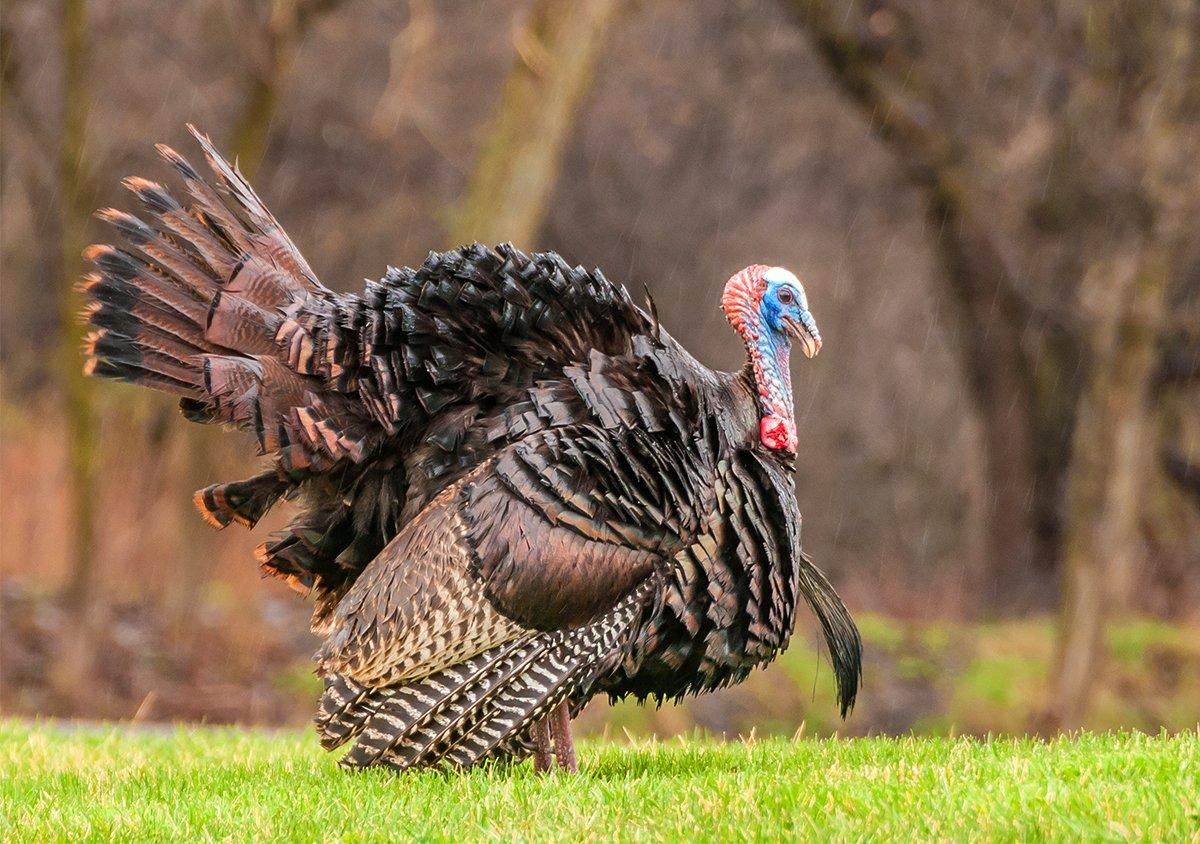
There is a universal question among turkey hunters, usually asked in the predawn while the coffee is being made. What will this weather do to the turkeys? We’ve always been told and assumed that birds gobble best when it’s clear, calm, and warm. Nice days and dogwoods, after all, are part of the allure of spring hunting.
But hunting seasons are short and spring is turbulent, and so if you wait for the perfect weather to go hunting, you might not get to go at all. For turkey hunters, one saving grace is that the birds are diurnal — daytime critters — and so almost regardless of what the weather is doing, they are on the ground, somewhere, and can be hunted. One time a buddy and I ditch-slipped a Nebraska longbeard during a tornado warning. Smart? Not at all. But possible.
Turkeys have another saving grace, too. They have waited all year to breed, and a little bad weather doesn’t change their intentions. In fact, I’ve learned, a crummy forecast usually bothers me more than it does the birds.
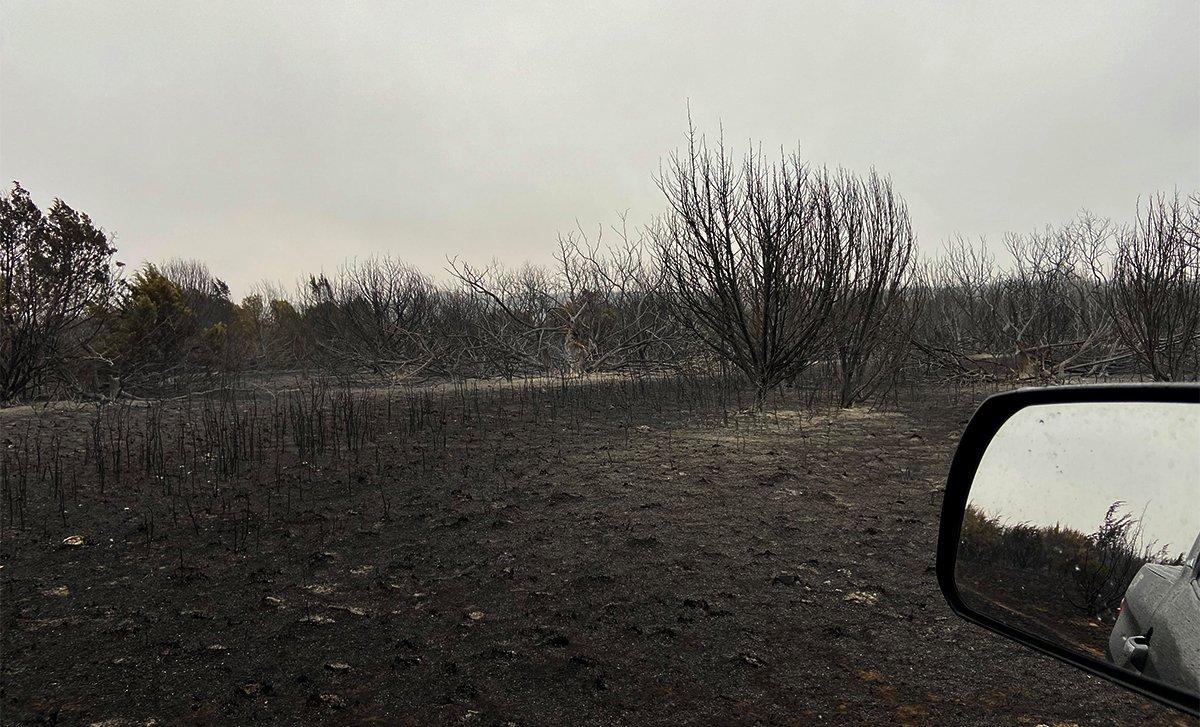
Just last week in Texas, one of our hunting days was forecast to be 94 degrees (it actually reached 96) with a sustained 30-mph wind. A wildfire had ravaged the ranch we were hunting only a few weeks earlier, and so the dry air was laced with black soot. But before those Winds of Hell began to blow, the morning broke in a fog so thick it seemed I could’ve cut a slice of it from the sky and set it in my truck for later.
Will they even gobble in the fog like this? my buddy Miles wondered aloud.
Not much, and it seems like the fog keeps them in the tree forever, I said, matter-of-factly. Fifteen minutes later, a pair of vocal longbeards strutted right through the soup to our gun barrels. Miles killed one and I missed the other.
(Don’t Miss: 10 Reasons Why You Suck at Calling Turkeys)
A few hours later, the forecast was living up to the hype. Maybe I’ve seen it hit 90 degrees a time or two during the late season in Tennessee, but I wouldn’t swear to it. The Texas wind and heat felt like the rush of opening a broiling oven after something greasy has oozed onto the elements. Turkeys won’t do anything in this, I said, again matter-of-factly, as we cruised ranch roads and glassed under shade trees.
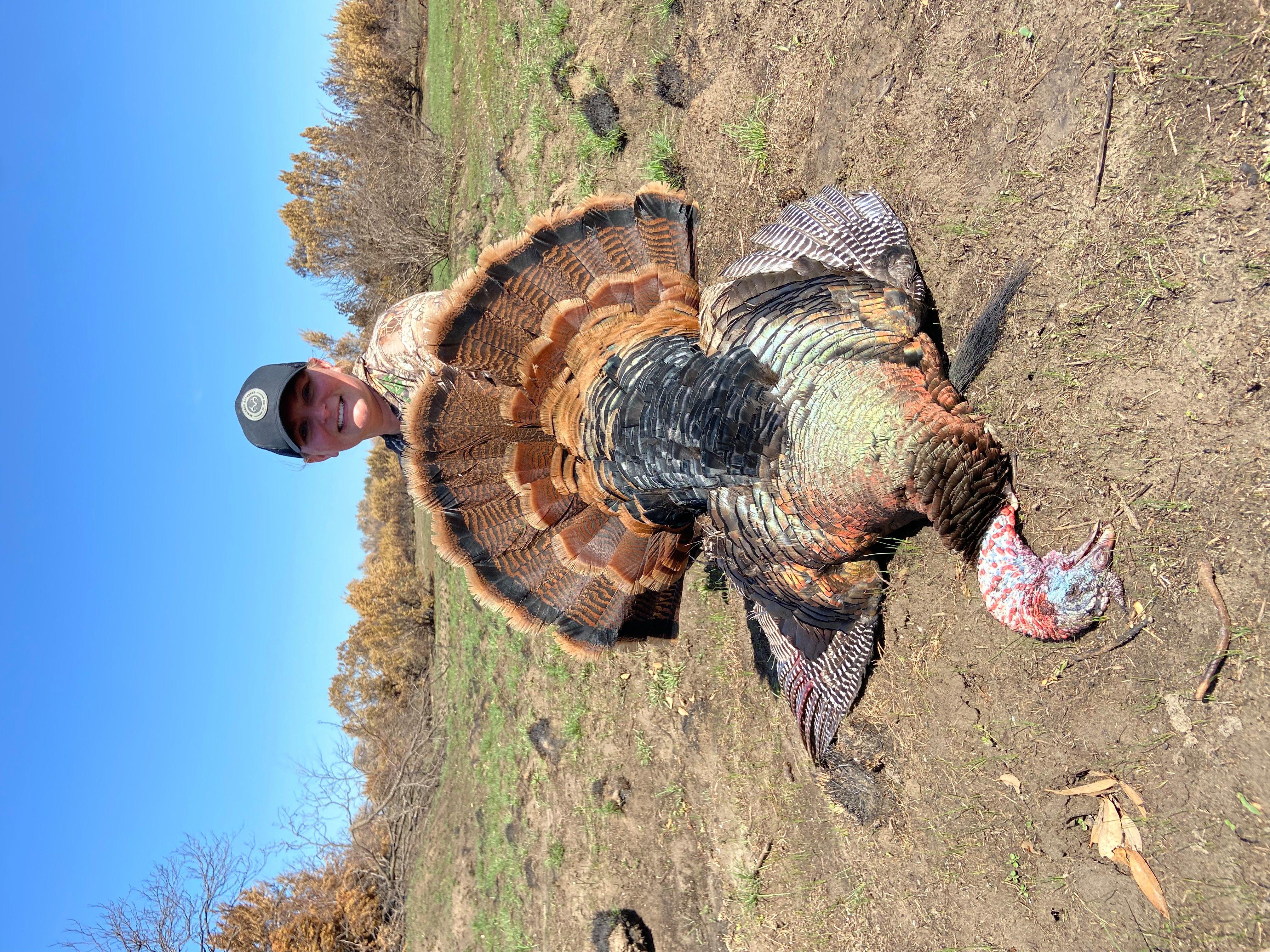
Then we topped a hill where two Rio Grande gobblers were strutting in the blazing sun. One of them gobbled at the truck. We cruised a half mile past them, made a wide loop to set up, and called them right in. Michelle, my wife, killed one at 12:04 p.m. At that point, having been 100% wrong on all of the day’s turkey behavior predictions, I made the safe bet that everyone else was probably at least as hungry as me. Let’s go get some barbecue and try again this afternoon, I suggested.
Listen to the Realtree Outpost Podcast from this hunt:
When in Doubt, Go Hunt
The other day, before Texas, a buddy of mine from Alabama called and said, I slept in this morning because it was cloudy and raining. I think I messed up, because it’s pretty outside now. He’d been having a good spring to that point, with several close calls but no trigger pulled. Since my season at home wasn’t open yet, I was living vicariously through him, and I also felt compelled to suggest what the turkeys would be doing at that very moment in another state, on a property I’d never seen. Channeling Dr. Phil, I told my buddy that many times in the past, I’ve forced myself to get up and go hunt and I’ve never regretted it, even when I didn’t get a bird. When I have slept in, though, I’ve almost universally woken up feeling sorry for myself.
Point being, go hunting and see what happens, I said.
The next morning, my buddy waited out a predawn deluge, and then he heard a turkey gobble at the departing thunder as he was gathering his gear. He sent me pictures of that bird later in the day, lying dead on his tailgate, with the words, How ’bout that, Ol’ Son?
Not that it offered much hope back in Texas. The winds were still raging as I watched the sun fade behind the live oaks that evening, but it seemed as though at least one of my predictions would hold true: Turkeys wouldn’t do squat that evening, hot as it was. Miles was tagging along with me — the first time he’d ever been unarmed in Texas, he said — and we decided to sit within earshot of a creek bottom, where turkeys often roost. With less than an hour of shooting light remaining, I hit my box call, thinking maybe I’d get a bird to shock gobble before fly-up. The answering gobble was so faint I thought I might’ve imagined it, but Miles heard it too.
No way we’re killing that bird, I whispered. He’s a mile away, and they’ll be flying up any minute. Shoot, he’s probably up in a tree right now, gobbling from the limb.
But when he gobbled again a few minutes later, I realized he’d cut half the distance. I popped in a mouth call and yelped, and he roared back from the dark timber, so close I could feel the rattle in his throat. Then I saw him, strutting across the pasture toward me, a mere silhouette in the fading light. But when he got to 25 yards, I could see his white head pretty good.
(Don’t Miss. Seriously. Never Miss a Gobbler Again)
In 28 seasons of hunting, I’ve never killed a gobbling turkey any later in the day than that one. Never worked one at high noon when it was 94 degrees, either. Nor have I ever seen a turkey pitch into a blinding fog and tear right through it, drumming and gobbling so furiously I never lost track of him, before ultimately revealing himself within gun range.
That day, I saw all the above, and in every instance predicted that the turkey would do the exact opposite of what he actually did.
Sometimes, it’s best to just shut your mouth and go hunting.
One of the most revolutionary and creative designs belongs to Mossberg with its FLEX Toolless Locking System (TLS). The whole point of the FLEX TLS is to give shooters the ultimate customization ability for their guns. It’s a series of 3 (patent-pending) connectors that allow shooters to adjust or swap out the stock, forend, and recoil pad without any tools.
FLEX TLS gives each shooter the ability to customize their gun for an endless amount of shooting applications. For example, if you want a light, laser, and optic for SWAT or military use, you can simply change the standard forend to the FLEX Tri-Rail.
The FLEX TLS can swap out stocks for an overall shorter shotgun/rifle and you can change the recoil pad to your desired length. The FLEX TLS can be used in conjunction with almost every Mossberg created to enhance your capabilities and ensure you are 100% comfortable with every aspect of your gun.
MOSSBERG FLEX TACTICAL TRI-RAIL FOREND
Mossberg has the FLEX TLS incorporated fully into both the 500 and 590 models, but you don’t have to have one of those models to take advantage of the system.
FLEX was designed to be purpose-driven and guide each shooter to find the best combination of parts for their style or purpose of shooting. I can’t recommend a better system to customize your shotgun than the FLEX TLS.
The fact that you don’t need ANY tools and takes minutes to install makes a world of difference for those who value time.
Buy Here
Mossberg 6-Position Tactical Stock
The 6-Position FLEX Stock will fit any 12/20 gauge tactical series shotgun with no additional tools and installs within a few minutes.
This pistol grip and stock will instantly improve the ergonomics of the gun by providing a tighter grip and adjustable LOP for specific purposes. It even comes with a hook for a sling attachment to avoid carrying your shotgun for long periods.
This specific attachment is compatible with the FLEX 22 Model due to the specifications of that model.
Buy Here
Mossberg Flex 590 Tactical Shotgun
The Mossberg FLEX 590 Tactical is my favorite of the tactical shotgun because of the incorporated FLEX technology and the 9-shell capacity. The 590 FLEX Tactical Shotgun sets itself apart by its ability to be customized for dozens of applications.
This shotgun is already equipped with the FLEX TLS for quick and easy installation of everything from optics, scopes, lights, and lasers. The FLEX model is lighter, but it’s also about 5-7″ longer than most other tactical models.
The reason for this is to enhance the capabilities and allow shooters to collapse the stock if they want the length shortened.
Pros
Easily customizable
20″ barrel provides a longer range for a bigger area to clear
9-shell capacity is more than enough to get the job done
Tri-Rail system provides a lightweight and stable platform for a multitude of attachments
Features
Ambidextrous safety lever mounted on top
20″ Barrels with Stand-Offs, Muzzlebrakes
Free Gun Lock/10-Year Limited Warranty Included
Why Should I Buy The Mossberg 590 Special Purpose Tactical Shotgun?
The 590 FLEX Tactical Shotgun is perfect for a 3-Gun shooting competition held by the National Shooting Sports Foundation (NSSF). This shotgun is the jack of all trades when it comes to self-defense and military CQB operations.
If you’re in the market for a Tactical shotgun and want to be able to customize the shotgun to fit your exact needs, this is the gun for you. I’m a little biased because this is the tactical shotgun that I own for my personal defense in case I have to defend my family.
I can tell you that this shotgun is smooth, accurate, has a low felt recoil, and works great with a light and a red-dot sight attachment.
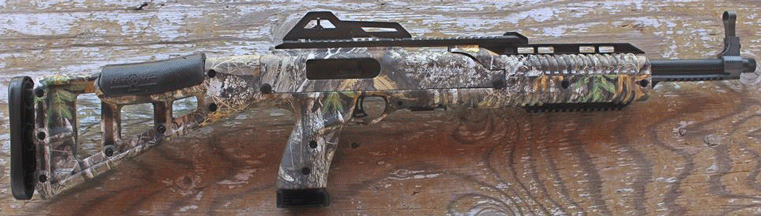
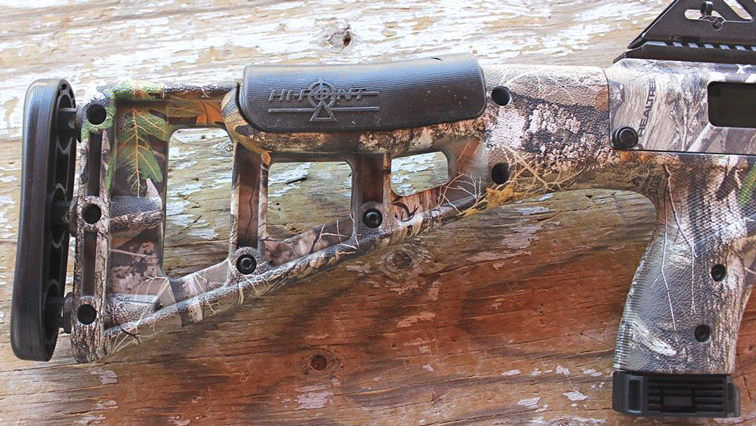
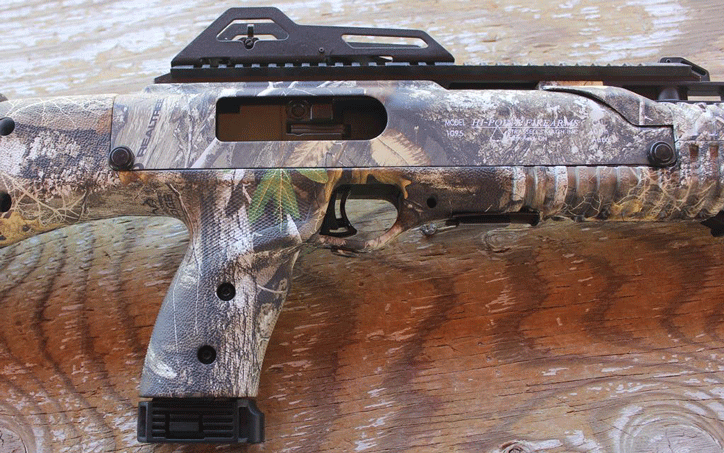
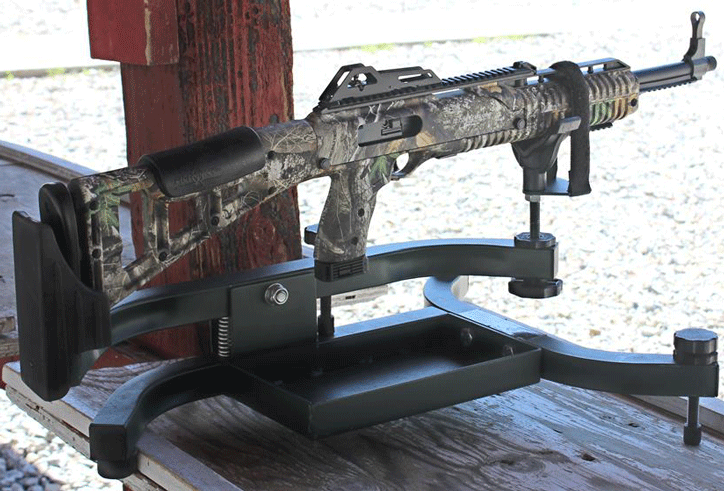
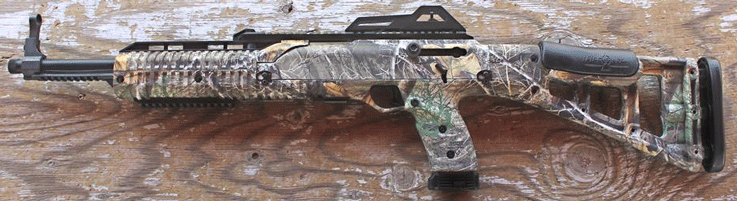
Hi-Point Firearms has been manufacturing some of the most budget-friendly semi-automatic pistols and carbines available for more than two decades. While the aesthetics of the guns may not gladden the eyes of all who gaze upon them, they are loaded with features, constructed from 100-percent American-made components and assembled by a U.S.-based labor force. This year, Hi-Point decided it was time to ramp up the power potential of its carbine line with the addition of a brand new 10 mm version called the 1095TS. As of this writing, the 10 mm is available in either a standard flat black or Realtree Edge camouflage finish. This review takes a closer look at the Realtree Edge version.
Like its predecessors, the 1095TS Edge is a blowback-operated, striker-fired semi-automatic carbine with a single-action trigger. The striker mechanism, bolt assembly, trigger group, external controls and single-stack magazines all take their cues from Hi-Point’s pistols. However, there is no magazine disconnect in the carbine and the monolithic grip cannot be swapped out or modified.
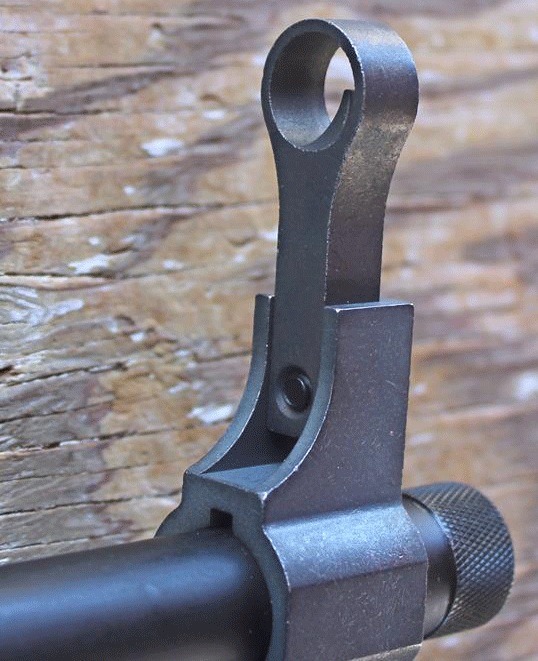
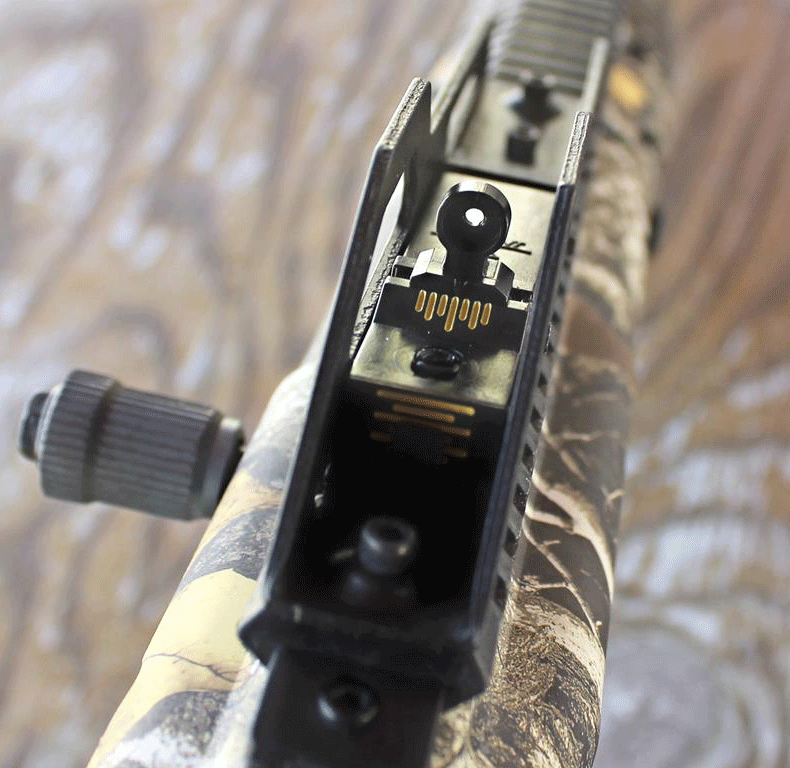
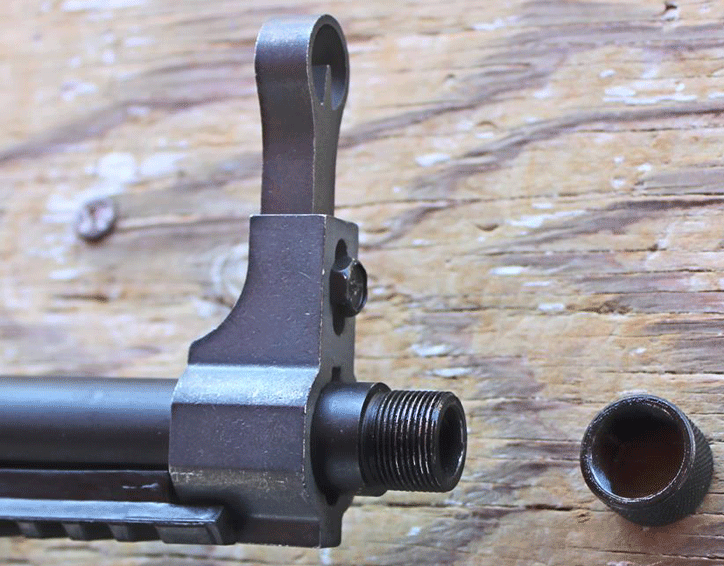
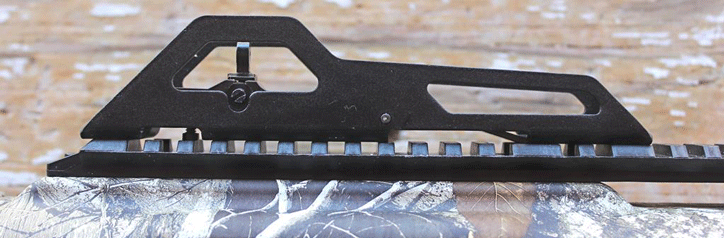
The round profile 17.5″ blued steel barrel has a muzzle threaded at .57×28 TPI in order to accept muzzle accessories. A knurled thread protector is provided. The factory iron-sighting system consists of an adjustable hooded post attached to the barrel and a fully adjustable peep sight at the rear. The rear sight is set into a stamped sheet steel housing which can be removed in order to install a magnified optic or red-dot sight.
The receiver is cast from Zamak 3 alloy which is, apparently, strong enough to handle the increased pressure (SAAMI Max: 37,500 PSI) of the 10 mm cartridge. Each caliber of Hi-Point carbine is rated for +P ammunition so as to be able to fire all factory-manufactured, SAAMI-spec ammunition. However, history has shown that 10 mm pistols of all types tend to wear out more quickly than similarly sized models chambered for 9 mm, .40 S&W and .45 ACP because of the increased pressure levels and bullet velocities. It seems likely that a 10 mm carbine, no matter which company makes it, is going to reach the end of its working life span more quickly than other pistol-caliber models.
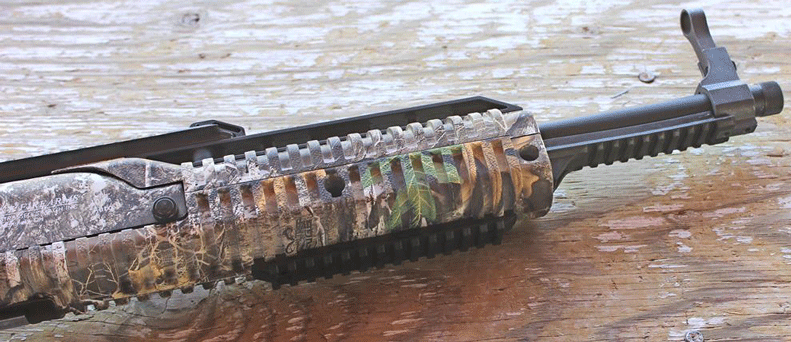
A sheet steel shroud is placed over the receiver to keep out dirt and to support the back end of the sight rail. In this case, the shroud has been given the same hydro-dip camouflage treatment as the polymer stock to create a unified appearance. The ribbed fore-end, pistol grip and shoulder stock are all constructed from a single piece of textured high-impact polymer. A polymer handguard, which is ribbed to match the fore-end, is clamped over the barrel to lend support to the front end of the 9.5″ Weaver-style sight rail. A 3.5″ accessory rail is mounted under the barrel along with a 4.5″ rail attached to the fore-end of the stock.
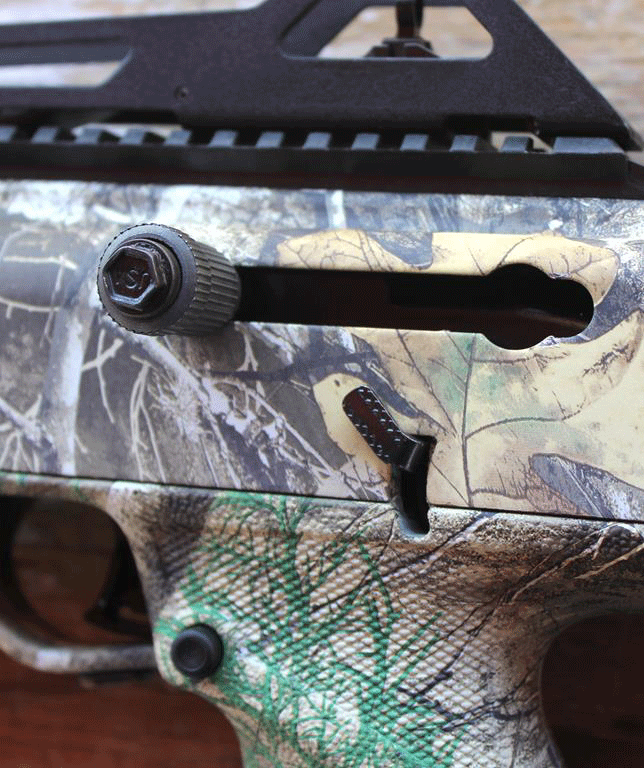
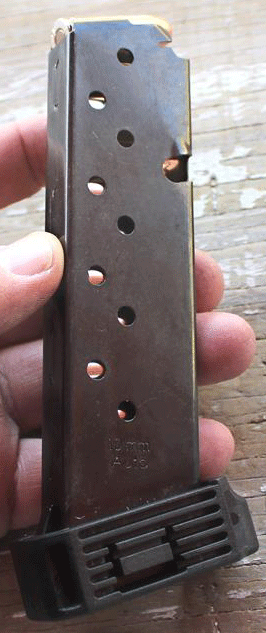
Hi-Point carbines are configured to eject spent shell casings to the right of the receiver with the manual controls installed on the left. The round, reciprocating charging handle is simply twisted into the bolt assembly and tightened using the provided combination wrench and sight adjustment tool. The manual safety swings up into the Safe position and down, exposing a red-dot, to fire. The polymer round-button magazine release allows the magazine to drop free of the pistol grip when pressed. The 1095TS Edge arrives with one blued steel 10-round, single-stack magazine with an oversized black polymer baseplate.
The black polymer trigger is best described as having a single-action trigger pull even though the arch of travel is a bit longer than most single-actions. The trigger feels surprisingly smooth and breaks with 5 lbs. 11 oz. of trigger pull. The skeletonized shoulder stock provides a 14.5″ length of pull (LOP) with a soft rubber cheek pad. The black polymer recoil plate is supported by three extensions, each of which is fitted with a recoil reduction spring. The carbine arrives with a simple nylon web shoulder sling and a set of removable blued steel sling swivels.
The two features that keep Hi-Point carbines selling like hot cakes are their low sticker prices and the platform’s reliability. At the shooting range, the 10 mm 1095TS Edge experienced two failures to feed in the first 50 rounds. After that, it merrily munched its way through whatever it was fed from relatively low velocity (1,150 f.p.s.) practice-grade imports to premium hunting and defense loads. The carbine feels good to hold, it points well, the sight system is easy to use and the recoil reduction system built into the shoulder stock kept felt recoil to a comfortable moderate level. The Realtree Edge camouflage finish has been properly applied and provides a refreshing alternative to a flat black finish.
In most cases, I conduct formal pistol-caliber carbine accuracy testing at 50 yards from a benchrest. However, much like the Hi-Point 4595TS PRO carbine chambered in .45 ACP that I tested three years ago, the five-shot group sizes of the 1095TS Edge opened up to around 5″ at 50 yards when firing practice grade ammunition. But I wanted to know the distance at which this 10 mm carbine could produce practical group sizes of 3″ or less. Once again, the practical target distance proved to be 25 yards when shooting less expensive ammunition.
Although I stuck with budget-priced loads during the .45 ACP carbine test, this time around I broke out some premium-grade ammunition in a variety of bullet weights to see if the 1095TS Edge’s accuracy could be improved. I was also curious to see how its 17.5″ barrel would affect bullet velocity, which was measured for 10 consecutive shots using a Lab Radar chronograph with a 12″ offset from the muzzle of the carbine.
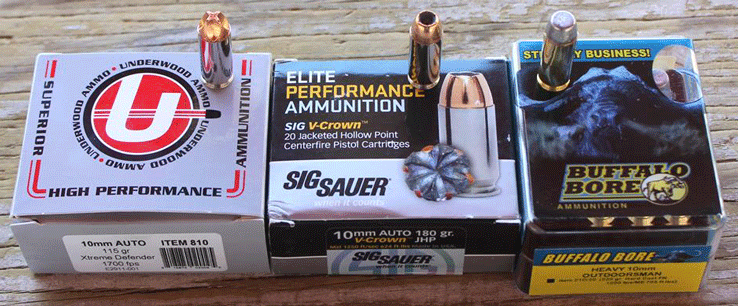
Formal accuracy testing began with one of the heaviest-bulleted commercially-available cartridges loaded to a maximum safe velocity for its weight, Buffalo Bore’s Heavy Outdoor 220-gr. hard-cast flat nose with a listed pistol velocity of 1,200 f.p.s. at the muzzle. This round’s velocity was upped to 1,325 f.p.s. by the carbine-length barrel for 858 ft.-lbs. of muzzle energy with a best single group of 2.31″ and a five-group average of 2.53″.
The fastest and lightest bullet of the day was an Underwood Ammunition’s Xtreme Defense 115-gr. CNC-machined solid-copper Xtreme Penetrator with a listed pistol velocity of 1,700 f.p.s. These rounds scooted right along at 1,912 f.p.s. for 933 ft.-lbs. of energy at the muzzle. It printed a best group of 1.35″ with a group average of 1.47″. SIG Sauer’s Elite Performance 180-gr. V-Crown jacketed hollow point loaded to 1,250 f.p.s. is a top-notch, multi-purpose load which is accurate and reliable in pistols and carbines. Bullet velocity increased to 1,400 f.p.s. for 783 ft.-lbs. of muzzle energy with a best single group of 1.56″ and an average of 1.70″.
The Hi-Point 10 mm 1095TS brings a new level of punch to a platform favored by those who are looking for a reliable pistol-caliber carbine at a rock-bottom price. Although this gun’s best accuracy potential is realized at around 25 to 30 yards, instead of a more typical pistol-caliber carbine distance of 50 yards, quality 10 mm loads will get the job done within that range. I’m glad to see that fans of the 10 mm Auto have a new, less-expensive way to put this terrific cartridge to work. With suggested retail prices starting at $389.99, it’s certainly the most affordable carbine in this potent caliber.
“What Do Deer Eat in Summer? Discover the Dietary Preferences of Deer During the Warm Season. Explore their Natural Diet and Learn How They Adapt to Find Nourishment in Lush Environments.”
1. “Exploring the Summer Diet of Deer: What Do They Eat?”
Deer have a diverse and ever-changing diet, and their preferences shift with each season. During the summer months, when there is an abundance of food available, deer can consume anywhere from three to ten pounds of food daily. Their food consumption remains fairly consistent during this time but may increase in the fall as they prepare for winter. So, what exactly do deer eat in the summer?
According to a study from the University of Missouri Extension, whitetail deer have been found to dine on over 600 plant species. In a single day, they can consume up to 20 different types of plants to gather necessary nutrients. The plentiful supply of food during the summer makes it easy for them to eat as much as they want.
However, it’s important to note that deer typically avoid well-established crops such as corn, soybeans, oats, wheat, and alfalfa. If they do go after these crops, they will preferentially eat ones that have fallen on the ground. These crops serve as snack-time satisfaction for them. Mushrooms can also be consumed as snacks during the summer months.
Deer also feed on various fruits such as those from ash trees, hemlock trees, sumac trees, maple trees, and aspen trees. They also enjoy ground-bearing fruit like strawberry and raspberry plants. Additionally, deer may feed on fruit trees such as plum bushes, pears, apples, and crab apples during the summer months.
Protein is an essential aspect of a deer’s diet. Females require high levels of protein before giving birth and during lactation periods. Bucks need protein for antler regrowth during spring and summer months. To meet their protein needs, deer often feed on winter wheat, soybeans, rye grasses, brassica plants (such as kale or turnips), clover, and alfalfa. Generally, deer will feed on as many plant species as they can find close to the ground.
Deer are known to forage for their meals at dawn and dusk when they believe there are no predators around. They move about frequently, rapidly feeding on available food sources before moving on to another area. While they primarily browse for their meals, deer also consume fruits when available.
In conclusion, deer have a wide range of food options during the summer months. They eat various plants, fruits, and even mushrooms. Their diets consist of both carbohydrates and protein-rich foods to meet their nutritional needs. Deer are opportunistic feeders and will consume almost anything they can find close to the ground.
2. “Unraveling the Mystery: What Deer Feed on During the Summer Months”
Deer have a diverse diet that changes with each season, and the summer is no exception. During this sunny season, deer have an abundance of food to choose from, allowing them to eat as much as they want. According to a study from the University of Missouri Extension, whitetail deer can consume over 600 plant species in a day. They eat as many as 20 different plant varieties to gather the necessary nutrients.
While deer are known for their ability to devour crops, it’s important to note that they typically avoid snacking on well-established crops like corn, soybeans, oats, wheat, and alfalfa. If they do go after these crops, they will prefer the ones found on the ground. Deer also enjoy mushrooms as snacks during the summer but tend to eat more during the fall season.
In addition to plants, deer also feed on fruits from trees such as ash, hemlock, sumac, maple, and aspen. They also indulge in ground-bearing fruits like strawberries and raspberries. These fruits provide carbohydrates for deer during the summer months.
Protein is another essential aspect of a deer’s diet. Females require high levels of protein before giving birth and during lactation. Bucks need protein to regrow their antlers in preparation for mating season. To meet their protein needs, deer feed on winter wheat, soybeans, rye, brassica, clover, and alfalfa.
Deer are opportunistic feeders and will consume almost anything they can find close to the ground. They browse on grass varieties in spring but prefer soft stems during summer. Additionally, they may also feed on lichen and forms at specific times of the year.
Overall, deer have a varied diet in the summer months consisting of plants, fruits, and protein sources. They are constantly foraging for food, usually at dawn and dusk when they feel there is no predator around. Their ability to adapt their diet to the changing seasons allows them to thrive in different environments.
3. “Understanding the Palate of Deer in Summer: Their Favorite Foods Revealed”
During the summer, deer have a wide variety of food options available to them. According to a study from the University of Missouri Extension, whitetail deer are known to dine on over 600 plant species. This means that in a single day, deer can consume as many as 20 different types of plants to gather the necessary nutrients.
Deer take advantage of the abundance of food during the summer and can eat as much as they want. However, it’s important to note that deer typically avoid well-established crops like corn, soybeans, oats, wheat, and alfalfa. If they do consume these crops, they prefer to eat ones that are found on the ground rather than directly from the plant.
In addition to ground-based crops, deer also enjoy snacking on mushrooms during the summer. While they may eat some mushrooms during this season, their consumption tends to increase during the fall months.
Deer also have a preference for fruits from various trees such as ash, hemlock, sumac, maple, and aspen. They also feed on ground-bearing fruits like strawberries and raspberries. These fruits serve as a source of carbohydrates for deer during the summer.
When it comes to protein intake, female deer require higher levels of protein weeks before giving birth and during lactation. Bucks also need protein for antler regrowth in summer and spring. To meet their protein needs, deer often feed on winter wheat, soybeans, rye, brassica plants (such as kale or turnips), clover, and alfalfa.
Overall, deer have a diverse diet in the summer months. They will eat almost anything they can find close to the ground including corn, soybeans, rye grasses legumes berries bark and more.
Please note that while lichen and fungi may be part of a deer’s diet, they tend to seek these out during specific times of the year, particularly in winter.
In conclusion, deer have a varied and adaptable diet during the summer months. They consume a wide range of plant species, including fruits from trees and ground-bearing plants. Protein is also an essential part of their diet, with females requiring higher levels during certain periods. Deer are opportunistic feeders and will eat almost anything they can find close to the ground.
4. “From Fruits to Bark: Discovering the Varied Diet of Deer in the Summer”
During the summer, deer have a diverse diet that includes a wide range of plant species. According to a study from the University of Missouri Extension, whitetail deer can consume over 600 different types of plants. In order to gather adequate nutrients, they eat as many as 20 different plant varieties in a single day. The abundance of food during the summer allows them to eat as much as they want.
While deer may snack on crops such as corn, soybeans, oats, wheat, and alfalfa, they typically prefer to eat those that are found on the ground. These crops serve as a form of snack-time satisfaction for them. Mushrooms can also be consumed as snacks, although deer tend to eat more during the fall season than in the summer.
In addition to crops and mushrooms, deer also feed on fruits from trees such as ash, hemlock, sumac, maple, and aspen. They also enjoy ground-bearing fruit like strawberry and raspberry plants. These fruits provide carbohydrates for deer during the summer months.
Deer are known for their preference for soft stems during the summer. While they may feed on grass varieties in the springtime, they opt for soft stems during the sunny season. They also feed on fruit trees such as plum bushes, pears, apples, and crab apples.
Protein is an essential aspect of a deer’s diet. Female deer require high levels of protein before giving birth and during lactation. Bucks need protein to regrow their antlers in preparation for mating season. To fulfill their protein needs, most deer feed on winter wheat, soybeans, rye, brassica plants (such as kale or turnips), clover, and alfalfa.
Overall, deer have a varied diet in the summer that includes corns soybeans,r, rye, alfalfa, berries, bark, legumes, and many more. They also feed on apples, crab apples, plum bushes, and mushrooms. Deer are opportunistic eaters and will consume almost anything they can find close to the ground.
5. “Summer Feasting: A Look into What Deer Eat During Sunny Seasons”
During the summer, deer have a wide variety of food options available to them. They have an incredible palate and can consume anywhere from three to ten pounds of food daily. Their diets change with each season, and in the summer, they take advantage of the abundance of food.
According to a study from the University of Missouri Extension, whitetail deer can eat over 600 plant species. In a single day, they may consume up to 20 different plant varieties to gather the necessary nutrients. The summer provides them with plenty of options for their meals.
While deer will not typically snack on well-established crops like corn, soybeans, oats, wheat, or alfalfa, they may eat those that have fallen on the ground as a form of snack-time satisfaction. Mushrooms can also be included in their snacks during the summer months.
Deer also enjoy fruits from various trees such as ash, hemlock, sumac, maple, and aspen. They also feed on ground-bearing fruits like strawberries and raspberries. Fruits provide them with carbohydrates during the summer.
Protein is another essential aspect of a deer’s diet. Females require high levels of protein before giving birth and during lactation periods. Bucks need protein to regrow their antlers during the summer and spring months. To meet their protein needs, deer often feed on winter wheat, soybeans, rye, brassica plants (such as turnips), clover, and alfalfa.
Deer are opportunistic eaters and will forage for their meals at dawn and dusk when they believe there are no predators around. They move about frequently and may rapidly feed on one type of plant before moving on to another area.
In summary, during the summer months, deer will eat a variety of foods including corn (found on the ground), soybeans, rye, alfalfa, berries, bark, legumes, apples, crab apples, plum bushes, and mushrooms. They have a diverse diet and will consume almost anything they can find close to the ground.
Note: This article is based on the information provided in the given content and does not reflect personal opinions or experiences.
6. “Feeding Habits Unveiled: What Do Deer Consume in the Summertime?”
Deer’s Varied Summer Diet
During the summer, deer have a wide range of food options available to them. According to a study from the University of Missouri Extension, whitetail deer can feed on over 600 plant species. This allows them to consume as many as 20 different plant varieties in a single day in order to obtain the necessary nutrients. With an abundance of food during this season, deer have the freedom to eat as much as they want.
Preference for Snacks and Fruits
While deer will eat almost anything they can find close to the ground, they tend to avoid well-established crops. If corn, soybeans, oats, wheat, or alfalfa are present, they will typically opt for those that have fallen on the ground. These become their preferred snacks. Additionally, deer also enjoy fruits from trees such as ash, hemlock, sumac, maple, and aspen. They also feed on ground-bearing fruit plants like strawberries and raspberries.
Dietary Needs and Foraging Behavior
In terms of nutritional needs during the summer months, protein is essential for both male and female deer. Females require high levels of protein during pregnancy and lactation periods while bucks need it for antler regrowth. To meet their protein requirements, deer often feed on plants such as winter wheat, soybeans, rye, brassica (cabbage family), clover, and alfalfa.
Deer typically forage for food at dawn and dusk when they feel safer from predators. They move around frequently and may quickly consume a small amount of food before moving on to another area.
Other Dietary Considerations
Apart from plants and fruits, deer may also feed on lichen and moss. However, they tend to seek these out during specific times of the year, particularly in winter. Overall, deer have a diverse diet and will eat almost anything they can find closer to the ground.
In conclusion, deer primarily feed on a variety of fresh vegetation during the summer months. Their diet consists of grasses, leaves, and tender shoots from plants such as clover, dandelions, and wildflowers. While they may also consume fruits and berries when available, their main source of sustenance remains the abundant plant life found in their natural habitat.