Home Blog Page 24

Butchering Deer: The Front Quarters and Backstraps

0

Last year I managed to take photos of *most* of the process of butchering deer. Butchering doesn’t include the hanging, skinning, gutting, that’s all done before and I’m usually at home with the boys while he does that. Mac has expressed interest in helping with it this coming fall which is neat as he’s always had a healthy fear of large animals, even when they’re dead.

Let me repeat again and again and again that we are not professionals. I do not know exact names of cuts. BUT, Marius and I have been butchering deer and other animals for ourselves, other family members and friends quite often so between growing up and our relationship together we have butchered deer, moose, bear, cows, pigs, sheep, turkeys, ducks, geese, grouse, chickens and there is probably others I’m forgetting! The deer where we live are Black Tails and give us about 40 pounds of meat off the bone, so please note that larger deer will probably be a little different in some areas. (Where we might cut into stew meat, might be big enough for a roast on a large Mule Deer.)

Butchering Deer: The Front Quarters and Backstraps

Unfortunately I was busy with the cow when he cut the front legs off, so this starts at the point where you have the front legs off. To get them off, the deer is hanging by it’s hind legs, and you simply cut straight up from the joint to detatch it. The meat in this area is grinding and stew meat so you’re not cutting into steaks if you mess up.

With the front legs, you start by simply deboning in as large of chunks as you can.

He then trims off what will be grinding meat, dividing it from stew meat. Stew meat has less sinew, but has ‘rough grain’ meaning it needs to be slow cooked. I’ll show a picture of it lower down.

He takes care to trim off some sinew/connective tissue so that the finished product will be nicer. It isn’t neccessary to do this everywhere, but this below will be stew meat and it’s nicer to have it without gristle.

Holding the foot between his legs makes it more stable to continue deboning the meat.

On the shoulder blade there is about as clean as it gets scraping the meat off. We let dogs chew on it afterwards so it doesn’t go to waste. If we have more than our dog can handle, we give it to other friends dogs. One friend cuts up and dehydrates bones from deer in their excalibur dehydrator. One day when I have my own dog and an excalibur I will do the same!

You can see the grain in the stew meat below is quite coarse in some pieces, but this will make excellent meals!

Then we have the grinding meat, which is quite often pieces that are trimmed off after the initial cutting of larger chunks off, and are too small to do anything else with. More of this could have been made into stew meat but alas, I wanted more sausage than stew meat.

Next, while this looks really funny, it works really well. We have what we call “The Hanger” which is a small log structure big enough to hang a few smaller animals or a cow. It’s open to the air, but in the shade of the woods and covered by a tin roof. My stepdad built in, then Marius outfitted it with pulleys, rope and hooks to make getting animals up and down easier. Marius simply takes the rest of the animals down (I would have to carry down in chunks, too heavy for me) and brings it down to the table. He doesn’t take the feet off when he hangs it because he doesn’t see the point, and it’s handy for this point. So the deer is resting by the rib cage on the table and you’re looking at it from behind.Right on either side of the spine you can see different a coloured stripe of meat and this is affectionately known as the backstrap! Some may call it a loin as well. (You can see the top left where he shot the deer in the vitals, there is a bit of blood shot. This will get trimmed and fed to dogs. If you see about where that stripe goes into a point, where it thickens, Marius cuts a horizontal line to the spine. This separates the tougher neck meat from the buttery backstrap. Below, look how he cuts along the spine, make smooth long motions to make it as neat as possible. This is a primo cut and we treat it so!

After cutting down the side of the spine to the tailbone, he cuts along the top of the ribcage freeing the backstrap from the carcass.

He then makes final cuts trimming away.

And slices it off at the end! You can now see below on the right a definitive marker for cutting apart the hind legs, which is handy.

What you’re left with is one long, gorgeous albeit hard to handle strip of backstrap.

To make this more manageable, I cut it into three even chunks. I do the same with the other backstrap, and wrap two to a package. One of these chunks is a dinner for our family so I usually cook two and make leftover cooked one into some sort of lunch. See the fine grain on this meat? Ridiculous I tell you. Makes me want to go cook up a backstrap right now!

The last part of butchering deer that I’m going to show you before keeping you hanging until next time, is cutting out the tenderloins. It’s never pretty to do so, and these tender morsels could be easily overlooked, but we find cutting them out, wrapping and then trimming up before cooking is the best way to not waste any. Same as on the backstraps, but this time on the inside, he cuts along the spine.

Then below, you can see where he has sliced them out. Gently fry or BBQ these up, keep them rare, and cut them with a fork. You won’t believe the flavour involved with these.

Home Butchering

  • Pan Fried Deer Heart
  • How to Package Meat for the Freezer
  • How We Safely Include Our Children When Butchering Meat
  • Rendering Fat in the Crockpot

9mm vs 10mm – Cartridge Comparison

0

When it comes to self-defense, there are several valid arguments for the 9mm vs 10mm handgun. Both are very popular and have their advantages and disadvantages. However, the 9mm is widely regarded as the ‘ideal’ handgun for self-defense and is one of the most highly used handguns in military and police forces. This goes for both home defense and conceal and carry. The popularity of the 9mm means that largely we have to defend the 10mm to justify it as a viable option.

Understand that the decision of which handgun to buy is a very personal decision. Every person has a different preference on weight, size, power, and recoil. Some people plan to conceal and carry, while others plan to use the weapon for home defense. Some stay in the city and worry about crime, while others spend time in the wilderness and are more concerned with predators. Before making a purchase, weigh your priorities and options to find the perfect fit for your needs.

Because of this, it’s difficult to label one as a better cartridge than the other. We will take a look at these two cartridges and discuss how they are similar and how they differ in some key ballistic and performance categories. We think that by the end of the article you will see that both have merit in the world of handguns.

History

The 10mm handgun was developed through a group effort by Col. Jeff Cooper, Norma, the FBI, and Smith & Wesson. The firearm was designed for use by FBI agents but was quickly set aside for other weapons. Some people claim that the recoil was too much for the wimpy FBI agents. However, the truth is that the weight and power simply slowed down their firing. Additional weight and recoil make target acquisition take a bit longer. When an agent is defending themselves and trying to put two or three rounds on a target quickly, the 10mm was not ideal.

The FBI did find that with different ammo, the 10mm handgun performed better in speed tests. The FBI lite load drastically reduced recoil and helped with performance. However, with a lighter load, it eliminated the need for such a heavy gun. This brought the FBI back to the 9mm, .45 caliber, and sparked the design of the .40 Smith and Wesson. It makes a strong argument for the 9mm vs 10mm.

The 9mm was first developed and used by the German military in the at the turn of the 20th century. From then, the cartridge saw use in both World Wars and was eventually accepted as a highly effective caliber by other European countries and North America. The 9mm soon replaced the commonly used .38 cartridges in the law enforcement community due to its stopping power and low recoil and is probably the most highly used round behind the .40 S&W. The 9mm provided extreme ease of handling, more stopping power than previously used rounds, and could carry more rounds in the magazine.

direct comparison 9mm vs 10mm round

Let’s just take a look at the specifications of these two cartridges and see how they compare and contrast.

9mm10mm Parent Case7.65x21mm.30 Remington Bullet Diameter0.355”0.400” Neck Diameter0.380”0.423” Base Diameter0.391”0.425” Case Length0.754”.992” Overall Length1.169”1.25” Case Capacity13.3gr24.1gr Max Pressure (SAAMI)35,000psi37,500psi

From the cartridge measurements and specifications, it should jump out immediately that the 10mm Auto is a larger round than the 9mm.

10MM cartridges can hold much heavier bullets than the 9mm with some hunting and self-defense rounds coming in at 180-200gr. These bullets are much heavier than the more common weights used with 9mm rounds which commonly fall between the 115 and 140gr weight.

The 10mm Auto can be packed with a higher charge, which is needed to push such heavier caliber bullets at speeds needed for hunting and self-defense purposes. We will see shortly how these differences affect the terminal ballistics of these handgun rounds.

To compare, we select several specific rounds for each cartridge to compare in several categories. While these selections are only a small window compared to the amount of selections available, they will give us a good idea of how the two cartridges stack up next to each other, and for the most part, these trends can be extrapolated to most options available. Those rounds are listed below.

We also want to point out that you can play around with cartridge loads, including how hot the load is and the bullet type. A lot of shooters will reload their own ammunition to tailor their ammo to their needs. In this article, we are only looking at factory loads of these two handgun cartridges.

Stopping Power

One of the biggest discussion points when evaluating the 10mm vs 9mm or any other comparison of two handgun rounds is power. In self-defense, power equates to penetration or over-penetration. There are two schools of thought on power. Some gun owners want as much power as they can handle. They want to put down any target with one shot, regardless of what happens behind the target. This makes more sense for gun owners that use their handgun in the wilderness. You certainly do not want a lack of power if a bear or a wild hog is charging you.

On the other hand, is it responsible to have that much power? You might take down your target with one shot, but possibly injure or kill somebody standing behind that target or even in another room. It is quite possible for a strong round to travel through a body and then keep going through a wall. In ballistics gel tests a 9mm would typically travel about 13 inches after impact, while the 10mm was sometimes over 17 inches. This means that a 10mm could potentially travel through two people at center mass and still keep going. That is a huge amount of power. Of course, a lot of factors go into penetration and penetration is not the sole determinant of how effective a round is at disabling or deterring an aggressor.

However, in the question of bullet penetration from a 9mm versus a 10mm the key lies in the ammunition. More velocity does not always mean deeper penetration. When you switch to jacketed hollow point defense rounds, the penetration is about the same. The reason is that increased velocity causes a hollow point to spread faster after impact and to spread further. This creates more resistance and slows the bullet more than a round traveling at slower speeds. If you hit your target, the hollow point is just as safe as a 9mm round. While we will look at some numbers shortly, keep in mind that bullet type plays just as big a role in power and penetration. Two bullets with the same energy traveling downwind will penetrate differently if one is a controlled expansion bullet while the other is a hollow point.

More importantly, you should always think about the collateral damage before you fire any handgun. If you are not confident that you can hit your target without hurting other people, you do not take that shot. It is that simple. If gun owners are responsible about the way they use their firearms to defend themselves, then power is rarely an issue.

Before we move on, let’s take a look at some numbers for several popular 9mm and 10mm cartridges. We will look at the energy that is carried by the bullets, which transfers to the target and causes damage. And though we have talked briefly about penetration and the pros and cons to a deep penetrating defense-round, we will compare some sectional density data between the two.

Energy

The kinetic energy that is carried by a bullet is transferred to the surrounding tissue of the target. This kinetic energy damages and destroys tissue, organs, and nerves as it passes through. While only one variable in a bullets power, it is an important one and is easily comparable between rounds. Let’s take a look at the kinetic energy of the rounds we have selected for comparison and see if there are any trends we can pick up on.

9mm vs 10mm stopping power comparison

It is very clear from this graph that the 10mm Auto rounds carry a much higher amount of kinetic energy from the muzzle out to 50 yards. Right at the muzzle, the 10mm Auto rounds are carrying anywhere from 300-400 more ft.lbs of energy than the 9mm rounds. A lot of shooters might consider this overkill, and for the range or maybe even intruders, it may well be overkill. For taking large game or punching through cover, it’s the amount of energy that is needed to be confident in stopping a charge.

Though the 10mm Auto has a significantly more amount of energy, the 9mm is not to be scoffed at. For self-defense purposes, having a force of 250+ ft.lbs from 25 yards and in is more than enough to cause enough damage to stop an intruder in their tracks. This decrease in kinetic energy, as we will see, also aids in other characteristics that make the 9mm one of the more popular personal defense rounds throughout the world.

Penetration

The best visual method of measuring penetration is through the use of ballistic gels, which we alluded to earlier. While there is nothing wrong with this method, it sometimes gets blown out of proportion, especially when you are trying to compare it to an armored or heavily clothed target, or an animal with a thick hide and skin.

In this section, we will look at the sectional densities of the various rounds. The sectional density is a measurement that comes from the bullets diameter and weight. The higher the sectional density, the greater the penetration potential. Using this, it doesn’t matter what the target is; we can still make accurate comparisons between rounds. We should note, and we discussed this earlier, that the bullet design and jacket are also major factors in how a bullet penetrates. Hollow points with higher sectional densities still might not penetrate as much as a FMJ with a low sectional density.

Still, we have a good selection of bullet types for our 9mm and 10mm selections so the sectional densities should give us some interesting comparisons.

sectional density and penetration of the 10mm vs the 9mm

Overall, the 10mm Auto rounds have slightly higher sectional densities than the 9mm rounds. With that being said, we can see that it varies from round to round. The 147gr 9mm round has just as high a sectional density as the 10mm rounds. Others that have lower sectional densities still might penetrate more than other with higher sectional densities due to their bullet design. For example, full metal jackets have a higher penetration than hollow points because they will not expand as rapidly.

For the 10mm rounds, you do need extra penetration for some applications such as hunting. Because of this, a lot of 10mm rounds have bullet designs that feature more controlled expansion. This allows the bullets to reach vital organs of larger animals but still provide enough expansion to cause maximum damage to surrounding tissue. While penetration is an important component to a bullets and cartridges stopping power, it is only a small portion of the overall equation and has other factors that contribute such as velocity, which we will move on to in the next section.

Velocity

Talking about velocity is important when discussing two handgun cartridges that are going to be used for self-defense purposes. Velocity plays a key role in terminal ballistics of the firearm, such as the categories we just finished discussing, and it also plays a role in how the bullet behaves when shot. Though the latter isn’t discussed as often because of the ranges shots are most often taken with these rounds.

Still, we felt that velocity is an important component to properly picking the right cartridge for your needs and will take a look at the muzzle velocities out to 50 yards for the rounds we have used in previous sections.

Velocity compared 9mm versus 10mm auto

We can tell right off the bat that the 10mm Auto rounds have a higher muzzle velocity than the 9mm rounds. Most show around 100-200 ft/s increase in velocity, though the heavier 147gr 9mm round shows similar velocity patterns.

This trend continues for the rounds as they move downrange to the 50-yard mark. This trend makes sense as we already know that the 10mm Auto cartridges can pack a substantially larger amount of powder charge than the 9mm and is needed to fire the heavier pullets at a speed where the round would be effective in self-defense and hunting situations. Of course, the speed that these large bullets can travel is most likely going to mean an increase in the amount of recoil.

The increase velocities of the 10mm Auto rounds also affect the bullet’s penetration. The faster rounds can overcome resistance once it hits the target. Of course, expansion is going to slow down the round as it moves through tissue, but as a general trend, when looking at two of the same bullets, the once with a higher velocity is going to penetrate deeper.

Recoil

Recoil is probably the biggest argument in the 9mm vs 10mm debate, but it should not be. Yes, it is true that almost anybody can handle the recoil from a 9mm. Yes, the average 10mm round has noticeably more recoil than the average 9mm round. However, you will see a wide range of results based on the 10mm rounds you choose. If you go with a large, high speed round you will notice the recoil. However, there are plenty of rounds that have a similar kick to a 9mm. Experience handling firearms also plays an important role in handling recoil. Are there instances where the 10mm proved too much for certain agencies such as the short time in service for the FBI, sure, but that does not mean that is a round that no one of could become accustomed to handling with confidence.

Let’s take a look at some recoil data from several popular rounds for both cartridges.

9mm vs 10mm recoil compared

What we are looking at here is the recoil energy produced from firing each specific round. While this is not the actual felt recoil, we can be safe assuming that increased force generated is going to equate to more felt kick.

It’s also important to remember that other factors come into how much recoil is felt when firing both of these rounds. Probably the biggest factor is the weight of the handgun. Shooting the same round from a 2lb and a 1lb handgun is going to feel differently. Most handguns chambered to fire a 10mm handgun is going to be heavier than a handgun chambered to fire a 9mm. This is especially true for handguns designed for concealed carry.

Still, for comparison, we have generated the below data by using a constant firearm weight for all of the rounds.

This is a category where there is no debate. The 10mm Auto rounds produce a significantly more amount of recoil than the 9mm. While the numbers do a good job showing this distinction, we recommend shooting both of these on the range one after another if you have the opportunity. The numbers alone don’t do the difference justice.

For all but the heaviest 9mm round, the 10mm Auto rounds generate 2 to 3X the amount of recoil energy. For handguns, when you get into the 10+ ft.lb of energy for recoil, you are talking about some pretty dramatic recoil and the ability to influence your shot. It also has a big role in putting quick consecutive shots on target.

While the difference in recoil is pretty drastic, it all comes down to the purpose for which you will be using your 10mm. If you are going to be in the bush and need it for protection against predators, then a heavier round and heavier recoil makes sense. Chances are you will only get one shot off anyways. If you are a city dweller and plan on using it against two legged predators, a light round is fine. There is no real benefit to using a more powerful 10mm round for normal self-defense.

Accuracy

In our experience, accuracy with a handgun is all about the handler. At the ranges you are going to be taking shots, there is no wind at play or bullet drop to compensate for. What does effect accuracy the most is inexperience handling nerves, adrenaline, and anticipating recoil.

For the latter, it’s all about practice on the range. We don’t put a lot of stock in other peoples ideas of accuracy. Most of them are phenomenal marksmen. We don’t doubt that, but trying to measure accuracy is difficult in our eyes because of all the factors that can go into it and vary from day to day.

The shooter and the firearm all impact accuracy and to tell which round is more accurate, you need to be on the range with your own handguns and rounds and measure groupings for several days.

With that being said, all of the rounds we have listed in the article and used for comparison have a good reputation for tight groupings at ranges within 25 yards. And since we are talking about the 9mm vs 10mm, recoil is going to play a significant role in any difference in accuracy between these two rounds.

With the 10mm Auto rounds having a significantly more amount of recoil compared to the 9mm rounds there is going to be a learning curve when it comes to placing consecutive shots on target. It’s not impossible, but a lot of potential buyers are going to be looking for a handgun where they can rattle off several shots without having to bring the gun back down several inches to re-center.

Price

In the cost debate between the 9mm vs the 10mm, the 9mm has a slight edge. While the guns themselves are similar in cost, the rounds off the shelf are much more affordable for the 9mm. However, there are two significant points to consider that negate this cost difference. One is that the cost to reload your own 10mm is almost identical to the cost to reload your own 9mm ammo. More and more gun owners are moving to reloading their own ammo to save on cost. I recently wrote an article that showed reloading the average 9mm round saves 73% versus the cost of buying off the shelf.

Moreover, when disaster strikes and ammo is hard to find the 10mm will still be left on the shelf. The 9mm ammo will be the first to go because a much higher percentage of gun owners use 9mm ammo. For me, this is even more important than the cost of the round. Many people hesitated to use their .22 rounds until the option of buying online came around. You simply could not find it in stores. All in all, we would call it a wash for many gun owners.

Let’s take a quick look at how much some specific rounds of this ammunition would cost you at local retailers and online vendors.

AmmunitionPrice (20 Rounds) 9mm Hornady Critical Defense FTX 115gr$17.29 9mm Federal American Eagle FMJ 115gr$14.29 9mm Winchester PDX1 Defender Bonded Jacketed HP 147gr$18.79 9mm Remington Ultimate Defense BJHP 124gr$22.99 10mm Federal Vital-Shok Trophy Bonded JSP 180gr$32.49 10mm Winchester Super-X Silvertip Hollow Point 175gr$21.99 10mm Hornady Custom XTP Jacketed HP 180gr$16.49 10mm Hornady Custom XTP Jacketed HP 155gr$16.49

Unless you’re looking to stock up on some of the high grade hunting ammunition options for the 10mm, there is not a huge difference in price between the better 9mm and 10mm rounds.

You can buy cheaper 9mm ammunition in bulk if you’re just looking to burn some powder at the range and for this, there are not as many options for the 10mm at the same price.

Availability

This is probably the most distinctive difference between these two cartridges. Without a doubt, the 9mm is much more readily available than the 10mm. While the 10mm has had a small resurgence in the handgun world over the last couple of years, you can find an abundance of 9mm ammunition at just about any retail store that carries ammunition. With the 10mm round, you are restricted to large retailers that carry a wide range of ammunition, and even then, you might not be able to find the exact round you are looking for. The internet has made it a bit easier to get your hands on 10mm rounds, but you will also find a lot of boxes out of stock or on back order.

As we stated earlier, there are also a lot more people looking to buy 9mm ammo. For normal day to day use, there is enough to go around, but if the time came to start stocking up heavily, the 10mm, in the end, might be left sitting on the shelf. That’s of course completely hypothetical.

Applications

The purpose of your firearm may greatly determine your argument between the 10mm vs the 9mm. The 9mm has several models with several sizes and several purposes. Just looking at the Glock you have a 17 for home defense, a 19 for primary conceal and carry, and a Glock 26 for a backup or pocket pistol. All of these models have good stopping power but different sizes for anybody’s specific needs. It’s honestly one of the best all around rounds for personal protection. The stopping power and the low recoil make it a round that anyone can become comfortable handling.

The 10mm is a bit more limited. If you needed to, you could use a 10mm for conceal and carry. It would be difficult. The gun is fairly large which makes it hard to conceal and less comfortable. Its primary purpose would be for home defense or wilderness defense and hunting purposes. While this limits the marketability of the 10mm over the entire potential customer base, it makes it the perfect weapon for a portion of the market. The 10mm is a niche around if there ever was one.

Best Rounds

We have looked at several specific rounds for both the 10mm and 9mm cartridge. We want to just briefly pick some of our favorite rounds from this selection for specific purposes. This is by no means a definitive answer for the different categories as we realize that there are a multitude of other options out there and of course, personal preference is a huge factor. Still, for those shopping around, these are our list for the best hunting, self-defense, and range rounds for both the 9mm and 10mm auto cartridges.

Hunting/Wilderness Protection

We don’t recommend the 9mm as a hunting cartridge. If you are looking for a handgun cartridge that is going to be effective hunting or for defense from large predators, you really need to look at larger calibers, such as the 10mm. As far as hunting rounds go, we love the 10mm Federal Vital-Shok Trophy Bonded JSP 180gr rounds. They have the penetration and energy to get through heavy hide, skin, and bones and cause massive damage to vital organs.

Self Defense

One of our favorite 9mm self-defense rounds is the Winchester PDX1 Defender Bonded Jacketed Hollow Point. The 147gr bullet gives it a little bit more punching power and the jacketed hollow point can punch through thicker clothing and still cause a considerable amount of tissue damage. It has a bit more recoil than other 9mm rounds, but it’s nothing you cannot acclimate yourself to after a few hours on the range. Heavier handguns will minimize recoil and makes it perfect for a home defense round.

Range

For this section, we only have a pick for the 9mm, and that is the Federal American Eagle FMJ 115gr rounds. For 50 rounds under $15, it’s hard to find a better deal on reliable ammunition that is not going to jam constantly and foul up your chamber and barrel. They also make a more than effective self-defense round as well.

Conclusion

The comparison between the 9mm vs the 10mm is a tough one for us. The 10mm has die-hard fans that are incredibly loyal. These owners love the power. They like knowing that their target will be disabled with one well-place shot. However, the majority of the market prefers the 9mm. It is more versatile, easier to handle, and safer in the minds of some users. There were undoubtedly several FBI agents that would prefer the power of the 10mm. In the end, the majority ruled and smaller firearms were chosen.

Again, this is a very personal decision. We like both weapons and own both for different reasons. When heading on a hog hunt in March, the 10mm will be along. For everyday purposes, the 9mm is used. Your best bet is to try out both at the range and see how they feel. For most people, if you can handle the recoil the 10mm is pretty incredible. Take your time and find the option that best fits your needs. Despite the differences in the 9mm vs 10mm, both are quality options. We are sure you will be happy with whichever option you choose.

Jug Fishing Tips to Catch More Catfish

0

Tony Adams, of Eufaula, Alabama, is one of the best catfish catchers I know. In four hours, using what he considers the best jug line setup, Tony can produce 200-400 pounds by jug line fishing for catfish in Alabama and most of them individually will range from 8-20 pounds or better.

Tony jug fishes water that most catfishermen don’t fish, including the edges of underwater river channels, 20-60 feet deep, with jugs on Lake Eufaula. One of the most-important components of catching catfish while jugging southeast Alabama on the Chattahoochee River is the bait.

Great Days Outdoors asked Adams to test Fishbites Yeh Monn! Freshwater Catfish Baits that are biodegradable and made from all-natural ingredients to compare their catchability to his best jug fishing setup.

“I’ve discovered that the most-productive bait for deep-water catfish is hickory shad, often called skipjacks,” Adams explained. “We can catch them with a cast net here on Lake Eufaula, but they’re hard to find. Not only that, but after we get them, they must be frozen quickly and placed in the freezer, which requires a lot of time and effort that I don’t have. So, instead of trying to catch these hickory shad, I buy them from a guy who catches them on the Tennessee River, vacuum seals them and freezes them, while they’re still fresh. But, I have to pay $3 per shad.”

When Adams is jug line fishing for small catfish, he can get 20 baits out of one shad. However, if he’s fishing for big catfish, he only may get 12 baits out of one shad. To test Fishbites, Adams used the same number of jugs that he did while fishing with skipjacks on his best jug fishing setup.

“There was no difference between the amount and the size of catfish I caught with the Fishbites compared to those I caught with skipjacks,” Adams said. “I also liked how the Fishbites were more accessible, cost less and didn’t have to be kept frozen. I actually found more reasons to use the 5/8-inch-wide and 12-inch-long ribbons of Fishbites’ Yeh Monn! Freshwater Catfish Baits that are available in crawfish, liver, shad and worm scents than to go through all the trouble required to get, keep and fish with frozen skipjacks.”

Tony Adams moved to Eufaula, Alabama, in 1989, and when he arrived, he decided he would learn where and how to catch catfish there.

Today, during the hot summer months, Adams runs the lines coming from his jugs down to 40-60 feet deep, and in the fall, 18-60 feet deep, because he says, “The bigger catfish at Lake Eufaula and other lakes will hold in that deeper water. I’ve caught cats weighing from 20-60 pounds each on 60-foot deep lines.”

How to Rig and Bait Jugs for Catfish

Generally when Adams goes jug line fishing for catfish in Alabama, he puts out about 72, 20-ounce plastic jugs that he often rescues from ballpark garbage cans.

“During the summer months, we’ll catch about 300 pounds of cats by putting out those 72 jugs and fishing for 4 hours,” Adams said. “Then during the fall, I’ll usually catch 150-200 pounds of catfish in a 4-hour period to have a fine fish fry.”

Adams can produce that many fish in that short time, partly because he uses a Humminbird Helix 12 depth finder that features down imagining as well as side imaging.

Adams Puts his Best Jug Fishing Setup out on the Edge of the Main River Channel

Adams paints all his 20-ounce Gatorade and Pepsi plastic bottles orange. The jugs then fit neatly into the racks that drink salesmen use to carry Gatorade and Pepsi into the stores, and they’re stackable. So, Adams’ jugs don’t take up very much room in his boat.

“My jugs are easier to see on the water when they’re painted orange than any other color,”

Adams explained. “I use 50-60 pound test line coming off my jugs and either No. 5/0 or No. 6/0 stainless-steel circle hooks.”

Adams fills the insides of some of the jugs with foam, especially when he’s jug line fishing for very-big catfish in Alabama.

“A big catfish can pull a jug down so deep that the sides of the jug will collapse. So, by spraying foam in the jugs when I’m fishing for big cats, I solve that problem. The foam creates more flotation, and even if the jugs are pulled down deep in the water, the sides of the jugs won’t collapse.”

Why Place Your Best Jug Fishing Setup in a Straight Line

On some of his jugs, Adams uses an egg sinker above a swivel with about 18 inches of leader line below the swivel going to the hook.

According to Adams, “The weight helps the bait reach the bottom faster, and the swivel prevents the cat from rolling up in the line. On some of my jugs, I won’t use any lead, and I’ll only have a swivel to keep the cat from twisting the line. So, when the catfish picks-up my bait, the fish won’t feel any resistance on the line, until it gets the bait well into its mouth.

“I like to use No. 5/0 or No. 6/0 stainless-steel circle hooks when I’m trying to catch big cats – generally larger than what most anglers use. When I want to catch eating-size cats, I use a No. 7/0 or a No. 8/0 hook. I’ll also put about three turns of electrical tape around my jugs to have a place to put the points of my hooks when I take in my lines. Putting the points of the hooks under the electrical tape keeps the line on the jugs from unrolling, and it gives me a good place to store my hooks after I’ve finished fishing. I have reflective tape on some of the jugs to spot them easily when I fish at night.”

I also noticed that Adams tended to put his jugs out in a straight line, and he told me, “The easiest way to determine if you’ve got a cat on a jug or not is to put your jugs out in a straight line. Then when you start running your jugs, if you see a jug off to the left or to the right of that line, you know you’ve either caught a cat, or a cat has taken your bait. However, most of the time, if a jug isn’t in that straight line where you’ve put it, it will have a catfish on it.”

Adams uses a fiberglass Bream Buster pole with a large bass hook on the end of the pole tied to the last eyelet on the pole to pick-up his jugs quickly and play a catfish down. Then he can get the catfish to the surface quicker and up to the side of the boat.

Where to Put Out Your Best Jug Fishing Setup to Catch Catfish

When I fished with Adams, we started putting our 72 jugs for catfish out in the mouth of Barbour Creek. Then we headed north toward the railroad trestle. Adams uses his depth finder to pinpoint the water depth where the shad are concentrating on a river channel.

“When you put your jugs on the edge of a river channel, the wind either will blow the jugs on top of the river channel or out over the river channel,” Adams explained. “The catfish will relate to that river channel, especially in the hot summertime, as well as in the fall of the year when they’ll often suspend over the river channel.”

Adams cuts his baits into two sizes, big baits for big catfish and smaller baits for catfish 1-1/2 to 8 pounds.

“I put my bigger baits out in the deeper water, and my smaller baits in the shallow water,” Adams said.

As we put out the jugs, I saw that the main river channel had a bend on it. Instead of placing the jugs in a straight line there, Adams motored his boat around the bend and placed a few extra jugs in that bend of the old river channel.

“I’ll place a few more jugs in this spot than I do when I’m putting them out in a straight line,” Adams mentioned. “For the last 2 years, I’ve hooked a ‘gorilla-size’ catfish that stays in this bend. Once this catfish gets hooked, it goes to some underwater structure and breaks my line. I’ve watched for my jug to come up for 30 minutes before, but that ole catfish will keep it down underwater, and I’ll lose my jug. But I’ve never seen this large catfish.”

Why Use Large Baits to Catch Big Catfish

I asked Adams, “How often do you lose a jug when you put jugs out to catch catfish?

“If there’s little or no wind, I may not lose any jugs,” Adams said. “But on a windy day, I may lose three or four jugs, even if I’m working them, taking fish off the jugs and rebaiting, for the full 4 hours. There have been days when I’ve jug fished just ahead of a storm, and the big catfish have been biting actively. When that happens, I easily can lose as many as 12 jugs out of the 72. When those big catfish feel the pressure of the jug, they will run to structure and hang my jug up underwater.”

When I asked, “Tony, how often do you change out your hooks when you are jug fishing for catfish in Alabama?” he answered, “I usually change my hooks about once per year. But when I break a line off from a jug that’s gotten into structure, I’ll change out the line, the weight and the swivel and put a new hook on that jug. I fish with stainless-steel circle hooks, because they don’t rust, and they’re really strong.

“The lines on my jugs will get my hook and bait down to 18 – 60 feet deep. Most jug fishermen don’t fish with lines that long. I use lines that long from the springtime until the weather starts to cool down in early winter. Once winter arrives, the cats will move into the creeks. Then, I’ll put my jugs out in the creeks and shorten my lines to 8-16 feet deep. I can catch catfish all winter long jug line fishing for catfish in Alabama on Lake Eufaula.”

Adams likes the skipjack’s head for a big bait. He doesn’t catch a big catfish on every skipjack head he baits with, but if a big catfish does find that bait, it really will enjoy the head of a skipjack for breakfast or lunch. And, the same is true of the Fishbites Yeh Monn! Freshwater Catfish Baits Adams tried for “GDO.”

What Tips Will Help You Jug Fish for Catfish Better

* A 20-ounce Gatorade or a soft drink bottle with the cap screwed on is an ideal size of jug for the best jug fishing setup. It’s not too big and doesn’t take up much space in the boat.

* Those 20-ounce jugs rigged and ready to fish can be put in a drink case they’ve been designed to fit in and take up far less room and are much easier to handle than gallon jugs or bigger.

* The line will free-spool off the end of the jug just as fast as line free-spools off a spinning reel, by throwing the bait in the water and keeping your big engine running. (No lead necessary).

* Deep-water fishing produces more and bigger catfish than fishing in shallow water, or at least, when fishing Lake Eufaula.

* Stainless-steel circle hooks require much less maintenance and can help you land bigger cats than wire hooks will.

* A Bream Buster pole with a large bass hook tied to the end of it makes picking up jugs, as well as fighting and landing big cats, easier and quicker than trying to pull the cats in hand-over-hand with the line.

* A strong, oversized rubber-coated dip net is a must for success when jug fishing for catfish in Alabama.

* You must spend about 4 hours of the day baiting and landing the catfish you catch on your jugs to take the most catfish. However, using Fishbites’ Yeh Monn! Catfish Baits saves time.

* Jug line fishing Adams’ style is one of the quickest ways I’ve ever seen to catch the most catfish in the shortest time for both the table and the freezer.

Important Contact Info

FishBites

www.fishbites.com

amazon.com/fishbites

877-840-2248

What's the Best Barrel Length for 6.5 Grendel?

0

You’ve heard great things about the range, accuracy, and knockdown power of 6.5 Grendel rounds out of an AR-15, and now you want to try it. We completely understand. Fortunately, modifying your AR-15 to load and fire 6.5 Grendel rounds is easy – all you have to do is replace the barrel, bolt, and magazine with 6.5 Grendel compatible ones.

Getting the right 6.5 Grendel barrel is especially important because it will determine the handling and accuracy of your gun. Keep reading to discover the best barrel length for 6.5 Grendel.

What's the Best Barrel Length for 6.5 Grendel?

The Best 6.5 Grendel Barrel Length Depends on Your Needs

Understanding your shooting needs is the first step toward picking the best 6.5 Grendel barrel length. For instance, if you plan to hunt, you will need a long barrel that delivers enough velocity and stopping power to take down your preferred prey.

Long-range shooters also need a long barrel that delivers enough velocity to hit far-away targets. However, your barrel can’t be overly long. A too-long barrel will make your gun bulky and clumsy, leading to trouble wielding and aiming your gun.

What about home protection, self-defense, or combat training? For such scenarios, you don’t need a barrel that delivers maximum range. Instead, go for a gun you can easily and quickly pull, aim, and shoot. Short barrels are best for this because you can easily move the gun within the closed spaces of your home or during close to mid-range combat.

What Are the Most Popular Lengths for 6.5 Grendel Barrels?

What counts as a long or short barrel will depend on your ammo type. For instance, unlike 9mm barrels that can be as short as 4.5 inches, the shortest 6.5 Grendel barrel you can get is 12 inches. Why? Since 6.5 Grendel is a mid to long-range ammo, it requires a barrel that can support that range.

Below are the most popular 6.5 Grendel barrel lengths:

  • 12.5 inches: A 12.5-inch 6.5 Grendel barrel is ideal if you want to keep your gun as compact and light as possible for easy wielding.
  • 16 inches: A 16-inch 6.5 Grendel barrel is a mid-length barrel that offers better muzzle velocity than 12 inches without overly compromising maneuverability.
  • 18 inches: The 18-inch 6.5 Grendel barrel is popular among shooters who want to hit far-off targets.
  • 20 inches: If you want maximum velocity and range, a 20-inch Grendel barrel is the way to go.

6.5 Grendel Barrels for Long Range Shooting

You can hit targets up to 800 yards away with 6.5 Grendel ammo, but only if you have the right barrel length. A 20-inch barrel is long enough for complete gunpowder burning to generate maximum bullet velocity. The velocity generated by the long barrel will help your long-range precision shooting by making a round fly further on a flat trajectory before gravity pulls it off course.

While longer barrels are available, tests show that the velocity generated by a 22-inch barrel is close to that of a 20-inch barrel. Since the velocity gains from going 22 inches or higher are negligible, you are better off sticking with a 20-inch barrel. Also, getting a 22-inch barrel or higher may make your gun uncomfortably heavy and long.

Optimal Barrel Lengths for 6.5 Grendel Hunting Rifles

Among many hunters, 18 inches is considered the best barrel length for 6.5 Grendel. Since the barrel isn’t overly long, you don’t have to worry about your gun getting caught in bushes while hunting for prey. Also, the barrel’s length will not get in the way of pulling and shouldering your gun to take aim or make follow-up shots quickly.

Even better, an 18-inch barrel combined with a 6.5 Grendel round can generate enough power to take down most deer-sized targets at 500 yards. Also, an 18-inch 6.5 Grendel barrel offers enough stability and velocity to help rounds maintain course and remain accurate, increasing your chances of hitting prey in a kill zone.

The Most Versatile Barrel Lengths for Multipurpose 6.5 Grendel Rifles

Do you want an AR-15 that can multitask? If so, fit it with a 12.5 or 16-inch 6.5 Grendel barrel. These mid-length barrels offer the best of both worlds, keeping your gun easy to wield and offering impressive velocity and accuracy.

Barrel Length FAQs

Here are answers to common questions about the best barrel length for 6.5 Grendel:

How far can you accurately shoot a 6.5 Grendel?

The distance you can accurately shoot 6.5 Grendel rounds will depend on various factors, such as wind, barrel length, skill level, and bullet weight. In standard conditions, a 6.5 Grendel round can travel 200 yards without experiencing a drop. That means you get the most accuracy at 200 yards. However, a skilled shooter can compensate for drop and accurately hit targets at 800 yards.

What does a 6.5 Grendel compare to?

The ammo most similar to the 6.5 Grendel is the .308 Winchester. They are both long-range rounds, but the .308 Winchester has a slightly larger diameter. The bigger size of the .308 gives it a bit more knockdown power than the 6.5 Grendel. However, the 6.5 Grendel takes the prize for accuracy because of its lower recoil and superior wind resistance.

Is it better to have a longer or shorter barrel for 6.5 Grendel?

Whether you should get a longer or shorter barrel for 6.5 Grendel will depend on your shooting plans. Go for a longer barrel if you want maximum accuracy and bullet velocity. However, if you want a gun that stays easy to carry and wield, you are better off with a shorter barrel. While a shorter 6.5 Grendel barrel has less range and power, it’s more than enough to take down targets at 200 yards.

How much does a 6.5 Grendel drop at 500 yards?

The drop of a 6.5 Grendel round at 500 yards will depend on your barrel and bullet weight. According to data from AmmunitionToGo.com, 6.5 Grendel ammo fired from a 24-inch barrel will drop 50 to 60 inches at 500 yards, depending on the specific 6.5 Grendel ammo you use. Hornady Match 123 Gr. ELD drops 51.3 inches at 500 yards, while Federal Gold Medal 130 Gr. OTM drops 59.48 inches.

What's the Best Barrel Length for 6.5 Grendel?

Need a 6.5 Grendel Barrel?

Now that you have the scoop on the best barrel length for 6.5 Grendel, which one do you plan on getting? Don’t forget that the right barrel length for your AR-15 is one that fits how you intend to use your gun. Visit the Ballistics Advantage store today to browse and order your preferred 6.5 Grendel barrel and the other components you need to upgrade your AR-15 to take 6.5 Grendel rounds.

Best Air Rifle Scopes

0

Some of the links below are affiliate links, meaning, at no additional cost to you, we will earn a commission if you click through and make a purchase.

The Top 3 Best Air Rifle Scopes Reviewed

Owning a good scope is a necessity for anyone with an air rifle. Scopes allow you to zero in on a target and ensures a fast, humane kill when hunting. I did the hard work for you and chose 3 scopes from my favorite brand: UTG.

UTG Pro is actually a part of the famous Leapers Company that is known for their durable, powerful scopes that pack power and accuracy into an affordable tier of scopes. Whether you’re a beginner and want to see what a difference scopes can be when shooting or you’re an experienced shooter looking to enhance the fun, you’ll find a scope that meets your need on our list.

The UTG brand also features superior light gathering technology for accurate, clear views even in low light conditions.

Keep in mind that all of these scopes are under $200 and have been thoroughly tested. They’re all great options, but the UTG 3-12×44 is the number 1 choice.

1. UTG 3-12×44 30mm Compact Air Rifle Scope Review

My first choice for the best air rifle scope. The 3-12×44 is precise, easy to adjust and mount, and comes with some of the best features on the market. It’s also a very affordable scope, which is another reason I like this model. After all, you’re probably going to mount this UTG model on a decent rifle.

Technical Specs

  • 30-millimeter
  • 3-12×44 magnification
  • 36-color reticle
  • Sealed and nitrogen filled tube
  • Fog-proof and rain-proof
  • Flip open lens cap
  • Sunshade
  • Zero locking / resetting turrets
  • Lifetime warranty
  • Parallax free view

Right out of the box, you’ll be able to tell just how solid of a design this scope has. Weighing just 1.4 pounds, it doesn’t add unnecessary weight to the rifle, and it measures 10.4” in length.

Click here to buy now and get discounted price on the UTG 3-12×44 30mm Compact Air Rifle Scope.

Mounting Made Simple

From the moment of unpacking to actually mounting and torquing the scope, it took about 5 minutes. Once mounted, I moved onto the turrets that allow for full adjustment of the scope. There are top turrets for locking and resetting. You’ll also be able to tune the windage and elevation to your liking.

The side wheel adjusting turret allows you to achieve a parallax-free view starting at 10 yards.

Looking into the scope for the first time, you’ll see that there’s a range-estimating reticle that allows you to judge your shot based on distance and make any necessary adjustments.

The EZ-TAP function can be controlled with a simple click and will allow color blind users to find the perfect color when shooting. Those that are not color blind will be able to see even in the harshest of conditions from heavy snow to torrential rain. This adds a whole new element to the way you can shoot your rifle.

Accurate at 200 Yards

I always start at a close range when trying to zero a scope, and then move back as necessary. The first few rounds were close to center, but it required a few more adjustments before I was able to achieve insane accuracy. I was able to hit ½” or less groups at 40 yards with no issue at all.

Moving back to 100 yards, the scope still held zero. Even after going back further, the scope held zero like a champ. After 300 rounds, the scope was still deadly accurate.

With 12x magnification, you’ll be able to zoom right into a target at ranges of 100+ yards. Whether your rifle can shoot adequately to hit the target at this range is another question, but most mid to high-priced options will.

As my first pick for any rifle, this is the perfect scope and it costs under $150. With the color enhancements and the fine tuning that’s able to be adjusted, this scope is good for small and large game as well as distance plinking. Holding true for over 300 rounds, you won’t need to make frequent adjustments to reach zero again no matter how much recoil your rifle has.

Check out the following video below for a more detailed look at this scope!

Click here to buy now and get discounted price on the UTG 3-12×44 30mm Compact Air Rifle Scope

2. UTG 3-9×32 Compact CQB Bug Buster AO RGB Air Rifle Scope Review

The Bug Buster is cheaper than our #1 choice and is the perfect scope if you’re on a budget. You’ll immediately notice that this scope has 9x magnification instead of 12x magnification. If you’re going to be shooting smaller game at a far distance, this may be a concern, but for the majority of hunters this won’t be an issue at all.

Technical Specs

  • 3-9×32 magnification power
  • 1-inch tube
  • Zero locking / reset turrets
  • Range estimating reticle
  • Fog-proof and rain-proof
  • Completely sealed
  • Nitrogen filled
  • ¼ MOA adjustments
  • Parallax Free view at 3 yards
  • RGB side wheel illumination
  • 13.9 ounce weight

I truly appreciate when a scope is lightweight. If a scope is too heavy, it can take more strength to get the perfect shot, and after a few hours of shooting, your arms tire. This 9.8” in length scope weighs just 13.9 ounces, adding less than a pound of weight to your rifle. For larger caliber models, this is a major advantage.

Click here to buy now and get discounted price on the UTG 3-9×32 Compact CQB Bug Buster AO RGB Air Rifle Scope

Easy Adjustments and Mounting

Mounting is a breeze with all UTG models, which is one of the reasons that this is my preferred brand. After reading users mounting this scope to their hunting rifles, I thought why not give it a try myself. After all, this model is very affordable.

The rock solid construction is accompanied by smooth, ¼ MOA clicks that allow you to perfectly set up a kill.

Making sure the screws were tightened and torqued, it was time to adjust the turrets to achieve zero. The reticle’s vertical axis should be adjusted followed by the windage and elevation.

Once all adjustments were made, I tested out the scope and was blown away by the accuracy.

Accurate and Clear

The first few shots were off as is normal. I needed to adjust the windage and elevation slightly, but once I was done, I did my first test at 25 yards. At this range, I was able to hit the bull’s-eye 25% of the time and accuracy only improved as I broke in my rifle.

After 250 rounds, I was getting tight groups and didn’t have to readjust the scope at all. It held zero perfectly.

Clarity is great even when it’s raining or temperatures change quickly and the scope should be foggy. The sealant is amazing, so you won’t have to worry about an unclear shot.

As for holding zero, after 400 rounds, the scope was still deadly accurate and did not need to be readjusted.

In low light conditions, this scope performed exceptionally well. The light gathering technology that UTG boasts about is very powerful. When in bright light conditions, I did have some issues as too much light was filtered into the lens and threw off my shot a bit. For a scope that’s under $100, this model performed so well that I would recommend it as the ideal entry-level or intermediate scope. It paired up really nice with some of my Benjamin air rifles.

While not as powerful as our first choice, this scope is still an amazing buy. Get a deeper look into this scope below.

Click here to buy now and get discounted price on the UTG 3-9×32 Compact CQB Bug Buster AO RGB Air Rifle Scope

3. UTG 4-16×44 30mm Air Rifle Scope Review

Our third choice could have easily been our first pick, but it does come with two drawbacks: it’s slightly more expensive and the magnification is not needed by all hunters. With 4-16×44 magnification, this scope is immensely powerful for anyone that just wants to enjoy plinking or is planning on eliminating a few pests in the garden.

Technical Specs

  • 30mm tube
  • Emerald lens coating
  • Shock-proof, fog-proof and water-proof
  • 4x to 16x power
  • EZ-TAP illumination
  • Parallax from 10 yards
  • Mil-dot range finder
  • ¼ MOA adjustments
  • Side wheel turret
  • Nitrogen filled and sealed
  • 15.2 ounce weight
  • 17.3” length

A super powerful scope, if you’re in the market for a scope with this level of magnification, I highly recommend this model. If you’re on a tight budget, my first and second choice models will blow you away.

Click here to buy now and get discounted price on the UTG 4-16×44 30mm Air Rifle Scope

Amplification Power

The amplification power of this scope is 4-16x which is powerful enough to see a fly at 80 yards, but it may be too powerful for your needs. Keep in mind that powerful scopes also require more light, so in low light conditions, you may experience an issue.

The EZ-Tap illumination rectifies most low light issues, allowing for a great shot.

A more powerful scope will also be heavier in most cases. While I listed the weight at 15.2 ounces, other product definitions go up to 24 ounces. I did not weigh the scope myself before mounting, but it does seem heavier than just 15 ounces.

Easy Adjustments and Holds Zero

Holding zero is so important when you’re hunting. You don’t want to waste time trying to readjust only to see your potential kill run away. All of these models hold zero exceptionally well.

Adjustments of ¼ MOA allow for the utmost in fine tuning, and there is also a side turret to adjust the parallax. The windage and elevation adjustments are just like the other options we mentioned and can be adjusted using the simple-to-click turrets.

So, how well did it hold zero? I attached this to a .357 caliber Benjamin Rogue to test it out and boy did it hold zero. After 300 rounds with this powerful rifle, there was no need to adjust or worry about hitting the target.

Just like with our first option, you can tap the EZ-Tap to on and will be able to see in virtually all light conditions. With 36-colors, you won’t have an issue at all even if you’re color blind.

If you’ve never had a scope that allows for parallax adjustments, you’ll quickly learn how useful and valuable this feature is when hunting. Every last bit of adjustments you do will make your shot closer to the bulls’-eye.

Why isn’t this model my first choice? It’s a little costly and provides too much power for most users. If you don’t have a high-end rifle, you don’t need a scope of this power. For under $175, this is a great option for anyone with a high-end scope that needs this level of magnification.

Need a better visual of this scope? Watch the video below.

Click here to buy now and get discounted price on the UTG 4-16×44 30mm Air Rifle Scope

After trying all three of these UTG scopes, it was tough to pick the best air rifle scope out of the bunch. When it comes to the perfect balance of power and affordability, the UTG 3-12×44 is the clear winner and our #1 choice.

Anyone on a budget will find that the less powerful UTG 3-9×32 is a great choice and is very affordable. Its low price makes it our #2 choice. Our #3 choice, the UTG 4-16×44, is extremely powerful and is really its own demise. It’s so powerful and higher priced than our other picks that it came a little lower on the list.

Which model is best for you? Any one of these scopes will all do the job adequately, but the UTG 3-12×44 is our go-to choice for beginners and advanced shooters alike.

If you’re looking for another air rifle scope, you might want to consider the CVLife Tactical 3-9×40 Optics R4.

What is your effective bowhunting range?

0

What is your effective bowhunting range

With hunting season in full swing and with more hunts around the corner, the archery ranges have been busier than ever. Folks are getting ready for upcoming hunts and some are possibly even trying to rectify some mishaps that might have recently happened in the field. All of us have been there a time or two. We’ve put in the range time ahead of season, scouted our tails off and continued to grind our way into the depths of our hunt all to arrive at that moment. That moment that we are all striving for. We get a great animal in front of us and hit them with our rangefinder. The reading is within our effective shooting distance back at the range, so we let it rip. Unfortunately, that’s all the ripping that takes place and our arrow sails harmlessly over the animal’s back.

“They were within my effective range! What happened?”

Hunting happened and your effective range might not be what you think it is.

So, what is your effective range?

Effective bowhunting ranges

Before we dive into the meat and potatoes here, let’s look at effective range as a whole. What is it? Personally, I would define it as a distance in which the shooter can effectively place three arrows within a paper plate or kill zone of an animal. At which point distance wise they fail to do that, that point would be past their effective shooting range. That distance is going to vary from shooter to shooter, but the principle remains the same. One hunter’s effective range might be 40 yards, while another’s might be 80 yards. Experience, dedication to their craft and overall skill level seems to be what separates people here. No matter the case, it’s important that we are honest with ourselves here when we’re at the range. Take note of where you really start to see inconsistencies. That’s at the range, though. This tale doesn’t end at the range.

Your effective range in the field…

I am a firm believer that your effective range at the range is likely not your effective range in the field. Things are just different and there is no way for us to replicate the feeling of a live animal in front of us. This is the part that we get to practice the least out of this whole equation that is bowhunting. We don’t get to practice having the adrenaline rush that comes from a close encounter. There aren’t scenarios at the range where you are at full draw waiting for the right angle, all the while melting with anticipation.

Shop article bar

At the end of that cycle, there is picking a spot and executing a good shot. The first few times I was ever at full draw on an animal, I remember actually aiming at the animal as a whole, not picking a spot—a common mistake among new bowhunters. We know these things before getting into the field, but, when we get there and are put in that situation, it’s almost as if you forget. For that reason, I think we need to eat some humble pie before heading in the field.

Practice makes perfect

It is good practice, in my opinion, to subtract a bit off of what you determine your effective range is at the range. Let’s say 10 to 20 yards. So, if your effective range at the range is 80 yards, I’d say whittle that down to 60 yards during your hunt. There are just so many variables that have an effect on our shooting out there. The weather, a target that moves, the size of the animal, our own desires, poor shooting conditions, etc. Of course, this distance might increase through the years as you grow more comfortable with bowhunting and acquire more in the field practice. However, ice running through the veins is not a common trait. I’d also be pretty sad if, one day, bowhunting encounters don’t excite me as they do today. It’s why we do it.

Practicing for game day

Practicing for game day

While we can’t replicate exactly what it is to be at full draw in the red zone of a big buck, I do think there are some things that we can do to practice for game day. Instead of standing with perfect archery form, try sitting or kneeling for your shot. You could try sitting with your legs out to the side, in front of you or even crossed. What about shooting with one foot up on a rock while the other is planted on the ground? Each of these things throw off our balance, which is a highly likely scenario in a hunting situation. Try shooting at your maximum effective shooting distance in some of these positions. You might be surprised. While you’re at it, try holding at full draw for 30 seconds to a minute and then shoot at your maximum effective distance. Actually, before you do that, sprint to the target and back or do 20 burpees to elevate your heart rate a bit. Oh! And when you shoot, don’t aim at a bullseye. Pick a spot and aim at a random place on the target. 3D targets are great for this. In the end, my money is on that effective shooting distance not being exactly what you thought it was.

Closing thoughts

Long range bowhunting

In no way, shape or form am I knocking long-range bowhunting with this piece. I’ve said it before and I’ll say it again: If you can do it, you can do it. Getting to that point, though, doesn’t come without a little reflection. These are merely thoughts on some possible healthy reevaluations that we can look at. As hard as bowhunting is, we don’t get opportunities out the wazoo for filling tags. Each animal that we are so fortunate to bring home is one that doubtfully came from little to no work. It takes dedication to be consistently successful with a bow and, along the way, it pays for us to truly know what we are and are not capable of. Knowing this is going to provide us with a better experience overall and the quickest death possible for the game we pursue. We are predators and it is on us to be good ones.

goHUNT's INSIDER Research Tools

Chiltepin Pepper Guide: Heat, Flavor, Uses

0

What are chiltepin peppers?

You may be surprised to learn that the chiltepin is actually a pepper native to the United States. In fact, it’s the only one, making it known to many above the border as “the mother of all peppers”. The chiltepin pepper has a rich history in Native American culture. And its tiny size along with its intense (but short-lived) extra-hot spiciness (50,000 to 100,000 Scoville heat units) and smoky, earthy flavor have made it a unique favorite among today’s hot pepper lovers.

Chiltepin pepper

Table of Contents

  • What are chiltepin peppers?
  • Chiltepin fast facts
  • How hot are chiltepin peppers?
  • Where do chiltepin chilies grow?
  • What do they look like?
  • What do chiltepin taste like?
  • Cooking with chiltepin
  • Where can you buy chiltepin peppers?
  • Must-read related posts

Chiltepin fast facts

Scoville heat units (SHU)Median heat (SHU)Jalapeño reference pointCapsicum speciesOriginUseSizeFlavor

How hot are chiltepin peppers?

For such a small size, they pack a pretty big punch. Be careful if you ever get the chance to pop a few of these peppers in your mouth. Chiltepin ranges from 50,000 to 100,000 Scoville heat units (or SHU), with the chance for a bit hotter if a crop had an ideally wet growing season. This makes it equal with Thai peppers in terms of overall heat and roughly six to forty times spicier than your standard jalapeño. Compared to that cayenne pepper in your cupboard (30,000 to 50,000 SHU), the chiltepin begins in heat wear the hottest cayenne stops.

Let’s also compare the chiltepin to another chili that’s often referenced alongside it: the pequin. Pequin chilies are quite a bit milder: 40,000 to 60,000 SHU. Their floor is near equal, but chiltepin can be, at their hottest, nearly double the heat of pequin peppers.

But the heat of a chiltepin is quite different than most other peppers. They zing you with hotness before calming down quickly. Compare that to a ghost pepper where the heat starts seemingly mild and boils over in intensity over time. It’s definitely a different eating experience.

Where do chiltepin chilies grow?

As mentioned, this is the one wild chili native to the United States. It’s found natively in the southwestern U.S. and northern Mexico. For a long time, chiltepin plants pretty much only grew wildly, a treasure of the land. Native Americans adored this chili, and they still do. It’s a food staple and a medicine (due to the capsaicin in the plant).

Rituals were built around the wild harvesting of the chiltepin pepper – it’s something that brought communities and families together. It’s this sort of indigenous North American history and folklore that’s bringing the chiltepin back to the forefront among chilies in America.

Today, chiltepins still grow wildly. The regions of wild growth in the United States are few – totaling 15 locations. But many are all protected national park sites like Coronado National Forest. There are domesticated crops as well, but you’ll find that many packages of dried chiltepins are picked from wild harvests in these regions.

What do they look like?

These are tiny chilies. In fact, chiltepin are sometimes called bird’s eye peppers because of their tininess (not to be confused with the Thai peppers which are also sometimes called bird’s eye chilies.) The chili goes by many other names, too,, including bird pepper, chile tepin, chiltepe, and simply tepin.

Chiltepin are often only a quarter-inch across, so multiple chilies can fit on a United States quarter, and they have a round shape. They follow the common color maturation pattern of most chilies, from green to a beautiful red hue. Overall, they look quite unassuming for the amount of spiciness they hold.

What do chiltepin taste like?

There’s a smoky, earthy flavor surrounding the pepperiness of the chiltepin. And that’s only heightened when they are picked sun-dried from the vine. It’s a common way that these chilies are eaten since they are found natively in the Southwest of the United States.

Cooking with chiltepin

As mentioned, using this chili sun-dried is a favorite for many people. Some simply enjoy this wild North American chili, sun-dried, straight off the vine. Just pop a pepper in your mouth for an intense experience.

And even though these peppers are small, people still cook with them. Chiltepins, in both their dried and fresh forms, are often mixed in with sauces and salsas. They are also ground into powders for spices. They even make their way into spicy desserts. A favorite for many is pickled chiltepins. When pickled, the chili is mixed with other spices to create one of the most unique condiments imaginable.

And, of course, chiltepin are a favorite for Tex-Mex and authentic Mexican foods of all types. It’s an excellent chili for burritos, enchiladas, quesadillas, and more.

More cooking tips:

  • When cutting into chiltepin, handle with care. The heat level of these chilies is low enough that you can typically handle them whole without concern for chili burn. But cutting into any chiltepin, like with any chili, releases the capsaicin (the compound that creates the spiciness.) Wear gloves when cutting them to keep the potential for pretty significant chili burn at bay.
  • Use sparingly, then add as you like. The small size of chiltepin can really fool you into overusing them. That’s especially true if you’re swapping chiltepin into a recipe that called for larger chilies. Don’t think that you need to match size for size (like five chiltepin for one jalapeño.) You’ll be in for a surprising amount of spiciness.
  • Chiltepin are also an excellent chili for read meats and barbecue. It’s that earthy, smoky flavor. It maps very well to the bolder tastes you get from grilled steaks and heavily marinated meats and bolder barbecue sides.

Where can you buy chiltepin peppers?

You won’t often find these peppers in a grocery store outside of the southwestern United States, that’s for sure. And even specialty stores may not carry them. But you’ll definitely find them online, along with chiltepin seeds, whole chilies, and other products.

With its rich North American history and surprising taste, the chiltepin is no longer a forgotten pepper. If you’re a chilihead, exploring what this pepper has to offer is an interesting way to experience both one of the earliest known peppers as well as the rich Native American history of the United States. It may be tiny, but its significance is grand.

Must-read related posts

  • The Hot Pepper List: The chiltepin is only one of over 150 chilies we profile here at PepperScale. Our list lets you filter chilies by spiciness, flavor, origin, use, and more.
  • Small Peppers Guide – Tiny Delivers Big: This chili is among the smallest on the Scoville scale. Which others share that distinction? Take a look.
  • Our Hot Sauce Rankings: We rank over 100 hot sauces, covering overall flavor, heat balance, usability, and collectibility. Explore the rankings and even sort by the chilies used.

What Is .277 Fury: Basics, Ballistics, & Army Adoption

0

It’s always exciting when any branch of the US military starts flirting with a new cartridge, and it’s hard to think of a recent cartridge that has generated more excitement than the SIG .277 Fury.

On paper, this round has some truly staggering statistics, and there are rumblings that the Army is eyeing it to at least partially replace the much-beloved 5.56 NATO.

Today, we’re going to take a look at this new round, the guns that go with it, and what it means for us average Joes and Janes in the civilian world.

WHERE .277 FURY CAME FROM

In April 2022, the US Army announced that they’d selected SIG Sauer’s XM5 rifle and .277 Fury ammunition to partially replace the M4.

So does that mean the M4 and 5.56 are on the way out?

Not even close.

For one, the .277 Fury and the XM5 are only partial replacements.

For two, the Army has hemmed and hawed about replacing the M16/M4 off and on for the almost six decades, and nothing comprehensive has happened yet. The M16/M4 is just too hard to beat in terms of versatility, reliability, and affordability.

While the adoption announcement came in 2022, our story actually begins back in 2017, when the US Army launched the Next Generation Squad Weapon Program (NGSW) to find a common system of 6.8mm cartridges, along with arms to go with them, to replace the 5.56mm M4 carbine, the M249 SAW light machine gun, and the 7.62mm M240 machine gun.

The Army invited firearms manufacturers to submit a new cartridge and accompanying rifle system that met a few different requirements.

SIG XM250 and XM5

The rifle could be no bigger than 35 inches long and 12 pounds (with attachments), able to accurately hit targets out to 610m, able to suppress targets out to 1200m, and able to use small arms fire-control systems.

The ammo needed to match that accuracy, pierce near-peer body armor out to 500m, and use a 6.8mm projectile.

.227 Fury was SIG Sauer’s design for the program, hoping to be adopted. Clearly, that worked out. The round was accepted by SAAMI in 2020, then the round, along with the accompanying XM5 and XM250 LMG rifles, was adopted by the US Army in 2022.

But let’s talk about what the round can do.

.277 FURY CONSTRUCTION & BALLISTICS

When looking at .277 Fury’s ballistics, it’s likely that one of the first things you’ll notice is the round’s incredibly high chamber pressure, 80,000 PSI.

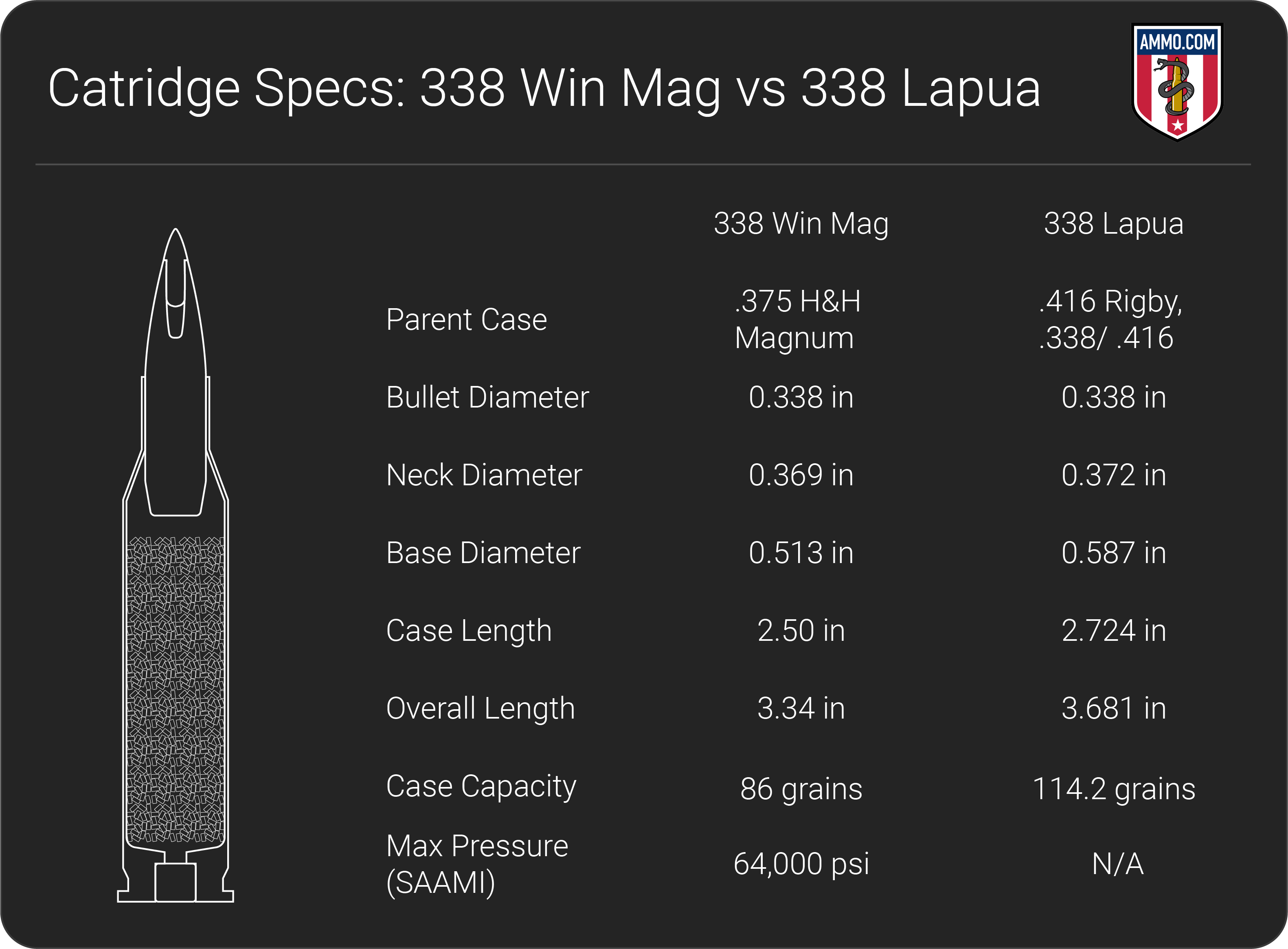
In contrast, the chamber pressure of 5.56 NATO is only roughly 75% of that, at about 60,000 PSI, while 6.5 Creedmoor and .308 Win have only slightly higher chamber pressures at 62,000 PSI. Even a .338 Lapua Magnum is only about 60,000 PSI. In fact, SAAMI recommends that cartridges don’t exceed 65,000 PSI.

So to accommodate for this much higher-than-usual chamber pressure, SIG had to make some unusual design choices.

At first glance, the case seems pretty normal. The body is brass, and while it’s thicker than you’d typically see, it’s not too unusual. Where things really get shaken up is the base of the case, which is made from a separate stainless steel piece, allowing the case to tolerate the higher pressure. The pieces connect with a locking washer.

But what does that higher pressure mean for the performance of this round?

Well, .277 Fury sends a 140 gr round down range at 2,950 ft/s (900 m/s). For comparison, a similarly sized 6.5 Creedmoor round will achieve only about 2,710 ft/s (830 m/s).

That allows the Fury to maintain accuracy at significantly further distances than even Creedmoor, which was specifically designed for long-range target shooting. .277 Fury has a -41 inch drop at 500 yards, compared to 6.5 Creedmoor’s -53 inch drop.

At 1000 yards, SIG says the .277 Fury will drop a whole six feet less than 6.5 Creedmoor and hit the target with 25% more energy.

The real kicker? To reach that speed at the muzzle, Creedmoor needs about a 24-inch barrel, while the Fury will come out of a barrel that’s 8 inches shorter.

If you send a 6.5 Creedmoor out of a 16” barrel you’re looking at more like 2,450 FPS Vs. .227 Fury’s 2,950.

We see higher velocity, around 3,100 f/s, from 5.56 NATO, but with a much smaller projectile, around 62 gr, and the 5.56 NATO doesn’t maintain its trajectory nearly as well either, with a drop of about -90 inches at 500 yards.

All in all, the .277 Fury sounds a whole heck of a lot more effective than 5.56, and looks to be a marked improvement over even something like 6.5 CM…but I still don’t see 5.56 getting replaced anytime soon.

Downsides?

While all that performance sounds great, it’s key to remember that a lot of it comes from the fact that the bullets are about 3 times as heavy as 5.56 NATO. From a boots-on-the-ground perspective, that weight is a lot. We’re already sending our armed forces into harm’s way, carrying a lot of weight. Equipping them with .277 FURY either means a lot more weight or a lot less ammo on their person.

This demands the question, can this really be a viable 5.56 replacement for the average infantry? The Army seems to think so. For now.

Also, the idea of defeating body armor at 500 yards is a big part of the development here, which is a need our military hasn’t really had in most recent conflicts. It’s clear with this requirement that the Army is looking ahead to modern battlefields against better-equipped opponents than what we’ve seen in the last several decades.

SIG Spear is their civilian version of the XM5. Think of it as the AR-15 to the military’s M4. This one is chambered in 6.5 Creedmoor.

Then again, based on what the world has seen in Ukraine for the last year, past reports of “near-peer body armor” might be overstated.

All in all, the .277 Fury is a pretty incredible round, especially for long ranges, but it’s more of a specialty round, while the 5.56 NATO is more of a generalist. Of course, for what .277 Fury is for, it’s very, very good.

The bottom line is that .277 Fury is something of a monster. 6.5 Creedmoor is nothing to sneeze at, and .277 Fury makes 6.5 Creedmoor looks like its kid brother.

WHAT DOES ALL THIS MEAN FOR NORMAL PEOPLE?

Honestly, not much…for now.

The .277 Fury hasn’t had a huge impact in the military as of yet, and it’s certainly not going to replace the AR-15 platform for civilians. And even if you do want to replace your AR with a .277 Fury rifle, there aren’t a lot of options available.

From the time the round was first introduced for civilian use at the end of 2019, Sig had the bolt-action CROSS available for it. At around $1,600 to $1,800, it’s not outrageously priced.

If you can get your hands on it, that is, and that’s a big “if.” While researching for this article, I couldn’t find one in stock anywhere.

Then early last year, SIG introduced the MCX-Spear (SIG’s civilian version of the XM5) chambered in .277 Fury, and just this week added the .308 Win and 6.5 Creedmoor versions. All 3 have an MSRP north of $4,000.

Ammo is a bit easier to get your hands on, but it’s still pretty pricey, generally running at least $1.65 per round for the cheapest stuff. And, of course, you have to get your hands on the rifle first.

On the other hand, other similar rounds like .308 Win and 6.5 Creedmoor are much cheaper and easier to find, and the difference in ballistic performance just isn’t enough to tempt me to pay the higher price for .277 Fury.

So if you’re in the niche group of hunters pushing the 600 to 800-yard range, you might find it worth it, but personally, I’m going to hold off for a while until the price comes down (if it ever does).

Of course, we’ve seen explosions of popularity in rounds adopted by the military, and what the US Army uses has a huge effect on what other service branches pick up. If we start seeing the USMC, Navy, and Air Force picking up .277 rifles, that’s a whole different ball game.

If 6.8×51 becomes a standard NATO cartridge? Forget about. It’ll be around for a hundred years. Will that happen? SIG certainly hopes so, I’m sure, but right now, the Army has only bought into the tune of about $20 million.

Which, in terms of military acquisitions and spending, is basically the equivalent of tipping your Uber Eats driver with a stick of gum.

Still, the round definitely has potential, and it’s one of the most interesting developments in cartridge design that we’ve seen in quite a while, from the hybrid-material case to the insane 80,000 PSI case pressure that blows almost everything else out of the water.

LOOSE ROUNDS

The SIG .277 is a marvel of cartridge development and firearms engineering, but that doesn’t mean it’s a home run just yet. On paper, things look great for this round to succeed and maybe replace some issued M4s.

There are some logistical hurdles in the way of that goal, but it’s always interesting to see a major manufacturer like SIG SAUER really pushing the envelope in terms of cartridge design and putting out something completely new that we haven’t seen before.

The Best Red Dot Scope For Turkey Hunting in 2024

0

Today I’m going to show you the best red dot scope for turkey hunting.

In fact:

I’ve hand-tested over a dozen optics alone for this review.

The best part?

I’ve sorted the scopes by use. So whether you’re on a budget or need the best red dot sight, you’ll find it here.

Let’s dive in!

Best Red Dot Scope for Turkey Hunting

Trijicon MRO

$450-750

Aimpoint PRO

Best for Long Range

$463

Best for the Money

$310

Vortex Venom

Best for the Budget

$230

Why use a red dot sight to hunt turkey?

Turkey hunting needs reliable magnification and durability. Red dot sights are known for fast target acquisition, though, and turkey hunters have to move quick.

Red dot sights have unlimited eye relief, so you can use your peripheral vision. They’re a lighter red dot scope for turkey hunting across hard terrain. Basically, turkey hunters should use a red dot.

What qualities should you look for?

Not all red dots are built equally. Some are manufactured with better parts while others are designed for a specific purpose. With that in mind, here are some important factors to consider.

Lens Clarity

When you’re turkey hunting, quickness matters. A big part of being able to sight on your target is the reticle. Some red dots have larger dot reticles that can make it hard to see everything.

Since turkey hunting is outdoors, it also helps to have a green dot option. Red dots are great for certain environments, but green is better for outdoor use. It’s just a little more expensive.

The price is worth it, though. Green dot reticles are better to stand out against tree surroundings.

Design

You never know how long you’ll be turkey hunting, so it’s good to have lighter gear. A red dot sight doesn’t weigh as much as rifle scopes, and they’re usually more mobile.

It’s also important to have durable construction. You might even want a red dot sight that’s small enough to co-witness, so remember your turkey hunting goals.

Battery

Most red dot sights for turkey hunting use batteries that you’ll have to replace when they run out. It’s better to use one that has a common battery. Of course, you also want your battery to last.

Battery life can depend on a number of factors beyond hours of use. The brightness setting you need for turkey hunting, for example, can drain the battery faster.

Versatility

If you’re like me, you have a few guns in your collection. It’s always better if the red dot sight, like something from Vortex, can fit on several, or all, of them. This can save you money and give an accuracy edge to your shooting across the board.

The Best Red Dot Scope for Turkey Hunting

If you’re pressed on time, here’s a quick list of the best red dot scopes for turkey hunting:

  1. Trijicon MRO: Best Overall
  2. Aimpoint PRO: Best for Long Range
  3. Holosun 510c: Best for the Money
  4. Vortex Venom: Best for Budget

1. Trijicon MRO: Best Overall Red Dot Scope

One of the best manufacturers out there is Trijicon, and their MRO has quickly become my favorite red dot. It has an impressive number of features, but you’ll definitely pay for them.

Glass Clarity & Reticle Patterns

Trijicon built the MRO with efficiency in mind. It has a multi-coated lens, so I haven’t had issues with smudges or clarity.

I love how easy it is to use, too. The MRO has 8 ambidextrous settings for brightness, with 4 of them meant for night turkey hunting. The 2 MOA reticle has an intense dot that I can see in countless conditions.

Eye Relief & Eye Box

Unlimited eye relief is a great feature of red dot sights for turkey hunting. However, the Trijicon MRO stands out with one of the best fields of vision I’ve seen, literally.

Durability and Weight

The high-grade aluminum tube is matte black. It only weighs a little over 5 ounces, so it’s easy on my arms for longer turkey hunting. The 2.6-inch length also lets me mount a rifle scope to co-witness.

Once I mounted it, the MRO didn’t shift at all from recoil. Even my shotgun sights didn’t move my zero, so it’s a serious piece of machinery. Trijicon’s optic is waterproof and extremely durable.

Elevation & Windage Knobs

The adjustment knobs on my MRO give me a lot of control over the settings. Each click is ½ MOA with a total range of 70 MOA for elevation and windage.

I don’t have any trouble getting to the knobs, either. The elevation is on top of the red dot sight and windage is controlled on the side.

Parallax & Magnification

The MRO is parallax-free, so the red dot doesn’t move with the sight. I haven’t had any issues with precision or maintaining my target. As with most red dots, the magnification is 1x.

Mounting & Rings

If you need a red dot sight that can mount most of the weapons in your collection, Trijicon has you covered. I’ve been able to put it on every weapon I own, so it works for shotgun sights.

On top of that, the MRO comes with a quick-release mount. If there was a situation where I could co-witness, which hasn’t happened yet, I could swap out scopes easily.

Battery

A highlight of the MRO is the battery. I’ve never had to replace it and it’s supposed to last for 5 continuous years. I also haven’t noticed any issues with the higher brightness levels.

Is the Trijicon MRO worth it?

It’s a little more expensive, but the Trijicon MRO is one of the best red dots I’ve ever used for anything. That means it’s perfect for any turkey hunting needs.

Why? It’s got:

  • 2 MOA red dot
  • Multi-coated lens
  • Fantastic brightness settings
  • 5-year battery use
  • Quality components

For the price you’re paying, Trijicon doesn’t have my favorite warranty. It only lasts 3 years, you need proof of purchase, and it’s non-transferrable. Still, with the durability, I don’t foresee needing to repair or replace my red dot sight anytime soon.

If you want efficiency without the Trijicon price, though, you might like the Burris FastFire III. It’s a little older, but it’s got some great features, like a 3 MOA reticle for improved accuracy.

2. Aimpoint PRO: Best Long Range Red Dot Scope (rewrite)

Another trusted name in sights for turkey hunting is Aimpoint. They offer the ACO and the upgraded Aimpoint PRO, and I always recommend the latter if you can afford it. There’s a reason law enforcement and the military use the PRO.

Glass Clarity & Reticle Patterns

Similar to the Trijicon, the Aimpoint PRO has a 2 MOA reticle and multi-coated lenses. The lens reduces glare, so I’ve never had a problem shooting during the daytime.

Thanks to the red dot picture quality, turkey hunting at 150 yards or farther. With some sights for turkey hunting, night vision makes the image grainy. The PRO retains a clear picture.

Eye Relief & Eye Box

You have the traditional unlimited eye relief with a PRO. I can see everything in my field of view clearly, so I can watch for movement outside of my red dot sight.

Durability and Weight

Aimpoint is one of the best manufacturers in optics. They use quality parts for their red dot scope for turkey hunting, so I’ve never had any issues with durability. The PRO’s tube is made of aircraft-grade aluminum.

The matte-black finish has water wicking and it’s waterproof, so you don’t have to worry about rain. Humidity isn’t even a problem, because the tube is sealed to be fog-proof.

The PRO is shock-proof and scratch-proof. I’ve used mine for a while and it’s survived all of my turkey hunting trips without a scratch. I was surprised at how tough it is, since it’s only 11.6 ounces.

Elevation & Windage Knobs

The elevation and windage knobs on the Aimpoint PRO are covered with aluminum caps. They’re safe, and easy to adjust with the included tool. With ½ MOA clicks, I was able to zero my PRO at 100 yards with ease.

Parallax & Magnification

The Aimpoint PRO is parallax-free with a 1x magnification, which is pretty standard for a red dot sight.

Mounting & Rings

The PRO mounts on a low-profile Picatinny rail. Since I’ve mounted it, I haven’t had to worry about it moving from recoil on any of my firearms.

Plus, the low profile helps with my field of view. The PRO works if you need shotgun sights for turkey hunting.

Battery

The Aimpoint PRO red dot uses a 2L76 battery, which is a little less common. Still, it can run continuously for 30,000 hours, so you won’t be replacing it for at least 3 years.

The highest brightness settings might affect that, but I haven’t had any issues with battery life in the last year. My PRO has 10 brightness options. 6 of them are for daytime shooting.

The back 4 are specifically built for night vision compatibility. That means I don’t have to worry if I’m still turkey hunting when the sun goes down, and the battery hasn’t failed me yet.

Is the Aimpoint PRO worth it?

I’d argue that the Aimpoint ACO and the PRO are both worth it, but the PRO is definitely superior. The ACO has similar features, but they don’t stack up to the PRO for long range.

Here’s why:

  • Waterproof, fog-proof, shockproof
  • 10 settings for brightness
  • 30,000 hour battery life
  • Night vision

Aimpoint has a pretty good warranty, depending on your purpose. If you’re using your PRO for competitive or professional shooting, it’s only good for 2 years.

Personal use at the range and turkey hunting, though, comes with a 10-year warranty for defects, repairs, and replacement.

3. Holosun 510c: Best for the Money Red Dot Scope

One of the newer names that impressed me is Holosun. They offer a number of optics for different needs, and the 510c reflex sight is a perfect red dot sight for turkey hunting.

Glass Clarity & Reticle Patterns

The multi-coated lens of my 510c is clear, and the LED reticle helps make the image pop. It comes with a red or green dot reticle, which is perfect for anyone with astigmatism or eye struggles.

One feature that separates the Holosun is that it can switch reticles. While I love the 2 MOA red dot, it can swap to a 65 MOA circle. It can even combine the two for a dot inside a circle.

Eye Relief & Eye Box

Unlimited eye relief and a wide field of view are pretty standard with the 510c. I didn’t notice anything wrong or better.

Durability and Weight

The Holosun 510c weighs just over 8 ounces. The high-grade aluminum tube is also 3.3 inches long, so it easily fits on a rail to co-witness. I love that the sight has a titanium hood, too.

Holosun uses great products for components, so I haven’t put a dent in my 510c. It’s been on many turkey hunting trips without any issues, especially since it’s water- and dust-proof.

Elevation & Windage Knobs

The 510c comes with a T10 L key, which is used to adjust the elevation and windage knobs. It’s easy enough to do on the fly, and the ½ MOA clicks make it easy to zero your red dot sight.

Both elevation and windage adjustments max out at 50 MOA.

Parallax & Magnification

My Holosun 510c is parallax-free past 50 yards with a 1x magnification. However, the anti-reflective coating on my lenses helps with farther shots.

Mounting & Rings

One thing that I’d use as a con is that it doesn’t come with a mount. However, it can be mounted to be a low-profile, absolute co-witness red dot sight. It’s easy to mount with the tool, too. This is great for shotgun sights for turkey hunting.

Battery

Thankfully, the Holosun 510c uses a CR2032 battery, which is very easy to find a replacement for. With 50,000 hours of battery life, though, you won’t need to.

Not only can the battery last for a long time, but Holosun extended that efficiency with two amazing features: Shake Awake and Solar Failsafe.

The former means your 510c will turn on when it senses motion. The latter means that your Holosun red dot sight can use solar power to conserve battery if you’re in the sun.

As for brightness levels, you have 12 settings to choose from. 10 of them are for daylight, and I like to keep mine around 7 or 8, depending. 11 and 12 are perfect for night vision, too, so I’ve gotten a lot of use out of the 510c.

Is the Holosun 510c worth it?

Definitely. Holosun may be newer, but they’ve certainly done their homework. The 510c delivers a premium red dot sight at a premium price.

Why? It’s got…

  • 3 reticle options
  • Extended battery plus solar options
  • 12 brightness settings

Holosun has a 10-year warranty on their red dot sights. That amount of time is great, because the durability and battery of this sight mean I won’t need to consider a warranty for a lot of years.

4. Vortex Venom: Best Budget Red Dot Scope

If you’re operating on a budget, Vortex is one of the best manufacturers you can look at. The Vortex Venom isn’t necessarily the cheapest, but it’s the best quality for your dollar.

Glass Clarity & Reticle Patterns

For starters, the Venom sticks out because it has a reticle that can switch between 3 MOA and 6 MOA. Different red dot sizes can be better for short- or long-range shots.

Whether you use 6 MOA for long-range shots or not, you still want a clear sight picture. The lenses on the Venom are fully multi-coated for the perfect image.

Eye Relief & Eye Box

As usual, you’re getting unlimited eye relief and you can see everything inside and out of your Vortex Venom.

Durability and Weight

Something that I love about the Venom is how light it is. While none of the red dot sights on this list are heavy, 1.1 ounces takes the cake.

Aluminum is a lightweight material, which is why the Vortex’s tube is made with that. The tube itself is sealed with an o-ring to prevent fog or humidity from affecting the image.

You’ll get a waterproof, fog-proof, scratch-resistant red dot scope thanks to the ArmorTek coat to your Venom. For a red dot sight under $300, Vortex makes a great argument as the best.

Elevation & Windage Knobs

The adjustments on your elevation and windage knobs aren’t quite as precise as some of the more-expensive sights. Still, 1 MOA isn’t bad and they’re not hard to get to.

The max range of elevation and windage is 130 MOA and 100 MOA, respectively. It was easy to zero and I’ve barely had to readjust since.

Parallax & Magnification

Even though it has a 1x magnification with the typical parallax-free nature of red dots, I can easily hit things at 150 yards consistently.

Mounting & Rings

The Venom is also one of the most versatile red dot sights. You can put it on a Weaver or Picatinny rail and it’s adjustable for the height of your cheek weld.

Vortex made an affordable red dot sight for turkey hunters. If you need shotgun sights when you’re turkey hunting, this could be the red dot for you.

Battery

One restriction of the Venom is the 150 hours of battery life, but that’s at the brightest setting. Your CR1632 battery can handle all 10 levels of brightness for a long time.

While the 150 hours for peak brightness may seem low, you’ll get a continuous 30,000 at the lowest. It’s about your purpose and when you plan to go turkey hunting.

Is the Vortex Venom worth it?

One of the best names in optics is Vortex and the Venom has a lot of great features for the cost. It’s the only reflex sight on this list and worth adding to your collection.

Why? It’s got…

  • 3 or 6 MOA reticles
  • Variable battery life
  • 10 brightness options
  • Lightweight composition

Another great quality for the cost is the Vortex warranty. It’s transferable with a lifetime warranty to get repairs no-questions-asked. I’ve loved their customer service so far and they work fast.

Still, if you’d rather go even lower, you can get the Vortex StrikeFire II for $50 less. It’s also a great red dot scope for turkey hunting on a budget. The StrikeFire II has similar features for a little less.

Final Verdict

The best red dot scope for turkey hunting comes down to preference and purpose, but my top recommendation would be the Trijicon MRO. It’s more expensive, but you’re paying for quality and versatility.

You also get both colors of reticle and a long-lasting battery for any situation. If you need a red dot scope for a unique reason, though, you can’t go wrong with the other three.

Now It’s Your Turn

I hope you enjoyed my best red dot scope for turkey hunting guide.

Now I want to turn it over to you:

Which red dot sight will you pick for turkey hunting? Or perhaps you already have one and would like to share your thoughts.

Either way, let me know by leaving a quick comment down below.

FAQ:

Best Compact Crossbows, Compounds for Quick, Accurate Hunting

0
Best Compact Crossbows, Compounds for Quick, Accurate Hunting

The TenPoint Havoc RS440 Xero, which comes with the Garmin Xero X1i laser-rangefinding scope, has an axle-to-axle measurement of just 7 1/2 inches when cocked. (Photo courtesy of TenPoint)

Timing is often critical to getting a shot while bowhunting. Whether hunting with a crossbow or a compound, preparing to shoot typically takes longer than when hunting with firearm.

With a compound, it also requires more movement. These are challenges that bowhunters readily accept and that bow manufacturers seek to help them overcome.

Being able to deftly maneuver a bow is key to capitalizing on a shot opportunity. No matter if the hunt occurs in a treestand or a ground blind, or even in the form of spot-and-stalk, crossbows with narrow widths and compounds with short axle-to-axle lengths shine in tight quarters.

They are easier to carry off the beaten path and guide around brush, branches and vegetation without hang-ups. New technology allows manufacturers to build easy-handling bows that are not only fast, but also accurate and comfortable to shoot.

Here are seven new models that are among the most compact on the market. They might buy you those extra few moments you need to make a shot.

Ravin R500E

GAF-Compact-Bows
Ravin R500E

Ravin promises the R500E will deliver 500 fps with the 400-grain arrows that come with the bow. Unprecedented speed is exciting, but the cocking system is just as impressive. The battery-powered Ravin Electric Drive System allows shooters to cock and decock the crossbow with just a push of a button. This cocking system is detachable and includes a charger, and the R500E can still be cocked manually with Ravin’s VersaDrive System. The R500E has an axle-to-axle spec of just 3.6 inches when cocked. While the overall width of the crossbow is certainly wider than the axle-to-axle figure, it’s still ultra-narrow. The R500E’s 28-inch length also contributes to the compact nature of this crossbow.

  • Axle-to-Axle, Cocked: 3.6″
  • Axle-to-Axle, Uncocked: 7.6″
  • Power Stroke: 15″
  • Length: 28″
  • Weight: 9.9 lbs
  • Speed: 500 fps
  • MSRP: $3,349
  • ravincrossbows.com

Wicked Ridge NXT 400

GAF-Compact-Bows
Wicked Ridge NXT 400

At just six inches wide axle-to-axle when cocked, the NXT 400 is Wicked Ridge’s narrowest crossbow ever. Its XR6 Cams and Vector-Quad cable technology uses four cables instead of two to power 200-pound limbs. The result is a speed of up to 400 fps with 400-grain arrows. Without the foot stirrup, the NXT 400 is 33 inches long and weighs less than 7 1/2 pounds. The NXT 400 package includes an ACUdraw cocking device, TenPoint 3X Pro-View scope, three-arrow quiver, and three Pro Elite 400 carbon arrows with practice points.

  • Axle-to-Axle, Cocked: 6″
  • Axle-to-Axle, Uncocked: 11.3″
  • Power Stroke: 15 1/2″
  • Length: 33″
  • Weight: 7.4 lbs
  • Speed: 400 fps
  • MSRP: $1,099.99
  • wickedridgecrossbows.com

TenPoint Havoc RS440 Xero

GAF-Compact-Bows
TenPoint Havoc RS440 Xero

The TenPoint Havoc RS440 Xero is a top-quality crossbow, but it’s what’s on top of the Havoc that sets it apart. This crossbow ships with the Garmin Xero X1i rangefinding scope. Press a button, and the scope determines the distance to the target then automatically provides an illuminated aiming point based on the range (see “Gear: How It Works,” page 100). The Havoc RS440 includes TenPoint’s ACUslide System, which makes cocking and decocking quiet, safe and nearly effortless. Easy to handle, the Havoc measures less than 27 inches long without the foot stirrup and 28 3/4 inches with the stirrup. The two-stage S1 trigger is silky smooth, and pull weight is a smidge under 3 pounds. The Havoc RS440 is also available with a more conventional EVO-X scope that features a holdover reticle.

  • Axle-to-Axle, Cocked: 7 1/2″
  • Axle-to-Axle, Uncocked: 12.3″
  • Power Stroke: 13 1/2″
  • Length: 26 1/2″
  • Weight: 7 1/2 lbs
  • Speed: 440 fps
  • MSRP: $3,649.99
  • tenpointcrossbows.com

Mission Sub-1 XR

GAF-Compact-Bows
Mission Sub-1 XR

When cocked, the Mission Sub-1 XR measures 9.1 inches axle-to-axle and 13 inches at its widest point. It produces arrow speeds of up to 410 fps. The Sub-1 XR is easy to cock without a cranking device, but a silent Mission RSD Crank is an optional add-on. A speed-compensating Hawke scope is included in the package, along with a quiver and soft case. (The Sub-1 XR can also be purchased without the scope, quiver and arrows for $200 less.) This crossbow is incredibly accurate, thanks in part to a match-grade trigger that breaks crisply at about 3 pounds of pull weight. And if the hunt doesn’t end with a shot, the Sub-1 XR can be decocked easily. It is arguably the safest and easiest crossbow to decock without a crank system.

  • Axle-to-Axle, Cocked: 9.1″
  • Axle-to-Axle, Uncocked: 12 1/2″
  • Power Stroke: 14 5/8″
  • Length: 30 1/2″
  • Weight: 7.6 lbs
  • Speed: 410 fps
  • MSRP: $1,899
  • missioncrossbows.com

Mathews V3 27

GAF-Compact-Bows
Mathews V3 27

It’s not often you find a pair of flagship bows, especially with different axle-to-axle lengths, that mirror each other in almost every way. Mathews’ V3 27 and 31 models, however, are the exception to this rule. Both have a brace height of 6 inches and an IBO speed rating of 342 fps. The main difference is the length between the axles. The V3 27 is the company’s most compact bow to date. It, like the V3 31, makes use of Mathews’ Crosscentric cam to permit easy draw-length and draw-weight changes, the new Nano 740 damping system, and redesigned limbs and limb cups to reduce weight.

  • Axle-to-Axle: 27″
  • Brace Height: 6″
  • Let-Off: 80, 85%
  • Draw Weight: 60, 65, 70, 75 lbs
  • Draw Length: 25 to 29.5″
  • Weight: 4.29 lbs
  • Speed: 342 fps
  • MSRP: $1,199
  • mathewsinc.com

Hoyt Carbon RX-5

GAF-Compact-Bows
Hoyt Carbon RX-5

Hoyt heralds its latest carbon incarnation, the RX-5, as its best carbon model to date. The bow is fitted with an all-new HBX Cam that promises smoothness and speed, plus redesigned Limb Shox to minimize vibration and noise. Measuring 30 inches between the axles and having a 6 1/4-inch brace height, the RX-5 can hit speeds up to 342 fps. Other notable features of this 4.4-pound compound include the Integrate Rest Mount, which puts QAD’s Integrate MX drop-away in line with the riser, and a lower stabilizer position. The bow is also offered in an Ultra model with a 34-inch axle-to-axle length and 7-inch brace height.

  • Axle-to-Axle: 30″
  • Brace Height: 6 1/4″
  • Let-Off: 80, 85%
  • Draw Weight: 30 to 80 lbs
  • Draw Length: 25 to 30″
  • Weight: 4.4 lbs
  • Speed: 342 fps
  • MSRP: $1,699
  • hoyt.com

Bowtech Solution SD

GAF-Compact-Bows
Bowtech Solution SD

Optimized for bowhunters with draw lengths of 23 1/2 to 28 1/2 inches, the new Solution SD offers speed and performance in a short-draw compound. Bowtech reports arrow speeds up to 323 fps, and the company builds the Solution SD with its DeadLock Cam System. The Deadlock cams can be moved left or right on the axles by just turning a screw for easy tuning to achieve perfect arrow flight. Deadlock cable containment reduces torque, and Orbit dampeners can be strategically placed on the riser to offset accessory weight while minimizing vibration.

  • Axle-to-Axle: 30″
  • Brace Height: 7″
  • Let-Off: 85, 87%
  • Draw Weight: 50 to 70 lbs
  • Draw Length: 23 1/2 to 28 1/2″
  • Weight: 3.9 lbs
  • Speed: 323 fps
  • MSRP: $1,199
  • bowtecharchery.com
Best Air Rifle Deals

Popular Posts

What Is a Break Barrel Air Rifle?

0
A break barrel air rifle is a type of air rifle that uses a break action to load and unload pellets. It is one...

How Do Break Barrel Air Rifles Work?

0
A break barrel air rifle is a type of airgun where the barrel breaks open at a hinge point just above the breech. This...

Can a Felon Legally Possess an Air Rifle in Tennessee?

0
"Understanding the Legalities: Felon Ownership of Air Rifles in Tennessee" can a felon own an air rifle in tennessee? In the state of Tennessee, the ownership...